Lost worlds of Gondwana Leonid Popov, Honorary Research Fellow, 26 May 2021 What is Gondwana? The Museum has large fossil collections of Early Palaeozoic age (540-400 million years old) from various parts of the world. Many come from regions that in the geological past formed a huge single supercontinent, called Gondwana. Wales was also part of Gondwana, until it broke away some 480 million years ago. Where is Gondwana located? If we could look at the globe 400-550 million years ago, we would find a very different world. Almost all of the Northern Hemisphere was covered by an ocean called Panthalassa. In the Southern Hemisphere, a huge landmass extended from the South Pole to the equator. There were no oceans separating South America, Africa, Australia, Antarctica and India. They were all merged in a single supercontinent, which scientists have named Gondwanaland or simply Gondwana. It also included large parts of south and south-east Asia, and southern Europe, which were either attached to the mainland, or formed chains of islands and volcanic island arcs some distance off the Gondwanan coast. Some of these islands, such as South and North China, were the size of small continents. When was Gondwana formed? Gondwana was formed some time during the Ediacaran Period, by about 550-530 million years ago, as a result of the collision of several ancient continents. First signs of complex animal life This is the time when the first signs of complex animal life appear in the fossil record. The name of the Period comes from the Ediacara Hills in South Australia, where geologist Reg Sprigg discovered the (then) oldest known animal fossils in 1946. Ever since, Gondwana has been the most important source of our knowledge of early metazoan (complex animal) life. Important fossil localities outside Australia are known from Namibia, Newfoundland, Central Iran and Wales. All were part of Gondwana at that time. Image 1: Earth about 530 million years ago, shortly after the Gondwanan supercontinent formed. The oldest mineralised fossils of marine animals date from this time: (a) mineralised plate of worm from Northern Iran; (b) brachiopod from Indian Kashmir; (c) trilobite from Alai Range, Kyrgyzstan; (d) enigmatic fossil from Jordan; and (e) conodont tooth. Scale bars = 0.2 mm. Trilobite fragments about 4 mm wide. The Cambrian Explosion Evidence of life is scarce in rocks formed during the Ediacaran Period, but everything changed at the beginning of the Cambrian Period, just over 540 million years ago. This was the time when marine animals started to grow hard parts, or skeletons, for the first time. Remains of such animals were preserved in the rock as isolated parts, like vertebrate teeth and sponge spicules, as shells, including molluscs and brachiopods, and as complete carapaces of trilobites and similar animals. Such fossils are found in many fossil localities across Gondwana, from Newfoundland to Australia. There are also a few locations where soft body parts of these animals are preserved. One of the richest and most important fossil localities of this kind is in Chengjiang, South China. These fossils provide convincing evidence that almost all major types of invertebrate animals that are alive today have existed since early Cambrian times. The Cambrian Explosion gets its name from the fact that most major groups of animals appeared over a (geologically) short period of time, as life diversified rapidly into a great variety of forms. What caused the Cambrian Explosion? There is a lot of debate among scientists and ongoing research about what caused the Cambrian Explosion, and it is likely to have resulted from the interplay of several factors rather than one single trigger. Recent research on ancient sediments gave weight to the key role played by oxygen, by showing that oxygen levels in the sea rose from the Ediacaran to Cambrian period, to near-modern levels. This would have allowed larger and more complex animals to evolve, and more complex food webs to develop. An increase in larger predators may have triggered rapid evolution of predators and prey, as natural selection adapted their bodies to better target or evade each other. There was also a global sea level rise at this time, which greatly increased the area of shallow seas on Earth, providing more habitable space that could be filled by new species. Another possible environmental factor was an increase in calcium ions in sea water, due to volcanic activity and widespread weathering of the land. These ions would have provided the raw materials for animals to make shells, skeletons and other hard parts, making a greater variety of body plans possible. Some scientists speculate that internal, developmental features of animals themselves may also have played a role in the Cambrian Explosion, although it is very difficult to test this idea. It is possible that animals acquired some key genes or that they crossed some threshold level of genetic complexity, making it possible to make a much bigger range of body shapes. However, the fact that some complex animals already existed in the Ediacaran period suggests that this was unlikely to have been a key trigger for the Cambrian Explosion. Image 2: About 480 million years ago, Avalonia separated from Gondwana, and Wales started a long journey towards the tropics, meeting the east coast of Laurentia (North America) 70-80 million years later. Marine life rapidly diversified on tropical shelves, shown by these fossils from Australasian and Middle Eastern sectors of Gondwana: (a) an early coral; (b) ostracod, a minute crustacean; and (c) encrusting bryozoans on brachiopod shell. The Ordovician diversification of life? Life in the ancient seas went through big changes during the Ordovician Period (440-490 million years ago). Animals living on the sea bottom started to grow upwards, higher above the sea floor, and the first coral reefs started to grow about this time. This resulted in an amazing increase in the diversity of life. In the Ordovician world, more animals lived attached to the bottom and fed by filtering plankton from sea-water. Good examples of such animals are various corals, brachiopods, bryozoans or moss animals, and crinoids or sea lilies. Living alongside these were mobile animals, including molluscs and arthropods. Trilobites were still abundant, but gradually became less important. Tropical seas surrounding the Australasian sector of Gondwana were an important centre for the origin of new marine life, like maritime South-East Asia is today. Image 3: 440 million years ago, the world was recovering after ice age and mass extinction. Most post-extinction survivors settled in the tropics, only later migrating to higher latitudes. Early Silurian rocks from Iran preserve a rare record of that migration: (a) common brachiopods and (b) bryozoans; (c) microscopic plates from sea cucumbers; (d) rare sponges; (e) trilobite Calymene; (f) conodont teeth and (g) cone-shaped brachiopods. The end and new beginning Towards the end of the Ordovician Period, life on Earth faced a difficult new challenge, resulting in the second biggest mass extinction event in its history. An enormous ice cap started to grow in the Southern Hemisphere, where most of the shallow seas supporting diverse marine life were located. During the final (Hirnantian) stage of the Ordovician, a significant part of Gondwana was covered by thick ice. Evidence for this is widespread across Africa, Brazil and the Arabian Peninsula, and has most recently been found by our research team in Iran. The growing ice sheet cooled the climate and caused sea level fall, drastically changing many shallow marine habitats. The Hirnantian was named after Cwm Hirnant near Bala, in North Wales, where this stage of geological history was first recognised. By that time, Wales was actually far away from the rapidly cooling Gondwanan world and was approaching tropical Laurentia (the ancient North American continent), as part of a small 'break-away' continent called Avalonia. Wales was also the place where the so-called "disaster Hirnantia fauna" was discovered and described for the first time. This restricted group of animals evolved in temperate latitude Gondwana following the first major pulse of global extinction. At that time, with few competitors left, they were able to spread widely across the globe. By the end of the Ordovician Period, two-thirds of marine species were extinct and the great variety of living things found in different parts of the world had all but disappeared. Lucky survivors took over expanding shallow seas after the ice cap melted in the early Silurian Period, from around 440 million years ago. Soon marine life flourished and diversified once more. But by that time, the four major continents, Gondwana, Laurentia (North America), Baltica (Europe) and Siberia, were slowly moving northwards and towards each other, eventually joining together to form a single land-mass, Pangaea (meaning "entire Earth"), by the end of the Palaeozoic. A different world with a different history was emerging.
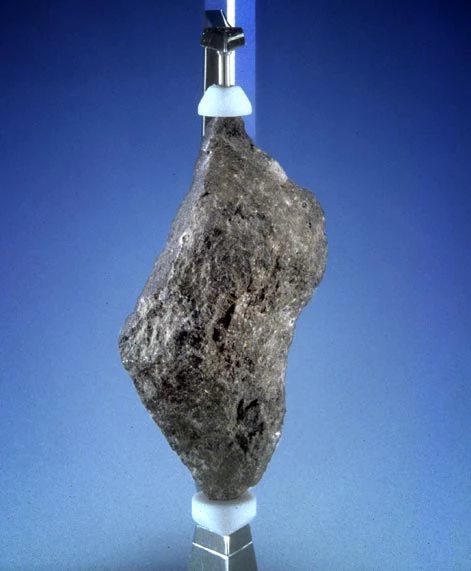
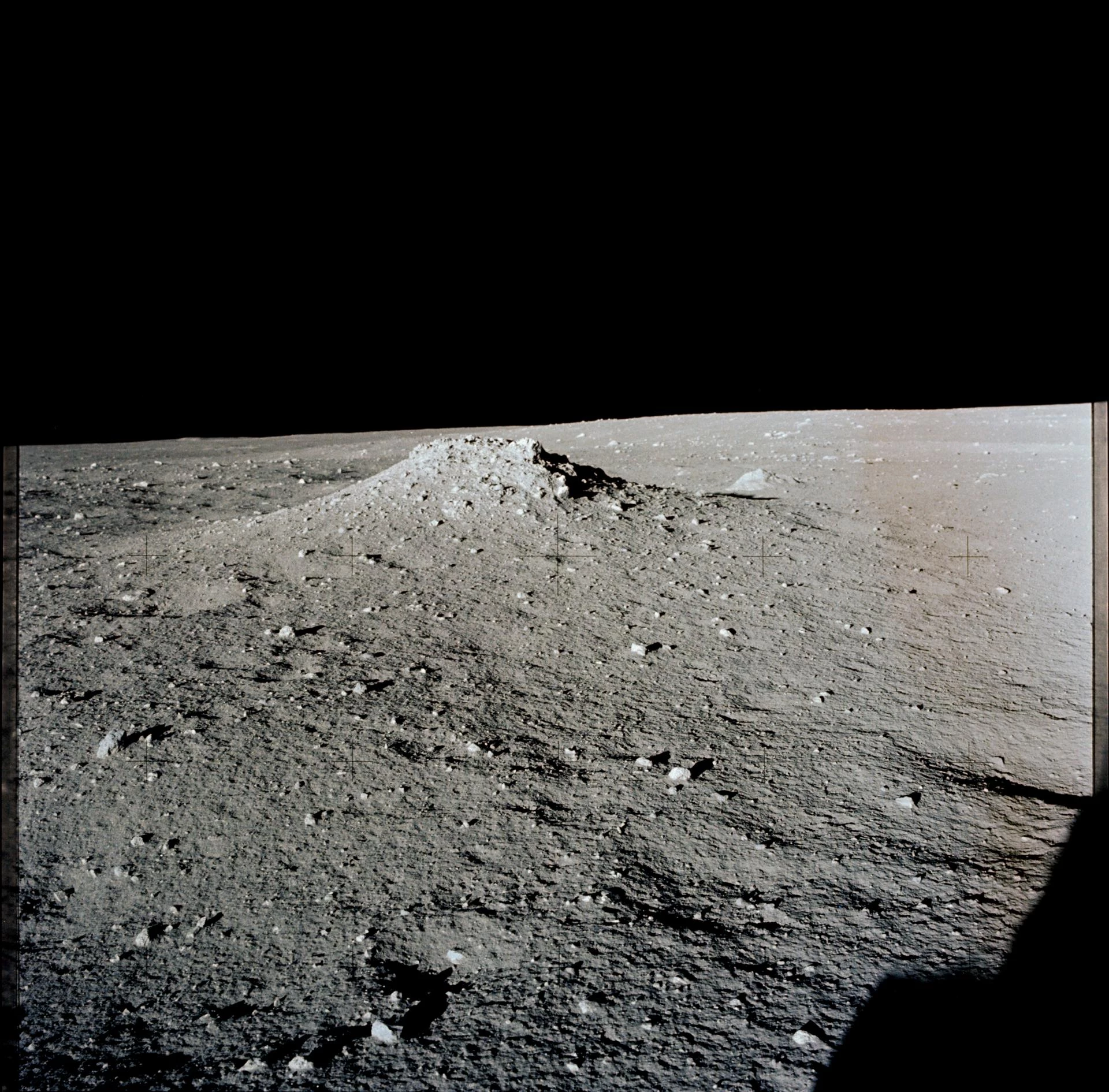
Apollo 12 Moon Rock 12 March 2019 Moon rock displayed at National Museum Cardiff. The rock comes from a mound of material thrown out by the impact that made Head Crater. Apollo 12 was the sixth manned flight in the United States Apollo programme and the second to land on the Moon. It was launched on 14 November 1969, from the Kennedy Space Center, Florida, four months after Apollo 11. Astronaut Alan Bean collected samples from the moon to bring back to Earth for research.The rocks on the Moon are roughly the same age as the oldest rocks found on Earth. They range from about 3.2 billion years up to about 4.5 billion years old. However on Earth rocks this old form just a small part of the surface geology. Most older formations have been destroyed and recycled by plate tectonics.Today, a piece of Moon rock from the Apollo 12 mission, on loan from NASA, is on display as part of the exhibition The Evolution of Wales at National Museum Cardiff.The precious rock is kept in a special airtight container to protect it from contamination. At 3.3 billion years old, the Moon rock is considerably older than the most ancient Welsh rock, a mere 711 million years old, is roughly the same age as Lewisian Gneiss (from north-west Scotland), the oldest identified rock in the UK, and is younger than the oldest rock known from Canada (Acaster Gneiss) at 3.9 billion years old. Examples of these three rocks are all displayed alongside the Moon rock.The moon rock is the most expensive item in the entire museum. Its value is based on the cost of going to the moon to get another piece. It is kept in a protective nitrogen environment; only NASA has a key to open the inner case.
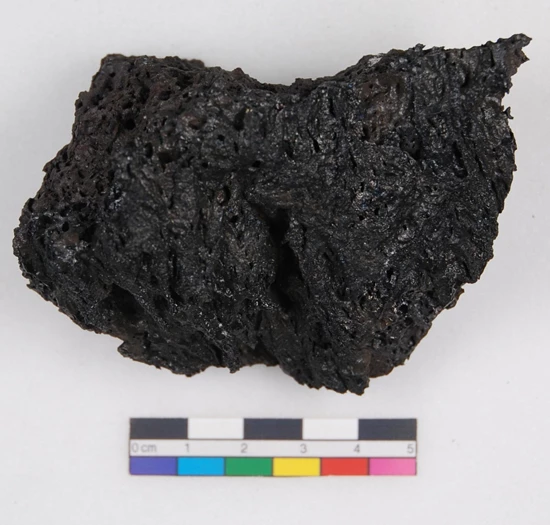
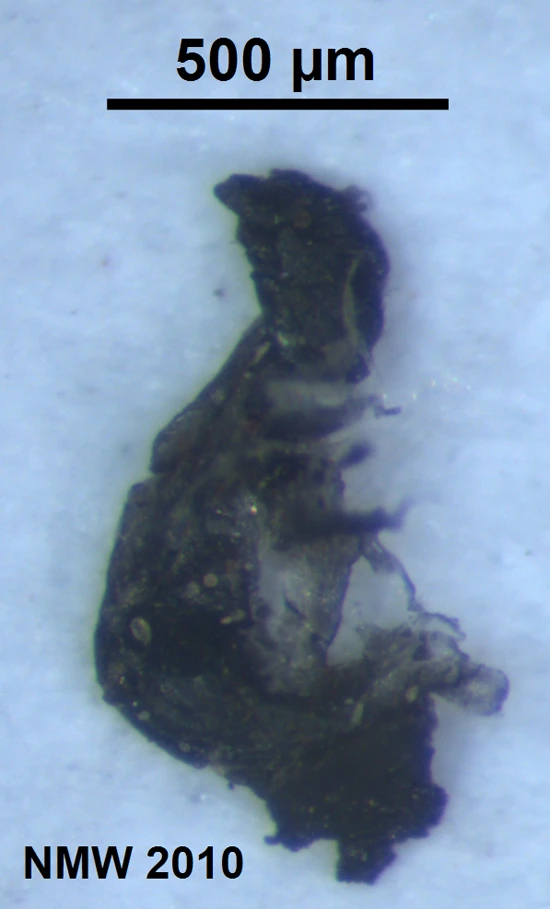
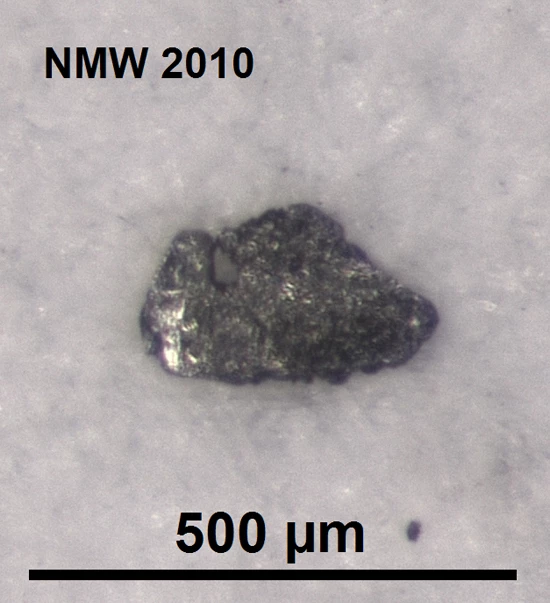
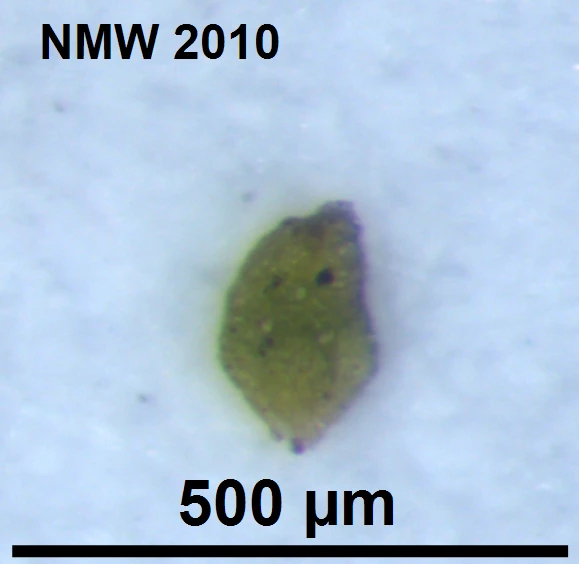
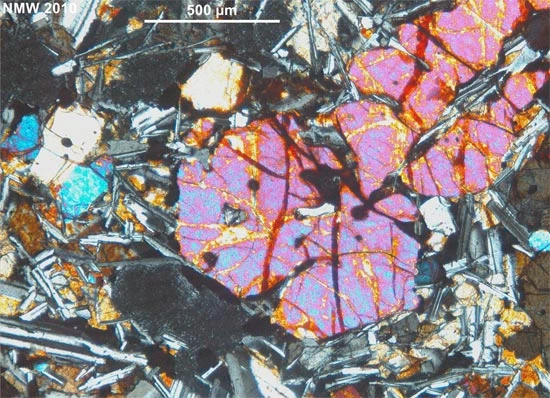
Volcanic ash falls on Wales 16 April 2010 Specimen of Icelandic basalt from the Geology collection Sharp, glassy, volcanic particle (scale: 500 microns) Pyroxene (scale: 500 microns) Olivine Basalt thin section A section of basalt rock thin enough to let light to pass through it allow geologists to study the minerals in the rock under a microscope. Icelandic ash analysed by Geology Department staff: Staff from the Geology Department at Amgueddfa Cymru - National Museum Wales collected and analysed volcanic ash that fell on cars roofs in the Cardiff area on Friday 16th April 2010. The ash was produced by the eruption of Eyjafjallajökull volcano which lies under a glacier in southern Iceland. After lying dormant for nearly 200 years, the volcano had been active since March 2010. On Wednesday 14 April the volcano erupted violently, blasting vast amounts of volcanic ash into the atmosphere. The violence of the eruption was exceptionally strong because explosions took place as the hot magma came into contact with water from the melting of the glacier through which it erupted. At the time of writing the volcano was still in eruption. Carried away by prevailing winds towards the UK and Northern Europe, the ash has led to severe disruption of commercial air travel. This is because volcanic ash can be sucked into aeroplane engines, causing them to clog, leading to engine failure. Because the ash is so fine grained Geology Department staff had to capture images of the ash using a camera mounted on a high power microscope. They found the ash contained fragments of solid lava, sharp, glassy volcanic particles, and the minerals feldspar, olivine and pyroxene. These minerals are the common constituents of the volcanic rock called basalt, which is consistent with the type of volcanic eruption currently occurring in Iceland. Iceland is a very geologically active region as it sits on the Mid Atlantic Ridge. Earthquakes and volcanic eruptions are relatively commonplace. Iceland is the only place where the Mid Atlantic Ridge is seen on land. Images of ash captured using a high power microscope (1μm = 1/1000 mm).
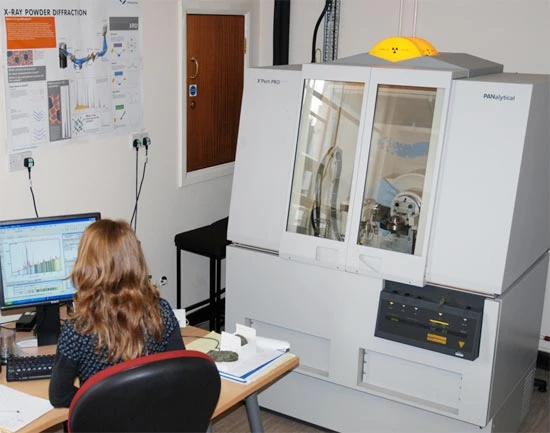
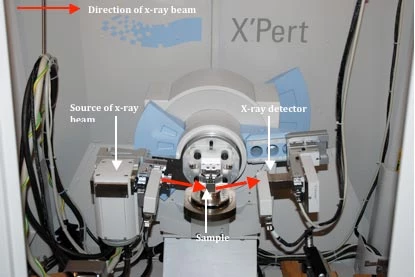
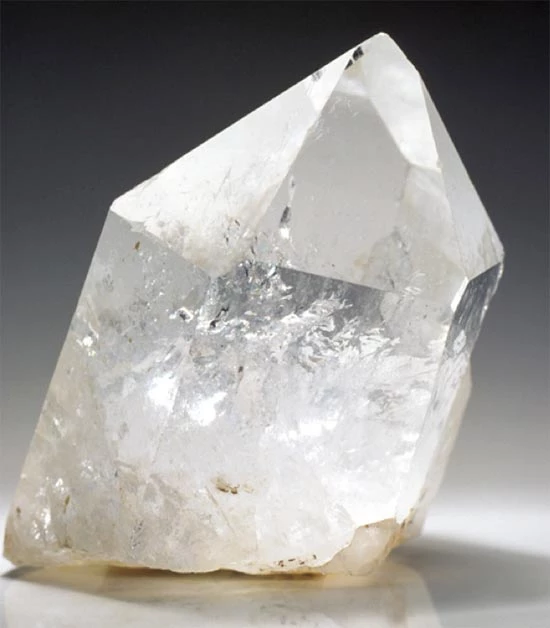
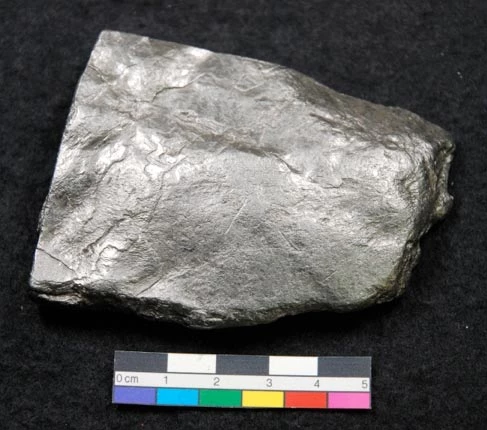
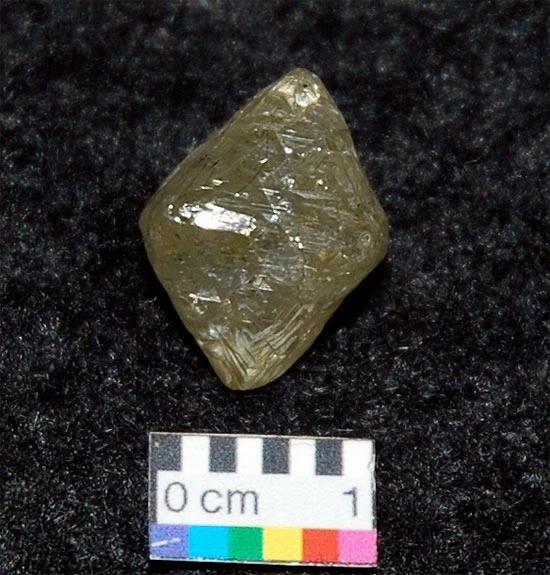
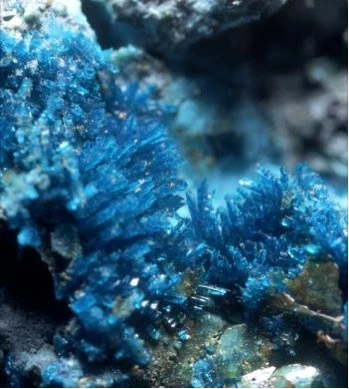
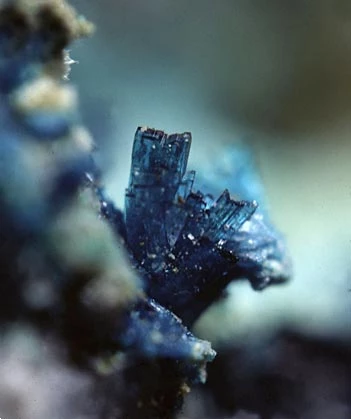
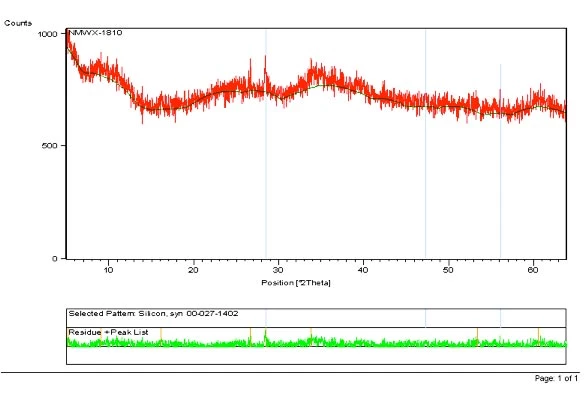
Mineral identification at Amgueddfa Cymru Amanda Valentine & Jana Horak, 7 December 2009 The X-Ray diffraction machine at the Museum Passing of an X-ray beam through a rock sample from the source to the detector Quartz crystal Graphite Diamond Langite wroewolfeite One of the activities of the Geology Department at Amgueddfa Cymru is to document all the minerals known in Wales. Minerals can be identified visually, but for a more definitive confirmation a process known as X-ray diffraction analysis (XRD) is used. This technique allows natural minerals and man-made crystalline materials to be 'fingerprinted' and compared to a database of known samples. X-ray diffraction analysis Most minerals are crystalline, which means they are made up of a regular framework of atoms creating a unique 'crystal lattice'. When X-rays are passed through a mineral, the atoms cause the X-rays to be diffracted, or bent, into many directions. The resulting X-ray pattern can then be recorded to produce a 'fingerprint'. Because no two minerals have exactly the same arrangement of atoms, their 'fingerprints' (or lattices diffraction patterns) are unique. These patterns can therefore be used to identify the mineral. To analyse a mineral by XRD a small sample, usually ground into a powder, is bombarded with X-rays. The data is recorded as a graph, called a diffractogram, which is a convenient form for viewing the result. To identify the mineral, the result is compared with a database of patterns from thousands of known minerals. An X-ray pattern of quartz showing its unique pattern Identical looking minerals Visual identification is still important, as it is possible for two different mineral species to have the same chemical composition but look very different. For example, diamond and graphite (both pure carbon) have the same chemical composition, but are clearly different not only in appearance but also in hardness and crystal form. On the other hand, langite and wroewolfeite are two chemically identical copper minerals that both form blue needles and are consequently difficult to tell apart visually. But because they have different crystal structures and therefore produce different diffraction patterns, XRD provides a quick and reliable method for distinguishing between them. Some minerals don't have a regular crystal structure and therefore don't produce diffraction patterns. Known as 'Amorphous minerals', they cannot be identified by XRD. A diffractogram pattern of an amorphous sample with no identifiable peaks The application of XRD The technique is widely used in geology and also in a range of related disciplines. For example, it is used to identify minerals in artists' pigments and the composition of corrosion on archaeological artefacts. Conservators can then devise the appropriate treatment for museum specimens.
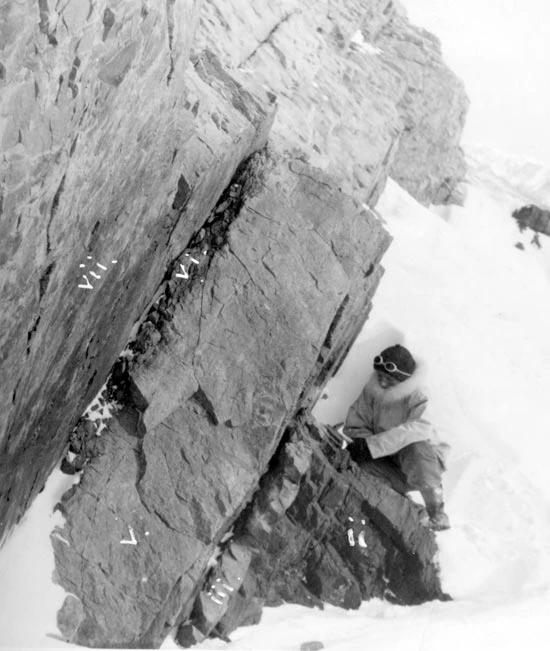
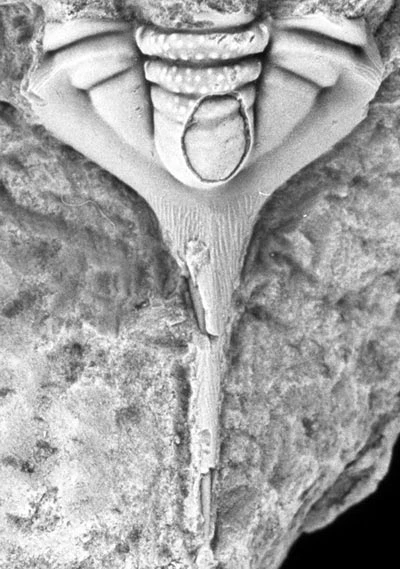
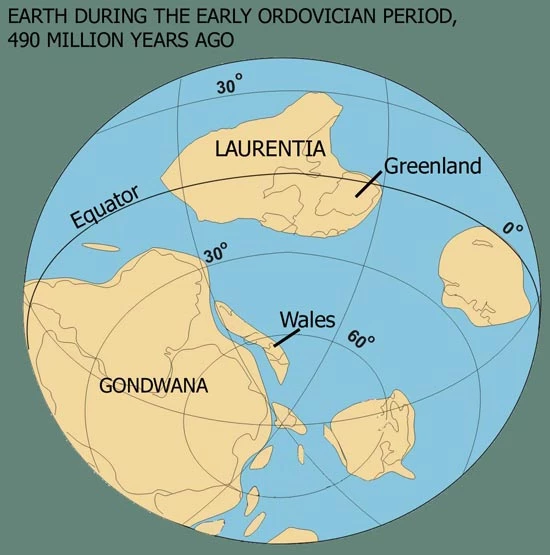
Tropical trilobites from frozen Greenland Lucy McCobb, 5 August 2009 Collecting fossils in the snow. 1950s. Aerial Photo of Greenland: The fossils were collected from the area shaded in red. The large fossilised eye of Carolinites, a trilobite which swam in the open ocean searching for food. The tail of the trilobite Acidiphorus has an impressive spine. The Museum's extensive holding of fossils include a collection of Ordovician age (470-490 million years old) trilobite fossils from Greenland. Although the continent is now cold and icy, it was not always so. British explorers in the icy north Greenland is a very difficult place in which to study and collect fossils. Most of it remains ice-covered throughout the year, and rock outcrops are readily accessible only in coastal areas during the summer months. Expeditions to explore the geology of Greenland began in the late nineteenth century, and continue to the present day. These have been organised by the Greenland Geological Survey, based in Copenhagen. In the 1990s, the Museum was presented with a collection of Cambrian and Ordovician trilobites from central east Greenland made between 1950 and 1954 by Dr John Cowie, formerly of the University of Bristol, and a colleague, Dr Peter Adams. Globe-trotting Greenland Today, we are familiar with Greenland as a cold, icy place, but this has not always been the case. The tectonic plates that make up the Earth's lithosphere have moved around throughout its history, and geologists have demonstrated that during the Ordovician Period Greenland lay close to the equator, and together with North America and Spitsbergen formed the ancient continent of Laurentia. At this time, Wales lay far away in cool, high southern latitudes, close to the vast continent of Gondwana. The fossil faunas of the shallow Ordovician seas around Laurentia and Gondwana are very different, and no trilobite species is common to Greenland and Wales. Earth during the early Ordovician Period, 490 million years ago Tropical trilobites new to science. The Ordovician trilobites of Greenland are preserved in limestone which accumulated on the floor of warm, shallow sub-tropical seas. Around forty different species have been identified in our Greenland collection, and several are new to science. Research has confirmed they are common to, or closely related, to those from other parts of Laurentia. Features of different trilobite species provide clues as to how they lived. Most were probably benthic (living on the sea floor), and were either scavengers or deposit feeders. Others have features such as very large eyes, showing that they were pelagic (swimmers); such forms were widely distributed in the Ordovician oceans, and found in other tropical regions apart from Laurentia.