: Research

Gas-guzzling clams

1 April 2008

The new species and Genus Spinaxinus sentosus, collected from the organic cargo of the sunken ship Francois Vieljeux

The new species and Genus Spinaxinus sentosus, collected from the organic cargo of the sunken ship Francois Vieljeux. The genus bears little resemblance to other known thyasirids and remains the only record of this species.

Thyasira methanophila Clam
Thyasira methanophila

, a clam new to science from a methane seepage area off Concepción, Chile. Its name suggests its dependence on methane.

An extreme magnification of the exterior shell of Spinaxinus sentosus

An extreme magnification of the exterior shell covering of Spinaxinus sentosus, recovered from the organic cargo of the sunken ship Francois Vieljeux. The spines witnessed at this magnification lead scientists at the Museum to name the new genus 'Spinaxinus'.

Deep beneath the sea floor there are large reservoirs of oil and natural gas, but it is only relatively recently that methane has been discovered to seep from the surface of the sea bed. These areas are known as 'gas seeps' and certain animals have evolved specifically to take advantage of this unique environment.

A diet of methane and sulphur

Found alongside these methane gas seeps are communities of clams that use the gas as a source of food. They don't actually eat the gas but they have evolved to harbour bacteria in their tissues that do the job for them.

These organisms are known as 'chemosymbiotic' and a few groups of clams have been very successful in adapting to this environment.

The same group of clams can also exploit sulphur and these are found living in areas where there are layers of rotting vegetation, around decaying whale carcasses, at hot vents and even on mud contaminated with diesel oil.

Because these clams come from unusual environments and often from deep water, many have yet to be studied in detail. A number of these gas guzzling clams were sent to Amgueddfa Cymru - National Museum Wales for identification and description. Several scientific papers have now been written on these species new to science

Clams from Chile

Clam shells and whole specimens were sent to the Museum following the discovery of a methane seep off the coast of Chile at a depth of 700-900m. One of these species, belonging go the genus Thyasira, was new to science and has been described in a scientific paper. The bacteria in the gill tissue of the clam were studied using a scanning electron microscope. This confirmed the symbiosis (reliance) between the bacteria and the clam.

A species of the genus Lucinoma was also discovered to be new to science but only shells have been found so far. It is likely that the majority of species living at this site are endemic (restricted to this location) and found nowhere else in the world.

The Pakistan Margin

From the other side of the world, we were sent a small species from the same group as the Chilean bivalve - Thyasira - but from the Indus Fan, off the coast of Pakistan, collected while investigating the unusual fauna that live in the very low oxygen waters of this region. The Museum worked with the Natural History Museum, London to investigate the DNA alongside describing the anatomy and shell of this bivalve.

A clam with a taste for shipwrecks

Man-made sources of methane and sulphur are also exploited and one of the strangest was the cargo of the sunken container ship Francois Vieljeux. This ship sank off the north coast of Spain in 1,160m of waters, taking with it its cargo of castor beans and sunflower seeds.

During attempts to salvage the vessel it was noted that clams had settled and grown on the cargo. All the clams belonged to chemosymbiotic groups and were exploiting the sulphur released by the rotting cargo. One clam was a Thyasira, similar to the specimen from Chile.

Cascadia Basin, off Washington State

The Baby Bare Seamount in the north-east Pacific Ocean is a hot spring and home to a new species of Axinus (similar to Thyasira). This site is unusual in that no other species of bivalve typically found at other methane seeps and hot vent sites are found here. Methane and Hydrogen sulphide levels are low, so initially it was a mystery as to what these animals were using as nutrition.

Cadiz Mud Volcanos

Off the Southern coast of Portugal there are numerous marine mud volcanoes created by stresses on the African and Eurasian tectonic plates. These stresses cause hot, methane and sulphur rich fluids to eject from deep within the volcanoes out into the sea bed above. By the time the fluids reach the sediment surface they are cold, so the mud volcanoes are classed as cold-seeps. Many species of Thyasira clams are found at some of these sites, but only a few are known to harbour the chemosymbiotic bacteria that help them to extract nutrition from sulphur and methane. A collaboration between the Museum and Cadiz University, Spain has resulted in the newly described species Thyasira vulcolutre , meaning 'belonging to mud volcano'.

Finally, in conjunction with Bangor University, the Museum is carrying out the taxonomic work on a Thyasira collected from a mud volcano in the Arctic and a mussel of the genus Idas which was collected from diesel contaminated mud beneath an oil rig in the North Sea.

This work by Amgueddfa Cymru - National Museum Wales is helping research the possibility of using these clams to clean up contaminated areas of the sea bed.

Catherine of the Wheel

1 November 2007

What do a firework and a painting from a medieval church have in common?

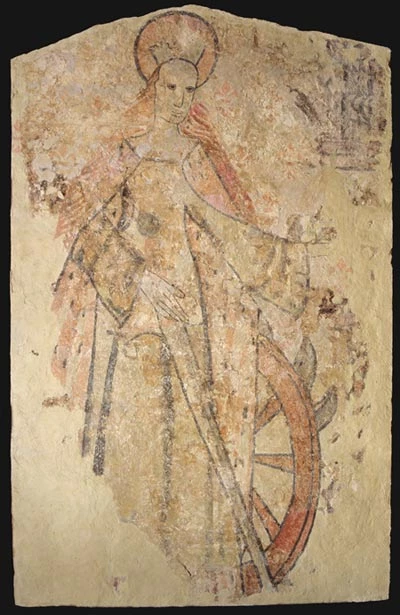
St Catherine

Medieval wall painting of St Catherine, from St Teilos church, dating to around 1400.

In 1998 St Fagans National History Museum began the challenging work of rebuilding and refurbishing a stone-built medieval church that had been moved from its original site in west Wales in 1984 — one of the first projects of its kind to be attempted in Europe. During the dismantling process, a number of extremely rare wall paintings were uncovered from beneath the limewashed walls.

St Catherine

One of the oldest paintings uncovered at the church dates from around 1400-1430 and represents St Catherine of Alexandria. It had remained hidden for centuries under layers of limewash, which had to be removed using doctors' scalpels.

Once the complete image had been painstakingly uncovered and the many thin layers of limewash delicately removed, St Catherine was revealed dressed in late fourteenth/early fifteenth-century costume, standing next to a spiked wheel and holding a sword.

Torture wheel and sword

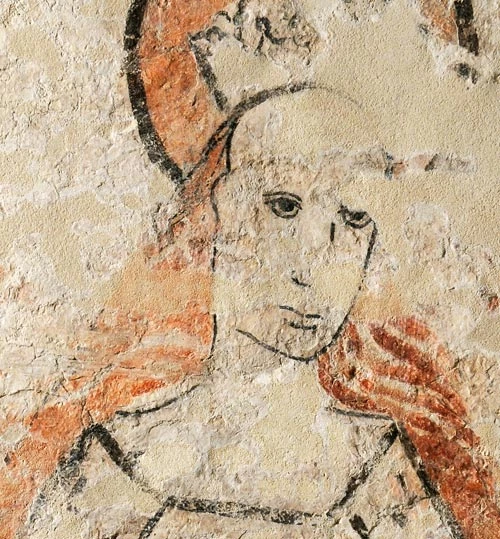
St Catherine medieval wall painting

Close up showing detail of St Catherine's face after conservation and cleaning by Jane Rutherfoord & Associates Ltd of Milton Lilbourne, Wilts. The work involved removing the backing that had been applied during initial conservation work in 1986, and replacing it with a modern high-tec solution based on hexlite - a lightweight aluminium hollow board used in aircraft manufacture. The surface was then cleaned to reveal the original paintwork.

The spiked wheel she is pictured next to is the instrument of torture that Catherine was condemned to death on by the Roman Emperor Maxentius [306-312] for her strong Christian beliefs. According to legend, the wheel itself broke when she touched it, so she was beheaded with the sword she is seen holding.

The torturous wheel that St Catherine is associated with gave rise to the name 'Catherine wheel' for the popular firework.

The re-erected church can be seen at St Fagans National History Museum. The wall paintings have been faithfully and expertly reproduced to show how the church would have appeared in about 1530. The St Catherine painting is not represented in the re-erected building, as it would have been covered over by this time.

The original wall painting of St Catherine is currently stored at the museum and can be viewed upon request in advance.

The disappearance of the rural Welsh cottage

6 July 2007

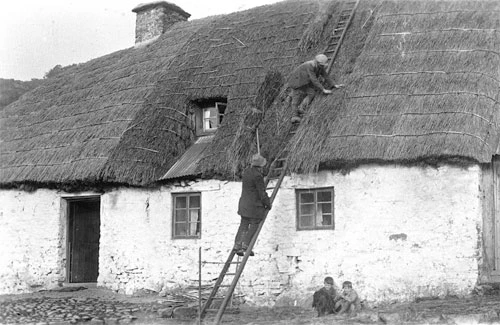
Mud walls and thatched roofs

Today, hardly any rural cottages erected since before the middle of the eighteenth century survive in Wales — it was generally believed that the poor simply could not afford materials good enough to last. New research suggests that this is not the case.

In fact, cottages were built with great ingenuity and attention to detail, using the best materials available locally.

Examination of Welsh cottages and the study of contemporary surviving accounts by Amgueddfa Cymru have concluded that it was a lack of maintenance and, above all, changing fashions brought about by the Industrial Revolution that led to their disappearance.

Sustainable construction

Transporting materials cost money so traditional builders were expert at exploiting their local environment in a sustainable way. Cow dung, for instance, provided fertilizer for the fields, was used in the making of clay flooring, added to help bind cottage walls and also as a fire-retardant for chimneys made of woven wattle.

Earth and turf

As the poor could not afford bricks, cottage walls were built from stone, earth or timber. They used whatever they could most readily and cheaply get. In western lowland areas of Wales — Anglesey, Llŷn and west Wales — that was often earth.

Few earth cottages survive in Wales today; many more can by found in the drier areas of England. In the very wet uplands, many turf-walled cottages were built, as turf lasted much longer than earth.

Thatched roofs

Up until the development of the great slate quarries of north Wales in the 19th century, and the coming of railways, thatch was a very common material. Today, very few thatched roofed buildings survive compared to in England.

Four different thatching techniques were common in Wales; only one still survives today in eastern Wales.

In west and north Wales the top coat of thatch was formed of knotted handfuls of straw thrust with a forked implement into a thick underthatch layer. The underthatch itself was often laid on a woven wattle foundation.

In the most exposed areas, the roof could be held down by a network of ropes pegged to the walltop, or held down by heavy stones.

Chimneys of straw and wattle

Cottage floors were often earth or mud. Partitions could be made of woven wattle or straw rope, covered with daub. The smoke hood above the chimney-stack was also often of daubed wattle, as was the chimney stack itself; no wonder that so many of these cottages were destroyed by fire.

But however sustainable the building materials used in these cottages, they fell prey to changes in society, and to fashion.

Changing fashions

With the growth of the Industrial Revolution, and the importation of food from abroad, more and more people left the countryside, most of them cottage dwellers.

More and more cottages, too, became the property of great estates, who began building larger homes for their workers. It was often easier to demolish the early cottages than it was to give them a second storey or to adapt them.

Today, traditional early cottages are rare survivals, and all the best remaining examples are listed as being of special architectural importance.

One collection - 786,000 shells - Cataloguing and curating the Melvill-Tomlin shell collection

12 June 2007

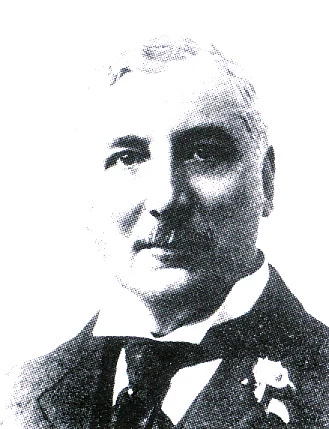
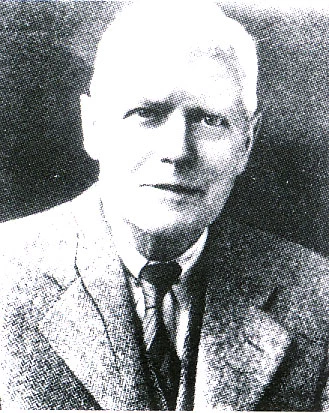
James Cosmo Melvill.

James Cosmo Melvill.

John Read le Brockton Tomlin.

John Read le Brockton Tomlin.

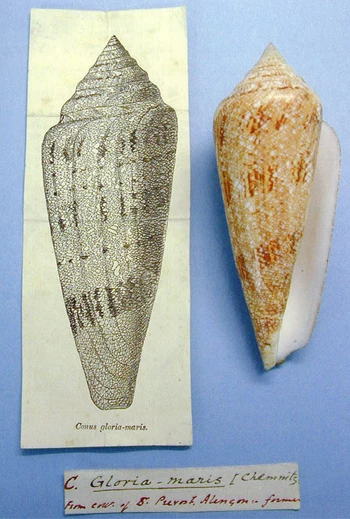
Conus gloriamaris.

Melvill's greatest prize specimen of Conus gloriamaris.

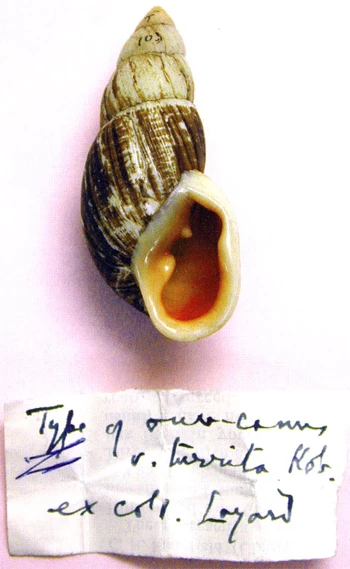
Placostylus from Layard.
Placostylus

from Layard.

When the Melvill-Tomlin collection of molluscs was received by Amgueddfa Cymru in 1955, it was the second largest shell collection in private hands in the world.

The collection, begun by James Melvill in 1853 and passed to John Tomlin in 1919, represented all regions of the world and contained nearly half of all mollusc species known.

Melvill described and named over 1000 species new to science. Tomlin continued to add important specimens from across the world until his death in 1954.

On Tomlin's death in 1954, the Museum received the entire collection, his library and papers. Tomlin's allegiance with Amgueddfa Cymru is thought to have developed whilst teaching at Llandaff Cathedral School in Cardiff.

Housing the collection

The collection arrived in mahogany cabinets, but is today housed in a mobile storage racking system allowing the whole collection to be organised in a standard, systematic sequence, providing easy access to any taxonomic researcher working on the collection.

Long and slow curation

Modern documentation is achieved by entering information into a computer database, but in the past information was hand-written into large registers. Between 1978 and 1994, museum staff and volunteers verified, labelled, and secured specimens in the collection.

The information on the collections was then published for taxonomists around the world for further study. If the process had continued in such a way, then a full inventory would have taken another thirty years.

Computer databases completes the 'first' inventory

In 1995, a computer database was purchased allowing many people to enter data at the same time. Over twenty staff and volunteers have since been involved in making an inventory of the collection.

Since work begun in 1978, the first inventory has now been completed and any enquiries can now be answered accurately in minutes, rather than days or weeks.

The first inventory has been completed and any enquiries can now be answered accurately in minutes, rather than days or weeks. Over 786,000 shells have been added to the database.

New to science

Within this collection, there are thousands of very important specimens that are referred to as 'types'. These are the specimens that were new discoveries to science when collected, and were usually described, illustrated and named by the collector.

With many older collections, it is only the detective work of museum curators and taxonomists around the world that can help to verify this information. An electronic inventory makes this task much easier by making the entire database of a collection available to taxonomists worldwide.

Discovering the secrets beneath - 18th century paintings under the microscope

30 April 2007

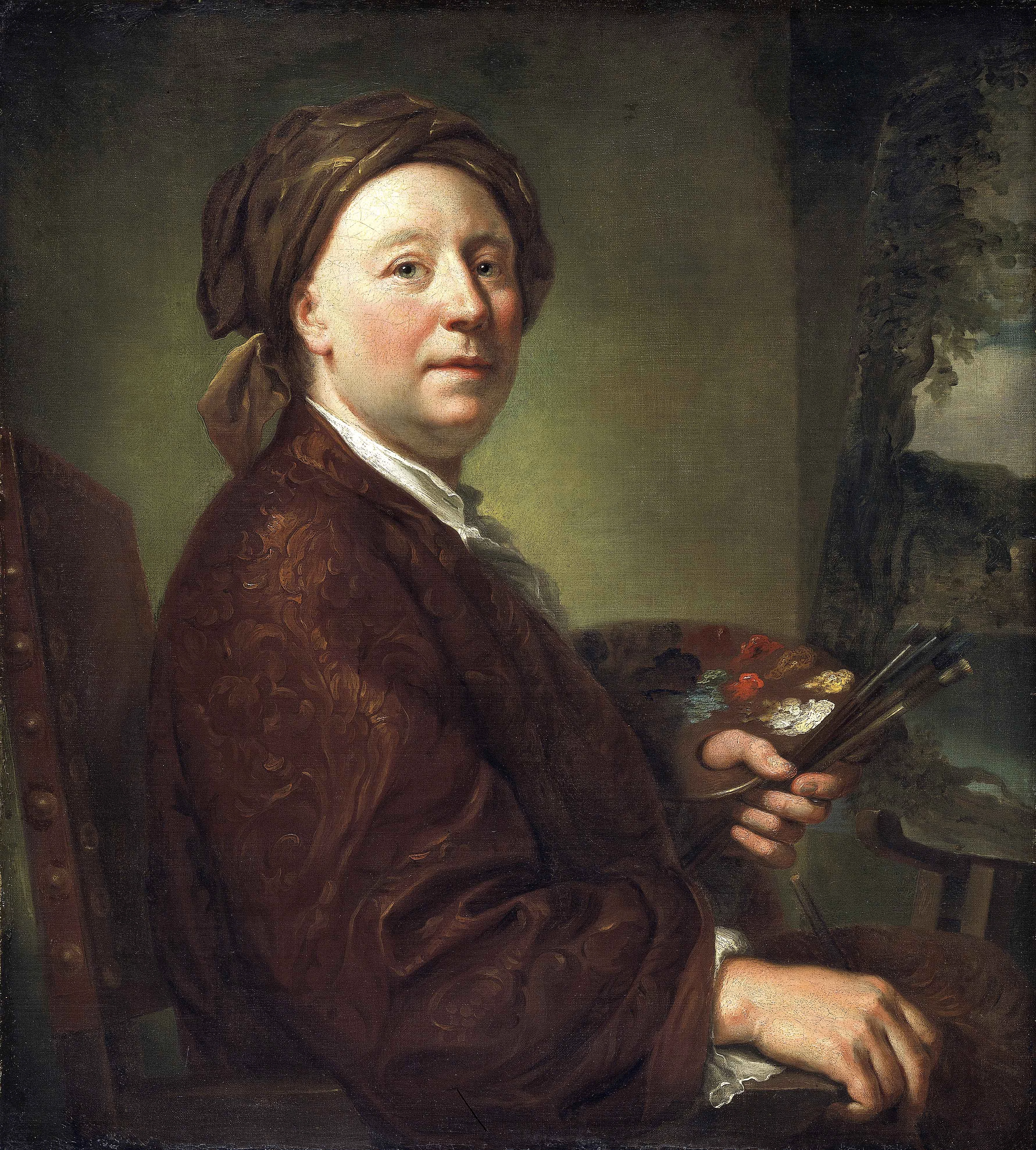
Richard Wilson (1714-1782)

Richard Wilson (1714-1782). This portrait was painted in Rome by Anton Mengs in return for one of Wilson's landscapes - a gesture of friendship and mutual admiration.

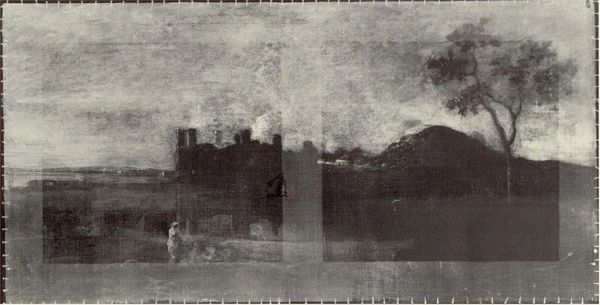
Caernarvon Castle X-ray image

Caernarvon Castle X-ray image (NMW A 73)

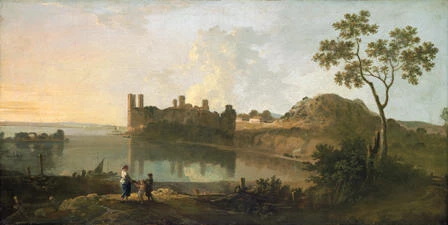
Caernarvon Castle by Richard Wilson

Caernarvon Castle by Richard Wilson

Dolbadarn Castle X-ray image

Dolbadarn Castle X-ray image (NMW A 72)

Dolbadarn Castle in I.R. light

Dolbadarn Castle in I.R. light (NMW A 5203)

Over the past few years, the Museum has been examining a number of paintings in the collections by Richard Wilson. Modern scientific equipment can reveal hidden details about the structure and materials used in these paintings. The results provide a fascinating insight into the artist's working methods and have led to discovering the origin of some of the more doubtful paintings from Wilson's work.

Infra-Red Light

Infra-red light has been used to see whether the paintings have subsequently been altered or painted over by the artist. Infra-red light can penetrate all but the deepest blue pigments to reveal any dark tones overlying a light coloured ground. It has been discovered that there are underdrawings in both the oil sketch of Dolbadarn Castle (NMW A 5203) and the large finished painting of the same subject (NMW A 72). In the oil sketch, the underdrawing includes a bridge across the river in the distance and a fence in the right foreground. Neither of these features were used in the final sketch. Furthermore in the large painted version Mount Snowdon is included in the background and the distant riverside buildings are moved further to the left. His ability to rework his designs brings variety to the many versions he painted of the same subjects and helps explain how he gives his English and Welsh views a grand classical appearance.

Paint Structure and Materials

Subjecting Wilson's work to X-rays has enabled the structure of Wilson's paintings to be examined. X-rays easily penetrate some materials, but are reflected by others. Some pigments traditionally used in oil painting come from heavy metals such as mercury, cadmium and lead. Lead white being one of the most commonly used. X-rays show up the structure of the painting and any changes that may have been made using lead white. Wilson usually painted his skies in a mixture of lead white and a blue pigment only down as far as the horizon, skirting around any trees and foliage silhouetted against the sky. The foreground and trees are painted largely with earth colours, which X-rays easily penetrate. A typical X-ray of a painting by Wilson should show a strong contrast between sky and foreground areas. This is best illustrated by Caernarfon Castle (NMW A 73). Any landscape not showing this characteristic contrast therefore can be assumed to have been produced by someone other than Wilson.

A few of the paintings examined so far show that Wilson sometimes completely reworked a composition. Dinas Bran (NMW A 3277) was originally started as a View of Tivoli (see NMW A 495). The town on the slopes of the hill is clearly visible in X-ray together with a wayside shrine, which occurs in other versions of that subject. He also occasionally reused a canvas. Dolbadarn Castle (NMW A 72) has been painted over a portrait of a woman, and Landscape with Banditti around a Tent (NMW A 69) is painted over a Venetian-style reclining nude.

Powerful microscopes

Tiny paint samples have been taken and looked at under incredibly powerful microscopes.

The pigments found in the paint layers almost exactly match the palette Wilson used. Prussian blue and indigo mixed with lead white are the chief pigments found in his skies, and ochre, Naples yellow, red and yellow lakes, Prussian blue and indigo in his foliage and foregrounds. Ultramarine blue however, which, according to contemporary accounts, Wilson used in finishing his skies, has not yet been found.

Proving Fakes

Although most of Wilson's close followers would have used a very similar palette to that of their master, this type of modern analysis has proved that later imitations were false as the pictures contained pigments that were not known in Wilson's day. These include NMW A 5195 Coast Scene near Naples, which contains cobalt blue, first introduced in 1817 and NMW A 5206 Cilgerran Castle which has a ground containing barytes, introduced at the end of the 18th century.

This research has produced information vital to a deeper historical understanding of individual works by Wilson, as well as some definite conclusions as to the status of paintings of doubtful origin.