: Natural History

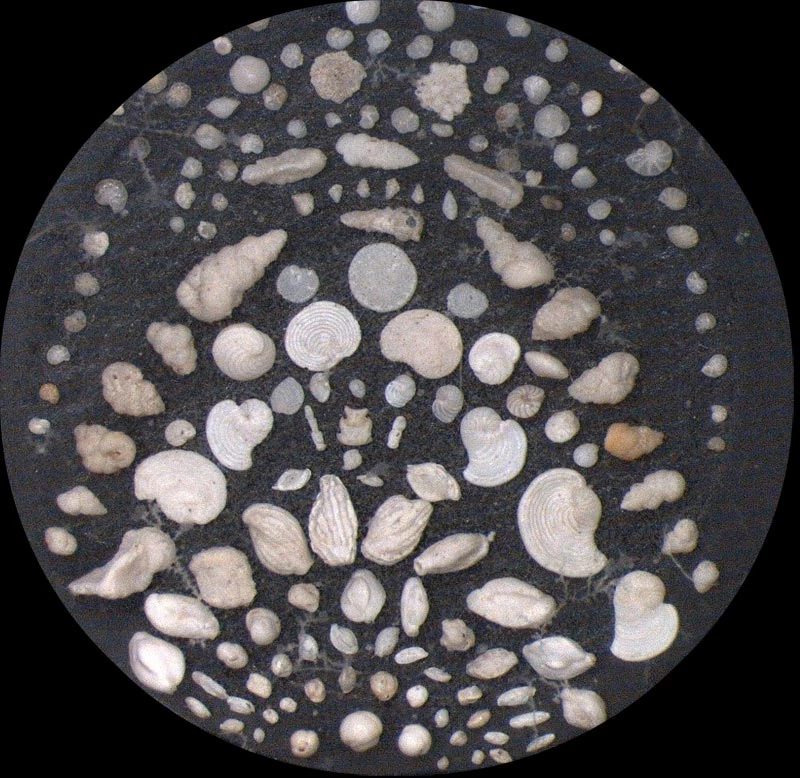
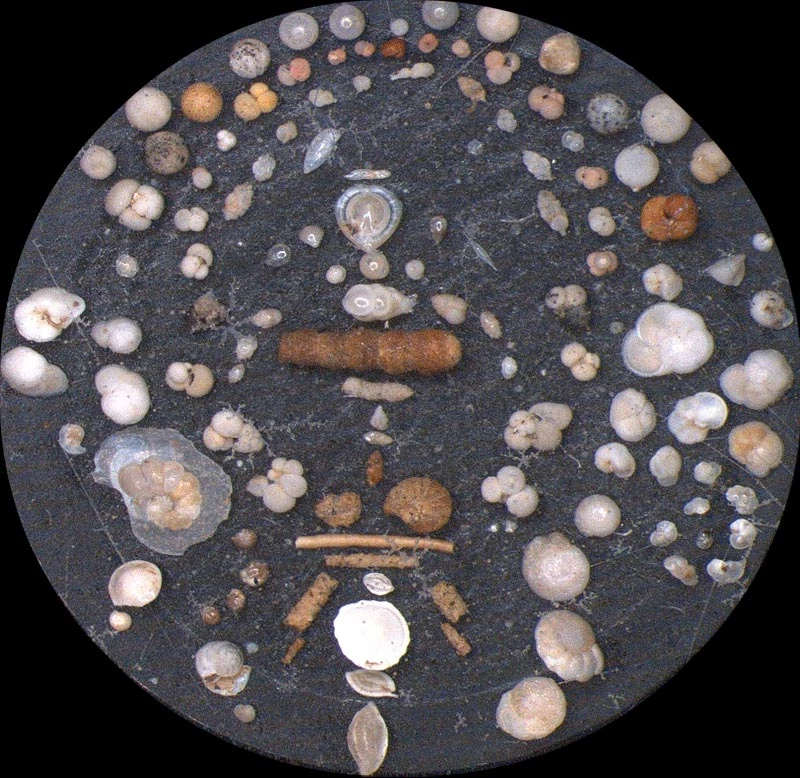
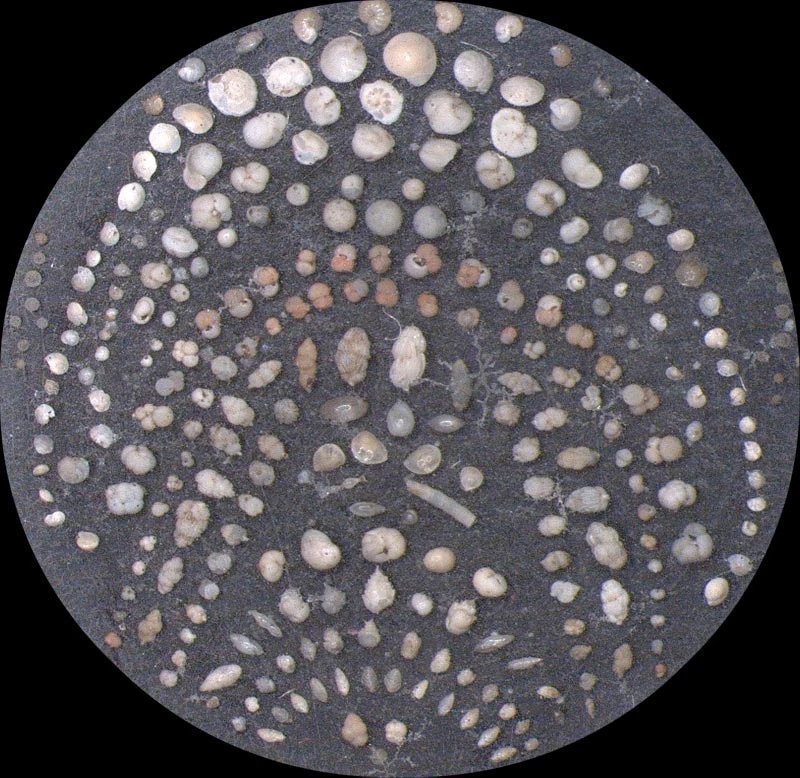
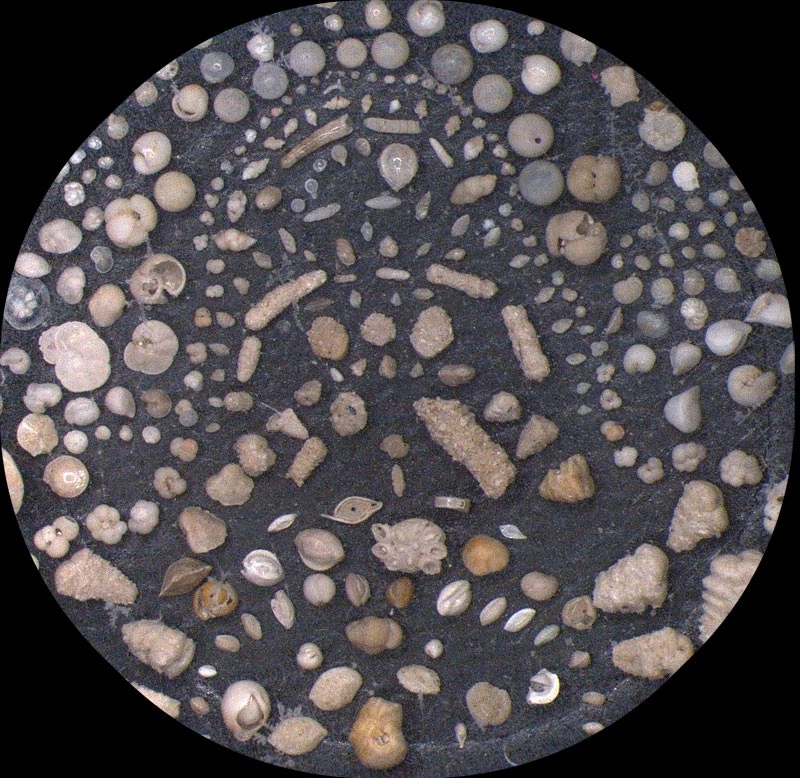
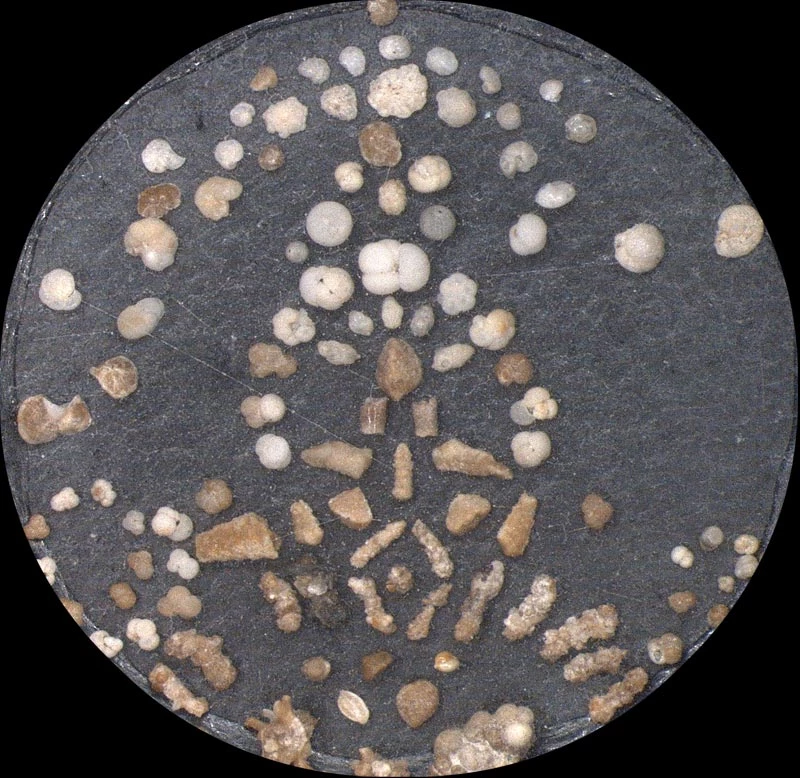
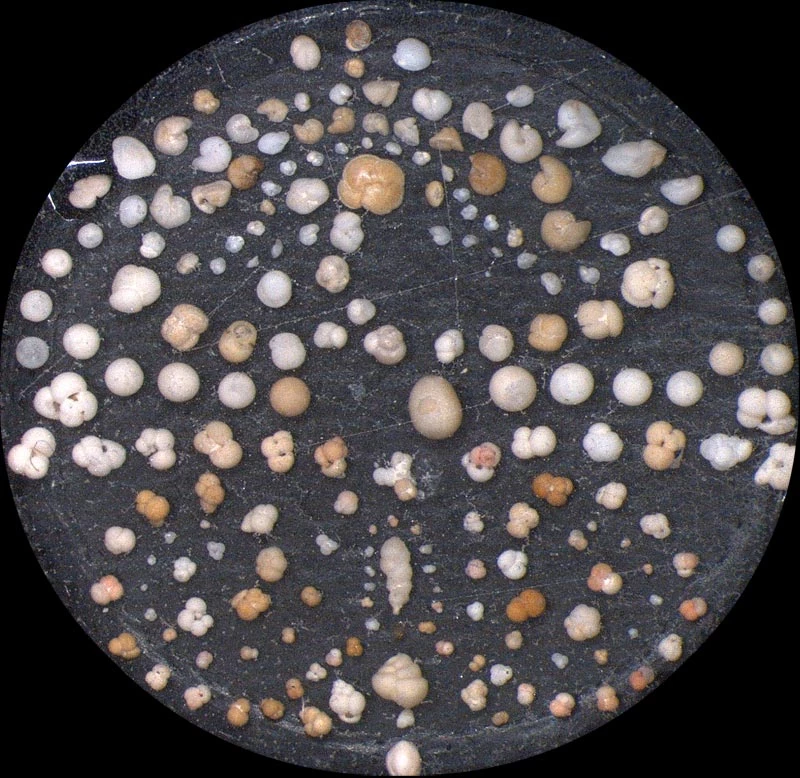
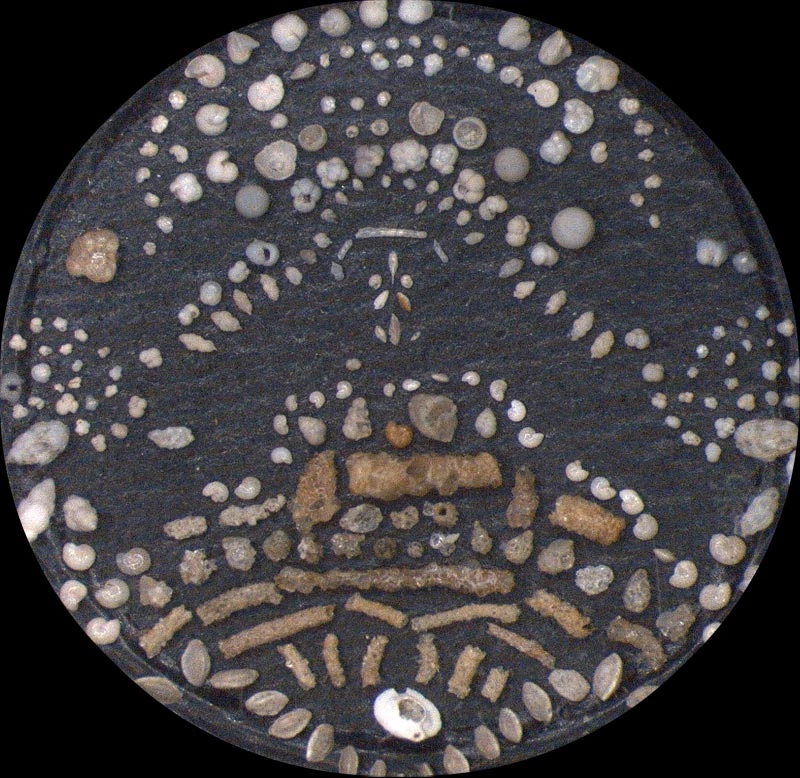
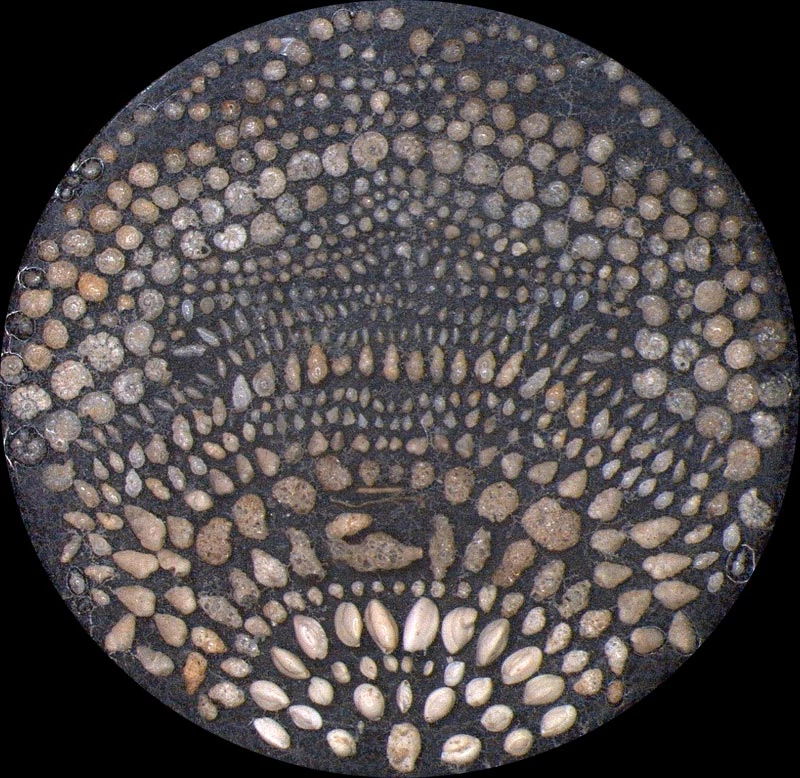
Microscopic designs: Ernest Heath's collection of Foraminifera

5 January 2012

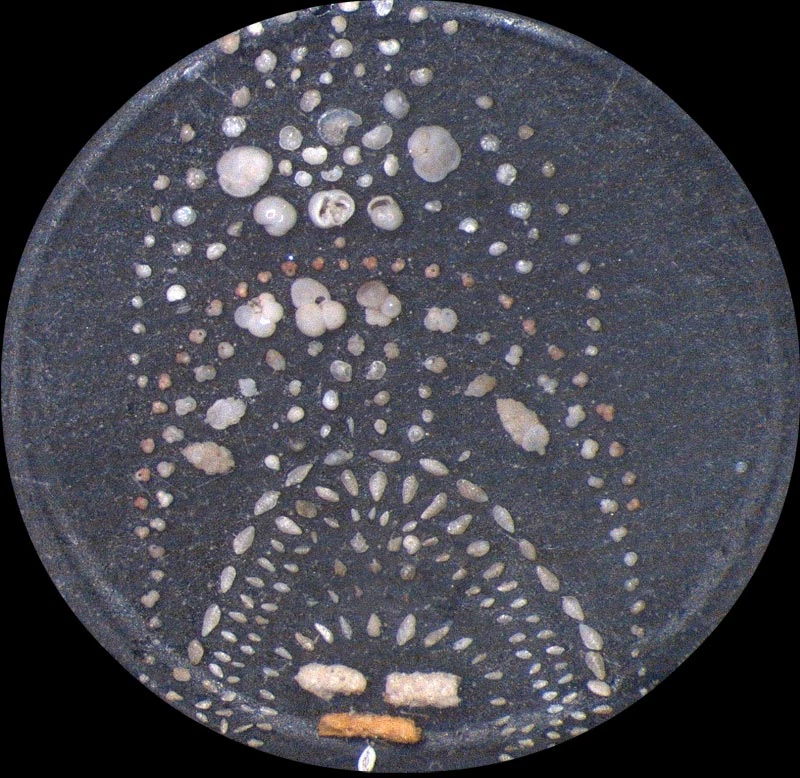
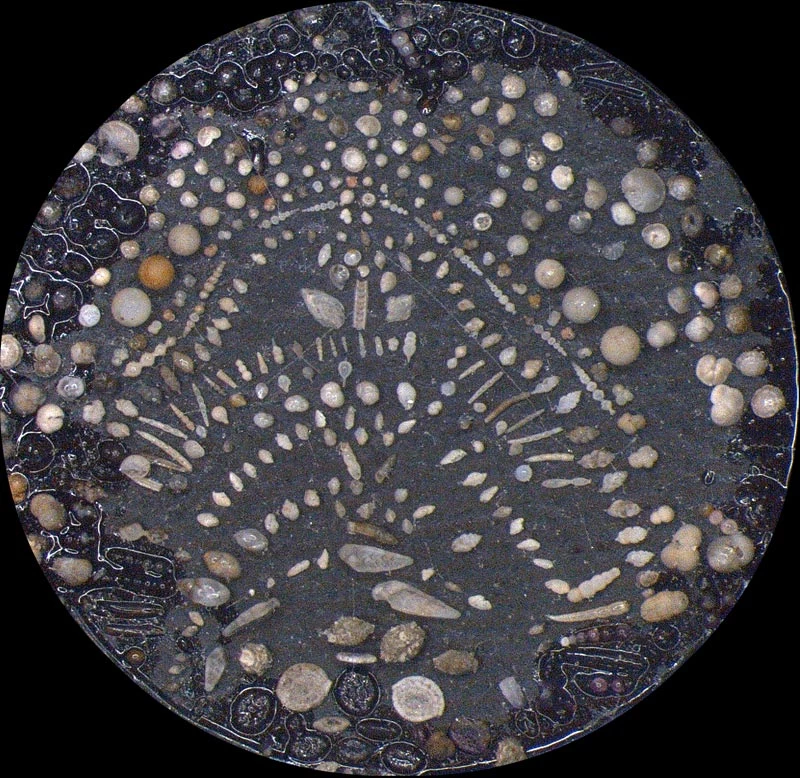
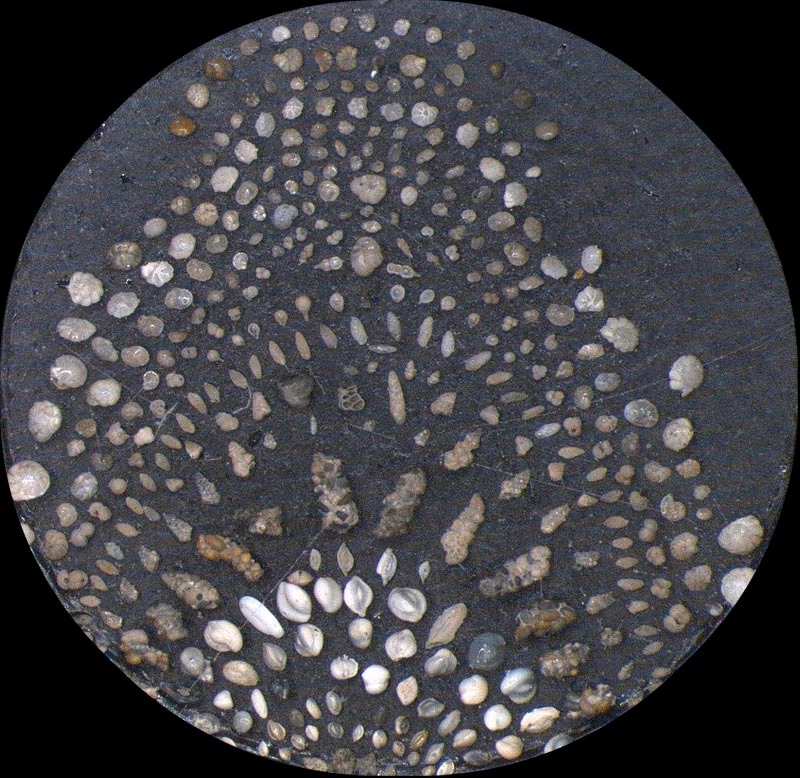
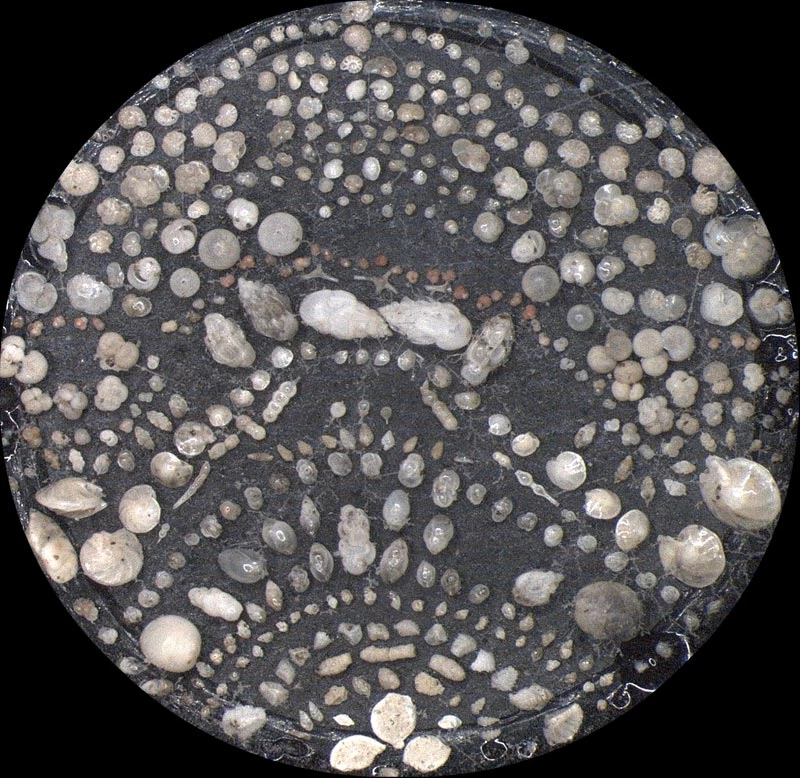
The Ernest Heath slide collection

The Ernest Heath slide collection

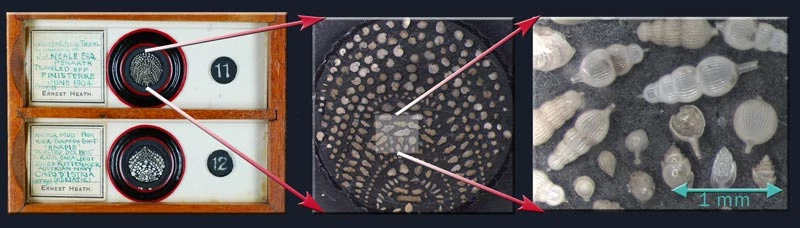
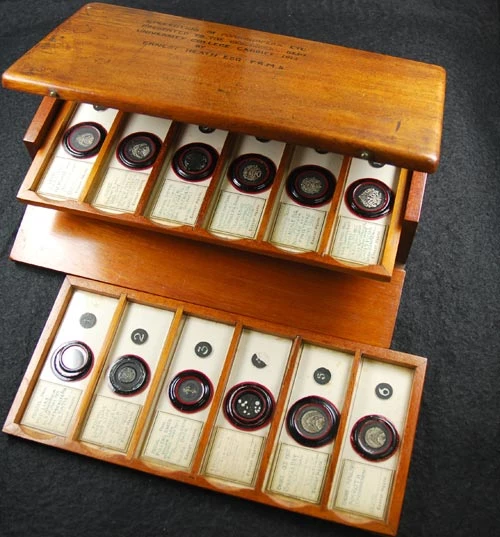
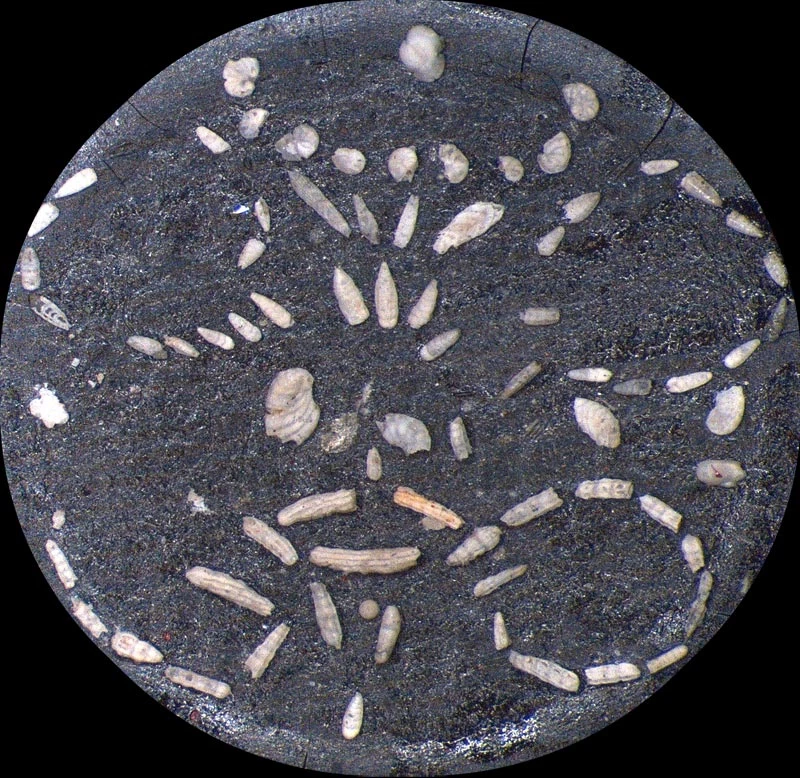
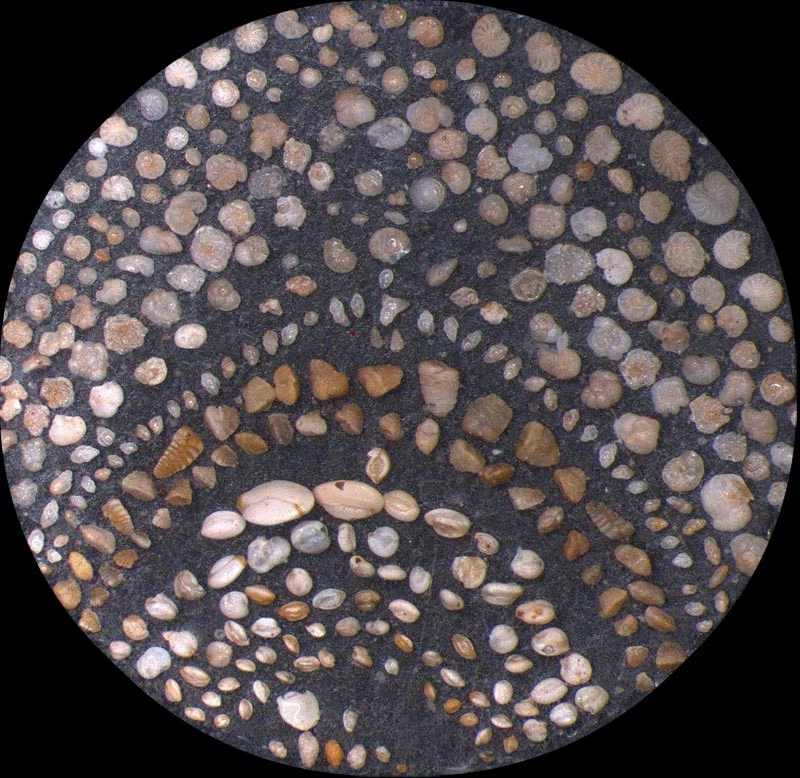
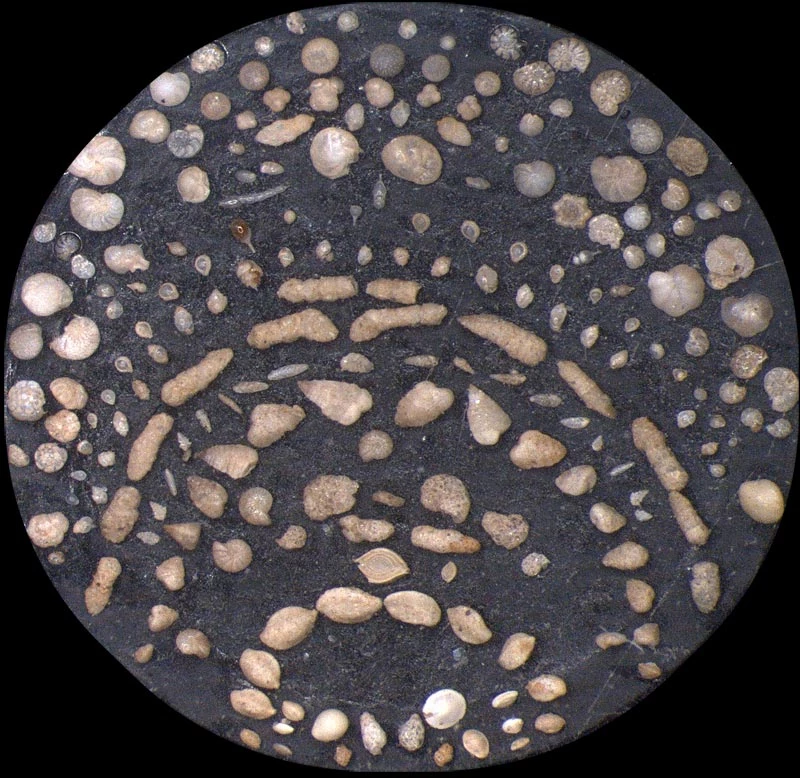
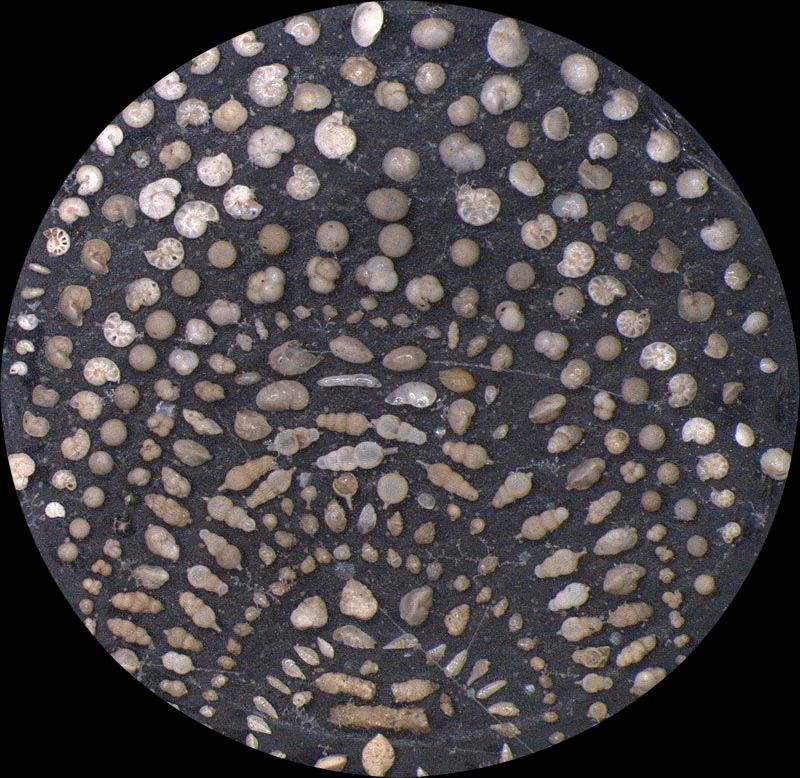
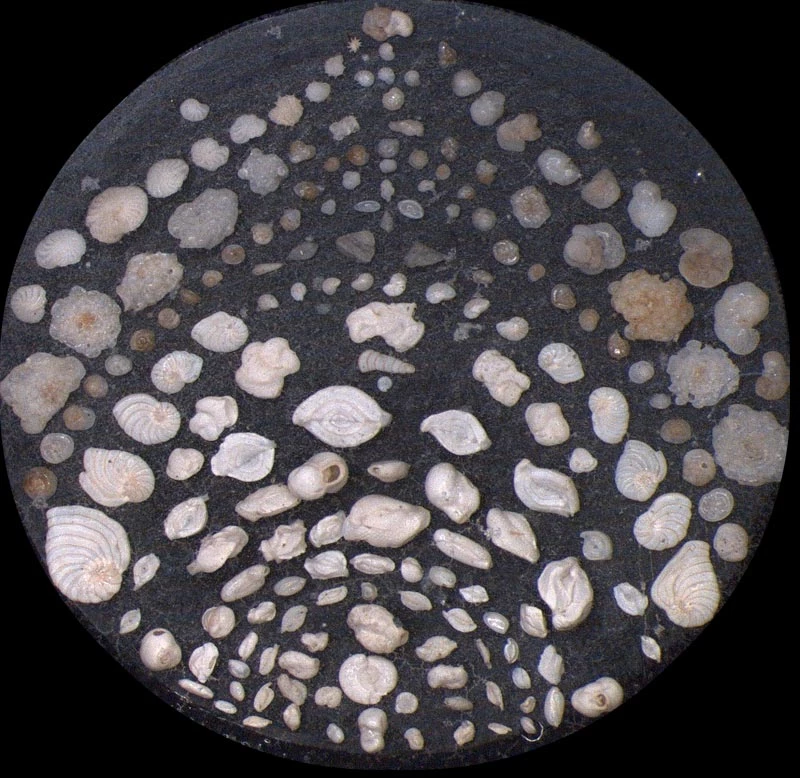
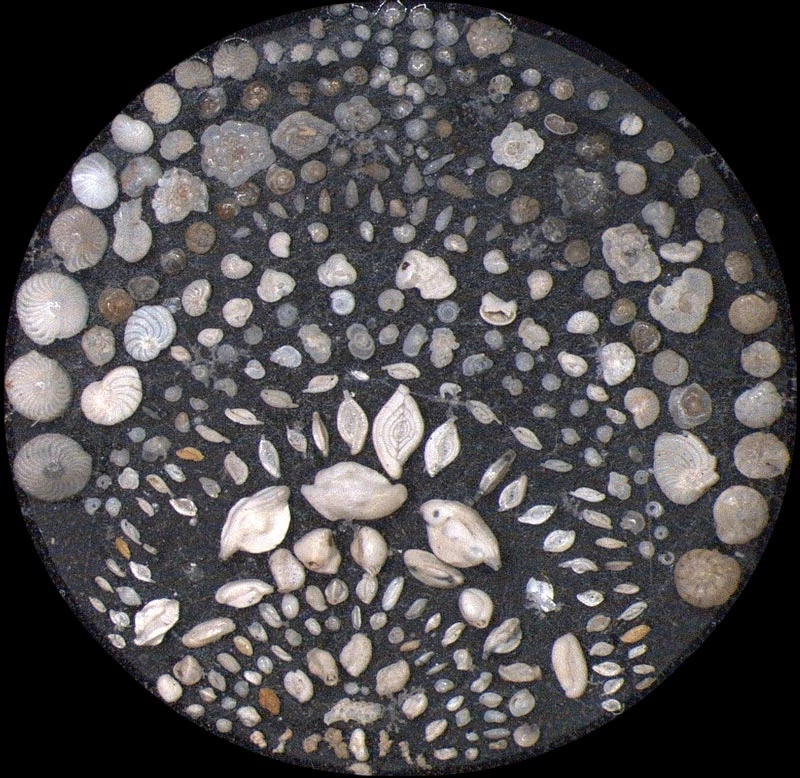
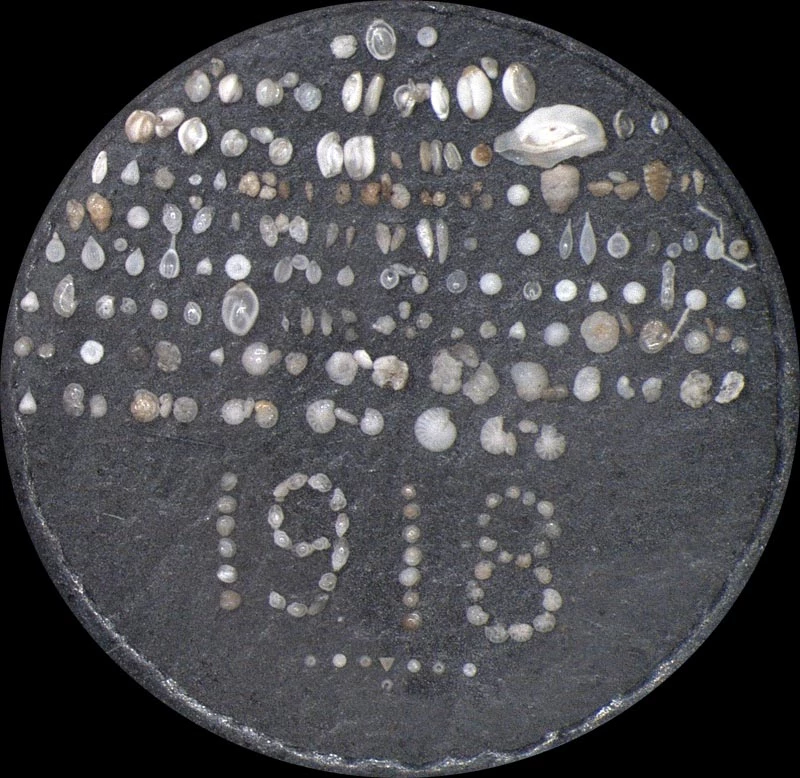
Would you have the patience to create tiny patterns like these?

Imagine yourself back in the early 1900's with no TV or internet for entertainment. Luckily affordable microscopes are the latest thing and you've started collecting weird and wonderful objects to look at. It's a popular form of entertainment to explore the natural world in miniature.

These wonderful microscope slides are mostly made up of foraminifera (forams), tiny animals which live floating near the sea surface or on the sea bed.

Ernest Heath: A fellow with a steady hand

The Ernest Heath slide collection

The Ernest Heath slide collection

They were created by Ernest Heath, probably using a wet paintbrush to pick the shells from samples of sand and mud. We don’t know much about him, apart from that he was a fellow of the Royal Microscopical Society, somehow got hold of deep-sea mud from around the world, and must have had a lot of time on his hands! Please contact us if you know anything else about him.

Museum experts in the Geology department have recently cleaned and restored this unique collection of beautiful slides.

Fossils from the birth of a new science.

Microscope slide before and after conservation

Microscope slide before and after conservation

Some of the forams were dredged by HMS Challenger on its voyage of discovery in 1872-1876. This was one of the first ocean-going scientific research expeditions and has been called the birth of oceanography, the study of the oceans. In fact we probably still know less about the ocean floor than we do about the dark side of the moon!

Click on the thumbnails below to view a selection of images from the collection

Archaeopteryx – the missing link between dinosaurs and birds?

Cindy Howells and Caroline Buttler, 13 October 2011

Archaeopteryx is an iconic fossil, often thought of as the ‘missing link’ between dinosaurs and birds. It was first described in 1861 by the German palaeontologist Hermann von Meyer (1801–1869). Since then Archaeopteryx has been the focus of controversy surrounding the origin of birds and their links with dinosaurs.

Only eleven specimens and an isolated feather have so far been found, all coming from a few quarries near the Bavarian town of Solnhofen in southern Germany.

Almost all of the specimens are from the Solnhofen Limestone, fine muddy limestones deposited in tropical lagoons about 150 million years ago near the end of the Jurassic Period. One was found in the overlying Mörnsheim Formation and is younger by perhaps half a million years.

Fossil of an Archaeopteryx skeleton with feather impressions.

Archaeopteryx specimen (Museum für Naturkunde, Berlin, Germany)

Discovery

In 1861 Hermann von Meyer published a description of a single fossil feather found in the Solnhofen Limestone and named it Archaeopteryx lithographica.

Archaeopteryx means ‘ancient wing’. Von Meyer also mentioned that ‘an almost complete skeleton of an animal covered in feathers’ had been found. After competition from other museums this skeleton was eventually bought by the British Museum along with other Solnhofen fossils for £700, then a huge sum of money.

In 1863 Richard Owen, Superintendent of the natural history collections at the British Museum, described and illustrated the specimen, declaring it be a bird with ‘rare peculiarities indicative of a distinct order’. The discovery of this remarkable fossil came just two years after the publication of Charles Darwin's book On the Origin of Species, which changed people’s perception of the natural world.

Archaeopteryx seemed to fit well with Darwin’s theory as it showed features of both birds and reptiles.

What did Archaeopteryx look like?

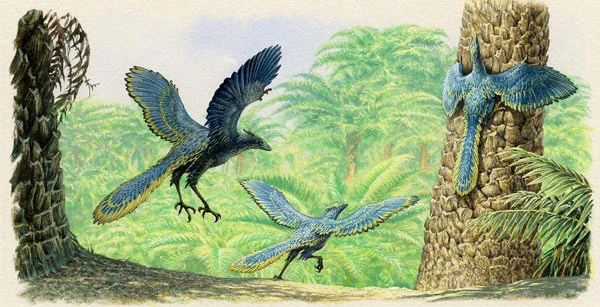
Archaeopteryx was a primitive bird with feathers, but its fossilised skeleton looks more like that of a small dinosaur. It was about the size of a magpie.

Unlike modern birds it had a full set of teeth, a long bony tail and three claws on its wing which may have been used for grasping branches. It lacked the fully reversed toes which enable many modern birds to perch. However, Archaeopteryx did have a wishbone, wings and asymmetrical ‘flight’ feathers, like a bird. It is likely that Archaeopteryx could fly, although perhaps not strongly.

Reconstruction of Archaeopteryx with blue and yellow feathers, perched on a branch.

Reconstruction of Archaeopteryx (© J. Sibbick)

The world of Archaeopteryx

Archaeopteryx lived on land near a series of stagnant and salty lagoons within a shallow tropical sea. Life in the lagoons was concentrated in the surface waters, as most of the lower levels were extremely toxic. It is possible that the only animals living in the lagoons were small floating crinoids (sea-lilies) and some fish.

Ammonites, shrimps, lobsters and starfish lived in the open sea nearby and were occasionally washed into the lagoons during storms. They did not survive for long in the lagoon waters. Horseshoe crabs have been found preserved at the end of a short trail of their own footprints. Very occasionally marine reptiles, such as ichthyosaurs and crocodiles, were also washed in.

Flying over the sea were pterosaurs and large insects such as dragonflies. These were blown into the lagoonal waters during these storms. A juvenile specimen of a small theropod dinosaur called Compsognathus has also been discovered in the same deposit, which must have been washed in from the land.

Illustration of three Archaeopteryx in a prehistoric forest: one flying close to the ground, another taking off from the ground and a third climbing a tree.

Reconstruction of Archaeopteryx (© J. Sibbick)

How did Archaeopteryx die and become preserved?

Although Archaeopteryx lived on land, occasionally some would have been caught up in storms as they flew or glided over the water. Waterlogged and unable to take off again, they would have drowned and sunk to the floor of the lagoon.

All of the known specimens display various characteristics of immaturity, indicating that none of the specimens was fully adult. This may have been the reason for their inability to survive storm events.

The carcasses were quickly buried by fine lime muds deposited on the lagoon floors. It is thought that one metre of rock today represents 5,000 years of deposition. The fossils of Solnhofen are exceptionally well preserved, due to the lack of disturbance from both predators and water movement. Within the fine-grained limestones, delicate features such as dragonfly wings or the feathers of Archaeopteryx can be found.

Further reading

Wellnhofer, P. 2009. Archaeopteryx the icon of evolution. Pfeil Verlag, Munich, 208 pp

Article by: Cindy Howells, Collections Manager (Palaeontology) and Caroline Buttler, Head of Palaeontology

British Seaweeds

4 October 2011

Seaweeds (marine algae) show a wide array of forms, colours and textures, and there are many different species of seaweed occupying different niches on the seashore. Some are able to grow high on the shore where it is dry for long periods of the day; others have developed defences against damaging wave action. These features and many more have been used by taxonomists to identify and classify them.

Within its botanical collections, Amgueddfa Cymru houses a herbarium of dried, pressed algal specimens. This herbarium provides an essential resource for studying seaweeds.

Browse through the images below to view a selection of seaweeds that can all be found on Wales' diverse rocky shores.

Exotic Marine Fish - evidence of rising sea temperatures around Wales?

Graham Oliver, 16 March 2011

Atlantic Tripletail (Lobotes surinamensis) caught near Peterstone, east of Cardiff.

Atlantic Tripletail (Lobotes surinamensis) caught near Peterstone, east of Cardiff. Original fish preserved in spirit.

Preparing a model of Atlantic Tripletail in a laboratory at Amgueddfa Cymru.

Preparing a model of Atlantic Tripletail in a laboratory at Amgueddfa Cymru.

The finished model of Atlantic Tripletail.

The finished model of Atlantic Tripletail.

In the past few years fishermen and members of the public have been reporting unusual catches and strandings of marine fish from around our shores — fish that would normally live in much warmer, tropical waters. Is this further evidence of rising sea temperatures around the shores of Wales?

These specimens are brought to National Museum Cardiff for identification, where they are incorporated into the national collections. In order to display their natural colours, painted casts are made and exhibited alongside the actual fish preserved in fluid.

The first UK sightings of tropical Tripletail

In 2006, an Atlantic Tripletail (Lobotes surinamensis) was caught in a fisherman's net in the Bristol Channel, near Peterstone, east of Cardiff. As the fisherman did not recognize the 60cm specimen, he brought it to the Museum for identification.

Tripletails are normally found in tropical and subtropical waters, and this individual is the first record from UK waters.

We know that these fish like muddy estuaries, which may be part of the reason it was in the Bristol Channel. They are semi-migratory, often associating themselves with floating debris, and it is possible it travelled here via the warm waters of the Gulf Stream.

Jacks, Swordfish and Leatherbacks

Another exotic catch was of a juvenile Jack, caught off the entrance to Milford Haven in August 2007. It is difficult to identify juvenile Jacks and the specimen needed to be X-rayed to confirm that it was the first Welsh record of an Almaco Jack (Seriola rivoliana).

This species is usually found in the warm waters of the Caribbean, but between July and September 2007 six were found along the south and west coasts of Britain, doubling the number of records since the first in 1984.

Then in 2008 a 2.2metre-long Swordfish (Xiphias gladius) was found dead on a beach near Barry in south Wales. Although this was not a new record, this oceanic species is seldom caught in Welsh waters.
These records of warm-water fish appear to be further evidence of rising sea temperatures. The findings coincide with increasing numbers of turtles, especially Leatherbacks, in the Irish Sea. However, the occurrence of exotic marine species is not new, and the Gulf Stream has frequently brought warmer water animals to our shores.

Most recently, two species of shipworm (Bankia gouldi and Uperotus lieberkindii) have been found in timbers washed up on the Lleyn Peninsula in north Wales. These are both warm-temperate and tropical species, and have not been recorded before from the UK.

The establishment of such exotic species around the British coastline, or at least an increase in their frequency, would reflect real changes in their geographical range.

The recording of marine species is vital to our recognition of such events, and the role of fishermen and the public cannot be underestimated — indeed we welcome this participation, and look forward to the arrival of the next mystery creature at the enquiry desk.

Juvenile specimen of an Almaco Jack (<em>Seriola rivoliana</em>) caught at Milford Haven.

Juvenile specimen of an Almaco Jack (Seriola rivoliana) caught at Milford Haven.

X-ray image of the juvenile Almaco Jack, used to help confirm its identification.

X-ray image of the juvenile Almaco Jack, used to help confirm its identification.

The Swordfish (<em>Xiphias gladius</em>) found dead on Barry beach.

The Swordfish (Xiphias gladius) found dead on Barry beach. Note the damage to the side of the fish, probably caused after death.

Boarfish (<em>Capros aper</em>) found off the coast of Wales.

Boarfish (Capros aper) found off the coast of Wales. Although not a rare fish, it is rarely seen as it tends to live in deeper waters.

Fossil life - on different scales

8 March 2011

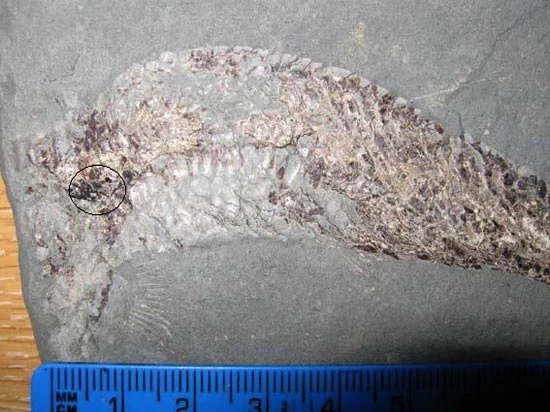
The fossil fish Pholidophorus; the circle shows the dark area where the fossil bacteria are preserved

The fossil fish Pholidophorus; the circle shows the dark area where the fossil bacteria are preserved

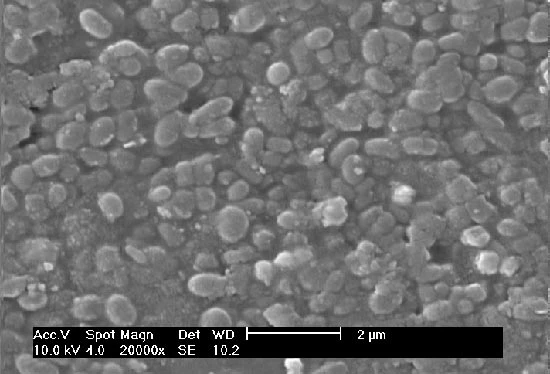
A close up of the fossilised bacterial colony, at a magnification of x20,000

A close up of the fossilised bacterial colony, at a magnification of x20,000

Fossils are the remains of ancient life. Most animal fossils are made of the hard parts of the body, such as bones, teeth, scales and shells. On rare occasions however, soft tissues, or even bacteria, can became fossilised.

A well preserved fossil fish from Somerset

The fossil fish illustrated here was found on Kilve Beach in north Somerset and although it is missing its head, the rest of it is well preserved. The fossil is about 11cm long and its scales outline the shape of the body. Faint traces of the front fins are also visible.

The fish is named Pholidophorus; it is an extinct animal that looked similar to a modern-day herring. Almost 200 million years ago, this fish died while swimming in the Jurassic sea that covered Somerset. As scavengers did not disturb the carcass after death, it became buried in fine sediment. This sediment eventually hardened to form the rock in which the fish became fossilised.

Microscopic detail reveals further fossilised remains

Although it is a fine example, this fossil fish preserves something even more remarkable. Scientists at Amgueddfa Cymru removed tiny fragments from the central area of the fossil to study them using an electron microscope. Zooming in on these fragments 20,000 times, some fine details started to emerge - a layer of tiny, rounded, elongate structures. These are the fossilised remains of bacteria.

Fossilised bacteria have been found in many localities around the world, most famously from fossils in South America and Germany. The bacteria are often preserved in calcium phosphate, because calcium is a common element in sediment, and phosphorus is found in the decaying tissues of animals.

How do we know these are fossil bacteria?

First, they are clustered together in colonies, and are a similar size and shape to modern-day bacteria.

Secondly, other very fragile cellular tissues, such as the cells of embryos, as found in the Cambrian rocks of China, have been documented .Fossilised muscle tissues can even preserve the internal details of cells, for example in Jurassic rocks in Brazil and Miocene rocks from Spain. The fossilisation of cells, including bacteria, is being observed more frequently as scientists look ever closer at the fossils in their collections.

Finally, on rare occasions, a thin dark layer of fossil bacteria occasionally traces the body outline of a fossil, revealing the shape of the fleshy tissues surrounding the skeleton, as in Eocene rocks from Germany. This tells us that fossilisation of the bacteria took occurred rapidly after the time of death.

It is becoming increasingly clear that bacteria play an important part in the processes of fossilisation, with the bacteria themselves sometimes being preserved.

Looking at a fossil, it is natural to wonder what kind of animal or plant it is, but some interesting discoveries can be made by asking what the fossil is actually made of. The answer, on close inspection, is often surprising and is the key to finding out how an organism became fossilised in the first place.