Algal Blooms Katherine Slade, 23 August 2010 Green Seaweed Ulva species growing on the rocky shore at West Dale Bay, Pembrokeshire. An algal bloom formed by phytoplankton off the west coast of Ireland. It can be seen as a light blue band all along the left side of the image. © Nasa. Preserved specimen of a Torgoch or Arctic Charr (Salvelinus alpinus). Collected from Llyn Peris in 1978. This is a Sea-Lettuce (Ulva lactuca) from Amgueddfa Cymru's scientific collection. We have around 5,000 algae specimens comprising macroalgae (seaweeds) and charophytes (stoneworts). Porphyra, the seaweed used to make Laverbread, is shown here growing on a rocky shore... ... and here as a herbarium specimen in Amgueddfa Cymru. Algal blooms develop when algae or bacteria living in the sea or freshwater occur in vast numbers. Algal blooms can become big enough to be visible from space. What are Algal Blooms? This is when algae or bacteria living in the sea or freshwater occur in vast numbers. Algal blooms can become big enough to be visible from space. Many different kinds of algae and bacteria can form blooms. Two important groups are green seaweeds and blue-green bacteria (cyanobacteria). Why do they occur? Algal blooms occur when conditions are just right, usually where there are high nutrient levels, warm temperatures and slow water currents. Pollution from our homes, sewage plants, fertilisers and manure from farms can result in high nutrient levels in lakes and the sea. If the global climate warms up, then so will water temperatures. This means algal blooms are likely to occur more frequently. They have already become more common around the UK in the last 30 years. What are the effects? As the algal bloom grows it blocks out light to plants in the water, which begin to die and decompose. Bacterial decomposition reduces oxygen levels in the water, which in turn causes marine animals to die. As the bloom decomposes, the algae also release poisonous hydrogen sulphide gas. Some algae and cyanobacteria also create toxins that can kill other wildlife in the water. In some cases these toxins can build up in shellfish such as cockles, making them poisonous for us to eat. Can we prevent it from happening again? Although algal blooms are natural phenomena, our activities can cause them to occur more frequently. Tighter controls on the use of fertilisers in farming and better treatment of waste water can help to reduce them. The only way to protect people from harm once an algal bloom has formed is to keep them away from the water. Wildlife cannot be protected that easily. Seaweed Blooms Sea-Lettuces (Ulva species) are green seaweeds that can form algal blooms. In summer 2009, vast blooms of green seaweed were reported in southern UK and northern France. In this case it is not the seaweed itself but the hydrogen sulphide gas that is poisonous to humans on the beach. However, the only casualty reported in 2009 was an unfortunate horse, which broke through the crust on a deep pile of weed and was poisoned by the release of hydrogen sulphide. Fortunately, Sea-Lettuces do not usually grow to such huge proportions. They are common on rocky shores around the UK and, as their name suggests, resemble thin, bright green lettuces. Toxic Cyanobacteria In the summer of 2009 a cyanobacteria (Anabaena spiroides) formed a potentially toxic algal bloom in Llyn Padarn, north Wales. This is one of only three lakes where the Torgoch, or Arctic Charr (Salvelinus alpinus), is found in Wales. The population of this rare fish was threatened by the lack of oxygen. There was also an impact on the local economy as people were prevented from visiting the lakeside. What you can do We can all help to reduce the chance of algal blooms this summer by using less washing liquids and powders in our homes. The phosphates in these products are washed down our drains and into lakes and the sea where they become nutrients for algae. They can form as much as 25% of the nutrients released in sewage. Look out for environmentally friendly products that contain less phosphate. Did you know? The Welsh dish known as Laverbread is made from a type of red seaweed. These seaweeds are called Porphyra, commonly known as laver. Porphyra seaweeds are also known as nori in Asia and are processed in a different way to make the seaweed into sheets used in sushi. Seaweeds and the Museum There are three main groups of seaweeds: green seaweeds, red seaweeds and brown seaweeds. The Sea-Lettuces that can cause problems in the UK and France are green seaweeds, and are placed in the genus Ulva by taxonomists. Taxonomists are scientists that study the classification and evolution of organisms. At Amgueddfa Cymru our taxonomists study many different groups. To do this they use the Museum's extensive scientific collections of animals and plants. These collections provide an invaluable resource for accurate identification and a sound taxonomic foundation. At Amgueddfa Cymru we hold approximately 5,000 algae specimens, which are constantly being added to. Seaweeds are included in a broad group known as the algae. Our oldest and perhaps the most important algae collection is that of Lewis Weston Dillwyn, who was an important figure in Welsh history. Many of the specimens he collected were from or near Swansea where he lived. The collection contains algae specimens that are 200 years old. They are part of the original material used by Dillwyn in the preparation of his pioneering 1809 work British Confervae. This work, a rare copy of which is housed at Amgueddfa Cymru, contains beautiful colour drawings of algae and was a significant advance for algology. Before its publication, only 34 species of algae had been described; this rose to 177 described species after its publication. UK Environment Agency: If you spot an algal bloom, report it on freephone 0800 80 70 60.
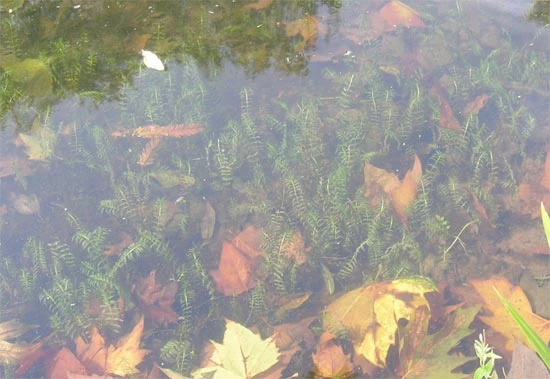
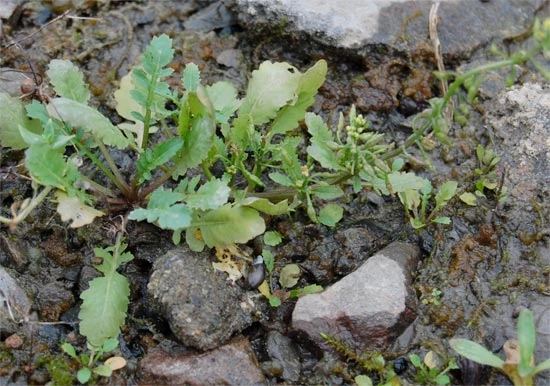
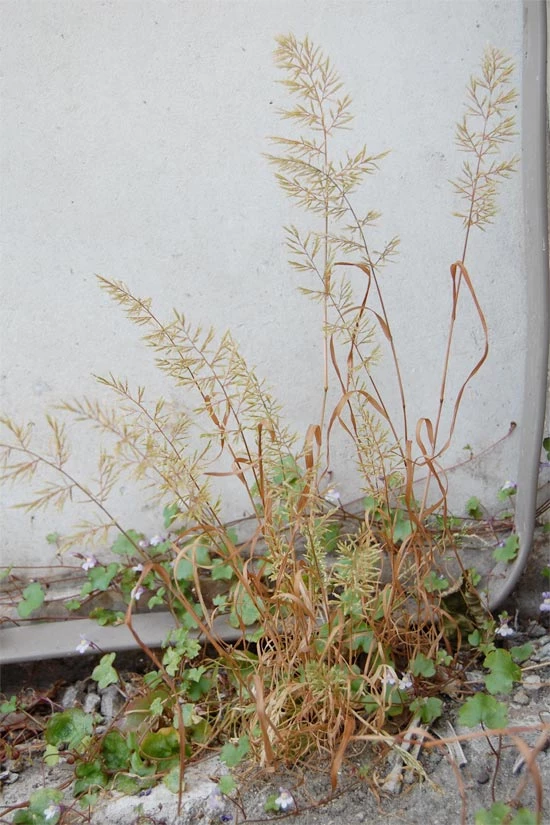
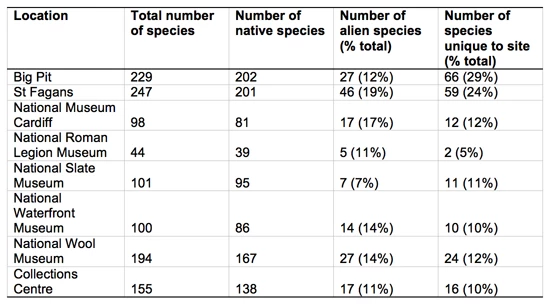
The nature of museums: Vascular plants at Amgueddfa Cymru 7 June 2010 A few species of conservation interest were found. Groenlandia densa (Opposite-leaved pondweed) is a declining aquatic plant and the ornamental ponds at St Fagans, where it is abundant, is of its very few remaining Welsh sites. It is classed as Vulnerable on the Red List for Wales (Dines 2008). A small quantity of Rorippa islandica (Northern Yellowcress) was found on damp waste ground at the Collections Centre in Nantgarw. This species has been spreading rapidly in south Wales during the last decade. Catapodium rigidum subsp. majus (Fern grass) is a rare grass that has been persistent, despite herbicide treatment, on the cobbles at National Museum Cardiff since at least 1997. Studies of vascular plant species across Amgueddfa Cymru's eight locations reveal the importance of protecting fragile ecosystems.Recent legislation, the so-called "Biodiversity Duty" (Section 40 of the Natural Environment and Rural Communities Act 2006), aims to raise the profile and visibility of biodiversity and states that "Every public authority must, in exercising its functions, have regard, so far as is consistent with the proper exercise of those functions, to the purpose of conserving biodiversity".In response, we are carrying out biodiversity surveys at the eight Amgueddfa Cymru locations. The aim is to find out which species are present so that the biodiversity of the sites can be maintained and enhanced. In this article we're looking at the vascular plants — flowers, ferns, trees and so forth.The methodThe surveys were carried out in 2008 and 2009. All vascular plant species, except deliberately planted or cultivated species, were recorded with notes on their frequency and habitats.ResultsIn all, 456 species were recorded; 364 (80%) were natives or aliens known to be here since before the year 1500, and 92 were alien species introduced since 1500. There are about 1,400 plant species in Wales that are native or known to have been here since 1500, excluding critical genera such as Hieracium, Taraxacum and Rubus (T. Dines (2008) A vascular plant Red Data List for Wales. Plantlife International, London). Amgueddfa Cymru's eight locations have 26% of the Welsh flora.The number of species present at each site varied, partly depending on the size of the site and partly on the habitats (Table 1). The richest sites were St Fagans, where there are extensive gardens and woodland, and Big Pit, which has coal tips and moorland as well as buildings and grassland. The sites with lowest diversities were the National Roman Legion Museum at Caerleon, where land is essentially restricted to a garden, and National Museum Cardiff and the National Waterfront Museum in Swansea, which are mostly urban grasslands.The numbers of alien species also varied, the highest proportion being at St Fagans, where many aliens had naturalised from gardens, and National Museum Cardiff in Cardiff city centre. The National Slate Museum in Llanberis had significantly fewer aliens. The only serious alien infestations were of Himalayan Balsam (Impatiens glandulifera) at the National Wool Museum in Dre-fach Felindre and St Fagans, and Japanese Knotweed (Fallopia japonica) at St Fagans.200 (45%) of the species occur only at one or other of the sites (Figure 1), and protecting these is clearly important for maintaining Amgueddfa Cymru's overall biodiversity. The high number of unique species at Big Pit is largely due to the occurrence of moorland and coal tips with a different flora to the other, largely lowland, sites. 16 species were found at all eight sites.Other plants of interest included Monks-hood (Aconitum napellus), Sea Stork's-bill (Erodium maritimum), Glabrous whitlowgrass (Erophila glabrescens), Ivy Broomrape (Orobanche hederae) and Southern Polypody (Polypodium cambricum). Potamogeton trichoides, recorded in several of the St Fagans ponds in 1992, was not refound. Other than these, most of the plants found are relatively common and widespread in Wales.The overall number of plant species was quite surprising, even if it largely consisted of relatively common species. The diversity at Big Pit, St Fagans and the National Wool Museum means that those museum sites can be used for education. The more interesting species can now be monitored and looked after. Table 1. Summary of species data for Amgueddfa Cymru locations. Figure 1. Frequencies of the number of locations in which each species has been recorded. Overview of all locationsAmgueddfa Cymru: Full Report Big Pit National Coal Museum National Museum Cardiff National Wool Museum National Slate Museum Collections Centre Nantgarw St. Fagans: National History Museum National Waterfront Museum
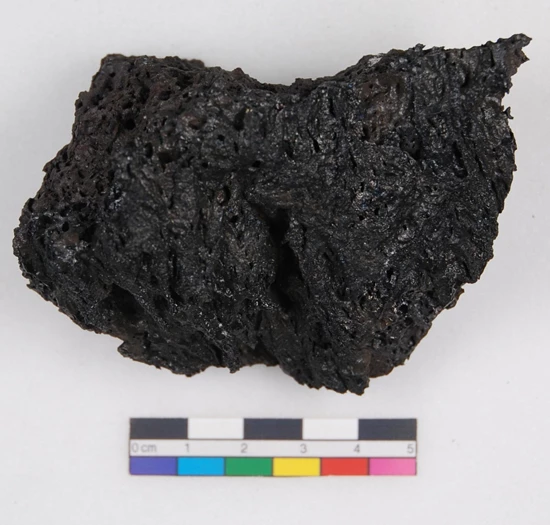
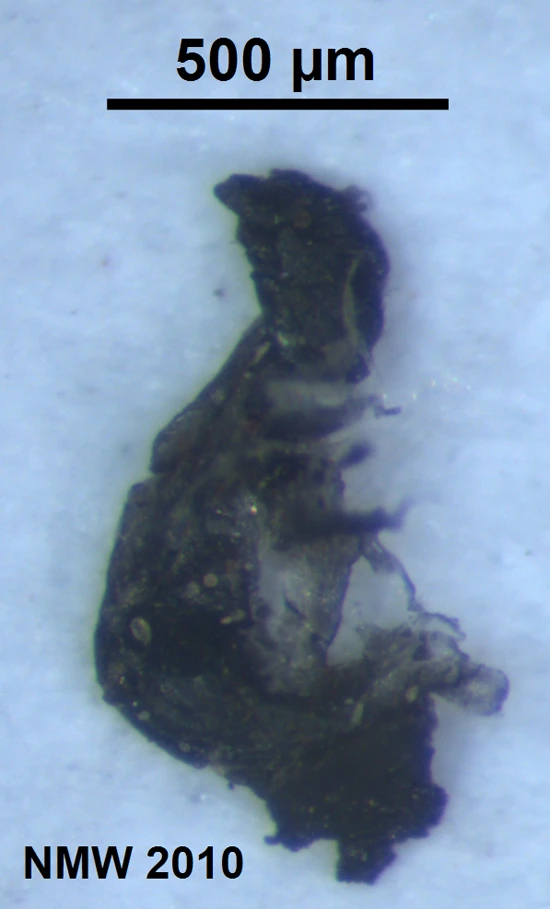
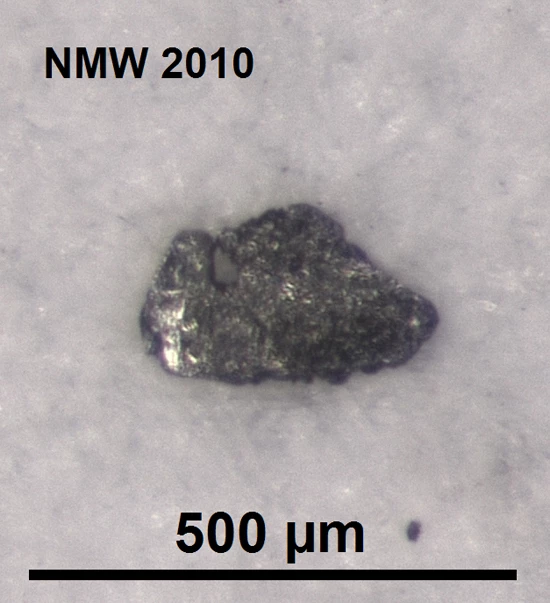
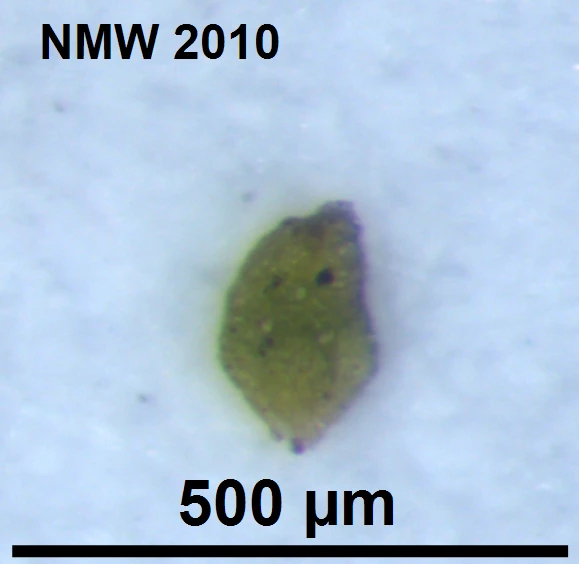
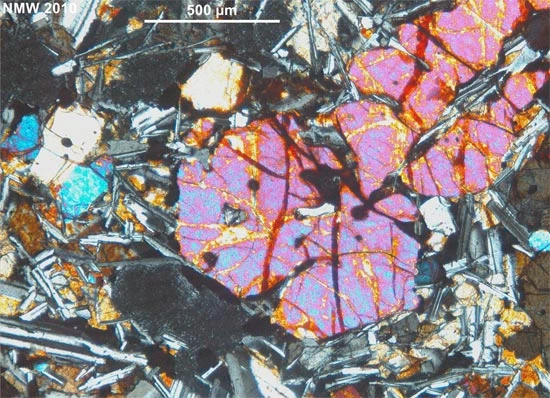
Volcanic ash falls on Wales 16 April 2010 Specimen of Icelandic basalt from the Geology collection Sharp, glassy, volcanic particle (scale: 500 microns) Pyroxene (scale: 500 microns) Olivine Basalt thin section A section of basalt rock thin enough to let light to pass through it allow geologists to study the minerals in the rock under a microscope. Icelandic ash analysed by Geology Department staff: Staff from the Geology Department at Amgueddfa Cymru - National Museum Wales collected and analysed volcanic ash that fell on cars roofs in the Cardiff area on Friday 16th April 2010. The ash was produced by the eruption of Eyjafjallajökull volcano which lies under a glacier in southern Iceland. After lying dormant for nearly 200 years, the volcano had been active since March 2010. On Wednesday 14 April the volcano erupted violently, blasting vast amounts of volcanic ash into the atmosphere. The violence of the eruption was exceptionally strong because explosions took place as the hot magma came into contact with water from the melting of the glacier through which it erupted. At the time of writing the volcano was still in eruption. Carried away by prevailing winds towards the UK and Northern Europe, the ash has led to severe disruption of commercial air travel. This is because volcanic ash can be sucked into aeroplane engines, causing them to clog, leading to engine failure. Because the ash is so fine grained Geology Department staff had to capture images of the ash using a camera mounted on a high power microscope. They found the ash contained fragments of solid lava, sharp, glassy volcanic particles, and the minerals feldspar, olivine and pyroxene. These minerals are the common constituents of the volcanic rock called basalt, which is consistent with the type of volcanic eruption currently occurring in Iceland. Iceland is a very geologically active region as it sits on the Mid Atlantic Ridge. Earthquakes and volcanic eruptions are relatively commonplace. Iceland is the only place where the Mid Atlantic Ridge is seen on land. Images of ash captured using a high power microscope (1μm = 1/1000 mm).
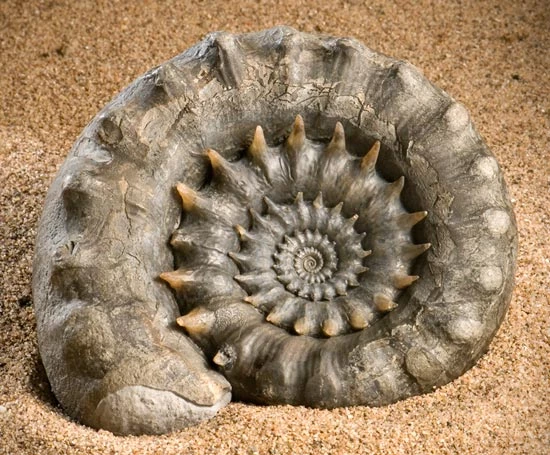
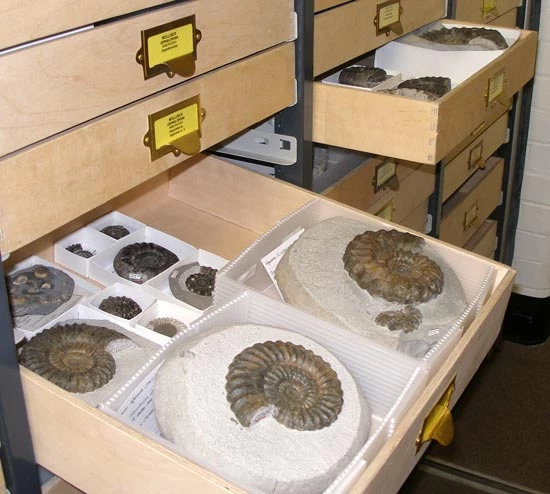
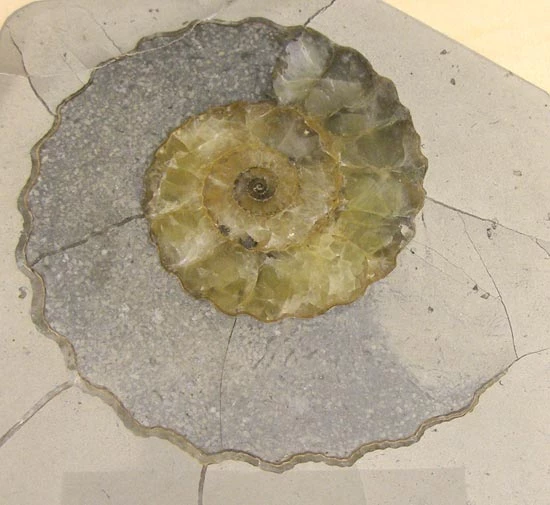
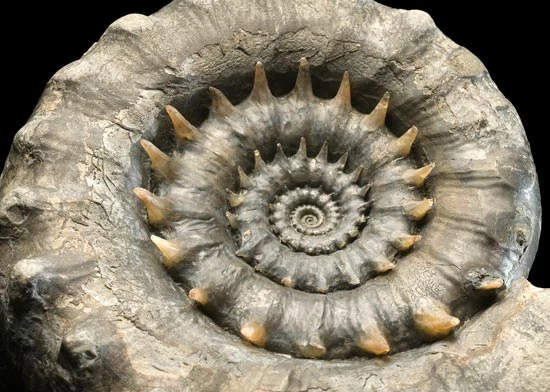
Secrets of the ammonites Cindy Howells, 26 February 2010 The specimen after preparation, revealing the delicate spines Ammonites in the collections at Amgueddfa Cymru Section through an ammonite showing the chambers Underside of the prepared specimen Delicate spines on the inner whorls. Similar spines would originally have been present on the outer part of the ammonite as well, but these had been worn away by erosion Scientists have managed to dissolve the rock surrounding the fossil of a 190-million-year-old ammonite, revealing, for the first time its intricate pattern of spines. When you pick up a fossil on a beach it is often broken or eroded. You might discard it because it is poorly preserved or incomplete. But most fossils are found partially concealed in rock, and in these cases they can carry hidden secrets. One such ammonite fossil had been lying in a drawer in the Geology Department at the Museum for 50 years. It is part of a collection of almost 6,000 fossils donated by James Frederick Jackson in 1960. James Frederick Jackson Jackson lived in a small cottage at Charmouth near Lyme Regis, and spent his spare time collecting rocks and fossils around the Dorset coast. From 1914 to 1919 he worked at the Museum, and over his lifetime he donated almost 21,000 specimens. Palaeontologists regularly consult the Jackson collection because it contains a complete and valuable record of Dorset's Jurassic fossils. A few years ago, one such researcher noticed that a particular ammonite was unusual. However, much of it remained concealed in rock, which needed to be carefully removed by specialists to reveal the fossil. A year of preparation After a year of painstaking work, the specimen was finally returned to the Museum to take pride of place in the collections. The limestone sediment had been completely removed with a solution of weak acid and, for the first time, the detail of delicate spines on the inner whorls could be seen. Similar spines would originally have been present on the outer part of the ammonite as well, but these had been worn away by erosion. The specimen features in a recently published monograph of the Palaeontographical Society, in a series devoted to the scientific description and illustration of British fossils, under the formal scientific name of Eoderoceras obesum (Spath). Ammonites Ammonites lived in the Mesozoic Era (251-65.5 million years ago) and were marine animals related to the Nautilus. They swam in the sea, preying on smaller marine animals. They usually had a spiral shell which could be from 5mm to 2m across. Their shells could be smooth, ribbed or knobbly, or even spiny. They lived in the outer whorl of their shell, while the inner part consisted of gas-filled chambers used for buoyancy. You can often see an intricate pattern on the surface of ammonite shells, which marks the division between each chamber. All these features are used by palaeontologists to identify different species of ammonites. The Museum has large and scientifically important collections of ammonites, mainly from south-west Britain. They are a valuable tool in helping scientists understand the geology and palaeontology of Britain.
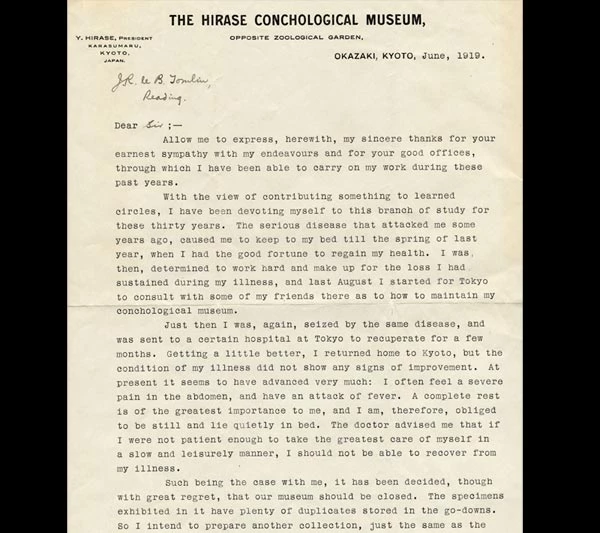
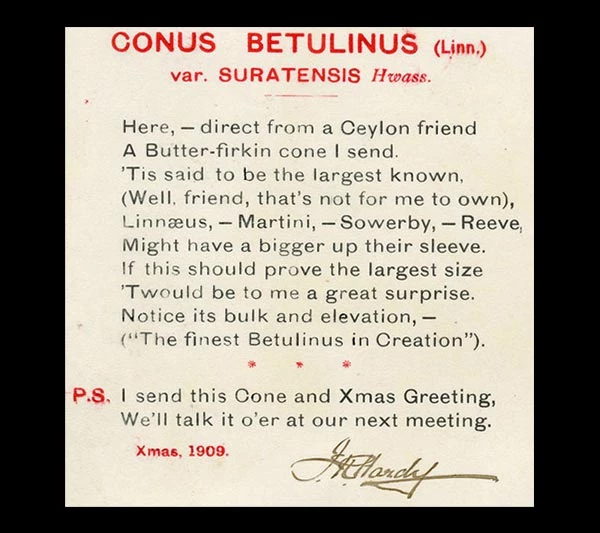
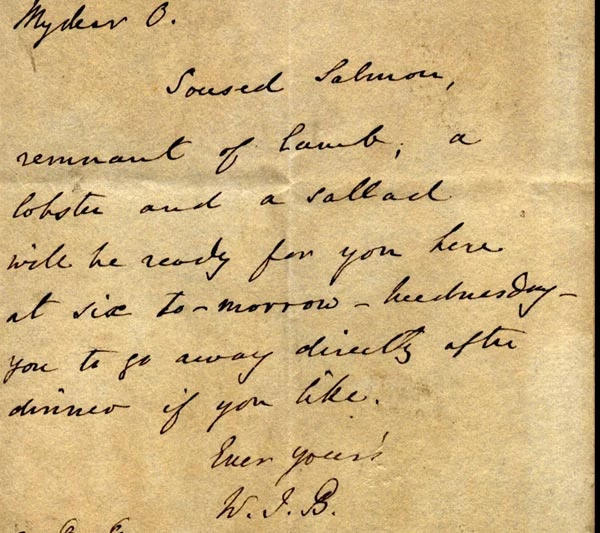
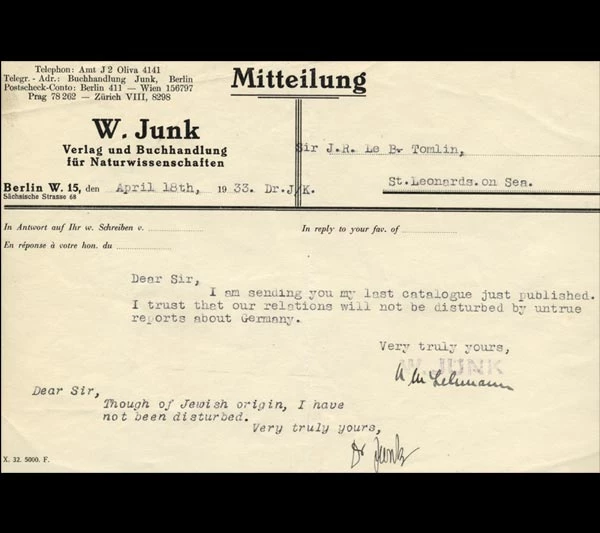
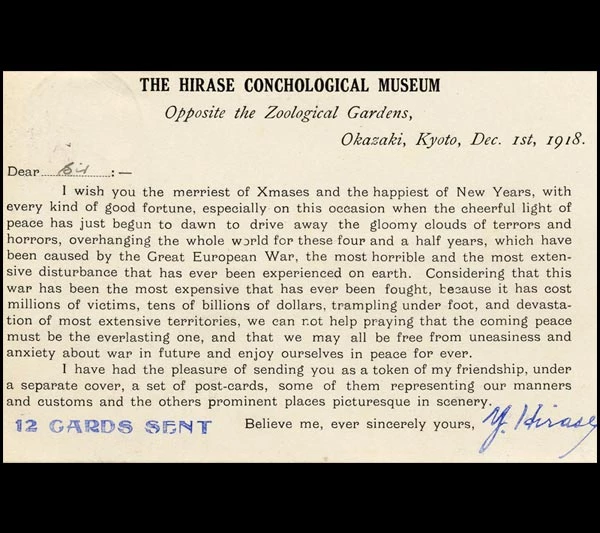
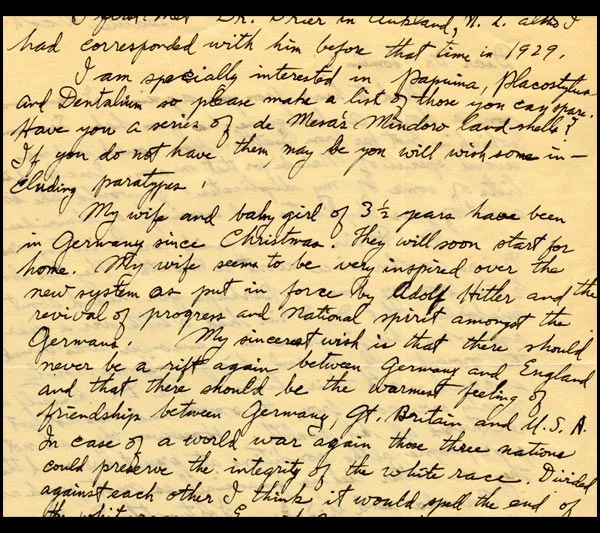
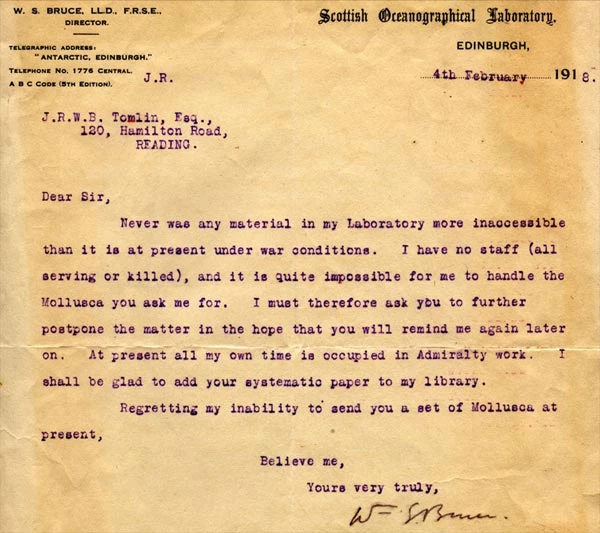
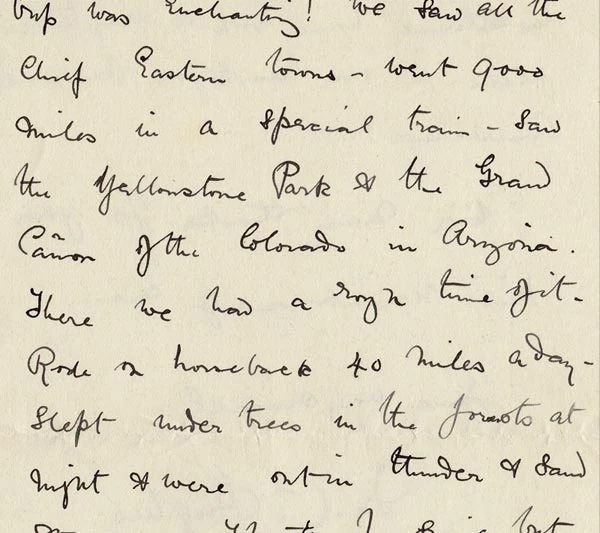
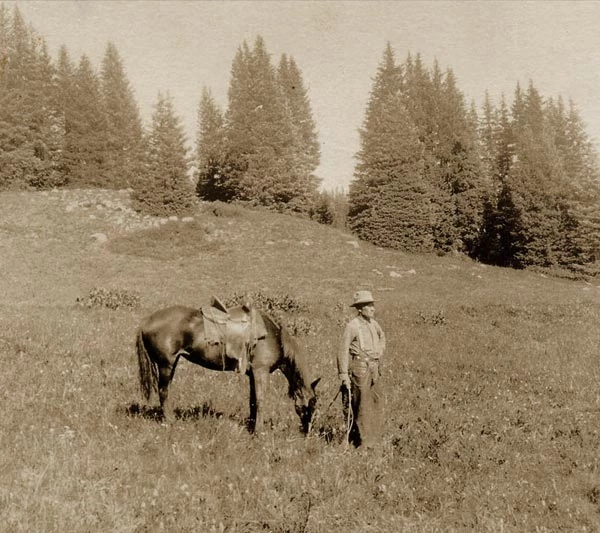
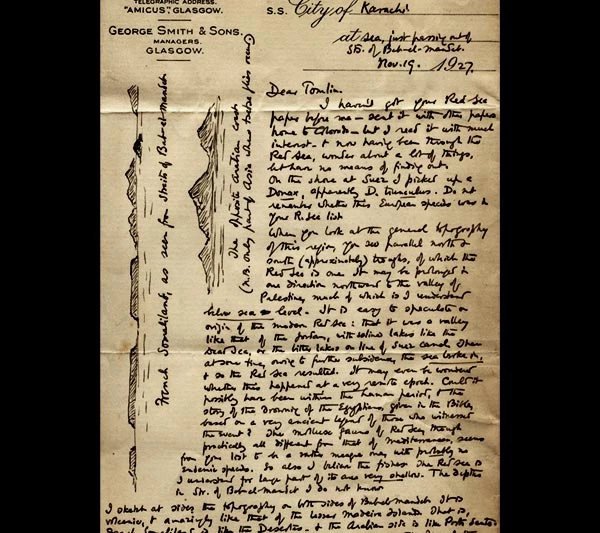
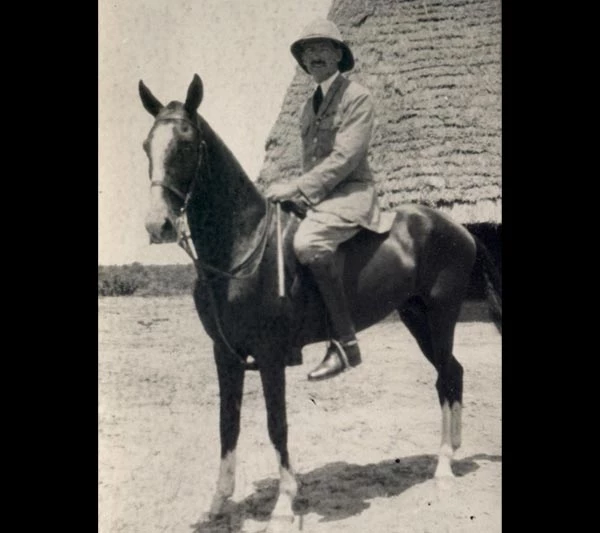
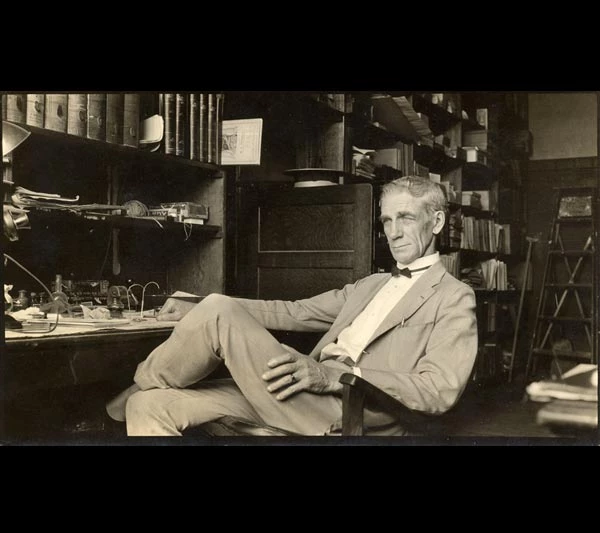
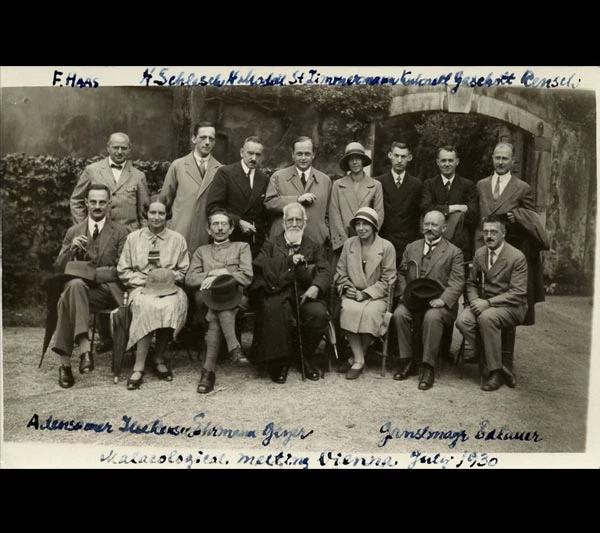
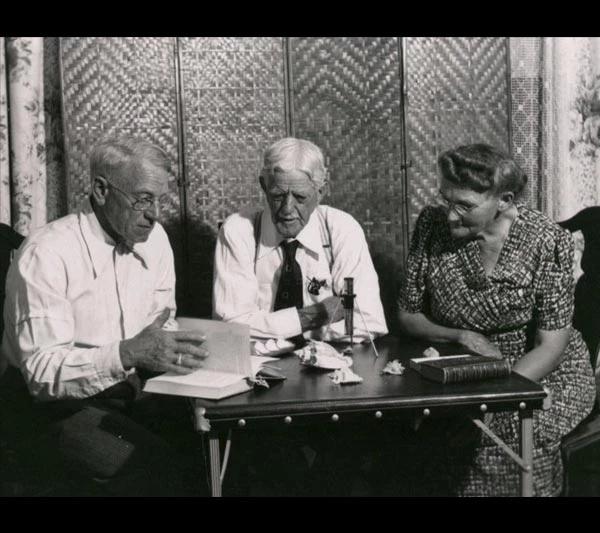
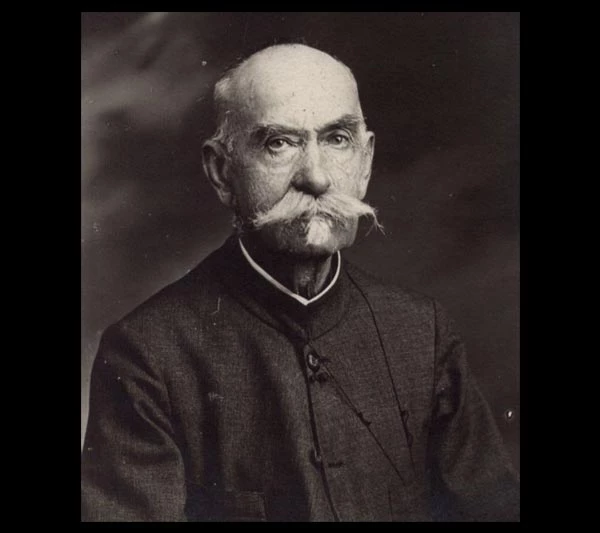
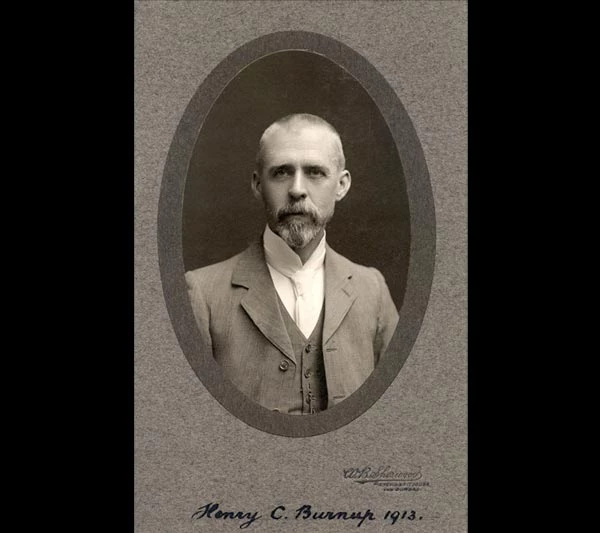
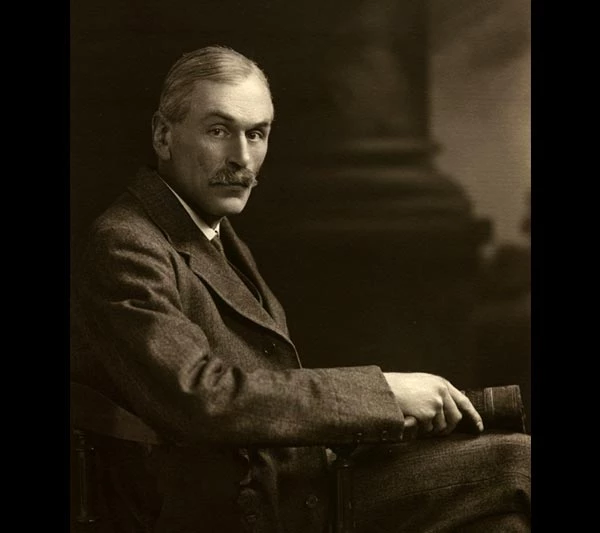
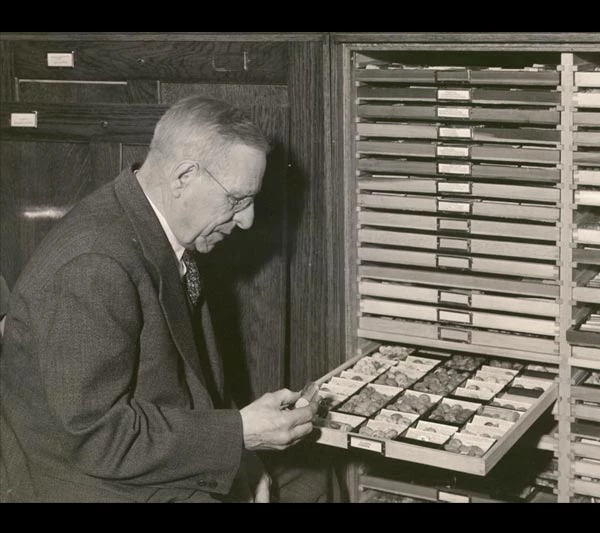
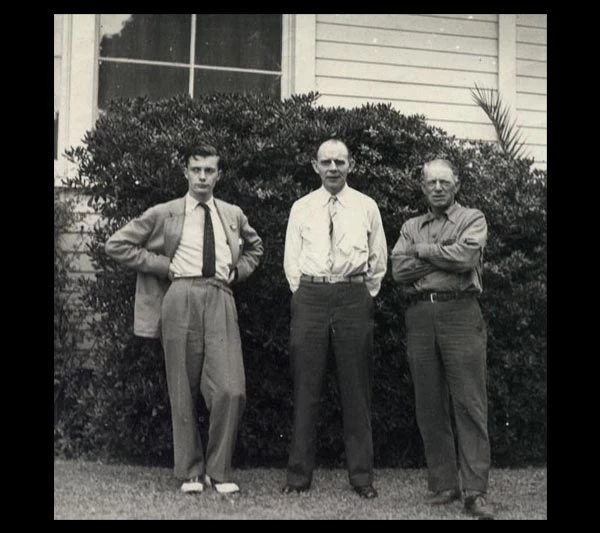
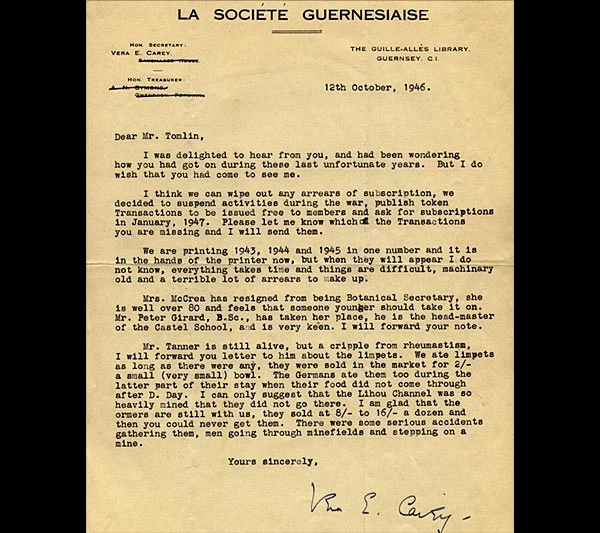
Documenting the Past - The Tomlin archive 15 February 2010 John Read le Brockton Tomlin was one of the most highly respected shell collectors of his time. Amgueddfa Cymru holds both his extensive shell collection and his archive of correspondence. It is an archive not only of scientific history, capturing a bygone era of collecting, but also a personal insight into the lives of some of the most famous shell collectors of the day. The archive is estimated to contain well over a thousand documents dating from the early 1800's through to the mid 1900's. It is a collection of all of the correspondence between Tomlin and his many shell associates around the world. Many interesting discoveries have been made whilst cataloguing this archive. It has brought into focus aspects of the lives of collectors, recounting expeditions and voyages, personal illness and hardship, war, dinner invitations and Christmas cards. A selection of items from the archive have been made available below. Tomlin Archive INTIMATE INSIGHTS: A photograph of the Japanese shell collector, Shintaro Hirase, his wife and six children. INTIMATE INSIGHTS: A letter from Yoichiro Hirase relating how his ill health has led to the closure of his museum in Kyoto, Japan. "I often feel a sever pain in the abdomen and an attack of fever. A complete rest is of the greatest importance to me, and I am, therefore, obliged to be still and lie quietly in bed". INTIMATE INSIGHTS: A Christmas card from William Evens Hoyle, the first director of Amgueddfa Cymru, 1909-1926. INTIMATE INSIGHTS: Seasons greetings and a poem! "Here, direct from a Ceylon friend A Butter-firkin cone I send. 'Tis said to be the largest known, (Well, friend, that's not for me to own) Linnaeus, Martini, Sowerby, Reeve, Might have a bigger up their sleeve. If this should prove the largest size 'Twould be to me a great surprise. Notice its bulk and elevation, ("The finest Betulinus in Creation"). INTIMATE INSIGHTS: Letter from the American shell collector, Joseph Emerson, announcing his retirement. "...Now I am 86 and a half years old and I must say finis to a work which I love and have been engaged in so long. It is too great a tax on my nerves...". INTIMATE INSIGHTS: A dinner invitation "Soused salmon, remnant of lamb and a salad will be ready for you here at six tomorrow". INTIMATE INSIGHTS: An invitation from Reverend Ellerton Alderson to Tomlin, proposing a visit to his house in West Sussex. "The nearest railway station at Goring is practically useless, the train service being, as you justly remark 'putidious' ". COLLECTING IN ADVERSITY / WAR: Postcard from W. Junk, Berlin, 18 April 1933. "Though of Jewish origin, I have not been disturbed". COLLECTING IN ADVERSITY / WAR: A postcard from a German shell collector and dealer Martin Holtz, 1 February 1928. "By the war however my whole existence is destroyed and especially as naturalist, traveller and dealer. In want of means and without support, I am unable to continue my scientifical enterprises". COLLECTING IN ADVERSITY / WAR: A postcard from the Japanese conchologist Yoichiro Hirase, 1 December 1918. "I wish you the merriest of Xmases and the happiest of new Years, with every kind of good fortune, especially on this occasion when the cheerful light of peace has begun to dawn to drive away the gloomy clouds of terrors and horrors, overhanging the whole world for these four and a half years, which have been caused by the Great European War, the most horrible and the most extensive disturbance that has ever been experienced on earth". COLLECTING IN ADVERSITY / WAR: Letter from the American conchologist Walter Eyerdam, 4 August 1935. "My wife and baby girl of 3 and a half years have been in Germany since Christmas. They will soon start for home. My wife seems to be very inspired over the new system as put in force by Adolf Hitler and the revival of progress and national Spirit amongst the Germans. My sincerest wish is that there should never be a rift again between Germany and England...". COLLECTING IN ADVERSITY / WAR: Letter from La Société Guernesiaise, 12 October 1946. "We ate limpets as long as there were any, they were sold in the market for 2/- a small (very small) bowl. The Germans ate them too during the latter part of their stay when their food did not come through after D. Day". COLLECTING IN ADVERSITY / WAR: Letter from the Scottish Oceanographical Laboratory, Edinburgh. 4 February 1918 "Never was any material in my laboratory more inaccessible than it is at present under war conditions. I have no staff (all serving or killed), and it is quite impossible for me to handle the Mollusca you ask me for". COLLECTING IN ADVERSITY / WAR: Letter from the Honorary Secretary of the Biology War Committee, 4 December 1944. "The Biology War Committee has been asked...for information on the dangers of swimming in tropical waters...I should be very grateful if you could give me any information on the distribution of clams or other mollusca which might either catch swimmers or in any way inconvenience them". COLLECTING IN ADVERSITY / WAR: Portrait of Arthur Douglas Bacchus. (Reserve) Household Battalian, Combermere Barracks, Windsor. 17 January 1917 EXPEDITIONS AND HOLIDAYS: Letter from C. Hughes describing his holiday in America, 19 April 1892. "Our American trip was enchanting! We saw all the Chief Eastern towns — went 9000 miles in a special train — saw the Yellowstone Park and the Grand Canyon of the Colorado in Arizona...Rode on horseback 40 miles a day, slept under trees in the forests at night and were out in the thunder and sand storms...The Grand Canyon was beyond words...". EXPEDITIONS AND HOLIDAYS: An American conchologist, Junius Henderson, collecting molluscs in Colorado. "A sort of a conchologist in 'cowboy' leather 'chaps' collecting molluska on Grand Mesa, Colorado at an altitude of 10000 ft. 1923...". EXPEDITIONS AND HOLIDAYS: Letter from the Australian conchologist, Charles Hedley recounting a long holiday in Africa. 11 April 1925 "I wondered leisurely through the Great Rift Valley, one of the geological wonders of the world, down to Nairobi. After wasting a week trying to buy a giraffe for the Sydney Zoo, I moved on to Kilimanjaro". EXPEDITIONS AND HOLIDAYS: Continuation of letter from Theodore Dru Alison Cockerell, 19 November 1927. "We left the boat at Port Said and went to Cairo and saw Pyramids and Sphinx. The things in Museum at Cairo are more splendid than the published pictures could reveal...We had about 8 hours at Naples — saw the Zoological Station and went to Pompei". EXPEDITIONS AND HOLIDAYS: Letter written at sea by Theodore Dru Alison Cockerell. 'Just passing out of Bab-el-Mandeb' [a strait located between Yemen, Djibouti and Eritrea], 19 November 1927 "I sketch at sides the topography on both sides of Bab-el-Mandeb. It is volcanic and amazingly like that of the lesser Madeira Islands. That is French Somaliland is like the Desertas and the Arabian side is like Porto Santo". EXPEDITIONS AND HOLIDAYS: Anthony Arkell — Sudan (c. 1925) COLLECTORS AND COLLECTING: "Just me in one of my dreams". Thompson van Hyning - Florida State Museum, 27 April 1925. COLLECTORS AND COLLECTING: Photograph of a meeting in Vienna, July 1930. COLLECTORS AND COLLECTING: The collectors Phillipe Dautzenberg, Charles Hedley and Henri Fischer - Paris, October 1912. COLLECTORS AND COLLECTING: The collectors Emery and Elsie Chace and Daniel Emery - St Petersburg, Florida. COLLECTORS AND COLLECTING: The French collector Eugène Caziot, 1923. COLLECTORS AND COLLECTING: John Wesley Carr from the Natural History Museum, Nottingham. COLLECTORS AND COLLECTING: Amateur conchologist, Henry Burnup who settled in South Africa in 1894. COLLECTORS AND COLLECTING: The British collector Arthur Edwin Boycott, 1925. COLLECTORS AND COLLECTING: The American collector Frank Collins Baker in his collection. COLLECTORS AND COLLECTING: Collectors Robert Tucker Abbott, Bill Clench and Emery Chace - San Pedro, 1940.