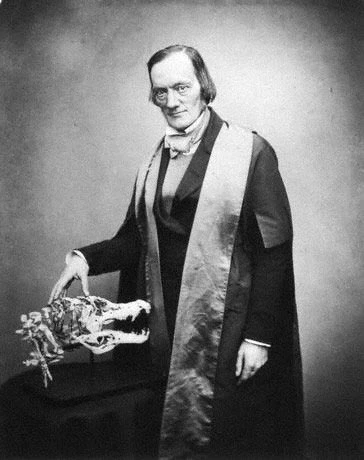
Important Fossil Turtle discovered after being lost for 150 years Cindy Howells, 18 November 2012 Chaning Pearce [Image (c) Bristol City Museum & Art Gallery] The fossil turtle at National Museum Cardiff, its significance previously unknown Sir Richard Owen in 1855 by Maull & Polyblank. Founding father of the National Museum of History, London and inventor of the word 'dinosaurs' In 1842 the famous naturalist and palaeontologist Sir Richard Owen described four new fossil turtle specimens from the Purbeck Limestone (Lower Cretaceous) of Dorset. One of these has always been in Natural History Museum in London, but the other three were held in private collections, and after 1842, effectively vanished for 150 years! One of the missing three was discovered in the Natural History Museum several years ago by Dr Andrew Milner whilst studying turtles and other reptiles, but the whereabouts of the other two remained a mystery. However, further research led him to the National Museum Cardiff where a fossil turtle in the collections was positively identified as one of Owen's missing specimens. This fossil turtle - originally named Chelone obovata - was owned by Joseph Chaning Pearce (1811-1847), who worked as a doctor in Bath until his early death at the age of 37. He built up one of the largest private collections of fossils outside London and had set aside part of his house as a private museum. After his death his family kept the small museum until at least 1886 when they moved to Kent. The collection is next heard of in 1915, when much of it was bought by the Bristol Museum and Art Gallery, along with its original catalogue. Dr Milner searched the collections at Bristol Museum but did not find the Chaning Pierce specimen, and assumed that it was destroyed in 1940 when incendiary bombs landed on the exhibition hall of the Bristol Museum during the Second World War. However, in 2008 he found the original hand-written catalogue, and on page 32 is the record for Fossil no.12 Chelone obovata with a pencil annotation - Sent to Cardiff Museum, 3rd March 1933. Dr Milner contacted the Department of Geology, National Museum Cardiff, and it transpired that in 1933 a Purbeck turtle shell was registered, although we had very little information about it. The specimen had been on display in the Evolution of Wales exhibition since 1993 as it is very well preserved and fairly complete. Richard Owen's original description in 1842 describes this turtle as the 'type specimen' of the species Chelone obovata - meaning that this is the specimen against which all others should be checked. Although there were no illustrations, he published a very detailed and accurate description. This description matches the specimen in National Museum Cardiff exactly, and there is no doubt that it is the same specimen. A recent investigation shows that the turtle now belongs in the genus Hylaeochelys and the species latiscutata. This specimen has significant historical interest as it was collected prior to 1840, and described by Sir Richard Owen - the man who invented the name 'dinosaur'. The details of the rediscovery have been published in Morphology and Evolution in Turtles, edited by D. B. Brinkman et al., in the series - Vertebrate Paleobiology and Paleoanthropology.
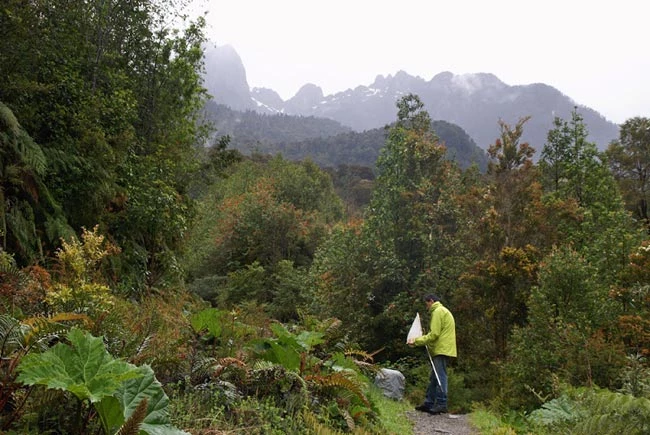
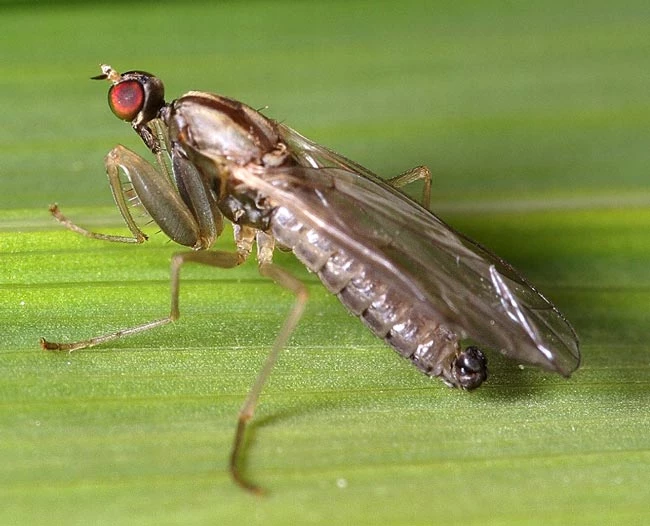
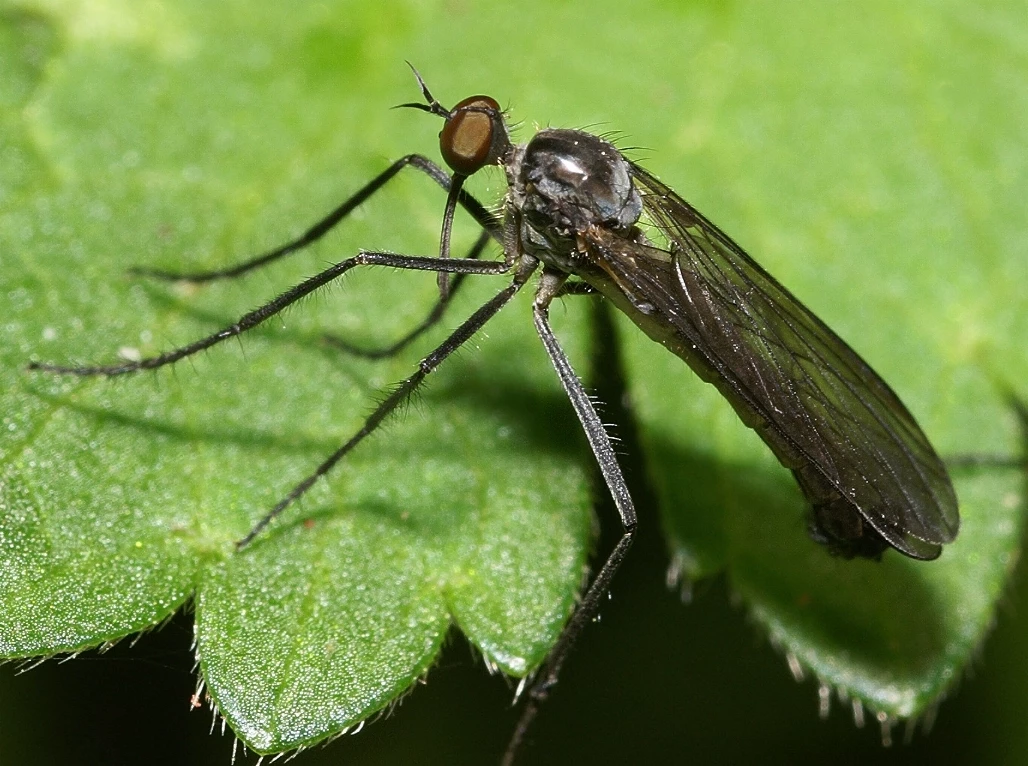
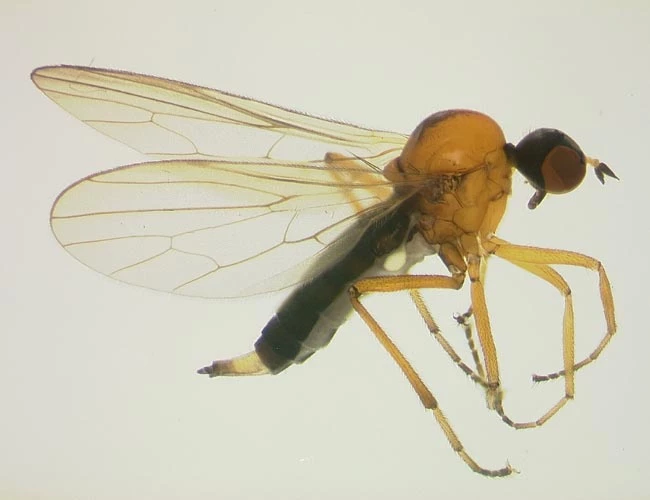
Species new to science: Dance-Flies from Chile Adrian Plant, 6 November 2012 Collecting insects, Alerce Andino, Chile. Chelipodozus sp. (about 4 mm long) Cladodromia sp. (about 4 mm long). Empis sp. An undescribed species of the macrorrhncha-group (about 6 mm long). An undescribed species of Neotrichina (about 4 mm long). All species are constantly evolving, and their current distributions and diversity, even in the local context of Wales, have been determined by factors such as climate change, continental drift and ecology. Scientists must therefore study organisms in a global context in order to properly appreciate how they fit into the Tree of Life. This is very much the case with insects, including flies (Diptera). Their major evolutionary lineages appeared in the remote past, at places now separated by the drifting apart of continents. For instance, many major species of Diptera evolved in Patagonia and Australasia, at a time when these lands formed part of the ancient supercontinent of Gondwana. In temperate regions, flies known as 'dance-flies' (Empidoidea) are numerous and may account for 10% of all fly species. Some feed on flowers and are important in pollination, while most are fierce predators of other invertebrates helping significantly to regulate pests. Still others have complicated mating rituals involving spectacular display flights and the presentation of dead insects as 'presents'! The Empidoidea first appeared in Gondwana in Jurassic times, at least 160 million years ago. As the supercontinent broke up and the continental fragments drifted apart, there was a massive increase in diversity of these flies. Collaboration between entomologists at Amgueddfa Cymru and other museums around the World have improved our understanding of the evolutionary history of these flies. One such project saw a team of entomologists from Amgueddfa Cymru and the Muséum national d'Histoire naturelle in Paris embarking on an expedition to Patagonia sponsored by CAFOTROP (CAnopée des FOrêts TROPicales). The objective was to look for new Gondwanic species in the dense temperate rainforests of Chilean Patagonia using specialist sampling methods of close searching, netting and trapping. This was followed by sifting, sorting and preserving the catch, ready for preparation and identification of the specimens once back in the laboratory. These southern temperate rainforest proved very rich in Empidoidea with three weeks collecting resulting in some 8,000 specimens, including many species unknown to science. Many genera have been identified that are now restricted to locations that were once part of Gondwana, such as Ceratomerus, Clinorhampha, and Cladodromia. Particularly exciting was finding new species of the Empis macrorryncha - a group of flies that are closely related to species of the same group known from SW Australia. This suggests these species evolved from a common ancestor which probably lived before the Gondwana continent fragmented.
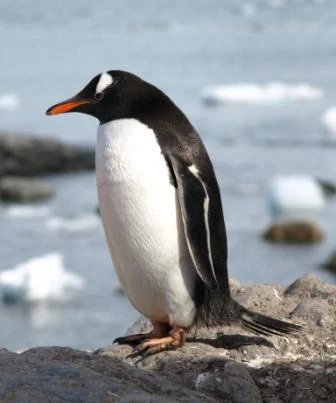
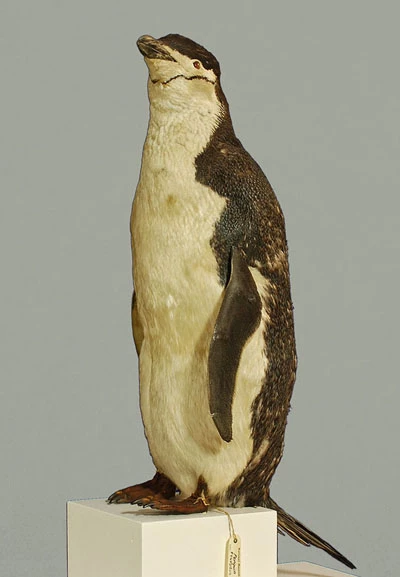
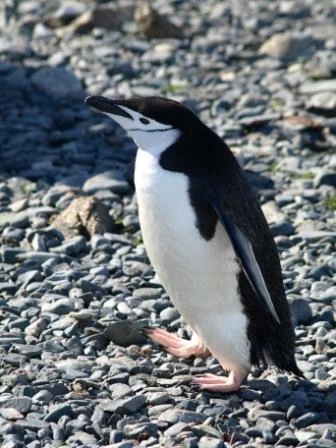
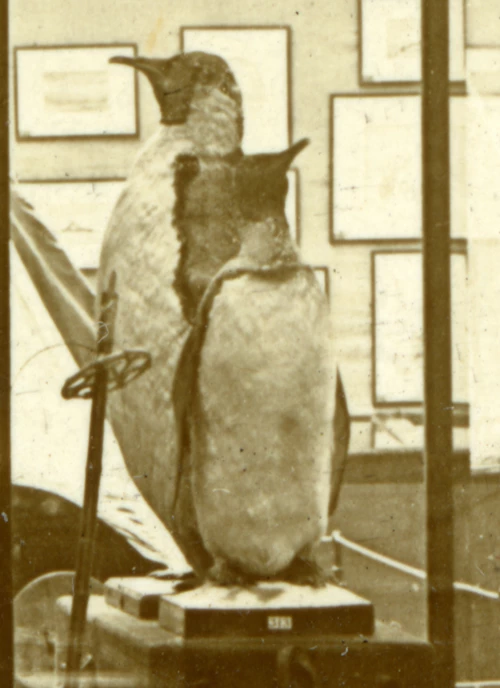
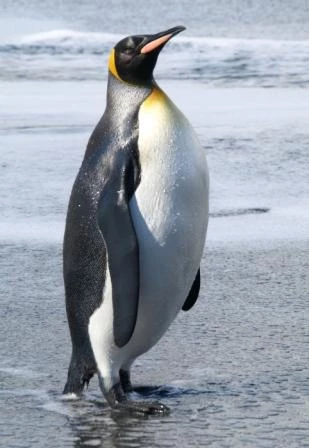
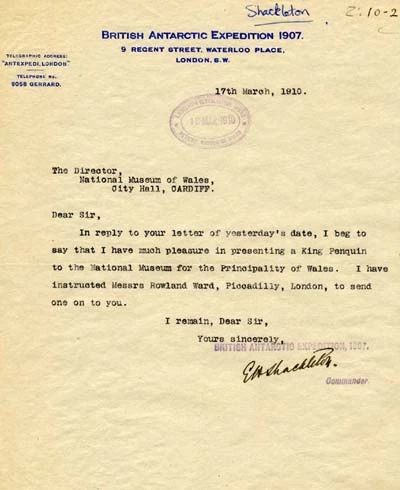
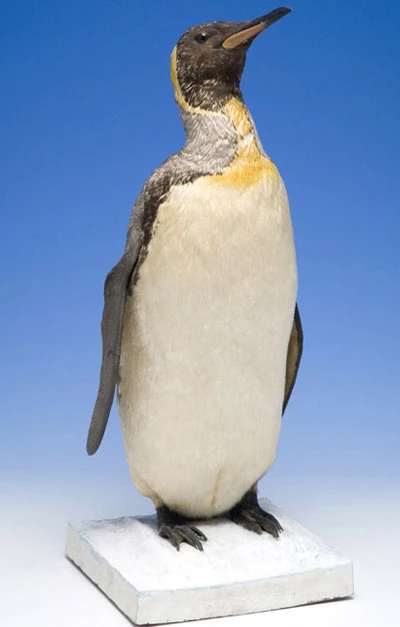
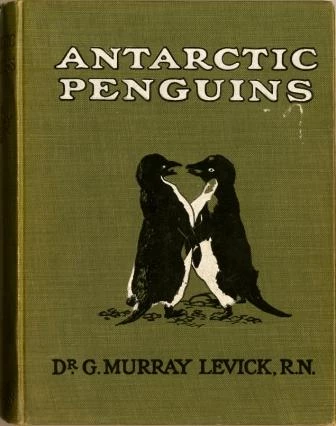
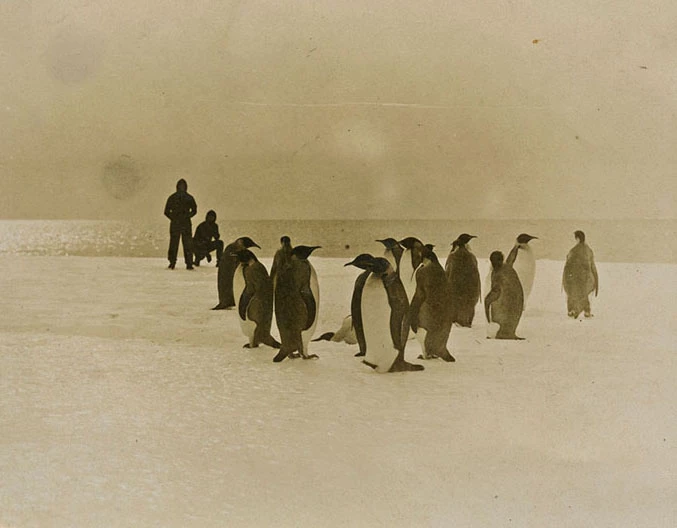
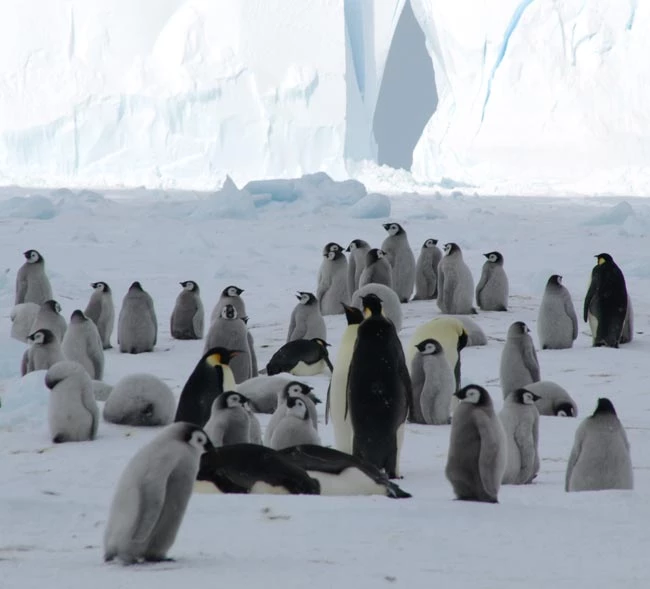
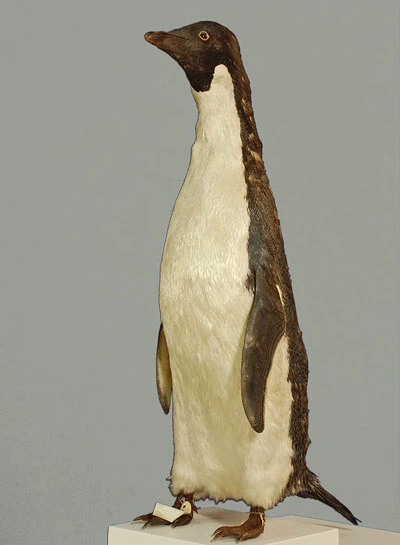
Antarctic Penguins 11 May 2012 Penguins are the archetypal Antarctic animals, but only two species, Emperor and Adélie, are truly Antarctic and found nowhere else. The other Antarctic penguins, such as Chinstrap and Gentoo, also occur on sub-Antarctic islands. Elsewhere in the world there are species of penguins which live in warmer climates and one, the Galapagos Penguin, lives practically on the equator. However, they always live where very cold waters feed up from the south. They are flightless birds, well-adapted for life in the sea where they spend most of their time. Emperor Penguins are the largest, standing over a metre in height and weighing 22-45 kg. Captain Scott, on his 1901-04 Discovery Expedition, was the first to observe the migration of the Emperor Penguin. They come ashore in April and then walk up to 100-160 km inland to their breeding areas. After laying her single egg, the female returns to the sea to feed, leaving the male to incubate the egg through the severe Antarctic winter. For nine weeks he endures temperatures as low as -50°C and winds of up to 200 km/h. During this time he cannot feed and by the time the female returns in spring he has lost 45% of his body weight! The early Antarctic explorers collected penguins for food but some were also collected as scientific specimens. We have several in the collections here at Amgueddfa Cymru. Antarctic Penguins Gentoo Penguin, Waterboat Point, Antarctic Peninsula. Image: T SharpeThe Gentoo Penguin is another of the small penguins and is the least common of the Antarctic penguins with a world population of about 300,000 pairs. Most of these are found on sub-Antarctic islands such as South Sandwich, South Shetland, South Orkney, Crozet and Heard. However, unlike the Adélie they aren't dependent on the pack-ice and it looks as though their numbers are increasing on the Antarctic Peninsula as it warms up. Chinstrap penguin in the Museum's collections Chinstrap Penguin, Half Moon Island, Antarctic Peninsula. Image: T SharpeThe Chinstrap Penguin is roughly the same size as the Adélie and is easily recognised by the thin strip or strap running under its chin. They are the one of the most numerous of the penguins, it's estimated there are about 7 million breeding pairs in the world! There are some huge colonies on the Antarctic peninsula, the biggest colonies can have as many as 200,000 birds living in them. One of the Emperor Penguins and the Shackleton King Penguin can be seen in this 1914 Antarctic exhibition held by the Museum in the City Hall, Cardiff. King penguin, Gold Harbour, South Georgia. Image: T. Sharpe Letter from Sir Ernest Shackleton to the Director of the Museum. King Penguin presented to the Museum by Sir Ernest Shackleton. It was collected on the 1907-09 Nimrod Expedition, probably from Macquarie Island.King Penguins are the second largest penguins, they stand about 90 cm tall and weigh 11-16 kg. They are not found on the Antarctic continent, as they prefer slightly warmer water. They breed on sub-Antarctic islands such as Crozet and Kerguelen islands in the South Indian Ocean; Macquarie Island between New Zealand and Antarctica; and the Falklands and South Georgia in the South Atlantic Ocean. Surgeon George Murray Levick (1877-1956) was on Captain Scott's 1910-13 British Antarctic Expedition. Levick studied the Adélie Penguin rookery at Cape Adare on the Ross Sea coast of Antarctica while based there in the summer of 1911-12 with the Expedition's Northern Party. Antarctic Penguins. A study of their social habits was published by Levick in 1914 and was based on his observations of the penguin rookery at Cape Adare. Emperor Penguins photographed by Frederick Gillies in Queen Mary's Land, Antarctica in 1912. Gillies was a Chief Engineer on the Aurora, a former Newfoundland sealing ship used on Douglas Mawson's Australasian Antarctic Expedition of 1911-14. Gillies was born in Cardiff and served his apprenticeship as an engineer on the steamers of John Shearman and Company and P. Baker and Company of Cardiff. Emperor Penguins and chicks, Ross Sea, Antarctica. Image: T Sharpe. Adélie Penguin in the Museum's collections. The Adélie Penguin is the only other truly Antarctic penguin. It is about half the size of the Emperor Penguin and weighs between 4 and 6 kg. Adélie Penguins look as though they are being affected by the climate change happening around the Antarctic Peninsula. Adélies only occur where there is plenty of pack-ice in the sea. As the peninsula has warmed there is now less pack-ice in the height of the summer and the Adélie Penguins appear to be moving further south to stay with the pack-ice. Peter Howlett and Tom Sharpe.
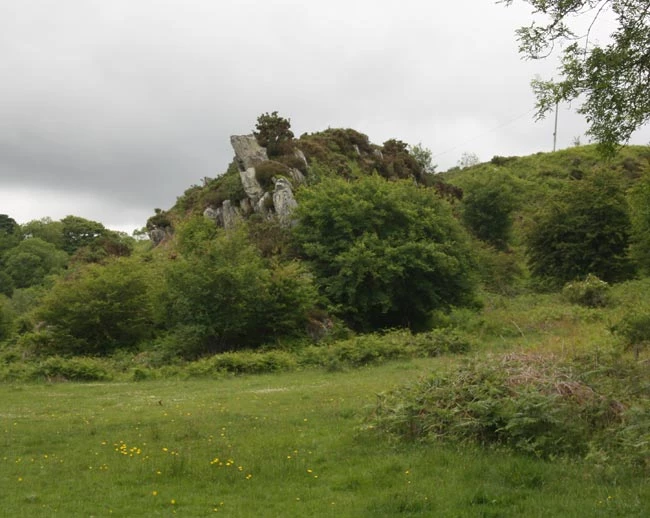
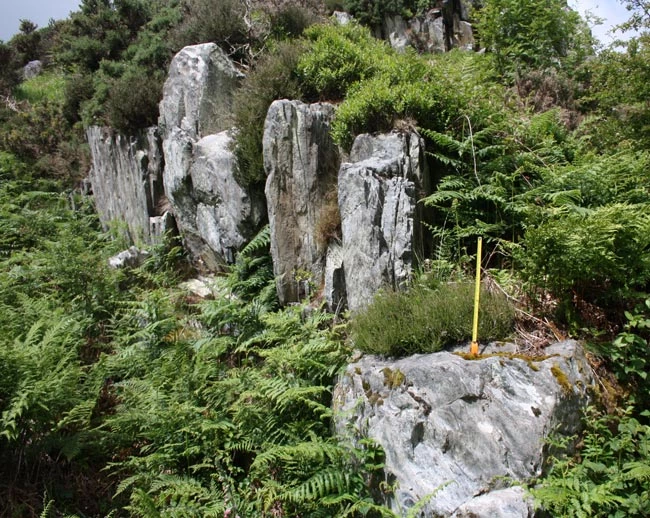
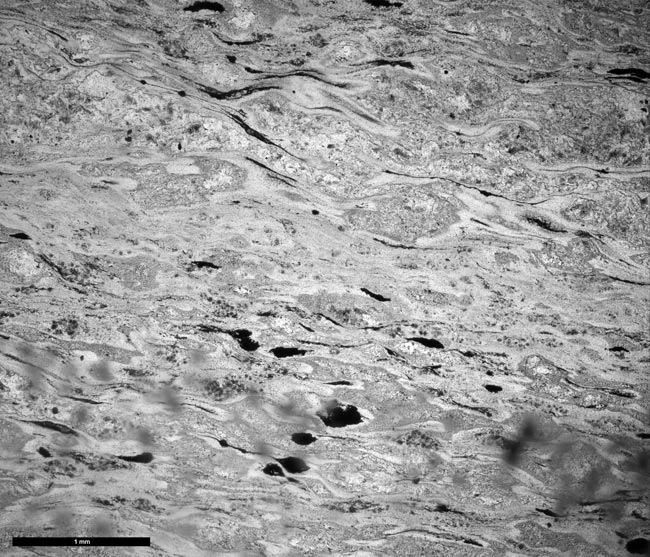
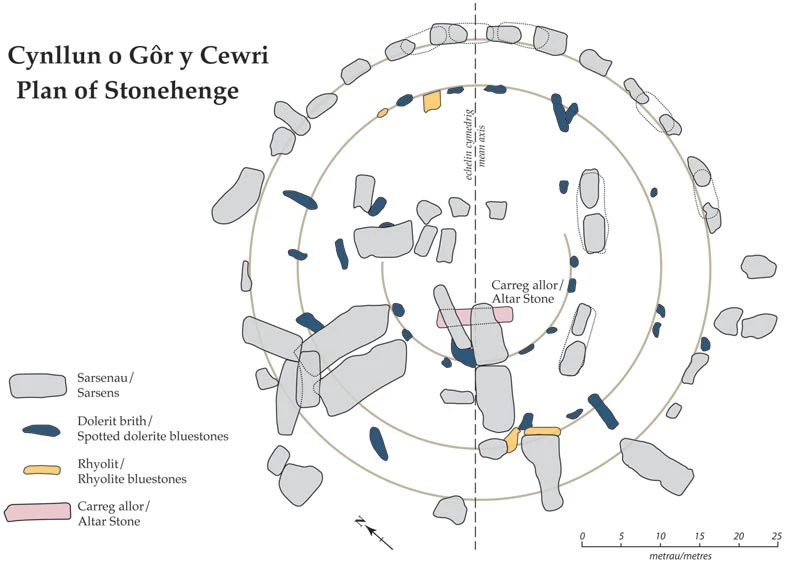
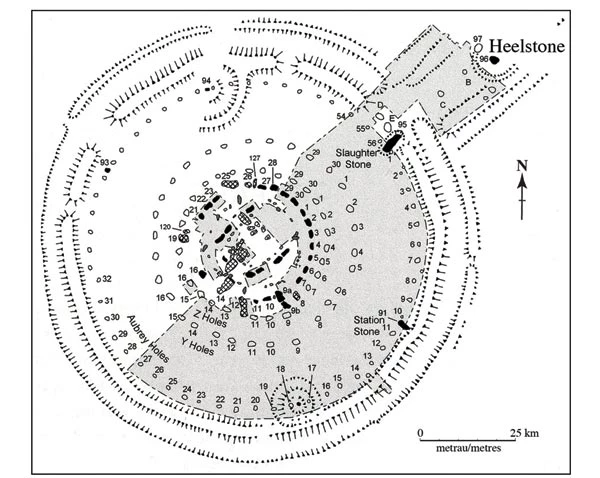
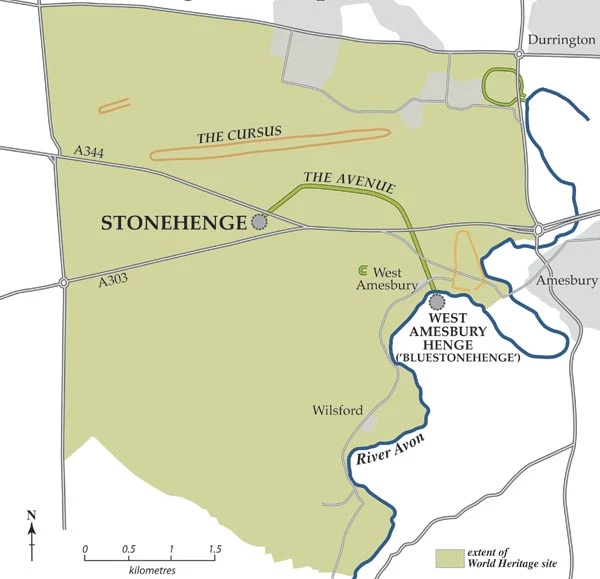
Sourcing the Stonehenge Bluestones Richard Bevins, 21 February 2012 Pont Saeson, June 2011. Close up of the outcroppng rocks, Pont Saeson, June 2011. Microscopic view of the newly identified match to the Stonehenge bluestones The source of the Bluestones at Stonehenge has long been a subject of fascination and controversy. One type was traced to north Pembrokeshire in the early 1920s, but now geologists at Amgueddfa Cymru and University of Leicester have directly matched another type to a different part of north Pembrokeshire. Will this provide us with more ideas about how the stones might have been transported to Stonehenge? The Stonehenge monument Stonehenge, on Salisbury Plain, is one of the world's most iconic ancient monuments. It is designated as a UNESCO World Heritage Site, and it is as recognisable worldwide as sites such as Machu Picchu in Peru and the Xian Terracotta Warriors in China. Stonehenge is a complex site. It is best known, of course, for the standing stones, which comprise the Outer Circle, the Inner Circle, the Inner Horseshoe and the Heel Stone and, within the structure, the so-called Altar Stone. Surrounding the stone circle are further structures, identified by mounds and ditches, and a series of 'holes' thought to have held standing stones of more henges. These holes, known as the Aubrey Holes, are important because they contain debris (or 'debitage' as some archaeologists call the material) whose lithology is not represented among the current standing stones. However, the current Stonehenge monument is only a part of a broader range of contemporary features, including the Avenue, the Cursus and the recently identified West Amesbury Henge (known as Bluestonehenge). Collectively, these comprise the Stonehenge Landscape. The large stones that form the Outer Circle are known as 'Sarsens'. They are hard, resistant sandstones thought to have been collected from the local Salisbury Plain environment. The sources of the smaller stones that form the Inner Circle, the Inner Horseshoe and the Altar Stone, known as the 'Bluestones', are 'exotic' to the Salisbury Plain area. For many years their source baffled eminent Victorian investigators such as Maskelyne, Cunnington, Teal and Judd. This is the so-called Bluestone lithology. The Bluestones In 1923, however, H.H. Thomas from the Geological Survey published a paper in The Antiquaries Journal in which he claimed to have sourced the spotted dolerite component of the Bluestones to hilltop rock outcrops, or 'tors', exposed in the high Preseli, to the west of Crymych in west Wales. Specifically, he thought that the tors on Carn Meini and Carn Marchogion were the likely source outcrops. He went on to speculate about how humans had transported the stones to Salisbury Plain, favouring transport across land rather than a combined land and sea journey. Not all the Bluestone stones standing today at Stonehenge, however, are spotted dolerites. Four of them are ash-flow tuffs, of either dacitic or rhyolitic composition. Debris recovered from the Aubrey Holes, as well as various archaeological excavations at Stonehenge and the Stonehenge Landscape, comprise spotted dolerite and more, and very different, dacitic and rhyolitic Bluestone material. Map of the Preseli area showing the research area, and the proposed origins of the Bluestones Plan of Stonehenge Plan of Stonehenge showing archaeological detail The Stonehenge Landscape Recent discoveries In 2009 Amgueddfa Cymru, in collaboration with Dr Rob Ixer, University of Leicester began new petrological investigations. Examination of debris from the Cursus Field, adjacent to the Cursus, showed the presence of samples identified as being ash-flow tuffs, with tube pumice, crystal fragments and lithic clasts in a fine-grained recrystallized matrix. These were broadly similar to the four dacitic and rhyolitic standing stones, yet showed key differences. Also present were samples that had previously been informally called 'rhyolite with fabric'. This lithology is defined by a very well-developed fabric, present on the millimetre scale. This distinctive rock texture has led Museum scientists to identify the source of the rock to Pont Saeson, in the low ground to the north of Mynydd Preseli. Vaporising the Bluestones To test this match further, quantitative evidence has been acquired by analysing the composition of tiny, micron-sized zircon crystals from Stonehenge and Pont Season rhyolite samples, using a technique known as 'laser ablation inductively coupled plasma mass spectrometry' at Aberystwyth University. The technique is to focus a very high-power laser beam, with a diameter of only 10 microns, onto the zircon crystals (themselves no larger than 100 microns) and 'ablate' them — essentially vaporizing them — so that after analysis the zircon crystals are peppered with small craters. The vapour generated by this process is then analysed in the mass spectrometer, which reveals the chemistry of the zircon crystals. This was the first time zircon chemistry had ever been used to provenance archaeological material. As well as zirconium (and the closely related element hafnium) the crystals contained detectable concentrations of a range of elements including scandium, tantalum, uranium, thorium and the rare earth elements, and the analyses from the two sample sets proved to be near identical, providing a geochemical 'fingerprint'. This result is of considerable significance, and was published in 2011 in the internationally recognised Journal of Archaeological Science. In June 2011 more detailed sampling identified the outcrop known as Craig Rhos-y-felin near Pont Saeson as the source of the majority of the rhyolite debris recovered during excavations at Stonehenge and the vicinity. The results from these latest excavations were published in the journal Archaeology in Wales in December 2011. External links University of Leicester UNESCO: Stonehenge World Heritage Site Aberystwyth University Journal of Archaeological Science Archaeology in Wales Journal
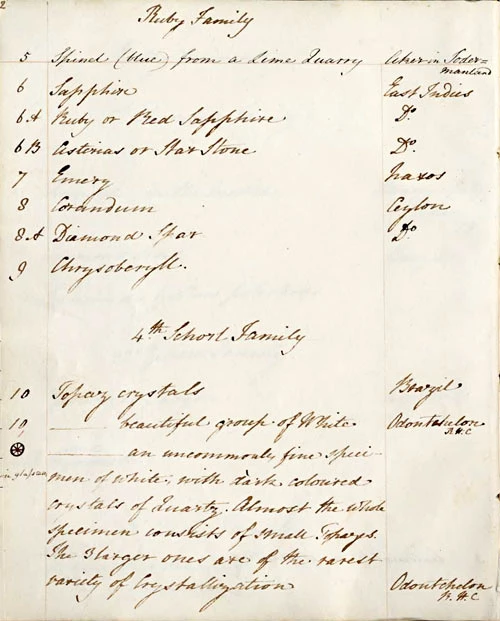
The fabulous mineral collection of Lady Henrietta Antonia Clive, Countess of Powis. Tom Cotterell, 31 January 2012 Catalogue of Metallic Minerals in the Possession of the Countess of Powis Vol II, 1817: The original collection catalogues. Catalogue page from Vol. 1. Earthy Minerals. Olivenite on quartz from Cornwall, given to Henrietta by the Countess of Aylesford. Specimen 9 cm long. NMW 29.311.GR.80. One of the most important historic mineral collections at Amgueddfa Cymru was formed in the early nineteenth century. Assembled by Lady Henrietta Antonia Clive (1758-1830), Countess of Powis, and donated to the museum by the 4th Earl of Powis in 1929, the collection of minerals is one of the earliest mineral collections with links to Wales. Lady Henrietta, Countess of Powis Lady Henrietta was born into a titled and landed family, the Herberts, descended from the Earls of Pembroke of the fifteenth century. Her father, Henry Arthur Herbert (c.1703-1772), 1st Earl of Powis, owned large estates in Shropshire and Mid-Wales as well as property in London. Henrietta was born at their principal residence, Oakly Park, at Bromfield, near Ludlow, but following its sale to Lord Robert Clive (Clive of India), in 1771, she spent her formative teenage years at the Herbert’s ancestral home, Powis Castle. Clive of India Henrietta married the late Lord Clive's eldest son and heir, Edward, in 1784, in a marriage that was mutually beneficial - the Herbert family had accrued significant debts, but their name was prestigious, while the Clive family had become enormously wealthy through Lord Robert Clive's military campaigns in India. Henrietta and Edward lived at Walcot Hall near Bishop’s Castle, where they had four children, Edward, Henrietta Antonia, Charlotte Florentia and Robert Henry. Edward Clive became Governor of Madras at the end of the eighteenth century and while Henrietta was in India she began assembling a collection of rocks and minerals. Later she purchased and exchanged minerals with prominent collectors and mineral dealers of the time including, James Sowerby, Dr John MacCulloch and the Countess of Aylesford. She also recorded many specimens having been given to her by her children. Earthy and metallic minerals Henrietta's collection is typical of the style of collections dating from the early nineteenth century, with the minerals arranged systematically by chemistry. Henrietta organised her collection into two handwritten catalogues: Volume 1 - Earthy Minerals and Volume 2 - Metallic Minerals. She used a numbering system to identify each specimen, with small numbered labels affixed to the specimens. Although many of these labels have long since fallen off, her detailed catalogue entries have allowed many of her specimens to be matched up with their correct number. Henrietta's collection comprised over one thousand specimens. Of these, several hundred samples have been identified in the museum collection. Despite the missing specimens, considering its age, Henrietta's collection is remarkably complete. It is now considered to be one of the most important historic mineral collections at Amgueddfa Cymru.