: Wales in the World

The 1958 British Empire and Commonwealth Games Queen’s Baton Relay

Dr Emma Lile, 21 May 2014

The 1958 British Empire and Commonwealth Games Queen’s Relay baton

The 1958 British Empire and Commonwealth Games Queen’s Relay baton.

The Queen’s message, signed ‘Elizabeth R’, dated 14 July 1958, and sent from Buckingham Palace to Cardiff via the baton relay. By Gracious Permission of Her Majesty Queen Elizabeth II.

The Queen’s message, signed ‘Elizabeth R’, dated 14 July 1958, and sent from Buckingham Palace to Cardiff via the baton relay. By Gracious Permission of Her Majesty Queen Elizabeth II.

The route of the Queen’s message relay in 1958. (© Commonwealth Games Federation)

The route of the Queen’s message relay in 1958. (© Commonwealth Games Federation)

Who would have thought that the exciting, colourful and internationally renowned Commonwealth Games Queen’s Baton Relay actually started its life in Wales?

Signifying a visual celebration of the unity and diversity of all the Commonwealth nations, and highlighting sport’s ability to join people of all races, this much-anticipated event has now become a familiar and popular prelude to the Games’ grand opening.

Having begun as the Empire Games in 1930, the Commonwealth Games has always been proud to follow the Olympic ideal of friendship, solidarity and fair play, and endeavours to promote good relations between the Commonwealth countries.

The British Empire and Commonwealth Games, as they were known in 1958 when held in Cardiff between 18 and 26 July, were the first to stage the Queen’s Baton Relay, intended to symbolise peace and harmony through sports participation.

In a fitting tribute to the capital city’s success as host, the Cardiff baton will form part of this year’s ceremony when the 2014 Glasgow equivalent arrives in Wales on 24 May to begin its seven-day journey around the country.

The baton

Although its origins remain unclear, it is believed that the idea for a Commonwealth baton relay was conceived during the late 1950s by the Games Organising Committee. Appointed as the event’s Honorary Organiser was retired Royal Navy officer, Commander Bill Collins, who had previously coordinated the London Olympic Torch Relay in 1948. For the Cardiff relay Collins was ably assisted by a team of local organisers, selected by athletic associations from all counties through which the running route passed.  

The 1958 silver-gilt and enamel baton was designed by Cardiff jeweller and former soldier, Colonel Roy Crouch, Chairman of the Games’ Medals Committee. Measuring 40cm in length and 4cm in diameter, it was decorated with Welsh national symbols, namely a red dragon, daffodils and leeks, along with crowns representing the royal connection. ‘VI British Empire and Commonwealth Games, Wales 1958’ was inscribed on the hollow tubular baton, which was manufactured by Turner and Simpson, silversmiths, of Birmingham.

The 1958 British Empire and Commonwealth Games Queen’s Relay baton.

The 1958 British Empire and Commonwealth Games Queen’s Relay baton.

The first baton relay

Dr Roger Bannister, then holder of the Empire Games mile record, leaving Buckhingham Palace carrying the baton at the start of the relay. He is accompanied by fellow Games champions Chris Chataway (left) and Peter Driver. (© Commonwealth Games Federation

Dr Roger Bannister, then holder of the Empire Games mile record, leaving Buckingham Palace carrying the baton at the start of the relay. He is accompanied by fellow Games champions Chris Chataway (left) and Peter Driver. (© Commonwealth Games Federation)

On 14 July 1958, the baton relay set off from the forecourt of London’s Buckingham Palace, the residence of Queen Elizabeth, Head of the Commonwealth, before travelling through several English counties and all thirteen Welsh on its journey to Cardiff. Unfortunately, owing to illness, the Queen was unable to hand her message to the opening runners, namely Dr Roger Bannister, the first sub-four-minute miler, escorted by fellow 1954 Games champions Chris Chataway and Peter Driver. Her place was taken by the relay organiser, Commander Collins, who placed the message inside the baton; a cap on one end being secured by a spring catch, thus avoiding the need for a key. In order to prevent damaging the baton en route, the message was transferred to a metal replica version following the relay’s second stage, which, for security reasons, was fitted with a lock. The ceremonial silver baton then resumed its duties on the final changeover, carried, message safely inside, by the last runner.

A total of 664 athletes, including 32 schoolboys, were involved in the relay, which covered more than 600 miles over almost four days.  According to The Story of the Sixth British Empire and Commonwealth Games by Clive Williams (2008):

One runner from each club, service unit and school in each county was given a stage to run. The seniors ran two-mile legs while the juniors ran a mile. The run continued day and night, seniors being used in dense traffic conditions and, where possible from midnight to 6.00am. In the north the message passed through Llangollen, Wrexham, Flint, Llandudno and Caernarfon before heading south down the west coast through Dolgellau, Aberystwyth, Cardigan and Haverfordwest. To satisfy the needs of the more heavily populated south the relay wound around the coast from Carmarthen, Llanelli, Swansea and Bridgend before it covered the valleys of the south through Aberdare, Brynmawr, Abergavenny, and Newport then on to Cardiff.

An official car followed directly behind the runner throughout to protect him from unofficial cycle or motor car escorts, to light the road at night, and to enable the section organisers to keep the time-table correct. Speeds varied as necessary from 6.5 to 7.5 minutes to the mile, thus ensuring that there was no idea of a race and to allow spectators to be shown the baton at take-over points.

Ken Jones, former Wales rugby player and Olympic athlete, presenting the baton to the Duke of Edinburgh at the opening ceremony at Cardiff Arms Park. (© Commonwealth Games Federation)

Ken Jones, former Wales rugby player and Olympic athlete, presenting the baton to the Duke of Edinburgh at the opening ceremony at Cardiff Arms Park. (© Commonwealth Games Federation)

The opening ceremony

'A Quick Laugh' by Geoffrey Evans, <i>Western Mail</i>, 18 July 1958. Reproduced by kind permission of the National Library of Wales

'A Quick Laugh' by Geoffrey Evans, Western Mail, 18 July 1958. Reproduced by kind permission of the National Library of Wales

Following a trumpet fanfare and six-gun salute, on Friday 18 July at 6.33pm, the final leg runner entered the Arms Park stadium to complete the relay. This athlete’s identity was a closely guarded secret and rapturous applause rang out from the 40,000 or so spectators when he was revealed as former Wales rugby player and Olympic silver sprint relay medallist, 36-year-old Ken Jones of Newport.  Donning a red vest complete with Welsh badge and white shorts, Jones appeared in the competitors’ entrance before running once around the cinder track, holding the baton aloft. He then stopped in front of the Duke of Edinburgh, the President of the Commonwealth Games Federation, and handed him the baton accompanied by the light-hearted remark of ‘Nice pass Ken’ by a member of the crowd, in recognition of Jones’s prestigious rugby career.  The Duke proceeded to read the Queen’s message to the excited crowd:

To all athletes assembled at Cardiff for the 6th British Empire and Commonwealth Games I send a warm welcome and my very best wishes. I am delighted that so many Commonwealth countries have sent teams to Wales for these Games. The number is larger than ever and more than three times as great as for the first meeting at Hamilton in 1930. This is welcome proof of the increasing value which is being placed today on physical strength and skill as an essential factor in the development of the whole man, healthy in mind and body. It also gives the greatest personal pleasure to know that so many members of the Commonwealth family are meeting in friendly rivalry and competition. I hope that many lasting friendships will grow from this great meeting of athletes and spectators, and that you will all go home with a better understanding of the value of our Commonwealth of nations. I am greatly looking forward to being with you at the end of next week.

The much-anticipated Games were then officially opened, as Cardiff welcomed 35 nations and 1,122 athletes to compete in the sports of athletics, boxing, cycling, fencing, bowls, rowing, swimming and diving, weightlifting and wrestling. In addition to the use of Cardiff Arms Park for the opening and closing ceremonies and the athletics events, other venues included Cardiff’s Wales Empire pool, built especially to host the swimming, Sophia Gardens for the boxing bouts, Maindy Stadium the cycling and Llyn Padarn, Llanberis the rowing. Wales’s sole gold medal was won by bantamweight boxer Howard Winstone, although the home nation did also collect three silvers and seven bronze.

The closing ceremony and beyond

Following a Games widely considered an outstanding success, the closing ceremony on 26 July  proved to be an historic occasion. Although continued illness prevented the Queen from attending in person, a recorded message was played to the crowd in which she announced: ‘I intend to create my son Charles, Prince of Wales today. When he is grown up, I will present him to you at Caernarfon.’

Despite being the smallest ever host nation, Wales’s superbly organised sporting spectacle did the country proud and was recognised at the time as a magnificent occasion which celebrated the cream of athletic strength and stamina on a global stage.

On the culmination of the 1958 Games the Queen’s relay baton was offered by the Organising Committee to the National Museum of Wales, at the wish of Queen Elizabeth. It has been housed in the Art Department ever since, along with the accompanying royal message, and represents an enduring visual testament to an unforgettable and momentous festival of sport.

Thanks to Chris Jenkins, Chief Executive, Commonwealth Games Council for Wales, and Clare Ewing, Events Officer, Sport Wales, for their kind assistance.

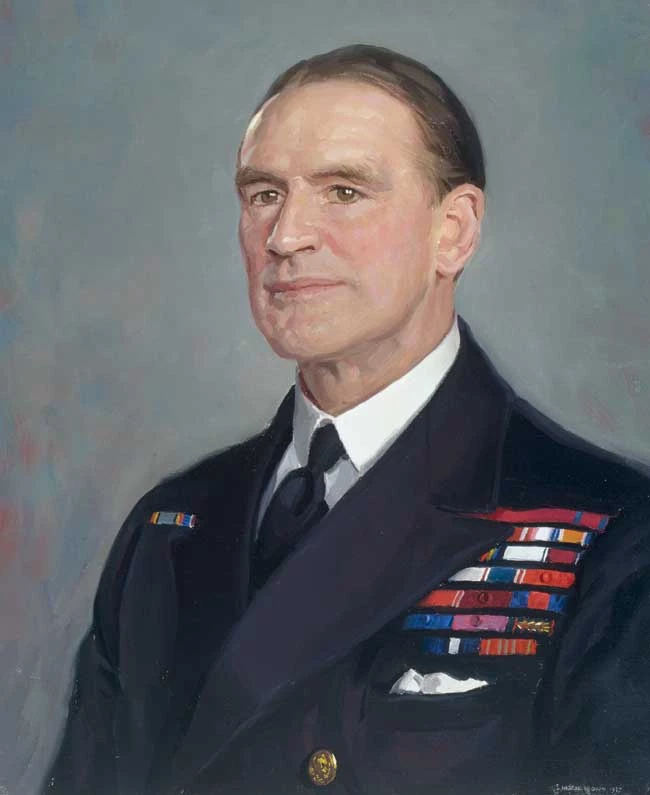
A portrait of Teddy Evans of the Antarctic, Evans of the Broke (1880-1957)

14 June 2013

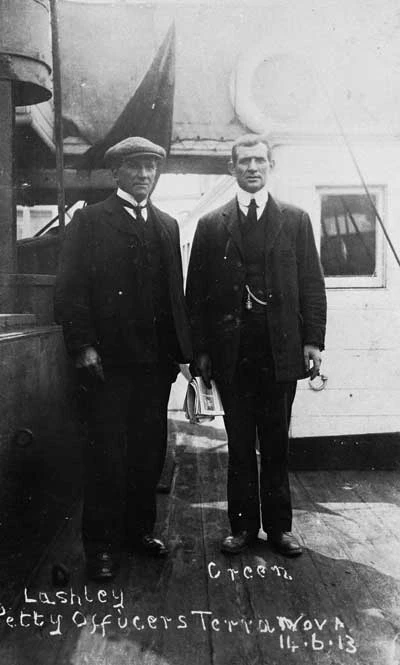
Petty Officers William Lashly (left) and Tom Crean on board the <em>Terra Nova</em> on her return to Cardiff, 14 June 1913

Petty Officers William Lashly (left) and Tom Crean on board the Terra Nova on her return to Cardiff, 14 June 1913

Teddy Evans

Evans of the Broke (1880-1957)

Teddy Evans was second-in-command of Captain Scott's ill-fated Antarctic expedition from 1910 to 1913 and, following Scott's demise, in command of the Terra Nova's journey back into the Roath Dock in Cardiff on 14 June 1913.

In 1937, when this picture was painted, Admiral Sir Edward Ratcliffe Garth Russell Evans (Teddy Evans) was 57 years old and Commander-in-Chief of The Nore, an operational command position of the Royal Navy based at Chatham in Kent. He had had a distinguished naval career, most notably during the First World War when, in command of HMS Broke, he famously rammed a German destroyer in a battle off Dover in 1917.

But he was also well-known to the public as second-in-command of Captain Scott's last Antarctic expedition from 1910 to 1913.

This painting is one of a series of twenty portraits of eminent Welsh men and women commissioned by Sir Leonard Twiston Davies in 1937 for the National Museum from the artist Sydney Morse-Brown (1903-2001), Principal of Carmarthen School of Art and Inspector of Art in Schools in Wales. The other sitters were selected from a diverse range of fields; they included the playwright and actor Emlyn Williams (1905-1987), former Secretary to the Cabinet Dr Thomas Jones (1870-1955), David Davies, 1st Lord Davies of Llandinam (1880-1944), architect Clough Williams-Ellis (1883-1978), novelists Richard Hughes (1900-1976), Charles Morgan (1894-1958) and Hilda Vaughan (1892-1985) and the World Flyweight Boxing Champion Jimmy Wilde (1892-1969).

Although claiming a Welsh ancestry, Evans' Welsh roots are obscure; he was born on 28 October 1880 in Marylebone in London; his father, Frank, was born in Oldham in Lancashire where his father, Henry Edwin Evans, was a provision merchant.

After an unruly childhood, Evans joined the Royal Navy in 1896. In 1902, as a Lieutenant, Evans served as second officer on the Morning, one of two ships sent by the Royal Geographical Society to help free Scott's first expedition ship, Discovery, from the ice of McMurdo Sound in Antarctica.

In 1909, Evans played on his tenuous Welsh links to seek support in Cardiff for a Welsh National Antarctic Expedition. But within a few months of floating his idea, he was told about Captain Scott's plans to return to Antarctica and was invited to join Scott as second in command. With him, he brought so much Cardiff and Welsh sponsorship that Scott named Cardiff the home port of the expedition ship, the Terra Nova.

On Scott's second (and last) expedition, with William Lashly and Tom Crean, Evans was in a supporting sledging party which accompanied Scott to within 150 miles of the South Pole before turning back on 4 January 1912, leaving Scott, Lawrence Oates, Edward Wilson, Henry Bowers and Edgar Evans to continue on to the Pole. Teddy Evans, Lashly and Crean were the last to see Scott's Polar Party alive.

Evans himself came close to death on his return journey to the expedition base hut. Suffering from scurvy, Evans had to be dragged on the sledge by Lashly and Crean. On 18 February 1912, leaving Lashly with the severely ill Evans, Crean pushed on, alone, for the final 35 miles to get help. Crean and Lashly were later awarded the Albert Medal for saving Evans.

After a period of recovery in England, Evans returned to Antarctica in charge of the Terra Nova to collect the expedition members and the Polar Party. On arriving at the base hut, with the ship decorated for celebration of a successful attempt on the Pole, he received the news that Scott and his companions had perished on their return journey. Now in command of the expedition, Evans brought the Terra Nova back into the Roath Dock in Cardiff on 14 June 1913.

Evans' career culminated in a peerage in 1945, as first Baron Mountevans. He died in Norway on 20 August 1957.

The Vale of Glamorgan - a hive of industry

31 July 2012

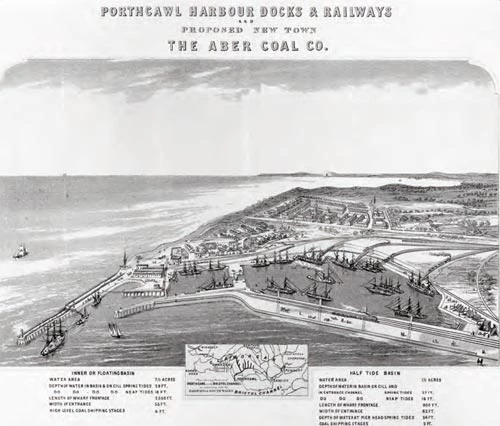
In the nineteenth century new docks were built at Porthcawl to help handle the worldwide demand for coal.

In the nineteenth century new docks were built at Porthcawl to help handle the worldwide demand for coal.

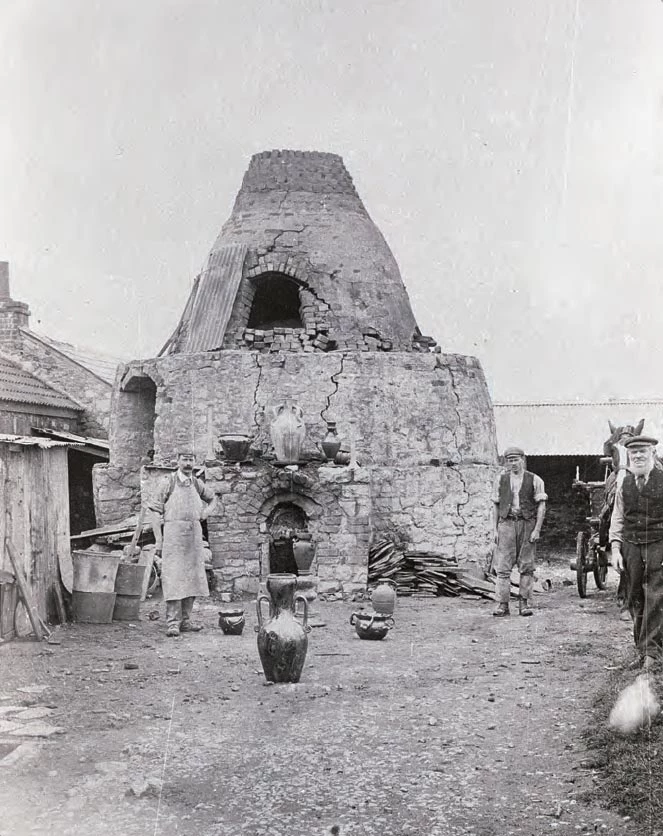
This view of Ewenny Pottery dates from the early twentieth century.

This view of Ewenny Pottery dates from the early twentieth century.

A limestone quarry near Aberthaw in the 1950s.

A limestone quarry near Aberthaw in the 1950s.

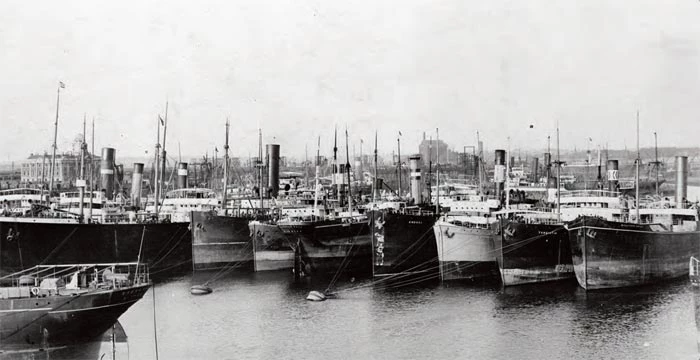
Barry docks, c.1910, with ships moored to buoys waiting to load coal.

Barry docks, c.1910, with ships moored to buoys waiting to load coal.

The Vale of Glamorgan - a hive of industry

Although the Vale of Glamorgan has been predominantly agricultural, there are a number of historically important industries in the area, some of which are still operational today. Some of those industries grew from the characteristic limestone geology of the area, while others are due to the area's lengthy coastline or relatively flat topography.

Pottery

There has been a pottery at Ewenny since the early fifteenth century. Successive generations of the Jenkins family have run it since 1610, and it remains a flourishing business today.

Quarrying

Limestone was widely quarried in this area. It was used for the building industry, and it was burnt to produce fertiliser and cement. It was also shipped across the Bristol Channel to Somerset and north Devon.

Mining

The valleys just north of the Vale Glamorgan held vast reserves of high-grade steam coal. Not even the huge, thriving docks at Cardiff could handle the worldwide demand for this premium fuel. In the nineteenth century new facilities were built at Porthcawl, Penarth and Barry - where just over 11 million tons were exported at its peak in 1913. Barry docks are still used today.

Captain Scott’s Welsh Flag

Elen Phillips, 1 March 2012

 The <em>Terra Nova</em>  leaving Cardiff on 15 June 1910. The Welsh flag flies from the mizzen mast, while the White Ensign flies from the mizzen gaff. On the foremast is the flag of the City of Cardiff.

The Terra Nova leaving Cardiff on 15 June 1910. The Welsh flag flies from the mizzen mast, while the White Ensign flies from the mizzen gaff. On the foremast is the flag of the City of Cardiff.

 The Welsh flag made by Howell & Co and presented to Scott's Expedition.

The Welsh flag made by Howell & Co and presented to Captain Scott's Antarctic Expedition.

Full-page advertisement for James Howell & Co - featured in a guide to the National Pageant of Wales, 1909. Published by the Great Western Railway Co.

Full-page advertisement for James Howell & Co - featured in a guide to the National Pageant of Wales, 1909. Published by the Great Western Railway Co.

The textile collection of Amgueddfa Cymru includes several Welsh flags. Most were originally hoisted above civic buildings; one has even flown in outer space! The oldest and largest example in the collection is associated with another daring mission — Captain Robert Falcon Scott’s 1910–13 British Antarctic Expedition.

The flag in question was displayed at a departure dinner held for Captain Scott and his officers in Cardiff on 13 June 1910 and was flown on the Terra Nova as the ship sailed from Cardiff and when she returned in 1913.

On St David’s Day 1911 and 1912, the flag was hoisted in Antarctica at Scott’s expedition base hut.

Made from a coarse woollen fabric, with selvages at the top and bottom edges, the flag measures an impressive 3.45m x 1.83m. The dragon motif is a cut-out which has been machine stitched to the green and white ground fabric. Details — such as its claws, tongue and eyes — have been achieved using black and white paint.

James Howell & Co. of Cardiff

We do not know who stitched and painted the flag, but we do know that it was made by James Howell & Co in Cardiff, probably by its dressmaking department.

During a lunch held for Lieutenant E. R. G. R. Evans of Scott’s expedition on 1 November 1909, Howell’s offered to make a large Welsh flag for him ‘to take to the South Pole’. Evans had given up plans for his own Welsh Antarctic Expedition and had joined Scott as second-in-command.

Evans was particularly influential in drumming up publicity and donations to the expedition, largely through the editor of the Western Mail, Willie Davies — it was Davies’s wife who came up with the idea of presenting a Welsh flag to the expedition.

Cardiff ‘one of the most enterprising cities in the Empire’

The inhabitants of Cardiff, in particular, had embraced the British Antarctic Expedition like no other region. Having achieved city status in 1905, Cardiff’s civic leaders were on a re-branding mission. They wanted, in the words of the Town Clark, J. L. Wheatley, to promote Cardiff ‘as one of the most enterprising cities in the Empire’.

Closely associating the city with Scott’s voyage to Antarctica — one of the last great frontiers — was indicative of this newfound civic confidence.

James Howell was a prominent figure within Cardiff’s business community. His department store, James Howell & Co., established in 1865, was the largest of its kind in Wales. It is of no surprise that James Howell felt compelled to contribute in some way to Scott’s venture. He had a track-record of ‘sponsoring’ civic events in Cardiff. In early 1909, he supplied one of his buildings on Wharton Street free-of-charge to the National Pageant of Wales.

Postcard issued to commemorate the National Pageant of Wales, 1909

Postcard issued to commemorate the National Pageant of Wales, 1909

The Marchioness of Bute as 'Dame Wales' at the National Pageant of Wales, July 1909.

The Marchioness of Bute as 'Dame Wales' at the National Pageant of Wales, July 1909.

1914 temporary exhibition of Edward Wilson's Antarctic watercolours and sketches

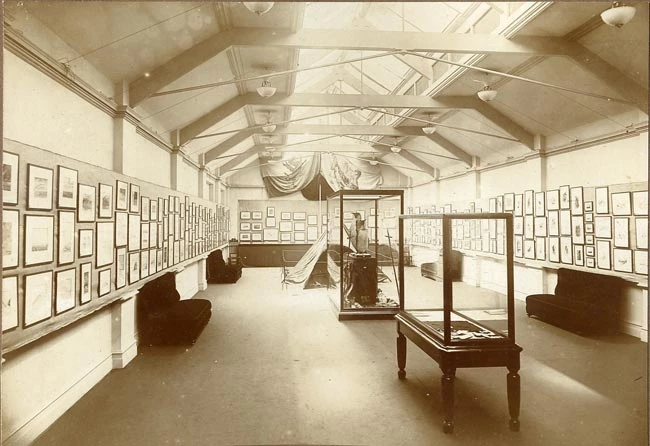
In the summer of 1914, the Museum held a temporary exhibition of Edward Wilson's Antarctic watercolours and sketches. Wilson was Chief Scientist on Scott's expedition and died with him on the return journey from the South Pole in 1912. The exhibition was held in the City Hall as the Museum building was still under construction at that time.

 The Welsh flag and the flag of the City of Cardiff, both flown on the <em>Terra Nova</em>  were displayed on the wall at the back of the exhibition. The two penguins in the display case are still in the Museum's collections.

The Welsh flag and the flag of the City of Cardiff, both flown on the Terra Nova were displayed on the wall at the back of the exhibition. The two penguins in the display case are still in the Museum's collections.

National Pageant of Wales

The National Pageant was essentially the great and the good of high society re-enacted scenes from Wales’s heroic past. The Pageant organisers required 40,000 items of costume and a team of 800 ‘lady workers’ were drafted in to help. For six months, the ladies set up camp in Wharton Street. As a Pageant sponsor, Howell would have also supplied professional dressmakers from his own workforce. Indeed, the iconic ‘Dame Wales’ dress worn in the Pageant’s opening scene on 26 July 1909 is remarkably similar in execution to the Terra Nova flag.

Both the dress and the flag have similar, naïvely designed, appliquéd Welsh dragon motifs. Made probably only months apart in workrooms associated with James Howell & Co., could they have been stitched by the same hands?

The Welsh Dragon of the 1890s

The dragon on the Terra Nova flag is noticeably different from that on today’s flag. It is more upright, a dragon segreant, rather than a dragon passant. This style of dragon was common during the 1890s and early 1900s. It can be seen, in various guises, on eisteddfod bardic chairs from this period, as well as on a host of other national insignia. The dressmakers of Howell’s probably adapted the Terra Nova dragon from such sources.

Standardising the Welsh Flag

In 1910, the National Eisteddfod of Wales wrote to the Museum asking for advice on the design of the dragon: ‘We are anxious to have as near as possible the true form of the device’. A curator replied: ‘I regret to say that we have no authentic specimen of the animal in the National Museum’. The letter was handed to Mr Thomas Henry Thomas, a recognized authority on these matters, who had for many years attempted to standardise the Welsh dragon. His sketches and papers are now deposited at the Museum.

The flag gets cut up for souvenirs

When the Terra Nova returned to Cardiff in June 1913, with this Welsh flag flying from the mainmast, the Western Mail noted that it was ‘considerably smaller than when first hoisted three years ago. While the Terra Nova was berthed at Lyttleton, in New Zealand, the representatives of the Welsh societies at that port were allowed to cut away portions of the flag and to keep them as mementoes of the expedition’.

At a dinner held in the Royal Hotel on 16 June 1913 to mark the expedition’s return to Cardiff, Teddy Evans announced that the flag was to be given to the National Museum of Wales. However, following the festivities there seems to have been some confusion as to what Evans had done with the flag. He thought he had given it to the Lord Mayor, but in fact it was found in the Royal Hotel some four months later!