: Conflict & Invasion

Metal detector discoveries from Monmouthshire: Two spectacular treasure finds

16 April 2007

In 1998 two separate but significant discoveries were unearthed by metal detectorists in Monmouthshire - a unique hoard of roman coins from Rogiet and a gold ring from Raglan. Both finds were significant and fine examples of treasure that are now in the collections of Amgueddfa Cymru.

The Treasure Act of 1997

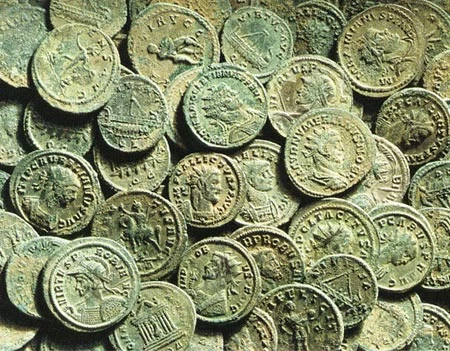
The Rogiet hoard, as found.

The Rogiet hoard, as found.

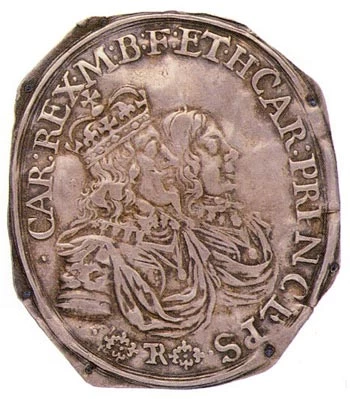
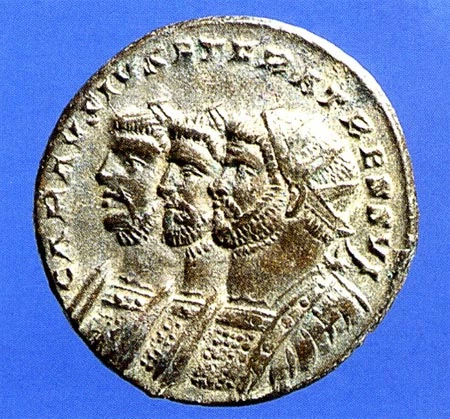
'Carausius and his brothers' (Rogiet hoard)

'Carausius and his brothers' (Rogiet hoard)

The Treasure Act of 1997 covers certain classes of coins and precious metal objects found in England and Wales and has extended legal protection to single objects of gold and silver and to virtually all coin hoards. The new regulations have provided improved protection for certain categories of newly-found antiquities, and better opportunities for preserving these for the public benefit.

Since the act came into force, staff from Amgueddfa Cymru have handled numerous finds, including the spectacular discoveries of an unique hoard of Roman coins from Rogiet and a massive gold signet ring from Raglan.

One of the finest hoards of roman coins ever found in Wales

In September 1998, thousands of Roman coins from the third century AD were discovered by Colin Roberts at Rogiet, Monmouthshire. This was one of the finest hoards ever recorded from Wales and were declared treasure in December 1998.

The 3,750 coins had been buried, possibly in a wooden box, around AD 295-6 (we believe this to be the date since there were no coins later than this in the box) and span a forty-year period, with twenty-two emperors represented, a sign of the political instability of the times.

Political trouble

Their deposit, and the owner's failure to recover them, probably relate to this military and political instability. At the same time, however, the currency of the Roman empire was going through major change. In AD 294-5, new gold, silver and copper alloy coins were introduced to uniform designs and standards empire-wide.

The hoard is made up of an unusual composition for a British find as the coins found in it were not circulated in great numbers here. The hoard is significant as it contains a number of faulty issues of the 260s, and also because it contains over 750 coins of the two individuals who declared themselves Emperor in Britain, Carausius (287-93) and Allectus (293-96). These are not often found in hoards and contain rare denominations representing a variety of warships.

Also included in the hoard is a particularly fine specimen, perhaps the best in existence, of a classic rarity of the Romano-British coinage series. In around 292, Carausius seems to have wanted official appreciation from the emperors Diocletian and Maximian, issuing coinage in their names as well as his own. He even depicted himself with the others on a single design, with the slogan 'Carausius and his brothers'. The feeling was not shared, and within a year Carausius was gone, murdered by his minister Allectus.

An ornate gold ring from Raglan

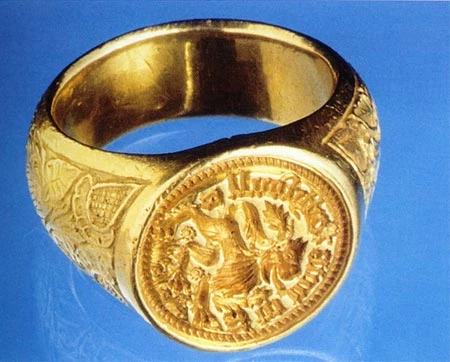
The Raglan Ring

The Raglan Ring

In the same year as the Roman coins were unearthed at Rogiet, a massive and ornate gold signet ring was found near Raglan, Monmouthshire, by Ron Treadgold, and was also declared treasure. The ring has a circular bezel engraved with a design of a lion on a bed of flowers, within a single cable border with the legend: to yow feythfoull or feythfoull to yow and initials W A either side of the lion.

The finest example of late medieval gold jewellery to be found in Wales

The shoulders of the ring are decorated with flowers and leaves and is significant for the study of late medieval rings as very close comparisons exist in the engraving on the gold episcopal ring of John Stanbury, Bishop of Hereford (1452-1474), a mid 15th century cross from Winteringham, Lincolnshire and a gold ring from Godstow Priory, Oxfordshire. The Raglan ring is likely to date from the middle or third quarter of the 15th century, and is perhaps the finest example of late medieval gold jewellery ever to be found in Wales.

The ring's owner

The original owner of the seal has yet to be identified, though the finding of the ring near Raglan and initials W A make William Herbert, first Earl of Pembroke (executed after the battle of Banbury during the Wars of the Roses, in 1469) a possibility. He married Anne Devereux, and the initials might stand for William and Anne.

The size of the ring suggests that it was worn by a man, and the inscription may be regarded as a sign of faithfulness to his wife. Herbert was one of two men referred to as the 'chosen and faithful' to the new king, Edward IV, and on Edward's coronation he was ennobled. However, the identification of the ring as that of William Herbert is not proven and other names are possible.

At present, all that we can safely say is that the ring was a mark of rank, and probably belonged to an important officer or visitor to Raglan during the second half of the 15th century.
When the Vikings invaded North Wales

2 April 2007

Historical records tell us of a series of terrifying attacks by Viking invaders on the coasts of Britain, France and Ireland in the last decade of the 8th century. Archaeological evidence show that these invaders may not have been as brutal as records claim.

The first recorded raid on Wales occurred in 852, and we know of attacks by

Vikings on Anglesey and Gwynedd from 854 onwards. Rhodri Mawr, ruler of Gwynedd (844-78), led resistance to these early onslaughts, killing the Danish leader Gorm in 855.

In 903 Vikings came to Anglesey after being driven out of Dublin. According to both Irish and Welsh records they failed to gain a foothold in Wales, and sailed on to Chester. Again in 918, Anglesey was ravaged by Vikings.

Frequent attacks occurred on the island during the second half of the 10th century on the island; Olaf of Dublin built a castle known as 'Olaf's Castle' or 'Castell Bon y Dom' about the year 1000.

This one-sided historical record of Vikings terrorising the land has now been transformed by archaeology. Viking contact was certainly hostile and brutal at times, but often opportunist. In some areas, they rapidly settled as peaceful farmers, and archaeology has provided evidence for them as colonisers, merchants, and skilled craftsmen.

The nature of Viking settlement in Wales remains one of the mysteries of early medieval archaeology, none more so than on Anglesey. This is emphasised when the Viking measurement of 'a day's sail' is plotted from the Isle of Man, Dublin, Chester and the Wirral, for they all intersect in Anglesey waters.

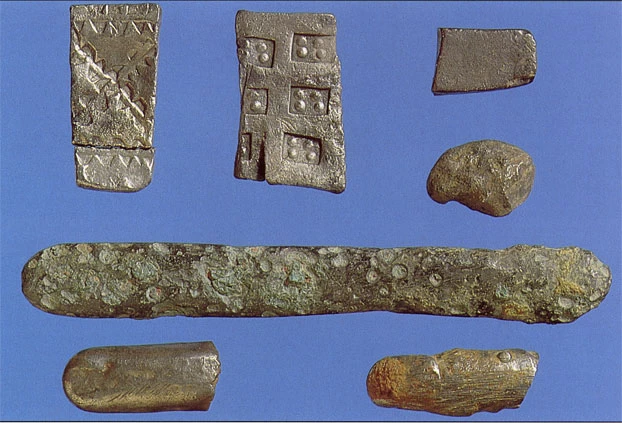
10th-century fragments of silver ingots and arm-rings

10th-century fragments of silver ingots and arm-rings

The Vikings name Anglesey

Physical evidence of the Vikings in Wales is even less definite. Certainly, we know that the Vikings were familiar with Anglesey because of the place-names of Scandinavian origin which have been given to prominent coastal features as navigational aids: Onguls-ey itself, traditionally thought to incorporate a personal name - presumably a Viking leader, The Skerries, Piscar, Priestholm (prestaholmr) and Osmond's Air near Beaumaris, from Asmundr & eyrr, a gravel bank near the sea.

Uncovering evidence of Vikings in Wales

For a more realistic picture of Viking Wales, we have to turn to archaeology. Most Viking silver found in Wales has been discovered in coastal areas. St Deiniol's monastery in Bangor has produced two hoards, one dated to around 925, and a small group of coins deposited about 970. The

Bryn Maelgwyn hoard of coins near Llandudno was deposited in the mid-1020s, and may be Viking booty rather than local savings; and a remarkable hoard of five complete Viking silver arm rings of were found in the 19th century at Red Wharf Bay, Anglesey.

The Viking Age settlement at Llanbedrgoch

One of the most intriguing archaeological sites belonging to the Viking period is to be found at

Llanbedrgoch , Anglesey and research by Amgueddfa Cymru has helped reveal the nature of Viking Age life which has puzzled scholars for decades.

Distinguished Service - campaign & gallantry medals

30 March 2007

The medal collections of Amgueddfa Cymru

Silver 'Forlorn Hope' badge 1643 — this would have been sewn onto a sash or tunic.

Silver 'Forlorn Hope' badge 1643 — this would have been sewn onto a sash or tunic.

South Africa Medal 1877-79: '1428 Pte E. Jones 2.24th Foot'.

South Africa Medal 1877-79: '1428 Pte E. Jones 2.24th Foot'.

Sergeant Evan Jones, c.1917.

Sergeant Evan Jones, c.1917. He was born in Ebbw Vale in 1859 and enlisted in the Monmouth Militia in 1874, joining the 24th Foot in 1877. He served in South Africa, where on 23 January 1879 he was one of the tiny garrison that held Rorke's Drift against a massive Zulu attack. He later served in the Mediterranean, India and Burma, and remained in uniform with various units until 1920. He died in Welshpool in 1931.

The British medal collections of Amgueddfa Cymru were formed back in the 1920s thanks to gifts from two men.

In 1922, Colonel Sir William Watts donated his collection of 105 British naval and military medals, and in 1923 W. Lisle Bowles made generous gifts of similar medals.

From these, the Museum gained a representative collection of British military campaign medals, from the battle of Waterloo (1815), the first engagement for which all who took part received a medal, to the Great War of 1914–18 and beyond. However, only a small number of these military and gallantry medals had any Welsh associations.

In more recent years, therefore, occasional purchases and donations have concentrated on these two categories, our stated policy being to collect medals 'relating to the deeds of Welsh people'.

'Forlorn hope'

The earliest military award in the collection is a badge for the 'Forlorn Hope', dating from the English Civil War and awarded to selected troops who acted as vanguards. This was a Royalist award introduced in 1643 by Thomas Bushell, a mining engineer and master of the mint at Aberystwyth.

Civilian Heroes

The Albert Medal was introduced in 1866, at first awarded for gallantry at sea, but extended to the saving of life on land in 1877 to reward the heroes of Tynewydd Colliery, Rhondda, for the successful rescue of five colleagues trapped by flooding for nine days deep underground. Several Albert Medals relating to this incident are in the Museum's collection. When the Edward Medal was created in 1907 for gallantry in mines and quarries, one of the first two awards went to a Welshman, Henry Everson, of Penallta Colliery; the medal was donated to the Museum by his son in 1978.

From Albert to Edward to George

In December 1971, the Albert and Edward Medals were withdrawn, to be replaced by the George Cross. Of those who elected to exchange awards, seven chose that their previous medals be donated to the Museum. Two of these, Gordon Bastian and Eynon Hawkins, held the Albert Medal for gallantry at sea, having rescued fellow crewmen in torpedoed ships in 1943. Three 'land' Albert Medals are those of Walter Cleall; Cardiff policeman Kenneth Farrow, who attempted to save a small boy from drowning; and Margaret Vaughan, who as a schoolgirl saved a boy caught by the rising tide at Sully Island, near Barry, from drowning. Edward Medals were given to Bert Craig (Mountain Ash, 1922) and Thomas Thomas (Brynamman, 1933).

Heroism and Great Gallantry

In 1990, the Museum acquired three George Medals with Welsh connections.

The George Cross and George Medal were created in 1940, primarily as a response to the increased exposure of civilians to great danger during the Blitz. On 19 August 1940, the Royal Naval fuel depot at Llanreath, Pembrokeshire, was bombed and burned for seventeen days, destroying over thirty million gallons of oil. This was the biggest fire ever known in Britain. Norman Groom was one of 650 firemen who fought the blaze and one of three Cardiff men to receive the George Medal. Thomas Keenan, a nightwatchman, removed an incendiary bomb from the top of a tank containing 300,000 gallons of petrol at a depot in Ferry Road, Cardiff, on 2 January 1941.

The awards highlighted here form just the tip of a historical iceberg. Unlike those of any other country, Britain's campaign medals and most of its gallantry awards have, since the early 19th century, been impressed with the name (and for military awards the number, rank and unit) of their recipients. Even the millions of campaign stars and medals of the Great War of 1914–18 were individually named, though those of the Second World War were issued unnamed, presumably to save costs. Most medals are, therefore, starting points for historical research into the lives of individuals.