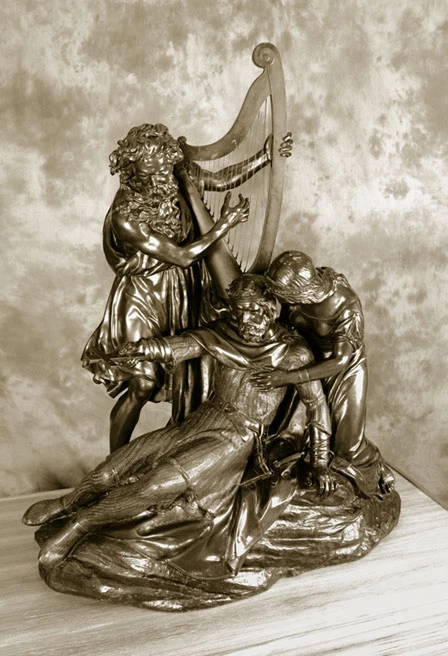
The death of Tewdric Mawr - King of Gwent 11 October 2007 This sculpture depicts the death of Tewdrig Mawr, saint and King of Gwent and Morgannwg, who died at the moment of victory over the Saxons at Mathern, around 630AD. The composition originated as a plaster shown at the Abergavenny Eisteddfod in 1848. This was subsequently shown at the Royal Academy in 1849. A bronze electrotype of it was exhibited by Elkington, Mason & Co. in the Great Exhibition of 1851. Two casts are known today, both also made by Elkington’s. The other is on display in the Brecknock Museum. This one, which is dated 1856, was given by a group of subscribers to Morris C. Jones, editor of the Montgomery Collections, in 1876. A brass plate recorded: ‘This bronze group represents the death of Tewdric Mawr, King of Gwent and Morganwg 610 AD. Tewdric Mawr, in his old age, was induced to appear in defence of his country against the Saxons whom he thoroughly vanquished near the junction of the Severn and the Wye. The Welsh King, though mortally wounded, urged his brave followers to pursue the fleeing Saxons. In his dying moments he was comforted by his daughter Marchell, mother of Brychan, while an aged Bard proclaimed to him by harp and song, the victory. The group was designed, from suggestions by Lady Llanover, by the late John Evan Thomas F.S.A. and modelled by his brother W. Meredyth Thomas Medal Student RA. Elkington & Co. fect, Liverpool.’ The sculptor John Evan Thomas was born in Brecon in 1810. He studied under Sir Francis Chantrey and on the Continent. He produced the first of many church monuments in 1831, and began to practice as a portrait sculptor in London in 1834. He established a studio at 7 Lower Belgrave Place, from which he frequently exhibited portrait busts at the Royal Academy until 1862. Despite his move to London, Thomas retained close links with the gentry of his home town and with the principal Welsh landed families, many of whom were to sit for him. Consequently he was the first Welsh sculptor to establish a significant career and reputation largely through Welsh patronage. Thomas’s principal works are a statue of the 2nd Marquess of Londonderry (Westminster Abbey), a statue of the 2nd Marquess of Bute (also exhibited in Great Exhibition and cast in bronze in 1853, now in Cardiff city centre), Sir Charles Morgan (Newport), a memorial to the 1st Duke of Wellington (Brecon), John Henry Vivian (Swansea) and the statue of the Prince Consort erected on Castle Heights, Tenby, in 1865. Although principally a portrait sculptor, he contributed mediaevalising statues of Henri de Londres, Archbishop of Dublin, and of William, Earl of Pembroke to Pugin’s scheme for the rebuilt House of Lords in 1848. Described by Benedict Read as the ‘only unqualified example of ideal sculpture with history as a subject matter’, The Death of Tewdric is a significant episode in mid-Victorian art. It is also of fundamental importance in the context of the Welsh national revival of the 1830s and 1840s, being the principal work of art to emerge from the triennial Abergavenny eisteddfodau patronised by Lady Llanover. Peter Lord calls it ‘the most notable example of national academic art in the first half of the 19th century’. The Death of Tewdric also appears to have been the largest work exhibited by Elkington, Mason & Co. at the Great Exhibition in 1851, employing the firm’s newly invented electrotype process. Both the bard (derived from the well-known de Loutherbourg print of 1784) and his harp are formed as separate sections, and are bolted to the base. The Death of Tewdric, 1848–56 Bronze, height 167 cm (65 inches), length 127 cm (50 inches), width 63 cm (25 inches) Signed: I EVAN THOMAS Sc and Elkington Mason & Co fect 1856 Bronze, cast by Elkington & Co, Birmingham and Liverpool
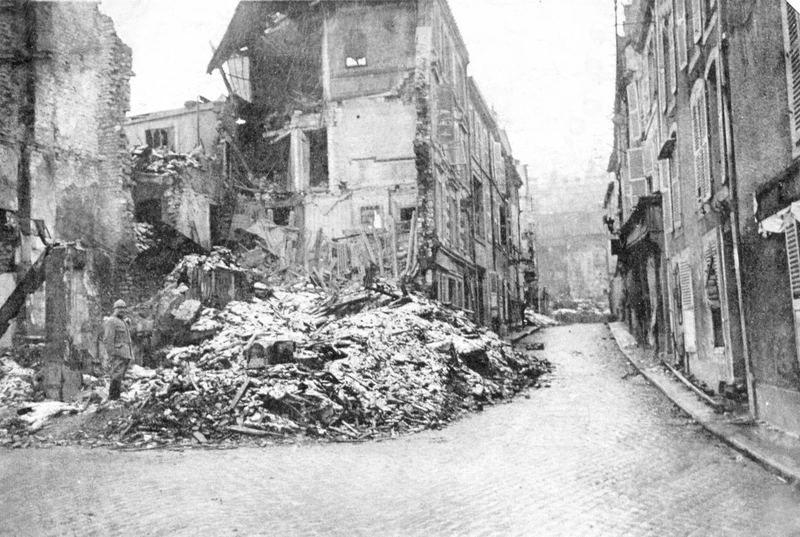
The Davies Sisters during the First World War 29 July 2007 Gwendoline Davies visited the damaged and largely empty French city of Verdun on 9 and 10 March 1917, where she acquired this postcard image as a souvenir. Private collection (Lord Davies) The First World War had a profound effect on the lives of Gwendoline and Margaret Davies, two sisters from mid Wales whose gifts and bequests completely transformed the range and quality of Wales's national art collection. They lost much-loved relatives and served with the Red Cross in France, seeing the destruction first hand. They were deeply conscious of the horrors experienced by both British and French soldiers, and shocked at the suffering of civilian refugees. While their brother David flung himself into the cause of international peace, the sisters hoped to repair the lives of ex-soldiers traumatized by the war, through education in the crafts and through music. Out of this grew the idea of Gregynog, as a centre for the arts, and for the discussion of social problems. Bringing Refugee Artists to Wales On 4 August 1914 Germany invaded Belgium, precipitating the First World War. Over a million Belgians fled their homes. The Davies family decided that Belgian artists should be brought to Wales, where they could work in safety, and inspire the country's art students. Major Burdon-Evans, their agent, and their friend Thomas Jones journeyed to Belgium where they assembled a group of ninety-one refugees, including the sculptor George Minne, and the painters Valerius de Saedeleer and Gustave van de Woestyne and their families. All three artists were to spend the rest of the war as refugees, largely dependent on the Davies family for support. While their impact on the arts in Wales was limited, the work of all three was to be profoundly influenced by their Welsh exile. The Sisters in France, 1916–1918 Initially the sisters undertook charitable work at home in connection with the war. They were keen to do more 'in the way of helping', but few women managed to go out to France. One way of doing so was to volunteer through the London Committee of the French Red Cross. There was little provision in the French army for the welfare of the ordinary soldier, and the Committee sent women to operate canteens at railway stations, hospitals and transit camps. In July 1916 Gwendoline was posted to a transit camp near Troyes. Margaret joined the canteen there in June 1917, and her journals record their lives at this period. The sisters were deeply moved by the stoicism of the ordinary soldiers of the French army and by the suffering of exhausted, sick, and hungry refugees. Wartime collecting The sisters sometimes managed to add to their art collection during the First World War. Although wartime travel in France was difficult, trips to Paris on Red Cross business provided Gwendoline with opportunities to visit the Bernheim-Jeune gallery. She bought a Daumier and a Carrière there in April 1917, and paintings by Renoir, Manet and Monet in December. In February 1918 she bought her two celebrated landscapes by Cézanne, The François Zola Dam and Provençal Landscape, which are among her most important and far-sighted purchases. In February 1916, Gwendoline Davies spent £2,350 on ten oils and a drawing by Augustus John. Both she and Margaret went on to acquire more works by John, and they collected the work of no other artist on this scale. Gwendoline was determined that the work of Augustus John be seen at Amgueddfa Cymru, later placing several of her own purchases on loan to the Museum. Guide to the paintings Paul Cézanne (1839–1906), Provençal Landscape, oil on canvas, about 1887–8 Bought by Gwendoline Davies with Cézanne's The François Zola Dam in 1918, this picture cost half as much, £1,250. It was probably painted at his family's property outside Aix-en-Provence. Full of the shimmering colour of the South of France where the sisters had holidayed in 1913–14, it must have seemed a world away from war-time Paris in winter. Amgueddfa Cymru (Bequest of Gwendoline Davies, 1951) NMW A 2438. Paul Cézanne (1839–1906), The François Zola Dam, oil on canvas, about 1879 This landscape is one of Gwendoline Davies's greatest pictures, bought in Paris for £2,500 in February 1918. The Troyes canteen was closed for repairs. She was in the city, then under intermittent German bombardment, on Red Cross business. She may have seen it on a previous visit, as in January Margaret had translated from the French the art dealer Ambroise Vollard's anecdotal account of Cézanne's life. Together with Provençal Landscape acquired with it, this was one of the first Cézannes to enter a British collection. Amgueddfa Cymru (Bequest of Gwendoline Davies, 1951) NMW A 2439. Camille Pissarro (1831–1903), Sunset, the Port of Rouen (Steamboats), oil on canvas, 1898 Margaret Davies bought several works by Pissarro at the Leicester Galleries, London, in June 1920. This was the most expensive at £550. The previous year she had worked at a canteen in Rouen run by the Scottish Churches Huts Committee. Amgueddfa Cymru (Bequest of Margaret Davies, 1963) NMW A 2492.
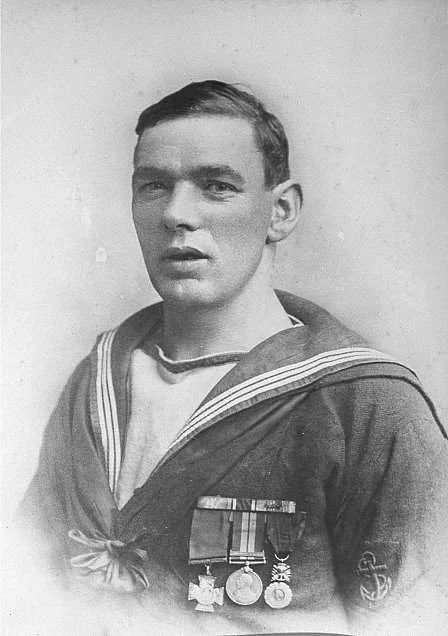
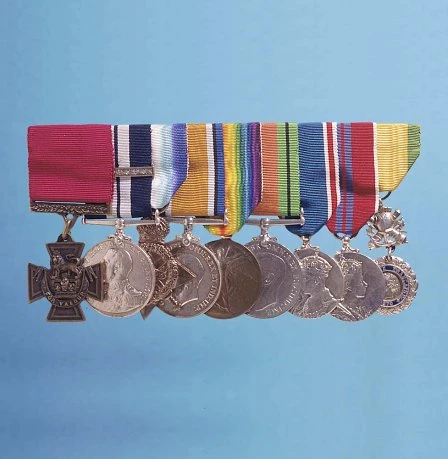
A 'mystery' Victoria Cross and a stuffed parrot 26 April 2007 William Williams VC. Image © Kenneth Williams Collection. William Williams' medals. Left to right: Victoria Cross, Distinguished Service Medal with second award bar, Great War service medals (1914-15 Star, War Medal, Victory Medal), Defence Medal 1939-45, Coronation Medals (1937 and 1953), France, Médaille Militaire. In 1917 William Williams was awarded the Victoria Cross for his role in the sinking of a German submarine. On 21 July 1917 an Anglesey seaman, William Williams, received the Victoria Cross, Britain's foremost gallantry award. The citation on the award read 'selected by the ship's company of one of H.M. ships to receive the Victoria Cross under Rule 13 of the Royal Warrant'. This vague citation led this and other similar cases to become known as the 'Mystery VCs'. What lay behind it? U-boats and Q-ships During World War I (1914-18), the German Navy attempted to blockade Great Britain, using its submarine (U-boat) fleet to cut off food and vital supplies. One tactic used by Britain to trick the German submarines was to use armed ships disguised as merchant ships. These were known as 'Q-ships'. These ships went to great lengths to ensure that they were attacked, in the hope that the submarine would then surface and expose itself to the hidden guns of the Q-ships. Williams served on several Q-ships and already held the Distinguished Service Medal for his part in the sinking of a German submarine in February 1917. H.M.S. Pargust Williams was awarded the Victoria Cross for his involvement in the sinking of the German submarine UC-29 on 7th June 1917. The H.M.S Pargust was torpedoed and the crew were seen to abandon their disguised Q-ship - complete with a stuffed parrot in a cage - but unknown to the Germans, a small number of men remained hidden on board. For over 30 minutes, Seaman Williams held in place the starboard gun port, its releasing weights having been freed by the torpedo's explosion. His actions prevented premature exposure of the gun until the moment came to open fire when the German submarine eventually surfaced nearby. The achievement of sinking UC-29 was recognized by the award of the Victoria Cross to H.M.S. Pargust, the first time a ship had been honoured under the Rule for rewarding an act of collective gallantry. One officer (Lieutenant R.N. Stuart) and one rating were elected by the crew to receive the award. Williams, whose quick thinking and strenuous effort had saved the day, was the rating. His distinguished career held one more twist: on 8 August 1917, H.M.S. Dunraven (Pargust's successor and another Cardiff ship) was sunk off the French coast after a five-hour battle with another submarine. Williams received a bar (second award) to his DSM for his gunnery work on this occasion: his third gallantry award in under six months! William Williams was discharged from the Royal Naval Reserve in November 1918. He settled in Holyhead and was a founder member of the local branch of the British Legion. He died on 23 October 1965. Background Reading My mystery ships by G. Campbell. Published by Hodder & Stoughton (1928). Sea killers in disguise by T. Bridgeland. Published by Leo Cooper (1999).
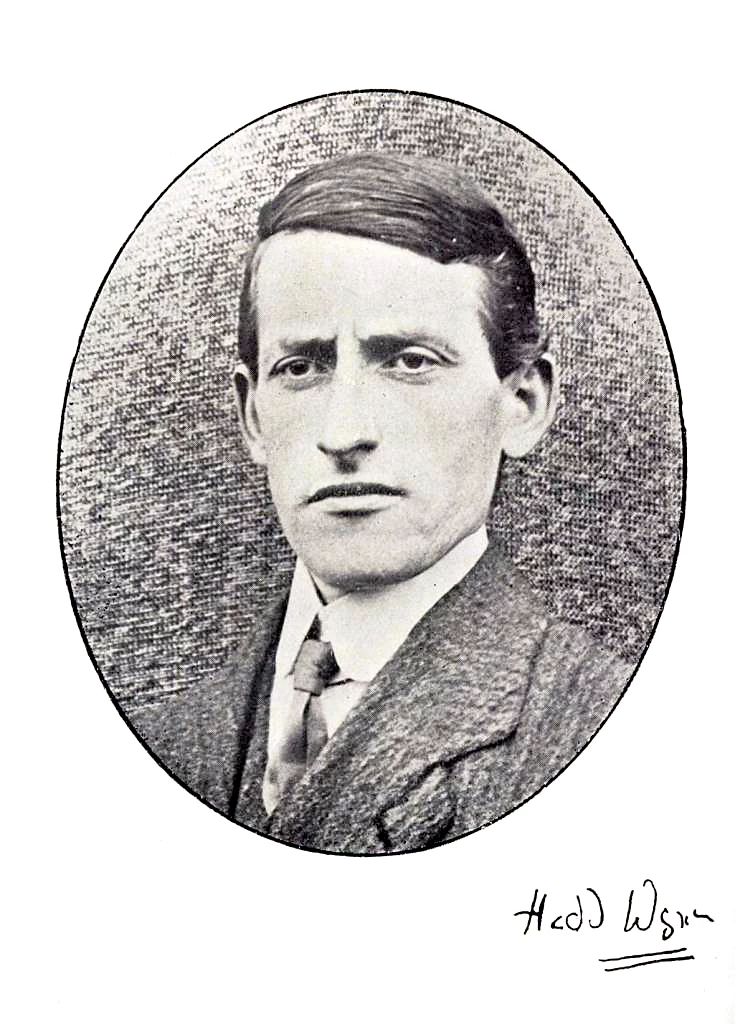
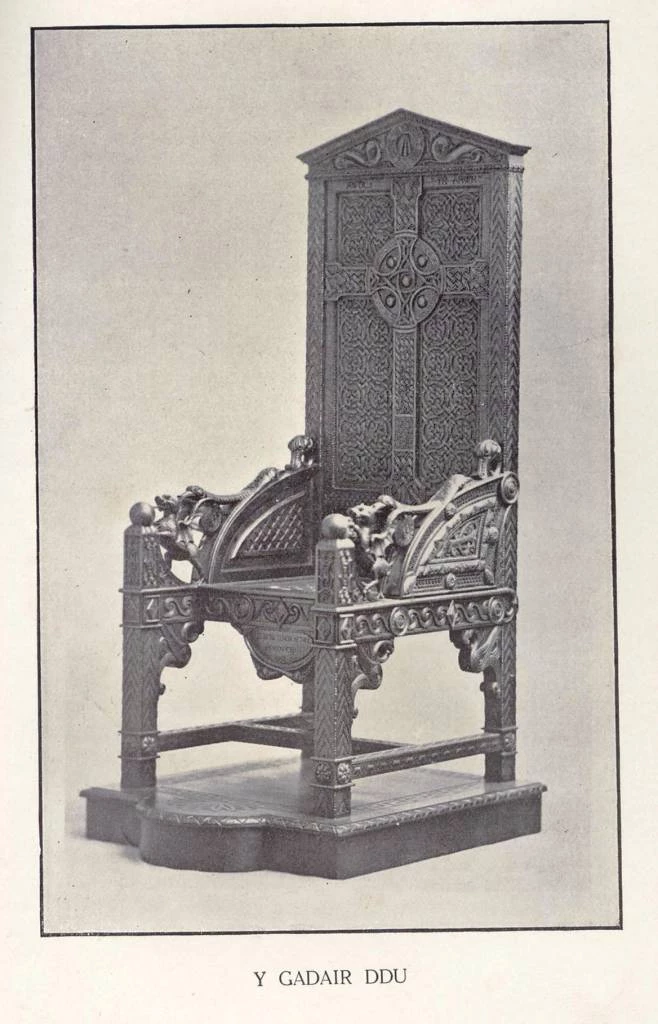
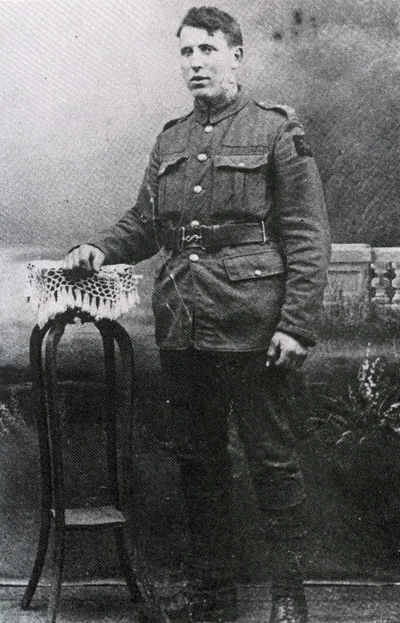
Welsh bard falls in the battle fields of Flanders 25 April 2007 "It was the last day of July, you see. The first day of probably the biggest battle that ever took place. The battle of Passchendaele". (Simon Jones, 1975). Over a quarter of a million Welshmen enlisted to fight in the First World War. Among them was the poet Ellis Humphrey Evans of Trawsfynydd, better known under his bardic name of Hedd Wyn. He was dispatched for active service in 1917. Just a few months later he was dead - killed in battle on the fields of Flanders. The Black Chair Six weeks later he was posthumously awarded the chair at the National Eisteddfod at Birkenhead for his poem Yr Arwr (The Hero) which he had completed shortly before his death. The chair itself was draped in black during the chairing ceremony, and has since been known as the Y Gadair Ddu (The Black Chair). By the age of 28 he had won four Eisteddfod chairs for his poetry. Ellis Humphrey Evans (Hedd Wyn; 1887 - 1917) The Black Chair Witness account Mr Simon Jones of Aberangell, Mid Wales, served in the same regiment as Hedd Wyn, and witnessed his falling on the field of battle. Hear or read his account, as recorded by St Fagans National Museum of History in 1975: AWC 4763. Recorded: 26.9.1975, by Robin Gwyndaf. AWC 4764. Recorded: 26.9.1975, by Robin Gwyndaf. "It was the last day of July, you see. The first day of probably the biggest battle that ever took place. The battle of Passchendaele. And we were going over the top at half past four. We started over Canal Bank at Ypres, and he was killed half way across Pilckem (Ridge). I've heard many say that they were with Hedd Wyn and this and that, well I was with him as a boy from Llanuwchllyn and him from Trawsfynydd. I saw him fall and I can say that it was a nosecap shell in his stomach that killed him. You could tell that. You couldn't stay with him - you had to keep going, you see. When did you see him last, to speak to him? Oh, it's difficult to say. Perhaps I spoke to him that morning, because if I saw him get killed, I must have been near to him. I remember well that we had an officer leading us called Newman, Lieutenant Newman. He was going in front of me, and I saw him fall on his knees and grab two fistfuls of dirt. Well there was nothing but dirt there, you see - the place was all churned up. He was dying, of course. What did you do? Could you do something when you saw Hedd Wyn... ? Nothing at all. No. There were stretcher bearers coming up behind us, you see. There was nothing - well, you'd be breaking the rules if you went to help someone who was injured when you were in an attack. Your business was to keep going. How did you feel when you saw your friend fall? Well I'll tell you straight. To be honest, you had no time to sympathise because you didn't know whether you'd be in the same situation as him in a couple of yards." Simon Jones in the First World War "I saw him fall and I can say that it was a nosecap shell in his stomach that killed him. You could tell that. You couldn't stay with him - you had to keep going, you see". (Simon Jones, 1975). Lost generation Hedd Wyn was one of 32,000 soldiers to be killed in the attack on Pilckem Ridge. The devastated village of Passchendaele itself was not captured until 6 November, 98 days after the start of the battle. This slow advance over little more than five miles of ground was achieved with the loss of 310,000 Allied and 260,000 German lives. The Black Chair remains a potent symbol of the devastating impact of the First World War on communities throughout Wales, and the unfulfilled potential of a whole generation of young Welsh men.
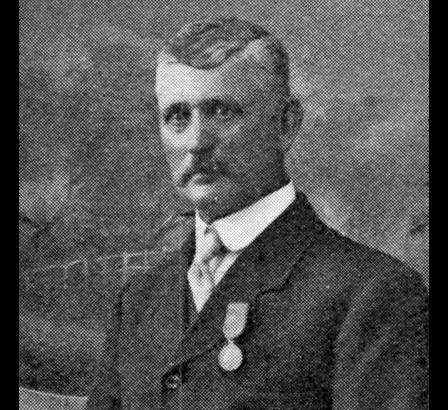
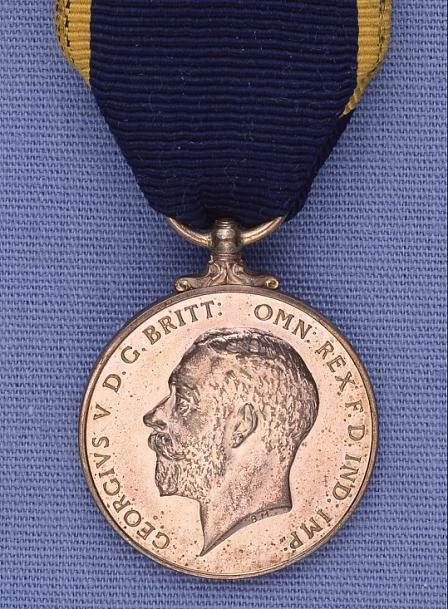
Heroic rescue for man dangling from girder 50 meters high 23 April 2007 Edward Medal for bravery James Dally, wearing the Edward Medal. From the Great Western Railway Magazine, September 1915. In October 1914 James Dally saved a colleague from a 52m fall from a viaduct. He was awarded the Edward Medal for his bravery. On 28 October 1914, the Crumlin viaduct, near Newport, south Wales, was being painted by using a staging of planks timber supports. Around 5:00 pm, one of the supports broke, and the foreman, Mr Skevington, fell 52m (175 feet) to his death into the goods yard below. The second man, Thomas Bond, just managed to grip onto the main bridge structure in time, but was left dangling in mid air... Heroic rescue The Crumlin Viaduct. The location of the rescue is marked with a red dot. Bridgeman James Dally, of Crumlin, was nearby, supervising the operation. He immediately crawled out from the gangway on to the diagonal bracings - which were a mere eight centimetres wide: "I asked him to swing his legs in an upward direction, so as to get them around the stretcher, if possible. This he succeeded in doing. I then got hold of Bond's legs; & told him to move one hand at a time & by that means he was drawn nearer to the gangway & when he was near enough I got a better hold of him, & eventually landed him safely on the gangway." According to the London Gazette, "The man would probably have lost his life had it not been for the courage and presence of mind shown by Dally." Bond himself had no doubts: "I was suspended in the air; but if Mr Dally had not been on the gangway at the time, & taken the action he did I could not have saved myself... I owe a deep debt of gratitude to Mr Dally, for had it not been for the encouragement he gave me, & the prompt effort he made, I would have undoubtedly met the same fate as Mr Skevington." Acts of courage in other industries James Dally's Edward Medal, Industry, Second Class (bronze), front view. In the event, Dally was awarded the Edward Medal, which he received from King George V on 12 July 1916. This medal had been created in 1907 to reward "heroic acts performed by miners and quarrymen" and in 1909 its award was extended to acts of courage in other industries. The Crumlin Viaduct was 512m (1,680 feet) long and rose some 60m (200 feet) above the valley of the Ebbw. The viaduct was opened on 1 June 1857 and by 1863 was part of the Great Western Railway network; it was demolished in 1965-66. Background Reading For Those in Peril, by Edward Besly. Published by the National Museums & Galleries of Wales (2004). Gallantry: its public recognition and reward in peace and war at home and abroad by A. Wilson and J. H. F. McEwen. Published by Oxford University Press (1939).