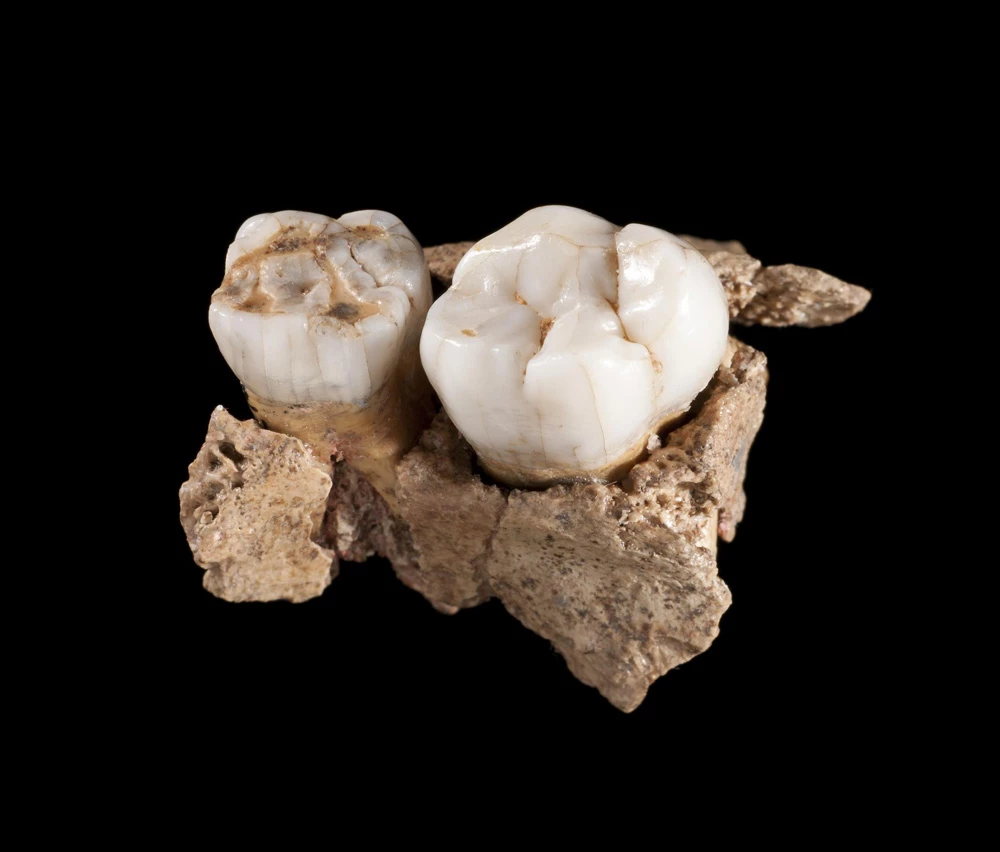
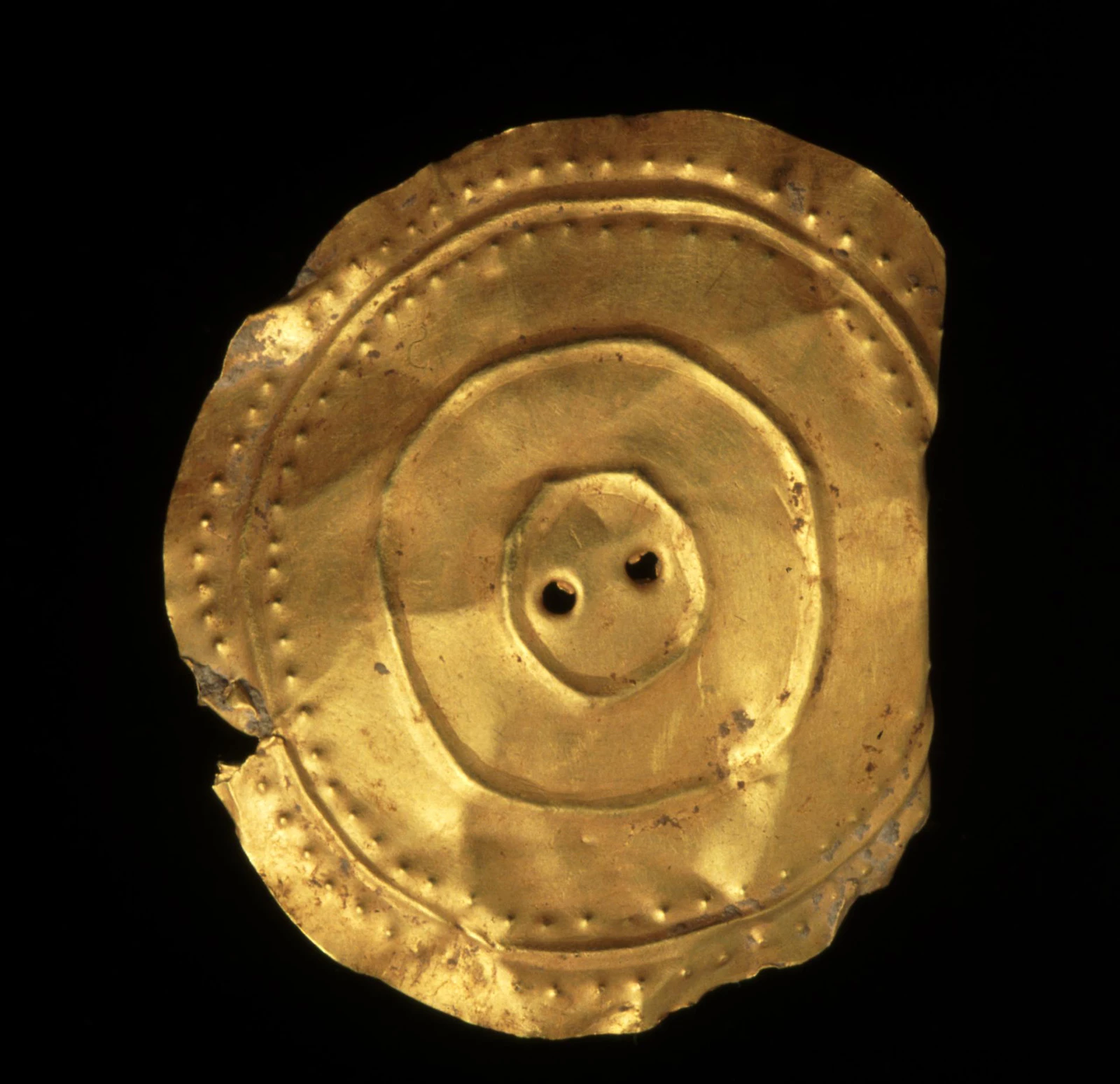
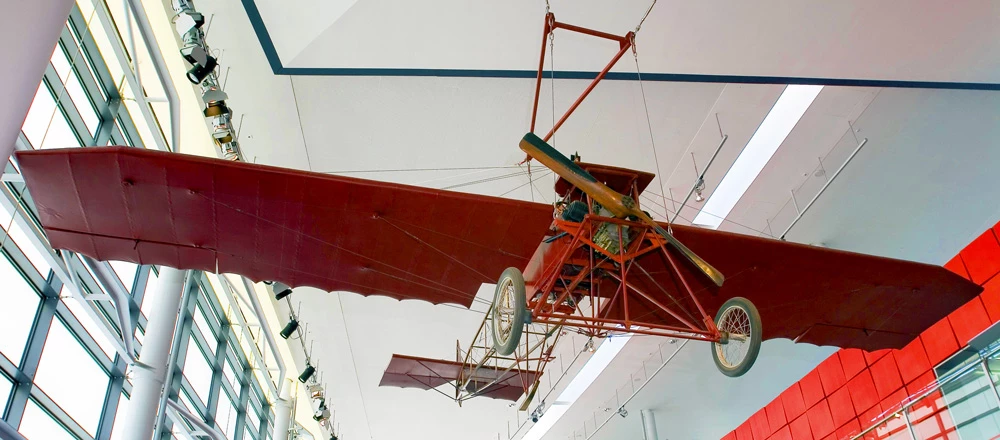
Uncovering our Collections: Half a Million Records now Online 26 March 2018 As we reveal half a million collection records for the first time, we look at some of the strangest and most fascinating objects from National Museum Wales Collections Online. This article contains photos of human skeletal fragments. The Biggest We have some real whoppers in our collections - including a full-size Cardiff Tram and a sea rescue helicopter - but the biggest item in our collection is actually Oakdale Workmen's Institute. Built in 1917, the Institute features a billiard room, dance hall and library - and is nowadays found in St Fagans National Museum of History. Horace Watkins testing his monoplane in 1908 Many of the buildings in St Fagans are part of the national collection - meaning they have the same legal status as one of our masterpiece Monets or this coin hoard. The buildings are dismantled, moved, rebuilt - and cared for using traditional techniques, by the museum's legendary Historic Buildings Unit. The Oldest The oldest human remains ever discovered in Wales These teeth belonged to an eight year-old Neanderthal boy - and at 230,000 years old, they are the oldest human remains in Wales. They were discovered in a cave near Cefn Meiriadog in Denbighshire, along with a trove of other prehistoric finds, including stone tools and the remains of a bear, a lion, a leopard and a rhinocerous tooth. These teeth are among some of the incredible objects on display at St Fagans National Museum of History The Shiniest People in Wales have been making, trading and wearing beautiful treasures from gold for thousands of years - like this Bronze Age hair ornament and this extremely blingy Medieval signet. At around 4000 years old, this sun disc is one of the earliest and rarest examples of Welsh bling One of the earliest examples of Welsh bling is this so-called 'sun disc', found near Cwmystwyth in Ceredigion. Current research suggests that these 'sun discs' were part of ancient funeral practice, most likely sewn onto the clothes of the dead before their funerals. Only six have ever been found in the UK. Most Controversial At first glance, an ordinary Chapel tea service - used by congregations as they enjoyed a 'paned o de' after a service. A closer look reveals the words - 'Capel Celyn'. The chapel, its graveyard and surrounding village are now under water. Capel Celyn, in the Tryweryn Valley, is now underwater Flooded in 1965 by the Liverpool Corporation, the Tryweryn valley became a flashpoint for Welsh political activism - creating a new generation of campaigners who pushed for change in how Welsh communities were treated by government and corporations. Curators from St Fagans collected these as an example of life in Capel Celyn - to serve as a poignant reminder of a displaced community, and to commemorate one of the most politically charged moments of the 20th century in Wales. Honourable Mention: an Airplane made from a Dining Room Chair Made from a dining room chair, piano wire and a 40 horsepower engine, the Robin Goch (Red Robin) was built in 1909 - and also features a fuel gauge made from an egg timer. The Robin Goch (Red Robin) on display at the National Waterfront Museum Its builder, Horace Watkins, was the son of a Cardiff printer - here he is pictured with an earlier, even more rickety version of his famous monoplane. Horace Watkins testing his monoplane in 1908 Our collections are full of stories which reflect Wales' unique character and history. The Robin Goch is one of the treasures of the collection, and is an example of Welsh ingenuity at its best. Half a Million Searchable Items The launch of Collections Online uncovers half a million records, which are now searchable online for the first time. “Collections Online represents a huge milestone in our work, to bring more of our collections online and to reach the widest possible audience. It’s also just the beginning. It’s exciting to think how people in Wales and beyond will explore these objects, form connections, build stories around them, and add to our store of knowledge." – Chris Owen, Web Manager Search Collections Online Plans for the future Our next project will be to work through these 500,000 records, adding information and images as we go. We'll be measuring how people use the collections, to see which objects provoke debate or are popular with our visitors. That way, we can work out what items to photograph next, or which items to consider for display in our seven national museums. Preparing and photographing the collections can take time, as some items are very fragile and sensitive to light. If you would like to support us as we bring the nation's collections online, please donate today - every donation counts. Donate Today We are incredibly grateful to the People's Postcode Lottery for their support in making this collection available online.
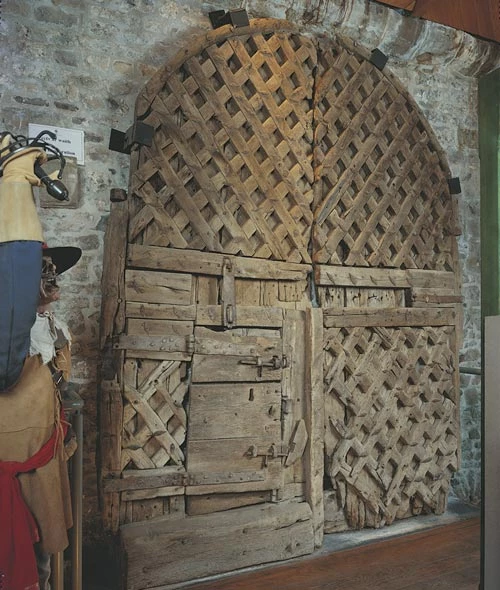
Castle Studies in Wales (and beyond) John R. Kenyon, 1 April 2009 Chepstow Castle © Cadw, Welsh Assembly Government (Crown Copyright) Wooden gates at Chepstow Castle dating from the 1190s, making them probably the oldest castle doors in Europe. © Cadw, Welsh Assembly Government (Crown Copyright) Dolforwyn Castle from the air. © Cadw, Welsh Assembly Government (Crown Copyright) The ruins of Dolforwyn Castle. © Cadw, Welsh Assembly Government (Crown Copyright) Dolwyddelan Castle. © Cadw, Welsh Assembly Government (Crown Copyright) The development of medieval studies was a significant aspect of archaeology after World War 2, and work on castles was a prominent feature of these studies. For those wanting to discover the facts about medieval castles in Wales, then a book that was published in 2008 is for you. This is Castles, Town Defences and Artillery Fortifications in the United Kingdom and Ireland: a Bibliography 1945-2007 (Donington: Shaun Tyas), compiled by John R. Kenyon. However, much work had been done on castles long before 1945, although our understanding of these monuments has altered over the years. Because of the fine examples of castles to be seen in Wales, castle studies in this country have played an important role in the way that our research on these buildings has evolved over the last 150 years or so. The great stone castles of Wales George Thomas Clark has been described as the founding father of the castle studies. He was an engineer who worked under the great I. K. Brunel on both the Great Western and the Taff Vale railways in the 1830s. From the 1850s he was managing the Dowlais ironworks in Glamorgan, and well placed to indulge himself in examining the castles of Wales, on which he wrote numerous papers, later collected in book form. His theories on the origin of the earthworks of the first Norman castles in England and Wales, notably the castle mounds or mottes, such as that can be seen at Cardiff Castle, were soon shown to be wrong by later researchers, such as Ella Armitage. Nevertheless, a considerable amount of his work on the great stone castles of Wales and elsewhere is still of value. The Bibliography 1945-2006, with its 740 pages, indicates just how popular castle studies, both academic and popular, have been since 1945. Worth noting is the excavation of the first Montgomery castle, known as Hen Domen [Old Mound], from 1960 to 1992, as this has given us a fascinating picture of what this earth-and-timber castle in the Welsh Marches would have looked like in the twelfth century. The oldest castle doors in Europe Other recent research has helped us change our understanding of the development of certain features to be found at some of the great stone castles. One of the best examples of this concerns Chepstow in south-east Wales. The introduction of rounded twin-tower gatehouses, such as the outer gate at Chepstow, has in the past been seen as a development from the about the 1220s. However, the wooden gates that hung in the gatehouse until 1962, and which are now on display inside the castle, have been dated through the analysis of the tree rings (dendrochronology) to the 1190s, making them probably the oldest castle doors in Europe. Elsewhere, excavation and conservation of a number of the castles of native Welsh lords have been undertaken, for example at Dinefwr and Dryslwyn in Carmarthenshire. Dolforwyn in Powys, the last castle to be built by Llywelyn ap Gruffudd, prince of Wales (d. 1282), has been totally uncovered, and the results of the work at all three castles have appeared in popular guidebooks and academic reports.
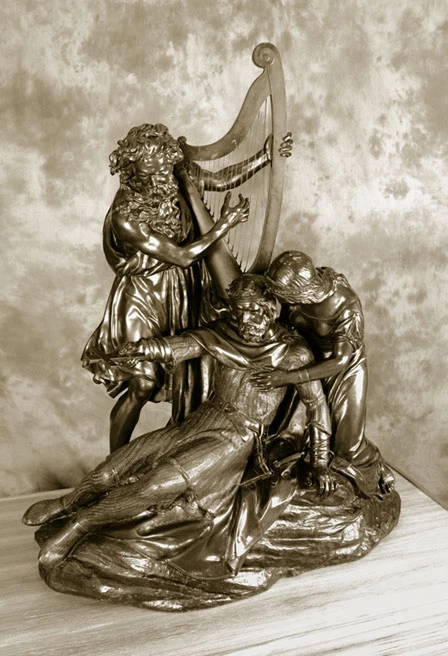
The death of Tewdric Mawr - King of Gwent 11 October 2007 This sculpture depicts the death of Tewdrig Mawr, saint and King of Gwent and Morgannwg, who died at the moment of victory over the Saxons at Mathern, around 630AD. The composition originated as a plaster shown at the Abergavenny Eisteddfod in 1848. This was subsequently shown at the Royal Academy in 1849. A bronze electrotype of it was exhibited by Elkington, Mason & Co. in the Great Exhibition of 1851. Two casts are known today, both also made by Elkington’s. The other is on display in the Brecknock Museum. This one, which is dated 1856, was given by a group of subscribers to Morris C. Jones, editor of the Montgomery Collections, in 1876. A brass plate recorded: ‘This bronze group represents the death of Tewdric Mawr, King of Gwent and Morganwg 610 AD. Tewdric Mawr, in his old age, was induced to appear in defence of his country against the Saxons whom he thoroughly vanquished near the junction of the Severn and the Wye. The Welsh King, though mortally wounded, urged his brave followers to pursue the fleeing Saxons. In his dying moments he was comforted by his daughter Marchell, mother of Brychan, while an aged Bard proclaimed to him by harp and song, the victory. The group was designed, from suggestions by Lady Llanover, by the late John Evan Thomas F.S.A. and modelled by his brother W. Meredyth Thomas Medal Student RA. Elkington & Co. fect, Liverpool.’ The sculptor John Evan Thomas was born in Brecon in 1810. He studied under Sir Francis Chantrey and on the Continent. He produced the first of many church monuments in 1831, and began to practice as a portrait sculptor in London in 1834. He established a studio at 7 Lower Belgrave Place, from which he frequently exhibited portrait busts at the Royal Academy until 1862. Despite his move to London, Thomas retained close links with the gentry of his home town and with the principal Welsh landed families, many of whom were to sit for him. Consequently he was the first Welsh sculptor to establish a significant career and reputation largely through Welsh patronage. Thomas’s principal works are a statue of the 2nd Marquess of Londonderry (Westminster Abbey), a statue of the 2nd Marquess of Bute (also exhibited in Great Exhibition and cast in bronze in 1853, now in Cardiff city centre), Sir Charles Morgan (Newport), a memorial to the 1st Duke of Wellington (Brecon), John Henry Vivian (Swansea) and the statue of the Prince Consort erected on Castle Heights, Tenby, in 1865. Although principally a portrait sculptor, he contributed mediaevalising statues of Henri de Londres, Archbishop of Dublin, and of William, Earl of Pembroke to Pugin’s scheme for the rebuilt House of Lords in 1848. Described by Benedict Read as the ‘only unqualified example of ideal sculpture with history as a subject matter’, The Death of Tewdric is a significant episode in mid-Victorian art. It is also of fundamental importance in the context of the Welsh national revival of the 1830s and 1840s, being the principal work of art to emerge from the triennial Abergavenny eisteddfodau patronised by Lady Llanover. Peter Lord calls it ‘the most notable example of national academic art in the first half of the 19th century’. The Death of Tewdric also appears to have been the largest work exhibited by Elkington, Mason & Co. at the Great Exhibition in 1851, employing the firm’s newly invented electrotype process. Both the bard (derived from the well-known de Loutherbourg print of 1784) and his harp are formed as separate sections, and are bolted to the base. The Death of Tewdric, 1848–56 Bronze, height 167 cm (65 inches), length 127 cm (50 inches), width 63 cm (25 inches) Signed: I EVAN THOMAS Sc and Elkington Mason & Co fect 1856 Bronze, cast by Elkington & Co, Birmingham and Liverpool
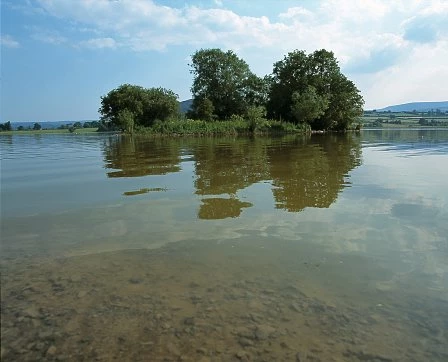
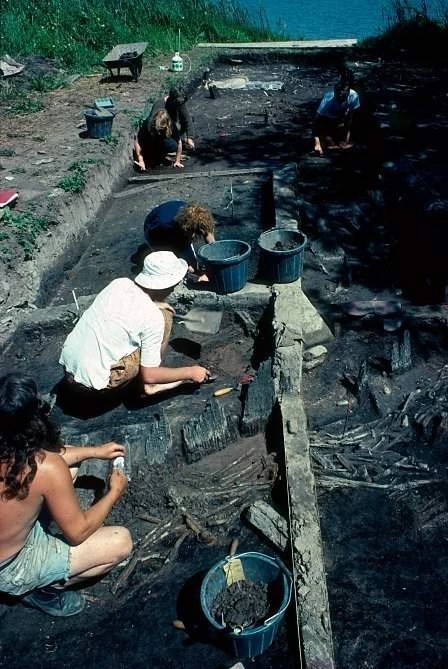
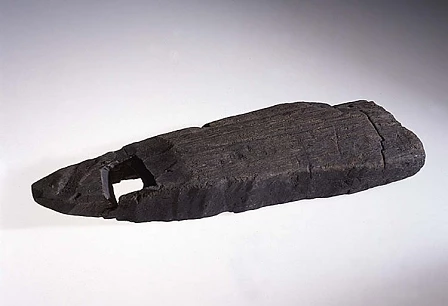
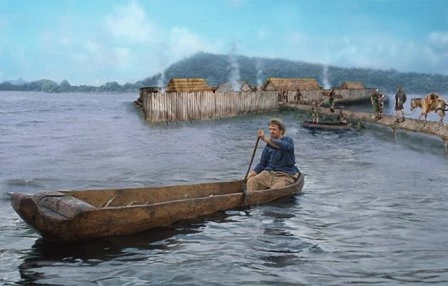
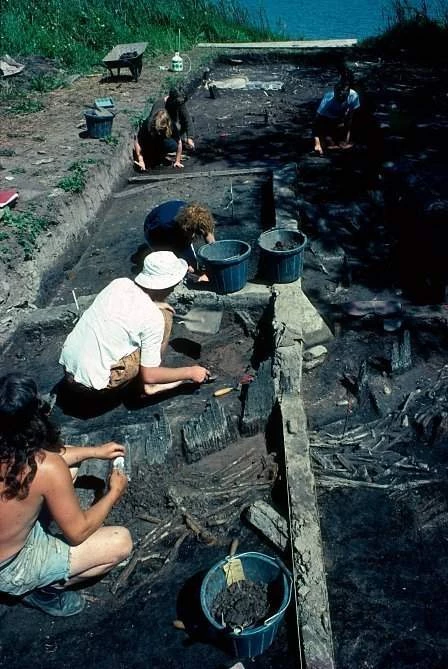
The Palace in the Lake 13 September 2007 Llan-gors Lake, with crannog in background. Image: Cadw (Crown Copyright). Llan-gors crannog during excavation. This image of the 1991 excavations shows planks from the crannog's palisade wall. Oak plank from Llan-gors, 60cm (2 foot) long. Submerged oak planks like this formed part of the palisade around Llan-gors crannog. Reconstruction of Llan-gors crannog, based on the excavation. Excavations at the artificial island or crannog in Llan-gors Lake, near Brecon, have provided a unique glimpse of a royal Welsh court. Excavations between 1989 and 1993 by the National Museum Wales and Cardiff University have revealed that the crannog, the only one known in Wales, was an early medieval royal site of the ruler of the inland kingdom of Brycheiniog. The small early kingdom of Brycheiniog (Brecheiniauc) corresponded approximately to the historical county of Brecknockshire in south Wales. The territory took its name from Brychan, dynastic founder of the royal line according to later legend.. Irish influence The crannog was carefully constructed of brushwood and sandstone boulders, reinforced and surrounded by several lines of oak plank palisade. Tree-ring dating of the well-preserved timbers has established that they were felled between AD889 and AD893. The site seems to have been influenced by Irish building techniques, and was possibly constructed with the assistance of an Irish master craftsman. The kings of Brycheiniog claimed to be descended from a part-Irish dynasty, and their use of such an unusual and impressive construction may have enhanced their political standing and strengthened their claims to Irish ancestry. Objects of high quality As a royal site Llan-gors crannog would have been a centre of administration, as well as a place for hospitality, where the ruler seasonally held court, received tribute and indulged in hunting and fishing. The artefacts uncovered, which include embroidered textile and parts of a portable shrine, confirm the site's aristocratic status. The crannog is attacked The Anglo-Saxon Chronicle records that in AD916 Æthelflaed, 'Lady of the Mercians', sent an army into Wales three days after the murder of Abbot Ecgberht and his companions. The army destroyed Brecenanmere (the Anglo-Saxon name for Llan-gors Lake) and captured 'the king's wife and thirty-three other persons'. This record of an attack probably refers to the crannog, and the capture of the wife of king Tewdwr ap Elisedd. During excavation, a charred, burnt layer was uncovered - probably representing this attack. The site gives an unique glimpse of life on a royal site in the late 9th and early 10th-centuries. Timeline 880s: Elise ap Tewdwr, ruler of Brycheiniog forced by the aggressive actions of Gwynedd to seek overlordship of Alfred the Great. 889-93: Llan-gors crannog constructed by the ruler of Brycheiniog. 894: Vikings ravaged Brycheiniog. 916: Brecenanmere (probably Llan-gors crannog) destroyed by Mercian (Anglo-Saxon) army. Background Reading 'On a crannoge, or stockaded island, in Llangorse Lake, near Brecon' by E. N. Dumbleton. In Archaeologia Cambrensis (4th series) vol. 1, p2-98 (1870). 'The early medieval crannog at Llangorse, Powys: an interim statement on the 1989-1993 seasons'. In The International Journal of Nautical Archaeology vol. 23, p189-205 (1994).
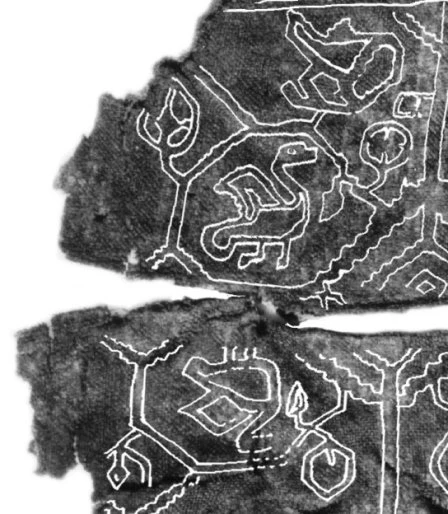
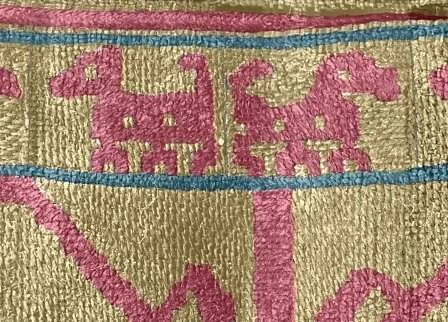
The Llan-gors textile: an early medieval masterpiece 3 May 2007 Excavations at Llan-gors Lake in 1991. The textile was discovered in the silts beyond the oak palisade visible in this trench. The lump of charred textile, as found lying on a piece of wood. Part of the decoration preserved on the textile, showing a group of birds framed by vines. Unfortunately none of the original colour was preserved in the textile, making the design very difficult to see without assistance. It is picked out here with superimposed white lines. The total area shown is roughly 9cm tall by 7cm wide (3.5 x 2.8 inches). Digital-simulation of colour on a photograph of the original textile. In 1990, archaeologists working at a site on Llan-gors Lake, near Brecon, made an unexpected discovery - the remains of a magnificently decorated textile, over a thousand years old. Just off the northern shore of Llan-gors Lake lies a crannog (a man-made island) built as a royal site for the ruler of Brycheiniog in the 890s - a turbulent period in the kingdom's history. At this time, Brycheiniog was under pressure from several neighbouring kingdoms, and Llan-gors must have seemed a safe retreat. However, excavations of the site have shown that this haven was short-lived, being destroyed by fire in the early 10th century. Much of the archaeological work at Llan-gors focused on the waterlogged silts that surrounded the crannog. It was here that the textile was discovered, badly charred and very fragile. Through careful conservation treatment it was possible to separate and clean its many layers revealing this unlikely lump to be among the most important finds of early medieval textile yet found in Britain. The base material of the textile was a very fine plain-weave linen. Silk and linen threads have been used to decorate the textile with birds and other creatures within a framework of vines, and with borders containing repeating patterns or lions. The skill with which this work has been accomplished continues to be a source of wonder. The linen has 23 threads to the centimetre - a magnificent achievement given the equipment available in the 9th and 10th centuries AD. The textile appears to be part of a garment, perhaps a tunic or dress - it has a hem and a belt loop - but unfortunately too little survives to indicate its detailed shape. Its owner was a person of considerable status since the silk that decorates it must have been imported to Britain, while the quality of the needlework suggest that it was produced in a specialist workshop. So how did this fine textile come to be lost? A clue can be found in the Anglo-Saxon Chronicle for AD916, which records that in this year a Mercian army from England destroyed a site called Brecenanmere (Brecknock-mere = Llan-gors Lake) and captured 'the wife of the king and 33 other persons'. Was this the event that saw the burning of Llan-gors and the loss of the textile? It is tempting to believe so. Background Reading 'A fine quality insular embroidery from Llangors Crannog, near Brecon' by H. Granger-Taylor and F. Pritchard. In Pattern and Purpose in Insular Art edited by M. Redknap, S. Youngs, A. Lane and J. Knight, p91-99. Published by Oxbow Books (2001). 'Worn by a Welsh Queen?' by L. Mumford and M. Redknap. In Amgueddfa, vol. 2, p52-4 (1999). 'The Llangorse textile; approaches to understanding an early medieval masterpiece' by L. Mumford, H. Prosser and J. Taylor, in C. Gillis and M.-L. B. Nosch (eds), Ancient Textiles: Production, Craft and Society, 158-62. Published by Oxbow Books (2007).