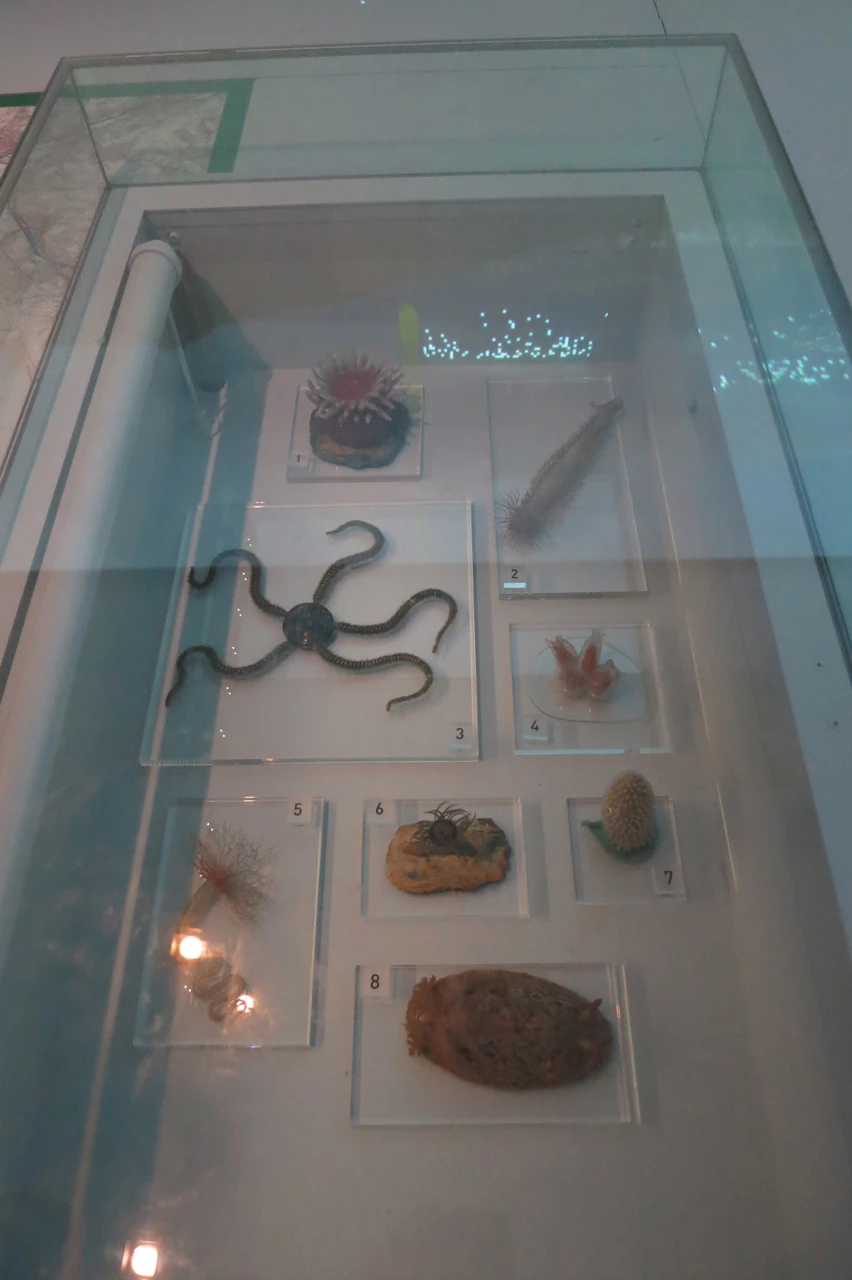
Original Rock Stars Trevor Bailey, 18 May 2016 This blog is about fossils whose beautiful patterns have intrigued us for as long as we’ve been human. These animals survived the evolutionary power struggles of the past to leave their relatives in today’s oceans. They are the Sea Urchins, or to give them their scientific name, the Family Echinoidea - Echinoids to their friends.A ‘Hedgehog’ by name, but not by natureTheir name comes from the Greek ‘Echinus’, meaning Hedgehog, because of their spines. People in the Middle Ages had the idea that each kind of land animal had a matching version living in the sea; sea-horses, sea-cows, and so on. So the spiky Echinoid was naturally called a Sea-Hedgehog. This might sound daft today, but we still call the Echinoids’ cousins “Starfish” though we know they’re nothing to do with fish at all !Like little armoured aliensThe bodies of echinoids are really strange, almost like something from science-fiction. Being covered in massive spiny stilts you can walk on is weird enough, but inside their box of a shell they’re even more peculiar. They have a multi-purpose organ called the water vascular system. It’s a central bag of fluid connected to five lobes which lead to many tiny tubes coming out through pores in the shell. These are its tube-feet. It can move them around by changing the pressure inside the bag. They’re very handy for dragging itself along the sea floor, sensing the surroundings, and for getting food to its mouth. Some burrowing echinoids can even stick a tube foot up above the sand to get oxygen from the water.Their basic body plan has proved to be very well adapted to a life of sea-bed scavenging. They move along like armoured tanks eating up whatever they can find; mostly algae, but their set of five toothed jaws can deal with a varied diet.Cherished by the AncientsThe beautiful shells of echinoids have fascinated humans for a very long time indeed, maybe because they’re so different from other animals on the planet. Most animals have just one line of symmetry and an even number of limbs. But echinoids and their cousins the starfish can show star-like five-fold symmetry.We know that this struck many people in the past. Ken McNamara gives the following two examples in his book “The star-crossed Stone” about the rich folklore of echinoids.The oldest example of a collected and labelled fossil, is an echinoid with Egyptian hieroglyphics inscribed on it about 4000 years ago. It was found “in the south of the quarry of Sopdu, by the god’s father Tja-Nefer”. Sopdu was called the god of the morning star - he was a kind of border-guard god, and it’s been suggested that echinoids were important to the Egyptians in some way in their travels to the afterlife.But human fascination with echinoids stretches back much, much further than that; long enough for the great ice sheets to have advanced and retreated across Britain four times since. About four hundred thousand years ago in what is now Kent, someone chose to make a tool from a flint containing a fossil echinoid. Most flint tools have two cutting edges, but this one may have been left unfinished on purpose. If the maker had chipped the flint to make the other edge, the fossil would have been destroyed. What is amazing is that this person was not a Homo sapiens like you or I, but either a Homo heidelbergensis or a very early Neanderthal (Homo neanderthalensis). Other humans were collecting fossils before members of our own species left Africa.Trevor Bailey, Senior Curator – Palaeontology. This blog was adapted from a gallery tour I gave at the National Museum Cardiff.
Captain Anthony Starkey - Master of the S.S. TORRINGTON Mark Etheridge, 6 May 2016 The National Waterfront Museum’s current exhibition Forget me not: Postcards from the First World War features a fantastic selection of all types of postcards from the industry & transport, and social & cultural history collections. One case tells the amazing, but tragic, story of Captain Anthony Starkey of the S.S. Torrington. Captain Anthony Starkey was master of the S.S. Torrington. The ship was built in 1905 by William Doxford & Sons of Sunderland and was owned by the Tatem Steam Navigation Company of Cardiff. Page from the scrap album showing stamps and some theatre tickets for entertainment in the POW camps. On 8 April 1917 the ship was sailing from Italy to Cardiff to load coal for the Italian railways. Shortly after 11.30am she was torpedoed by a German submarine, 150 miles off the Isles of Scilly. The torpedo hit forward of the bridge. A submarine then surfaced and opened fire on the ship. Capt. Starkey ordered his men into the lifeboats, but the submarine came alongside. Capt. Starkey was ordered below deck of the U-boat, which he did thinking he could save his men. Some of the crew went on the deck of the U-boat, whilst others remained in a lifeboat. The captain of the U-boat then ordered the vessel to dive remarking that “the others could swim”. Through the submerging of the U-boat about 20 member of the Torrington’s crew were washed off and killed. The remaining crew in the lifeboat were never heard of again. In total thirty four members of the crew were killed and Capt. Starkey was the only survivor. Newspaper cuttings describing the events of 8th April 1917. Capt. Starkey was held prisoner aboard the submarine for fifteen days. He was then held in four different prisoner of war camps in Germany, including Brandenburg, Holminden, and Strohenmoor. Prisoners were poorly treated in these camps, and Capt. Starkey commented that “We would have starved if it had not been for the food we received from home. We were there for two months and a half on German rations and looked like shadows when the time was up. Then food began to arrive from home and we certainly enjoyed that. The food in the camps was always potato soup, not always good potatoes, cabbage soup and some bread.” Photograph from the scrap album showing meal time at one of the POW camps. Probably serving the potato or cabbage soup Capt. Starkey mentions. During his time in the various prisoner of war camps Capt. Starkey put together a ‘scrap album’. This album contains over 55 postcards and photographs, along with German bank notes, and documents such as ration cards, camp theatre tickets, letters and telegrammes. Some of these photographs show everyday life in the camps, such as meal times and entertainment. This album in on display in the current exhibition, along with other photographs, and two newspaper cuttings pasted onto the back board of another scrap book. These describe the whole story in detail. Photograph sent home to Mrs Starkey of Cardiff. Capt. Starkey is standing at left, and is at the POW camp of Brandenburg, near Berlin. Page from scrap album showing German bank notes, and a photograph of some of the entertainment. Page from the scrap album showing stamps and some theatre tickets for entertainment in the POW camps. Newspaper cuttings describing the events of 8th April 1917. Forget me not: Postcards from the First World War runs until 19 June 2016 at the National Waterfront Museum.To discover more about the First World War collections at Amgueddfa Cymru view this online catalogue. Mark Etheridge Curator (Industry & Transport) Follow us on Twitter - @IndustryACNMW
Y Garreg Fawr undergoes restoration Dafydd Wiliam, 6 May 2016 Y Garreg Fawr from Waunfawr in Gwynedd was built in 1544, and is a fine example of a Snowdonian house. At the time, these homes were some of Wales’s finest and represented the beginnings of the modern home we know today. Prior to this date, the wealthy Welsh lived in timber-framed hall-houses. These were often single-story buildings comprised of three bays in a linear arrangement: a ‘service’ bay of a dairy and larder, a ‘solar’ – which was the bedroom - and in-between was a large hall with a central hearth, and was open to the rafters. Although Y Garreg Fawr has a hall, service end and solar, it represents a radical departure from the previous medieval plan by introducing some key developments. Choosing to build in stone allowed the creation of a pair of effective chimneys - one on each gable. These in turn allowed the creation of a first-floor featuring heated, smoke-free rooms.Y Garreg Fawr (The Great Rock) was named after the large exposed rock outcrop behind the house. Two other Snowdonian type houses share a similar important-sounding name. Both are called ‘The Great House’ – Tŷ Mawr Wybrnant and Tŷ Mawr Nantlle – names that highlight their physical grandeur as well as the high social standing of their owners. Y Garreg Fawr was is a rare survival of national significance, but by 1976 (432 years later) it was barely recognisable and in a serious state of disrepair. At the time, the only way to ensure its survival was to move it stone by stone, some 165 miles, to St. Fagans National History Museum where it could be rebuilt. 40 years later it is undergoing a programme of restoration. A recent inspection of Y Garreg Fawr revealed that the inner surface of its walls had been rendered with cement. This is an out-dated practice that is not in keeping with current methodologies. Work is now underway to remove the cement and re-place it with lime mortar, which should allow the building to breathe better, and allow it to stand for several more centuries. Y Garreg Fawr is now closed for a number of months to allow this work to continue.
Super Scientist Awards 2016 Penny Dacey, 4 May 2016 One hundred and forty schools across the UK are to be awarded Super Scientist Certificates on behalf of Amgueddfa Cymru - National Museum Wales in recognition for their contribution to the Spring Bulbs - Climate Change Investigation.Huge Congratulations to all these schools!A big ‘thank you’ to every one of the 4,907 pupils who helped this year! Thank you for working so hard planting, observing, measuring and recording - you really are Super Scientists! Each one of you will receive a certificate and Super Scientist pencil, these will be sent to your school by mid-May.Many thanks to the Edina Trust for funding this project.Super Scientist Winners 2016Each will receive a class trip of fun-packed nature activities.Ysgol Pentrefoelas - WalesBiggar Primary - ScotlandCarnforth Primary - EnglandRunner's up: Ysgol Nant y Coed - WalesSevern Primary - WalesAbbey Primary School - ScotlandSt. John the Baptist Primary School – ScotlandSt. Nicholas' Primary School - EnglandThe Blessed Sacrament Catholic Primary School - EnglandHighly commended schools: Alexander Peden Primary School Allensbank Primary School Arkholme C of E Primary School Asmall Primary School Bacup Thorn Primary School Barsail Primary School Bent Primary School Betws Primary Bickerstaffe CE Primary School Blackwood Primary School Braidwood Primary School Breckon Hill Primary School Broad Haven Primary School Burnside Primary School Calderwood Primary School Castlepark Primary School Chapelton Primary School Coedpenmaen Primary School Coppull Parish CE Primary School Darran Park primary Drumpark Primary ASN School Dykesmains Primary School East Fulton Primary School Glebe Primary School Glengowan Primary School Grange Primary School Hay on Wye Primary School Henllys Church in Wales Primary School High Mill Primary School Hudson Road Primary School John Cross CE Primary School Kelly Street Children's Centre Lanark Primary School Law Primary School Llangors Primary School Llanharan Primary School Loch Primary School Lynnfield Primary School Maesycoed Primary School Mellor Saint Mary CE Primary School Milton of Balgonie Primary School Murray Primary School Nantymoel Primary Netherburn Primary School Newmains Primary School Newport Primary School Our Lady of Peace Primary School Pirnmill Primary School Rougemont Junior School Silverdale St. John's CE Primary School St. Charles Primary School St. Cuthberts RC Primary School St. Joseph's Primary School St. Paul's CIW Primary School St. Peter's Catholic Primary School St. Robert's Catholic Primary Staining C of E Voluntary Controlled Primary School Stanford-in-the-Vale Primary School Stonehouse Primary School Trellech Primary Underbank Primary School Ward Jackson Church of England Primary School Wormit Primary School Ysbyty Ifan Ysgol Bro Tawe Ysgol Deganwy Ysgol Gynradd Gymraeg Llantrisant Ysgol Gynradd Llandwrog Ysgol Rhys Prichard Ysgol San Sior Schools with special recognition: Arkleston Primary School Beckford Primary School Brisbane Primary School Carnbroe Primary School Castlepark Learning Centre Dasfen Primary School Glencairn Primary School Hakin Community Primary School Kirkfieldbank Primary School Lamlash Primary School Mossend Primary School Orchard Meadow Primary School Penygawsi Primary School Shakespeare Primary School St Athan Primary School St David's RC Primary School St Michael's RC Primary St. Aidan's Primary School St. Bernadette's Primary School St. Columbkille's Primary School St. Michael's CE Aided Primary School St. Oswalds V A School Wellpark Children's Centre Willow Lane Catholic Primary School Woodlands Nursery Centre Ysgol Esgob Morgan Ysgol Hiraddug Schools to be awarded certificates: Colinsburgh Primary School Bryn Celyn Primary Coleg Meirion-Dwyfor Condorrat Primary School Corsehill Primary School & Nursery Class Craigbank Primary School Holytown Primary School Howwood Primary School Inchinnan Primary School Ladywell Primary School NPTC Group Newtown Campus Our Lady & St. Francis Primary School Pontrhondda Primary School Rashielea Primary School Rhos Helyg Rigside Nursery Rogerstone Primary School Saint Anthony's Primary School St. Aidan's Primary School St. Bridget's Primary School St. Brigid's Primary School St. Mark's Primary School St. Mary's Primary School St. Paul's Primary School St.Brigid's SWISS VALLEY C.P. SCHOOL Tongwynlais Primary School Whitelees Primary School Ysgol Coed y Gof Ysgol Ffridd y Llyn Ysgol Iau Hen Golwyn Ysgol Mair Ysgol Pencae Thank you for all your hard work Bulb Buddies,Professor Plant
Wales and Mount Everest Jeannette Rose Marxen, 1 May 2016 The Treasures: Adventures in Archaeology exhibition not only highlights the objects recovered from excavations but the process and adventure that many archaeologists went on while making these discoveries. These archaeological adventures also coincide with the Visit Wales Year of Adventure. In looking at the wider world of adventure, there are few things more adventurous than climbing Mount Everest. And while it might seem that Mount Everest is a world away from Wales, the connections between the two reach lofty heights.The first of those connections begins with the name. Mount Everest was named after George Everest. Born in Crickhowell, Powys in 1790 he trained as an engineer and spent most of his career working in India on a detailed survey of the entire subcontinent. He served as Surveyor General of India and it was his successor, in 1857, who suggested the mountain be named after him. Everest disagreed with this honour, he believed when naming geographical sites it was best to use local names. However, since there were several local names for the mountain, the name Everest remained. George Everest (19th century photo) There is another name connection between Mount Everest and Wales. After the Great Trigonometrical Survey gave an official height to the mountain for the first time in 1856, it became something to conquer. In 1921, Britain organised their first reconnaissance team whose job it was to map the various features and possible routes for future climbers. George Mallory was a member of this team and while surveying, he came across a glacial valley and named it the Western Cwm. For anyone who knows their Welsh, cwm means valley. It is said that Mallory visited Snowdonia many times to climb and the name may reflect that. Mount Everest Training is key to any expedition, especially something as extreme as climbing Mount Everest. The 1953 British Mount Everest Expedition began their training in 1952 and chose Snowdonia as their base. While it might pale in comparison in height, Snowdon offered the climbers many opportunities to train on treacherous rock face and unstable scree. Their headquarters was based at the Pen-y-Gwryd Inn, between Llanberis and Capel Curig. You can still stay there and the walls are lined with mementos from the team’s time in residence. There were also two Welsh members of the 1953 Expedition. In fact, it was almost a Welshman who reached the summit first. Charles Evans was a teacher from North Wales and was the deputy expedition leader. Evans and Tom Bourdillon were the first team to make an attempt on the summit on 26 of May. They were a mere 100 meters from making history when they decided to turn back to camp because they were running low on oxygen. While it is possible to climb Mount Everest without oxygen it undoubtably makes it more difficult and dangerous. The 1953 Expedition knew the value of using oxygen properly and part of that was thanks to Griffith Pugh. As a qualified doctor, Pugh was able to combine his medical knowledge and interest in Alpine sports by studying the effects of altitude on the body. He was the physiologist of the expedition and his main duty was ensuring there was enough oxygen and that the other members acclimated to the altitude safely. 2004 photo mosaic the Himalayas with Makalu and Mount Everest from the International Space Station, Expedition 8. On the 23rd of May 1995, Caradog Jones, from Tregaron, Ceredigion, became the first Welshman to reach the summit of Mount Everest. Twelve years and one day later, Tori James, from Pembrokeshire, became the first Welsh woman to accomplish the feat.