Renowned Welsh poet Gwyneth Lewis was the inaugural National Poet of Wales in 2005. She has won the Forward Poetry award twice and in 2012 won the Crown at the National Eisteddfod. In 2005 we commissioned Gwyneth to write a poem to celebrate the opening of the National Waterfront Museum, on the subject of Wales’s industrial past.
Her poem has been printed in a limited edition by the Gregynog Press. The Gregynog Press was established in 1922 by the sisters Gwendoline and Margaret Davies. Gwendoline Davies (1882-1951) and Margaret Davies (1884-1963) were the granddaughters of David Davies who made his fortune during the industrialisation of Victorian Wales. The sisters were keen art collectors and philanthropists whose generous bequests to Amgueddfa Cymru helped form our outstanding collections of Impressionist and Post-Impressionist art.
Printed on archival paper, the print is available as a mounted or mounted and framed print. The edition is limited to 475.
As usual in this monthly blog post I’d like to share with you some of the objects that have recently been added to the industry and transport collections.
The first, is a collection of documents, photographs and objects relating to Smiths Potato Crisps Ltd. This company was formed by Frank Smith and Jim Viney just after the First World War. The Smiths Potato Crisps factory went into production at Fforestfach, Swansea in 1947, and the factory was officially opened in October 1948. The first ever flavoured crisps (cheese and onion) were produced here in the 1960s. The factory was later taken over by Walkers, and closed by them in 2006.
This baseball cap has the logo for 'Walter Energy, Western Coal' on it. Walter Energy (originally known as Walter Industries Inc.) was found in the U.S.A. in 1946. The company owned Aberpergwm Colliery from April 2011, but the company filed for bankruptcy in July 2015. Aberpergwm Colliery was closed by British Coal on 7 October 1985, but reopened in 1996, as of June 2016 it has been mothballed.
This plate, and also a pewter mug, were presented to men leaving Cwm Colliery in 1986. The union couldn't offer a presentation lamp after the strike, so these were produced instead. The plate has a presentation inscription on the front, and also historical details of Colliery painted on reverse.
Finally this month, this T-shirt was produced for sale during a tour by the protest singer Billy Bragg. The tour was in June 2009 and was to ‘Mark the Anniversary of the Miners' Strike, 1984-85', and travelled to a number of venues throughout Wales.
Mark Etheridge Curator: Industry & Transport Follow us on Twitter - @IndustryACNMW
This month, however, we're putting your know-how to the test - to see whether you can spot an impostor in our collection.
Throughout July, we will be replacing one of our works of art with a fake, as part of Sky Arts' competition and tv show: Fake! The Great Masterpiece Challenge.
Can you find the fake?
We're appealing to armchair art detectives everywhere, to visit National Museum Cardiff and find the fake.
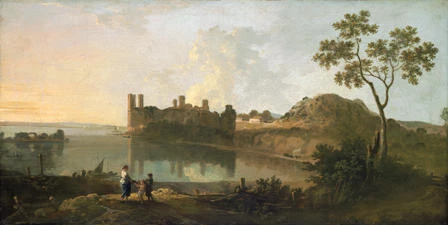
A copy has been made of a great work of 'British Landscape' painting, and will be hanging in our galleries throughout July.
Once you've decided which one of our works isn't quite what it seems, place your vote online - all will be revealed on Sky Arts later this year, and unveiled in a special exhibition.
The Art Collections at Cardiff
We have over a thousand works of art on display at National Museum Cardiff - from our famous impressionist collection, to contemporary works, installations and applied art. Entry is free, so visit us this month to find the fake.
To make things a little easier, we're focussing on our landscape collections. Here are some of its highlights and hidden gems:
The Golden Age of the Picturesque
At National Museum Cardiff, you'll find works by master landscape painter Richard Wilson - whose amazing ability to capture scenes bathed in Mediterranean light led him to be known as the 'Father of British Landscape'.
You will also find a portrait of this artist, at work by his easel, in our Historic Art galleries - painted by his contemporary, Anton Mengs.
Different Perspectives: Cityscapes and Nocturnes
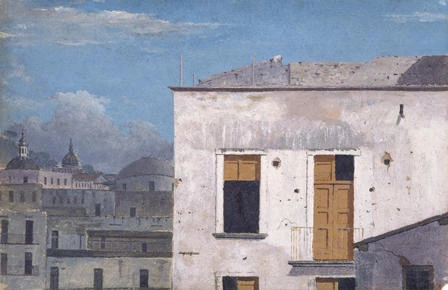
As the landscape changes over time, so have artists' techniques and perspectives. No bigger than a picture postcard, Thomas Jones' urban scenes, painted ahead of their time in the 1780s, show snapshots of the backstreets and roofs of Naples.
Jones' work appears alongside studies of nature in our Paintings from Nature gallery.
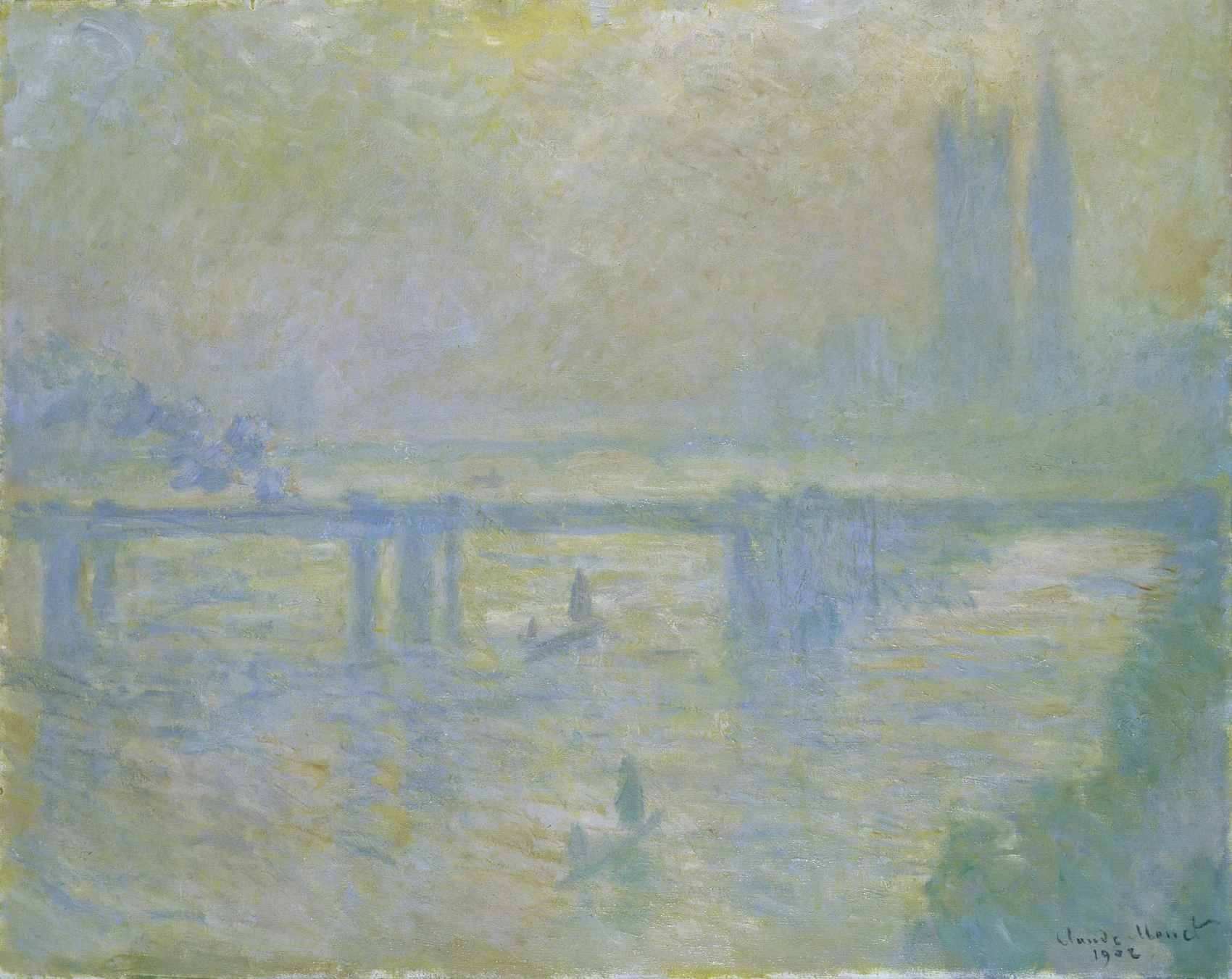
In our galleries, you'll find an extensive collection of Impressionist works, from Dorothea Sharp's open-air scenes and Monet's famous Waterlilies, to post-impressionist masterpieces such as Cézanne's 'The François Zola Dam'.
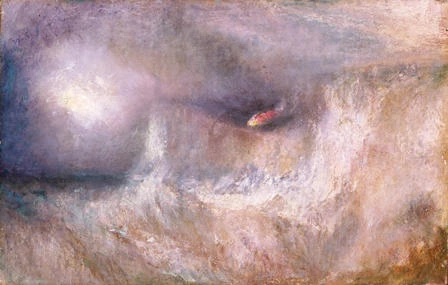
Arguably one of the UK's most famous artists, J.M.W Turner was a precursor of the impressionist style - capturing the bluster and chaos of a storm in works such as 'The Beacon Light', or golden sunrises and seascapes in 'The Morning After the Storm'.
Three of Turner's lesser-known works, branded as 'fakes' in the 1950s, were studied in detail and recently confirmed as a genuine.
These works are now proudly on display in our Victorian Gallery, alongside works by pre-raphaelite Dante Gabriel Rossetti and miniature maquettes of one of Cardiff's most famous landmarks, the castle's Animal Wall.
Wales's Inspiring Landscape
The Power of the Land: The Welsh Landscape gallery tells the story of Wales' changing landscape, and the way it has inspired painters, sculptors and travellers over the centuries.
From the eighteenth century artists began to explore Wales in unprecedented numbers. Today Wales is still attracting artists, re-interpreting the places and paintings of the past, looking at the land in new ways. From Kyffin Williams' wild mountains to Cardiff's industrial docks, you'll find them in this beautiful circular gallery.
Related Events
If you'd like to take a closer look at the collection, we have free guided tours every Wednesday and Saturday at 12.30pm. Take a look at highlights including works by Cézanne, L.S Lowry, Richard Wilson and J.M.W. Turner, with our friendly gallery guides.
Visual Audio Display Units (VADUs) still exist in the National Museum Cardiff galleries. We know, because with almost every finger touch on the touchscreen, it sends a little signal to the web server that includes a piece of information describing the last interaction (i.e. ‘please play the video’, ‘please display the menu list’). We record all those messages, firstly to make sure the kiosk is actually working day-to-day and secondly to find out which aspects are popular or not popular, knowledge that is useful to guide future kiosk development.
Figure 1, a cartoon of kiosk development process - an attempt to show the separation from the web server, while maintaining rudimental communication from the gallery space (satellite to mothership).
Each message is sent as an AJAX call (asynchronous JavaScript and XML) from the kiosk, which is usually a standalone bundle of files running through a web browser (HTML, CSS & Javascript files). The main bulk of the kiosk development is carried out through our in-house web CMS (called Amgueddfa CMS) on a computer that mirrors the public web server, it’s only before the launch that all the necessary files are copied over to the computer in the exhibition space (wrapped up as an ‘App’), where it remains like a satellite away from its mothership (the web server). Beep beep, beep beep.
Patterns of Frequency
A single recorded kiosk command is not particularly exciting by itself but when there are greater numbers, patterns emerge. For instance, if we record each time a video is started on the kiosk we get a round number to how many people were interested in the subject matter of the video (information gathered before they had seen the video). If we also record when people stop playing the video we can start to distinguish patterns in their viewing behaviour. Judging by the average video length played the majority of the visitors saw less than 39% of the total video length, with the longest average being three minutes 17 seconds. Of course, there were also lots of visitors who watch the videos until the end; as you can tell by the 'happy-tail' patterns formed by visitors reaching the film credits at the end of the film (figure 2).
Figure 2 shows all video stop points for five videos presented as scatter plots against the video length in minutes. Judging by the average video length played, which is shown in green - the majority of the visitors saw less than 39% of the total video length, with the longest average being three minutes 17 seconds. Of course, the there were also lots of visitors who watch the videos until the end (as you can see by the 'happy-tail' patterns formed as they reach the film credits at the end of the video), but on the whole I wouldn't recommending placing feature length films on kiosks.
Figure 2 shows the raw data stored within a database table on the web server.
Overview of the Numbers
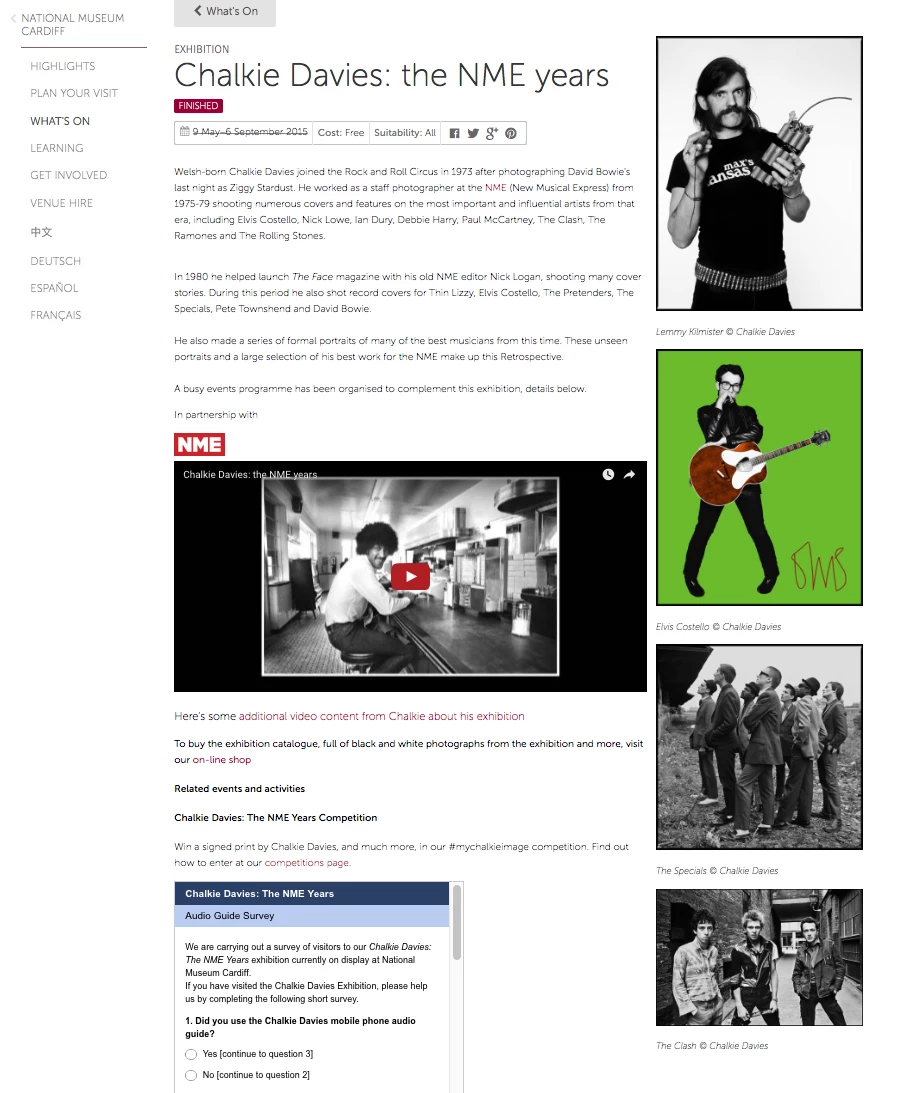
I signed-off my last blog with a promise of data relating to the Wi-Fi audio tour during the Chalkie Davies exhibition last year, which I’m including below. To placing the Wi-Fi statistics within the gallery space, I’ve also gathered data from the four large screen kiosks in the exhibition against the monthly visitor figures.
It is immediately clear that the four large kiosks were very popular - they contained a great deal of curated content which included a composite NME magazine, Chalkie Davies film, Youth Forum audio interviews, a comments section and What’s On calendar. I can imagine the relative attraction and easy access of the kiosks goes a long way to explain the comparatively lower figures of the Wi-Fi audio tour, but let us not be downbeat - the feedback received from the visitor survey about the Wi-Fi was positive.
93% of survey monkey results either felt they ‘learnt a lot about the exhibition’ or ‘it improved their experience as a visitor’ - it must be noted that the number of people who filled in the survey and used the Wi-Fi audio tour was extremely low compared to the overall gallery visitor figures (12 / 42,000), but the survey morsel is still very positive.
However, I would be cautious in suggesting an Wi-Fi audio tour for short-run exhibitions, mainly due to the diminished numbers compared to the insitu kiosks - the Wi-Fi audio tour could gain popularity following a less exhibition-specific avenue (e.g. providing audio descriptions for the top ten popular objects), which would allow the audio catalog to be built gradually and remain available all year around throughout the museum.
Future Beeps
To conclude, we have been collecting kiosk statistics since 2011. The storage method may change, we could additionally store the data on Google servers via Google Analytics, but however the beeps are stored the way visitor interact with museum kiosks will continue to guide the future kiosk development.
Table showing all the touchscreen events for the Chalkie Davies exhibition with visitor figures for the gallery:
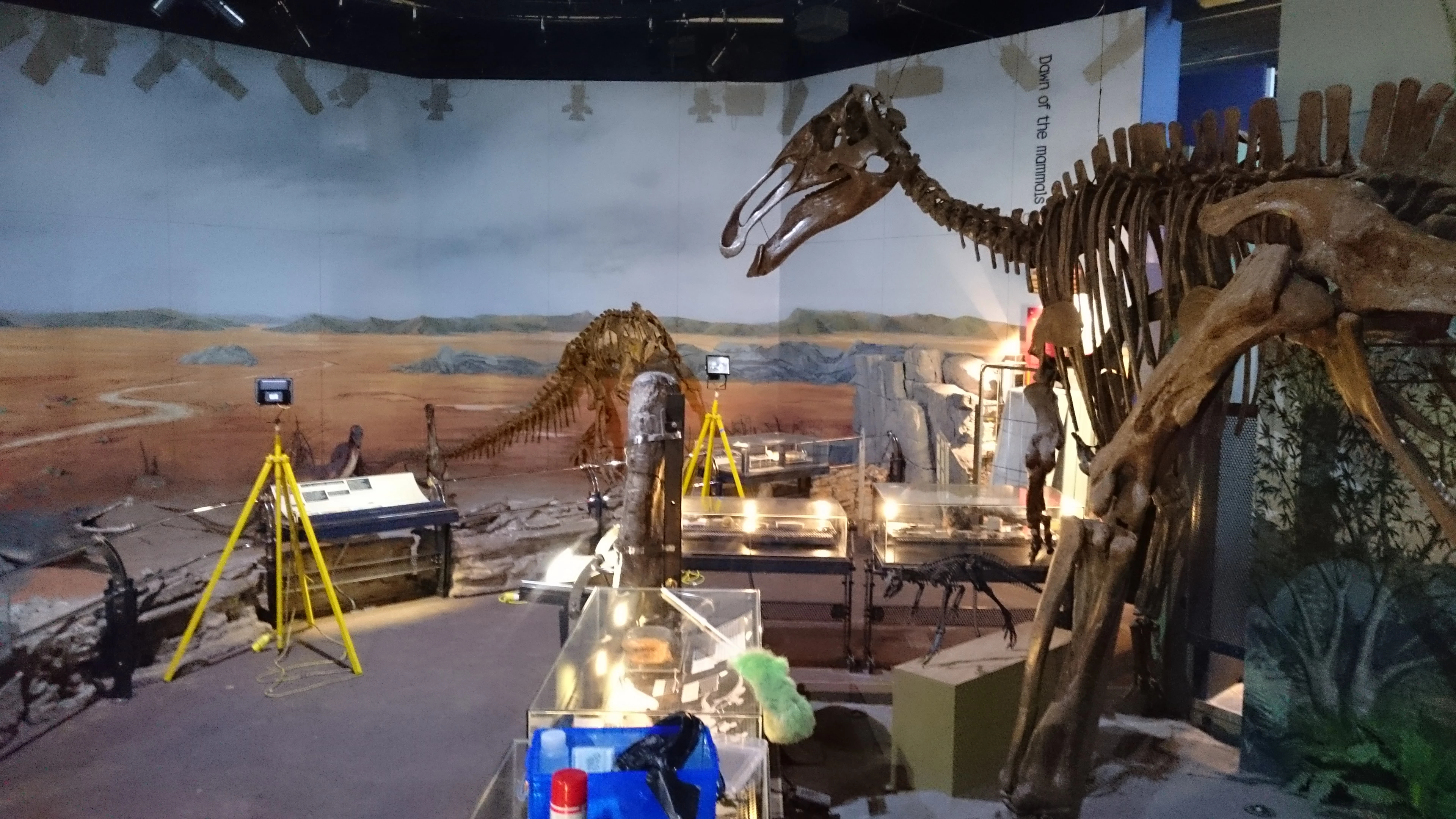
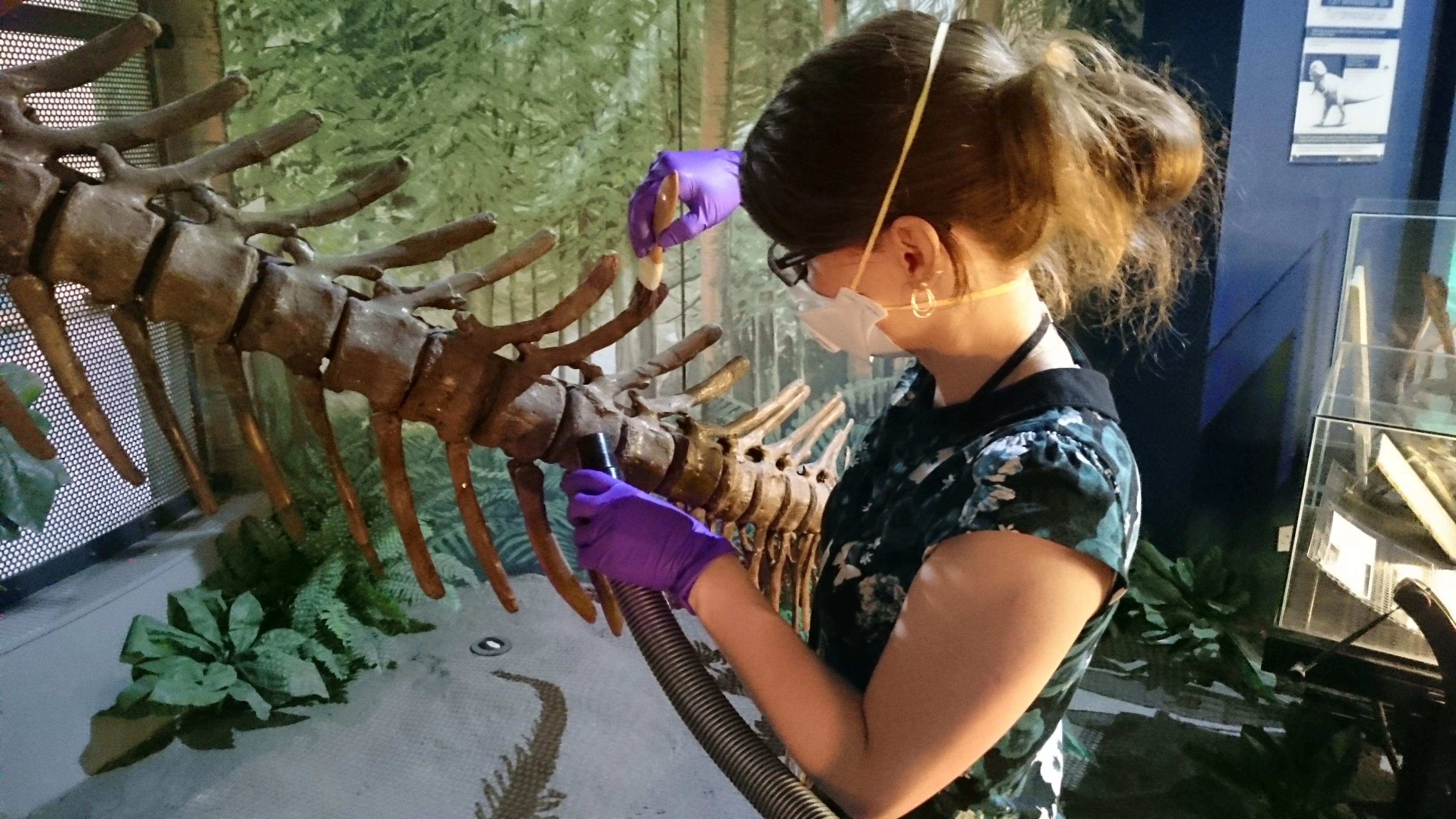
Our Geology galleries at National Museum Cardiff are still closed for essential maintenance. We are changing things around a bit – out with the old and in with the new: we are changing old display screens for new ones; old light bulbs for new ones; old fire beams new ones; old dust – well, for no dust at all. Yes, the dinosaurs are having their vertebrae tickled to release some of the dust of the centuries and keep them looking pretty.
Actually, if you have been to see the dinosaurs recently there is a good chance you have left some of yourself on them. Dust in our galleries is composed of tiny particles that come into the building through our ventilation system (although we have very good air filtration). Other dust particles are fibres from the clothes you wear. But the bulk of dust is, actually – well, there is no easy way of saying this: bits of YOU. Especially hair and skin.
Humans are living beings whose bodies renew themselves constantly. Our skin is our largest organ. New cells are formed constantly at the base layer of the epidermis (the outer part of the skin). These new cells move up through the layers of the epidermis and die as they are further away from blood vessels that supply nutrients. Eventually they reach the corneum, the outermost layer, and slough off.
We love having you in the museum (actually, next time you visit why don’t you bring a friend who hasn’t been for a while). But if you shed your skin while you are in the museum you are inevitably leaving a small part of your body in the building. Nice.
These particles are tiny and very light. They will happily settle on surfaces. Our dinosaurs (and, of course, all other displays) provide ideal surfaces for dust to settle. And no, dust bunnies do not evolve into dust rhinos – so there is no need to set up protective zones to save these cute little things.
Dust will form a layer on objects, which, contrary to popular opinion by people who dislike cleaning, is not protective. On the contrary: dust attracts moisture from the air and then becomes very reactive, which can lead to corrosion and other forms of damage to our objects. This is not only unsightly but can result in expensive conservation treatments or even irreparable damage.
We’re in the business of heritage preservation for the long-term. We want to help keep all of the important national collections for generations to come. This includes removing your dead skin cells from the dinosaur skeletons while we have the space to work in the gallery.
And no, we would not get rid of our vacuum cleaner because it is only collecting dust.
Our Geology galleries are going to re-open on Tuesday 5th July.
Find out more about care of collections at Amgueddfa Cymru - National Museum Wales here.
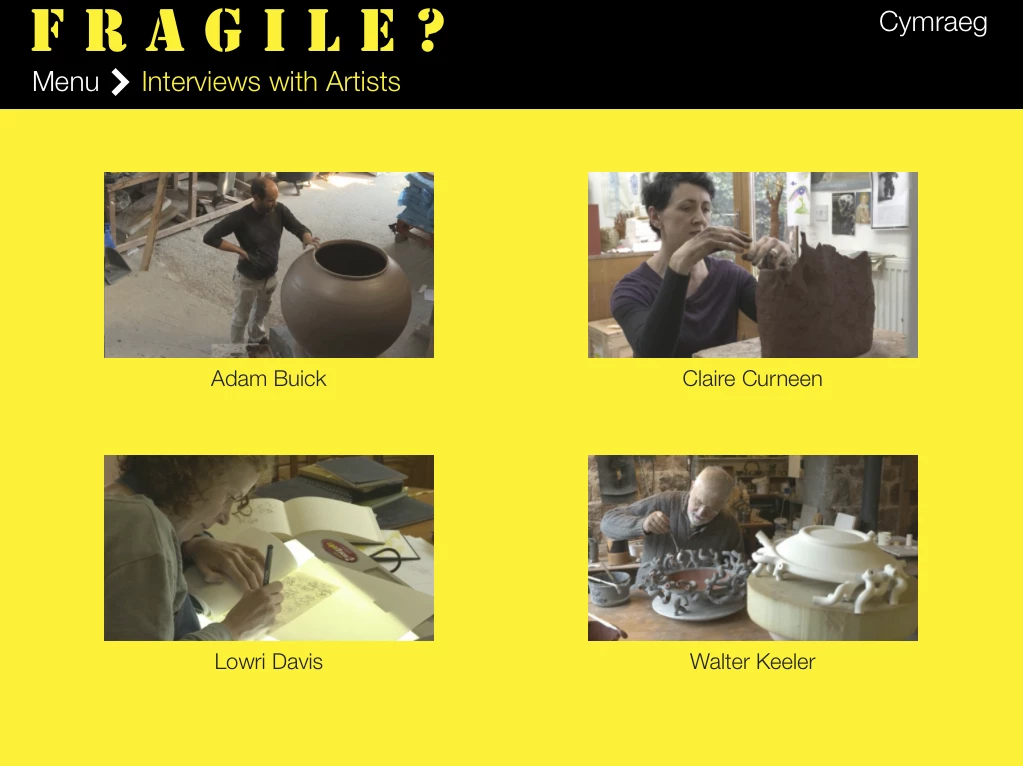
Figure 4, a screen shot from the Fragile? exhibition showing the four films available on iPads.
Figure 5, a photograph taken the week before the exhibition launch, with one of the 27" touchscreen in the foreground.
Figure 6, numbers turned into graphs; showing the frequency of the Wi-Fi audio plays throughout August 2015.
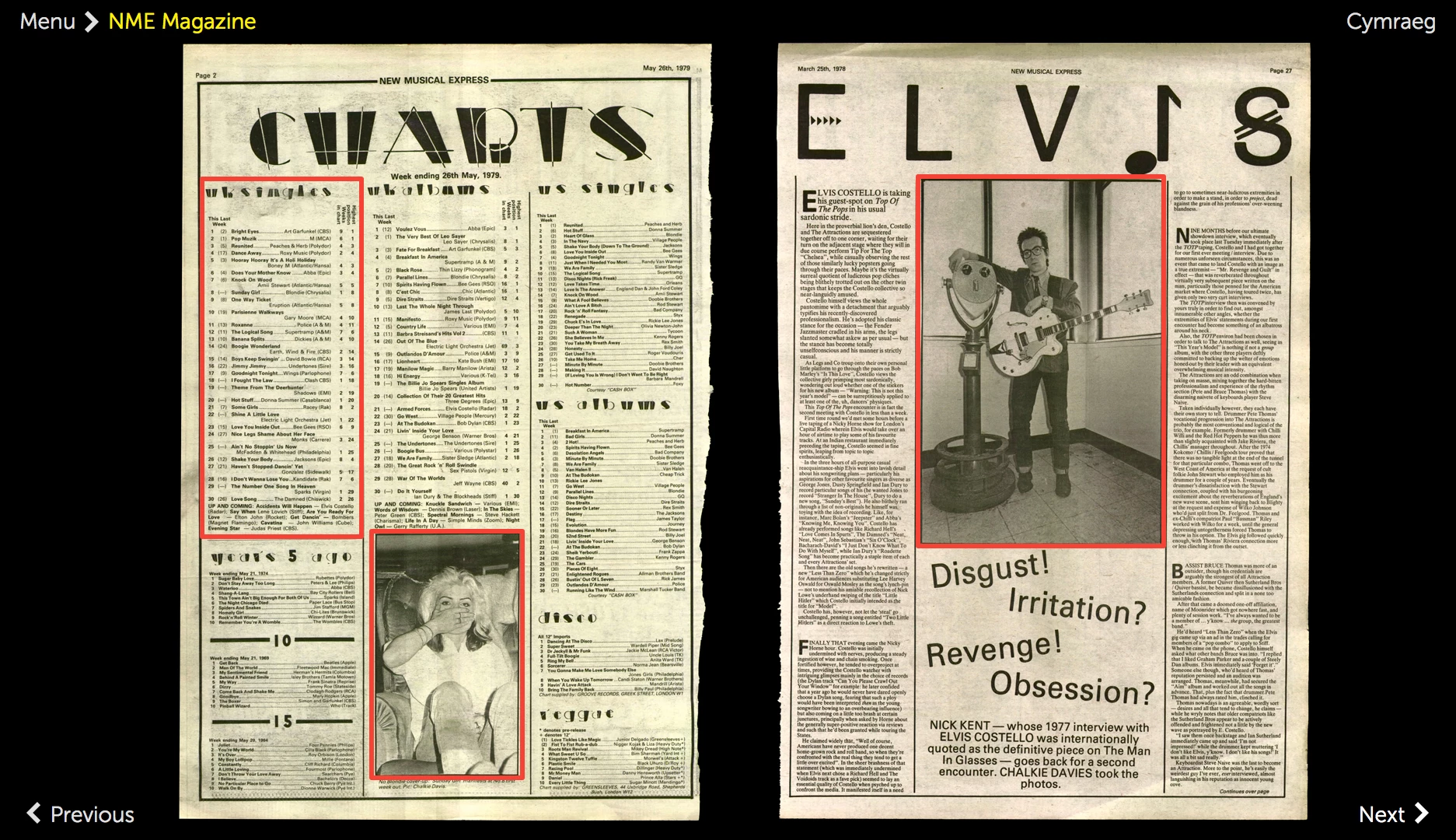
Figure 7, screen shot of the composite NME magazine - the felt tip markers could be selected to zoom the original photograph.
Figure 8, Youth Forum audio interviews. There was 22 in total, but only six were shown randomly on each visit to the kiosk.
Figure 9, Exhibition 'What's On' page with the survey monkey questionnaire.
Figure 1, a cartoon of kiosk development process - an attempt to show the separation from the web server, while maintaining rudimental communication from the gallery space (satellite to mothership).
Figure 2 shows all video stop points for five videos presented as scatter plots against the video length in minutes. Judging by the average video length played, which is shown in green - the majority of the visitors saw less than 39% of the total video length, with the longest average being three minutes 17 seconds. Of course, the there were also lots of visitors who watch the videos until the end (as you can see by the 'happy-tail' patterns formed as they reach the film credits at the end of the video), but on the whole I wouldn't recommending placing feature length films on kiosks.
Figure 2 shows the raw data stored within a database table on the web server.