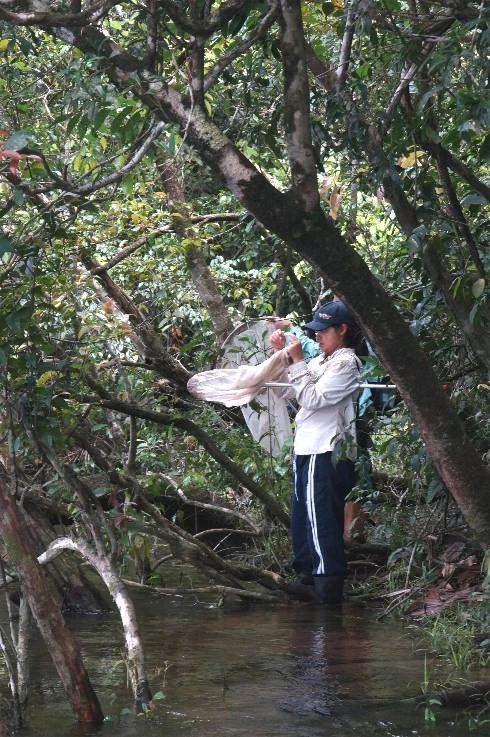
Brazilian PhD student Josenir Camara is working with Dr Adrian Plant, Principal Curator of Entomology at Amgueddfa Cymru, on a three-year project to describe some of the diversity of Diptera (flies) inhabiting the rainforest of Brazil’s Amazon Basin. The two researchers have already made numerous collecting expeditions to remote parts of the Amazon, but now they are both back in Cardiff where Josenir will spend the next six months studying at the Museum. As a part of her research she will describe all the Amazonian species of a group of water-inhabiting flies known as Hemerodromia. She already has more than 50 species that are completely new to science and once these have been formally described, the next task is to construct an evolutionary tree showing how the Amazonian Hemerodromia have diversified in respect to Hemerodromia elsewhere in the world. This is where Amgueddfa Cymru comes in as our extensive collections will provide her with an invaluable resource she can use to compare how Amazonian species differ from others. By careful comparison of ‘characters’ of each species and using sophisticated computing methods, Josenir will construct a ‘phylogenetic tree’ to illustrate the sequence of evolutionary changes that have occurred. By comparing the evolutionary tree with the fossil record, geological and climatic history it is hoped that we start to learn more about the biogeography of the Amazon (biogeography is the study of how species and communities or organisms become distributed both geographically and through geologic time).
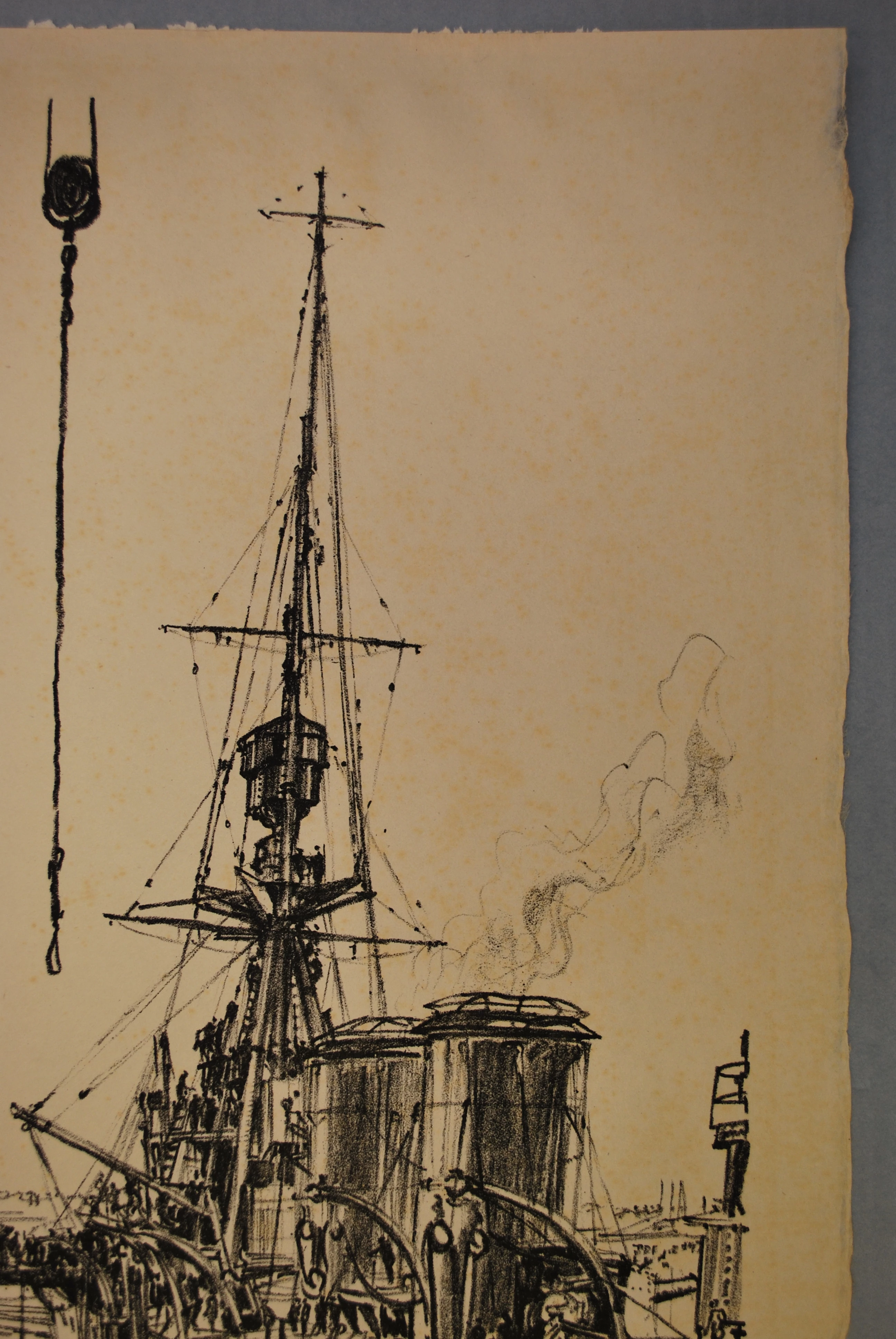
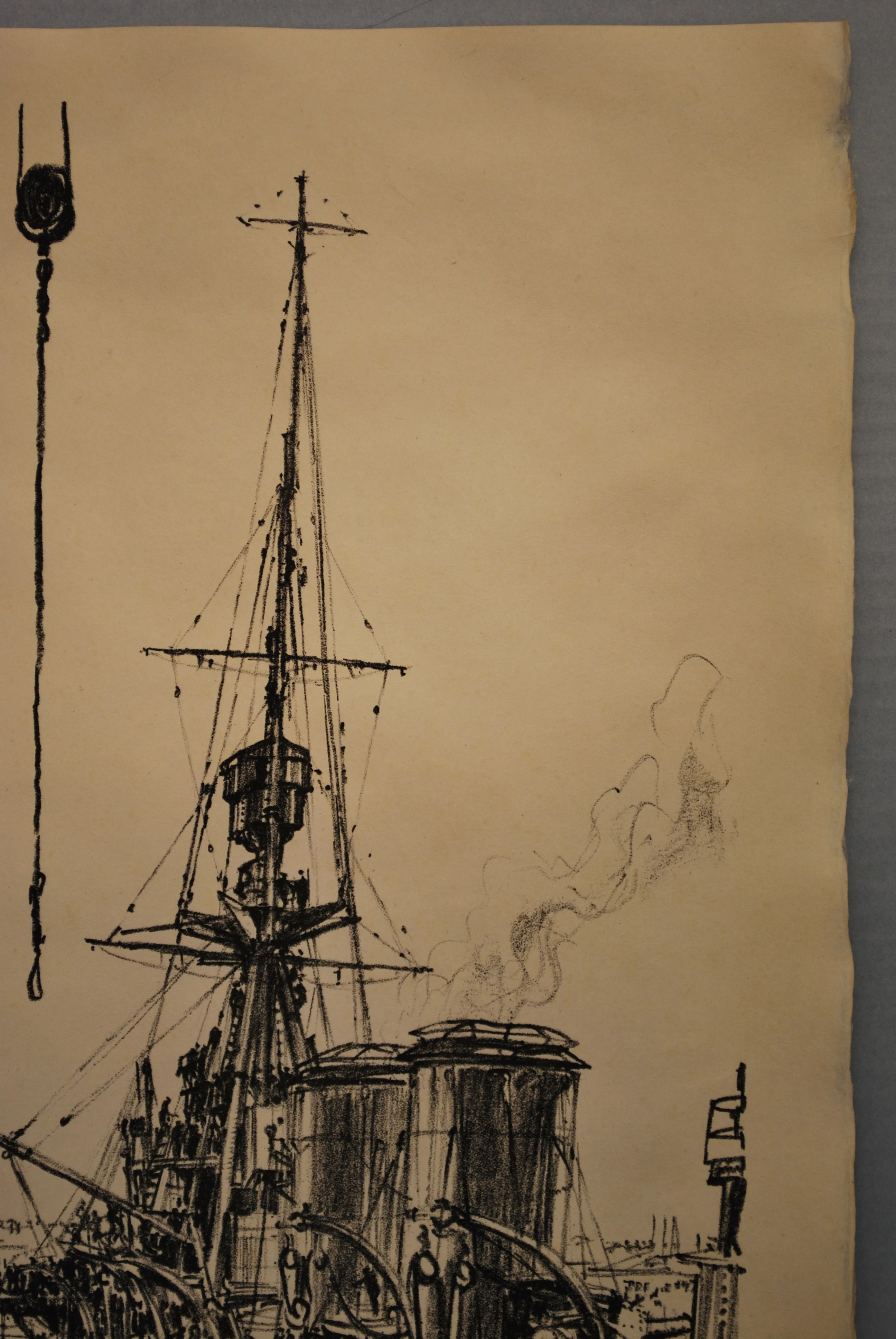
Do you want to know what happened after washing one of the lithograph prints??
So here you are, the before and after washing treatment where you can see that the foxing spots have disappeared completely over the paper surface.
As we said before, the foxing reddish-brown spots can appear in the paper surface due to different causes. For example, the print has been exposed to relative humidity and temperature fluctuations for a long period of time creating an environment for the growing of mould or another possibility, could be that during the paper making process were used raw materials infested with mould.
These micro-organisms can remain latent for months or years awaiting for the appropriate conditions for growth and there are a wide range of colour stains. In some of the lithograph prints we found basically small yellow spots in different areas of the paper surface.
The 1958 British Empire and Commonwealth Games Queen’s Relay baton.
The Queen’s message, signed ‘Elizabeth R’, dated 14 July 1958, and sent from Buckingham Palace to Cardiff via the baton relay. By Gracious Permission of Her Majesty Queen Elizabeth II.
Who would have thought that the exciting, colourful and internationally renowned Commonwealth Games Queen’s Baton Relay actually started its life in Wales?
Signifying a visual celebration of the unity and diversity of all the Commonwealth nations, and highlighting sport’s ability to join people of all races, this much-anticipated event has now become a familiar and popular prelude to the Games’ grand opening.
Having begun as the Empire Games in 1930, the Commonwealth Games has always been proud to follow the Olympic ideal of friendship, solidarity and fair play, and endeavours to promote good relations between the Commonwealth countries.
The British Empire and Commonwealth Games, as they were known in 1958 when held in Cardiff between 18 and 26 July, were the first to stage the Queen’s Baton Relay, intended to symbolise peace and harmony through sports participation.
In a fitting tribute to the capital city’s success as host, the Cardiff baton will form part of this year’s ceremony when the 2014 Glasgow equivalent arrives in Wales on 24 May to begin its seven-day journey around the country.
The baton
Although its origins remain unclear, it is believed that the idea for a Commonwealth baton relay was conceived during the late 1950s by the Games Organising Committee. Appointed as the event’s Honorary Organiser was retired Royal Navy officer, Commander Bill Collins, who had previously coordinated the London Olympic Torch Relay in 1948. For the Cardiff relay Collins was ably assisted by a team of local organisers, selected by athletic associations from all counties through which the running route passed.
The 1958 silver-gilt and enamel baton was designed by Cardiff jeweller and former soldier, Colonel Roy Crouch, Chairman of the Games’ Medals Committee. Measuring 40cm in length and 4cm in diameter, it was decorated with Welsh national symbols, namely a red dragon, daffodils and leeks, along with crowns representing the royal connection. ‘VI British Empire and Commonwealth Games, Wales 1958’ was inscribed on the hollow tubular baton, which was manufactured by Turner and Simpson, silversmiths, of Birmingham.
The 1958 British Empire and Commonwealth Games Queen’s Relay baton.
On 14 July 1958, the baton relay set off from the forecourt of London’s Buckingham Palace, the residence of Queen Elizabeth, Head of the Commonwealth, before travelling through several English counties and all thirteen Welsh on its journey to Cardiff. Unfortunately, owing to illness, the Queen was unable to hand her message to the opening runners, namely Dr Roger Bannister, the first sub-four-minute miler, escorted by fellow 1954 Games champions Chris Chataway and Peter Driver. Her place was taken by the relay organiser, Commander Collins, who placed the message inside the baton; a cap on one end being secured by a spring catch, thus avoiding the need for a key. In order to prevent damaging the baton en route, the message was transferred to a metal replica version following the relay’s second stage, which, for security reasons, was fitted with a lock. The ceremonial silver baton then resumed its duties on the final changeover, carried, message safely inside, by the last runner.
A total of 664 athletes, including 32 schoolboys, were involved in the relay, which covered more than 600 miles over almost four days. According to The Story of the Sixth British Empire and Commonwealth Games by Clive Williams (2008):
One runner from each club, service unit and school in each county was given a stage to run. The seniors ran two-mile legs while the juniors ran a mile. The run continued day and night, seniors being used in dense traffic conditions and, where possible from midnight to 6.00am. In the north the message passed through Llangollen, Wrexham, Flint, Llandudno and Caernarfon before heading south down the west coast through Dolgellau, Aberystwyth, Cardigan and Haverfordwest. To satisfy the needs of the more heavily populated south the relay wound around the coast from Carmarthen, Llanelli, Swansea and Bridgend before it covered the valleys of the south through Aberdare, Brynmawr, Abergavenny, and Newport then on to Cardiff.
An official car followed directly behind the runner throughout to protect him from unofficial cycle or motor car escorts, to light the road at night, and to enable the section organisers to keep the time-table correct. Speeds varied as necessary from 6.5 to 7.5 minutes to the mile, thus ensuring that there was no idea of a race and to allow spectators to be shown the baton at take-over points.
'A Quick Laugh' by Geoffrey Evans, Western Mail, 18 July 1958. Reproduced by kind permission of the National Library of Wales
Following a trumpet fanfare and six-gun salute, on Friday 18 July at 6.33pm, the final leg runner entered the Arms Park stadium to complete the relay. This athlete’s identity was a closely guarded secret and rapturous applause rang out from the 40,000 or so spectators when he was revealed as former Wales rugby player and Olympic silver sprint relay medallist, 36-year-old Ken Jones of Newport. Donning a red vest complete with Welsh badge and white shorts, Jones appeared in the competitors’ entrance before running once around the cinder track, holding the baton aloft. He then stopped in front of the Duke of Edinburgh, the President of the Commonwealth Games Federation, and handed him the baton accompanied by the light-hearted remark of ‘Nice pass Ken’ by a member of the crowd, in recognition of Jones’s prestigious rugby career. The Duke proceeded to read the Queen’s message to the excited crowd:
To all athletes assembled at Cardiff for the 6th British Empire and Commonwealth Games I send a warm welcome and my very best wishes. I am delighted that so many Commonwealth countries have sent teams to Wales for these Games. The number is larger than ever and more than three times as great as for the first meeting at Hamilton in 1930. This is welcome proof of the increasing value which is being placed today on physical strength and skill as an essential factor in the development of the whole man, healthy in mind and body. It also gives the greatest personal pleasure to know that so many members of the Commonwealth family are meeting in friendly rivalry and competition. I hope that many lasting friendships will grow from this great meeting of athletes and spectators, and that you will all go home with a better understanding of the value of our Commonwealth of nations. I am greatly looking forward to being with you at the end of next week.
The much-anticipated Games were then officially opened, as Cardiff welcomed 35 nations and 1,122 athletes to compete in the sports of athletics, boxing, cycling, fencing, bowls, rowing, swimming and diving, weightlifting and wrestling. In addition to the use of Cardiff Arms Park for the opening and closing ceremonies and the athletics events, other venues included Cardiff’s Wales Empire pool, built especially to host the swimming, Sophia Gardens for the boxing bouts, Maindy Stadium the cycling and Llyn Padarn, Llanberis the rowing. Wales’s sole gold medal was won by bantamweight boxer Howard Winstone, although the home nation did also collect three silvers and seven bronze.
The closing ceremony and beyond
Following a Games widely considered an outstanding success, the closing ceremony on 26 July proved to be an historic occasion. Although continued illness prevented the Queen from attending in person, a recorded message was played to the crowd in which she announced: ‘I intend to create my son Charles, Prince of Wales today. When he is grown up, I will present him to you at Caernarfon.’
Despite being the smallest ever host nation, Wales’s superbly organised sporting spectacle did the country proud and was recognised at the time as a magnificent occasion which celebrated the cream of athletic strength and stamina on a global stage.
On the culmination of the 1958 Games the Queen’s relay baton was offered by the Organising Committee to the National Museum of Wales, at the wish of Queen Elizabeth. It has been housed in the Art Department ever since, along with the accompanying royal message, and represents an enduring visual testament to an unforgettable and momentous festival of sport.
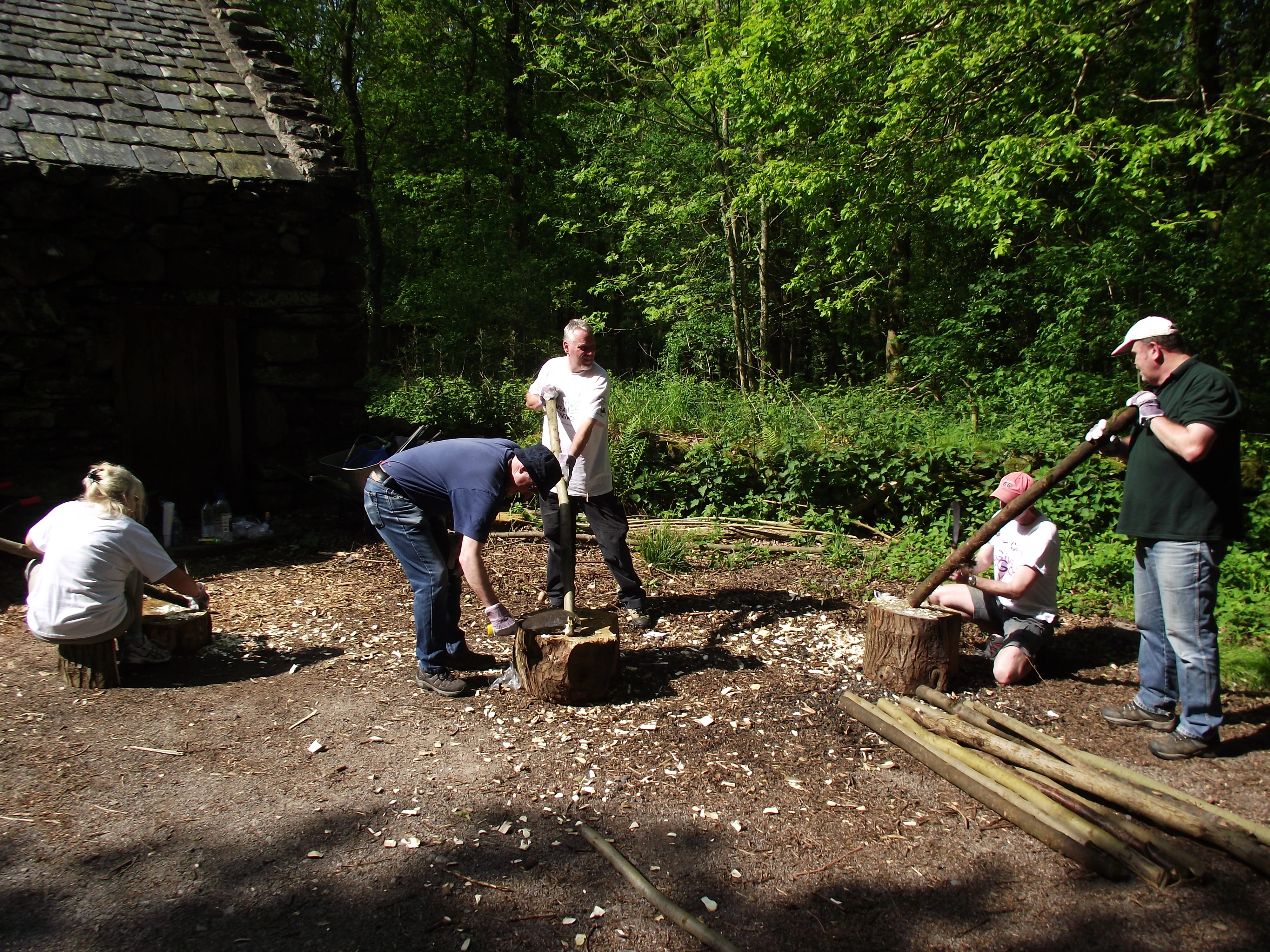
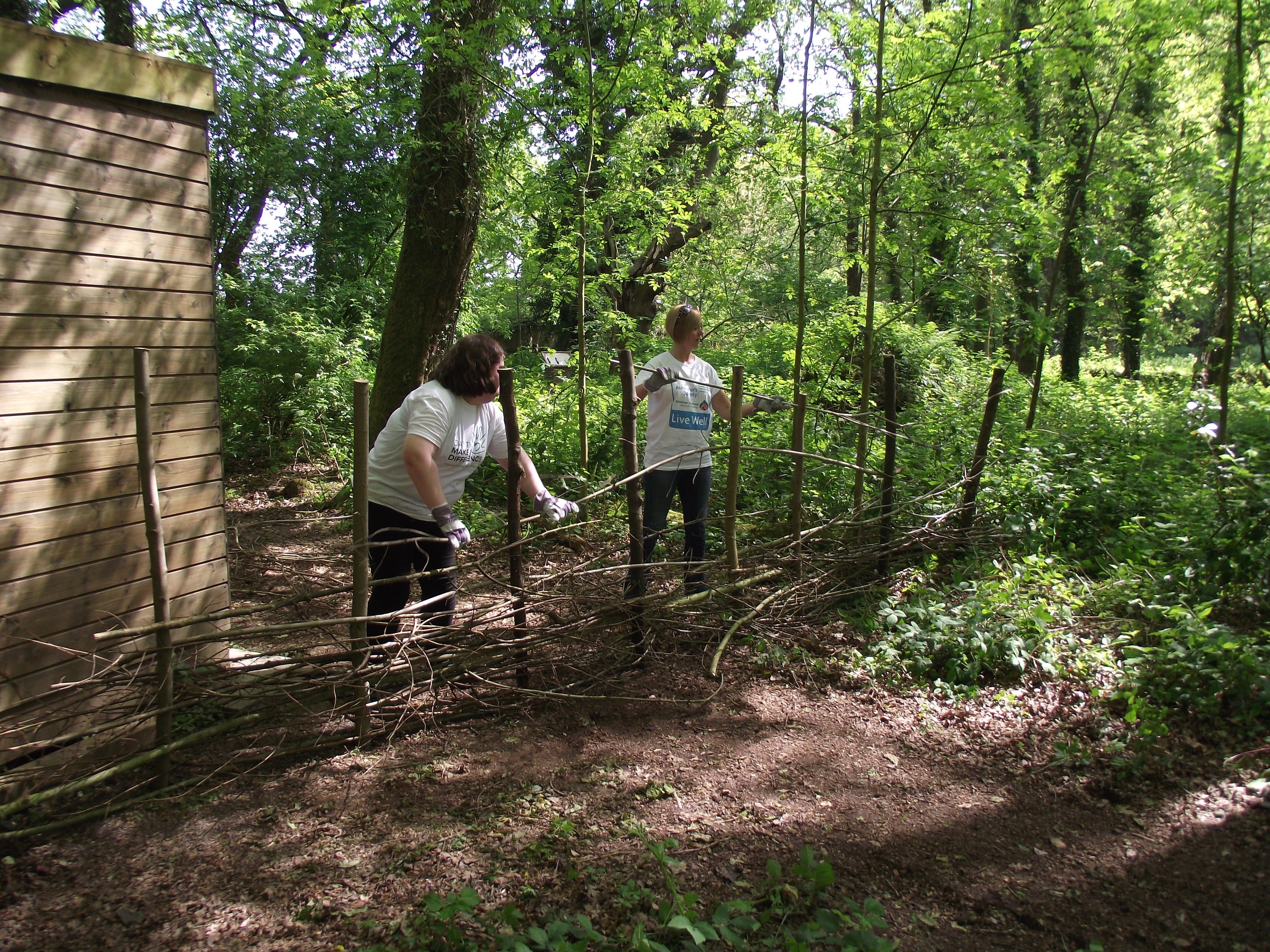
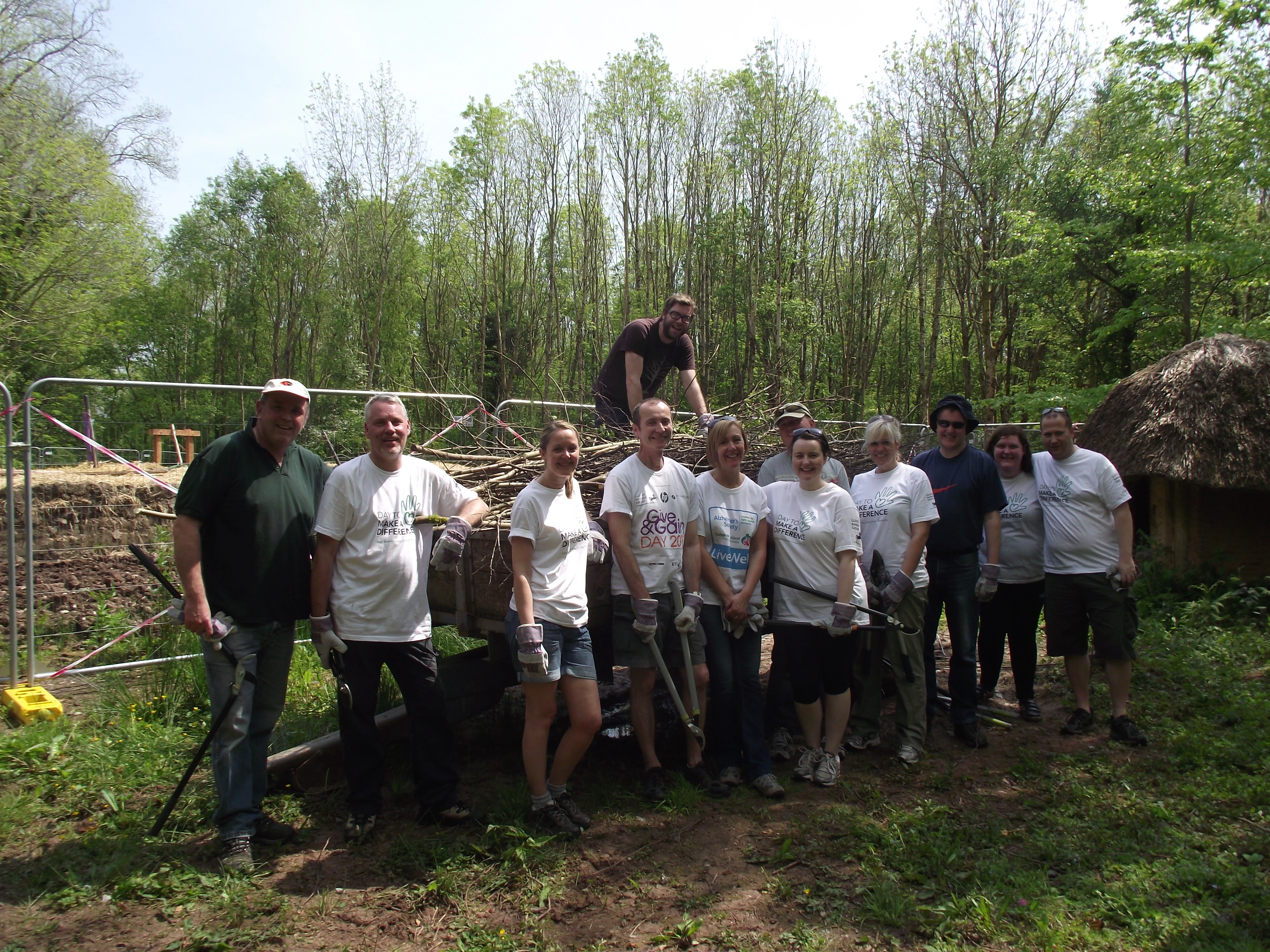
Last week, as part of Give and Gain Day 2014, we had 50 volunteers from the Lloyds Banking Group helping with a number of projects here at St Fagans. Some helped with the Gardening Department, some helped the Historic Buildings Unit while some assisted with a project alongside the Alzheimer’s Society. Myself and Bernice had the help of 11 volunteers to build a dead hedge in the woodlands near the bird hide.
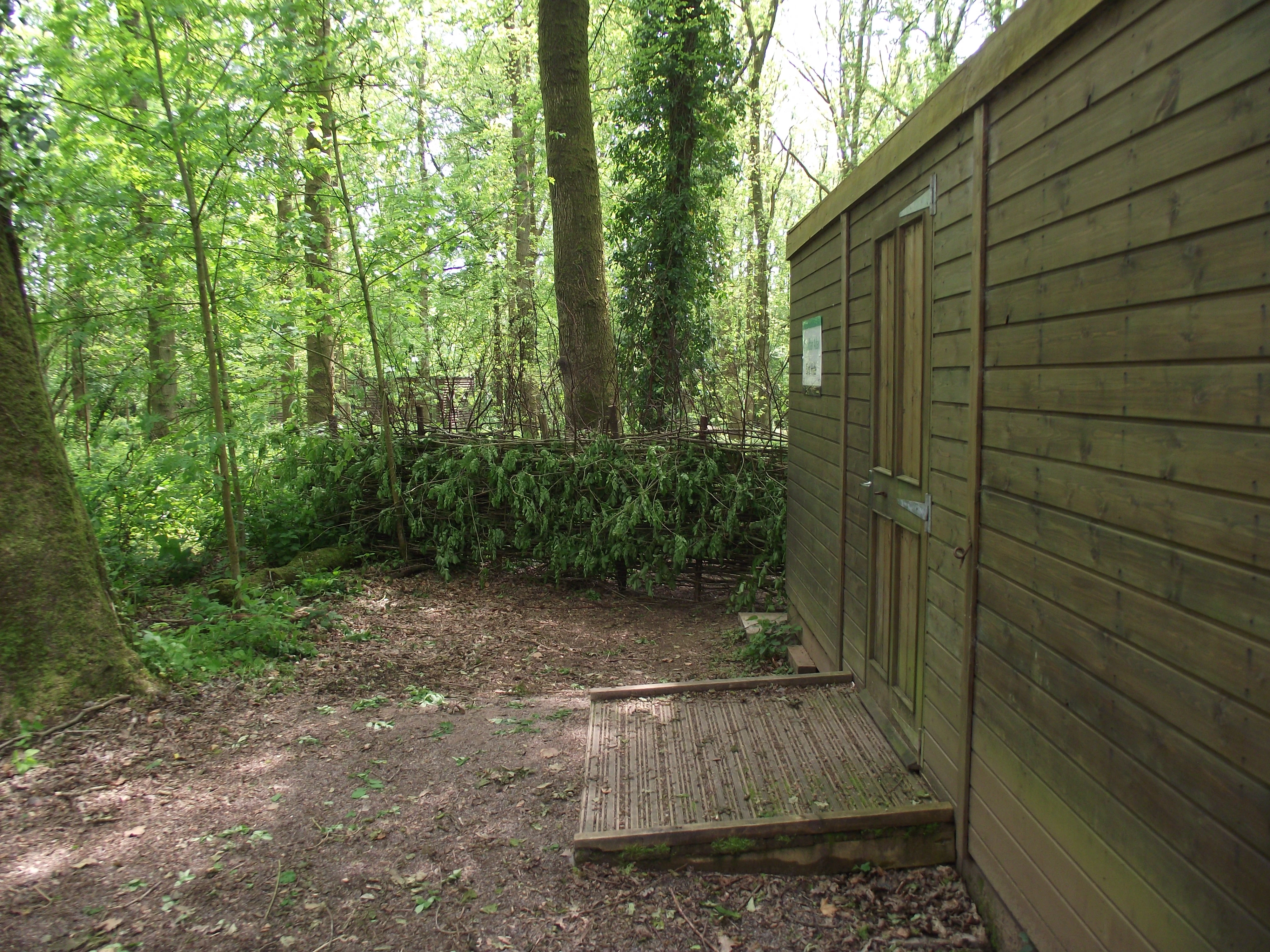
We had been planning on building a dead hedge in near the bird hide for a while, for a number of reasons. A dead hedge would act as a screen for approaching the bird hide, meaning that birds on the feeders would be less likely to be scared by the approaching visitors. A dead hedge also acts as a wildlife corridor, giving cover to a wide variety of wildlife as they move through the woodlands. Visitors had also begun cutting through the woodland, and one section of the dead hedge was to act as a deterrent meaning visitors would be more likely to stick to the paths.
The first task of the day was the sharpening of the fence posts. The posts are needed for structure and need to be driven firmly into the ground. Creating the sharp end obviously makes this much easier. After creating pilot holes, the poles were then driven into the ground using a sledge hammer. Once the posts were in place, we could then begin to assemble the dead hedge.
A dead hedge is built up of dead woodland material. Over the past couple of weeks I have been asking the gardeners and farmers here to help by collecting any trimmings and off cuts and delivering these to the bird hide for use in this project. Everyone was incredibly helpful, and we ended up with a vast pile of material… or so I thought. Dead hedging takes a lot of material, so along with some of the volunteers I headed into the woods to do a bit of clearing to gain more material.
After lunch, we headed up into the woods near the site of Bryn Eryr, the Iron Age farmstead currently being built. This area has previously been cleared so there was a lot of cut material for us to collect. This was loaded into a trailer and taken over to the bird hide. The afternoon finished with us using this material to finish the dead hedge. As an artistic final touch, we used some lime cuttings to add extra height and a certain je ne sais quois to the finished hedge.
As these pictures show, the day was a huge success! The weather could not have been better and I think everyone enjoyed themselves. The 2 sections of dead hedge we wanted to build got done, and I’ve already earmarked some projects for future volunteers! The amount of work done in a day was incredible, it would have taken me and Bernice a lot longer to do without the help of the volunteers. A huge thank you to everyone who helped us and the other projects too!
So how long do you think you can survive without breathing? Humans generally last only six minutes without oxygen before brain damage occurs. But what about 25 years? Some plants can live without respiring for that long. How could this exceptional resurrection ability be used to help thousands of people? Or perhaps even help us to colonise new worlds?
All plants need water to survive. They combine water with carbon dioxide during photosynthesis to create sugar for energy. But what happens in extreme environments when water is not available?
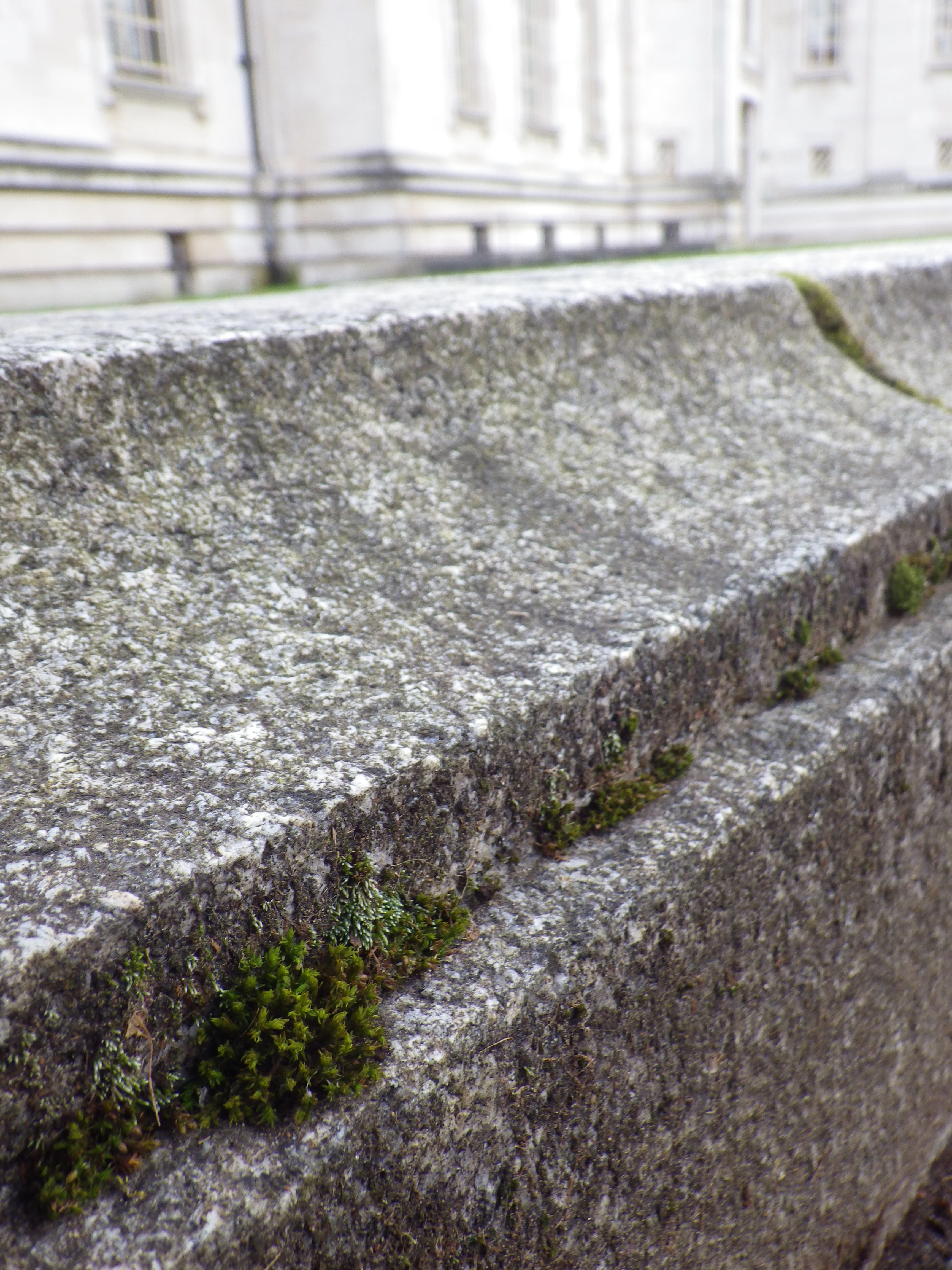
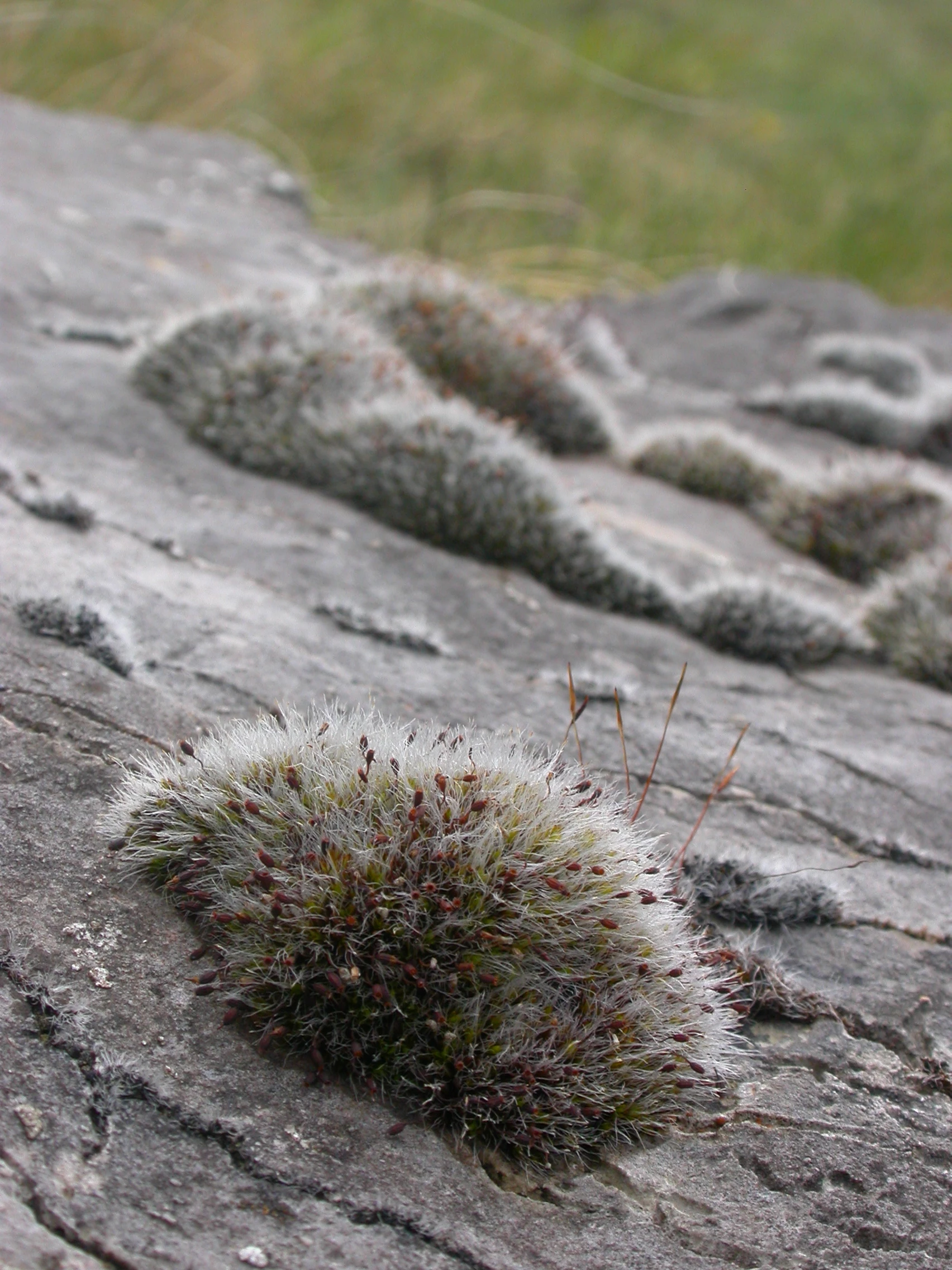
The Antarctic is an extreme environment where water is unavailable to plants as it is locked up as solid ice. But you don’t have to look as far as the Antarctic for an extreme environment for a plant. Your roof, sheer rock faces and the tops of walls are habitats where many plants would struggle to get water. Yet mosses grow in these habitats all around us. So how do they do it?
Some plants have adapted to dry habitats or drought conditions by holding onto water when it is available. They may have waxy leaf surfaces or store water in cells in a similar way to a cactus. Mosses and liverworts take water from the surrounding atmosphere, often relying less on water from the ground. Some mosses also have white hair points to their leaves. These hair points improve take up of water from the air by increasing surface area, as well as acting to catch water droplets.
Other plants show an amazing ability to survive despite being completely dried out. This is not the same as not watering your cactus for a few months, where it is using stored water to stay alive. This is when a plant fully dries out AND all life processes such as photosynthesis and respiration stop. On adding water, life processes begin and the plant revives. This is known as desiccation tolerance.
Desiccation tolerance was first observed in animals over 300 years ago. Dirt from a dried-out river was put in water under a microscope. Tiny rotifers were seen swimming about, much to the surprise of the observer! It took science another 150 years to confirm that resurrection of life was even possible.
This resurrection ability is common in adult mosses and liverworts as well as in seeds, spores and pollen. It is rare in adult flowering plants and ferns (a notable exception being the Resurrection Plant (Selaginella lepidophylla), a plant related to ferns). Scientists have managed to grow seeds from the flowering Lotus that were 1100 years old.
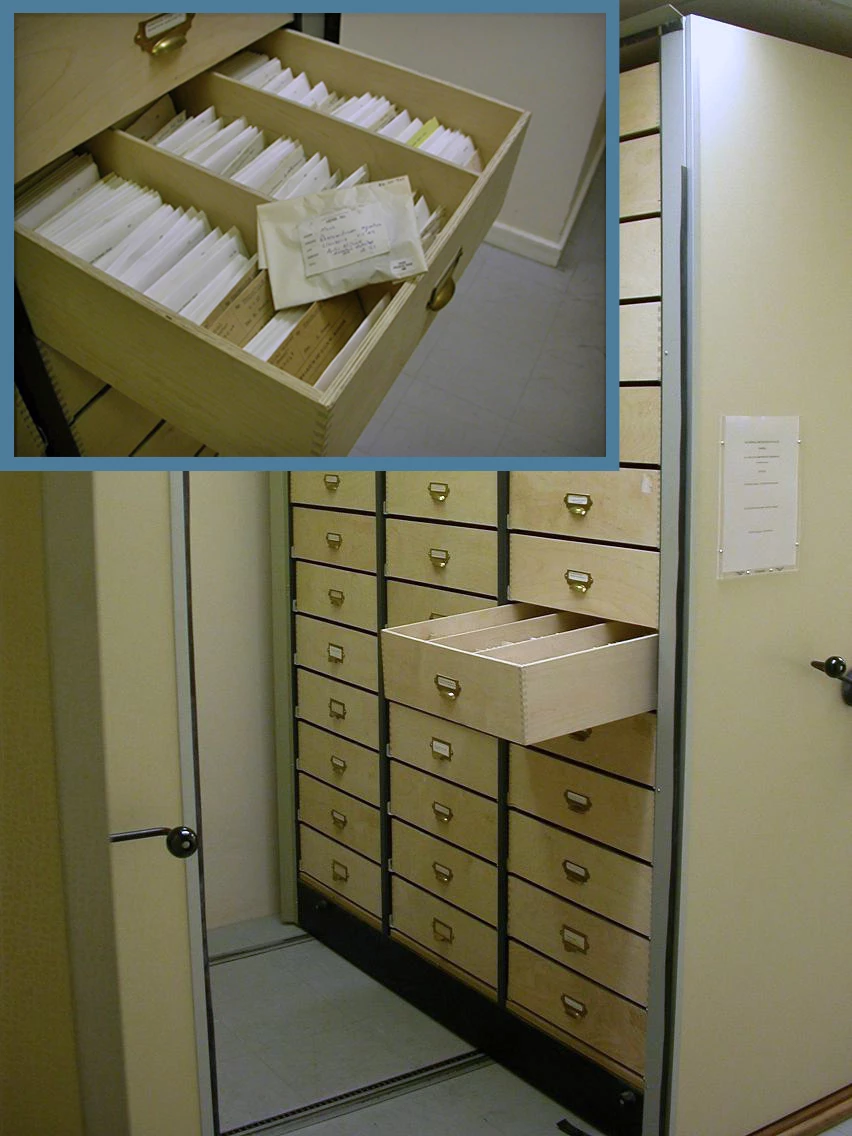
One liverwort has been revived after 25 years of being completely dried out. The resurrection of this liverwort after so long was particularly interesting as it was an adult plant rather than a spore or seed. It’s a strange thought that the dried specimens of mosses and liverworts in the National Museum Wales collections behind me as I’m writing this, may be more alive than I thought!
The National Museum Wales collections - more alive than they first appear?
The ability to revive depends on how fast the plant dried out, how long for, the intensity of drying and the temperature. The plant may be better able to cope if it has experienced drying out before and become ‘hardened’. Mosses have a number of adaptations that enable them to revive, they can:
quickly take up water
quickly repair cell contents
switch particular genes on and off
go into protein production overdrive
These mosses contribute to biodiversity in their own right and create habitats for other species. But how could a reviving wall-top moss be useful? The secrets mosses hold in their resurrection abilities can help us understand how plants managed to colonise the land around 470 million years ago.
More relevant to humans may be the discovery of how to translate this desiccation tolerance into crop plants in the future. Thousands of people starve every year when crops fail in drought conditions. If we can help crop plants to survive droughts by programming them to lie dormant until rain returns, we could create a more stable food supply.
An intriguing thought is that desiccation tolerant plants could be used to help terraform other planets. Resurrection abilities helped plants to colonise the land 470 million years ago, maybe one day it could help us colonise new worlds.
Further reading:
J. Graham (2003) Stages in the Terraforming of Mars: the Transition to Flowering Plants.AIP Conference Proceedings
Peter Alpert (2005) The limits and frontiers of desiccation-tolerant life.Integrative and Comparative Biology 45:685-695
Black, M. and H.W. Pritchard (editors) (2002) Desiccation and survival in plants: Drying without dying, pp. 207–237
Proctor et al. (2007) Desiccation-Tolerance in Bryophytes: A Review.The Bryologist, 110:4, 595-621
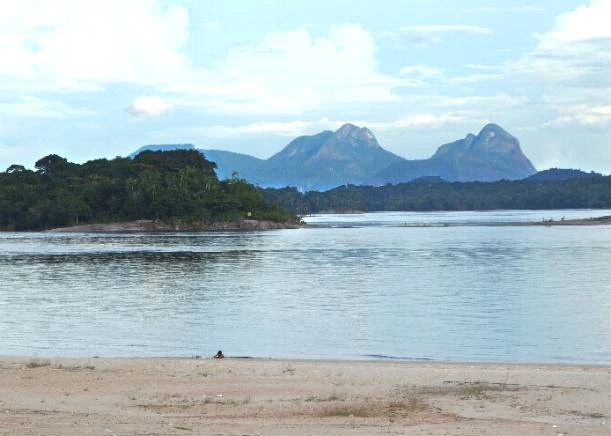
Mountains at Sao Gabriel da Cachoeira on the Rio Negro
Close up foxing detail, before treatment. ‘Ready for sea’ by Muirhead Bone.
Close up foxing removed detail, after treatment. ‘Ready for sea’ by Muirhead Bone.
The 1958 British Empire and Commonwealth Games Queen’s Relay baton.
The Queen’s message, signed ‘Elizabeth R’, dated 14 July 1958, and sent from Buckingham Palace to Cardiff via the baton relay. By Gracious Permission of Her Majesty Queen Elizabeth II.


.webp)