Angham Abdullah, Refugee Wales project researcher, 15 December 2021
Dr Angham Abdullah (Cardiff University) is a Research Associate on the Refugee Walesproject. The opinions expressed here are the author’s own.
We all heard the news about the 27 refugees who drowned trying to cross the English Channel in an inflatable dinghy on the 24th of November 2021. They included women, one of them pregnant, and children as well as young men. This was the biggest single loss of life in the Channel recorded since the International Organisation for Migration started collecting data in 2014.
Boris Johnson described the tragedy as “appalling”. I was hoping to hear a more genuine response that reflected the tragic loss of peoples’ lives. Those victims had strong reasons to risk their lives in that way. To them, putting their lives at the mercy of the waves was more endurable than an endless cycle of wars, violence, poverty, and persecution back home.
A few days after the tragedy, we heard responses from UK officials who, instead of empathising with the victims and looking at the real causes of such tragedies, pointed fingers at the smugglers and negotiated stricter asylum rules. And before the bodies of the 27 victims were transferred to their homelands for final burial, the Home Secretary produced an even more “appalling” response by issuing the Nationality and Borders Bill. Clause 9 of the Nationality and Borders Bill gives the government the right to deprive naturalised British citizens of their citizenship without informing them. Because of this, around 6 million naturalised persons in the UK will live in fear of being stripped of their British nationalities.
I couldn't stop thinking about the Syrian refugees I've interviewed for the Refugee Wales Project. Some of them have recently arrived in the UK, while others have been trying to make sense of their new life and rebuild their future and that of their children. When I asked them what getting British Citizenship meant to them, the overall response was “safety and a better future for the children”. I wondered how they would feel when they realised that the British Citizenship, they were working towards could be taken away “without any previous notice”.
I have spent years of waiting, uncertainty, anxiety as well as my life savings in return for the British citizenship which my children and I were recently granted. We thought that this citizenship would enable us at last to plan for our future. The thought that it could be revoked “at any moment” has left us feeling insecure and uncertain. Like the sea victims, very many of us who sought to mend our broken lives on "the safe shores of Britain" will see our faith in the UK further shattered.
The past year and a half have certainly been a challenging time for the whole world: the Covid-19 pandemic, the social injustice highlighted by the Black Lives Matter movement, a climate crisis that feels increasingly apocalyptic. At a time like this, you may well wonder whether art is just an indulgence.
For my colleagues and me at Amgueddfa Cymru, the knowledge that art is important to our well-being and a powerful way to explore and express ideas has been reinforced by our Celf ar y Cyd projects, developed to share the arts across Wales in response to the current health crisis. We have been bringing art into hospitals to support NHS staff and patients during the pandemic, and set up an online magazine Cynfas as a new platform for creative and critical responses to Amgueddfa Cymru’s art collection.
Many of the artworks we have used for these projects were acquired by Amgueddfa Cymru with the support of the charity Art Fund (artfund.org). Art Fund has been helping the Museum acquire works for Wales’s national art collection since 1928 and been a key supporter throughout the period of lockdown as we have continued to work on developing the collection. Here are just a few examples.
For Magdalene Odundo, her pots convey a universal human language. Asymmetric I has a strong anthropomorphic character, seemingly alluding to a pregnant female body and promising new life. Drawing on African traditions, she emphasises the power of pots to heal and to commemorate those who have died, making this vessel an eloquent object for the times we are living through.
Henri le Sidaner, The House (La Maison), not dated, oil on panel
Bequeathed by Daphne Llewellin of Usk with Art Fund support
One feature of the pandemic has been the comfort people have derived from nature and from living in the moment. Three small late-19th-century French paintings bequeathed through Art Fund are good examples of how artists have been particularly good at this. In The House, Henri Le Sidaner creates the sense of a quiet moment of reflection. We can imagine the artist quickly dabbing paint across his small panel to capture the light reflected off the windows and door of this vine-covered house.
Paul Delance, Beach with Seated Figures (La côte déserte), 1900, oil on panel
Bequeathed by Daphne Llewellin of Usk with Art Fund support
Paul Delance, View from a Hill, Sannois, Seine-et-Oise, 1890s, oil on panel
Bequeathed by Daphne Llewellin of Usk with Art Fund support
In Paul Delance’s Beach with Seated Figures (La côte déserte), we can sense the artist working briskly on a windy beach on the French Atlantic coast to record a bracing seaside excursion with friends. His View from a Hill, Sannois, Seine-et-Oise is another very personal work, thought to have been painted after the death of his wife in 1892 and showing him turning to art and to nature as sources of comfort.
The landscape of Wales has long been a source of inspiration and pleasure. This is what Paul Sandby found in 1771, when he toured north Wales in the company of the young landowner and art patron Sir Watkin Williams-Wynn. His charming series of 21 views of this journey shows how the pioneering tourists delighted in discovering this dramatic land. One highlight was the outing by boat to Dolbadarn Castle, in the shadow of Yr Wyddfa/Snowdon.
The industrial heritage of Wales has also provided artists with rich subject matter. German artists Bernd and Hilla Becher were best known for their typologies, photographs of a single type of industrial structure organised into grids. Preparation Plants, 1966-1974 comprises nine photographs taken by the Bechers during visits to Britain between 1966 and 1974, including the south Wales collieries of Penallta, Fern Hill, Brittanic and Tower. Now that this whole industrial ecosystem of the Valleys has disappeared, these images feel like a kind of memorial.
Anna Boghiguian, A meteor fell from the sky, 2018, mixed-media installation
Purchased with support from Art Fund and the Derek Williams Trust
Courtesy the artist.
When Cairo-based artist Anna Boghiguian was invited to participate in the Artes Mundi 8 exhibition at National Museum Cardiff, she also immersed herself in the history of Welsh industry. Her installation A meteor fell from the sky creates links between Port Talbot’s Tata Steelworks and the company’s steelworks in India, focusing on the steel workers and their struggle for their rights.
John Akomfrah’s video installation Vertigo Sea is a powerful reflection on humanity’s abuse of the sea, from the slave trade and modern migration to destruction of the marine environment. It couldn’t be a more relevant work for our times and is on show at National Museum Cardiff in the exhibition The Rules of Art?
The Amgueddfa Cymru Decolonising Group, 6 December 2021
Museums and their collections are often rooted in colonialism and racism – Amgueddfa Cymru is no different.
The Black Lives Matter movement has fast-tracked conversations about the stories that our collections and displays present, calling for us to confront history and challenge present-day injustices.
We know that we have a lot of work to do to make sure that everyone is represented in our collection and present a more balanced, authentic, and decolonised account of history. To help us with this work, we have developed a Charter for decolonising Amgueddfa Cymru’s collection.
There is no single definition that explains exactly what decolonising means, so our Charter lays out what it means for Amgueddfa Cymru. It defines 6 areas where we will work collaboratively with communities of relevance on the journey towards decolonising the collection.
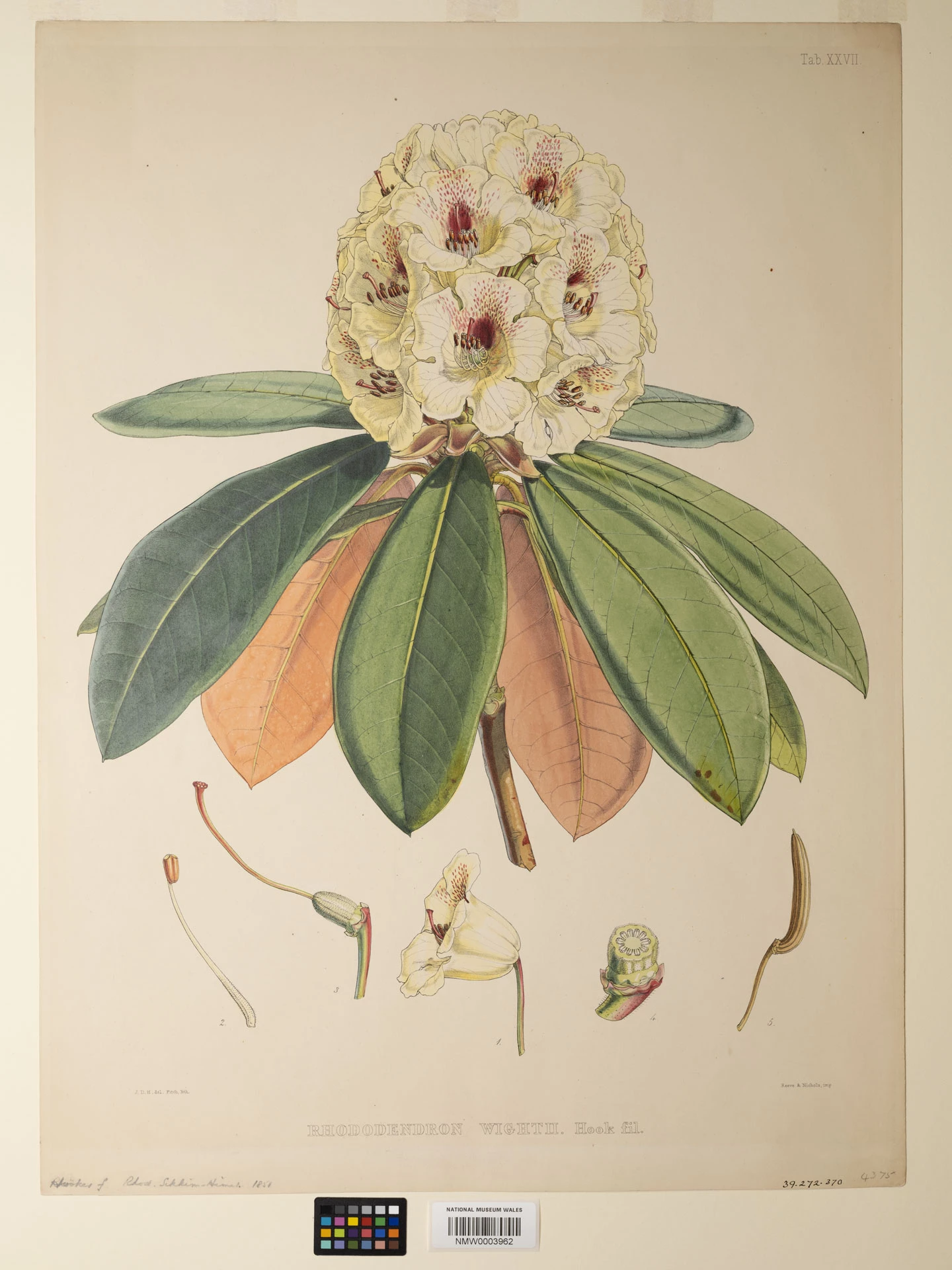
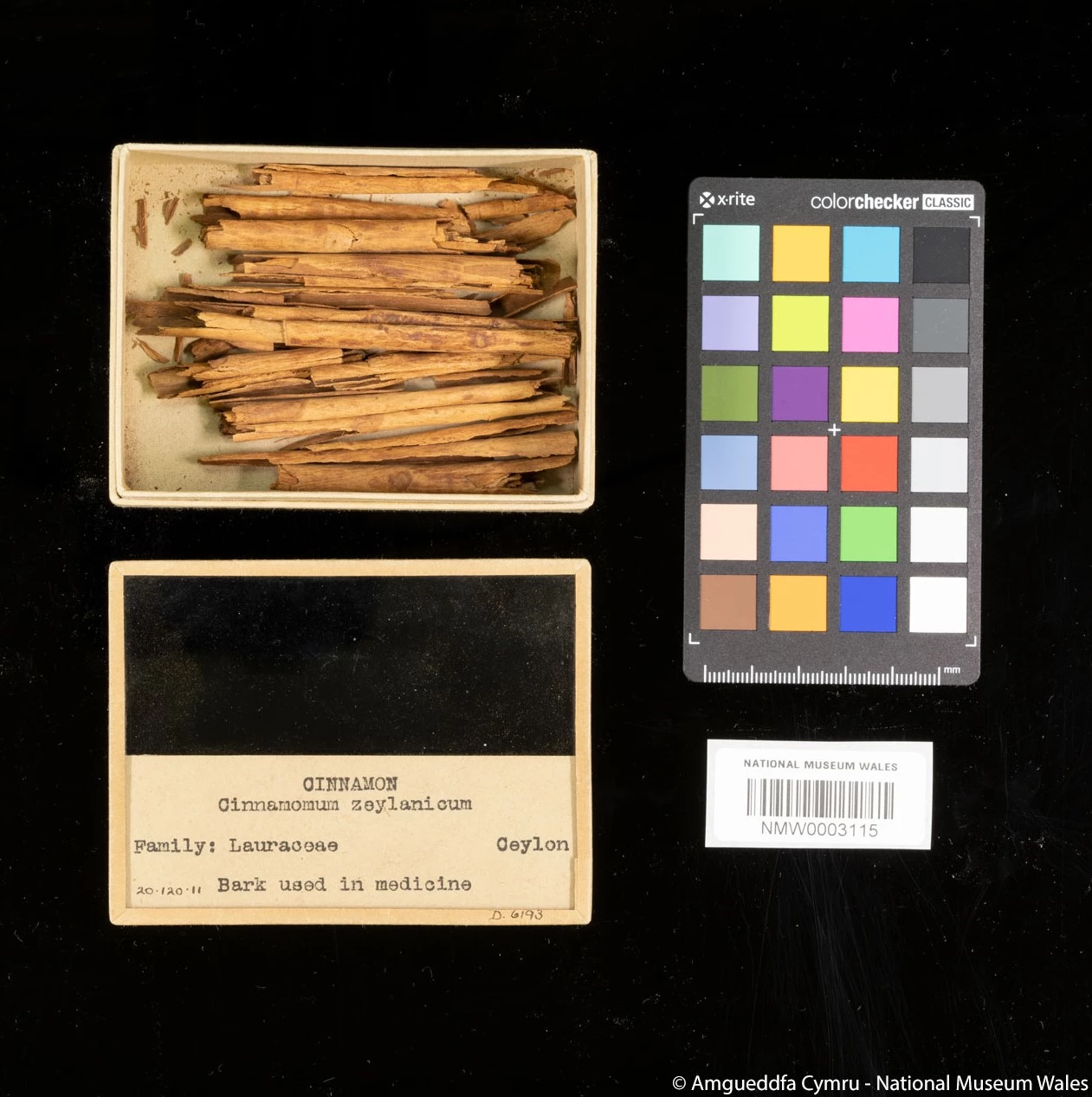
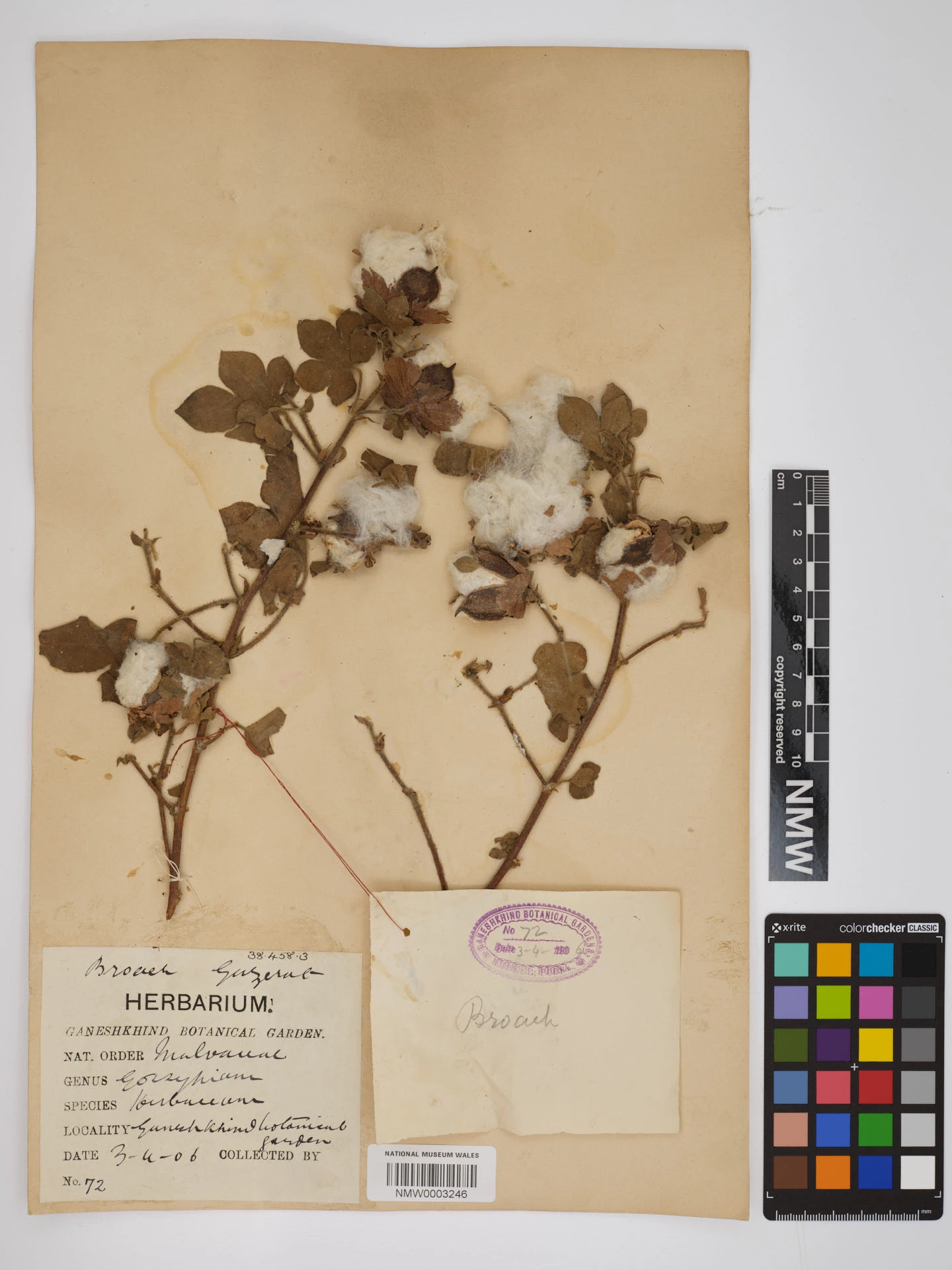
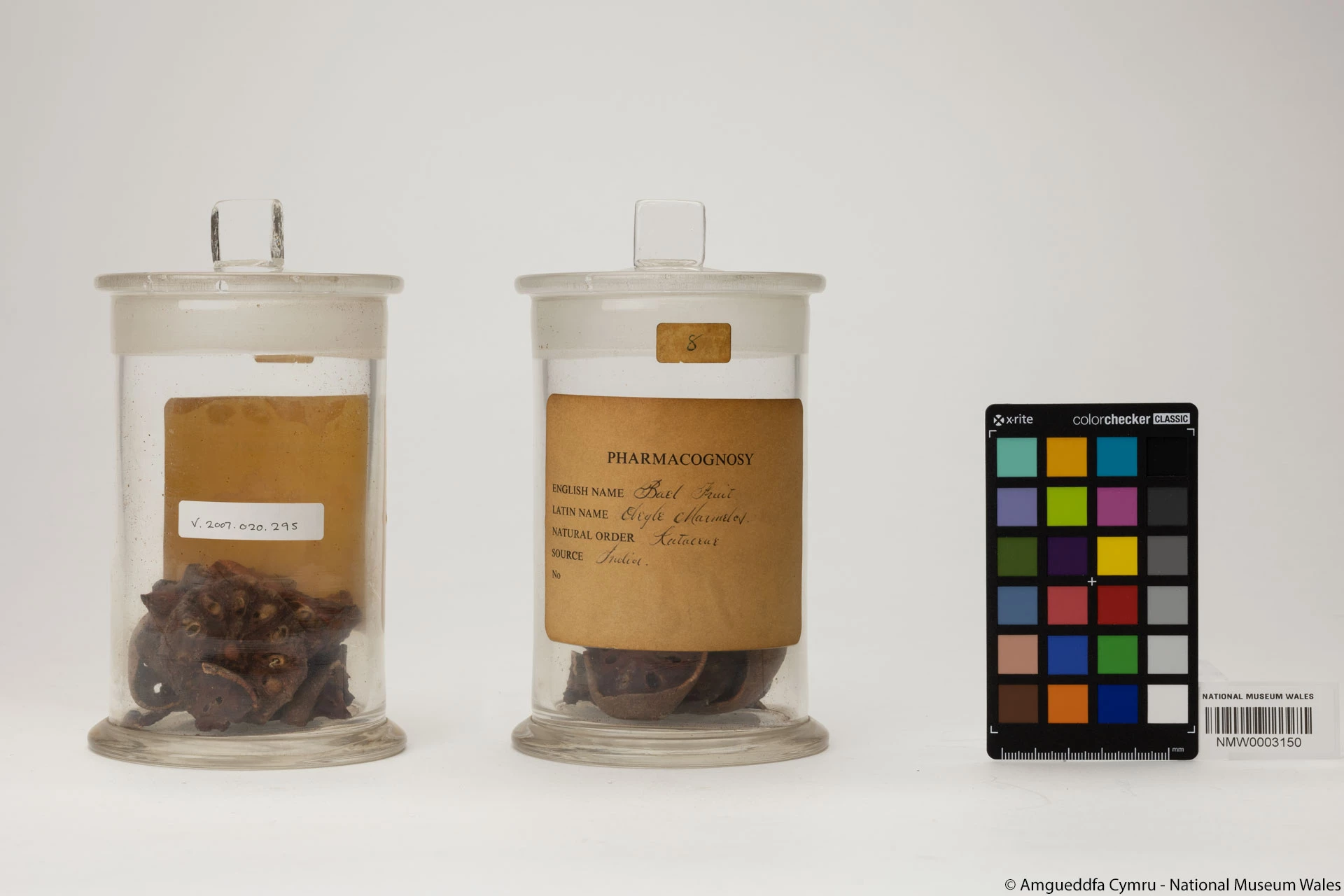
We are currently carrying out an audit of our collection. Our findings to date show that links to slavery are woven into the warp and weft of Welsh society. Objects that need to be decolonised are in every store, on every shelf, and in every gallery.
Over the next few months, we will begin a programme of community workshops to look more closely at these objects. To give you an idea of the kinds of objects we will be looking at together, here are a few examples from the collection.
From my recent musings you may have deduced that my research is centred around a beautiful group of marine bristleworms, which are given the name shovel head worms. Most people will be unfamiliar with shovel head worms, but they may have come across other marine bristleworms such as ragworms and lugworms used as bait by sea fisherman (the latter also being responsible for the casts of sand you see on sandy beaches), or the ornamental feather duster worms that people often keep in aquaria.
Lugworm casts and lugworm (photos by K. Mortimer and A. Mackie)
Alyson Cole - Volunteer Ambassador, 1 December 2021
The National Wool Museum Exhibition of Hope was launched in April 2020. This was of course during the beginning of the national lockdown and I think it is safe to presume that no one could have predicted how successful it would be!
With support from the Ashley Family Foundation and Community Foundation Wales, the aim was to collect enough 20cm or 8inch rainbow coloured squares in order to weave together a substantial rainbow blanket to be displayed in the National Wool Museum, and then eventually at the National Waterfront Museum in Swansea.
The idea of the rainbow colours was of course in accordance with the rainbow image, which during the national lockdown had became an important emblem. The rainbow symbolised light at the end of the tunnel after a dark and uncertain time. The blanket would therefore hopefully become a symbol of peace, hope, community and spirit.
The project surpassed all expectations and collected in the range of 2,000 rainbow square pieces from all over the country. These squares were knitted, felted, woven or crocheted not only from wool, but from cotton, silk and other wonderful fibres that people had to hand.
Due to the overwhelming response and the restrictions placed on volunteers in meeting and creating one single blanket, a decision was made to make many blankets instead. As a result, museum staff and volunteers began joining the squares from home!
With now many blankets in the making, the project took off to a new level and purpose! Not only were these blankets going to become works of art, they would also be donated to charities, such as the homeless charity 'Crisis'. The project grew further when the South Wales branch of the 'Crisis' Charity shared the exhibition on their Facebook pages and even going as far as providing people with physical packs of wool and instructions.
The project further snowballed when it was featured in Adult Learners Week 2020, when two videos were released of National Wool Museum Craftsperson Non Mitchell showing how to create a felted and woven square. Finally, maybe the biggest influence was when the Connect to Kindness Art Project, working alongside the Connect to Kindness Campaign and Carmarthenshire Association of Voluntary Services showcased the project in a collage of photos.
When I visited the exhibition recently, what I found fascinating is how, from humble beginnings, the project took on a life of its own and became more than simply helping create a blanket. Along with being beautiful pieces of art that could be enjoyed on their own merit, the blankets would now also help people in a physical and practical way!
In my opinion, what was lovely was how the exhibition has captured the array of positive feelings it had stirred in the volunteers and museum staff who took part in the project. I’m sure this was a somewhat unexpected or underestimated result of the project!
It was clear from the messages and notes received with the blanket squares, that it had brought many a sense of joy, achievement, comfort and a feeling of purpose. The blanket had brought people a sense of belonging and highlighted the feeling of community and what can be achieved when people "pull together"
This is perhaps the most interesting factor of the project for me - the stories of those creating the squares. I am delighted that the exhibition is reflecting this by showing "stories of the squares" in a video to go along with the exhibition, which will also be available online.
I had the pleasure of watching the video when I visited the exhibition in Drefach Felindre, and it was amazing to hear of the different stories of those behind the squares. There were stories of the project uniting family and friends along with chapels and schools. The exhibition includes an image of rainbow hands by the children of Ysgol Penyboyr.
The effort which some had gone to was also amazing. A big shout out to Elwyna who knitted 350 squares! One lady had even naturally dyed her wool in different rainbow colours.
One of the stories I found touching was of a lady who had recently lost her mother and who had left her a stash of yarn, mostly from America. Her mother had taught her to crochet and she felt the project was an amazing way to honour her mother's memory.
Crocheting also helped her deal with the grief during this time as she found it therapeutic and relaxing. Others also spoke of the art of crocheting and making the squares as being a therapeutic and relaxing process.
Another heart warming story was of how someone struggled with her memory and was overjoyed to discover that she remembered how to crochet.
These stories and indeed the whole exhibition being so visually bright and beautiful was very uplifting in what is still a fairly uncertain time. The words of one volunteer perfectly summed up the meaning of the project for me - although we couldn’t "be together, we could work together".
The exhibition can be seen in the National Wool Museum of Wales until mid January 2022. A walk around the exhibition will also be available online. The Exhibition will move to Swansea’s Waterfront Museum in July 2022 - October 2022.