Industry - Workshop of the World

Richard Trevithick’s steam locomotive

15 December 2008

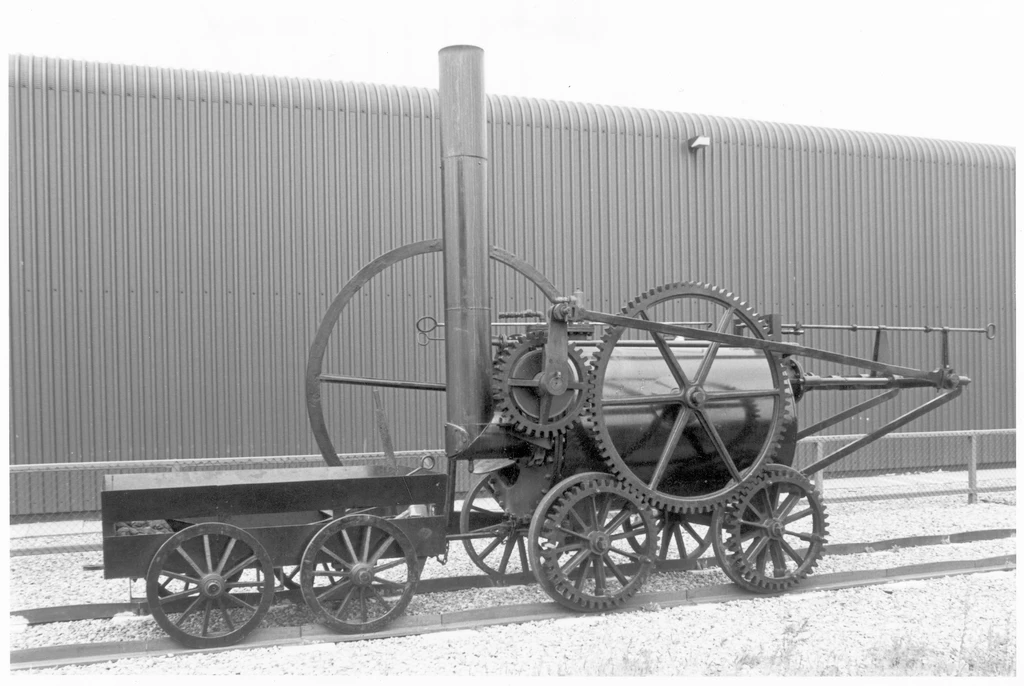
The replica locomotive

The replica locomotive in its present home, the National Waterfront Museum.

The Penydarren loco

On 21 February 1804, the world’s first ever railway journey ran 9 miles from the ironworks at Penydarren to the Merthyr–Cardiff Canal, south Wales. It was to be several years before steam locomotion became commercially viable, meaning that Richard Trevithick and not George Stephenson was the real father of the railways.

In 1803, Samuel Homfray brought Richard Trevithick to his Penydarren ironworks at Merthyr Tydfil in South Wales. Homfray was interested in the high pressure engines that the Cornishman had developed and installed in his road engines.

He encouraged Trevithick to look into the possibility of converting such an engine into a rail-mounted locomotive to travel over the newly laid tramroad from Penydarren to the canal wharf at Abercynon.

Crawshay’s wager

It would appear that Trevithick started work on the locomotive in the autumn of 1803 and, by February 1804, it was completed. Tradition has it that Richard Crawshay, owner of the nearby Cyfarthfa ironworks, was highly sceptical about the new engine, and he and Homfray placed a wager of 500 guineas each with Richard Hill (of the Plymouth ironworks) as to whether or not the engine could haul ten tons of iron to Abercynon, and haul the empty wagons back.

The first run was on 21 February, and was described in some detail by Trevithick:

‘...yesterday we proceeded on our journey with the engine, and we carried ten tons of iron in five wagons, and seventy men riding on them the whole of the journey... the engine, while working, went nearly five miles an hour; there was no water put into the boiler from the time we started until our journey’s end... the coal consumed was two hundredweight’.

Unfortunately, on the return journey a bolt sheared, causing the boiler to leak. The fire then had to be dropped and the engine did not get back to Penydarren until the following day.

This gave Crawshay reason to claim that the run had not been completed as stipulated in the wager, but it is not known if this was ever settled!

The engine was, in fact, too heavy for the rails. Later, it would serve as a stationary engine driving a forge hammer at the Penydarren works.

Replica locomotive

The replica locomotive on display in the Museum today was built working from Trevithick’s original documents and plans (now in the National Museum of Science and Industry). It was inaugurated in 1981 and, ironically, presented the exact same problem as the original engine – it too broke the rails on which it ran!

We cannot overestimate the importance of Trevithick’s locomotive. In 1800, the fastest a man could travel over land was at a gallop on horseback; a century later, much of the world had an extensive railway system on which trains regularly travelled at speeds of up to sixty miles per hour. This remarkable transformation, a momentous occasion in world history, was initiated in south Wales in that February of 1804.


The Penydarren locomotive – Steaming Days

A short film documenting the yearly steaming of Richard Trevithick’s replica locomotive at the National Waterfront Museum, Swansea.

Working Abroad - Welsh Emigration: Copper

19 September 2008

Remains of Burra Burra copperworks

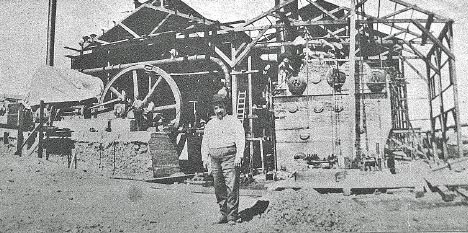
Remains of the copperworks at Burra Burra, New South Wales, Australia

Burra Burra copper mine, 1874.

Burra Burra copper mine, 1874.

Morris Stores, Swansea, Tasmania

Morris Stores, Swansea, Tasmania

George Mitchell

George Mitchell

The world of copper smelting was led by Wales in the 19th century. The works around Swansea and Holywell supplied over 50% of the world's copper.

The US copper industry vastly outstripped the Welsh copper industry. In Australia there were huge deposits of copper ore which led to the growth of smelting towns around the Spencer Gulf, South Australia from the 1860s. The workers were migrants, almost exclusively from the Swansea region, in the early days.

The mine and smelting works in Burra Burra, South Australia were Welsh owned with workers recruited in the Loughor and Llanelli area. It was the establishment of these smelters that eventually broke Swansea's undisputed dominance over the world copper markets.

As British and European copper sources became depleted, Swansea began to import copper ore, from countries such as Chile. In the 1860s Welsh smelters helped to establish works in Chile and today that country is among the largest producers in the world.

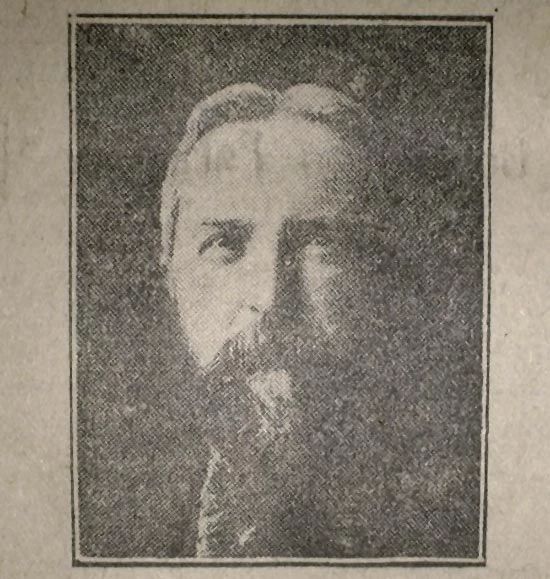
George Mitchell

Born in Swansea in 1864, Mitchell trained in the local copper works. He emigrated to the USA in 1888 and worked in several copper mining and smelting companies around the country. He owned mines and property from Mexico to Alaska but his huge copper smelting plant at Swansea, Arizona was a commercial failure and ruined him.

Working Abroad - Welsh Emigration: Coal

19 September 2008

Miners Cottages - New Zealand

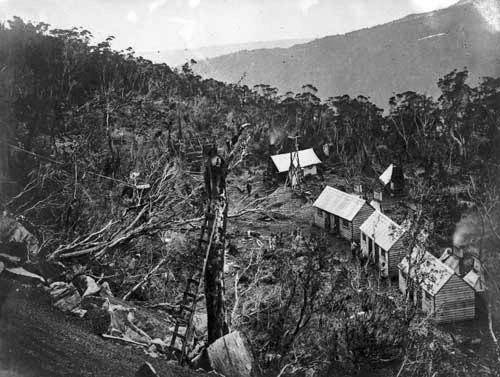
Miners cottages, Denniston,New Zealand

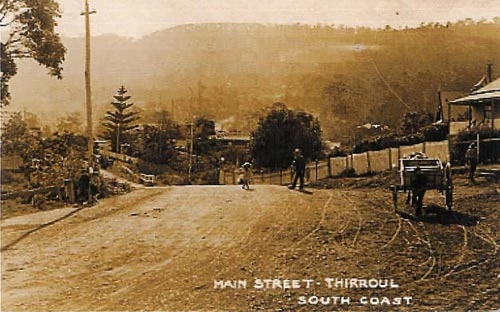
Main Street, Thirroul

Main Street, Thirroul, New South Wales, Australia.

Welsh coal mine, Kentucky

Welsh coal mine, Kentucky

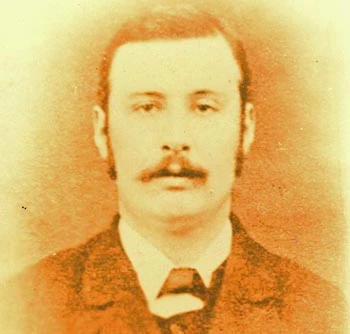
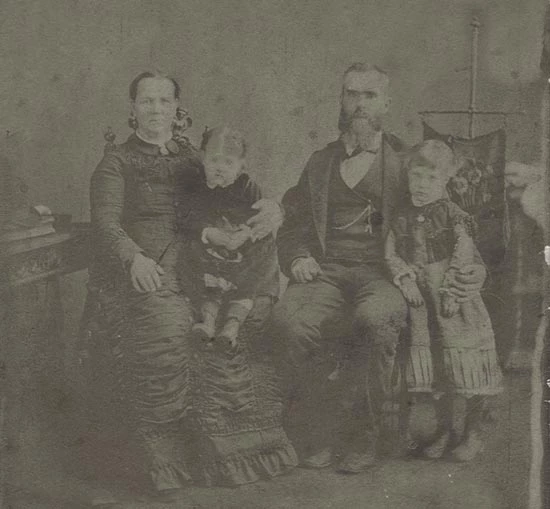
Lewis Williams

Lewis Williams, Loaned by Hywel Gwyn Evans

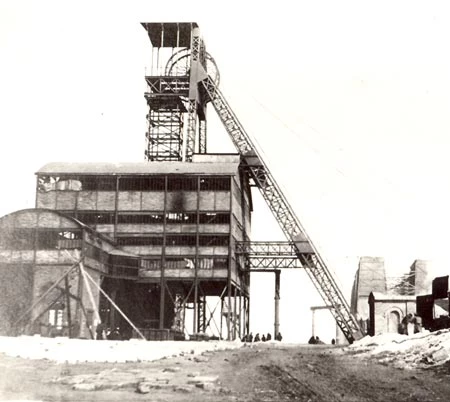
Tong Colliery

Tong Colliery, Kaiping, China.

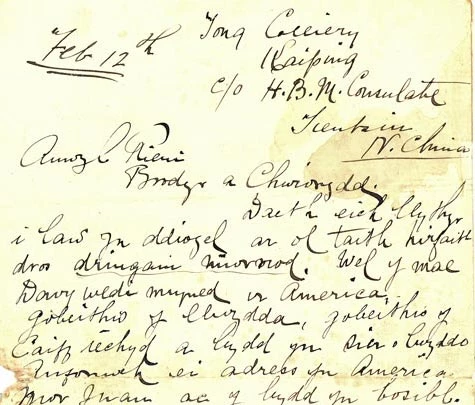
Letter from Lewis Williams

Letter from Lewis Williams written 12 February 1889. Loaned by Hywel Gwyn Evans

Wales experienced a spectacular boom in coal mining in the late 19th and early 20th centuries. The world looked to the Welsh mining industry for expertise and advice.

As other countries developed their own economies they also began to exploit local sources of coal. The skills of Welsh miners led to them being recruited by foreign mining companies. The miners were offered generous wages to develop and manage foreign mines. Welsh miners were found in large communities in the coalfields of Australia and America. Welsh mining engineers helped to develop the industry in South Africa and even China, which is, today, the largest producer and user of coal in the world.

Welsh miners were also to be found in England. There was a large Welsh community in Kent, where the coalfield was developed in the early 20th century.

The most important areas of coal production by Welsh miners outside of Wales were in the states of Ohio and Pennsylvania, in the USA.

The town of Scranton in Pennsylvania became the centre of the largest concentration of Welsh people outside Wales. Many street names reflect the Welsh heritage of the area, for example, Jones Street, Evans Court and Eynon Street.

Chapels were common and built in the Welsh style and the Welsh language was in common use, supported in the chapels and eisteddfodau as well as newspapers.

Even when financial backers of mines were not Welsh or of Welsh descent they often preferred to employ experienced Welsh mine managers. These, in turn, tended to employ Welsh miners.

Although this often created a strong camaraderie among the Welsh in the mines it sometimes caused difficulties among miners of other nationalities working alongside them.

Lewis Williams

Born in Rhiwfawr, Upper Swansea Valley, Williams was a collier who studied in night-school to become a mining supervisor. He was recruited with two other Welshmen to operate the first modern coal-mine in China. He travelled to Kaiping in 1888 and letters home show he enjoyed the work but he unfortunately died of cholera in June 1889.

Joseph Pugh

Born in Pantygorlan, Cardiganshire in 1854, Pugh was a lead miner who emigrated to the USA in 1869. He returned to Wales two years later to work in coal mines at Dowlais, Aberdare and Cwm Rhondda until 1880. He then returned to Pennsylvania and became famous for sinking deep and profitable mines, dying in 1903.