Collections & Research

Signs of Spring

Catalena Angele, 28 February 2014

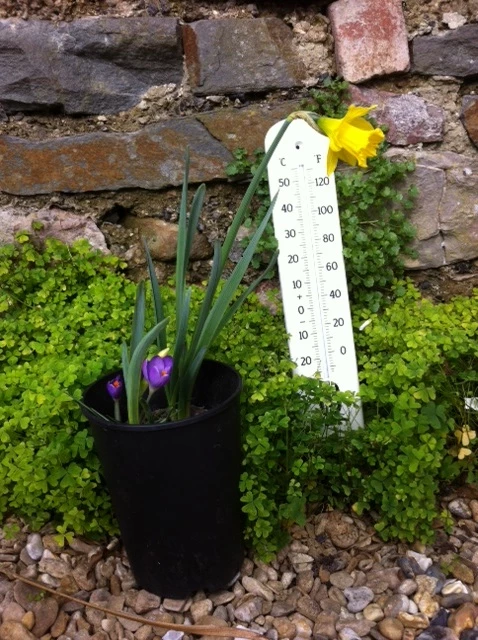
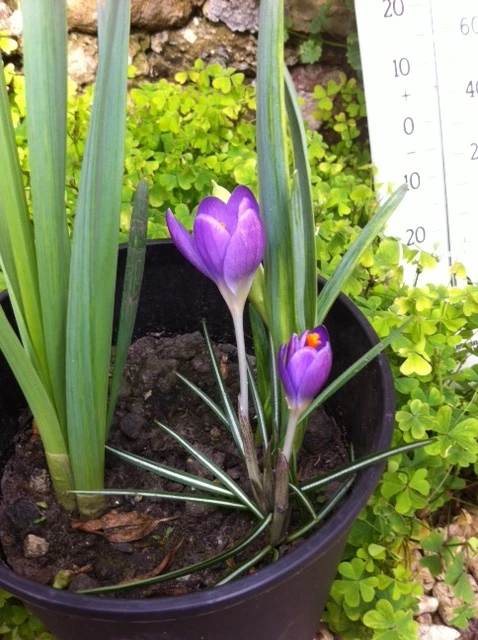
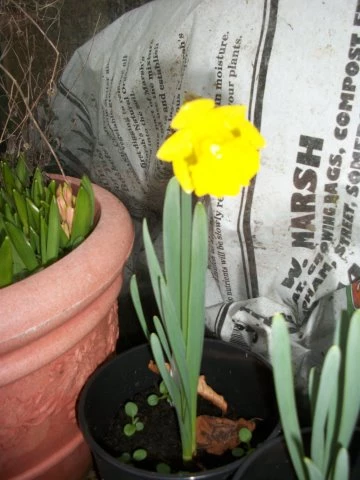
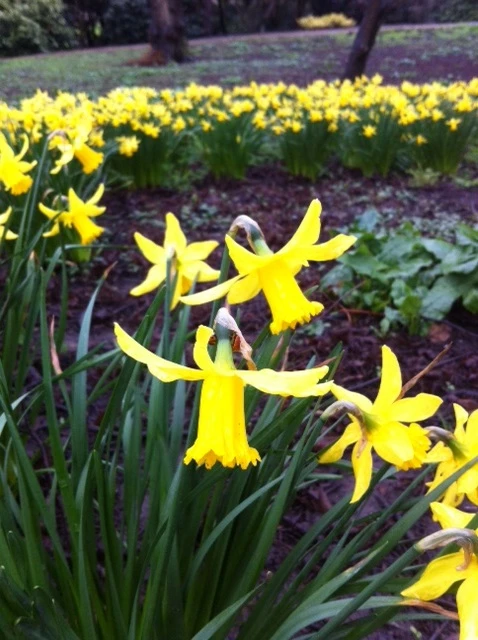
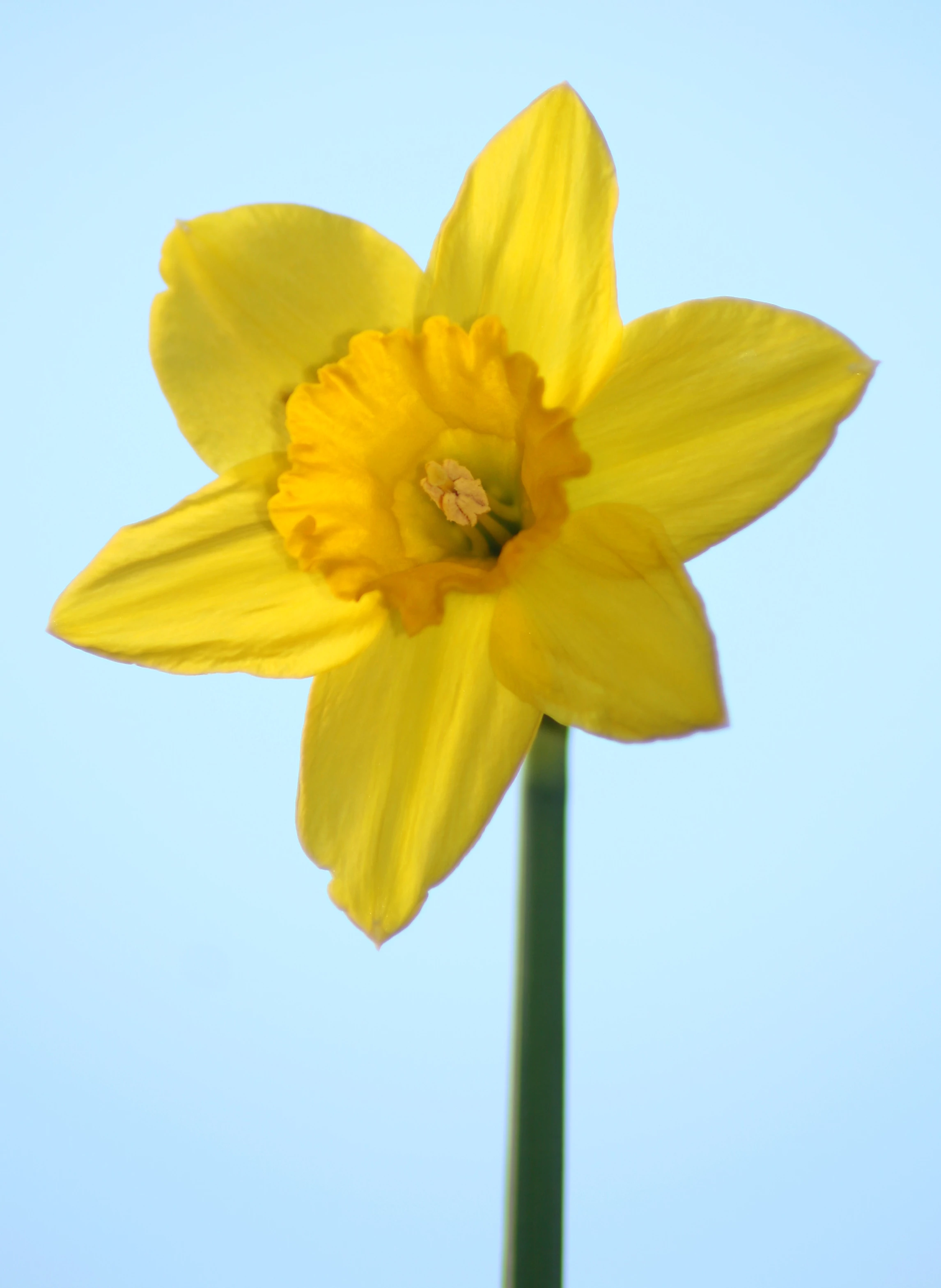
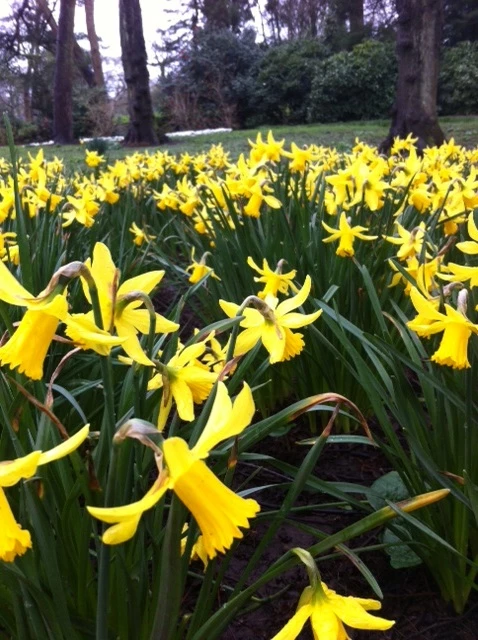
The sun is shining through my window here in Cardiff and it feels like Spring has arrived! My own plants are not ready to flower yet, my tallest daffodil is 80mm tall and my crocus is still only 30mm tall, but I am sure they will like the sunshine! I took a photo this morning of daffodils and crocuses blooming in Bute Park, Cardiff, aren’t they beautiful?

Which schools have had their first flowers?

Ysgol Glan Cleddau in Wales has reported their first crocus has opened, and Archbishop Hutton's Primary School in England have reported that their first daffodil has opened! Congratulations and well done for sending in your records.

Rougemont Junior School in Wales sent me this message: Well Professor Plant great excitement here at Rougemont School ... our MYSTERY BULBS have started to flower! They look very healthy, shorter in stem than the other Daffodil bulbs that we planted too. We think they could be Narcissus maybe Tete a tete? Will send a photo soon.

Prof. P: That is very exciting Rougemont School, and well done for investigating what kind of Narcissus they might be – Great work! I look forward to seeing your photos.

And Kilmaron Special School in Scotland said: THIS IS AN OBSERVATION OF LAST YEARS BULBS. We have been monitoring last years crocus and daffodil bulbs to see if older bulbs flower before newly planted bulbs. After our 1/2 term holiday we came back to find the crocus bulbs planted in the pots from last year had opened while this years crocus bulbs look to be about 7-10 days behind in their flowering. We are expecting to post this years results towards the end of next week.

Prof. P: This is really excellent monitoring and investigating Kilmaron! I am very impressed. You are right that older bulbs usually flower sooner than new baby bulbs, one reason for this is that they have had an extra year to grow and store up food.

I wonder where flowers will open next? You can see where flowers have opened so far by looking at this map. If your flowers haven’t opened yet then watch them closely as they may open very soon!

Remember to send me you flower records as soon as your flowers open. To remind yourself what to do, please use my PowerPoint presentation how to keep flower records, and read the What and when to record page on my website.

TOP TIPS:

  1. Every pupil in the class can send in their flower record! All the data that is sent in is used to create an average flowering date for each school. Watch the crocus chart and daffodil chart to see the tables change as the data comes in. It is really important that each pupil sends in their record - so the website can calculate the average flowering date for your school.
  2. Daffodils tilt their heads downwards just before opening. This prevents them from filling with rain after they open.
  3. You need to all send in your flower records to win the Super Scientist Competition!

Your questions, my answers:

Ysgol Terrig: It snowed heavily on Monday morning and stopped about lunch time. Our bulbs are starting to grow :) Prof P: I’m glad your bulbs are growing, did you go out to play in the snow?

Raglan VC Primary: We missed Tuesday because it was raining cat's and dog's, and we had bike training. Prof P: I love that saying! Can you imagine what it would be like if it really did rain cats and dogs? How would we measure that in our rain gauge?

Chatelherault Primary School: Sorry we did not record information on Thursday because we were away all day at a school trip. We were excited to see little green shoots in some of the plants. Prof P: Thanks for letting me know Chatelherault, I hope you had fun on your school trip.

Greyfriars RC Primary School: The plants are growing well and it's wonderful seeing them grow up. The mystery bulbs are really a mystery. from A and A :) Prof P: I hope your mystery will soon be solved Greyfriars!

Arkholme CE Primary School: Unfortunately the plant pots are standing in water this week. Let's hope next week is drier. The mystery bulbs are growing better than the others. Flower buds just appearing. From H. Prof P: I am sure your plants will survive the rain Arkholme, keep watching those flower buds!

Many Thanks

Professor Plant


A Window into the Industry Collections

Mark Etheridge, 27 February 2014

This month we have been donated six lamp checks to add to our very comprehensive collection of checks. Lamp checks informed colliery management of who was in work and became vital when rescue services needed to know how many men were actually underground during an incident such as a fire or explosion. Colliery check systems apparently became common during the late nineteenth century and became mandatory in 1913 after an amendment to the 1911 Coal Mines Act. The two lamp checks shown here were manufactured by E. Thomas & Williams at their Cambrian Works in Aberdare in 2013 using original dies owned by the company. The one on the left was produced to celebrate the 30th anniversary of Big Pit operating as a museum.


Read more information on checks and tokens

You can also see a selection of checks and tokens from our collection on our online database ‘Images of Industry’.

http://museumwales.ac.uk/industry/images/?action=browse_category&category=1716


This ophthalmoscope was used by colliery nurse Sister Iris Evans for checking ears and eyes in Pochin and Oakdale Collieries. After completing her training in 1952 Sister Evans joined the National Coal Board as a nursing officer at Pochin Colliery in 1955. Later she was transferred to Oakdale Colliery. She retired in 1985 finishing her career as Senior Nursing Officer for South Wales Area NCB. During her career she helped out during the Six Bells Colliery disaster in 1960. She also vaccinated many miners at Lady Windsor Colliery during a smallpox outbreak in South Wales in the 1950s.


This large 15 ton piece of coal is now located at Bedwellty Park, Tredegar, and is Grade II listed. It was cut at the Yard Level, Tredegar as a single block with the intention to display it at the Great Exhibition of 1851. It was originally 20 tons, however, after a 5 ton piece broke away in transportation it was decided not to transport it to London as it might not survive the journey. It was subsequently set up in the grounds of Bedwellty House. The smaller block of 2 tons (to the left) was cut in 1951 from the same seam as the earlier one. It was exhibited at the Festival of Britain in London, before being placed next to the earlier block in Bedwellty Park.


Follow us on Twitter - @IndustryACNMW


Museum records largest earthquake in UK since 2008!

Andrew Haycock, 25 February 2014

The British Geological Survey (BGS) reported a 4.1 magnitude earthquake in the Bristol Channel at 13:21 GMT on 20th February 2014. The event was also recorded on the Museum seismograph in the Evolution of Wales Gallery at National Museum Cardiff.

This is the largest earthquake in the UK since the 5.2 magnitude Market Rasen quake in February 2008.

The earthquake was felt widely across South Wales, Devon, Somerset and western Gloucestershire. Reports to the BGS described “felt like the vibration of a large vehicle passing the building”, “the whole house seemed to move/wobble back and forth a few times”.

The earthquake epicentre is estimated to be 18 km NNW of Ilfracombe at a depth of 3km.

Although the UK is not located on a plate margin, on average 200 – 300 earthquakes a year are recorded in Britain. Most earthquakes are so small they are not felt by people, and can only be picked up by the sensitivity of a seismometer.

The UK is located on the European plate. Tension is built up in the plate as new crust is created at the Mid Atlantic Ridge, and the plate is slowly pushed towards the north-east.

There are several long-active faults in the Bristol Channel which include the Bristol Channel – Bray fault. Once faults form, they create weak zones in the crust that can be reactivated time and time again. Movement occurred along one of these faults as tension in the crust was released.

On average an earthquakes of this size affects mainland Britain once every 2 years.

The largest recorded mainland event is the magnitude 5.4 earthquake on the Lleyn Peninsula in July 1984, where movement occurred along a long-active pre-existing fault.


Rain, rain and more rain

Catalena Angele, 21 February 2014

What a very wet and rainy January we had bulb buddies! It felt like it rained nearly every day! But how much rain did we really have compared to average?

Weather Scientists at the Met Office have created this map of the U.K. to show how much rain we had in January. You can have a closer look by following this link.

How did they calculate average rainfall? The Met Office Scientists have been keeping weather records for a very long time! They added up how much rain fell in January for 30 years (from 1981 to 2010) then divided by 30 to calculate how much rain fell on average each year.

Can you see the two different shades of dark blue? Rainfall in these areas was between two and three times the average for January. Can you see the black areas in the south of England and in eastern Scotland? Rainfall in these areas was more than three times the average for January!

Top tip for using this map:

  • 100% of average means that the rain was the same as average.
  • 200% of average means that there was twice as much rain as average.

Can you find where you live on the map? What colour is the map where you live? How much rain fell in your area? Is it more than average? Or less than average? You may want to ask your teacher to help you answer these questions!

Your questions, my answers:

Gladestry C.I.W. School: Our school was closed on Thursday because of a power cut so our head teacher recorded the results that day. Prof P: We done to your head teacher! I am very glad your head teacher is helping you with your investigation.

St Mellons Church in Wales Primary School: Hello Professor Plant. It has been so windy this week that our thermometer has blown off the wall and broken. We have been using the car thermometer. L, J and L-b. Prof P: Hello L, J and L-b at St Mellons School! I am very sorry to hear that your thermometer is broken, I will email your teacher and arrange to send you a new one. Well done for your quick thinking in using the car thermometer.

Bleasdale CE Primary School: It is very cold and wet. Prof P: I agree BleasdaleSchool!

Ysgol Gynradd Dolgellau: Yn anffodus mae ein thermometr wedi torri ar ol cael ei chwythu gan y gwynt mawr yn ystod yr wythnos. Athro’r Ardd: Trueni mawr i glywed hyn Ysgol Gynradd Dolgellau. Bydda i’n e-bostio eich athro i drefnu anfon thermomedr newydd atoch chi.

Manor Road Primary School (Lancashire): on Wednesday there was a red weather warning but luckily the plants stayed in place. Prof P: I’m very happy to hear that your plants are okay!

Stanford in the Vale Primary School: It is very rainy here but we are not flooded. Prof P: I am very glad to hear that Stanford! What colour is the rainfall map is your area?

Burscough Bridge Methodist School: The heavy gales have caused the rainfall measurements to be unreadable as the measuring vessel was continually disrupted and blown over. Prof P: Gosh it must have been very stormy. Thanks for letting me know, keep up the good work!

Many Thanks

Professor Plant

Exploring Insect Diversity in Thailand

Katie Mortimer-Jones, 17 February 2014

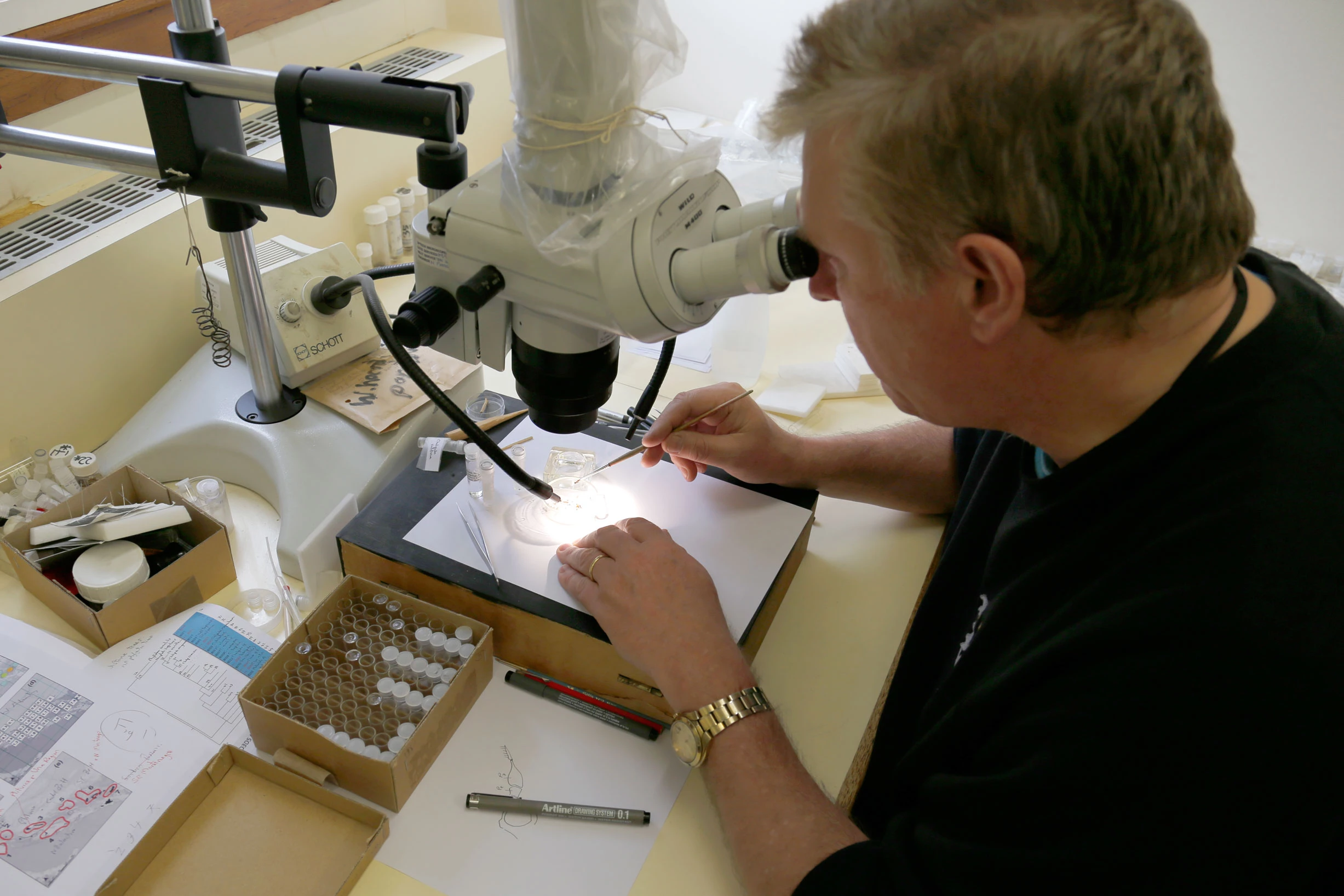
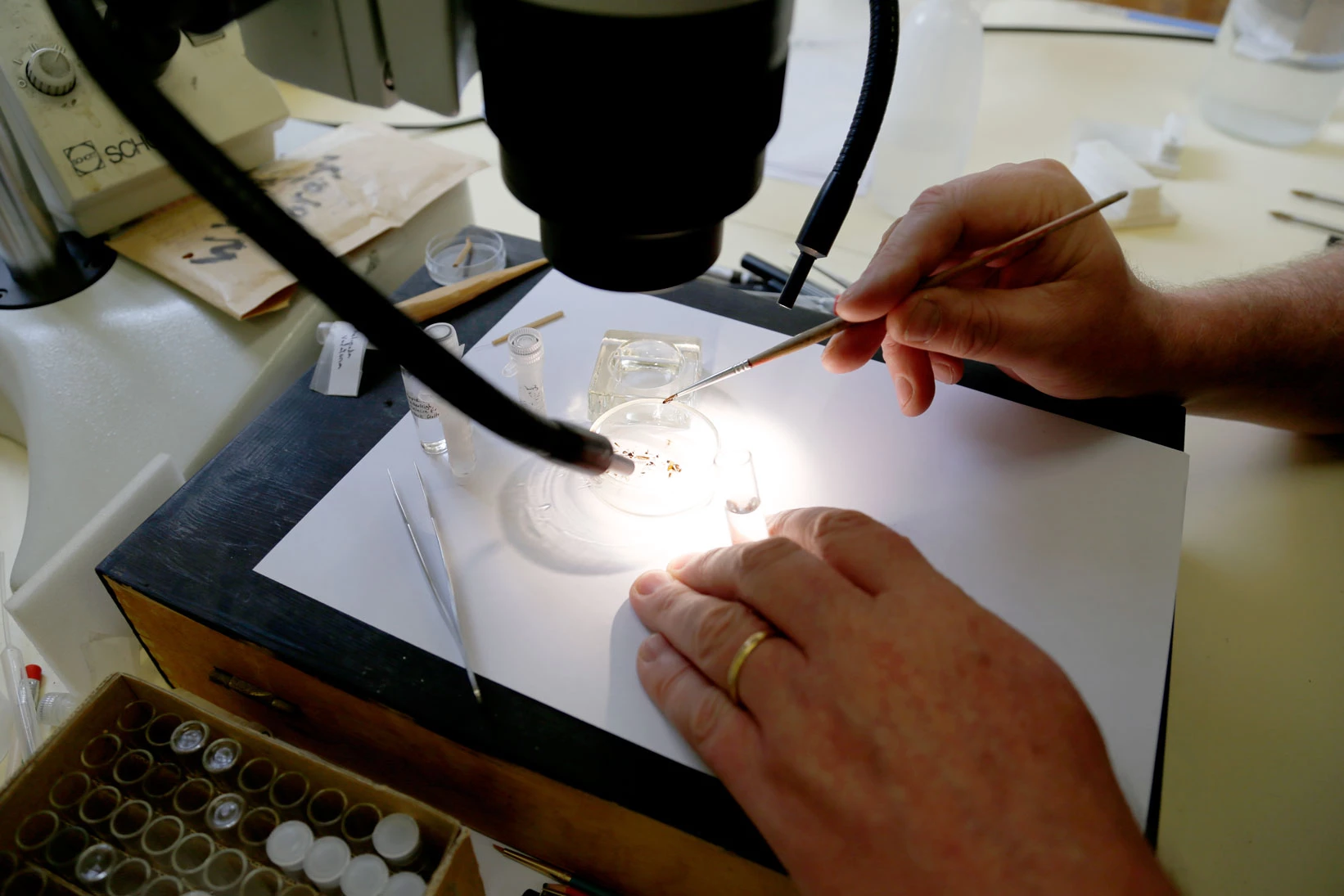
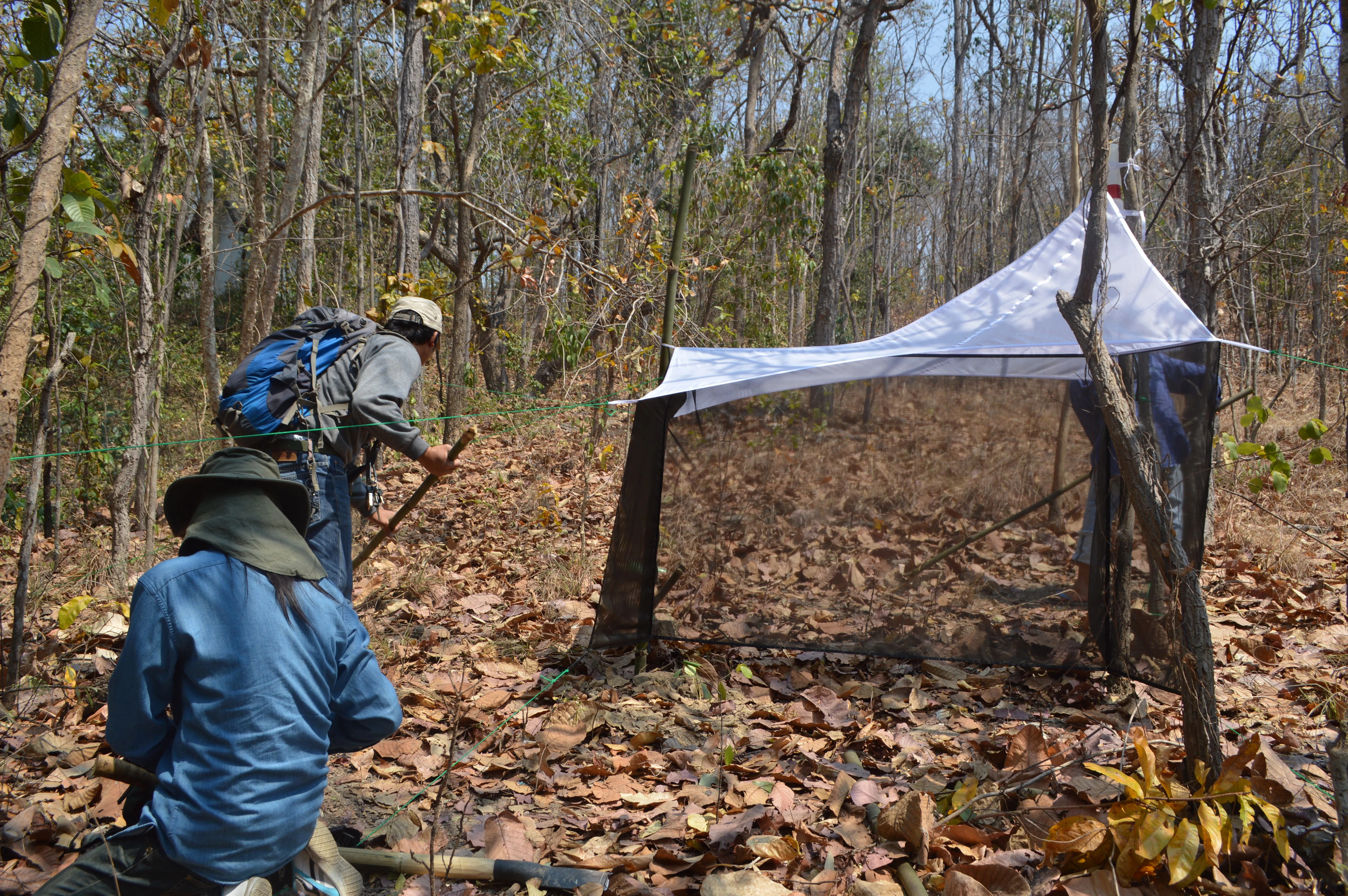
Work continues in a joint project with colleagues at the Entomology Section of the Queen Sirikit Botanic Garden (QSBGE) in Thailand exploring the diversity of tropical Diptera (flies). The objectives are to learn more about why two mountains in northern Thailand are such hotspots of diversity (the number and variety of species) and why so many endemic species are found there (an endemic species is one entirely confined to a particular locality). We should also learn much about the ecology of different communities of insects living in different forest types occurring at different altitudes. The project was started last January with Malaise traps (a tent-like structure into which insects fly and can be trapped) being set up along an altitude transect on Thailand’s highest mountain Doi Inthanon, and in the summit forests of slightly lower Doi Phahompok. Wichai Srisuka and his staff from QSBGE will empty the contents of the traps every two weeks for a full year and their team of expert technicians will conduct initial sorting and identifications at their laboratories and collection centre not far from the city of Chiang Mai. Some of the initial collections have already been made and many potentially very interesting specimens have been collected. The first consignment of material will be arriving in Cardiff shortly where I will begin the detailed taxonomic work; identifying species that have already been described, and, the more exciting part of recognizing and describing the many completely new species that will undoubtedly be found. I hope to feature some of the new species found in this blog later this year as the work progresses.

Introduction to the project

Dr Adrian Plant