St Fagans under snow: Tomorrow's guided tours of St Teilo's Church going ahead - if the snow holds back!
, 11 January 2010
The St Fagans site isn’t usually this quiet: even on blustery November afternoons, determined (but soggy) visitors can be found walking the site, exploring the galleries and the historic buildings. This week, however, the only surge in visitors has been the amazing array of birds we’ve seen reclaiming the hedgerows and, out of necessity, brazenly venturing near the offices and mess rooms in search of food. Only last Friday I was kept company by a pair of Lapwings, who were enjoying the last of the afternoon sun outside the museum's main entrance.
The only human traffic on our pathways has been a small army of Museum Assistants, Craftspeople and Agriculturers, busy clearing snow and gritting. The textures, colours and smells of our Christmas Nights event* are now long-gone; tipp-exed out and muted. The site is eerily empty - though it is incredibly beautiful, it has not been safe enough to let visitors in on several occasions during the last week or so.
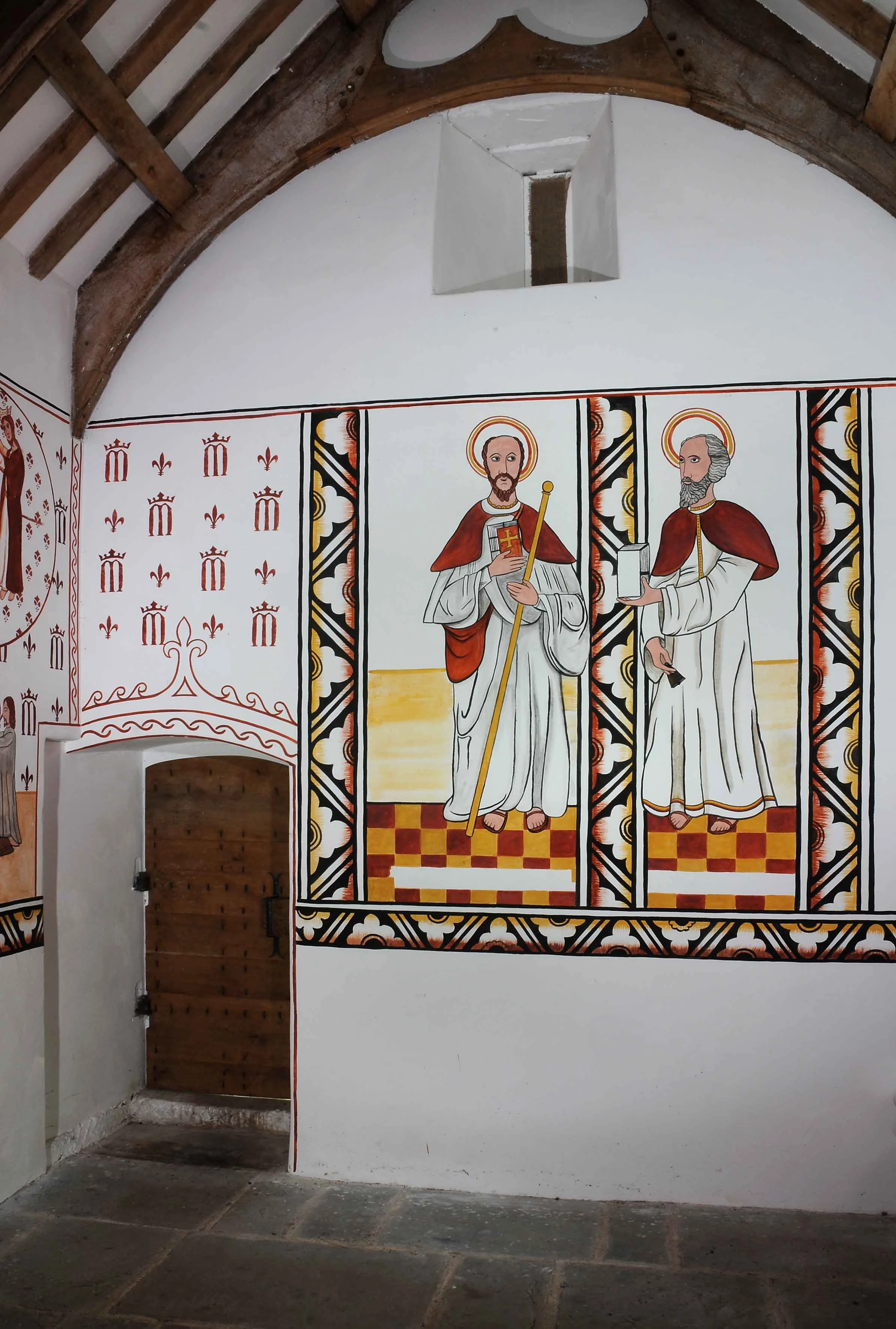
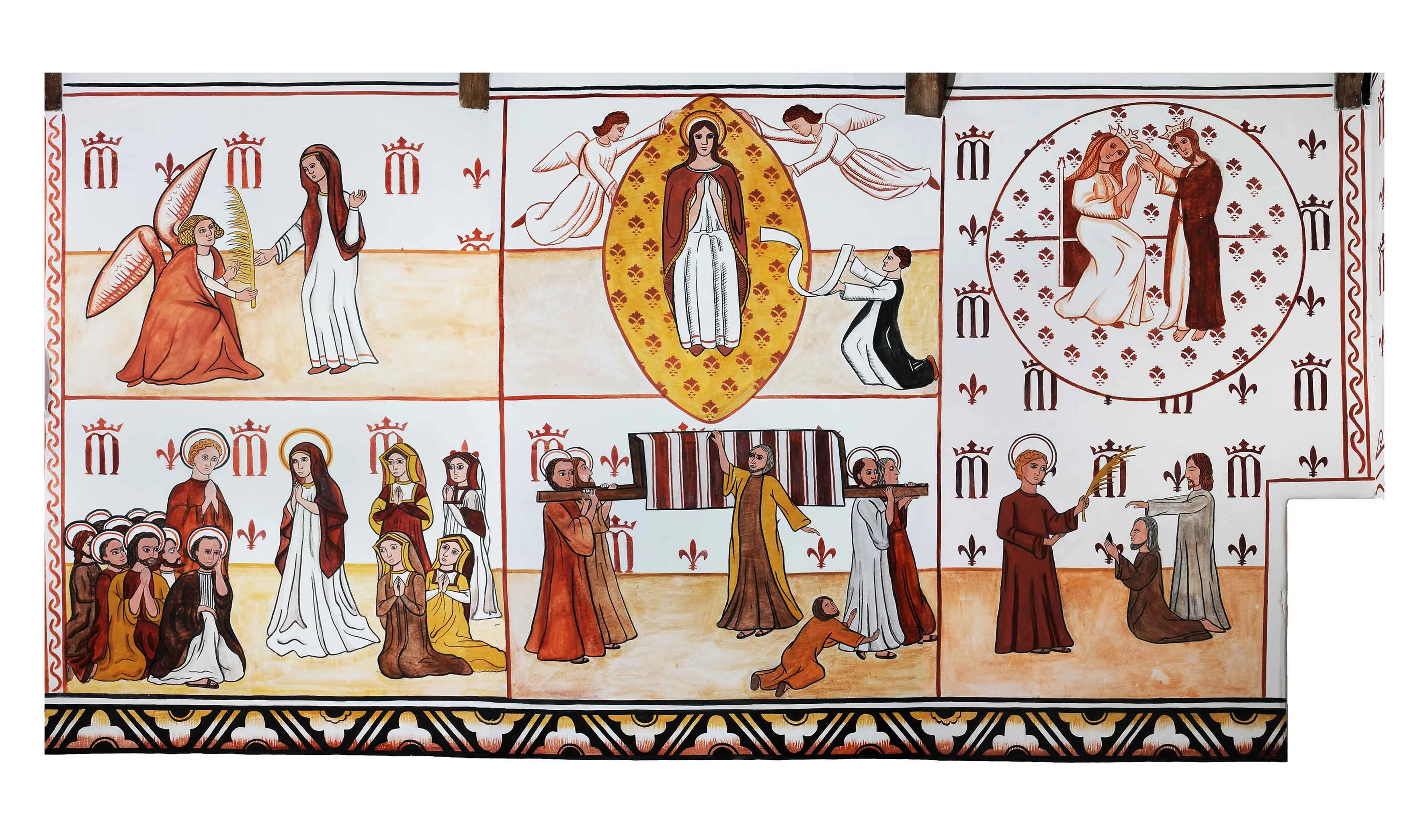
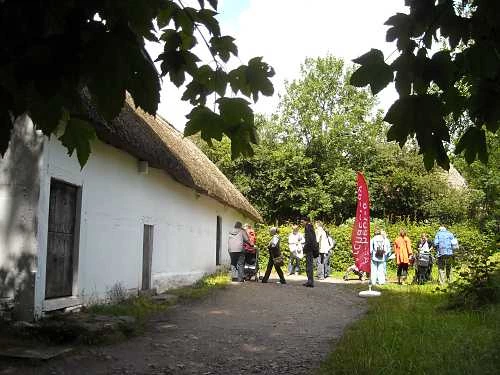
In the snow, St Teilo's Church does not look as dazzling as last year: as is the custom with traditional buildings, the bright limewash covering the outer wall has taken the brunt of the season's weather, and will be re-applied next spring when it is milder. The interior, as ever, is still as vibrant as it was when the reconstruction was officially opened in 2007, and, we hope, as it would have looked in 1500-1530.
The wall painting scheme is now finished, bar a few Latin inscriptions, which are proving harder to decipher than previously thought. The north chapel design, including figures of Saints Dewi and Teilo, as well as what is thought to be male and female portraits of local patrons, were composed by copying fragments plaster from the church in its original location. Where the plaster had deteriorated, or the pigment faded, we looked at better preserved mural sequences in Wales in order to come up with appropriate evidence for the missing parts.
While the north chapel is not directly accessible to the visiting public (partly because the east end of the church houses some of the oldest furniture in our collection), these murals are visible through the carved screens in the church. These, too, have had a new lease of life, through the work of Fleur Kelly, who has worked with our own in-house painters on several aspects of the church’s painted carvings.
If the snow holds back, the advertised guided tours of the Church will go ahead tomorrow and Friday (14-15 Jan); starting at 12:00, 13:00 and 14:00. Those interested in attending are encouraged to telephone us before starting their journey, to ensure that the museum is open and accessible, on (029) 2057 3500. The church is a ten-minute walk from the main entrance on a clear day, so please bear this in mind when choosing your footwear!
Wrap up warm, and hope to see you there!
*That's treacle; fairy lights; brass bands; bay leaves; woodsmoke and wet boots, in case you were wondering...