: Artists & Makers

Wales 1678: Reconstructing the earliest on-the-spot sketches of Wales

Emily O'Reilly, 11 February 2011

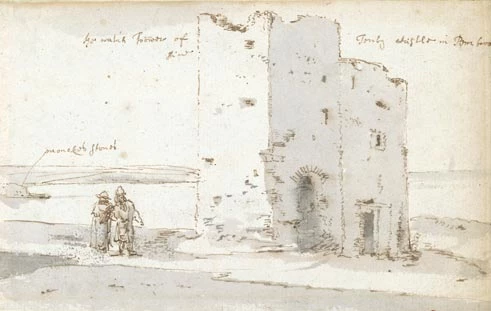
Pembroke Castle

Pembroke Castle

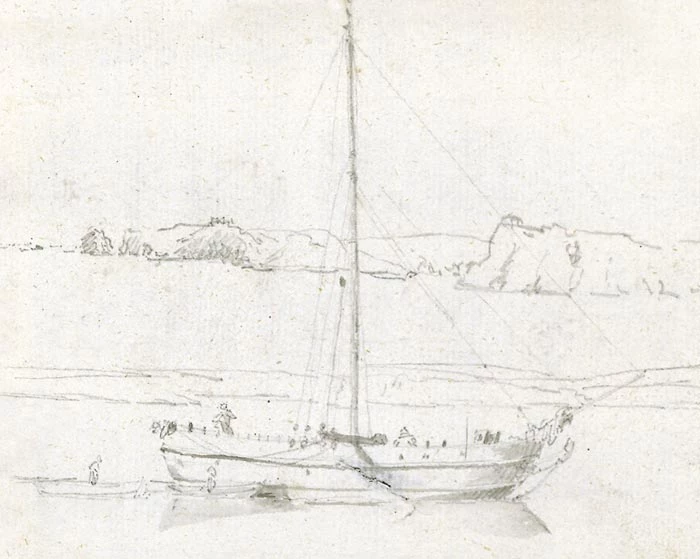
Boat at Tenby

Boat at Tenby

Amgueddfa Cymru has in its collection fifteen views of Wales drawn by Francis Place (1647-1728). Of these, ten are from a single sketchbook. These ten sketches, dated 1678, are the earliest images that the Museum holds of Wales that were drawn on-the-spot. In addition to revealing sketches hidden for 200 years, recent conservation work by the Museum has enabled sketches to be digitally stitched together - creating complete panoramic views that have never been viewed before.

The Museum purchased the sketches from a dealer in 1931. The dealer had bought them at Sotheby's in a sale of the collection of Patrick Allan-Fraser Art College in Arbroath, Scotland. The collection included drawings, prints, pottery and the only known oil painting, a self portrait, descended directly through the family from Place.

The drawings are all made from at least two separate sheets joined together and then stuck to a secondary support, which appears to be early wove paper, suggesting the late eighteenth or early nineteenth century.

Some drawings that obviously extended over the page had been left 'loose', allowing the viewer to lift the page and view the other side, but others had been stuck down to the secondary support — with the 'inconsequential' sketch on the verso hidden from view.

Hidden sketches

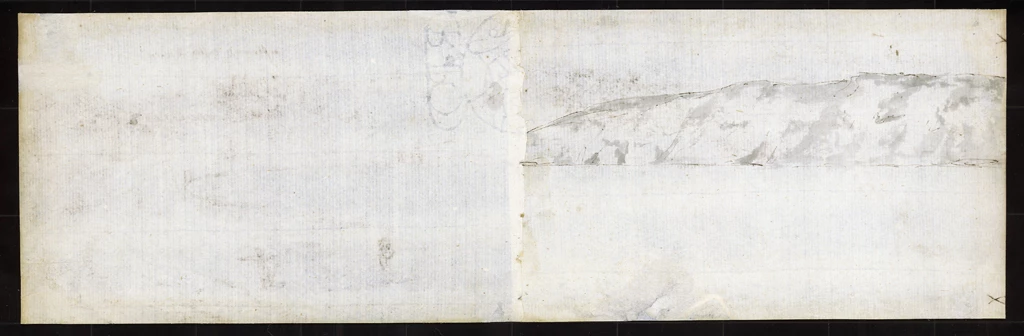
During conservation work, Museum staff decided to remove all the sketches from their secondary supports, and with all the sketches detached from the album pages it was revealed that a drawing on the back of one page joined up with the drawing on the back of another page, creating a new double-page spread.

The images could then be matched up, revealing sketches unseen since the original sketchbook had been taken apart at least 200 years ago. The original order of the sketches could also be determined.

Cardiff

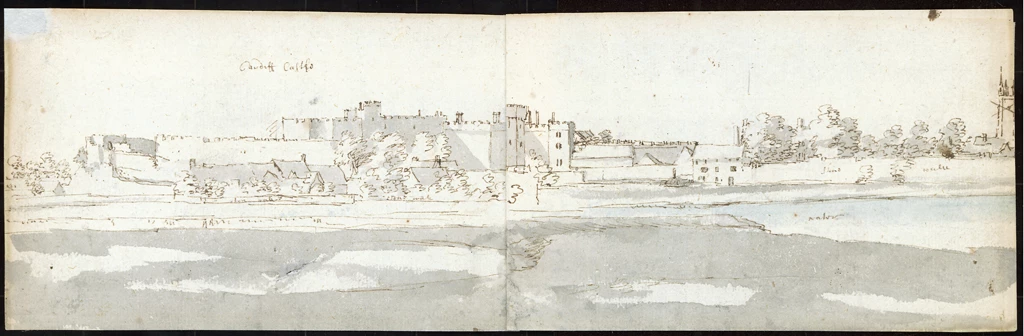
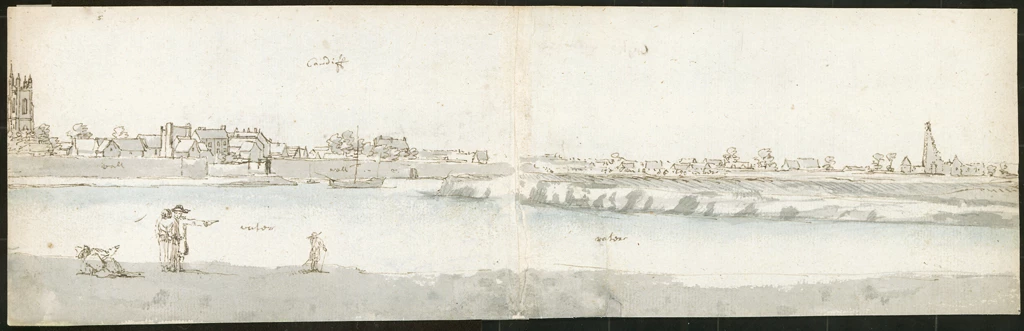
Many of the sketches have crosses or arrows showing where the panorama is extended over the page. Cardiff is two double-page sketches that join in the middle. There is a cross on the church tower in both sketches, which is where the two overlap.

<em>Cardiff</em> (1678) Francis Place. Double-page sketch 1
Cardiff

(1678) Francis Place. Double-page sketch 1

<em>Cardiff</em> (1678) Francis Place. Double-page sketch 2
Cardiff

(1678) Francis Place. Double-page sketch 2

<em>Cardiff</em> (1678) Francis Place, digitally stitched together.
Cardiff

(1678) Francis Place, digitally stitched together. This complete panorama has never been viewed before.

Never seen before panoramic views

As there was limited potential in showing these historical views of Wales in a traditional gallery setting, the images were scanned and digitally 'stitched together', and the panoramas could be viewed as complete images for the very first time.

During this process some insights into Place's working methods were discovered. When putting the separate pages together, no manipulation was required to match up the horizons as they already did perfectly — testimony to Place's ability as a draughtsman.

Although technology has not changed the way these objects are treated, it has greatly enhanced our knowledge of the works by giving deeper insight into the artist's working methods.

Oystermouth

Oystermouth has two crosses on the very left edge, indicating that the drawing extends over the page. On the reverse side of the sheet there are two corresponding crosses on the right edge.

<em>Oystermouth</em> (1678) Francis Place.
Oystermouth

(1678) Francis Place. Sketchbook sheet 1

<em>Oystermouth</em> (1678) Francis Place.
Oystermouth

(1678) Francis Place. Sketchbook sheet 2

<em>Oystermouth</em> (1678) Francis Place.
Oystermouth

(1678) Francis Place, digitally stitched together

Research

The bulk of Place's original work comes from the Sotheby's sale in 1931. Various lots from this sale are now in the Victoria and Albert Museum in London, including a number of mounted drawings and two sketchbooks. These items suggest that the drawings in Amgueddfa Cymru and the Victoria and Albert Museum originally came from one sketchbook.

The first Victoria and Albert Museum sketchbook consists of eighteen sheets, exactly the same size as the one at Amgueddfa Cymru and also bearing the same watermarks; there is a list at the front of the sketchbook corresponding to the views in the sketchbook, and the list continues with places in Wales that correspond with the order established from the Amgueddfa Cymru sketches.

The list is not in Places's handwriting, but is still of some age. Maybe it was a descendant of Place's, who made the list before they removed the best sketches to mount in a separate album?

More evidence is found in the second sketchbook from the Victoria and Albert Museum, where there is a sheet pasted inside the back cover. This sheet matches up with the last sketch in the first sketchbook. Unfortunately, this last page is pasted down but on the one small part that can be lifted there is a definite pencil line, which could match up with that on one of sketches at Amgueddfa Cymru...

Tenby

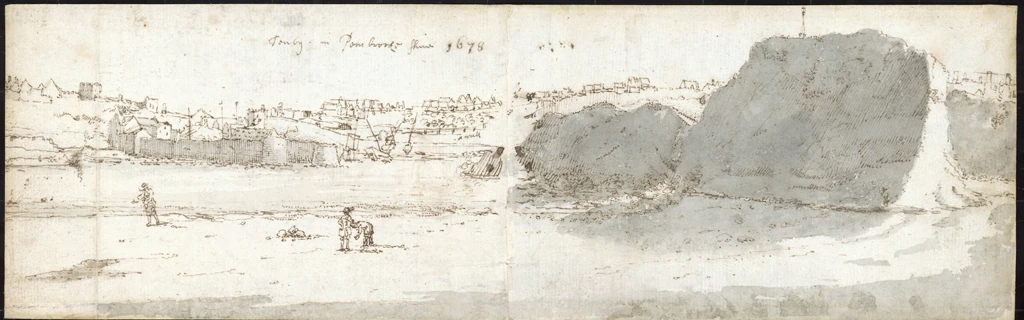
Another example of folding over can be seen Tenby. The crease over on the left of the drawing shows the reverse.

<em>Tenby</em> (1678) Francis Place
Tenby

(1678) Francis Place - Sketchbook sheet 1

<em>Tenby</em> (1678) Francis Place.
Tenby

(1678) Francis Place. Sketchbook sheet 2

<em>Tenby</em> (1678) Francis Place. Digitally stitched together
Tenby

(1678) Francis Place. Digitally stitched together

Francis Place (1647-1728)

Emily O'Reilly, 10 February 2011

Francis Place 1678
Francis Place 1678

Amgueddfa Cymru has in its collection fifteen views of Wales drawn by Francis Place (1647-1728). Of these, ten are from a single sketchbook. These ten sketches, dated 1678, are the earliest images that the Museum holds of Wales that were drawn on-the-spot. But who was Francis Place?

Francis Place was a Yorkshire man, born into a wealthy family in 1647 and the youngest of ten children. His lawyer father decided that he should follow in his footsteps and at the age of seventeen or eighteen Francis entered Gray's Inn in London to study Law.

However he disliked law and the Great Plague in 1665 gave him his excuse to finish with his studies and return home. A short time later he returned to London and worked with Wenceslaus Hollar, who introduced him to printmaking and print selling in London.

There is some suggestion that Place received some or all of his inheritance before his father died in 1681, and it would have been this that enabled him to follow his passion for art and angling.

Royalty and the age of the Virtuosi

The seventeenth century was the age of the Virtuosi — likeminded men with money and leisure interested in art, science and philosophy, many of whom went on to form the Royal Society in 1660. In the first half of the century only royalty and those closely associated with royalty learned and practised the art of drawing and painting.

Towards the end of the century it began to be taken up by the landed gentry and their sons and daughters. They studied to acquire knowledge, which was very different from those who had to make a living from it. There is evidence that, although ostensibly an amateur, Place was paid for work, particularly early on.

So Place fits in very well with the gentlemen of the time; he had the time and the money and, from what survives of his work, he dabbled in many media including early experiments in porcelain.

He was a member of the York Virtuosi who included Martin Lister, Henry Gyles, Thomas Kirke FRS and William Lodge. It may have been through this group that he earned commissions.

With his fathers money Place travelled far and wide in the UK to sketch and practise the art of angling. We know from correspondence of the period that the sketches at Amgueddfa Cymru were carried out on a tour of Wales and the West Country in 1678. He was travelling with his friend and fellow York Virtuosi William Lodge.

Travelling at this time was not without its dangers as this was the time of the Popish plots, and it is known that while in Wales they both spent one night in jail under suspicion of being Jesuit spies.

Tenby Cliffs

Tenby cliffs original stetchbook

<em>Tenby Cliffs</em> (1678), Francis Place.

and after digital restoration:

<em>Tenby Cliffs</em> (1678), Francis Place.

English Pottery at Amgueddfa Cymru

Andrew Renton, 6 January 2010

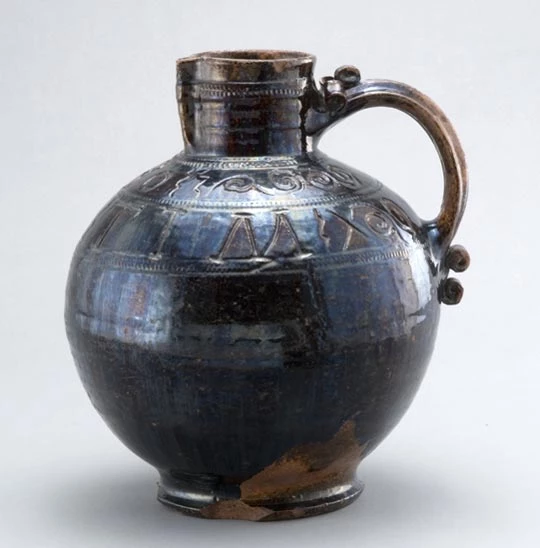
Incised earthenware harvest jug, made in Gestingthorpe, Suffolk, in 1680. Purchased 1904.

1: Incised earthenware harvest jug, made in Gestingthorpe, Suffolk, in 1680. Purchased 1904.

Amgueddfa Cymru boasts a magnificent collection of English pottery, the beginnings of which go back to the founding of the Museum. Generations of benefactors have ensured that the collection continues to thrive.

The former Cardiff Municipal Museum began collecting ceramics in 1882, aiming to develop the best collection of Welsh pottery and porcelain that it could. By 1895 the Museum believed "that these collections are now the best and most representative in existence", and began to shift its attention to other areas of interest, such as English and continental ceramics.

In 1896, Robert Drane became honorary curator. He was a passionate collector of Worcester porcelain, and had also selected the Museum's first acquisitions of Welsh porcelain.

The establishment of the National Museum of Wales

At this time, Cardiff Municipal Museum was also pushing the case for a national museum for Wales, and its own ambition to evolve into that new institution. In 1902 it talked of "the growing national character of its collections" and so began building its collection of English pottery.

Medieval to industrial

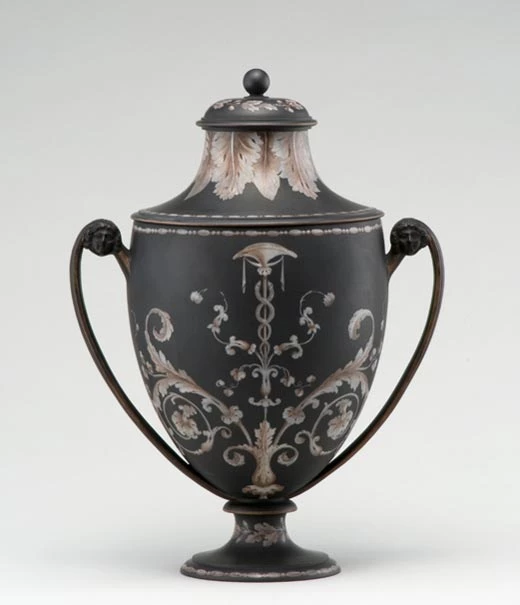
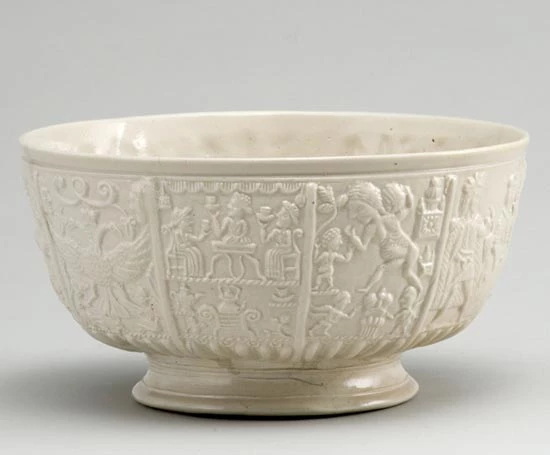
Taking charge of this new collecting priority, Drane quickly assembled much of the English pottery now at the National Museum. The full breadth of the English pottery tradition was represented, from late medieval wares to seventeenth- and eighteenth-century stoneware, slipware and delftware and industrially produced wares pioneered in Staffordshire from the middle of the eighteenth century. [Illustration 1-2]

Some outstanding objects included:

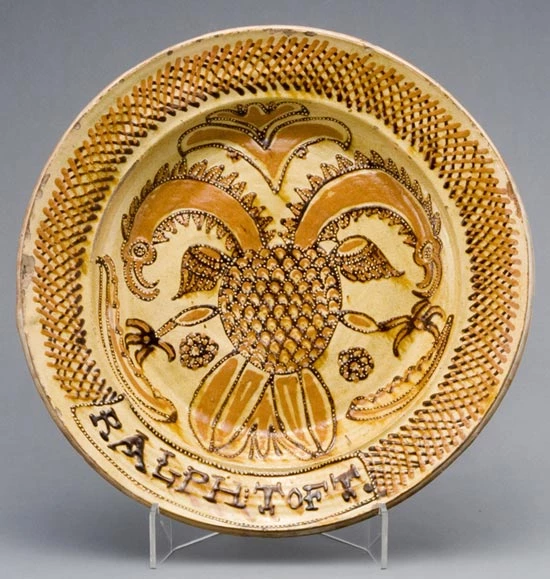
  • a rare and magnificent seventeenth-century slipware dish by Ralph Toft of Staffordshire [Illustration 3]
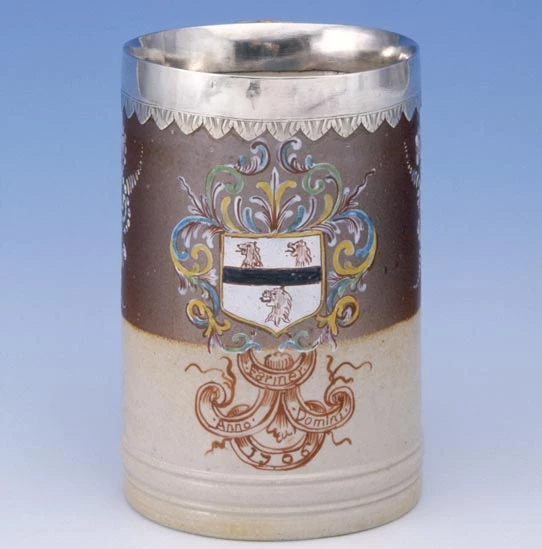
  • an important stoneware mug enamelled with the arms of Farmer and dated 1706 [Illustration 4]
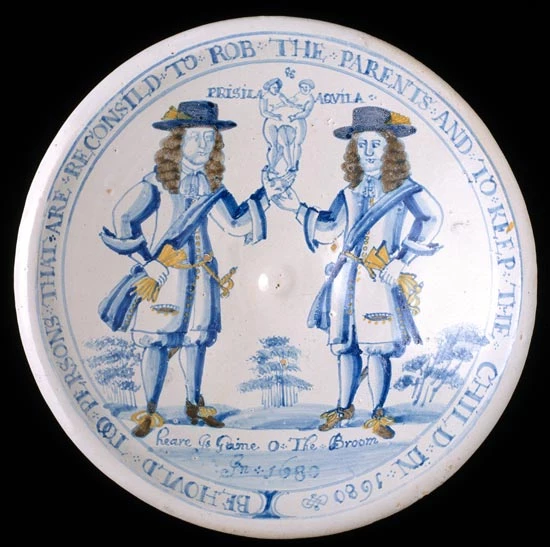
  • a remarkable Brislington delftware dish dated 1680, which exposes two Somerset squires who kidnapped a pair of conjoined twins to exhibit them as a money-raising venture. [Illustration 5]

The Museum's pride in its achievement was obvious. A report on the Brislington delftware dish in 1905 states 'Very few of these dishes are known to exist, and the Cardiff example is perhaps the best of them.'

Wilfred de Winton

The banker Wilfred de Winton was a supporter of the national museum campaign, and later donated his huge collection of porcelain.

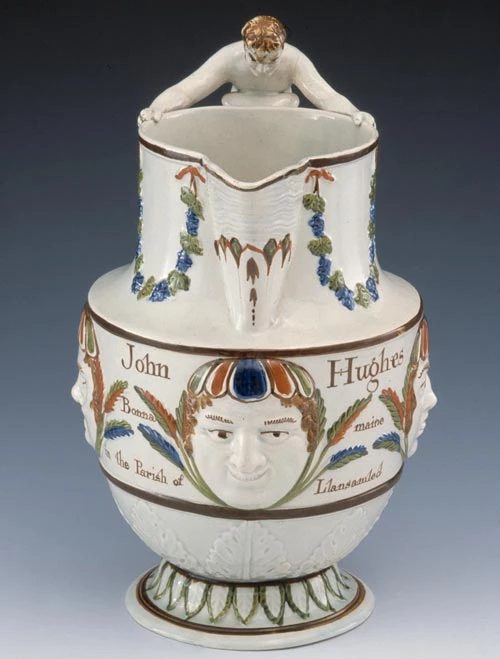
His gifts of English pottery included an amusing pearlware beer jug moulded with faces showing the progressive stages of drunkenness, its handle in the form of a merman peering into the jug. [Illustration 6-7] At the time this jug was thought to have been made at the local Cambrian Pottery, but is in fact one of many supposedly Welsh pieces in the collection that have proved to be English. [Illustration 8]

Ernest Morton Nance

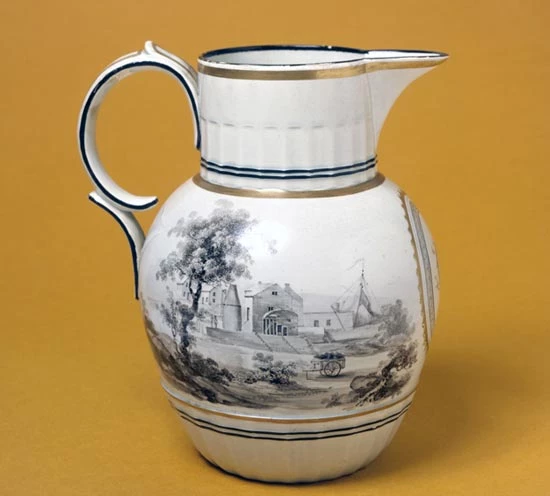
In 1953 Ernest Morton Nance bequeathed his collection of Welsh ceramics. Nance was particularly proud of his 'Cambrian Pottery' jug. He believed that its painted views of a pottery were in Swansea. In fact, this jug was also most likely made at Ralph Wedgwood's Ferrybridge pottery in about 1800. [Illustration 9]

The collection continues to grow

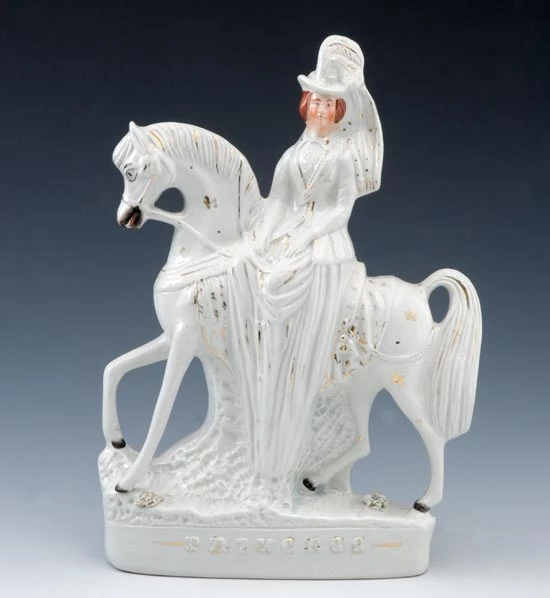
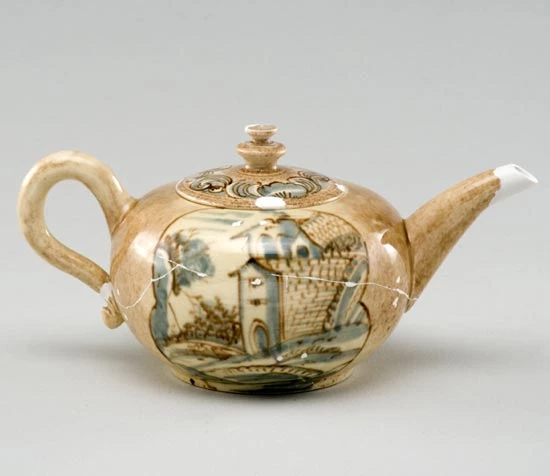
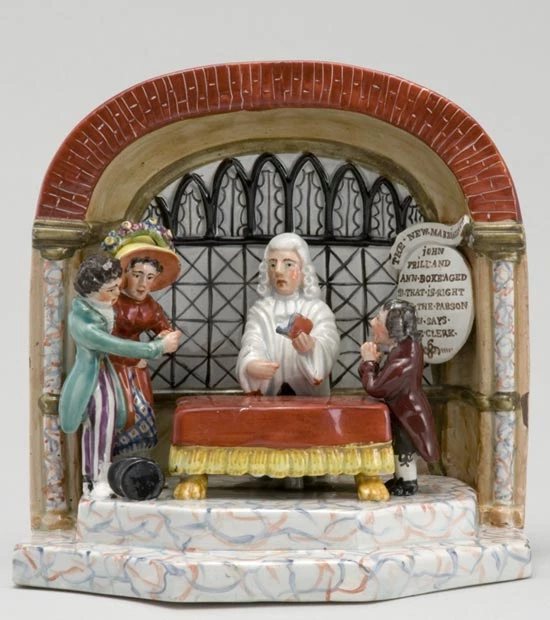
Generations of benefactors have ensured that the collection of English pottery continues to thrive. [Illustration 10] Bequests have brought in extensive collections of lustre pottery (Lord Boston, 1942), mid-nineteenth-century pot lids (Miss E. A. Nicholl, 1981) and Victorian Staffordshire figures (Mrs H. Hastings, 1995). [Illustration 11] In 1994 the gift of W. J. Grant-Davidson, a scholar of Welsh pottery, included interesting Staffordshire pottery, the highlight being an important early creamware teapot of about 1743 by Enoch Booth. [Illustration 12-14]

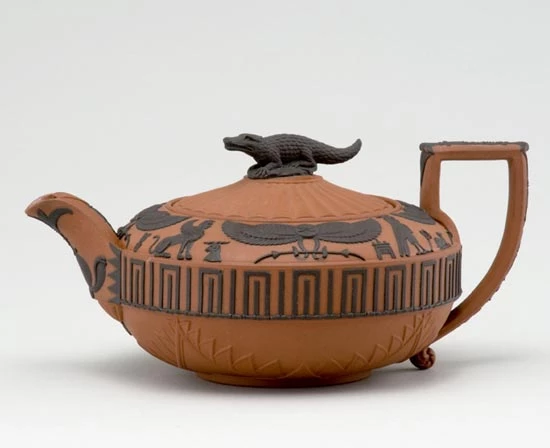
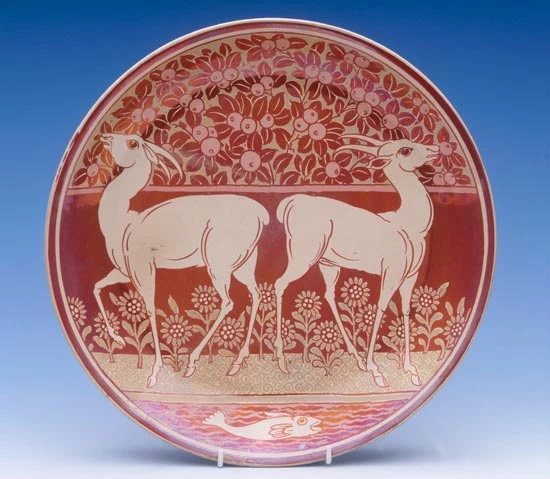
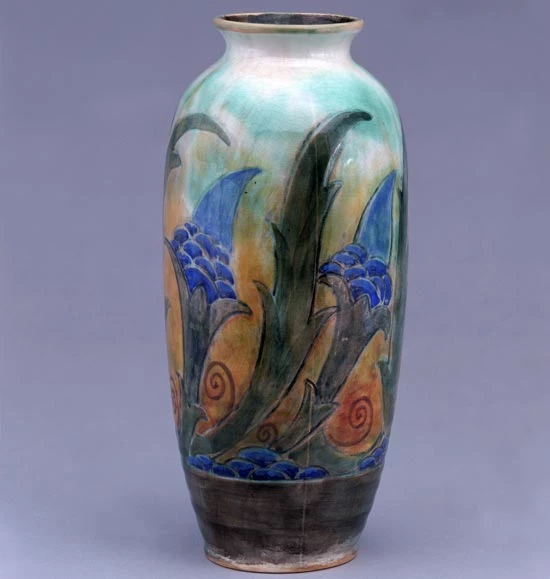
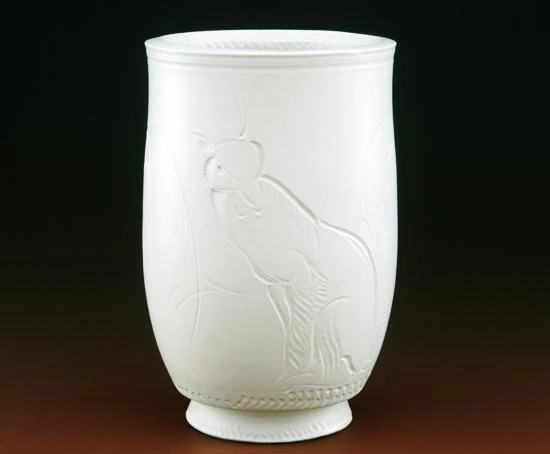
Amgueddfa Cymru also collects modern pottery, and has acquired such examples as a William de Morgan lustre dish and a Royal Doulton vase designed by Frank Brangwyn. [Illustration 15-16] Other modern pieces have come from the Museum's Outreach Collection, for example designs of the 1930s by architect Keith Murray for Wedgwood, and, in particular, from a generous gift from Mick Richards of an excellent collection of Susie Cooper's ceramics. [Illustration 17]

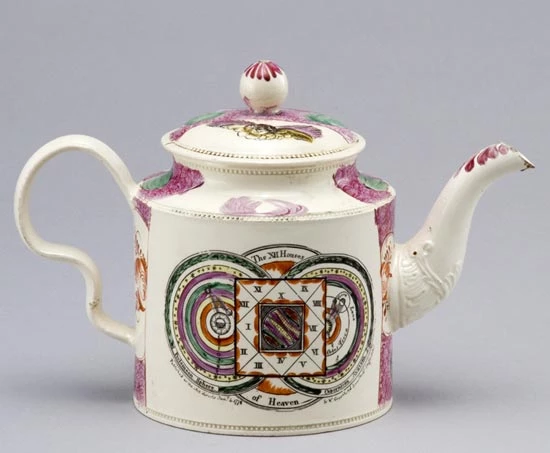
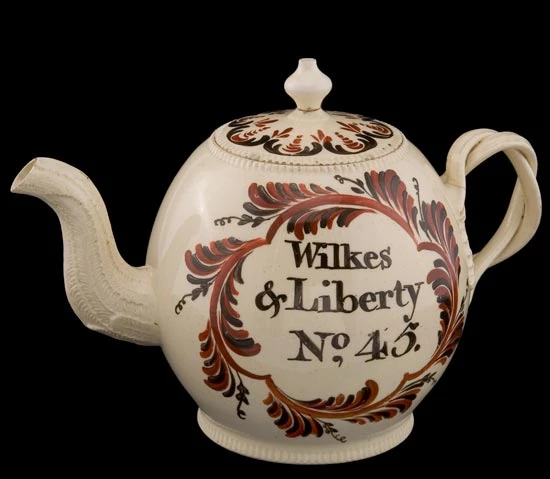
The collection is still growing, including acquisitions such as a creamware teapot of about 1765, which commemorates the radical politician John Wilkes. [Illustration 18]

Author: Andrew Renton, Head of Applied Art

Canu Cloch i'r Flwyddyn Newydd

Sara Huws, 3 January 2008


Er gwaetha'r tywydd rhynllyd, mae cornel o iard Eglwys Teilo Sant dal yn gynnes iawn. Gefail dros-dro sydd yno, ble mae dau arbenigwr-ac-artist yn gweithio ar ail-greu cloch Ganol Oesol gynnar. Roedd gan llawer o'r seintiau Cymreig yn y 6ed ganrif rai o'r rhain. Gellir darllen ychydig amdanynt (yn saesneg) ar y ddalen hon, sydd wedi'i ysgrifennu gan arbenigwr Canol Oesol Amgueddfa Cymru, Mark Redknap.

'The Christian Celts: Treasures of Late Celtic Wales'

Mae Andrew Murphy a Tim Young - y naill yw'r Gof yma yn Sain Ffagan, mae'r llall yn arbenigwr mewn metelau ac archaeoleg ymarferol - yn defnyddio megin enfawr i geisio ail-greu cloch Sant Ceneu. Mae'r gloch wreiddiol yn rhan o'r casgliad cenedlaethol. Mae Andrew a Tim yn defnyddio technegau tebyg i'r rhai a ddefnyddiwyd i wneud y gloch wreiddiol yn y 6ed ganrif i'w ail-greu. Maent yn gwneud hyn i geisio dysgu mwy am waith metel y cyfnod mewn ffordd ymarferol - rydym ni wastad yn arbrofi yn Sain Ffagan, felly mae'n braf gweld llwyddiant y gwaith ar ddyddiadur gwe Tim Young.

Cewch luniau, sylwadau a disgrifiadau yma ar wefan Geoarch.

Bydd mwy o wybodaeth am y prosiect yn cael ei gyhoeddi ar ein chwaer-safle, Rhagor: darganfod byd o gasgliadau, ar derfyn y gwaith. Mwynhewch ddyddiadur Tim yn y cyfamser!

I gadw'r thema: cloch lawer yn iau na chloch Ceneu yw'r gloch yn nhwr yr eglwys ei hun. Mae wedi'i seilio ar gynllun o'r 15eg ganrif o Lanilltyd Fawr. Fe'i castiwyd yn arbennig i ni yn ffowndri Taylors, Loughborough - man geni 'Great Paul', sy'n hongian hyd heddiw yng Nghadeirlan Sant Paul yn Llundain. Mae'n un ni ddipyn yn llai, ond yn ddigon swnllyd ta beth!

Clychau Taylor, Eayre and Smith

Hwyl am y tro a blwyddyn newydd dda!

Drawn from nature: Botanical illustrations

20 August 2007

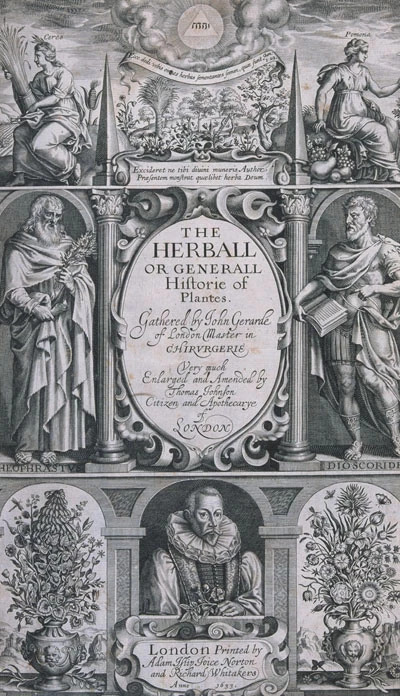
Old herbal

Throughout the Dark Ages, disease and poor hygiene were rife and people relied on herbalists and their remedies. Cure for deafness: take rat's urine, the oil of eels, the house leek, the juice of travellers' joy and a boiled egg.

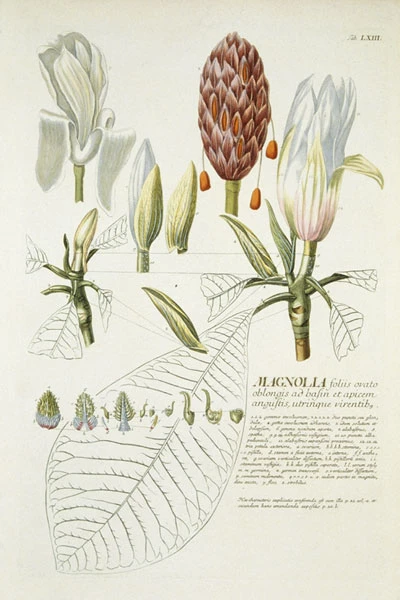
Magnolia

Plant collectors travelled to remote parts of the world. Finding new plants meant exploring new lands - often without accurate maps, through country without roads, and with few settlements.

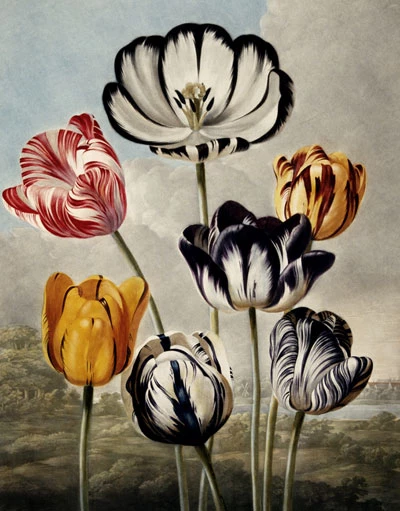
Tulips

In the 17th century, travel and trade brought many new exotic plants to Europe. So-called 'Tulipomania' rose from the passionate desire of the wealthy to own the rarest plants. In Holland, a single tulip bulb was bought for 4,600 florins, plus a coach and a pair of dappled greys.

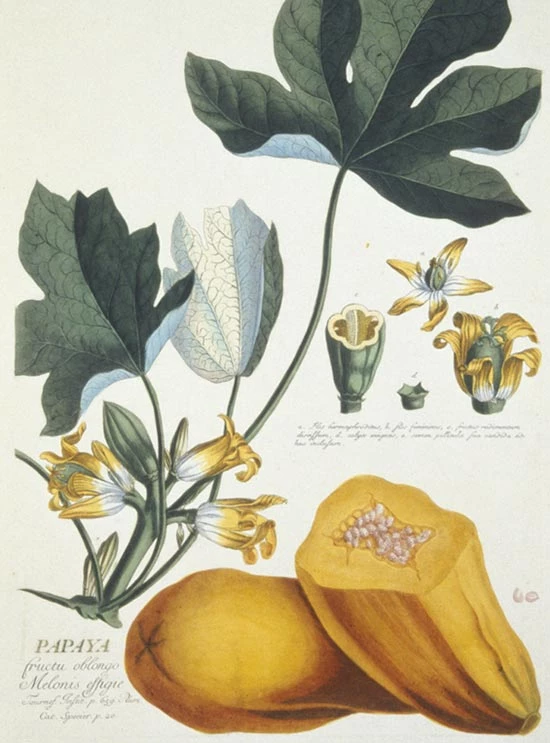
Papaya

Many of the exotic fruits such as the Paw-paw and Pineapple discovered on the voyages of discovery quickly became fashionable in Europe. The Paw-paw (papaya) is a native of tropical America.

Mankind has always been fascinated by flowers, by their beauty, and by their possibilities for healing and knowledge. Amgueddfa Cymru holds a unique collection of more than 9,000 botanical illustrations spanning five centuries.

After a small exhibition at National Museum, Cardiff in 1942, the illustrations were put into store. Fifty years later the breadth and significance of the collection was rediscovered and their exquisite draughtsmanship fully appreciated.

The collection comprises work ranging from professional engravings to amateur watercolours, and includes several items by acknowledged masters such as Georg Dionysius Ehret and Pierre Joseph Redouté.

500 years of botanical illustrations

The collection traces the development of botanical illustration and its relationship between art and science from the medieval herbals of the Dark Ages, when man feared nature, through the Enlightenment and the great voyages of discovery to the contemporary illustrations of the 21st century.

Floras

By 1600, after the early woodblocked herbals, the process of engraving on metal allowed a finer delineation of every minute detail, revolutionising botanical illustration. Flora Londinensis (1777-87) by William Curtis is one of the most famous British floras listing all the plants within a ten-mile radius of London. An important early 19th century European flora is the Flora Danica (1763-1885), which took almost a hundred years to complete.

In the 17th century, plants were grown for their beauty as well as practical and scientific use. The wealthy produced 'florilegias' illustrating the rare and beautiful plants on their estates, while scientific guides were full of precise illustrations from a whole range of plants.

The collection contains many original prints from the 17th century, including work by Redoute, Sowerby, Fitch and the Welsh-born Sydenham Edwards.

The introduction of taxonomy

In 1753 the Swedish naturalist Carl Linnaeus developed a new system of naming and classifying all living things. Everything was given two names in Latin: a genus name and a species name. This had a profound impact on the style of botanical illustration. Emphasis was now on the plant's sexual organs — much to the alarm of polite society.

The acceptance of the new Linnaean system was helped, in part, by the high quality of illustrations produced by G. D. Ehret at that time. The Museum holds illustrations by Ehret from Plantae Selectae (1750-73) and also a collection by J. S. Miller from Bute's Botanical Tables (1785), commissioned by John Stuart, 3rd Earl of Bute.

The collection also includes works by Redouté, Kirchner and Elizabeth Blackwell. Backwell illustrated a herbal entitled A Curious Herbal to free her husband from incarceration in a debtor's prison.

Voyages of discovery

Botanists accompanying the epic voyages of discovery in the 18th and 19th centuries were the first to record and collect the exotic plants encountered in the remote uncharted lands. For the first time Europeans saw pictures of exotic fruits such as pineapples, paw-paws and pomegranates. Examples in the collections include Banks' Florilegium and works from Curtis's Botanical Magazine.

Victorian enthusiasm

The Victorians brought about an immense enthusiasm for science. Engravings of newly introduced plants became widely available through journals and popular magazines, such as Carter's Floral Illustrations and Paxton's Floral Garden.

With the discovery of Victoria regia, the giant water lily from the Amazon, there was much rivalry between the gardeners of the stately houses of England as to who would be first to induce it to flower in Britain. Joseph Paxton, the gardener at Chatsworth, won the race. It is said that the structure of the huge leaf inspired his design for the Crystal Palace.