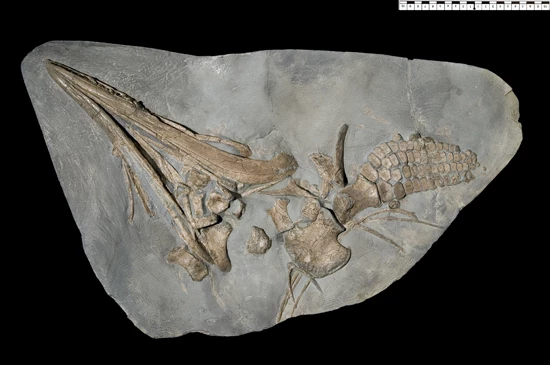
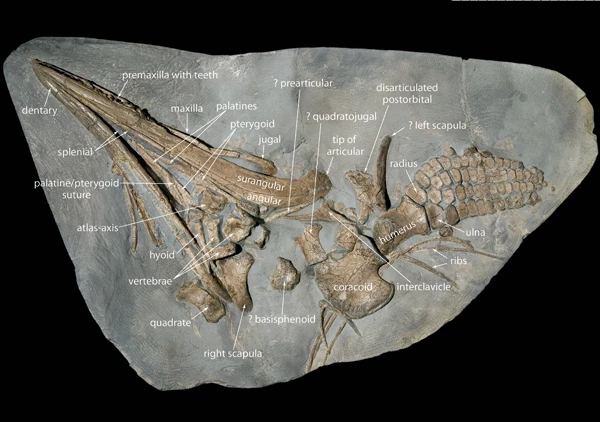
Fossil Reptile from South Wales Cindy Howells, 12 July 2010 The remains of the ichthyosaur after preparation for display Specimen complete with labels showing bone names In 2009, the Geology Department at Amgueddfa Cymru acquired a new Welsh ichthyosaur skeleton found preserved in the cliffs on the South Wales coast. Two hundred million years ago, in the early Jurassic period, south east Wales was covered by a warm shallow sea, teeming with life. One of the major predators within these waters was the ichthyosaur, an extinct marine reptile that looked similar to dolphins. These animals could reach over 15m in length, and preyed upon small fish and other marine animals such as ammonites and belemnites. The fossil was discovered several years ago preserved in the cliffs at Penarth, near Cardiff and acquired by Amgueddfa Cymru for public display. To prepare the specimen for display, hours of delicate, skilled work had to be undertaken to carefully remove the rock covering the preserved reptile bones. Rare fossils Individual ichthyosaur bones and teeth are relatively common fossils in South Wales, Dorset, and Somerset, as well as parts of the Midlands and Yorkshire, but complete or partially complete skeletons are rarer. The specimen discovered at Penarth includes the underside of the head and one of its paddle-like limbs, as well as part of the shoulder blade and several ribs. After it died the animal would have been buried in the sediment on the sea bed, preventing it from being completely scavenged by other animals. This skeleton will help in our understanding of Jurassic life in Wales. To find out more about ichthyosaurs and life in the Jurassic period visit the Evolution of Wales exhibition at the National Museum Cardiff.
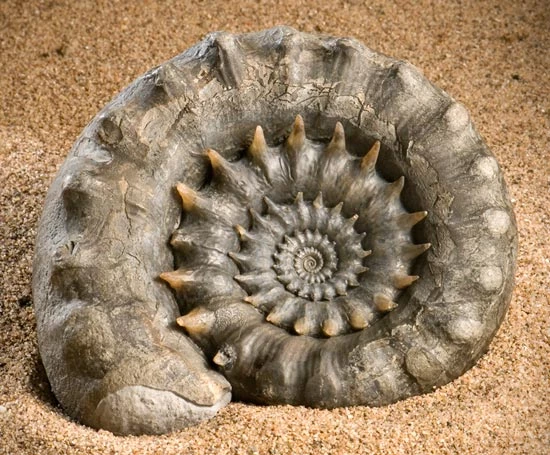
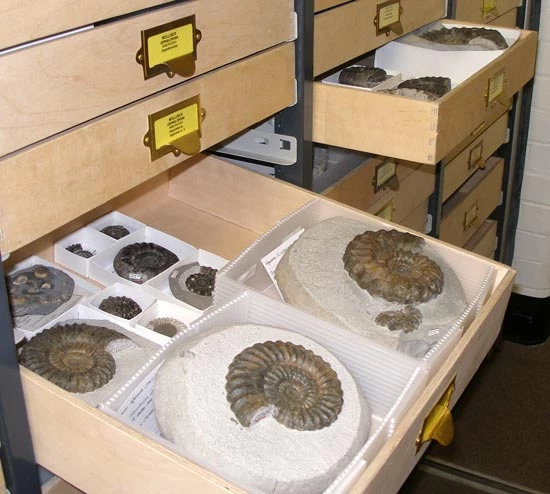
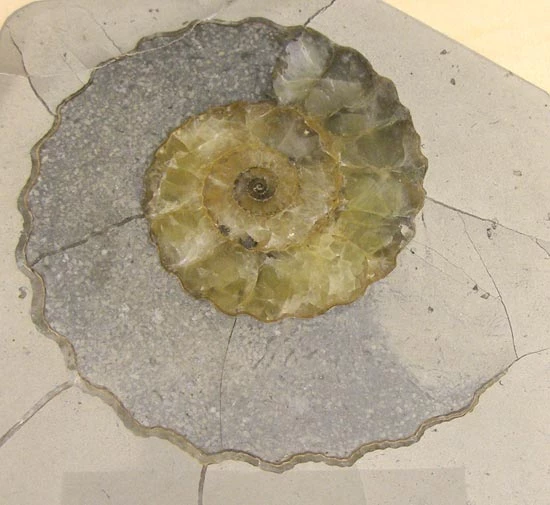
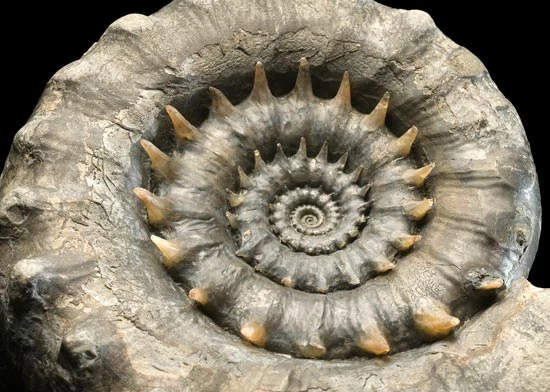
Secrets of the ammonites Cindy Howells, 26 February 2010 The specimen after preparation, revealing the delicate spines Ammonites in the collections at Amgueddfa Cymru Section through an ammonite showing the chambers Underside of the prepared specimen Delicate spines on the inner whorls. Similar spines would originally have been present on the outer part of the ammonite as well, but these had been worn away by erosion Scientists have managed to dissolve the rock surrounding the fossil of a 190-million-year-old ammonite, revealing, for the first time its intricate pattern of spines. When you pick up a fossil on a beach it is often broken or eroded. You might discard it because it is poorly preserved or incomplete. But most fossils are found partially concealed in rock, and in these cases they can carry hidden secrets. One such ammonite fossil had been lying in a drawer in the Geology Department at the Museum for 50 years. It is part of a collection of almost 6,000 fossils donated by James Frederick Jackson in 1960. James Frederick Jackson Jackson lived in a small cottage at Charmouth near Lyme Regis, and spent his spare time collecting rocks and fossils around the Dorset coast. From 1914 to 1919 he worked at the Museum, and over his lifetime he donated almost 21,000 specimens. Palaeontologists regularly consult the Jackson collection because it contains a complete and valuable record of Dorset's Jurassic fossils. A few years ago, one such researcher noticed that a particular ammonite was unusual. However, much of it remained concealed in rock, which needed to be carefully removed by specialists to reveal the fossil. A year of preparation After a year of painstaking work, the specimen was finally returned to the Museum to take pride of place in the collections. The limestone sediment had been completely removed with a solution of weak acid and, for the first time, the detail of delicate spines on the inner whorls could be seen. Similar spines would originally have been present on the outer part of the ammonite as well, but these had been worn away by erosion. The specimen features in a recently published monograph of the Palaeontographical Society, in a series devoted to the scientific description and illustration of British fossils, under the formal scientific name of Eoderoceras obesum (Spath). Ammonites Ammonites lived in the Mesozoic Era (251-65.5 million years ago) and were marine animals related to the Nautilus. They swam in the sea, preying on smaller marine animals. They usually had a spiral shell which could be from 5mm to 2m across. Their shells could be smooth, ribbed or knobbly, or even spiny. They lived in the outer whorl of their shell, while the inner part consisted of gas-filled chambers used for buoyancy. You can often see an intricate pattern on the surface of ammonite shells, which marks the division between each chamber. All these features are used by palaeontologists to identify different species of ammonites. The Museum has large and scientifically important collections of ammonites, mainly from south-west Britain. They are a valuable tool in helping scientists understand the geology and palaeontology of Britain.
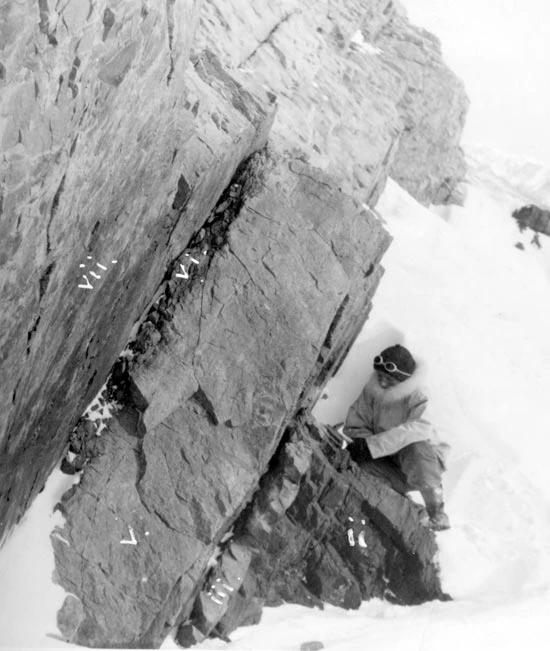
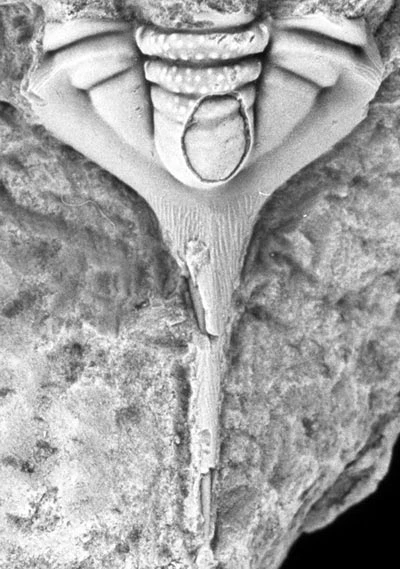
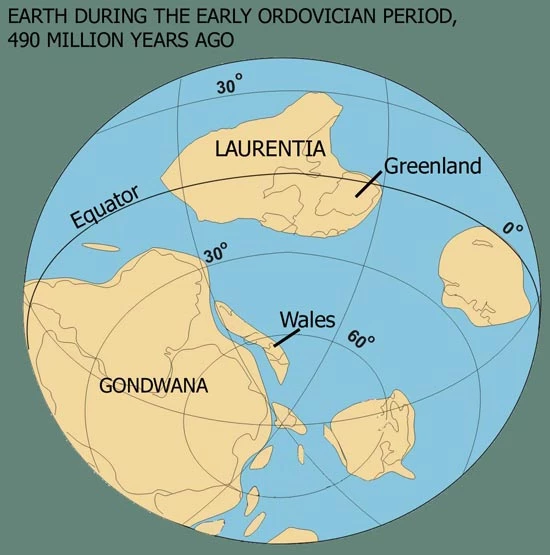
Tropical trilobites from frozen Greenland Lucy McCobb, 5 August 2009 Collecting fossils in the snow. 1950s. Aerial Photo of Greenland: The fossils were collected from the area shaded in red. The large fossilised eye of Carolinites, a trilobite which swam in the open ocean searching for food. The tail of the trilobite Acidiphorus has an impressive spine. The Museum's extensive holding of fossils include a collection of Ordovician age (470-490 million years old) trilobite fossils from Greenland. Although the continent is now cold and icy, it was not always so. British explorers in the icy north Greenland is a very difficult place in which to study and collect fossils. Most of it remains ice-covered throughout the year, and rock outcrops are readily accessible only in coastal areas during the summer months. Expeditions to explore the geology of Greenland began in the late nineteenth century, and continue to the present day. These have been organised by the Greenland Geological Survey, based in Copenhagen. In the 1990s, the Museum was presented with a collection of Cambrian and Ordovician trilobites from central east Greenland made between 1950 and 1954 by Dr John Cowie, formerly of the University of Bristol, and a colleague, Dr Peter Adams. Globe-trotting Greenland Today, we are familiar with Greenland as a cold, icy place, but this has not always been the case. The tectonic plates that make up the Earth's lithosphere have moved around throughout its history, and geologists have demonstrated that during the Ordovician Period Greenland lay close to the equator, and together with North America and Spitsbergen formed the ancient continent of Laurentia. At this time, Wales lay far away in cool, high southern latitudes, close to the vast continent of Gondwana. The fossil faunas of the shallow Ordovician seas around Laurentia and Gondwana are very different, and no trilobite species is common to Greenland and Wales. Earth during the early Ordovician Period, 490 million years ago Tropical trilobites new to science. The Ordovician trilobites of Greenland are preserved in limestone which accumulated on the floor of warm, shallow sub-tropical seas. Around forty different species have been identified in our Greenland collection, and several are new to science. Research has confirmed they are common to, or closely related, to those from other parts of Laurentia. Features of different trilobite species provide clues as to how they lived. Most were probably benthic (living on the sea floor), and were either scavengers or deposit feeders. Others have features such as very large eyes, showing that they were pelagic (swimmers); such forms were widely distributed in the Ordovician oceans, and found in other tropical regions apart from Laurentia.
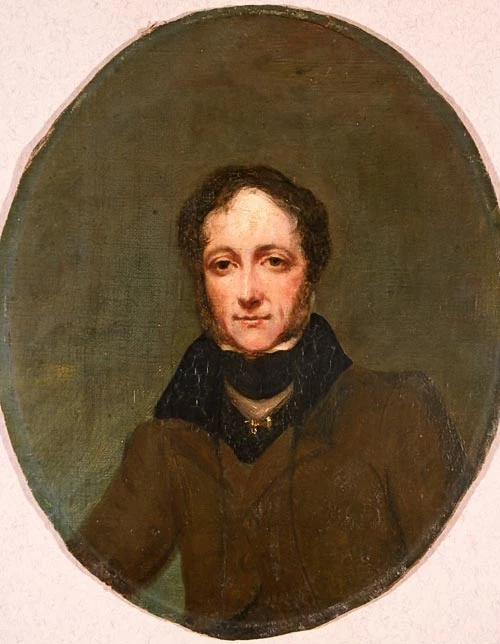
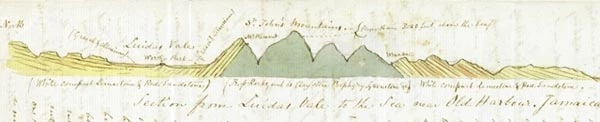
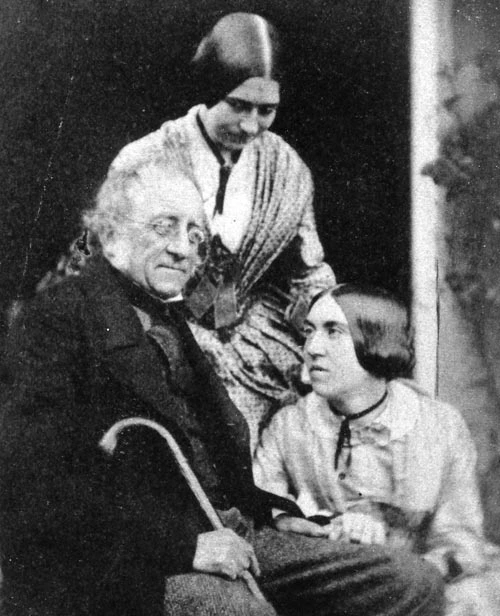
The De la Beche archive at Amgueddfa Cymru Tom Sharpe, 20 April 2009 Sir Henry Thomas De la Beche (1796-1855) The first geological map of Jamaica Duria Antiquior - A more Ancient Dorset. A watercolour painted in 1830 by Henry De la Beche. This was the first portrayal of a fossil environment in its entirety, showing the interactions of the various elements of the fossil fauna and flora, in particular the large marine reptiles of the early Jurassic Period. De la Beche and his daughters in Swansea, 1853 The Department of Geology at Amgueddfa Cymru houses one of the most important geological archives in the world. It contains over 2,000 items - letters, diaries, journals, sketches and photographs - of one of the leading geologists of the early 19th century, Sir Henry Thomas De la Beche (1796-1855). During the first half of the 19th century De la Beche played an important role in the new science of geology. In addition to his own scientific contributions, he established geology as a profession and founded several of Britain's major geological institutions, including the British Geological Survey the Museum of Practical Geology (later the Geological Museum and now part of the Natural History Museum in London) the School of Mines (now part of Imperial College London) and the Mining Record Office (now part of the Coal Authority). De la Beche was born in London and brought up in Devon and in Lyme Regis in Dorset, where he developed an interest in geology through his friendship with a local fossil collector, Mary Anning (1799-1847). Jamaica His family wealth came from slavery, and a sugar plantation in Jamaica, and in 1823-4 he spent 12 months on the estate. He toured the island, examining its rock outcrops. On his return to England he published the first description of the geology of Jamaica and its first geological map. De la Beche is regarded as the 'Father of Jamaican geology'. De la Beche began mapping the rocks of Devon in the early 1830s. However unrest in Jamaica, related to the abolition of slavery and the collapse of the sugar market, left him in financial difficulties and unable to continue his work. He wrote to the Board of Ordnance offering to complete the geological mapping of Devon for the Government for £300. His application was successful and he was appointed Geologist to the Ordnance Trigonometrical Survey. Founding the British Geological Survey Once the Devon work was completed, he successfully applied to continue with the geological mapping of Cornwall, and in 1835 the Ordnance Geological Survey was established. From this grew today's British Geological Survey. When most geologists were clerics or interested amateurs of private means, De la Beche was one of the first professionals. In 1837, De la Beche moved his Geological Survey to Swansea, recognising the economic importance of the Welsh coalfield. He soon became involved in the local scientific scene as a member of the Swansea Philosophical and Literary Institution and a friend of the Swansea naturalist Lewis Weston Dillwyn. De la Beche was accompanied by his 18-year-old daughter Elizabeth (Bessie). She soon got to know one of Dillwyn's sons, Lewis Llewelyn Dillwyn , and they married in August 1838. It is from their descendants that the Museum acquired the bulk of the De la Beche archive in the 1930s. Spectacular fossils discovered The papers contain a wealth of information about the developing science of geology in the first half of the 19th century. The names of the geological timescale (Cambrian, Ordovician and so on) that we now take so much for granted were being proposed and argued over, new and spectacular fossils were being discovered and evidence of the Ice Age was being recognised for the first time. De la Beche himself worked on the first descriptions of the large fossil marine reptiles, the ichthyosaurs and the plesiosaurs, and there is much in the papers on the formation of the Geological Survey and the other organizations he established. Darwin writes to De la Beche De la Beche corresponded with the leading geologists of the day and, with his experience of Jamaica, was often called on for advice relating to that island. One letter of 1842 in the collection quizzes him about the colours of horses, cattle and other animals bred for a number of generations on the island, and how they had changed. The author was Charles Darwin, at that time formulating his theory of evolution. De la Beche was a skilled draughtsman and this is evident in the archive, for in addition to faithful landscape views, fossil illustrations and geological cross-sections, he sketched many caricatures and cartoons. Through these he would comment on developments in the science, or on his activities and those of his contemporaries. The archive is an important resource for the history of geology and is frequently consulted by researchers from Britain and abroad - to arrange a visit, please contact us . Editor's note: this article was amended on 28/06/17 to remove a reference to de la Beche being a "fair slave-owner".

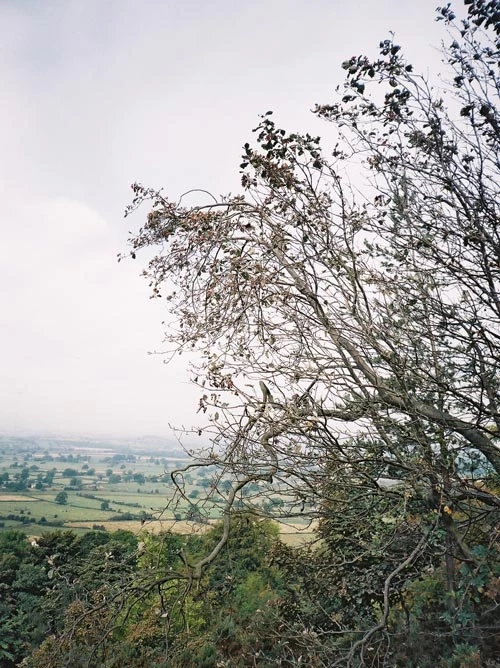
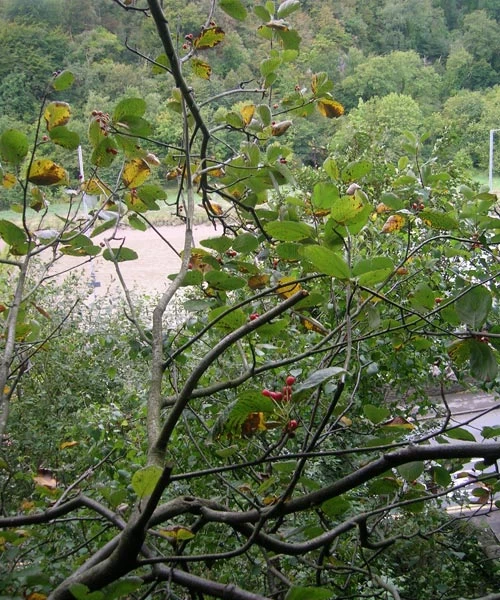
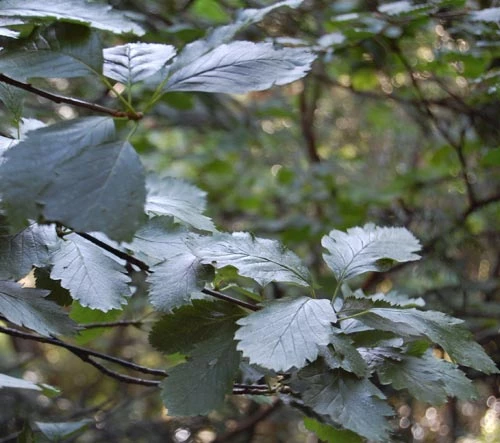
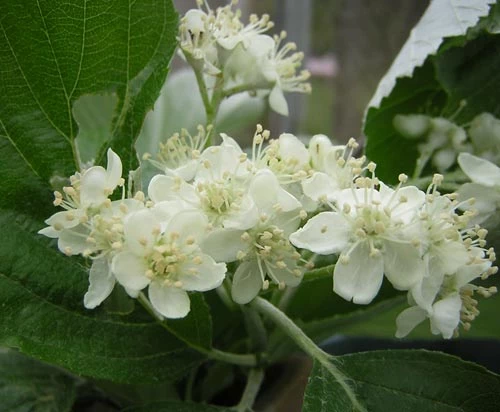
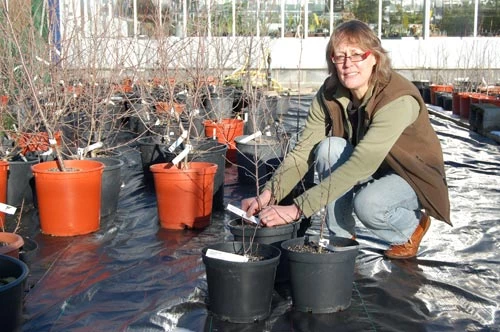
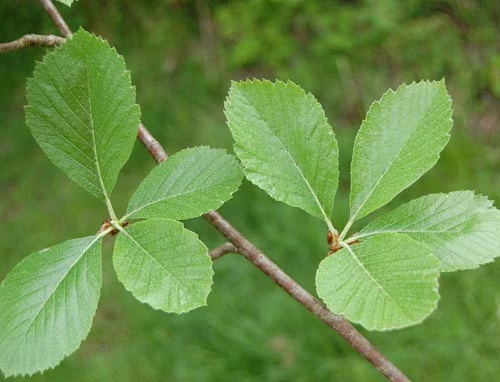
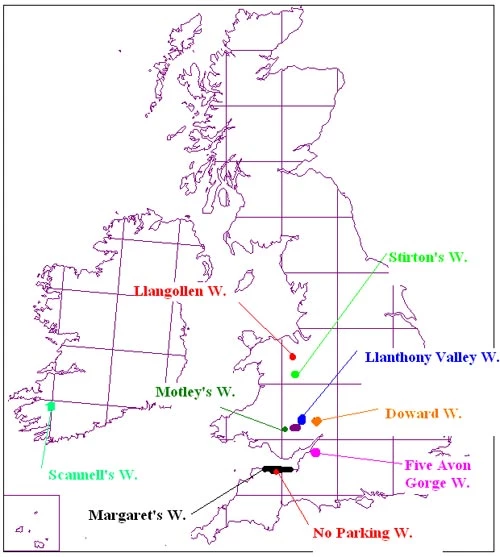
14 new trees discovered in the UK and Ireland 5 March 2009 Motley's Whitebeam - Sorbus x motleyi A new hybrid known only from one site near Merthyr Tydfil, where just two young trees are known. Stirton's Whitebeam - Sorbus stirtoniana About 40 trees can be found on the cliffs of Craig Breidden, Montgomeryshire. Houston's Whitebeam Sorbus x houstoniae A hybrid between the Common Whitebeam and the Bristol Whitebeam. The only one example can be found on a cliff in the Avon Gorge, inaccessible without ropes. where it was found by Ms Libby Houston (pictured) in 2005. Robertson's Whitebeam - Sorbus x robertsonii A new hybrid between the Common whitebeam and the Round-leaved Whitebeam. Only one tree is known so far, but it could be widespread in South-West England. Maura Scannell's Whitebeam - Sorbus scannelliana A new species first confirmed as distinct in September 2008. Five trees are known in the Killarney National Park, County Kerry, Republic of Ireland, where it probably originated from the Rock Whitebeam crossing with Rowan. Leigh Woods Whitebeam Sorbus leighensis A new species which has been known since the 1980s, but whose differences from the Grey-leaved Whitebeam has only recently been clarified using DNA. It is common at Leigh Woods on the Somerset side of the Avon Gorge, where about 100 trees are known. Jess Gould potting on young Sorbus stirtoniana at the National Botanic Garden of Wales. Llangollen Whitebeam, a rare tree confined to the cliffs of Eglwyseg Mountain, Denbighshire. Welsh Whitebeam - Sorbus cambrensis - First found in 1874 and classed as Grey-leaved Whitebeam, biochemical studies have recently shown this to be a new species. A new plantation of Motley's Whitebeam (Sorbus x motleyi)at the National Botanic Garden of Wales Map showing where the new trees were found (Key: W. = Whitebeam) Botanists at National Museum Cardiff in conjunction with scientists from Bristol University, Exeter University, Oxford University and the Royal Botanic Gardens, Kew have named new kinds of tree in Wales, England and Ireland, all of which are rare and need to be protected. Of the 14 finds which have been named officially in Watsonia, the scientific journal of the Botanical Society of the British Isles, six occur in Wales. These are: Stirton's Whitebeam (Sorbus stirtoniana) which can only be found in one place in the World - on the cliffs of Craig Breidden, Montgomeryshire; Llangollen Whitebeam (Sorbus cuneifolia) - a rare tree confined to the cliffs of Eglwyseg Mountain, Denbighshire where about 240 plants are known; Welsh Whitebeam (Sorbus cambrensis) found in the Brecon Beacons west of Abergavenny and Llanthony Valley Whitebeam (Sorbus stenophylla) - two closely related species from Wales; Doward Whitebeam (Sorbus eminentiformis) known only from the Wye Valley in England and Wales; Motley's Whitebeam (Sorbus x motleyi) - a new hybrid from one site near Merthyr Tydfil, where two young trees have been discovered. Evolution in Action The discovery of Motley's Whitebeam is an example of evolution in action. It originated as a hybrid between Ley's Whitebeam and Rowan in a wood after one of the few remaining Ley's Whitebeams was blown down in the 1989 Hurricane. The extra light from the gap in the woodland canopy allowed seeds in the soil to germinate and grow; These new finds, in addition to seven new types in England and one in Ireland are all members of the Sorbus group, which includes whitebeams, rowans and service trees, increasing the number of this type of tree by over 50%. DNA discovery Dr Rich led this project which was primarily funded by The Leverhulme Foundation and Amgueddfa Cymru - National Museum Wales, with contributions from Countryside Council for Wales, Natural England and Royal Botanic Gardens, Kew. Some of these trees have probably developed recently and are examples of on-going evolution of new species. Others are older types which have been known for some time but are only now described as 'species' thanks to modern DNA methods. The type specimens of the trees are held in the Welsh National Herbarium at National Museum Cardiff, and three of the Welsh species — Stirton's Whitebeam, Motley's Whitebeam and Welsh Whitebeam can be seen growing at the National Botanic Garden of Wales. New species and hybrids Wales Llangollen Whitebeam - Sorbus cuneifolia A new species from North Wales, Llangollen Whitebeam has probably evolved from the English Whitebeam; The Latin name cuneifolia refers to the narrower leaf bases, its distinguishing feature from the English Whitebeam; It is a rare tree confined to the cliffs of Eglwyseg Mountain north of Llangollen, Denbighshire, where about 240 plants are known. Motley's Whitebeam - Sorbus x motleyi A new hybrid known only from one site near Merthyr Tydfil, where only two young trees are known; This is an example of evolution in action. It originated as a hybrid between Ley's Whitebeam and Rowan in a wood after one of the few remaining Ley's Whitebeams was blown down in the 1989 Hurricane. The extra light from the gap in the woodland canopy allowed seeds in the soil to germinate and grow; It was first found in 1999 by Graham Motley of the Countryside Council for Wales when he was monitoring the very rare Ley's Whitebeam, and is named after him. Stirton's Whitebeam - Sorbus stirtoniana A new species, recently recognised as different from Thin-leaved Whitebeam with which it had been confused; About 40 trees can be found on the cliffs of Craig Breidden, Montgomeryshire; It has been named in honour of Prof. Charles Stirton in recognition of his inspirational work establishing the National Botanic Garden of Wales; Trees are held in cultivation at the Gardens. Welsh Whitebeam - Sorbus cambrensis and Llanthony Valley Whitebeam - Sorbus stenophylla Two new, closely related species from Wales; Biochemical studies have shown these species differ from each other and from the more widespread Grey-leaved Whitebeam, within which they were formally included; About 100 plants of the Welsh Whitebeam are known from the eastern Brecon Beacons west of Abergavenny; The Llanthony Valley Whitebeam was first found in 1874 by the Rev. Augustin Ley; There are probably about 100-200 plants in the Llanthony Valley. England Avon Gorge Whitebeam - Sorbus x avonensis A hybrid between Common Whitebeam and Grey-leaved Whitebeam; It was first found by Dr Tim Rich, Ashley Robertson and Libby Houston whilst studying whitebeams in the Avon Gorge in 2004; It has only so far been confirmed for the Avon Gorge in Bristol, but may occur locally in South-west England where the parents grow together. Houston's Whitebeam - Sorbus x houstoniae A hybrid between the Common Whitebeam and the Bristol Whitebeam; The only one example can be found on a cliff in the Avon Gorge, where it was found by Ms Libby Houston in 2005 which makes it inaccessible without ropes. Leigh Woods Whitebeam - Sorbus leighensis A new species which has been known since the 1980s, but whose differences from the Grey-leaved Whitebeam has only recently been clarified using DNA; It is common at Leigh Woods on the Somerset side of the Avon Gorge; About 100 trees are known. Margaret's Whitebeam - Sorbus margaretae Related to the Rock Whitebeam and the Bloody Whitebeam; It was first recognised as a distinct species by Margaret E. Bradshaw during her surveys of the rare Whitebeams of South-west England in 1984, and it is named after her. It occurs only on the cliffs along the north coast of Devon and Somerset, where at least 120 trees are known. No Parking Whitebeam - Sorbus admonitor The No Parking Whitebeam was first noted to be different from the more widespread Devon Whitebeam in the 1930s, but has only recently been demonstrated to be a different species using biochemical analyses; The name originates from the time in the 1930s when a ‘No Parking' notice was nailed to a tree by a small layby at Watersmeet in North Devon. It is common to the Watersmeet area of North Devon where there are at least 110 trees. Proctor's Rowan - Sorbus x proctoris A new hybrid between Rowan and Sichuan Rowan; It is named after Dr Michael Proctor, an eminent senior botanist of Exeter University, for his excellent work on British Whitebeams; Only one tree has been found in the wild in the Avon Gorge, where there is a nature conservation dilemma. As one of its parents is a garden tree from China, there is the potential for genes of the Sichuan Rowan to spread into the native rowan population in the Avon Gorge. To prevent this happening, one option would be to destroy/remove the only example of this tree! Robertson's Whitebeam - Sorbus x robertsonii A new hybrid between the Common whitebeam and the Round-leaved Whitebeam; Only one tree is known so far, but it could be widespread in South-West England; It was first found by Dr Tim Rich, Ashley Robertson and Libby Houston whilst studying whitebeams in the Avon Gorge; It is named after Dr Ashley Robertson for his outstanding work in clarifying the evolution of the whitebeams in the Avon Gorge. Wales & England Doward Whitebeam - Sorbus eminentiformis A new species, known only from the Wye Valley in England and Wales. The total population is probably under 100 trees, most of which occur on the Great Doward. Ireland Maura Scannell's Whitebeam - Sorbus scannelliana A new species first confirmed as distinct in September 2008; Five trees are known in the Killarney National Park, County Kerry, Republic of Ireland, where it probably originated from the Rock Whitebeam crossing with Rowan; It is named after one the great Irish botanist Maura Scannell, formerly of the National Botanic Gardens Glasnevin, whose knowledge of Irish botany is unrivalled. References: Rich, T. C. G. & Proctor, M. C. F. (2009). Some new British and Irish Sorbus L. taxa (Rosaceae). Watsonia 27: 207-216. Rich, T. C. G., Harris, S. A. & Hiscock, S. J. (2009). Five new Sorbus (Rosaceae) taxa from the Avon Gorge, England. Watsonia 27: 217-228.