: Natural History

Arthur the Arthropleura

Lucy McCobb, 23 March 2022

Who is Arthur the Arthropleura?

Arthur is a model of the biggest invertebrate that has ever lived on land, a millipede-like creature called Arthropleura.

Where did Arthur the Arthropleura come from?

The model was originally on display in Kew Garden’s Evolution House but when the space was dismantled in preparation for the HLF funded restoration of the Temperate House, it was no longer needed and Kew kindly donated it to Amgueddfa Cymru – National Museum Wales.

The Arthropleura model was in need of some substantial conservation work when it arrived at Amgueddfa Cymru – National Museum Wales.

It had been on open display for many years in a glass house alongside living plants and was damaged and rusty.

The humid display environment had caused the surface paint to flake away and several spiders and snails had taken up residence on the underside of the model!

Arthur the Arthropleura before conservation

Arthur the Arthropleura before conservation

The first job was to give the model a good wash with hot soapy water and remove the dirt and cobwebs!

Arthur the Arthropleura has a bath

Arthur the Arthropleura has a bath

Then all the flaking paint was scrubbed off, the damaged areas on the legs and head were rebuilt with an epoxy putty and the surface textures recreated.

The nuts and bolts of the removable antennae had rusted together, so the metal parts were replaced with new stainless steel threaded rods.

Once the repairs were complete the model was carefully painted with acrylics and then coated in a durable varnish, making it once again suitable for public display.

Arthur the Arthropleura after conservation

Arthur the Arthropleura after conservation

Who named the Arthropleura - Arthur?

Some of the Natural Sciences staff had become rather attached to the impressive 1.5m long millipede model whilst it underwent conservation work in the lab and named it Arthur the Arthropleura.

We have also had fun with Arthur; he has “escaped” and been on the run around the museum galleries!

Arthur the Arthropleura visits the Impressionists

Arthur the Arthropleura visits the Impressionists

We posted pictures of his adventures on the @CardiffCurator Natural Sciences Twitter account and had a fantastic response from our followers.

Arthur the Arthropleura is now a social media star and is a really wonderful addition to our collections!

What did Arthropleura look like?

Arthropleura looked a lot like millipedes do today. It had a long, narrow body made up of lots of segments, and its back was covered in hard plates.

On the underside of the body, there were lots of pairs of jointed legs, around 8 pairs for every six body segments, which is similar to the number of legs modern millipedes have.

Recently, palaeontologists realised that what they had previously thought was the head of Arthropleura, is actually just the front segment of its body. The head was tucked underneath this segment, just like it is in millipedes today. So our model Arthur is a bit out-of-date, and he shouldn’t be looking straight ahead quite as much as he does.

How big was Arthropleura?

There are two types of evidence that tell us how big Arthropleura was.  Fossils of the animal’s body, or parts of it, have been found in Germany, Belgium, France, the Czech Republic, and the U.K., but these are relatively rare.  More common are fossils of the long trackways made by the many feet of the Arthropleura as it scuttled over damp ground.  Its fossilised footprints are known from the USA, Canada, Germany, France and Scotland.  Measuring the trackways tells us how wide the animals that made them must have been, and we can calculate from that how long the animals likely were.

Arthur the Arthropleura next to a fox for size

Arthur the Arthropleura next to a fox for size

Some places have several trackways in different sizes, showing that different sized (and probably aged) Arthropleuras were moving around in that area.  The widest trackway known is 50cm wide, and the biggest Arthropleura is estimated to have been over 2m long.

Where did Arthropleura like to live?

Arthropleura fossils and trackways have been found in various locations that would have been fairly close to the equator 300 million years ago, including modern-day North America and the U.K.

Many of the first fossils were found in roof shales overlying coal seams, so it was thought for a long time that the giant creepy-crawlies just lived in humid coal swamps. Since then, evidence of Arthropleura has been found from a wider range of environments, including footprints walking along drier river banks.

It appears that they felt at home in a variety of landscapes with some vegetation cover.

Would Arthopleura have eaten me?

We can’t be certain what Arthropleura liked to eat, because its mouthparts have never been found in any fossils. However, if it did have tough, strong jaws for biting prey with, they would probably have survived and become fossilised. That may be circular reasoning, but there are other reasons why we think it probably ate plants rather than meat.

An Arthropleura fossil was found in Scotland in 1967, which had the remains of plants called giant clubmosses in the area where its gut would have been. It’s possible that the fossils were just preserved together by accident, so we can’t be certain the plants were actually Arthropleura’s last meal.

However, if its diet was similar to that of modern-day millipedes, it is likely to have lived on plant remains, seeds and spores.

Which other animals did Arthropleura share its home with?

If you looked around at the animals that shared Arthropleura’s world, you would see a very different view of life from today. There were no birds or mammals, because they hadn’t evolved yet. Scout around for our nearest relative, and you would eventually spy, lurking in the water, a large, squat amphibian called Eryops.

Animals with backbones were yet to gain a dominant foothold on dry land. Instead, creepy-crawlies accounted for most of the life you would have seen around you. There were large cockroaches (up to 9cm long) scuttling around, and spider-like creatures that would fill the palm of your hand. These weren't exactly like modern spiders - their fat bodies were divided up into segments rather than consisting of a single rounded piece, and they hadn't yet evolved the ability to spin webs - but they were well on their way to becoming the arachnids we see today.

fossil of a primitive spider-like creature (Maiocercus celticus)

fossil of a primitive spider-like creature (Maiocercus celticus)

The air would have been filled with a distinct hum from the most awesome animals around – huge dragonfly-like insects called griffinflies, whose wingspans could exceed 70cm. Griffinflies were among the top predators of their day, and were some of the first creatures on Earth ever to fly, around 150 million years before the first birds took to the wing. Even our amphibian kin Eryops had to share its home with arthropods; horseshoe crabs that also liked to divide their time between dry land and water.

Why don’t we get such huge invertebrates on land today?

The Carboniferous Period, around 300 million years ago, was undoubtedly the era of huge invertebrates.

At that time, giant Arthopleura, the biggest creepy-crawly that has ever lived on land, was joined by large cockroaches, arachnids and dragonfly-like insects. How was that possible, and why don't we see invertebrates as big as Arthur today?

Our atmosphere has around 21% oxygen. The evidence suggests that 300 million years ago, oxygen levels approached 35%. That would have made a huge difference to the amount of energy that insects and other arthropods could generate.

Insects and millipedes don't have lungs to actively breathe in air like we do. Instead, their exoskeletons have lots of tiny tubes passing through them called spiracles. Oxygen diffuses in through the tubes from the outside into a blood-filled cavity, from where it gets distributed around the animal's body, fuelling everything it does. More oxygen available meant more fuel, which enabled creepy-crawlies to grow bigger, and which would have been especially important in generating enough energy to get large flying insects off the ground. Such giants could not get airborne under today's atmospheric conditions.

Arthur the Arthropleura in one of its natural habitats

Arthur in one of his natural habitats, the coal swamp in our Evolution of Wales gallery

Oxygen levels aside, there are mechanical limitations to having an exoskeleton, which make it unlikely that such large invertebrates could exist today.

In order to grow bigger, all arthropods need to moult off their old exoskeleton and grow a new larger one. There is a period of time after moulting when the new exoskeleton is soft, and the arthropod must wait for it to harden before it can carry on with its normal life. Not only is this a dangerous time when the animal is vulnerable to predators, but it places a limit on size – if the exoskeleton becomes too big and heavy, it risks collapsing under its own weight.

That is one reason why the largest arthropods today live in the ocean, where the water helps to support their weight.  There is also a limit on how big creepy-crawly legs can get, as the bigger they get, the thicker the cuticle they're made of becomes.  They can only get to a certain size before the thick cuticle doesn't leave enough room inside for the muscles needed to operate the legs.

Another factor allowing Arthur and others to grow so huge may have been the lack of large vertebrate predators.  For a variety of reasons, it just isn't possible for such giant creepy-crawlies to exist today.

Lucy McCobb, Caroline Buttler & Annette Townsend

Glossary:

Arthropod – an invertebrate animal with a hard exoskeleton and jointed limbs.

Invertebrate – an animal without a backbone.

Exoskeleton – a tough outer skin, which provides support and protection to animals without an internal skeleton.
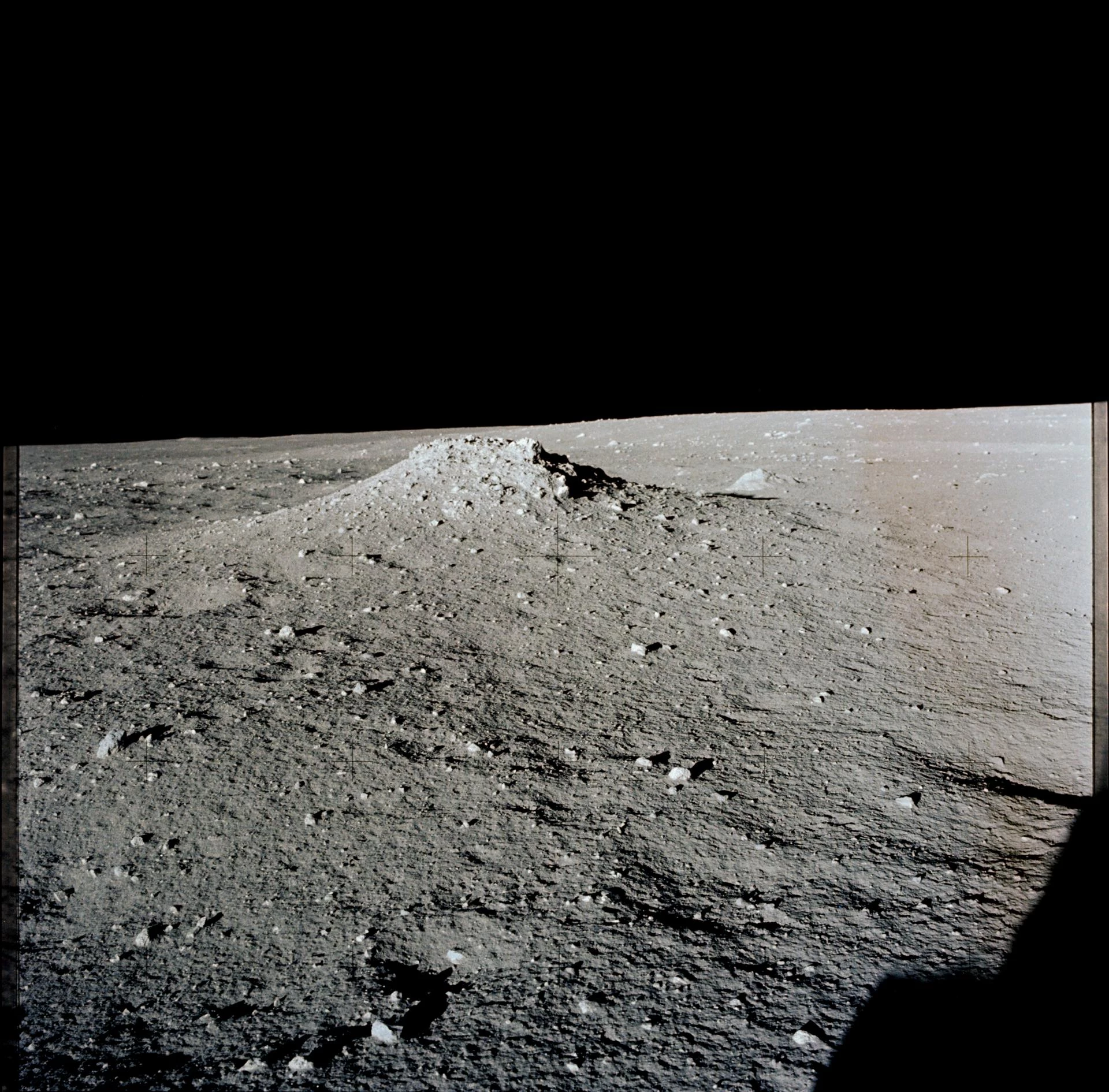
Apollo 12 Moon Rock

12 March 2019

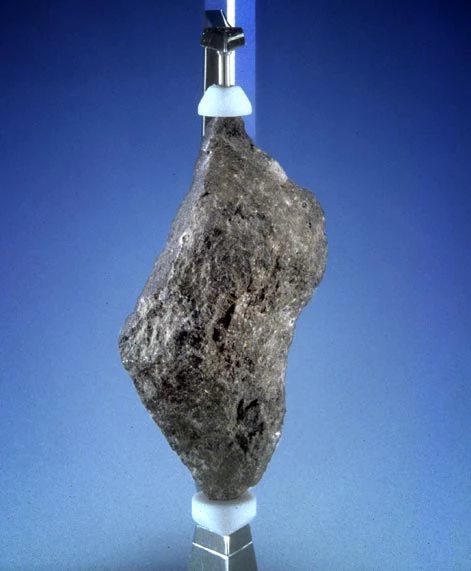
Moonrock displayed at National Museum Cardiff.

Moon rock displayed at National Museum Cardiff.

The rock comes from a mound of material thrown out by the impact that made Head Crater.

The rock comes from a mound of material thrown out by the impact that made Head Crater.

Apollo 12 was the sixth manned flight in the United States Apollo programme and the second to land on the Moon. It was launched on 14 November 1969, from the Kennedy Space Center, Florida, four months after Apollo 11. Astronaut Alan Bean collected samples from the moon to bring back to Earth for research.

The rocks on the Moon are roughly the same age as the oldest rocks found on Earth. They range from about 3.2 billion years up to about 4.5 billion years old. However on Earth rocks this old form just a small part of the surface geology. Most older formations have been destroyed and recycled by plate tectonics.

Today, a piece of Moon rock from the Apollo 12 mission, on loan from NASA, is on display as part of the exhibition The Evolution of Wales at National Museum Cardiff.

The precious rock is kept in a special airtight container to protect it from contamination. At 3.3 billion years old, the Moon rock is considerably older than the most ancient Welsh rock, a mere 711 million years old, is roughly the same age as Lewisian Gneiss (from north-west Scotland), the oldest identified rock in the UK, and is younger than the oldest rock known from Canada (Acaster Gneiss) at 3.9 billion years old. Examples of these three rocks are all displayed alongside the Moon rock.

The moon rock is the most expensive item in the entire museum. Its value is based on the cost of going to the moon to get another piece. It is kept in a protective nitrogen environment; only NASA has a key to open the inner case.

One thousand kinds of shells existing in Japan

Kristine Chapman, 7 September 2018

Hirase Museum

The Hirase Conchological Museum

Shintaro Hirase and family, September 1931.

Shintaro Hirase and family, September 1931.

The Library holds a set of beautiful Japanese shell books in its Mollusca collection.

The book is Kai Chigusa, but is more commonly known as Kai sen shu (or The Illustrations of a Thousand Shells in English) by Yoichirō Hirase (1859–1925), and was produced from 1914-1922.

Hirase was a Japanese conchologist who assembled the largest collection of shells in Japan at the turn of the century, and established his own shell museum (the Hirase Conchological Museum) in Kyoto from 1913 to 1919. His son Shintarō Hirase (1884–1939) was also a Japanese malacologist, who taught at Seikei College.

The book is comprised of four volumes, and each volume is an ‘orihon’ folding book. Orihon is a traditional bookmaking technique that consists of a long strip of paper that is written on one side and then compacted by folding in zig-zag, or concertina, fashion. The style originated in China, but was later developed in Japan, where it is primarily associated with Buddhist works or picture books.

Each of the four volumes has roughly 100 illustrations of shells, resulting in 400 illustrations in total. There is a theory that Hirase originally planned to produce 10 volumes, each with 100 illustrations, and that would have resulted in the ‘One Thousand Shells’ of the English title.

All the illustrations are hand-coloured woodcuts, Hirase chose this technique, rather than the more common lithography of the time, because he wanted the work to be of interest to artists.

The text is kept quite minimal, as they are predominantly picture books, but the preface is in Japanese, and the plate lists are bilingual, in Japanese and English.

The first three volumes are quite rare, volume one was commissioned in 1914 to commemorate the first anniversary of his Conchological Museum. Volumes two and three were produced a year later in 1915. Then there was a delay in the production of volume four, and it was not issued until 1922. Copies of volume four are now very rare, and it is believed by many that it was not produced in as many numbers as the first three.

Hirase Museum

The Hirase Conchological Museum

However, we don’t know exactly when our copy of Kai Chigusa was published. It was produced by leading Kyoto art publisher Unsodo, who carried on printing it after Hirase’s death, right up until the mid-1930s. The publishers never indicated which edition was which, each volume carries the date of its original publication, so it is impossible to know when each of the four volumes were actually printed!

Hirase suffered poor health and severe financial strain in the final years of his life, which might explain why he was unable to complete the remaining volumes. His Conchological Museum closed down in 1919, and the shell collections were dispersed. A number went to the Smithsonian in 1921, many more went to what is now the Natural Science Museum in Tokyo, and the remainder were given to his son Shintarō.

Years later, Shintarō’s collection went to the Research Institute for Natural Resources in Tokyo. Some of it was destroyed during World War II, but what remains of the collection is still stored there.

We purchased this copy of Kai Chigusa from Antiquariaat Junk in 1999 to add to our Tomlin Library. Hirase communicated with many key shell collectors, including John Read le Brockton Tomlin, and the Tomlin archive contains a number of letters, postcards and photos from him.

Although Tomlin didn't own a copy of Kai Chigusa himself, he did have a number of other books in his collection relating to Hirase, such as an album of pictures in commemoration of a Conchological Exhibition in Kyoto Library in 1910. The exhibition was organised by Hirase, and included shells, books, illustrations and paintings from both his own collections, and that of collectors around the world. It was a precursor to his setting up his own Museum in 1913, and Tomlin’s copy of the album also contains two line drawings of the proposed museum.

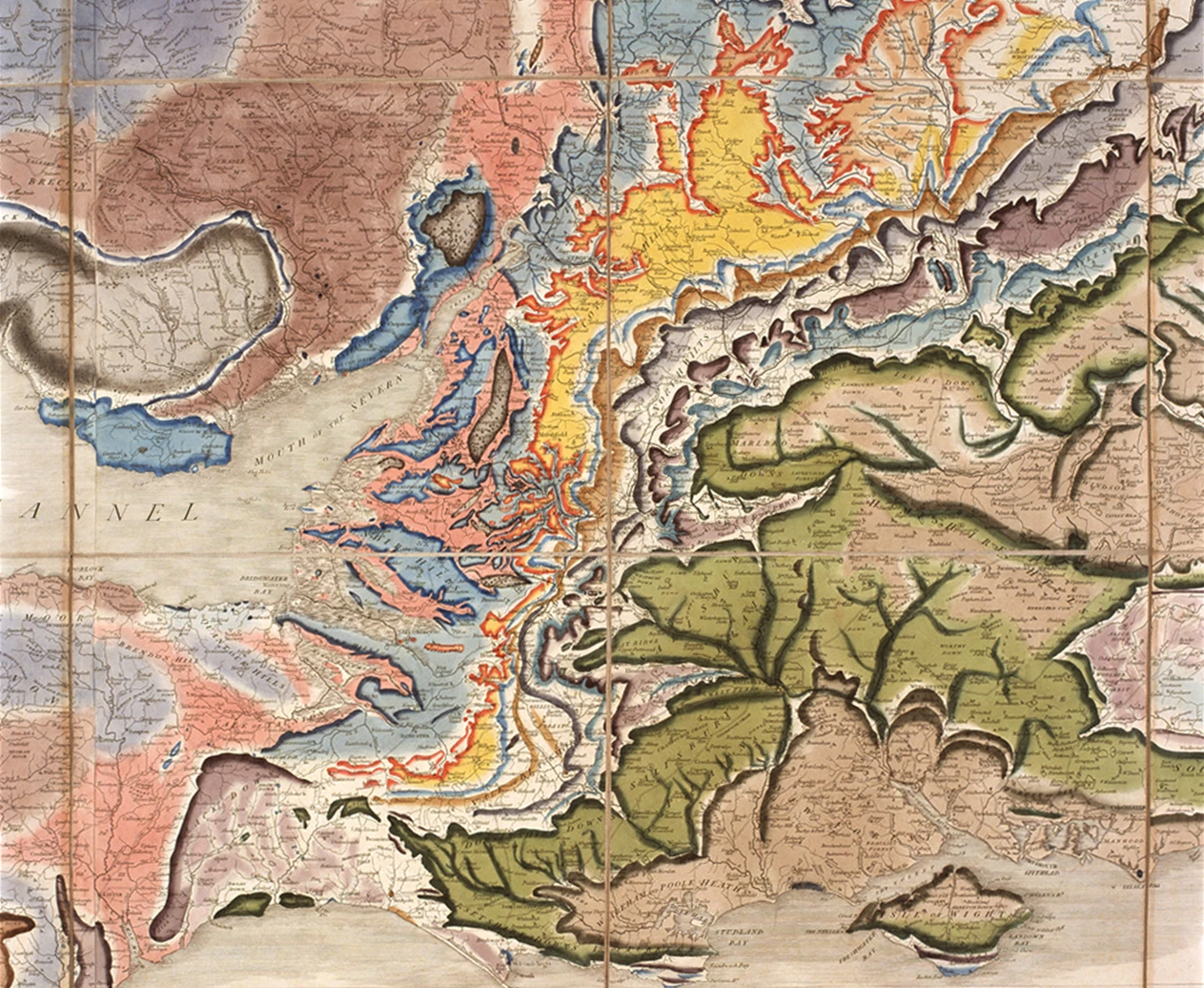
William Smith and the Birth of the Geological Map

Tom Sharpe (Lyme Regis Museum and Cardiff University, former Curator of Palaeontology and Archives in Amgueddfa Cymru – National Museum Wales), 30 November 2015

William Smith and the birth of the geological map

Geological maps are fundamental tools to a geologist. Displaying the distribution of different types and ages of rocks, they are the first step to understanding the geology of a place and key to the search for raw materials. Today, the whole of Britain has been mapped, largely through the work of the official agency, the British Geological Survey. But two hundred years ago, geology was a new science and the Survey was yet to be established. The industrial revolution was in full swing and the demand for coal, iron and limestone was huge. Landowners, keen to find coal on their properties, were being exploited by itinerant surveyors who, through greed and ignorance, persuaded them to fund searches where coal was never likely to be found.

William Smith, a surveyor from Oxfordshire, realised that a map showing where different rock layers - strata - came to the surface would be of value to both landowners and surveyors, not just for locating coal but also for agriculture, showing the different rocks and hence soils of different types. It would take him almost 15 years to complete.

Smith was born on 23 March 1769 in the Cotswold village of Churchill where his father was the blacksmith. He had a limited schooling but at the age of eighteen he was taken on as an apprentice surveyor in the practice of Edward Webb in Stow-on-the-Wold. He showed an aptitude for measurement and mathematics and an eye for the shape of the land. In 1791 Smith was sent to survey and value coal mines in the Somerset coalfield south of Bath, and two years later was appointed to survey the route for a new canal to transport coal from the mines.

Discoveries

During the six years that Smith worked on the Somerset Coal Canal, he made two fundamental discoveries. The canal was to be constructed in two branches in adjacent valleys and Smith noticed that the sequence of rock layers was not only the same in each valley but that the layers were always tilted towards the southeast. During his travels around the country to examine other canal routes, Smith realised that the strata of southern England always occur in a regular order and all were tilted in the same direction. His other discovery was the realisation that certain fossils were associated with particular strata; this meant that he could use the fossils to identify where a layer of rock lay in the sequence of strata.

The practical application of these discoveries was immediately obvious to Smith. Coal occurs in association with grey mudstone rocks, but such rocks appear in several places in the sequence of strata, both far below and above the coal. Using fossils, Smith could identify which grey mudstones were part of the coal beds and which were not, and with his knowledge of the sequence of strata, Smith could construct a map showing where the different rocks were present at the surface and where coal could be found.

William Smith and the birth of the geological map

When Smith explained his work to his friends Joseph Townsend and Benjamin Richardson in Bath on 11th June 1799, they persuaded him that he needed to publish his discoveries in order to receive credit for them and, possibly, reward. That evening, he dictated the order of the strata to his friends and soon handwritten lists of the sequence of rocks from the coal up to the Chalk were in circulation. Soon afterwards, Smith sketched a map showing the rocks of the Bath area and a small map showing some of the rock outcrops extending across England. In 1801 he published a prospectus of his intended great work on the strata of England and Wales.

Over the course of the next fifteen years, Smith travelled widely across the country, working on commissions as a land surveyor and drainer. As he travelled, he took note of the landscapes and the rocks, gradually accumulating the information he needed for his map.

Publishing the Map

William Smith and the birth of the geological map

The map was eventually published late in 1815 by John Cary, a leading London mapmaker. A Delineation of the Strata of England and Wales, with part of Scotland was a monumental work. At a scale of five miles to the inch, it was huge, over eight feet tall and six feet wide. It was spectacularly (and expensively) hand-coloured. It sold at prices starting at 5 guineas for the map in fifteen sheets, plus an index map and an accompanying Memoir. But although Smith’s Memoir listed over 400 subscribers to his map, few had paid in advance, and as his map had taken so long to complete, some of his subscribers had died. We do not know how many maps were sold, but it may have been in the order of only about 350.

During the years of its production, Smith continually altered the map as new information about the distribution of the strata became available to him and there are at least five different issues of the map known.

Within five years, Smith’s map was eclipsed by another, in places more detailed, map, the product of the collaborative effort of members of the Geological Society of London under its first President, George Bellas Greenough. And within twenty years of the publication of Smith’s map, detailed geological mapping came within the remit of a new, government-funded Geological Survey of Great Britain.

Smith’s beautifully-coloured map, however, remains an icon of the science of geology and is widely regarded as the first true geological map of any country. It also the more remarkable in that it represents the work of one man, who single-handedly mapped, for the first time, over 175,000 square kilometres of Britain.

Today the map is much sought-after by collectors and commands serious prices (currently there is one for sale in London for over £90,000). The number of copies still extant is currently being researched, but it is likely to be in the order of 150. The Department of Geology (now Natural Sciences) in the National Museum of Wales is in the unique position of holding nine complete or partial copies of the map, more than any other institution in the world, thanks to the foresight of its first Keepers, Frederick J. North, Douglas A. Bassett and Michael G. Bassett. North, in particular, rapidly established the Geology Department’s map and archive collections as one of the most important in the country and this has been built upon by his two successors. The National Museum is the only place in the world where almost all of the different issues of the map can be examined side by side.

A version of the article was published in Earth Heritage.

The Long Reach of the Ghost Slug

Ben Rowson, 11 August 2014

An adult Ghost Slug, about 7cms long.

An adult Ghost Slug, about 7cms long.

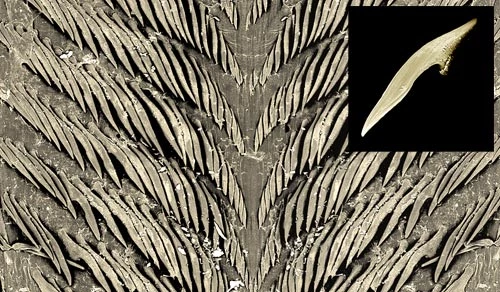
The Ghost Slug's blade-like teeth

The Ghost Slug's blade-like teeth, each about half a millimetre long. These are much longer and sharper than those of herbivorous species.

Close-up of the Ghost Slug's head.

Close-up of the Ghost Slug's head. The eyes, if present, would normally be at the tips of the two upper (longer) tentacles.

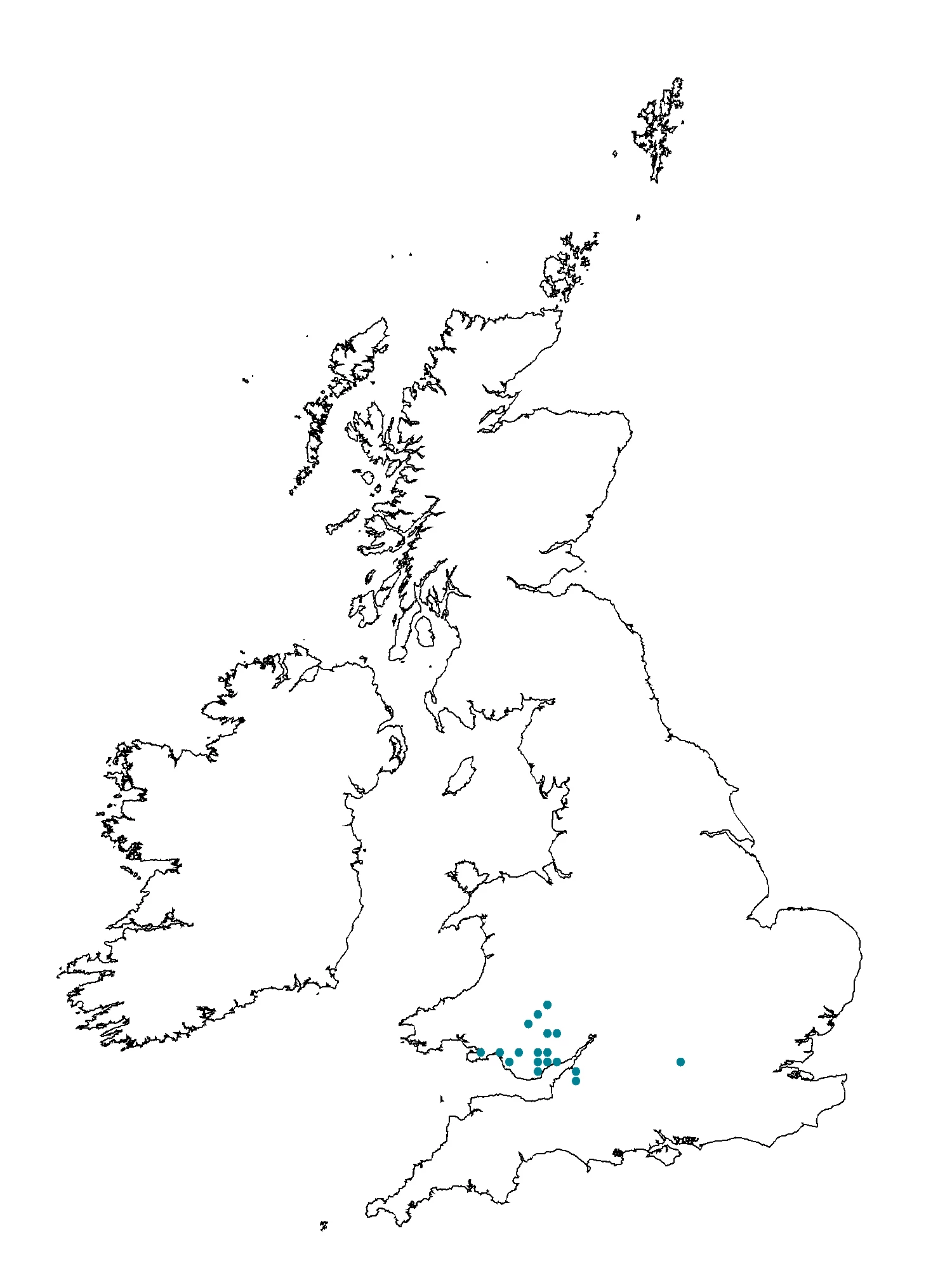
Verified Ghost Slug records received until Autumn 2013.

Verified Ghost Slug records received until Autumn 2013.

The bizarre Ghost Slug made headlines in 2008 when described as a new species from a Cardiff garden. When the first specimens were found, very little was known about this animal. The story since then connects our collections and specialist expertise with sharp-eyed members of the British public, recording networks, other taxonomists in Europe, and the media to show how a picture is emerging.

The species

Emphasizing its spooky nature, we gave the species the scientific name Selenochlamys ysbryda, based on the Welsh word ysbryd, meaning a ghost or spirit. The common name “Ghost Slug” soon became popular. Identifying it with the obscure genus Selenochlamys was a specialist task and required dissection of several specimens including our holotype. (Incidentally, Selenochlamys already combines the Greek words for a cloak, and Selene, goddess of the moon, but “Moon-Cloaked Ghost Slug” sounded a little too melodramatic.)

The Ghost Slug is strange in many ways. It is extremely elusive, living up to a metre deep in soil, only rarely visiting the surface. It seldom occurs in large numbers. This makes it an unusually difficult slug to look for, especially in other people’s gardens or other places that cannot be dug up.

It is also very distinctive. After having examined one, most agree that it is unmistakeable in future (haunting, perhaps?). The slug is ghostly white, and almost eyeless. It does not eat plants, but kills and eats earthworms, whose burrows it can enter with its extremely extensible body. This differs from that of most other slugs in having the breathing hole right at the tail, and in retracting like the finger of a glove, appearing to suck its own head inside-out. Unlike some British slugs, it can be identified with certainty from a good photograph. The photos here show some similar species often confused with it.

This combination of being elusive and distinctive makes the species perfect for a public recording project. We needed to know more, not just out of curiosity, but because the species might pose a threat to earthworm populations. It appeared to have been introduced from overseas, i.e. to be an alien or non-native species, whose spread might cause concern. We thank the then Countryside Council for Wales (now part of Natural Resources Wales) for funding early survey work and information dissemination in 2009, and others who have spread the word.

Contributions from the public

Since 2008, responses from over 300 people all over the UK (and a few from overseas) have been received and replied to. A large proportion were misidentifications, but many were correct and over 25 populations of Ghost Slugs are now known. These verified records have been submitted to the National Biodiversity Network via the Conchological Society of Great Britain and Ireland. We thank all respondents for their efforts, without which almost none of the populations would have been identified.

As the map shows, the Ghost Slug is widespread in south-east Wales, occurring in all the main Valleys and in the cities of Cardiff and Newport, and at two sites in Bristol. It remains, however, rare or absent in some nearby areas (such as Swansea) and by no means occurs throughout this region. Virtually all the records are from gardens, allotments, or nearby roads and riversides in populated areas. This is also true of an unexpected outlier, reported in May 2013 from Wallingford, Oxfordshire, which might indicate an eastward spread. The species is evidently firmly established in Britain and has survived the unusually cold, dry, or wet winters of the last five years.

Contributions from specialists

This species has had at least 10 years to be spread around Britain, but has not yet been seen elsewhere in Western Europe. The earliest records are from Brecon Cathedral in 2004 (in a 2009 paper by German-based taxonomists) and from Caerphilly in 2006 (on a pet invertebrates forum). We expected its origin to be in the Caucasus Mountains of Georgia and Russia or in northern Turkey, where other Selenochlamys occur. However, a 2012 paper by a Ukraine-based taxonomist described a museum specimen of S. ysbryda collected in Crimea in 1989. This makes some sense – Crimea has a number of endemic molluscs, and several alien species now in Britain were originally described from the region. The UK also has a history of conflict and trade with Crimea (there is even a Sebastopol near a slug population in Cwmbran!) making a direct, accidental introduction plausible.

DNA was sequenced from six specimens of the Ghost Slug, from Cardiff, Newport, Bristol, and Talgarth as part of our recent studies on British Slugs. The sequences were all but identical, supporting the theory that the species is not native to the UK.

Is it really a Ghost Slug?

If you are going to report a sighting, please ensure that your slug is a true Ghost Slug (Selenochlamys ysbryda). This can be done by looking at the mantle and the eyes. The mantle (indicated by the grey lines) looks like a layer of skin through which the breathing hole is often visible.

This Ghost Slug has a tiny, disc-shaped mantle at the rear end of its body. It has no eye spots on its tentacles (indicated by the arrow).

Other white or pale slug species have a large, cloak-like mantle over their “shoulders” near the front of their body. They have black eye spots at the tips of two of their tentacles.

The two shown here are the Netted Field Slug (Deroceras reticulatum) and Worm Slug (Boettgerilla pal lens). These species are very common in gardens, so there is no need to report them to us.

The media

The Ghost Slug was named one of the "Top 10 New Species of the Year" for 2009 by the US International Institute for Species Exploration. It has featured in exhibitions in Cardiff and Bristol, and even in school exam questions. It has also appeared in several books including Animal (Dorling Kindersley, 2011) and, most recently, in our own 2014 guide to the slug species of Britain and Ireland.

Further sightings

To monitor any spread or document behaviours we are still interested in future observations of Selenochlamys ysbryda, verified with a specimen or photograph. Please ensure that they are not the Netted Field Slug Deroceras reticulatum, shown above. To report a Ghost Slug, email

Ben Rowson .