: Wales in the World

Captain Scott sails from Cardiff

David Jenkins, 9 June 2010

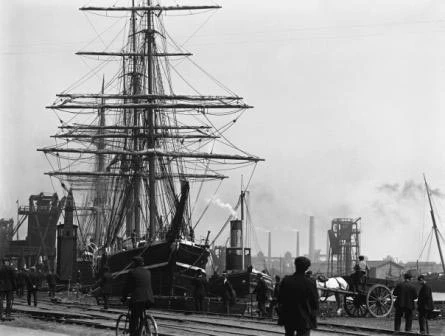
The Terra Nova loading in Bute East Dock, Cardiff, June 1910

The Terra Nova loading in Bute East Dock, Cardiff, June 1910

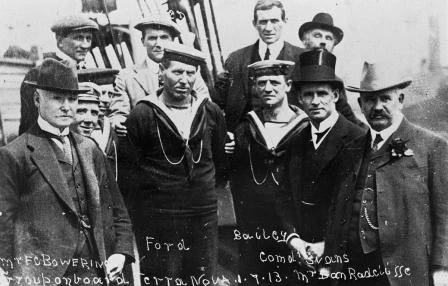
Aboard the Terra Nova in Cardiff, 17 June 1913.

F.C. Bowring (front left) and Daniel Radcliffe (front right) with Commander E.R.G.R.Evans (in top hat) aboard the Terra Nova in Cardiff, 17 June 1913.

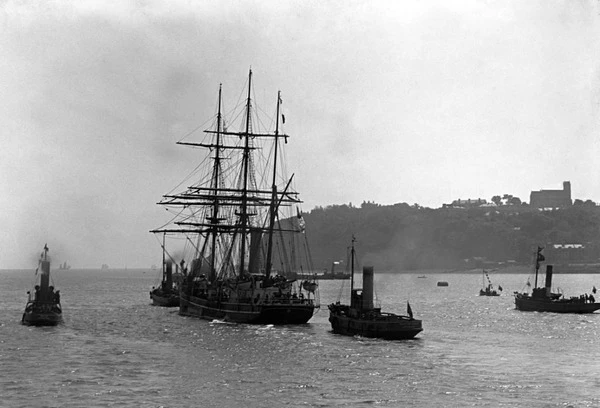
Scott's Terra Nova leaving Cardiff, 15 June 1910

Scott's Terra Nova leaving Cardiff, 15 June 1910

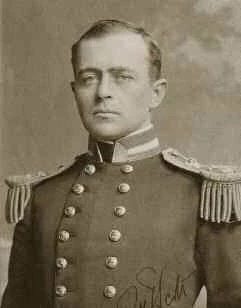
Robert Falcon Scott (1868-1912) in about 1905

Robert Falcon Scott (1868-1912) in about 1905

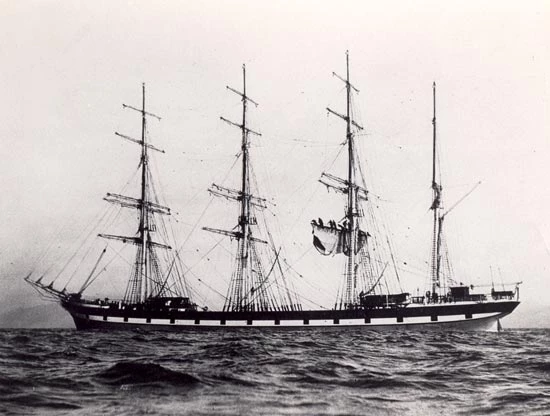
The SS Terra Nova

On 15 June 1910 a large, excited and noisy crowd cheered a heavily laden ship as she left the Roath Basin in Cardiff's docklands. SS Terra Nova was headed south — to Antarctica. On board were Captain Robert Falcon Scott and members of his British Antarctic Expedition , who aimed to be the first to reach the South Pole.

Welsh Coal

The Terra Nova had arrived in Cardiff five days earlier to finish preparations for the voyage and to take on fuel. 300 tons of Crown Patent Fuel, 100 tons of steam coal and 500 gallons of engine and lamp oil were donated by Welsh coal companies. All the cooking utensils were given by the Welsh Tin Plate Company of Llanelli and even Scott's sleeping bag was bought with funds raised by the County School in Cardigan. In addition to support in kind, a further £2,500 was raised in Cardiff, more than from any other city. Locally, the largest individual donors, and two of the expedition's most enthusiastic supporters, were the leading Cardiff shipowners Daniel Radcliffe and

William J. Tatem . They played an important role in fund-raising and raising sponsorship from throughout the south Wales business community and in the provision of dock facilities for the Terra Nova. There was so much support in Wales for the expedition that Cardiff was designated the Terra Nova's home port and it was to Bute Dock that she returned at the end of the expedition on 14 June 1913.

Why Cardiff?

In June 1909 William Davies, editor of the Western Mail, met with the young naval officer Lieutenant E.R.G.R. Evans, who was planning his own Antarctic expedition. Davies was very keen on supporting what he initially saw as a Welsh National Antarctic Expedition — Evans's grandfather was probably from Cardiff — and thought that there would be support for such a project from Cardiff businesses.

Soon afterwards, Evans learned of Scott's planned expedition and joined him as second-in-command, bringing with him the support of the editor of the Western Mail and the prospect of Welsh sponsorship. Davies was instrumental not only in rallying business and public support in Wales for Scott's expedition, but in persuading his compatriot, the Chancellor of the Exchequer, David Lloyd George, to provide a government grant of £20,000. Arguably, without the influence of Davies, the support of the Western Mail and the Welsh shipowners, Scott's expedition would not have left in time to reach the Pole in 1912.

Welsh connections

There was another Evans in the Terra Nova's crew, Petty Officer Edgar Evans from Rhossili, Gower. He had been to Antarctica with Scott on his Discovery expedition of 1901-4, and was chosen by Scott to be a member of his polar party on the 1910-12 expedition. Evans was the first to die on the return march from the South Pole.

Commemoration

Scott's links with Cardiff are commemorated by the lighthouse erected in 1915 in Roath Park Lake and the bronze plaque of 1916 on the staircase in City Hall. In June 2003 a commemorative sculpture was unveiled in Cardiff Bay.
Working Abroad - Welsh Emigration

9 February 2010

Welsh industrial emigration: The legacy

In the nineteenth and twentieth centuries, millions of people across the world moved to different countries looking for work. They wanted to improve their lives, try new working practices, or have adventures in different lands.

Many people left Wales and took traditional Welsh industrial skills with them. Some helped create continuing economic success in the countries they moved to. Some made huge fortunes, finding fame. Others led more quietly successful lives, settling down and raising families. Some returned to Wales after time abroad, others were never to see this country again.

Here we look at the various industries from Wales that supplied workers and expertise around the world. What were those industries and skills? Where did the workers go? What values and traditions did they take with them? What impact did their leaving have on the country they left behind?

Welsh coal mine, Kentucky

Welsh coal mine, Kentucky

Coal

"Wales experienced a spectacular boom in coal mining in the late 19th and early 20th centuries. The world looked to the Welsh mining industry for expertise and advice."

[see more]

Burra Burra copper mine, 1874.

Burra Burra copper mine, 1874.

Copper

"The world of copper smelting was led by Wales in the 19th century. The works around Swansea and Holywell supplied over 50% of the world's copper."

[see more]

 
John Davies of Talsarnau, Gwynedd, with his brother and friend seeking gold during the Australian Gold Rush

John Davies of Talsarnau, Gwynedd, with his brother and friend. They are seeking gold in Queensland, Australia in the 1880s

Gold

"Gold has been mined intermittently in Wales for thousands of years, but the industry never employed huge numbers of workers. Despite this, many Welsh emigrants joined the famous 'Gold Rushes' of the 19th century."

[see more]

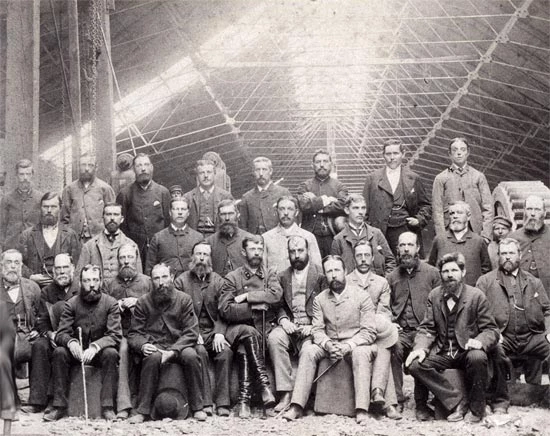
Welsh workers in the ironworks at Hughesovka

Welsh workers in the ironworks at Hughesovka, John Hughes is second from the right in the front row

Iron

"Wales was at the forefront of the development of the iron industry in Britain and it is therefore not surprising to find Welsh people leading the industry across the world in the nineteenth century."

[see more]

 
Bangor, Pennsylvania

Bangor, Pennsylvania

Slate

"Slate was used in Europe as a roofing material. Welsh slate was exported across the world for prestigious building projects. The discovery of slate deposits in different countries became one of a number of economic factors that influenced Welsh workers to move to those areas."

[see more]

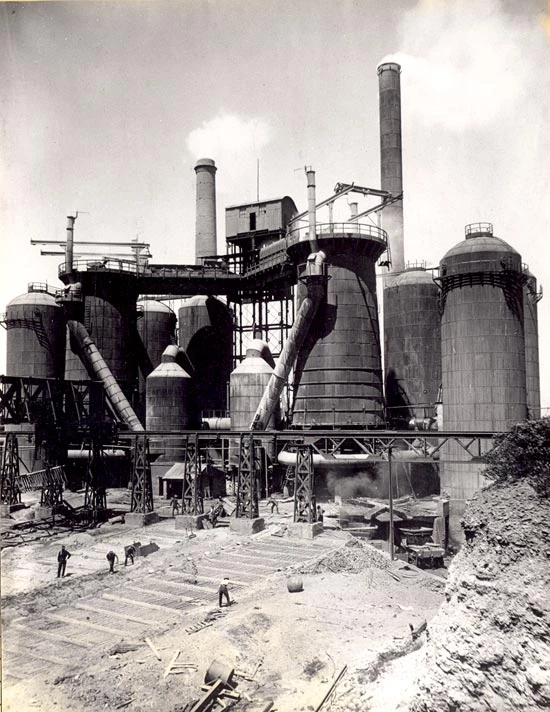
Lithgow Steelworks, New South Wales, Australia, 1920s

Lithgow Steelworks, New South Wales, Australia, 1920s

Steel

"Iron working centres often adapted themselves to the creation of steel, a stronger, more versatile material. Unsurprisingly Welsh workers played an important part in this change."

[see more]

 
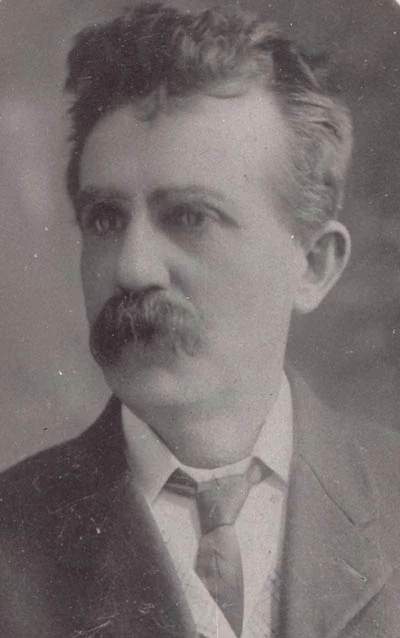
<em>Metropolis</em> built for William Thomas in 1887
Metropolis

built for William Thomas in 1887

Shipping

"Wales has a 1,200km (750 mile) coastline and a long tradition of seafaring. Welsh sailors travelled around the world, exporting Welsh goods and importing raw materials for industry. Welsh shipping lines were among the best-known in maritime trade and the company owners were amongst the richest."

[see more]

Quarrying stone, Randolph, Wisconsin

Quarrying stone, Randolph, Wisconsin

Metal Mining

"Wales has a 1,200km (750 mile) coastline and a long tradition of seafaring. Welsh sailors travelled around the world, exporting Welsh goods and importing raw materials for industry. Welsh shipping lines were among the best-known in maritime trade and the company owners were amongst the richest."

[see more]

 
John Williams

John Williams

Tinplate

"The manufacture of tinplate was another area where Wales held a virtual monopoly in the world. South Wales accounted for over 80% of world production in the early 1890s."

[see more]

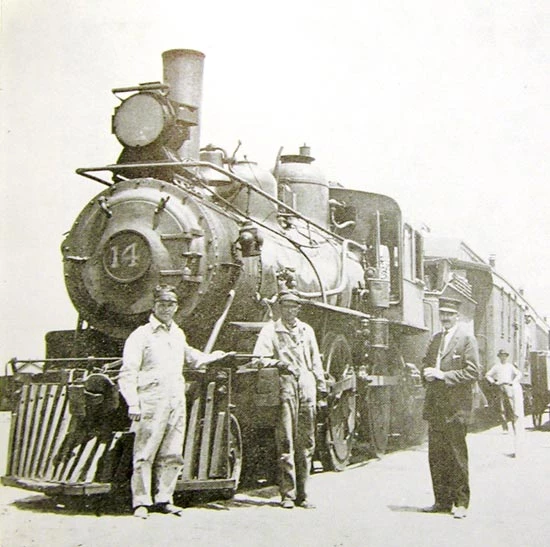
Morgan C. Jones, (on the right), nephew of Morgan Jones and working for the same company

Morgan C. Jones, (on the right), nephew of Morgan Jones and working for the same company

Other Industries

"Not all Welsh people worked in the 'traditional' heavy industries of Wales of course. Many worked in other industries and many transferred the skills they learnt in mines, foundries and works to other places of work."

[see more]

 
Cartoon from the Western Mail, 1928

Cartoon from the Western Mail, 1928

Migration Patterns

"Not everyone who left Wales for a new life abroad stayed away. Many people returned home for various reasons. This is called back migration."

[see more]

Breaker boys in Pennsylvania.

Breaker boys in Pennsylvania. Many Welsh boys in the USA began work in this way at an early age.

Radicalism

"Welsh industrial workers came from areas that had well organised unions. They had a reputation for standing up for their rights, safe working conditions and decent pay."

[see more]

 
Old Saron Church, the first Welsh church in Minnesota, 1856

Old Saron Church, the first Welsh church in Minnesota, 1856

Welsh Culture

"Like many emigrants, Welsh people took their culture with them to the new countries. In a strange, new place, keeping the songs, stories, languages and traditions of home alive helped emigrants to deal with the unfamiliarity."

[see more]

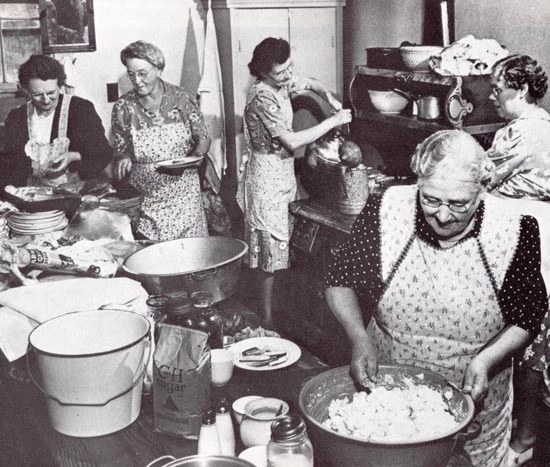
 Preparing food for a Gymanfa Ganu (singing festival), Peniel Church, Pickett, Wisconsin,1946.

Preparing food for a Gymanfa Ganu (singing festival), Peniel Church, Pickett, Wisconsin,1946.

Women

"The majority of industrial workers were men but women of course formed an important part of migrant communities."

[see more]

 
California, USA

California, USA

Place names

"It was common for emigrants of all nationalities to name their new settlements after places in their home countries. This provided a sense of identity and a link with home."

[see more]