: Work & Labour

200 Years of Industrial Innovation at Ebbw Vale

10 April 2007

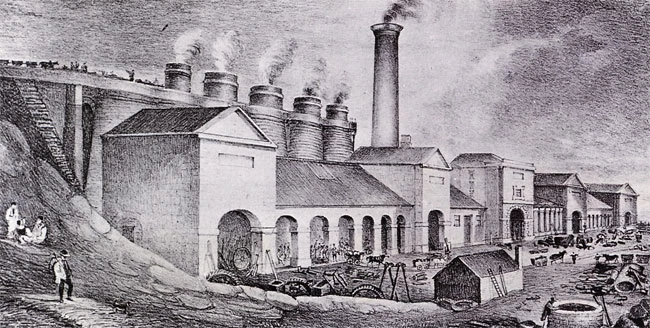
Abersychan Ironworks, 1866, run by the Ebbw Vale Co., 1852-83

Abersychan Ironworks, 1866, run by the Ebbw Vale Co., 1852-83

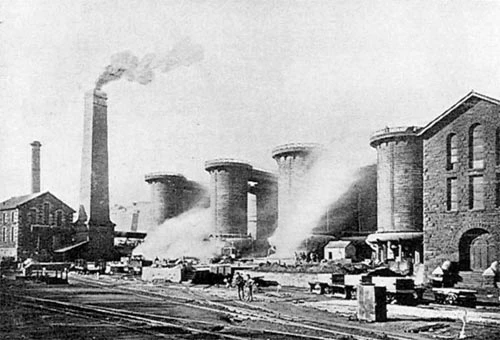
Ebbw Vale blast furnaces, about 1900

Ebbw Vale blast furnaces, about 1900

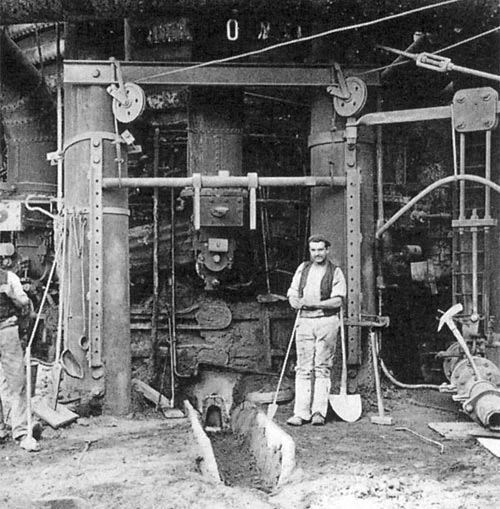
Blast furnace Taphole, 1907

Blast furnace Taphole, 1907

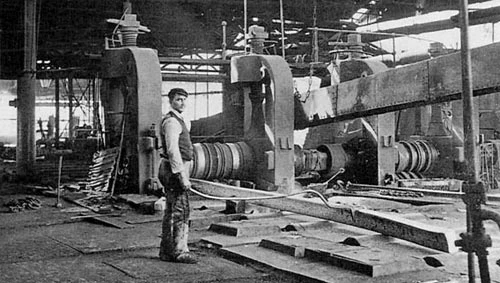
Steel works roughing mill, 1907

Steel works roughing mill, 1907

The Ebbw Vale Steel, Iron & Coal Company

In the mid-19th century the Ebbw Vale Steel, Iron & Coal Company was one of the largest iron producers in South Wales and was of international importance, not only in terms of size, but also for technical innovation.

100 years later, the works were the first in Britain to introduce American-style steel and tinplate production techniques and before the closure of the site at the turn of the millennium it was the largest producer of tinplate in Britain.

1790, the first Blast Furnace

Industry at Ebbw Vale extends back to 1790 when the first blast furnace was established. From 1796 to 1844 it was owned by the Harford family who built it into a successful concern. It supplied rails for the Stockton & Darlington Railway in 1829.

At the same time, the company began experimenting with the use of locomotives, one of the first of the South Wales ironworks to do so. In 1848 the Ebbw Vale Company was formed and the works went from strength to strength, absorbing four other ironworks at Abersychan, Sirhowy and Pontypool.

The first steel works in Britain

The company experimented in changing over from wrought iron to steel in 1854, installing one of the first steel plants in Britain in 1866.

The works declined in the 1870s and 1880s due to poor management, but the rapid expansion of the export coal trade kept the company afloat and saved the works from closure.

20th Century revival

The iron and steel works was revived in the early 20th century which, combined with a booming market for Welsh steam coal, helped make the company the largest integrated iron and coal company in Wales.

Closure and hardship

By the early 1920s it was employing no fewer than 34,000 men. The company was increasing its debts to finance its expansion at a time when the steel and coal industries declined sharply. This ultimately led to the works' closure in 1929 and its collieries being sold off.

Revival and expansion with Tinplate

The great hardship and unemployment in the town caused the Government to site Britain's first steel stripmill at Ebbw Vale and the works were rebuilt in 1936-38 under the ownership of Richard Thomas & Company, Britain's largest tinplate manufacturer.

The new works received a further boost in 1947 when Europe's first electrolytic tinplating line was installed.

Largest tinplate producer on Britain

Re organization in the steel industry following nationalisation in 1967 led to a run-down of steel making at Ebbw Vale, and the steel plant closed in 1978. Subsequently the works concentrated on tinplating and galvanising, becoming the largest tinplate producer in Britain. These works closed in 2002, ending over 200 years of industrial innovation at Ebbw Vale.
Radioactive Watches at Amgueddfa Cymru

2 April 2007

A number of items in the collection of watches at Amgueddfa Cymru 'glow-in-the-dark'. The material that causes this glow (luminescence) is radium. As radium is radioactive, the watches in question now have to be treated with care, making their conservation, accessibility and display a big challenge.

Radium

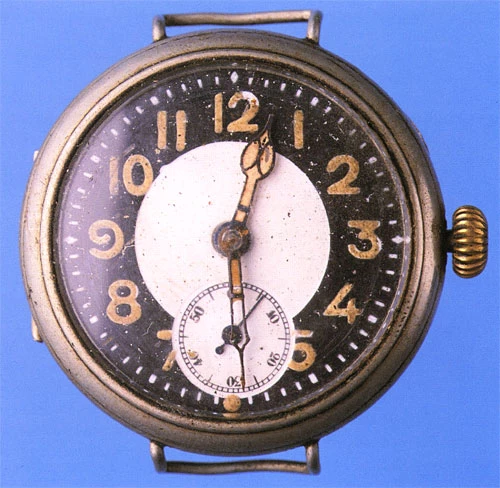
1918 gent's wristwatch showing degraded and missing areas of radium paint

1918 gent's wristwatch showing degraded and missing areas of radium paint

Marie Curie discovered Radium in 1898, and was the wonder of the new century - ironically thought to cure everything from arthritis to cancer. Mixing materials such as zinc sulphide and radium produces the glowing effect. In 1902, this luminescent material was first used to paint on the dials and hands of watches and clocks, allowing them to be seen in the dark.

Marie Curie eventually died from exposure to radium in 1934. Her notebooks, in which she was recording all her experiments are still too radioactive to handle today.

The Radium Girls

Glow-in-the-dark watches soon became popular with the mass market, and in the 1920s, production factories were set up where women would mix together glue, water, and radium powder into a glowing greenish-white paint that was then put onto the watches.

In order to paint neat and sharp numbers on the dials, the brushes needed a very fine tip. After a few strokes, the brushes would lose their shape, so the women "sharpened" the fine brushes by rolling the brush tips on their tongues to straighten the bristles, sometimes up to 6 times for every watch dial. Some even painted their teeth or applied glowing "makeup" as a novelty to show their friends. Many of these women would later die from cancer.

Testing for radioactivity at the museum

A radioactive contamination monitor (Geiger counter) was used to measure the radiation given off by the clocks and watches held in the collections housed at the museum. The highest readings showed dials to have a reading of 3000 counts per second against a naturally occurring level of 8 - 10 counts per second.

The measurable dose of Radium in a watch is apparently about 5 times the dosage from a standard chest X-ray.

The readings confirmed that the dials could be hazardous if exposure was not limited in some way. To combat this, the radioactive items were:

  • Enclosed in a sufficiently dense material;
  • Confined to a little used area of the stores;
  • Warning signs displayed as to the nature of the hazard.

All objects containing radium that were on public display were identified and withdrawn and put into safe storage.

Radioactive Dust

Although the storage of these items can be controlled and managed properly, the conservation of these objects is of concern. Since the dials are anything up to 100 years old, the paint breaks down into dust resulting in an increased risk of contamination from exposure to the radioactive dust.

There is the possibility of breathing in this dust by carrying out work on the dials, such as working on the mechanism, cleaning the dial, hands or covers. As a result, all items in the Museum that pose a radioactive risk are handled with suitable precautions taken to prevent any harm done to the conservator.

Radioactive decay

Interestingly, tests show that the brightness of the dials is not related to the level of radioactivity. Even if the dial paint is dim or invisible in the dark, it could still give a high reading of radioactivity, since although the reactive luminous chemical might have broken down, the radioactive element, radium will continue to be hazardous for many generations to come.

Kalighat Icons - Paintings from 19th century Calcutta

2 April 2007

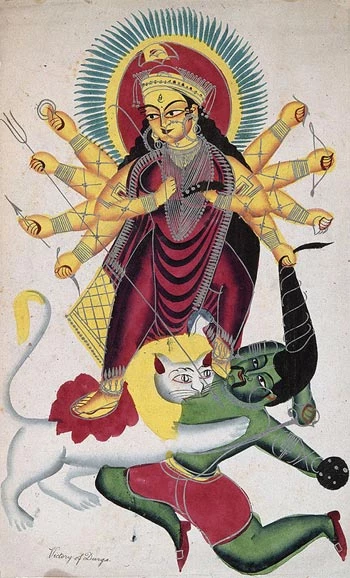
Kalighat painting
Kalighat painting
Kalighat Painting
Kalighat painting
Kalighat painting

The ‘Kalighat’-style paintings at Amgueddfa Cymru were brought over from India at around 1880. They represent a popular Indian art form that had died out by 1940. They are the work of professional artists called ‘patuas’ in Bengali and were sold for the equivalent of a penny each at markets and fairs in and around Calcutta, mostly at the gates of the famous temple at Kalighat, from where the style gets its name.

Storytelling

For centuries in Bengal, travelling professional artists known as &;lsquo;patuas’ or ‘chitrakars’ painted pictures or ‘pattas’ on cloth or handmade paper. These pictures were sewn together to make long scrolls of images. These artists toured rural villages, unrolling the images as they recited or sang the story. Patua families living in rural areas near Calcutta continue the tradition to this day.

Patuas move to the city

By 1806, some patuas had moved to the Calcutta – the biggest bazaar in Bengal. This new urban market had huge potential. In addition to residents, seasonal visitors to Calcutta wanted affordable souvenirs. With cheap machine-made paper and manufactured paints, the essential characteristics of the style emerged. Designs were kept simple, to be repeated as often as required according to the popularity of the picture. As demand increased, the detail in the scrolls was abandoned.

Traditions and religion

Certain Hindu traditions guided the painter. Each Divinity had a particular meditational formula – dhyan mantra – which the painters attempted to produce in line and colour. The traditional stories relate the appearance and actions of the gods and goddesses with their complexions, poses, mounts and weapons, which all had to be drawn correctly.

Hindu images and Muslim festivals

As Calcutta was extremely cosmopolitan, in addition to the Hindu images, the important Muslim festival of Muharram is also represented. It is possible that many Kalighat artists accepted beliefs from both the Hindu and Muslim faiths, as many of the scroll painters still do, having two personal names, one from each tradition.

The origin of the Kalighat Collection

The origin of the collection at the Museum is unknown before 1954. Assuming they form a single group, it is likely that they were acquired in Calcutta some time around 1873. The original owner was possibly French.

A collection now in the Bodleian Library, Oxford, was purchased between 1860 and 1870, and contains similar images. The collection is also similar to the seventy-three items in the Victoria and Albert Museum, London, acquired in India between 1865 and 1893.

The fall of the Kalighat style

1870 seems to have been the time when the popularity of these paintings reached its peak. To speed production, some families tried using a lithographic outline during the 1840s, but did not survive many years. It was the chromolithograph, capable of even brighter colours and a huge print run, which ultimately undercut the hand-painting families and took over the market and by the 1930s this popular art form had died out completely.

Sadly, very few of the thousands of Kalighat pats produced during the nineteenth century survive in India today, either in museums or private collections. They were never bought by the rich, who considered them unworthy of the name of art. In the poorer homes, the lack of protection from both the humid climate and physical damage soon destroyed the inherently weak cheap paper on which the patuas had worked their art.

Further reading

W. G. Archer, Kalighat Paintings, London 1971
Balraj Khanna, Kalighat – Indian Popular Paintings, London, 1993
Hana Knizkova, The Drawings of the Kalighat Style, Prague, 1975

Lost photographs uncover unique snapshot of rural Wales

22 March 2007

An unique collection of photographs from the turn of last century, rescued from decay and neglect, give an rare insight into life in rural Cardiganshire.

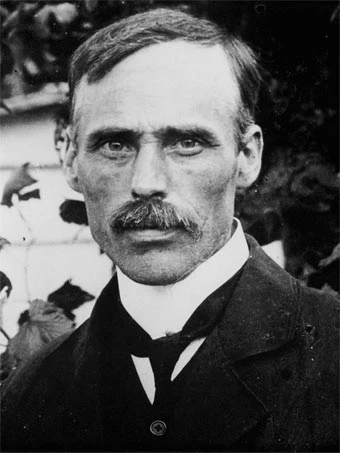
Tom Mathias (1866–1940)

Tom Mathias (1866–1940)

Luck often plays a big part in uncovering many important museum acquisitions, and this was certainly the case in the discovery of a fine collection of historic photographs, discovered in 1990 and obtained by Amgueddfa Cymru.

Only good luck could explain the fact that Maxi Davis, an experienced professional photographer, was told of the existence of boxes of very old glass negatives. What else but luck could explain the fact that those same negatives should have survived decades of neglect stored in kitchen cupboards and out-houses.

Aberdyfan, the house in question, was being cleared following the death of the owner, Mr James Mathias. The photographs had been taken by his father Tom Mathias during the turn of the last century.

Outstanding collection of photographs

Maxi Davis's passion for historical photography prompted him to salvage the negatives and to print those still in useable condition. What they revealed was an outstanding collection of photographs taken around Cilgeran and the Teifi Valley in west Wales at the turn of the century.

Thomas Mathias (1866–1940)

Tom Mathias was a self-taught photographer. He captured the daily life of his community with a keenness of eye and technical clarity rarely shown by better-known photographers using far more sophisticated equipment. He was born in Cilgerran in 1866, the son of a master mariner. Little is known of his early life, or what started his interest in photography. In 1897 he married Louise Paquier, a Swiss governess with a local gentry family, the Gowers of Castell Malgwyn.

The couple settled in Aberdyfan and Tom Mathias combined running the smallholding with his career as a photographer. They had two children, James, born in 1902, and Tilla, born in 1898.

Despite his lack of formal training, in 1897 he was confident enough to describe his occupation as 'photographer' on his marriage certificate. He is also listed as a photographer in local trade directories between 1901 and 1920. What happened in 1920 is unclear, but few of the surviving photographs appear to have been taken after that date.

Capturing Rural Life

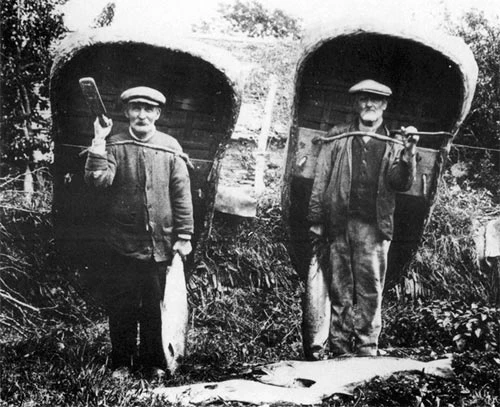
Cilgerran coracle-men

Cilgerran coracle-men William Johnson and John Morgan with their haul of fish, 1905.

Like most rural photographers, Mathias made his livelihood recording important family occasions and over half the images in the collection feature weddings, christenings and family groups, demonstrating an originality of approach which frequently cuts through the formality of the poses to capture the humanity and personality of the subjects. According to those who knew him, Tom Mathias had infinite patience in setting up his shots and nowhere is this patience better rewarded than in his splendidly informal photographs of children.

Tom Mathias took many photographs of the general daily life in and around Cilgerran, documenting an unequalled record of the social and economic life of his community. Not only did he take an interest in special events such as the return of the local regiment from the Boer War, Sunday school outings and village celebrations, but his camera also recorded the mundane and ordinary aspects of life.

Working life

Unusually for a collection of historic photographs, the material is fully documented. As well as saving the negatives Maxi Davis and his wife Peggy staged a series of exhibitions of the photographs in Cilgerran and the neighbouring villages, managing to establish the location and date of almost every photograph, as well as the identity of virtually every individual who appears in them!

This remarkable collection was nearly lost forever had it not been for the set of circumstances that saw these photographs rescued from neglect and decay to become an important museum collection preserved for future generations.

Cilgerran High Street, taken in 1905.

Cilgerran High Street, taken in 1905.

The old clock at the National Slate Museum in Llanberis, north Wales

22 February 2007

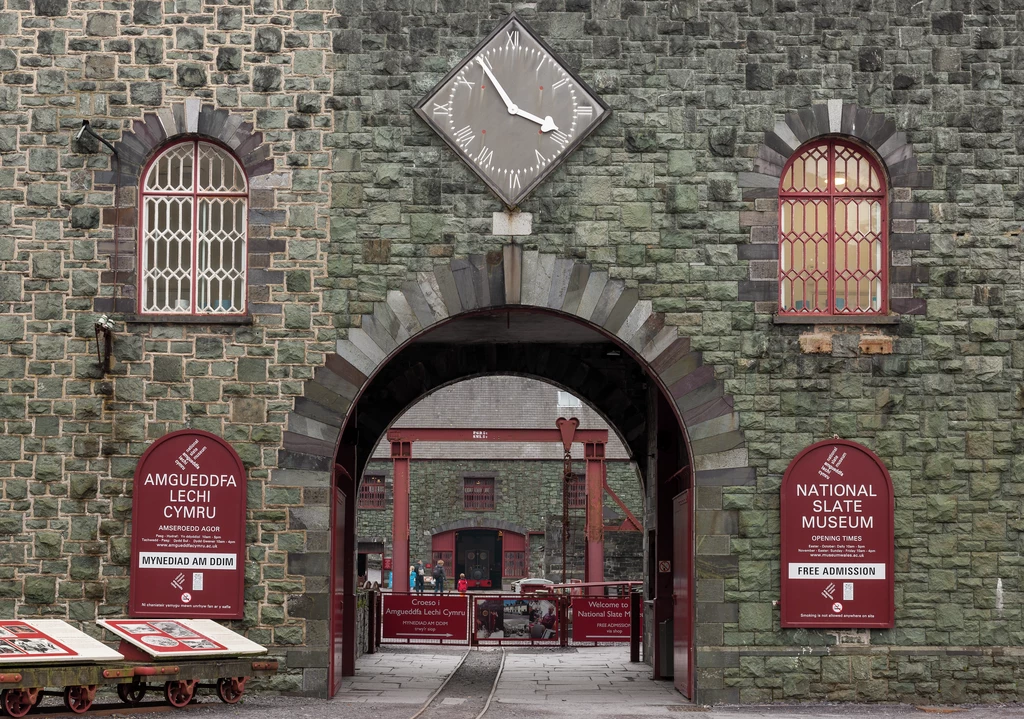
The clock above the entrance to the Welsh Slate Museum

The clock above the entrance to the Welsh Slate Museum

A distinctive feature of the National Slate Museum building is the diamond-shaped face of a clock on the front of the Museum. On the roofline above it is a small pagoda-like structure containing a bell and hammer, connected to the clock by a wire rope.

The mechanism is installed on the second floor of the building. It was manufactured in Shropshire but it is not possible to read the date. Early photographs of the building, erected in 1870, do not show the clock, so it was probably not installed until the mid-1890s

Timekeeper for quarry explosions

The Museum is located within the Victorian workshops of the Dinorwig Quarry. The clock helped ensure the trains taking slate from the quarry to the Company's port at Port Dinorwic were always on time. The clock was more than simply a timekeeper for the workshops though. At some stage in its life, a series of electrical connections were added. At set intervals the clock transmitted an electrical signal to other parts of the Quarry's large site. This was to ensure that blasting happened on time. Such systems were usually marketed as 'pulsynetic clocks'. They were sold by well-known makers such as Gent, Leicester. At Dinorwig, however, a home-made, reliable solution was produced.

100-year-old graffiti

A power supply was required to provide the electrical signals. This was supplied via wet cells, or accumulators, stored alongside the clock. One of the discoveries made when renovating this part of the building, in the mid-1990s, was the original graffiti on adjacent walls and panels noting the dates of battery charges. On June 10, 1909, for example, Willie Owen Williams and George Hughes charged the batteries.

Cleaning the clock

Although well cared for over the years, by 2001 the clock required specialist attention. J.B. Joyce and Company, the manufacturers, were still in existence. They were established at Whitchurch in Shropshire, and are still there over three hundred years later. Unfortunately, they have no records of individual clocks manufactured, but were prepared to visit the Museum to inspect the clock. The mechanism ended up being returned to the Joyce workshops where it was cleaned and serviced. The clock was then reassembled, brought back to the Museum and commissioned. Today the clock works smoothly and to a good degree of accuracy.

Village timekeeper

At a time when few people possessed watches, the clock installed in the Dinorwig Quarry workshops was a timekeeper for its surrounding community, with its bell being audible to most of those living in and around Llanberis. To quote one local author:

'Torrai ar y distawrwydd yn nhrymder nos, a chlywyd aml i glaf yn cwyno yn y bore,"Chysgis i ddim gwerth neithiwr - clywed yr hen gloc yn taro pob awr nes iddi 'leuo"'

(It relieved the silence of the depth of night, and quite frequently one would hear of those who were unwell complaining the next morning, "I didn't sleep well last night - I could hear the old clock striking each hour until it dawned".)

The old clock continues to measure the passage of time into the 21st century at Llanberis.