: Work & Labour

Cardiff – Coal and Shipping Metropolis of the World

18 April 2007

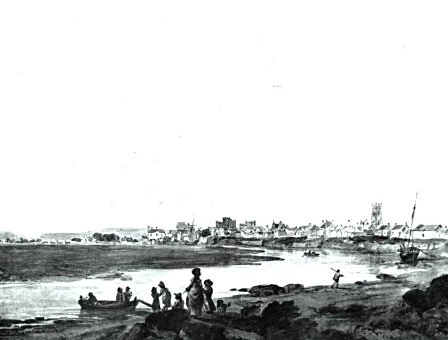
Cardiff: the pre-industrial port. Two sloops lying in the River Taff, as portrayed by Paul Sandby in 1776.

Cardiff: the pre-industrial port. Two sloops lying in the River Taff, as portrayed by Paul Sandby in 1776.

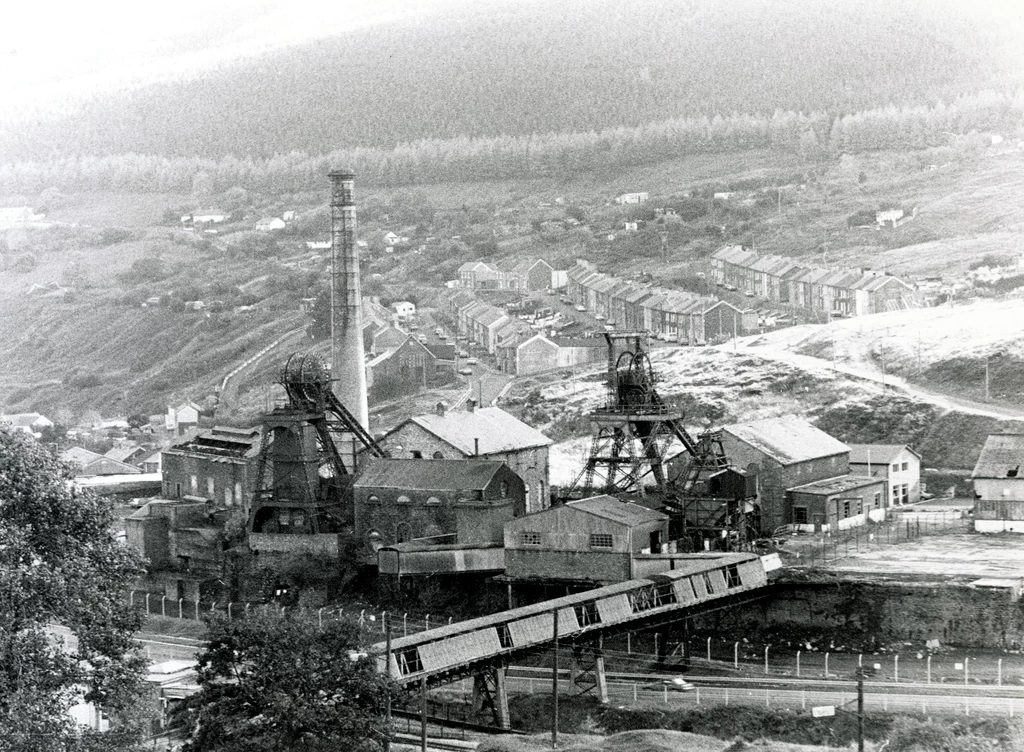
Cardiff: the industrial port. An aerial view showing the completed dock system about 1948.

Cardiff: the industrial port. An aerial view showing the completed dock system about 1948.

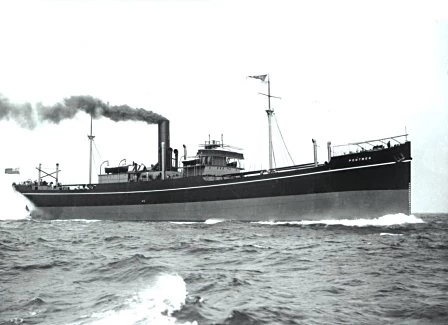
A typical Cardiff tramp steamer - the SS Pontwen, built in 1914.

A typical Cardiff tramp steamer - the SS Pontwen, built in 1914.

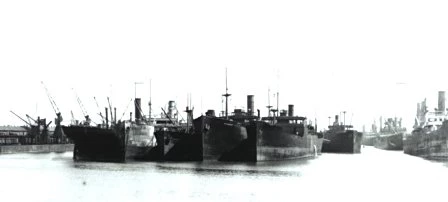
The age of depression. Laid-up ships in Cardiff docks about 1930.

The age of depression. Laid-up ships in Cardiff docks about 1930.

Cardiff: the port transformed. Modern retail developments now stand where Cardiff once exported coal to the world.

Cardiff: the port transformed. Modern retail developments now stand where Cardiff once exported coal to the world.

Second Marquess of Bute

In 1862, 2 million tonnes of coal were exported from Cardiff Docks ; by 1913, this had risen to nearly 11 million. This was the heyday of the coal industry before the depression of the 1930s.

Cardiff was the boom town of late Victorian Britain. For a few years before the First World War, the tonnage of cargo handled at the port outstripped that of either London or Liverpool. Yet in the late 18th century, Cardiff's trade was all transported by two small sloops sailing to Bristol on alternative days. So what had led to this transformation?

It was the growth of the iron industry in the South Wales Valleys that caused Cardiff to develop a port. In 1794, the

Glamorganshire Canal was completed, linking Cardiff with Merthyr, and in 1798 a basin was built, connecting this canal to the sea. Cardiff's foremost landowner, the 2nd Marquess of Bute, built West Bute Dock in 1839. Two years later, the Taff Vale Railway was opened.

Coal overtakes Iron

From the 1850s, coal began to replace iron as the industrial foundation of south Wales. South Wales steam coal was what oil is today, with yearly exports reaching 2 million tonnes as early as 1862. A further dock, the East Bute, was opened in 1859, but following the death of the 2nd Marquess in 1848, the Bute Estate trustees were over-cautious and reluctant to invest in new dock facilities.

Coal exports reach 9 million tonnes

Frustration at the lack of development at Cardiff led to rival docks being opened at Penarth in 1865 and

Barry in 1889. These developments eventually spurred Cardiff into action, with the opening of the Roath Dock in 1887, and the Queen Alexandra Dock in 1907. By then, coal exports from Cardiff totalled nearly 9 million tonnes per annum, much of it exported by locally-owned tramp steamers.

Tramp steamers and steamships

Cardiff's first steamship was the little Llandaff of 1865, and she was the first of a fleet of steamships that grew rapidly in the late 19th century. By 1910, there were some 250 tramp steamers owned at Cardiff. Each day, the owners would meet to arrange cargoes of coal for their ships in the opulent

Coal Exchange in Mount Stuart Square.

The coal export industry reached its peak in 1913, when 10.7 million tonnes of coal were exported from the port.

First World War

After the First World War, there was a significant increase in shipping in Cardiff, with 122 shipping companies in business in 1920. The boom proved short-lived, however; oil was growing in importance as a maritime fuel, and the terms of the Treaty of Versailles soon flooded Europe with cheap German coal. By 1932, in the depths of the depression, coal exports had fallen to below 5 million tonnes and dozens of locally owned ships were laid-up. It was an era of depression from which Cardiff never really recovered, and despite intense activity at the port during the Second World War, coal exports continued to decline, finally ceasing altogether in 1964.

Modern day Cardiff

Today, the port of Cardiff presents a very different picture from that existing a century ago. The waterfront has been totally transformed. Exclusive flats now stand where coal hoists once stood, and the rough and ready sailortown pubs have been replaced by sedate bistros. Only two docks, the Roath and the Queen Alexandra, remain in use, and just two shipping companies remain.

There is still some trade in timber, oil, and containers, but the days when the port was packed with tramp steamers, shrouded in coal dust as they loaded the 'black diamonds' of the valleys of south Wales, will never be seen again.

Background Reading

Cardiff and the Marquesses of Bute, by John Davies. Published by University of Wales Press (1981).

Cardiff Shipowners, by J. Geraint Jenkins and David Jenkins. Published by the National Museums & Galleries of Wales (1986).

Coal Metropolis: Cardiff, 1970-1914, by Martin Daunton. Published by Leicester University Press (1977).
Welsh slate discovered hundreds of miles from the quarries of North Wales

18 April 2007

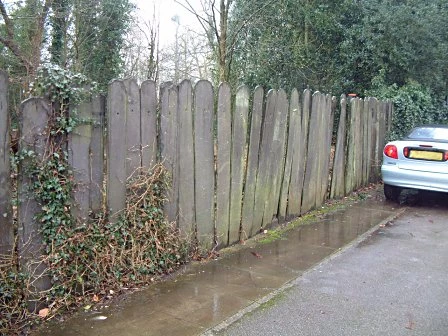
The slate pillar fence at Bisham (Windsor and Maidenhead)

The slate pillar fence at Bisham (Windsor and Maidenhead). Approximately 150m (164 yards) of this fence survives, although local residents remember it as once being significantly longer. The pillars of Bisham's fence typically extend about 180cm (5.9 feet) above ground level and must have a further 40cm (1.3 feet) or so below the ground. Each pillar is some 20cm (7.9 inches) in width and 3.5cm (1.4 inches) thick.

How did a slate pillar fence come to be built in the Thames Valley, 300km away from the slate quarries of north-west Wales?

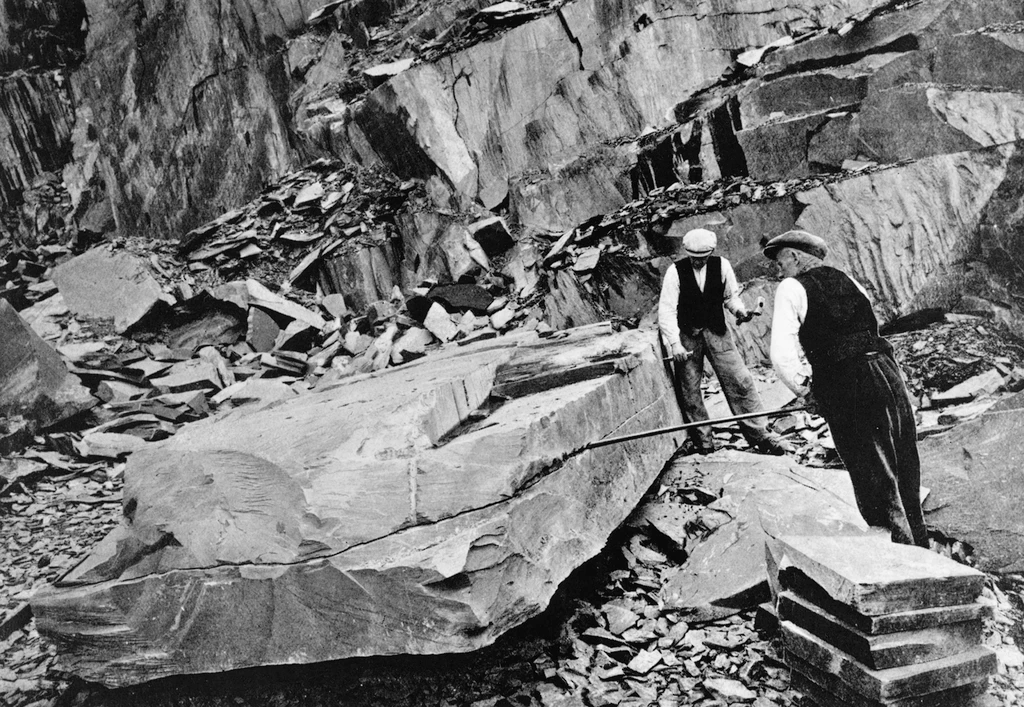
Slate pillar fences became common in north-west Wales from the middle of the 19th century. In 1861, the Penryhn Quarry at Bethesda, Gwynedd - one of the largest slate quarries in the world at that time - produced around 9,000 individual pillars. These pillars consisted of poor quality blue slate, typically about 150cm (4.9 feet) tall.

They were used to mark fields, gardens, railways lines and roads, with their simple construction being particularly well-suited to the harsh weather experienced by upland areas.

Despite their use around Wales's slate quarries, slate pillar fences are rarely found further a field. The discovery of a slate pillar fence at Temple House (now demolished) at Bisham, Maidenhead, is therefore extremely unusual. The bluish-purple colouring of the slate makes it certain that it was quarried in north-west Wales, probably at Penrhyn Quarry.

This raises the question of how a slate pillar fence came to be built almost 300km (186 miles) away from the source of the stone?

Temple House was built around 1790 for Thomas Williams, who owned the nearby Temple Mill copper works. Thomas Williams (1737-1802) was from north Wales originally and became the leading figure of the British copper industry. Williams employed the architect, Samuel Wyatt, to develop the Temple Mill copper works, and it is likely that Samuel also built Temple House.

Samuel Wyatt had very close links with the owners of the Penrhyn slate quarry. In 1782 he refurbished a building for Richard Pennant (later Lord Penrhyn), and in 1786 his brother became the general manager of the Penrhyn estate. This relationship ensured Samuel a regular supply of slates for his own business activities. In return, Samuel promoted the use of slate in the London area, using it for shelves, cisterns, lavatory-seats, window-sills and as a wall covering, as well as for roofing.

If the Temple House slate pillars had been supplied by Samuel Wyatt, their transport to Bisham could have been relatively simple. Even before the construction of a tramway from Penrhyn Quarry to the coast in 1801, there existed an efficient network of roads linking the quarry to the sea at Port Penrhyn.

From Port Penrhyn a fleet of vessels carried slate around the coast of the British Isles. The Wyatt family had an owning interest in many of these vessels. From London the cargo could be navigated up the Thames by barge.

There is therefore a great deal of circumstantial evidence linking the Bisham slate pillar fence with Samuel Wyatt and Penrhyn Quarry, and dating its construction to around 1790. But one aspect of the pillars' manufacture raises doubts about this. Some of the larger support pillars were clearly cut with circular saws - a technique which was not certainly used before 1805 and only became common from 1840.

One suggestion which unites these two strands of evidence is the possibility that the original fence was erected about 1790, but it had suffered from subsidence in the soft soil around Bisham. The result might have been a second order for Welsh slate around 1840 to rectify the problem.

The fence at Temple House may show evidence of the links between two of Wales's great industrialists, the copper magnate Thomas Williams and Richard Pennant of Penrhyn slate quarry, through the architect Samuel Wyatt. Both shared a common heritage, so what would have been more natural than for Thomas Williams and his architect to display the potential of Welsh slate beside his copper works at Temple Mill?

Background Reading

The Wyatts: an architectural dynasty by John Martin Robinson. Published by Oxford University Press (1979).

'Copper and Slate: Thomas Williams' Slate Pillar Fence at Bisham', by Dafydd Roberts. In The Marlow Historian, vol. 3, p16-21 (2003).

Moving a coalface to the museum

11 April 2007

When a miners' hospital closed in 2001, a working coalface that was used to exercise the patients for work again was dismantled and moved to the collections of Amgueddfa Cymru.

Talygarn House

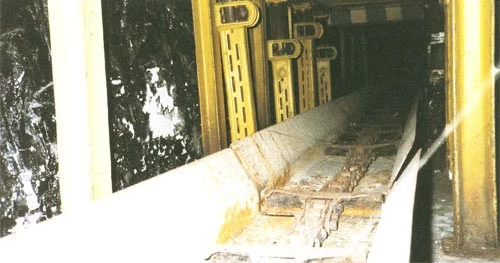
Talygarn House: a view along the full size model coalface

Talygarn House: a view along the full-size model coalface

Talygarn House, Pontyclun, south Wales, was a large stone mansion that became a hospital in 1880. The interior is decorated with wood panelling and painted ceilings. The house is surrounded by extensive parklands on which were grown, according to legend, specimens of every tree that can be cultivated in Britain.

Talygarn as a Convalescent Home

In October 1923, Talygarn House was opened as a miners' convalescent home, and in 15 years of its opening it had more than 41,000 patients.

In 1943, the Miners' Welfare Commission was asked to organise a rehabilitation service for injured mineworkers. Due to a serious shortage of manpower at that time, it was vitally important for injured colliers to return to work as quickly as possible. For this purpose Talygarn House was purchased as a centre for the coalfields of south Wales.

By 1964, 95% of patients treated at Talygarn returned to the mining industry. It continued to serve as a rehabilitation and physiotherapy centre until it was put up for sale in August 2000.

Miner rehabilitation and the 'Model Mine'

Due to the need to harden the men up to return to the collieries, a carpentry shop was provided where patients cut wood and sawed logs. Miniature stairs and static bicycles were available to exercise unused muscles.

Talygarn House was also equipped with a grand 'Model Mine' in which patients could get used to working back in a mining environment. The structure was a long concrete tunnel supported by arch girders. The roadway was equipped with rails and the metal framework known as 'horseheads', which prevented falls of stone on a real coalface.

Relocating the mine

In 2001, the contents of the 'Model Mine' were donated to Amgueddfa Cymru as a 'permanent reminder to visitors of the work of the Talygarn rehabilitation centre'.

The coalfaces were dismantled as if they were the real thing. Despite working in only four feet of height, the thirty-foot-long chain conveyor was successfully disassembled and removed.

All the items were safely transported to the Collections Centre at Nantgarw. The Talygarn donation is a unique survival of a complete thirty-foot section of a typical semi-mechanised coalface of the early 1960s.

Wales's smallest post office at St Fagans

11 April 2007

In 1992 Wales's smallest post office was delivered to Amgueddfa Cymru. Thanks to the generosity of Post Office Counters Ltd, who financed the project, the small brick building was dismantled, transported and then re-built at St Fagans National Museum of History by the Museum's specialist re-erected buildings team.

Village post offices have played an important role in community life throughout Wales for the past 90 years. By the 1950s, virtually every village had its own branch, from which mail was distributed, parcels were collected and people gathered to catch up on all the local news. The country postman/postwoman on their bicycle, and later, in the red-painted Morris Minor or Fordson van, helped to keep people in rural communities in touch with one another by maintaining links and regular contact.

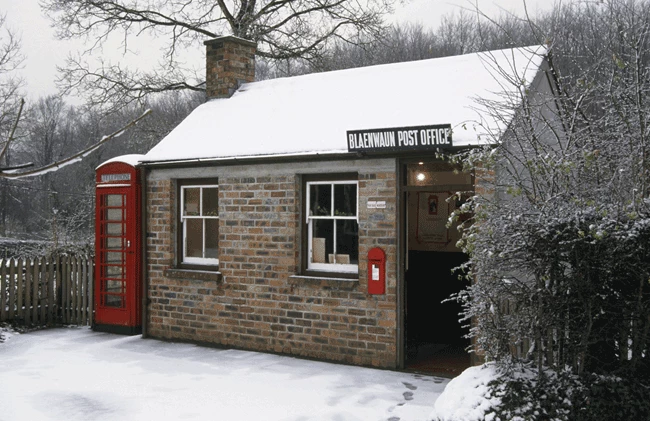
Wales's smallest post office at Blaenwaun, Carmarthenshire

Wales's smallest post office at Blaenwaun, Carmarthenshire

Blaenwaen Post Office at St Fagans National Museum of History

Blaenwaun Post Office at St Fagans National Museum of History

The Country Post Office

Of course, country post offices were very rarely housed in the impressive buildings of those found in towns. They usually occupied a corner of the village store or the front room of a house. Sometimes these post offices sold a range of items, but some relied on the sale of stamps, postal orders, licences and savings certificates as their only means of income.

Blaenwaun Post Office, located about eight miles north of Whitland in Dyfed, was one such business. It was built in 1936 by Evan Isaac, a stonemason and his cousin David Williams, a carpenter. The Post Office was run by Mrs Hannah Beatrice Griffiths (nee Isaac), Evan Isaac's daughter, who also ran the pub across the road, the Lamb Inn, with her husband.

Mail was brought daily from Whitland and was sorted at the Post Office on a low bench in the back room. It was delivered to the local community by Mrs Griffiths, who completed the eight-mile round journey on her bicycle before going across the road to work in the Inn. Any customers who arrived at the Post Office when the Griffithses were working in the public house could press a button which rang a bell behind the bar.

The Post Office, which measured just 5m long by 2.9m wide, comprised of two rooms: an outer serving room with a counter and an inner office or sorting room with a small fireplace and a bench under the window. A timber partition wall separated the two rooms. The internal walls were painted chocolate brown to a height of about a metre above the floor then cream to the ceiling, with a broad black band between the two.

A painted sign made of heavy tin sheet on a wooden board was fixed outside above the serving room window. It read BLAENWAUN POST OFFICE. A small post box was mounted against the wall between this window and the entrance door.

In the early days, there was a telephone on the counter for the use of the Post Office and, one assumes, the villagers. Later, a public kiosk was erected outside the small building. In the office was a War Department Receiver for receiving urgent messages in times of emergency.

Following Mr Griffiths' death in the early 1960s, the business was relocated to a new bungalow built by his daughter, Mrs Evanna James. The old Post Office stood empty from that time until it was offered to Amgueddfa Cymru in 1991.

It can be visited today at St Fagans National Museum of History in the 'village' section of the open-air museum, near the bakery and the tailor's shop. It has been refurbished to its war-time appearance, and represents a period of Welsh history not covered in any of the Museum's other buildings.