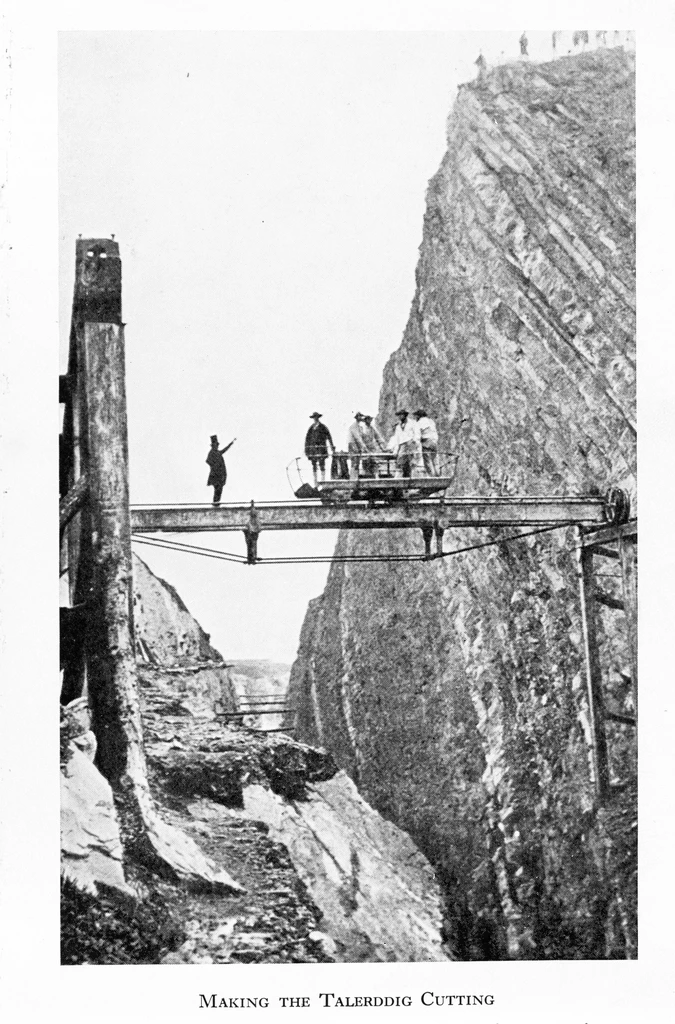
The industrial legacy of David Davies 29 July 2007 David Davies (1818-1890) This image shows him in a rare moment of repose. Private collection (Lord Davies) The completed Talerddig cutting, the deepest in the world at that time. Private Collection (Lord Davies) No.1 dock in 1913, when Barry docks exported 11m tons of coal. What appears to be a solid level surface in the right foreground of this scene in is fact water — thick with coal dust. David Davies of Llandinam The gifts and bequests of Gwendoline and Margaret Davies completely transformed the range and quality of Wales's national art collection. The sisters were the granddaughters of David Davies of Llandinam, one of the great entrepreneurs of 19th–century Wales. Gwendoline and Margaret Davies were the granddaughters of David Davies of Llandinam, one of the great entrepreneurs of 19th–century Wales. David Davies started in life as a tenant farmer and sawyer. He made his fortune during the industrialisation of Victorian Wales. He built much of the railway system in mid-Wales, became a pioneer of the coal industry in the Rhondda valley and was the driving force behind the construction of Barry dock in south Wales. Railways Starting with the construction of the Newtown & Llanidloes Railway in 1859, he became involved in the construction of a number of railways in mid-Wales, the Vale of Clwyd and Pembrokeshire. His greatest achievement as a railway engineer was the great Talerddig cutting on the Newtown & Machynlleth Railway, completed in 1862 and the deepest in the world at that time. Not all the ventures in which Davies was involved succeeded — the grandly named Manchester & Milford Railway reached neither destination! Coal – 'Davies yr Ocean' 1864 marked a decisive turning point in David Davies's career when he took out a pioneering mineral lease in the south Wales valleys. It took two years before the first pits were in full production. Five more collieries were opened by 1886. In the following year they were vested in a new public limited company, the Ocean Coal Co. Ltd. At the time of Davies's death in 1890, it was the largest and most profitable coal company in south Wales. From pit to port The crowning achievement of David Davies's career was the construction of the dock at Barry, south Wales. Davies and a number of fellow Rhondda colliery owners came together to solve congestion both on the Taff Vale Railway and at Cardiff's Bute docks. They promoted the construction of a railway from the coalfield to a new dock facility at Barry, then a tiny hamlet. Despite fierce opposition from the Bute faction, the dock opened in 1889. The application of wealth David Davies was a passionate supporter of Calvinistic Methodism — a strict non-conformist faith unique to Wales and distinct from Wesleyan Methodism. Like all of Gwendoline and Margaret's family he was a life-long Sabbatarian and teetotaller. It instilled in him a profound sense of philanthropy and public service. He gave generously to religious and educational causes. Having received a very basic schooling himself, the provision of university education in Wales was a cause close to his heart. He was a staunch supporter of the first college at Aberystwyth, opened in 1872. He served as Liberal MP for Cardigan Boroughs during 1874-86 and was elected to the first Montgomeryshire County Council upon its creation in 1889. After David Davies David Davies died in 1890 and was succeeded by his son Edward, who found the stresses of running the business empire so overwhelming that he died just eight years later. He in turn was succeeded by Gwendoline and Margaret's brother David, later 1st Lord Davies, who had to contend with the depression of the inter-war years. The post-war nationalisation of the coal, dock and railway industries saw the family lose control of their vast undertaking. Today, all the Ocean pits have closed, as has much of the railway system created by David Davies, and Barry dock sees little activity.
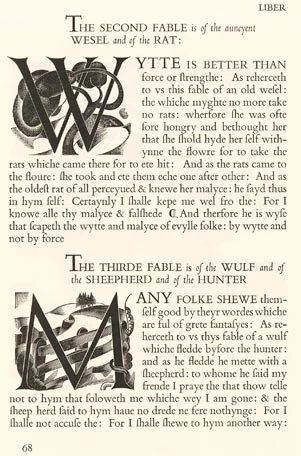
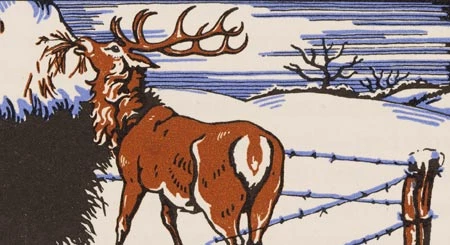
The Gregynog Press 29 July 2007 The Davies Sisters of Gregynog The frontispiece to The stealing of the mare (1930), the work of Robert Maynard. One of the outstanding aspects of the Davies sisters' involvement in the arts was the creation of the Gregynog Press. This was the only component of the arts and crafts scheme planned for Gregynog Hall to be implemented, beginning production in 1922. The first book, Poems by George Herbert, was published a year later, the last being published in 1940. The Gregynog Press, like other private presses of the time, produced high quality books in limited editions. Such books were usually superbly printed on handmade paper, using hand presses or small letterpress machinery. Many of the greatest wood engravers of the twentieth century were commissioned to produce illustrations for these books. The sisters already possessed books from some of the finest private press productions of the late nineteenth and early twentieth centuries, such as those from the Kelmscott and Ashendene presses. Staff One of the specially bound copies of the Loyal Address to King George V on the formal opening of the National Museum of Wales on the 21 April 1927. At its peak, the Press employed seventeen staff. Most of the general workforce in the composing room and the bindery was Welsh and local to Gregynog. The artistic staff came mainly from England and Scotland. The Gregynog Press Board had three aims in the production of fine books: to print books in the Welsh language, to publish some of the best examples of Anglo-Welsh literature and to publish translations of Welsh works. From the 1930s the subject matter was more varied. Of the forty-two books, eight were in Welsh, while a further eleven had a Welsh connection. It is this attention to Welsh material that was one of the distinguishing features of the Press. Loyal Address of the King The fables of Esope (1932). Agnes Miller Parker's wood engravings for this book, and XXI Welsh gypsy folk-tales (1933), established her as one of the greatest wood engravers of the twentieth century. One of the more handsome productions was for Amgueddfa Cymru, and undertaken at a few weeks notice. This was the printing of the Loyal Address read at the formal opening of the Museum on 21st April 1927 by King George V, accompanied by Queen Mary. A number of copies were bound in blue levant morocco, decorated in gilt. Printing Illustrated page of Psalm XC from Psalmau Dafydd (1929) The first 'Press' book, Poems by George Herbert, was printed on an Albion hand press. Most of the printing at Gregynog was done on the less labour-intensive Victoria, although William McCance, the second controller of the Press, used the Albion to print his first book, John Milton's Comus, in 1931. The first four books were restricted to a single typeface (Kennerley), but soon it became possible to use a range of types. A Gregynog type was made, but it was only used for one book (Eros and Psyche, 1935). The paper used at Gregynog was handmade. From 1927 to aid the process of printing this was done on dampened paper, a widely used technique. The outstanding quality of the printing of the letterpress and the wood engravings was largely due to Herbert Hodgson, printer from 1927 until 1936. Wood Engravings Illustration from The story of the red-deer (1935/6), a children's book, which was the only book produced at Gregynog where the illustrations were printed in colour. Some of the finest books ever illustrated with wood engravings were printed in Britain between the two world wars. The Press played a major part in this era. In the 1930s, the Gregynog Press saw one of the most outstanding periods of book illustration in Britain, with the sensuous engravings of Blair Hughes-Stanton and the intricate ones of Agnes Miller Parker. A small number of external artists were commissioned to prepare engravings, one of the best known of whom was David Jones; his two engravings were printed in Llyfr y Pregeth-wr, the Book of Ecclesiastes. Bindings Illustrated capital from The stealing of the mare (1930) The Gregynog Press was unique amongst private presses in that the binding of the books was seen as being as important as the printing. Up to 1935 each title was bound in buckram cloth or marbled paper, with one in vellum, but a small number of 'specials', were bound in full leather, of varying colours and designs. Almost all the specials were bound by Fisher, who is recognised as one of the greatest bookbinders of the twentieth century. His versatility is shown at its best in the implementation of the designs prepared by McCance and Hughes-Stanton, notably for The Fables of Esope, The Revelation of Saint John the Divine and The Lamentations of Jeremiah. Other 'specials' were designed by the artistic staff including Maynard and Hughes-Stanton. Images: Gwasg Gregynog/Gregynog Press
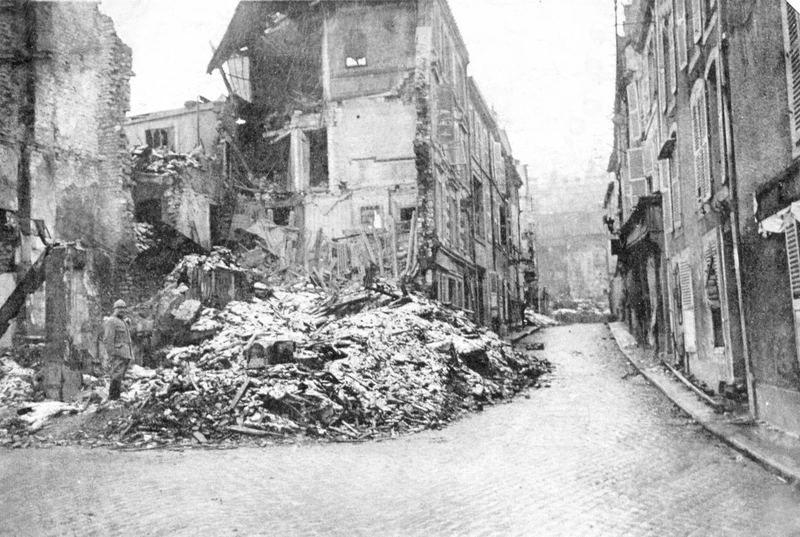
The Davies Sisters during the First World War 29 July 2007 Gwendoline Davies visited the damaged and largely empty French city of Verdun on 9 and 10 March 1917, where she acquired this postcard image as a souvenir. Private collection (Lord Davies) The First World War had a profound effect on the lives of Gwendoline and Margaret Davies, two sisters from mid Wales whose gifts and bequests completely transformed the range and quality of Wales's national art collection.They lost much-loved relatives and served with the Red Cross in France, seeing the destruction first hand. They were deeply conscious of the horrors experienced by both British and French soldiers, and shocked at the suffering of civilian refugees.While their brother David flung himself into the cause of international peace, the sisters hoped to repair the lives of ex-soldiers traumatized by the war, through education in the crafts and through music. Out of this grew the idea of Gregynog, as a centre for the arts, and for the discussion of social problems.Bringing Refugee Artists to WalesOn 4 August 1914 Germany invaded Belgium, precipitating the First World War. Over a million Belgians fled their homes.The Davies family decided that Belgian artists should be brought to Wales, where they could work in safety, and inspire the country's art students. Major Burdon-Evans, their agent, and their friend Thomas Jones journeyed to Belgium where they assembled a group of ninety-one refugees, including the sculptor George Minne, and the painters Valerius de Saedeleer and Gustave van de Woestyne and their families.All three artists were to spend the rest of the war as refugees, largely dependent on the Davies family for support. While their impact on the arts in Wales was limited, the work of all three was to be profoundly influenced by their Welsh exile.The Sisters in France, 1916–1918Initially the sisters undertook charitable work at home in connection with the war. They were keen to do more 'in the way of helping', but few women managed to go out to France. One way of doing so was to volunteer through the London Committee of the French Red Cross.There was little provision in the French army for the welfare of the ordinary soldier, and the Committee sent women to operate canteens at railway stations, hospitals and transit camps.In July 1916 Gwendoline was posted to a transit camp near Troyes. Margaret joined the canteen there in June 1917, and her journals record their lives at this period.The sisters were deeply moved by the stoicism of the ordinary soldiers of the French army and by the suffering of exhausted, sick, and hungry refugees.Wartime collectingThe sisters sometimes managed to add to their art collection during the First World War. Although wartime travel in France was difficult, trips to Paris on Red Cross business provided Gwendoline with opportunities to visit the Bernheim-Jeune gallery.She bought a Daumier and a Carrière there in April 1917, and paintings by Renoir, Manet and Monet in December. In February 1918 she bought her two celebrated landscapes by Cézanne, The François Zola Dam and Provençal Landscape, which are among her most important and far-sighted purchases.In February 1916, Gwendoline Davies spent £2,350 on ten oils and a drawing by Augustus John. Both she and Margaret went on to acquire more works by John, and they collected the work of no other artist on this scale.Gwendoline was determined that the work of Augustus John be seen at Amgueddfa Cymru, later placing several of her own purchases on loan to the Museum.Guide to the paintings Paul Cézanne (1839–1906), Provençal Landscape, oil on canvas, about 1887–8 Bought by Gwendoline Davies with Cézanne's The François Zola Dam in 1918, this picture cost half as much, £1,250. It was probably painted at his family's property outside Aix-en-Provence. Full of the shimmering colour of the South of France where the sisters had holidayed in 1913–14, it must have seemed a world away from war-time Paris in winter.Amgueddfa Cymru (Bequest of Gwendoline Davies, 1951) NMW A 2438. Paul Cézanne (1839–1906), The François Zola Dam, oil on canvas, about 1879 This landscape is one of Gwendoline Davies's greatest pictures, bought in Paris for £2,500 in February 1918. The Troyes canteen was closed for repairs. She was in the city, then under intermittent German bombardment, on Red Cross business. She may have seen it on a previous visit, as in January Margaret had translated from the French the art dealer Ambroise Vollard's anecdotal account of Cézanne's life. Together with Provençal Landscape acquired with it, this was one of the first Cézannes to enter a British collection.Amgueddfa Cymru (Bequest of Gwendoline Davies, 1951) NMW A 2439. Camille Pissarro (1831–1903), Sunset, the Port of Rouen (Steamboats), oil on canvas, 1898 Margaret Davies bought several works by Pissarro at the Leicester Galleries, London, in June 1920. This was the most expensive at £550. The previous year she had worked at a canteen in Rouen run by the Scottish Churches Huts Committee.Amgueddfa Cymru (Bequest of Margaret Davies, 1963) NMW A 2492.
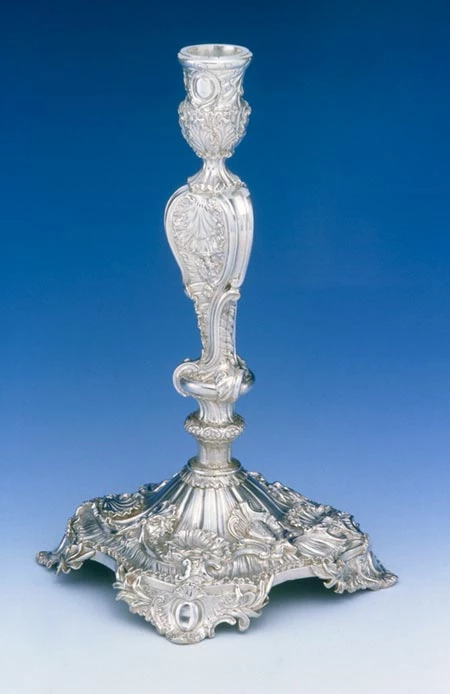
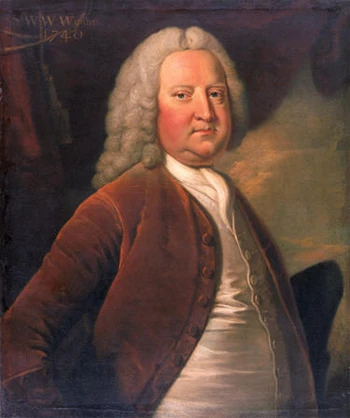
One of the wealthiest families of Wales 26 July 2007 Candlestick made in 1734 by the French protestant silversmith Lewis Pantin in the newly fashionable rococo style. Sir Watkin Williams Wynn (1693-1749) - 1740, oil on canvas. 76.2 x 63.2 cm Williams-Wynn of Wynnstay The Williams-Wynn family of Wynnstay in Denbighshire emerged as one of Wales's wealthiest in the early 18th century, a status they were to retain for over two hundred years. Several members of the family had an interest in the arts, and Sir Watkin Williams-Wynn (1749-1789), 4th baronet, was to be one of Wales's greatest patrons of the visual arts and music. Much of his collection is now housed at Amgueddfa Cymru. 'The great Sir Watkin' Sir Watkin Williams-Wynn (1693—1749), 3rd baronet, was the greatest landowner in Wales during the 1730s and 1740s, and a national leader of the Tory party in the House of Commons. He was the grandson of the politician Sir William Williams (1633/4—1700) who had acquired estates in Denbighshire and Shropshire. However, much of his great wealth was not passed down from his farther, but was generated by to a series of fortunate inheritances from female relations. In 1719 he inherited the Wynnstay estate in Denbighshire, together with other lands in Caernarfon and Merioneth from his mother's cousin, Sir John Wynn. In 1715 he had married the younger daughter of Edward Vaughan of Llwydiarth, and by 1725 the death of his wife's parents and older sister had brought him further estates in Montgomery, Denbigh, and Merioneth. He now owned over 100,000 acres, worth between £15,000 and £20,000 a year, which also gave him great influence over parliamentary elections. On the death of his wife Ann Vaughan in May 1748, Wynn married his god-daughter Frances Shakerley (1717—1803). Their son, also Sir Watkin Williams-Wynn, and the 4th baronet, was born in April 1749. Wynn, who was known as 'the great Sir Watkin' and 'the Prince of Wales', was killed in a hunting accident in September 1749. There are two portraits of 'the great Sir Watkin' in the collections of Amgueddfa Cymru . One of these is the work of Thomas Hudson a fashionable London portraitist who produced polished formal likenesses. The other is a pastel by William Hoare of Bath, and one of a group of pictures commissioned by Wynn's associate Lord Lichfield. Wealth and cultural sophistication Two pieces of silver also reflect the wealth and cultural sophistication of Wynnstay in his time. These are a pair of large candlesticks, and a massive tripod stand for a tea kettle. The candlesticks were made in London in 1734 by the French protestant silversmith Lewis Pantin, and are chased and cast with flowers, shells and scrolls —in the newly fashionable rococo style. They formed part of a set of four and are listed in an inventory of silver made on Sir Watkin's death. A small amount of silver purchased by the family in 1720 survives as an extraordinary rarity as only a handful of these pieces of silver furniture have escaped being melted down for reuse.
One of the wealthiest families of Wales 26 July 2007 Williams-Wynn of Wynnstay Sir Watkin Williams Wynn (1693-1749) - 1740, oil on canvas. 76.2 x 63.2 cm The Williams-Wynn family of Wynnstay in Denbighshire emerged as one of Wales's wealthiest in the early 18th century, a status they were to retain for over two hundred years. Several members of the family had an interest in the arts, and Sir Watkin Williams-Wynn (1749-1789), 4th baronet, was to be one of Wales's greatest patrons of the visual arts and music. Much of his collection is now housed at Amgueddfa Cymru. 'The great Sir Watkin' Sir Watkin Williams-Wynn (1693—1749), 3rd baronet, was the greatest landowner in Wales during the 1730s and 1740s, and a national leader of the Tory party in the House of Commons. He was the grandson of the politician Sir William Williams (1633/4—1700) who had acquired estates in Denbighshire and Shropshire. However, much of his great wealth was not passed down from his farther, but was generated by to a series of fortunate inheritances from female relations. In 1719 he inherited the Wynnstay estate in Denbighshire, together with other lands in Caernarfon and Merioneth from his mother's cousin, Sir John Wynn. In 1715 he had married the younger daughter of Edward Vaughan of Llwydiarth, and by 1725 the death of his wife's parents and older sister had brought him further estates in Montgomery, Denbigh, and Merioneth. He now owned over 100,000 acres, worth between £15,000 and £20,000 a year, which also gave him great influence over parliamentary elections. On the death of his wife Ann Vaughan in May 1748, Wynn married his god-daughter Frances Shakerley (1717—1803). Their son, also Sir Watkin Williams-Wynn, and the 4th baronet, was born in April 1749. Wynn, who was known as 'the great Sir Watkin' and 'the Prince of Wales', was killed in a hunting accident in September 1749. There are two portraits of 'the great Sir Watkin' in the collections of Amgueddfa Cymru . One of these is the work of Thomas Hudson a fashionable London portraitist who produced polished formal likenesses. The other is a pastel by William Hoare of Bath, and one of a group of pictures commissioned by Wynn's associate Lord Lichfield. Wealth and cultural sophistication Candlestick made in 1734 by the French protestant silversmith Lewis Pantin in the newly fashionable rococo style. Two pieces of silver also reflect the wealth and cultural sophistication of Wynnstay in his time. These are a pair of large candlesticks, and a massive tripod stand for a tea kettle. The candlesticks were made in London in 1734 by the French protestant silversmith Lewis Pantin, and are chased and cast with flowers, shells and scrolls —in the newly fashionable rococo style. They formed part of a set of four and are listed in an inventory of silver made on Sir Watkin's death. A small amount of silver purchased by the family in 1720 survives as an extraordinary rarity as only a handful of these pieces of silver furniture have escaped being melted down for reuse.