Christmas Traditions: The Mari Lwyd 14 June 2014 What is the Mari Lwyd?One of the most well-known Welsh customs is the Mari Lwyd, meaning 'Grey Mare', a horse-figure carried from door to door by wassail-singing groups during the Christmas season. Popular in South Wales during the 19th century, the tradition features a real horse's skull, usually decorated with coloured ribbons and rosettes and with glass bottle eyes. The lower jaw is fixed on a spring which shuts the mouth with a loud snap and brings the creation to life. A long white cloth is draped down the carrier which hides him from view.Occasionally the head was of wood, one account says paper, and in around 1935 a group of boys in Swansea used a pillow, but a horse's head was characteristic. The same horse's head tended to be used annually, for it was buried in lime to preserve it for most the year, and dug up each December.How is Mari Lwyd celebrated?In terms of the celebration itself, the custom used to begin at dusk and often lasted late into the night. During the ceremony, a party of usually all men, would carry the Mari through the streets of the village singing and dancing. The Mari does not hunt alone, for depending on the area and the amount of people in the wassailing party, she can be joined by an array of other characters named Punch and Judy, the Sergeant and the Merryman. Even very small groups usually have a leader, who holds the reigns to control the horse and take charge of the singing.They would visit every house or pub in the village and stand in front of the door to sing traditional songs.Next followed the pwnco, an improvised rhyme and verse contest between the Mari party and the inhabitants of the house.There was a lot of leg pulling, and the verses were usually quite mischievous.Traditionally these exchanges would be done with the door closed, and the contest could last for some time, sometimes even an hour or so, until one side gave up.If the Mari side lost the contest, they would have to leave without being admitted to the house. However this would have been quite a rare occurrence, as the Mari entering the building was thought to bring good luck, so they would usually win (or be allowed to win).Alternatively, the Mari party might sing one last verse begging for entrance.Once inside, the entertainment continued with the Mari running around neighing and snapping its jaws, creating havoc, and frightening the children, while the Leader pretended to try to restrain it.The Merryman played music and entertained the householders. Punch and Judy would also be part of the festivities. The participants would be rewarded with food and drink, and sometimes received a gift of money as well. The visit concluded with a traditional farewell song.Popularity of the Mari LwydWith the earliest account of the Mari dating from 1798, the boom years, as regards to the amount of horse's heads in existence, were between 1850 and 1920. Apart from one or two sightings in the north, the ritual remained exclusive to south Wales, being especially popular in Glamorgan, Monmouthshire and Carmarthenshire.A general decline occurred in the number of Mari Lwyd groups during the twentieth century. One of the reasons normally given for its demise is the decrease of Welsh speakers, preventing inhabitants from replying to the Mari group, as the Mari Lwyd contest was almost always sung and performed in Welsh.Another reason for the custom's decline was the increasing rowdiness and drunkenness which became associated with it. This was seen as unacceptable behavior especially with the rise of the Chapel and Methodism in Wales.However there has been a growing interest in the Mari Lwyd in recent years, and this has resulted in a resurgence in groups performing this tradition across all of Wales.Join us at St Fagans this Christmas to witness the Mari Lwyd tradition brought to life, explore our full Christmas programme hereThe Mari Lwyd Song Audio and Lyrics
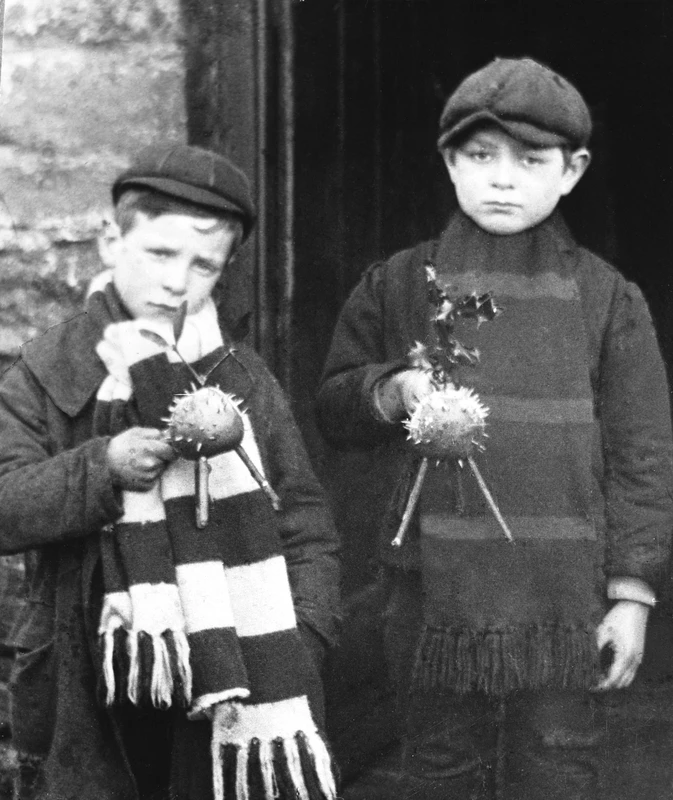
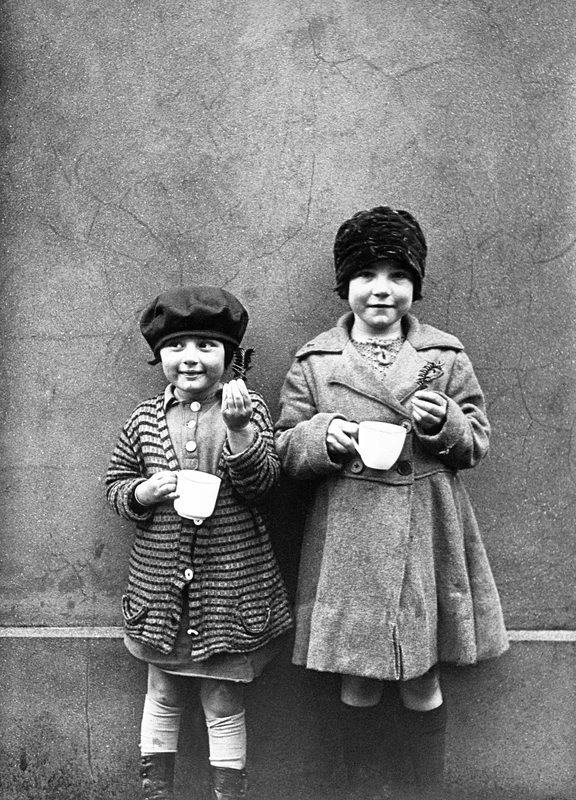
New Year Traditions: Collecting Calennig 14 June 2014 Happy New Year! At one time in Wales – New Year’s festivities were even more important than Christmas. In fact, one resident of Cynwyl Elfed, Carmarthenshire, in the 1860s, said that the chief importance of Christmas was , ‘that it was within a week of New Year’s Day, the biggest day of the year’. New Year has always been important in that it symbolized hope and starting afresh, every January 1st we make resolutions and try to turn over a new leaf. It’s not surprising therefore, that this period was associated with future fortunes. It was said that one’s behavior at the beginning of the year was held to influence his fate for the proceeding twelve months. The custom of ‘letting in’ in the New Year is familiar throughout most of Britain and in Wales, the first visitor to enter somebody’s house was of great significance, depending on their sex and personal characteristics. For instance, on New Year’s Day in Carmarthenshire and Pembrokeshire it was unlucky for a woman to see a woman first, and for a man to see a man first. People from Pencoed, near Bridgend, believed it bad luck to see a red-haired man first; in Pembrokeshire it was lucky to bring a fresh loaf into the house on January the first. What is calennig? A well-known Welsh tradition, still seen in some areas, is the collection of calennig (New Year’s gift) where children rise early and carry from door to door, as bearers of good luck, a decorated apple, pierced with three sticks and adorned with a sprig of box and hazelnuts. The children usually sing a simple verse and in return usually received a gift or food or money for their troubles. Rhymes and songs were concisely worded and their message was to announce the New Year's arrival, to wish the family a prosperous twelvemonth, and to ask from it ‘calennig’ or (New Year's Gift). Two boys collecting Calennig in Llangynwyd c. 1904-1910 Here is a verse sung in Cardiganshire and Pembrokeshire: (I left my house today With my bag and my stick, And here is my message to you, Fill my bag with bread and cheese.) What is the New Year’s water ritual? The New Year’s water ritual also took place in some parts of Wales, where children, after filling cups or small bowls with spring water, which they’d drawn from the well that morning, dipped into it a sprig of box, myrtle or mistletoe. This was then sprinkled either on grown ups hands and faces or around the house, in order to do away with the old year and usher in the new. The adults gave them a small gift in return of the sprinkling, which was commonly regarded as a sign of cleansing or or purifying. Two girls at Tenby partaking in New Year's water ritual, 1928.
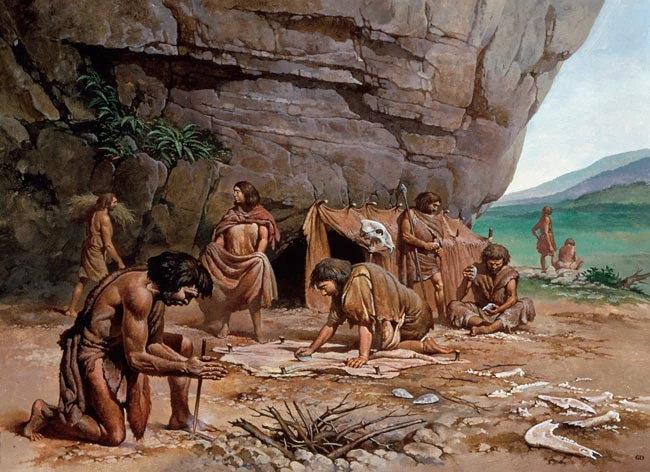
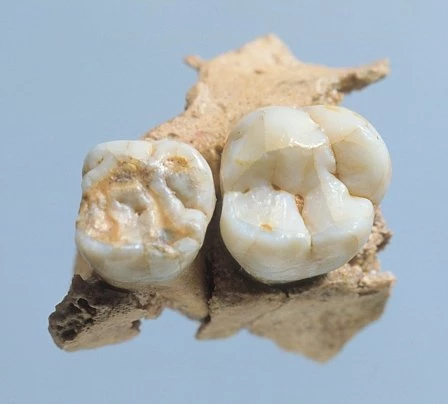
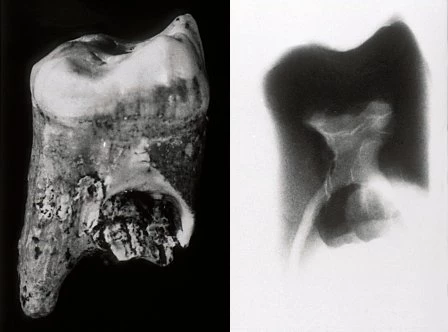
The oldest people in Wales - Neanderthal teeth from Pontnewydd Cave 9 July 2013 Reconstruction painting showing Early Neanderthal Man. Upper jaw of a child aged around 9 years old. Early Neanderthal tooth (left), and X-ray (right). The X-ray show the enlarged pulp cavity that has helped archaeologists to identify the Pontnewydd teeth as belonging to Neanderthals. Pontnewydd Cave was excavated by Amgueddfa Cymru between 1978 and 1995. The wall that can be seen across the entrance to the cave was built during the Second World War, at which time Pontnewydd Cave served as a munitions store. Pontnewydd Cave Excavations at Pontnewydd Cave, Denbighshire have discovered the oldest human remains known from Wales dating back some 230,000 years. Excavations at the cave by Amgueddfa Cymru between 1978 and 1995 unearthed a total of 19 teeth , discovered found deep inside the cave. These have been identified by experts at the Natural History Museum, London as belonging to an early form of Neanderthal. Neanderthals in Wales Neanderthals are one branch of the human evolutionary tree that is thought to have died out approximately 36,000 years ago. Our own species shared a common ancestor with Neanderthals, but did not evolve from them. Neanderthals were fairly short and stocky, had ridges under their eyebrows, big square jaws, and teeth that are larger than ours are today. Study of the remains found at Pontnewydd found that these teeth represent the remains of at least five individuals. Neanderthal Teeth The teeth have all been x-rayed and they show an interesting characteristic known as taurodontism - an enlarged pulp cavity to the teeth and shorter roots. Taurodontism is a characteristic (although not unique) feature of Neanderthal teeth and it is one of the features that has led experts to decide that these are Neanderthal as opposed to another early human. The people discovered in Pontnewydd Cave range in age from young children to adults. The most complete discovery from the site is a fragment of an upper jaw of a child aged around nine years old. In the jaw a very heavily worn milk tooth can be seen sitting next to a newly erupted permanent molar. Food remains The teeth were not found on their own inside the cave. Alongside them were stone tools and animal bones , some of which show signs of butchery - evidence that these were the food remains of these early Neanderthals. Questions remain as to whether these humans were originally buried in graves within the cave. The cave has since been washed through by the melt water from the retreating ice sheets at the end of the last Ice Age. Unfortunately the forces that have remarkably led to the preservation of these teeth deep within Pontnewydd Cave destroyed any traces of their original burial context. Background Reading Ice Age hunters: neanderthals and early modern hunters in Wales by S. Green and E. Walker Published by the National Museum of Wales (1991). In search of the neanderthals: solving the puzzle of human origins by C. Stringer and C. Gamble. Published by Thames and Hudson (1993). Pontnewydd Cave: a lower Palaeolithic hominid site in Wales: the first report by H. S. Green. Published by the National Museum of Wales (1984). Neanderthals in Wales: Pontnewydd and the Elwy Valley Caves edited by Stephen Aldhouse-Green, Rick Peterson and Elizabeth A. Walker. Published by National Museum Wales Books and Oxbow Books (2012).
Everything except the squeal 30 August 2012 Pigs were once an important part of everyday rural and urban life. They were the ultimate in recycling, converting waste into a useful product. They produced large litters and fattened quickly, eating anything from grass to scraps and leftovers. Killing a pig was a social occasion and friends and neighbours would often take it in turns to slaughter their pigs and share the meat. Share and share alike Bacon hanging from the loft. It shows the way the two pieces are kept separate to ensure they do not touch each other. Slaughtering would usually be carried out between early October and late March, thus providing families with a regular supply of fresh meat throughout the winter. Pork steaks and joints incorporating the ribs and back chain were the usual cuts shared among the community. Dishes prepared from the pig's offal (e.g. faggots and brawn) were also bonus gifts exchanged between friends and relatives, and this custom was practised in parts of south Wales well into the second half of the 20th century. The pleasant task of delivering the cuts of meat was generally allocated to the children, who would be given some money for their trouble. In some districts, this custom was known as hebrwng asgwrn (sending a bone). The remainder of the pig would be salted, and would serve as the main source of meat for the household throughout the year. Nothing Wasted Before the age of mass-produced footballs, children often used a pig's bladders to play ball, shown here with a quill inserted for inflating. Nothing was wasted. The pig's head would be boiled to make brawn. The pig's bristles could be used for brushes, its skin for making leather, blood for black pudding, and even its bladder for a football. It's no wonder that so many people kept pigs. Some even say that the 'piggy bank' acquired its name because it was fed the leftovers of people's small change until it was fat enough to be smashed, and the savings retrieved. Boiling a pigs head to make brawn Part of a film recording all the processes that resulted from pig killing. The work would follow the same pattern all over Wales, apart from making faggots. This would not normally happen in Gwynedd. In that part of Wales, the liver would be fried with onions as a main meal. Making liver and onions: Mrs Edith May Hughes This particular dish was popular as swper chwarel (the evening meal after returning home from the quarry) in the slate quarrying districts of north Wales. Oral history in Welsh: Mrs Edith May Hughes, Llannerch-y-medd, Anglesey describing how her mother used to prepare liver and onions. Mrs Hughes was born in 1904. "Then there was the liver. Mam had a big iron pan on the hob. And she'd cook the liver very slowly. She always had flour to hand, and a board. Then when she went to cut up the liver, there'd be flour on the board, and the liver would be put in it. She'd slice it, and dip it in the flour before frying it. The the onions would be fried, with the liver, slowly. There'd be a panful, by the time the liver was ready. She'd take the liver out, and make a pan full of good gravy with all these onions. The liver would be put in with it and would keep nice and tender, and hot. By the time we came home from school in the evening, you see." Mrs Edith May Hughes, Llannerch-y-medd, Ynys Môn. Born 1904. Recipe: half a pound bacon rashers one pound liver onions salt and pepper a little plain flour Slice the liver and toss in seasoned flour. Fry the bacon rashers lightly and lift out on to a warm dish. Fry the liver and chopped onion in the bacon fat and then place with the bacon. Make gravy by mixing a tablespoonful of plain flour into the fat in the pan, adding a little boiling water and stir well. Boil for a few minutes. Serve this dish with boiled potatoes.
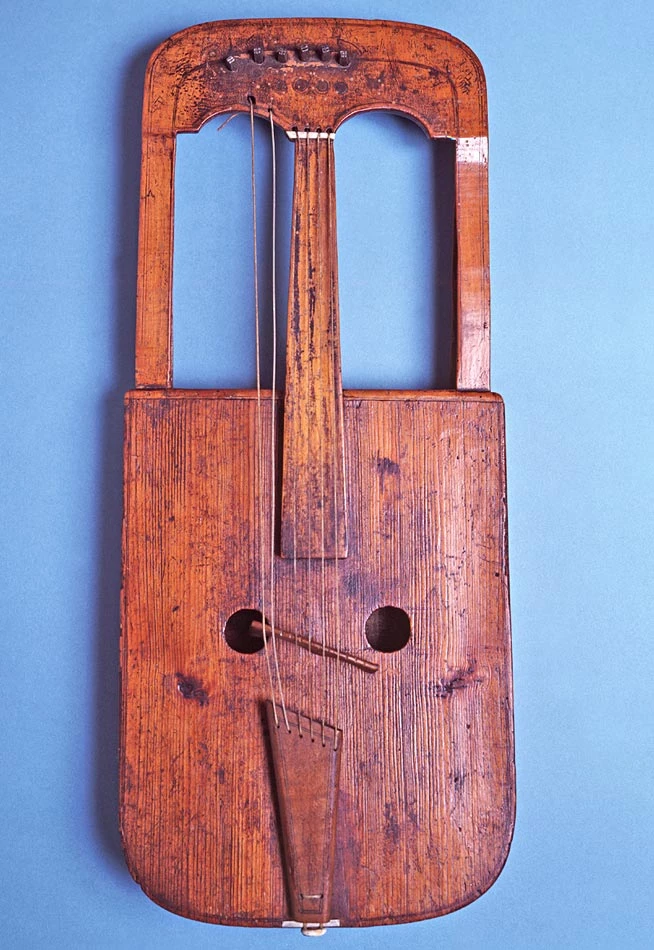
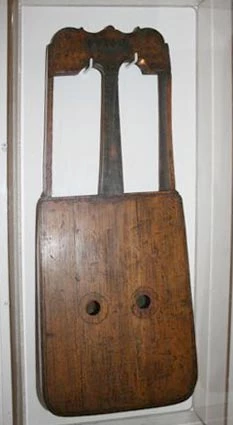
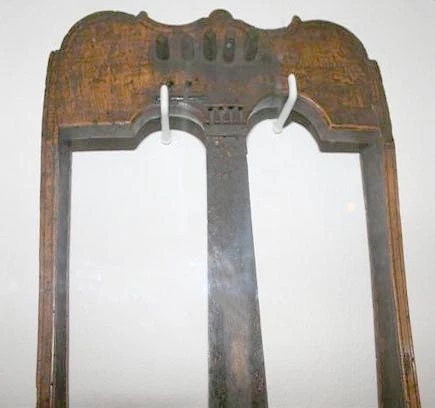
A new discovery within an old instrument: was the Welsh crwth unique in possessing two soundboxes? 2 April 2012 The National Library of Wales crwth. Image: National Library of Wales The 18th century crwth housed at St Fagans National Museum of History Amgueddfa Cymru is fortunate enough to house one of only three surviving authentic Welsh crwths in Britain. Does the discovery of a hidden aperture make the crwth unique amongst bowed instruments by having two soundboxes? An early stringed instrument first referred to in writing in the 12th century Laws of Hywel Dda (Hywel the Good), the crwth was popular in Wales throughout the Middle Ages, when it was enjoyed in aristocratic circles. The Laws of Hywel Dda mention the crwth, along with the harp and pipes, as instruments of status, played by noblemen and frequently providing musical entertainment. Crwth competitions were contested in the first recorded eisteddfod, held by Lord Rhys at Cardigan Castle in 1176, while a cywydd poem by Rhys Goch Eryri c.1436, delights in the magicians, acrobats and musicians (crwth players included), who were welcomed into the households of wealthy patrons. The emergence of the fiddle The social role of the crwth altered significantly from around 1600 onwards however, when it became more associated with the folk music tradition. The emergence of the fiddle during the 18th century effectively brought crwth playing and crwth making to an end in Wales, closing over a thousand years of practice and development. When an increase of interest in traditional music eventually took place during the late 20th century, the once common art of constructing a crwth, along with the most appropriate playing methods and performance techniques, had all but become a mystery. The last remaining crwths Of the three remaining historical examples in existence, each comprise a six-stringed instrument, oblong in shape and possessing a flat back, sides and soundboard, with the body and soundbox, as well as the main frame, being fashioned from a single piece of wood. A fingerboard divides a rectangular opening at one end while two holes can be seen in the soundboard. The St Fagans crwth The crwth in the Museums collection is inscribed 1742 and was made by Richard Evans of Llanfihangel Bachellaeth, Caernarfonshire. It was originally loaned to the museum by Colonel J.C.Wynne Finch of Y Foelas, Caernarfonshire, in 1935; the family of whom retains ownership of the instrument to this day. Although complete there is a line of blocked off tuning pin holes slightly offset from the current set. The Aberystwyth crwth The National Library of Wales, Aberystwyth, houses a second crwth, which was donated on the library's opening in 1907 by its principal founder Sir John Williams. This instrument was possibly owned by the Reverend John Jenkins (1770-1829) of Ceri, Montgomeryshire. Although it is complete (with the exception of two missing drone strings), it has undergone restoration/repair at some point to the main framework. The Warrington crwth The final example is kept at Warrington Museum and Art Gallery, and although its date is unknown, it bears a likeness to an instrument described and drawn in the 1775 edition of the journal Archaeologia (volume III, plate vii). This crwth was bought in Wales in 1843 by Dr James Kendrick, one of Warrington's first local historians and a noted antiquarian. Kendrick donated the artefact to the town that same year and it became one of the earliest exhibits at the local museum. The Warrington crwth is less complete than the other two, with missing tailpiece, strings, fingerboard and nut. The St Fagans crwth under x-ray. The darkened area within the neck clearly shows a tapering void and at its widest point is an aperture concealed beneath the fingerboard. The x-ray of the National Library crwth displaying the same tapering characteristics as the St Fagans example. The crwth at Warrington Museum and Art Gallery. © Warrington Museum and Art Gallery The missing fingerboard on the Warrington crwth allows the tapering void to be seen more clearly. This is visible on the photograph by the lighter bare wood which is bordered by a darker glue-lined impression. Hidden aperture revealed Conservation work on the St Fagans crwth uncovered a hidden aperture beneath an overhanging fingerboard. On further inspection this seemed to travel up the full length of the neck. X-rays of the instrument revealed a tapering, very purposeful cavity extending the full length of the fingerboard. The effect of this void reduces the surface area available for the fingerboard to adhere to the neck. Consequently, it would have been much more difficult to construct than had a solid, flat surface been used - which would have better adhered to the neck upper surface. What would have been the reason for constructing such an aperture? An increase in the tonal quality of the instrument? The aperture might well have performed in much the same way as the soundbox of an instrument or amplifier to provide a fuller sound to the vibration of the strings. Unique among bowed instruments? This second soundbox could possibly make the crwth unique amongst bowed instruments as such a design feature has no comparable legacy in the violin family. Inspection of the Aberystwyth crwth revealed a similar aperture in the neck. As this surviving example contains different design features to that housed at St Fagans, (and presumably constructed by a different maker), it seems quite plausible that such a void might well have been a consistent characteristic for all crwths. To confirm this hypothesis, close study of an image from the crwth at Warrington Museum revealed the tapering adhesive lines still visible on each side of the neck, with the bare wood area in the middle, showing the extent of the original aperture. Again, the variations in design suggest a different maker. Therefore, the inclusion of an aperture in the crwth must have been a standard construction technique that crwth makers employed for the manufacture of the instrument. The difference this aperture makes to the sound of the instrument could possibly be tested by recording the tonal scale of a replica crwth with a solid fingerboard, and then hollowing out the same instrument and recording the difference. Ultraviolet discovery Another aspect worth noting is an ink design that appears on the top surface of the St Fagans crwth's fingerboard, which only became apparent under ultraviolet light examination. The linear graphic design found under ultraviolet light on the top surface of the fingerboard on the St Fagans crwth. As the crwth was commonly held against the torso, the player could see down the instrument's neck and a design inked along the neck could possibly have aided the positioning of the fingers along the instrument's length. Interestingly, a vestige of this design also appears on the soundboard of a small harp which is also housed at St Fagans. Article by: Emyr Davies, Conservator: Furniture, Musical Instruments and Horology, St Fagans National History Museum and Emma Lile, Curator: Music, Sports and Customs, St Fagans National History Museum