: Traditions

Keeping evil at bay: Concealed garments

Elen Phillips, 9 August 2011

Beneath the floorboards

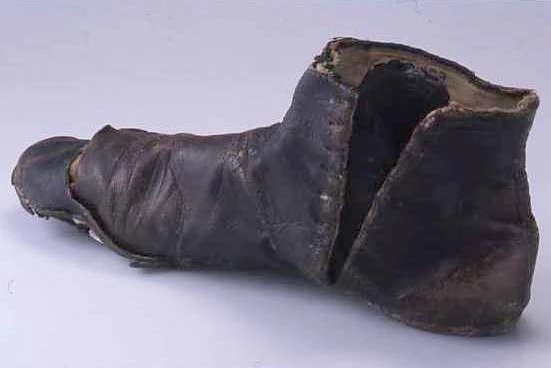
Adult's left boot, used as lucky charm under floorboards at Old Gwernyfed, Felindre, Brecon.

Adult's left boot. 9 button fastening at side (buttons missing). Used as lucky charm under floorboards at Old Gwernyfed, Felindre, Brecon.

Renovating an old house? Stay alert! Who knows what you'll find beneath the floorboards or behind the walls. You might discover a deliberately concealed garment, hidden by a previous occupant to bring good luck and fertility to the home. These concealments are called 'caches' — a term deriving from the French word 'cache', meaning 'to hide'. St Fagans National History Museum has collected several caches over the years. Each new find provides a valuable insight into this little known but widely practiced folk custom.

Hidden shoes

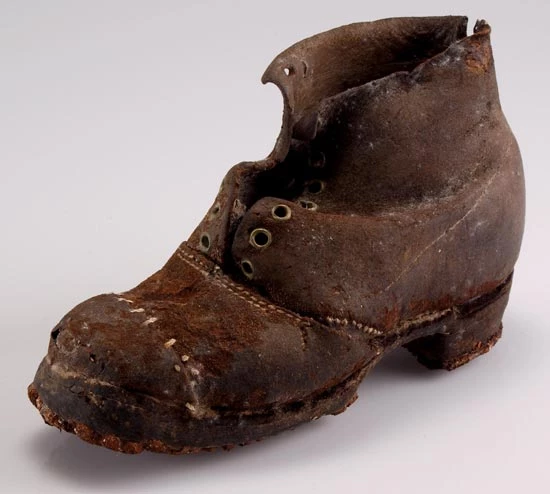
A leather shoe found behind a fireplace at Ty Cerrig, Llanfachreth, in March 1994

A leather shoe found behind a fireplace at Ty Cerrig, Llanfachreth, in March 1994

The most frequently found hidden garments are shoes. They are usually discovered near chimneys or fireplaces, but rarely are they found in pairs. Children's shoes are the most commonly found garments. This mid 19th century leather shoe was discovered in 1994 behind a fireplace in a stone built house in Llanfachreth. The owners found four other shoes in the same location, each well-worn and in a degraded condition. They almost certainly belonged to a family unit of two parents and three children.

Chimneys and fireplaces were probably chosen as hiding places because they served as the main focal point in most homes — a source of heat and comfort and an important place to congregate as a family. Shoes were also hidden under floorboards, around doorways and below staircases. Some considered these places to be the weakest part of a building, where evil spirits and witches would enter. Shoes were placed in these areas in order to trap or corner potential evil.

A concealed corset

A fragment of a mid-18th century corset found in a wall during restoration work to a thatched cottage in Pontarddulias

A fragment of a mid-18th century corset found in a wall during restoration work to a thatched cottage in Pontarddulias

Although shoes are the most frequent finds, other types of garments have also been discovered — for example, hats, jackets and breeches. This fragment of a corset was found in a thatched cottage in Cae Cerrig Road, Pontarddulais. It was discovered in 2002 lying in soil behind a thick wall to the side of the fireplace. Dating from the mid 18th century, it is roughly heart-shaped and is constructed from three layers: an outer layer of buff coloured wool, a stiffening layer of whalebone strips and a linen lining. Evidence of silk stitching remains in some areas. In its original condition, this fragment would have formed the front panel of the corset, covering the chest and abdomen.

What should you do if you find a concealed garment? If possible, avoid excessive handling and contact your local museum for further guidance. Remember to take plenty of photographs or drawings of the garment in its found location. Above all, stay vigilant — that heavily worn 'rag' could be a piece of history!
The Welsh dialect of Morriston, West Glamorgan

29 March 2011

Swansea Welsh

Listen to Cecil Lewis from Morriston talking in a West Glamorgan dialect of Welsh in Chapter 2 of this story.

The recording

An example of the dialect of the Swansea valley in West Glamorgan. Cecil Lewis of Morriston was born in 1913 and recorded by St Fagans National Museum of History.

An example of the Welsh dialect of the Morriston area of Swansea, West Glamorgan by Cecil Lewis.

Odd rai’n myn’ i ifed ar y slei, of cwrs, on’ och chi ddim fod i fyn’ i dafarne i ganu. Ŷch chi’n ‘bod yr Annibenwyr, p’un e chi ‘di gwbod o’r blân, fe dorrodd yr Annibenwyr Cwm Rondda mâs o’r llifer emyne. /Do fe?/ Shwrne dethôn nw i ganu Cwm Rondda a Tôn y botel yntafarne, dorrws yr Annibenwyr... dyw e’m yn llifer emyne ni nawrl Tôn y botel na Cwm Rondda. Ŷn ni’n canu C’wm Rondda acha... ma man ‘yn nawr, mae man ‘yn ‘da fi nawr. Dere ‘ma gw’ boi bach. Edrychwch chi trw’r llyfyr emyne ‘na. Sdim Cwm Rondda ‘na /Cwm Rondda ‘na/. Na Tôn y botel.

Ôn nw’n strict â’r pethe ‘ma slawer dydd, ôn nw?

O, y ni odd y gwitha wi’n credu. Annibenwyr.

Ôn i’n meddwl taw’r Methodistied odd...

Methodists, ôn nw’n câl y bai ‘efyd. Shwrne dethon nw i ganu Cwm Rondda a Tôn y botel yn y tafarne... Blaen-wern, odd dim lot o Blaen-wern ‘ma, chwel’ ‘chos on nw’n can... Ethon i ganu e i tafarne, chwel’. Odd, os och chi’n ifed, ‘na’ch Waterloo chi. /Ife?/ ‘Na’ch diwedd chi. O ie. O, och chi ddim fod i ganu... Wel ŷn ni’n canu Cwm Rondda, ma gire Cwm Rondda gyda ni yn y manna, ond dim a’r tôn... O Duw annwl! On nw... Shwrne odd e’n myn’ yn gân tafarne /ie/, ddim ishe ‘wnna. On nw...

Odd rai’n myn’ i ifed, though, yn’d odd e?

Wel, ôon nw’n ifed, ond ôn nw ddim yn openly chimod. On nw’n gwpod bo’ nw’n ifed. Wel, alle gwŷr y meline byth wedi gwitho yn y meline oni bai bo’ nw... i gadw i... Wel, ôn nw... meddylwch chi bo’ chi’n wsu, bod cryse’n do’ mâs fel ‘san nw’n dod o’r dŵr. Wel och chi’n colli nerth ofnadw o’ch corff, w. Wel, mae’n marvellous bo’ nw wedi byw! /‘Ti, ‘ti./ Duw!

So ôn nw’n ifed i neud lan y dŵr?

Wel ôn. Ôn nw yn. A dodi halen ‘nôl yn y corff, ys wedôn nw, chwel. Wel odd e yn ffaith ‘efyd. Odd jest neb odd yn gwitho’n y meline yn deetotallers. /Na./ Braidd. Nagw, nagw dirwest eriôd wedi bod yn werth yn Dreforys. Bach iawn o Band of Hopes sy ‘di bod ‘ma eriôd. Dim on’ y plant odd yn y
30 Band of ‘Ope. Shwrne ôn nw’n dod digon ‘en i ifed, ôn nw’n ifed.

‘Na beth odd amcan y Band of ‘Opes, ‘te, odd dirwest, ife?

le. Teetotallers, Band of ‘Ope. O Duw annwl. On’ bach iawn o rina odd i gâl. Ôn nw’n ifed i... Wel, a ôn nw mâs nos Satwn, ôn nw? Cwrdda, cwrdda yn y tafan /ie/. Wel odd ddim pictures i gâl amser ‘ny. A’r unig man odd ‘da
nw i gwrdda odd y tafan. Wel, och chi’n myn’ i dafan, och chi’n ifedl

Odd y merched yn myn’ i dai tafarne?

Na, na byth. Odd ddim merch câl myn’ i dafan.

Beth... ôn nw’n ‘ala ‘i mâs, ôn nw?

Dele ‘i ddim miwn. Cele ‘i ddim myn’ miwn. A odd snug— gwelsoch chi’r
snug eriôd?

Ma ryw gof ‘da fi amdanyn nw!

Wel, ‘na fe, dim on’ i’r snug ôn nw’n cal mynd.

Ife? /Ie./ Beth odd yn ots? Beth odd...

Och chi ddim fod i gymisgu. Dinon a menŵod mewn tafan. Catw’r menŵod fel’a, cadw’r dinon a... ‘Cer di o fanna.’

Pwy fenŵod odd yn myn’ i dai tafarne ‘te?

Y rough lot.

Ife? Pwy ôn nw weti ‘ny, ‘te?

O Duw, Duw! O’ son amdanoch chi. Câl menyw’n myn’ i dafan, och chi’n gomon ofnadw. W, dim o’ch ishe chi! Out! Odd ddim capel i chi, och
chi out. On’ ‘na beth od, ma dyn... ôn nw’n gweud bod dyn yn ifed, odd menyw yn llemitan. ‘Na’r gair. ‘Oti JohnJones...?’ ‘O, mae e’n ifed, oti. A ma’i wraig e’n llymitan ‘efyd.’ Wel, ‘na’r hall mark wedi ‘ny. Os odd ‘i’n llymitan, walle dele ‘i ddim... dele ‘i ddim... odd ‘i ddim câl dod. Os odd
‘i’n dod i’r tafan, dim on’ i’r snug odd‘i’n câl dod.Jyst tu fiwn y drws. Rŵm bach, ŷch chi’m ‘bod, a mâs. Odd ‘i ddim câl myn’ miwn i’r bar a cymisgu â dinon. O Duw, Duw! Out!

Odd rai menywod yn ifed yn tŷ?

Wel, dim trw wpod i ni. Na, on nw’n myn’ i... On’ och chi ddim cymisgu â rina, chwel’. Ôn ni’n ‘bod dim amdenyn nw! Duw! Bydde Mam ‘di’n
lladd ni ‘tân ni’n myn’ i dŷ menyw odd yn ifed! ‘O d... paid di â neud ‘na ‘to, cofia! Paid di â myn’ ‘da’r fenyw ‘na, ma ‘onna’n ifed, cofia!’ O, odd ‘i’n dread. Dread thing. Llymitan odd fenyw, ifed odd y dyn. ‘Na od, ife!

Christmas Traditions: Food

10 May 2010

Celebrate this Christmas by exploring recipes that have brought generations of families and communities together. Our curated selection will fill your season with the warmth of tradition, one recipe at a time.

The Goose

Group with geese at a farm on Stalling Down, near Cowbridge

Group with geese at a farm on Stalling Down, near Cowbridge

Goose has been the festive bird associated with Christmas in Wales over the centuries. Since the late medieval times the yeoman farmer had a goose on his Christmas table. Geese were easily bred and readily fed, especially in the early autumn when they were allowed to glean the fields after the corn harvest. Many farmers would give one as a gift to tenants and workmen to celebrate Michaelmas Day but a fair number would be reserved and fattened for the Christmas Market.

Christmas Turkey in Wales?

Turkey was not part of the Christmas fare in the rural areas until the second half of the twentieth century.

In general, the turkey was not accepted as part of the Christmas fare in the rural areas until the second half of this century.

Goose Blood Tart

In mid-Wales, it was the custom to make goose blood tart when the farmers were killing a large number of geese at Christmastime.

Oral evidence testifies that this cake was an essential part of the Christmas fare in the Trefeglwys district and similarly in the districts of Staylittle, Llanbrynmair and Llangurig in Montgomeryshire. To date, however, there is no evidence to show that it was prepared in any other county in Wales.

Gooseblood tart, a Christmas delicacy in parts of Montgomeryshire.

Gooseblood tart, a Christmas delicacy in parts of Montgomeryshire

The blood of about three geese would be put in a greased basin and boiled in a saucepan half full of water. Then the blood would be allowed to cool and set solid before it was rubbed between the fingers to make fine crumbs. Mixed with currants, flour, suet, salt , spice and golden syrup, it would be baked between two layers of crust on a plate in the oven.

A strange mixture of ingredients, you may think, but not unlike the mincemeat in mince pies, which originally included real meat as an ingredient!

Recipe for Goose Blood Tart

Plum Pudding

Christmas plum pudding

Plum pudding, well fruited and spiced, has been associated with Christmas since the early 18th century.

It would be boiled in one large lump in a linen pudding cloth, a custom that gave it the names lump pudding, rag pudding or bag pudding. The mixture was then bunched together and tied securely with strong cord to form a bag. The bag was then suspended from a stick placed across the top of the cauldron or boiler and immersed in boiling water. It was served with a sweet butter sauce.

Mixing the Christmas pudding involved the whole family when each member, from the youngest to the oldest, would take his turn to stir the pudding and in doing so would cast a secret wish. It was a common custom also when preparing the pudding to put small coins in the mixture - the old silver threepenny or sixpenny pieces, and the lucky recipients on Christmas day regarded them as tokens of good luck.

Toffee Evenings

Adding icing sugar to prevent toffee sticking together

Adding icing sugar to prevent toffee sticking together

Noson Gyflaith (Toffee Evening) was a traditional part of Christmas or New Year festivities in some areas of north Wales earlier this century. Families, in their turn, would invite friends to their homes for supper, usually in the form of a Christmas dinner, and it would be followed by merriment, playing games, making toffee, and story telling.

When the required ingredients had boiled to a certain degree, the toffee was poured onto a well-greased slate or stone slab. The hearth-stone itself was used for this purpose in some houses. Members of the happy gathering would then cover their hands with butter and attempt to "pull" the toffee while it was still quite warm. It was a skilled art to "pull" and twist the toffee until it became golden yellow in colour. Both the skilled and unskilled would take part - the one being a source of envy, the other a source of banter.

Toffee-making was also practised in parts of south Wales, especially in the coal-mining areas.

As far as we know, it was not associated here with a particular festive occasion, but housewives were known to sell it from their homes or on local market stalls. It was known by various names such as taffi, dant, or "fanny" or indeed it could be known by the name of the person who made it, e.g. losin Magws, or losin Ansin bach. Children would buy it - a six inch strip or two ounces for a penny.

Toffee Recipe

Loaf Cake

Loaf cake

Loaf cake, the rich yeast fruit cake baked for Christmas in the counties of south Wales

Loaf cake was synonymous with Christmas celebrations in the industrial valleys of south Wales. The dough, prepared in large quantities, would be carried to the local bakehouse where the baker would be responsible for baking the cakes for a penny or two per loaf.

Neighbours were invited to taste each other's cake, and tradition has it (in the district of Margam near Port Talbot) that if a young maid was given the opportunity to taste thirteen different cakes in one season, she would marry before the following Christmas.

Loaf Cake Recipe
Christmas card from the collection

Christmas card from the collection

Bando - An ancient manly game

8 February 2010

An ancient manly game

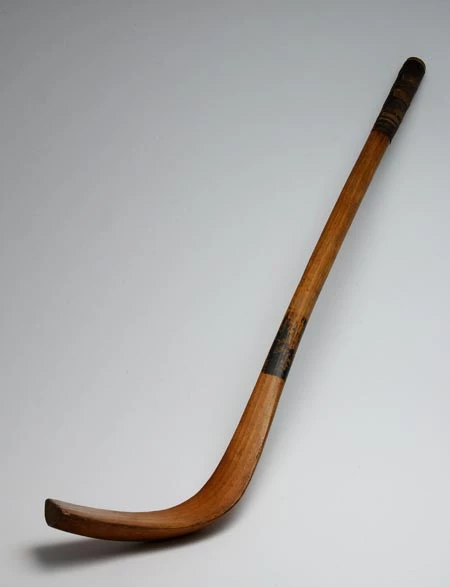
Bando stick from around 1845, belonging to Thomas Thomas, a member of the Margam Bando Boys

Bando stick from around 1845, belonging to Thomas Thomas, a member of the Margam Bando Boys

Popular across Wales, especially in Glamorgan, up until the late nineteenth century, the boisterous game of Bando was the cause of much local rivalry and violence.

Until the late nineteenth century Bando was a popular team game across Wales, especially in the county of Glamorgan. John Elias (1774-1841), the famous Calvinistic Methodist preacher from Pwllheli, Caernarvonshire, and politician David Lloyd George (1863-1945), raised in Llanystumdwy, Caernarvonshire, were both keen players in their youth, while a traveller from Cowbridge to Pyle in 1797 commented on the extreme barrenness of ash and elm on account of their being used to make bando sticks.

Bando resembled an early form of hockey, as it involved striking a ball with a curved club (called a 'bando') across a fixed area of play before attempting to drive it into the opponents' goal. The term 'bando' derives from the French 'bande', meaning 'bent stick', and the clubs used were made of hard local woods while the ball, similar in size to today's hockey ball, was often carved from holly or box.

Gambling, drink and boisterous behaviour

Bando stick from around 1845, belonging to Thomas Thomas, a member of the Margam Bando Boys

Bando stick from around 1845, belonging to Thomas Thomas, a member of the Margam Bando Boys

Matches were traditionally held between parishes, and the players often took them so seriously that they were known to train in advance. Although bando was usually played by men, women were keen spectators, and there is evidence that at a bando match played once in the Vale of Glamorgan the wife of one of the players concealed the ball with her petticoat until her spouse arrived to retrieve it. Games varied depending on the area, for there were no standardised rules, no set time limit to the play and no restrictions on the number of those taking part. Violence was commonplace, and even if a referee was present players were not deterred from hitting the opposition with their sticks. Spectators often placed bets on the final score, while local innkeepers ensured that there was always enough alcohol available. This lethal combination of gambling, drink and boisterous behaviour both on and off the pitch was eventually responsible for forcing bando out of existence.

The Margam Bando Boys

Glamorgan Volunteers Military Badge

The First Glamorgan Rifle Volunteers were formed in Margam, Port Talbot in 1859. This military badge, showing two bando sticks, was adopted by the Volunteers in 1875.

The prominence of the game in Margam, west Glamorgan, is celebrated in a nineteenth-century ballad entitled The Margam Bando Boys. This was also the year in which the Margam Volunteer Rifle Corps was formed. All the Margam Bando Boys followed their team captain Theodore Talbot into the Margam Volunteer Rifle Corps, which was formed in 1859. The badge design of this organisation included two crossed bandies or bando sticks.

Due praises I'll bestow
And all the world shall know
That Margam valour shall keep its colour
When Kenfig's waters flow

Our master, straight and tall
Is foremost with the ball;
He is, we know it, and must allow it,
The fastest man of all

Let cricket players blame,
And seek to slight our fame,
Their bat and wicket can never lick it,
This ancient manly game

Our fame shall always stand
Throughout Britannia's land;
What men can beat us? Who dare meet us?
Upon old Kenfig's sand?

Should Frenchmen raise a voice
To crush our peaceful joys,
They'll get by storming a precious warming
From Margam bando boys

Like lions we'll advance
To charge the sons of France;
The Straits of Dover we'll ferry over
And make the traitors dance

Napoleon shall repent,
If war is his intent;
He'll sadly rue it if he'll pursue it;
Proud Paris shall lament

Bold Britons rule the main,
And every hill and plain,
From every nation throughout creation
Our rights we will maintain

Welsh Surnames: Why are there so many Joneses in Wales?

8 February 2010

Genealogists and family historians are often frustrated by the limited number of surnames in Wales. Why is this so? Professor Prys Morgan, co-author of the book Welsh Surnames, explains the reasons why...

What was the old Welsh way of naming?

What was the old Welsh way of naming?

The Welsh only began to have fixed surnames about 500 years ago. Before that period, 4 — 500 years ago, the Welsh simply didn't have a system of fixed surnames at all. Well now, how did they manage without fixed surnames, you will ask. They managed perfectly well by everybody having a baptismal name, a first name, just as we have today, and then they affixed to that, by a little particle ap, which meant 'son of', they just fixed their father and their grandfather's name and their forefathers' name going back to about nine generations.

So if you asked someone who he was and he said, 'Well I'm John.' 'Oh that's not good enough. I mean John who, John what are you?' And he would say, 'Well I'm John ap John ap Gruffydd ap Meilyr ap Llywelyn ap Gwasmeir ap Gwasmihangel ap Rhys ap Gwasteilo and so on.

And the reason why each person in Wales had this long rigmarole of a genealogy instead of a name, he had a genealogy, the reason for it was very very important to society. It wasn't a matter of fancy at all, or snobbishness at all. It was that according to the laws of Hywel Dda (Hywel the Good), Welsh people didn't hold land for example as individuals. The only way they could hold land was by proving that they were descendants of a forefather, nine or ten or twelve generations back, who had held the tribal lands. And so if you couldn't show someone a satisfactory genealogy, well tough! You didn't have any right to farm the lands.

How did the Welsh get surnames?

How did the Welsh get surnames?

When about 500 years ago the Welsh were asked to take on a system of fixed surnames on the English pattern of Jackson and Greenfield and so on, they were asked to have a fixed surname and to pass that surname on to all their descendants. The Welsh were asked, 'Well, what is the thing that gives you status in your society?' And they said, 'Well we don't want nicknames, we don't want trade names. The only thing that we think of as important is our father's name.' And so they were asked, 'Well what is your father's name?' And they would say,' Well my name is John and my father is Gruffydd.' 'Alright. Well you will be John Griffiths.' And the other one would say, 'Well my father is John.' So they would say, 'Well you are to be John Jones.'

But why so many Joneses?

In exactly the same period, there was a period of streamlining and simplifying the Christian name. And this happened all over Europe, by the way, not just in Wales. But it had a very, very bad effect upon Welsh names because instead of having this magnificent variety of hundreds of ancient pagan names like Llywarch and Gwalchmai, which were — I mean Llywarch was the name of an ancient Celtic pagan god. And — or having a huge number of Catholic devotional names like Gwasdewi (the devotee of St David) or Gwasmeir (the devotee of the Virgin Mary) or Gwasmihangel (the follower of St Michael the archangel). Instead of having this huge variety of Catholic names and pagan names, people became very frightened and nervous as to what should be given as a name, and people invented a short catalogue of safe respectable names. And there were only about a dozen of them. A few safe Biblical names like John, Thomas and David, and a few safe royal names like Richard, Edward, Henry. That was the only sort of name that was safe to give. About a dozen names.

So the great tragedy was that at the very time that the Welsh were being forced by the clerks of the courts or the parsons of the parishes to take fixed surnames, it was the very time when the Welsh were being forced to take a very very small range of names. So there were hundreds and hundreds of people being forced to take fixed surnames at the very time when there were hundreds and hundreds of fathers being given the name John. So their children, also probably John, landed up in three generations, instead of being Llywarch ap Gwalchmai ap Gwasmihangel, they ended up being John Jones. And that's all. John Jones. Hundreds and hundreds of John Jones.