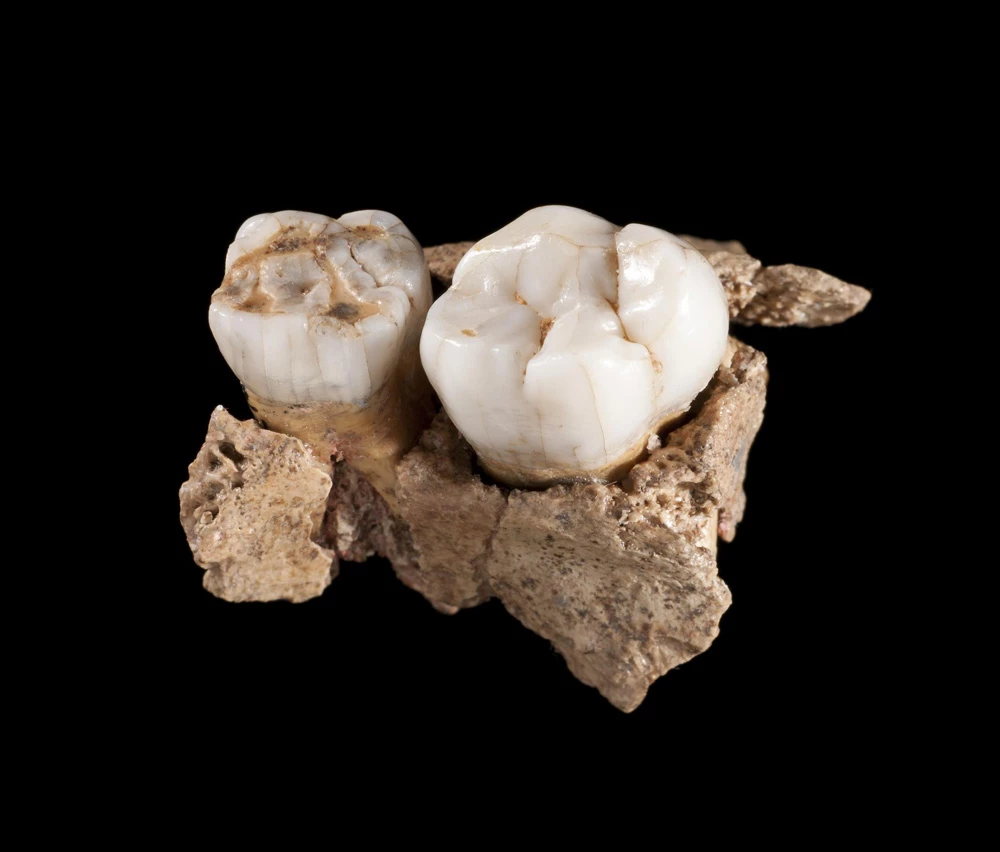
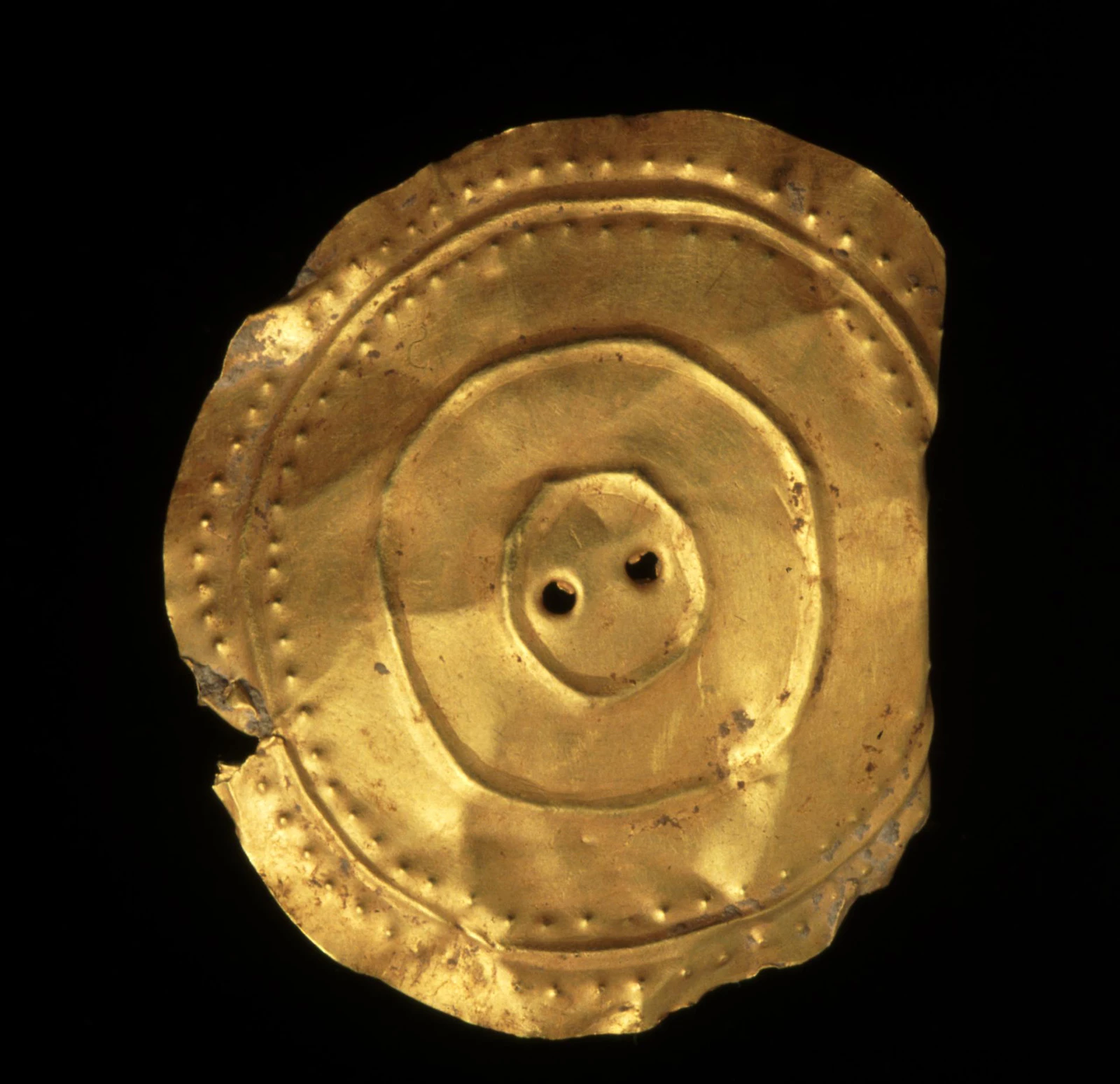
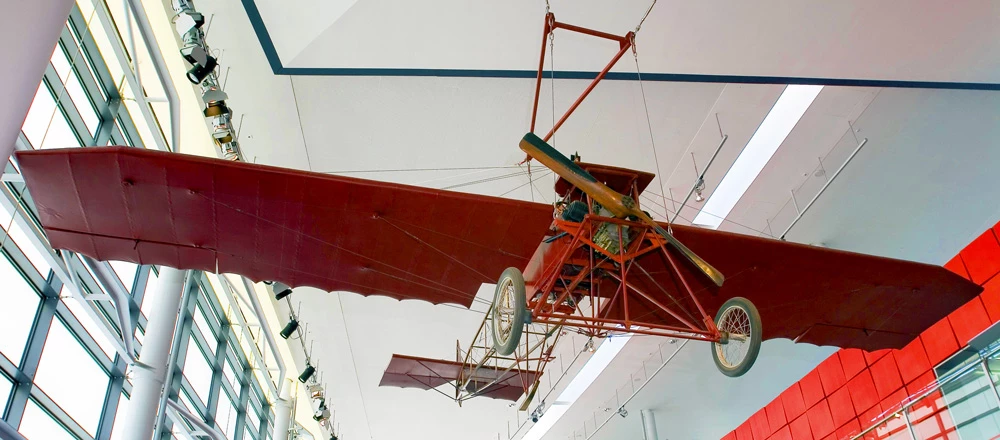
Uncovering our Collections: Half a Million Records now Online 26 March 2018 As we reveal half a million collection records for the first time, we look at some of the strangest and most fascinating objects from National Museum Wales Collections Online. This article contains photos of human skeletal fragments. The Biggest We have some real whoppers in our collections - including a full-size Cardiff Tram and a sea rescue helicopter - but the biggest item in our collection is actually Oakdale Workmen's Institute. Built in 1917, the Institute features a billiard room, dance hall and library - and is nowadays found in St Fagans National Museum of History. Horace Watkins testing his monoplane in 1908 Many of the buildings in St Fagans are part of the national collection - meaning they have the same legal status as one of our masterpiece Monets or this coin hoard. The buildings are dismantled, moved, rebuilt - and cared for using traditional techniques, by the museum's legendary Historic Buildings Unit. The Oldest The oldest human remains ever discovered in Wales These teeth belonged to an eight year-old Neanderthal boy - and at 230,000 years old, they are the oldest human remains in Wales. They were discovered in a cave near Cefn Meiriadog in Denbighshire, along with a trove of other prehistoric finds, including stone tools and the remains of a bear, a lion, a leopard and a rhinocerous tooth. These teeth are among some of the incredible objects on display at St Fagans National Museum of History The Shiniest People in Wales have been making, trading and wearing beautiful treasures from gold for thousands of years - like this Bronze Age hair ornament and this extremely blingy Medieval signet. At around 4000 years old, this sun disc is one of the earliest and rarest examples of Welsh bling One of the earliest examples of Welsh bling is this so-called 'sun disc', found near Cwmystwyth in Ceredigion. Current research suggests that these 'sun discs' were part of ancient funeral practice, most likely sewn onto the clothes of the dead before their funerals. Only six have ever been found in the UK. Most Controversial At first glance, an ordinary Chapel tea service - used by congregations as they enjoyed a 'paned o de' after a service. A closer look reveals the words - 'Capel Celyn'. The chapel, its graveyard and surrounding village are now under water. Capel Celyn, in the Tryweryn Valley, is now underwater Flooded in 1965 by the Liverpool Corporation, the Tryweryn valley became a flashpoint for Welsh political activism - creating a new generation of campaigners who pushed for change in how Welsh communities were treated by government and corporations. Curators from St Fagans collected these as an example of life in Capel Celyn - to serve as a poignant reminder of a displaced community, and to commemorate one of the most politically charged moments of the 20th century in Wales. Honourable Mention: an Airplane made from a Dining Room Chair Made from a dining room chair, piano wire and a 40 horsepower engine, the Robin Goch (Red Robin) was built in 1909 - and also features a fuel gauge made from an egg timer. The Robin Goch (Red Robin) on display at the National Waterfront Museum Its builder, Horace Watkins, was the son of a Cardiff printer - here he is pictured with an earlier, even more rickety version of his famous monoplane. Horace Watkins testing his monoplane in 1908 Our collections are full of stories which reflect Wales' unique character and history. The Robin Goch is one of the treasures of the collection, and is an example of Welsh ingenuity at its best. Half a Million Searchable Items The launch of Collections Online uncovers half a million records, which are now searchable online for the first time. “Collections Online represents a huge milestone in our work, to bring more of our collections online and to reach the widest possible audience. It’s also just the beginning. It’s exciting to think how people in Wales and beyond will explore these objects, form connections, build stories around them, and add to our store of knowledge." – Chris Owen, Web Manager Search Collections Online Plans for the future Our next project will be to work through these 500,000 records, adding information and images as we go. We'll be measuring how people use the collections, to see which objects provoke debate or are popular with our visitors. That way, we can work out what items to photograph next, or which items to consider for display in our seven national museums. Preparing and photographing the collections can take time, as some items are very fragile and sensitive to light. If you would like to support us as we bring the nation's collections online, please donate today - every donation counts. Donate Today We are incredibly grateful to the People's Postcode Lottery for their support in making this collection available online.
Everything except the squeal 30 August 2012 Pigs were once an important part of everyday rural and urban life. They were the ultimate in recycling, converting waste into a useful product. They produced large litters and fattened quickly, eating anything from grass to scraps and leftovers. Killing a pig was a social occasion and friends and neighbours would often take it in turns to slaughter their pigs and share the meat. Share and share alike Bacon hanging from the loft. It shows the way the two pieces are kept separate to ensure they do not touch each other. Slaughtering would usually be carried out between early October and late March, thus providing families with a regular supply of fresh meat throughout the winter. Pork steaks and joints incorporating the ribs and back chain were the usual cuts shared among the community. Dishes prepared from the pig's offal (e.g. faggots and brawn) were also bonus gifts exchanged between friends and relatives, and this custom was practised in parts of south Wales well into the second half of the 20th century. The pleasant task of delivering the cuts of meat was generally allocated to the children, who would be given some money for their trouble. In some districts, this custom was known as hebrwng asgwrn (sending a bone). The remainder of the pig would be salted, and would serve as the main source of meat for the household throughout the year. Nothing Wasted Before the age of mass-produced footballs, children often used a pig's bladders to play ball, shown here with a quill inserted for inflating. Nothing was wasted. The pig's head would be boiled to make brawn. The pig's bristles could be used for brushes, its skin for making leather, blood for black pudding, and even its bladder for a football. It's no wonder that so many people kept pigs. Some even say that the 'piggy bank' acquired its name because it was fed the leftovers of people's small change until it was fat enough to be smashed, and the savings retrieved. Boiling a pigs head to make brawn Part of a film recording all the processes that resulted from pig killing. The work would follow the same pattern all over Wales, apart from making faggots. This would not normally happen in Gwynedd. In that part of Wales, the liver would be fried with onions as a main meal. Making liver and onions: Mrs Edith May Hughes This particular dish was popular as swper chwarel (the evening meal after returning home from the quarry) in the slate quarrying districts of north Wales. Oral history in Welsh: Mrs Edith May Hughes, Llannerch-y-medd, Anglesey describing how her mother used to prepare liver and onions. Mrs Hughes was born in 1904. "Then there was the liver. Mam had a big iron pan on the hob. And she'd cook the liver very slowly. She always had flour to hand, and a board. Then when she went to cut up the liver, there'd be flour on the board, and the liver would be put in it. She'd slice it, and dip it in the flour before frying it. The the onions would be fried, with the liver, slowly. There'd be a panful, by the time the liver was ready. She'd take the liver out, and make a pan full of good gravy with all these onions. The liver would be put in with it and would keep nice and tender, and hot. By the time we came home from school in the evening, you see." Mrs Edith May Hughes, Llannerch-y-medd, Ynys Môn. Born 1904. Recipe: half a pound bacon rashers one pound liver onions salt and pepper a little plain flour Slice the liver and toss in seasoned flour. Fry the bacon rashers lightly and lift out on to a warm dish. Fry the liver and chopped onion in the bacon fat and then place with the bacon. Make gravy by mixing a tablespoonful of plain flour into the fat in the pan, adding a little boiling water and stir well. Boil for a few minutes. Serve this dish with boiled potatoes.
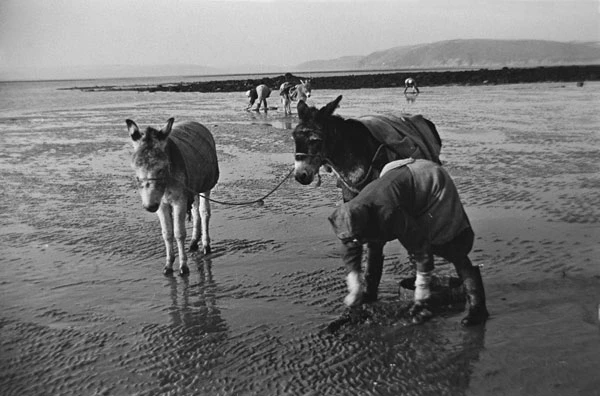
Food from our shores 23 July 2012 Introduction Cockle-gathering on Llan-saint beach. Cockle–gathering tools — a large sieve, a rake and cocses (a bent sickle blade). For centuries, communities living close to the coast have taken advantage of the source of food available to them on the beach or coastal rocks. There is extensive evidence from prehistoric and Roman sites that shellfish have been harvested in Wales throughout the centuries. Free for their collecting, shell-fish have been found in profusion along the coast, the types most commonly collected and marketed by ordinary people being cockles and mussels. Cockle gathering During the latter half of the nineteenth and early decades of the 20th century, female cockle-gatherers were regular stall-holders at urban markets in south Wales. Others sold their harvest from door to door in industrial and coastal villages in both north and south. Cockles, boiled and removed from their shells (cocs rhython), were usually carried in a wooden pail, balanced on the vendor's head, while the untreated variety (cocs cregyn) were carried in a large basket on the arm. By the time she reached her eightieth year one woman from Llan-saint, a coastal village in south Wales, had experienced sixty years of beach-combing for cockles. She referred to the usual pattern of daughters succeeding mothers in this occupation. They were dependent on this source of income. She recalled selling cockles for halfpenny a pint, but towards the end of her career the same quantity was sold for sixpence, a very mean reward for the tedious work involved. Gathering, washing and transporting them home from the beach was the initial stage, which had to be followed by a second process of washing, boiling and further transporting for marketing. Served with bread and butter or oatcakes, cockles made a light meal and were included in various dishes containing eggs or milk and chives. Women in the village of Penrhyndeudraeth, Merioneth, would sing the following rhyme as they sold the shellfish from door to door: Cocos a wya Bara ceirch tena Merched y Penrhyn Yn ysgwyd 'u tina (Eggs and cockles Thin oatcake The girls of Penrhyn Their bottoms ashake) Welsh caviar? Laver gatherer huts (1936) Another important food product from the sea was an edible seaweed called laver. In the eighteenth and nineteenth centuries women living in the coastal regions of Anglesey, Glamorgan and Pembrokeshire were ardent gatherers of laver. Collected from sea-shore rocks and stones, it had to be washed in seven lots of water to rid it of all its grit and sand. All excess moisture was then removed, and the clean laver boiled away slowly in its own moisture for some seven hours. Finally, it was drained and chopped very finely to give a greeny-black pulp. Tossed in oatmeal and fried in bacon fat, it was usually served with bacon. Know as bara lawr, llafan or menyn y môr, laverbread was prepared as a commercial product by Glamorgan families, and was sold along with the cockles on the market stalls. At one time, these two items were prepared and sold strictly by low-income families. Eventually their marketing was developed into commercial enterprises of considerable importance. Today laverbread, often called Welsh caviar, has found its way on to delicatessen counters and is offered as an hors d'œuvre in first-class restaurants.
Faggots, herring, and small beer: food for sale 2 March 2010 Introduction Market stall produce from a Carmarthen farmhouse, by Mrs E. Evans, Pencader. In the industrial towns and villages of both north and south Wales, selling traditional dishes from the home or on the local market stall used to be a prominent cottage industry. During sickness, industrial strife or if the bread-winner of the family died, the income gained from selling home-made food or drink made a considerable difference to families who could not rely on the social benefits we enjoy today. The service was also of value to the local community. Faggots In the coal-mining villages of south Wales, one of the favourite dishes prepared for selling was faggots. An observer, visiting Merthyr Tydfil market in 1881, witnessed the selling of home-made faggots there: A pile of what I took to be sausages were steaming furiously over a brazier of burning coals on one end of the bench, with a teapot leaning lazily against it and thinking aloud. Choosing what seemed the least formidable specimen of the food before me, I pointed to the brazier, but in a tone so low I was not heard 'I will take a sausage'. Obeying my gesture, the woman served, the woman served me a saucer-full of the black balls, swimming in hot gravy, and gave me a pewter spoon with which to eat it, instead of the knife and fork which might have been expected with meat. The balls proved to be not unpalatable eating, and were, according to my best judgement, made of liver. These forcemeat balls were prepared from pig's liver, lights (i.e. lungs), small pieces of pork fat and the thin membrane known as caul. The liver, lights and pork pieces were chopped finely, to which were added chopped onions, breadcrumbs, a little sage and seasoning. All were well mixed together. The caul was then cut into six-inch squares, each piece being wrapped around a tablespoonful of the mixture to form a faggot. Placed side by side in large roasting tins, they were cooked in a moderately hot oven. They would be served cold with bread and butter for lunch or a supper snack, but it was also a tradition to serve them hot with peas and gravy. Miners' wives or widows striving to augment the family income would buy pig's liver and lights regularly from the local butcher for a nominal sum of money. They would prepare this delicacy with peas to sell from their own homes. Up until the 1950s, some women in the mining villages of south-east Wales would prepare and cook faggots on specific days of the week throughout the year. Regular customers from the neighbourhood would bring along an earthen jug or bowl to carry home the required number of faggots in gravy and another bowl for peas. One woman recalled how selling a hundred faggots at two pence each every Friday evening provided her with a sum of money to buy a joint of fresh meat for her own family's Sunday lunch. Home-made faggots are still sold today by some well-established stall holders in the market towns of south Wales today. Pickled Herrings In north Wales, women would prepare pickled herrings to be sold. Herring fishing was a major industry common to all coastal villages and towns in Wales, but the selling of this traditional dish was confined to the coastal towns and slate-quarrying villages of the northern counties. Placed in an earthenware dish with onion rings, pickling spices and vinegar, water and seasoning, the herrings were baked very slowly until the bones disintegrated. This dish was prepared on specific. Men-servants were known to congregate in a particular vendor's house and while away their time in a convivial atmosphere on a Saturday evening consuming this delicacy. Others would buy them at mid-day and eat them in their own homes with jacket potatoes and oatcakes. Oatcakes, buns, and bread pudding Mrs Cathrin Evans stacking the oatcakes together to harden. Other favourite items prepared in ordinary homes in the counties of south Wales for marketing were yeasted currant buns (pice cwrens) and bread pudding (pwdin bara), while in north Wales oatcakes and muffins were the stock items sold. The art of oatcake-making was prolonged in slate-quarrying districts by women who practised it in order to augment their income. Women proficient in the same craft in agricultural areas were employed as casual labour on larger farms to bake a substantial supply of oatcakes for the harvest period or for the winter months. Toffee and small beer Adding icing sugar to prevent toffee sticking together In the industrial towns of both north and south Wales, home-made toffee and small beer were luxury items sold by ordinary housewives. Home-made toffee, known as cyflaith or india roc in the north, or as taffi dant, or losin dant in the south, would be sold from home or on local market stalls. One particular family in the coal-mining district, at the turn of the century, developed their toffee-making business to the extent that they eventually established a sweet-manufacturing business. Their shop, meeting the demands of the mining community, became a centre where people met to exchange views on cultural and religious topics. Diod fain or diod ddail (small beer) was a favourite drink with the coal-miner and slate quarry-worker alike: as a thirst quencher it was drunk daily by members of both communities. Local demand proved profitable to many widows or others anxious to find a source of income. They would brew it weekly in large quantities to sell to regular customers for two pence per quart bottle. One woman from Glamorgan, recorded by Amgueddfa Cymru, related how she collected large quantities of nettle-leaf tips and dandelion leaves, in season. They were washed, dried and stored in clean sacks to provide her with a continuous supply throughout the whole year. A quantity of these leaves, together with ground ivy, red-currant leaves and root ginger were boiled, the liquid was strained and sweetened with sugar. Yeast was added to the cooled mixture, which was cooled and allowed to stand overnight. On the following day it was poured and corked securely. In the early decades of the 20th century, the woman recalled selling an average of forty-two bottles per week making a profit of seven shillings, a sum which at that date was an invaluable addition to the low family income. She was one of many other industrious women who supplied their neighbourhood with this delectable drink.
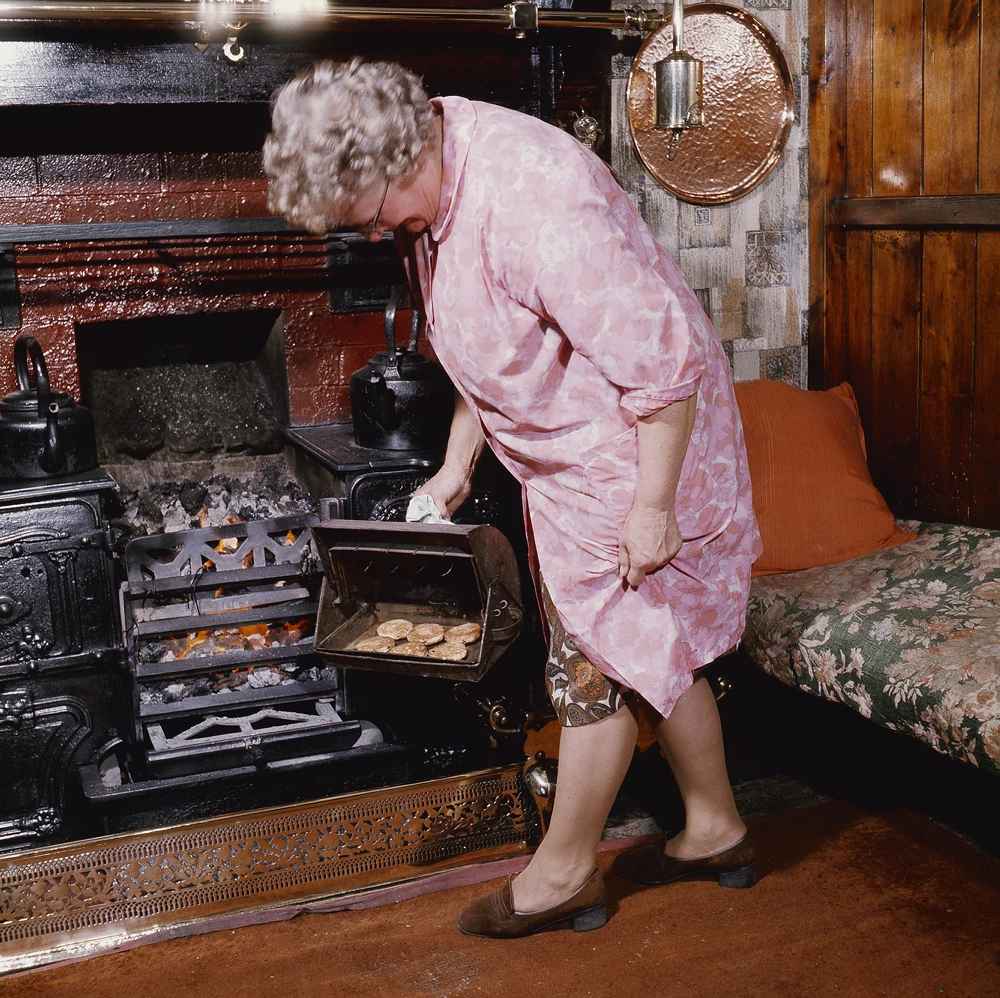
Traditional Welsh foods 23 April 2007 Margaret Maddocks baking round cakes in a Dutch oven, North Cornelly, Glamorgan.