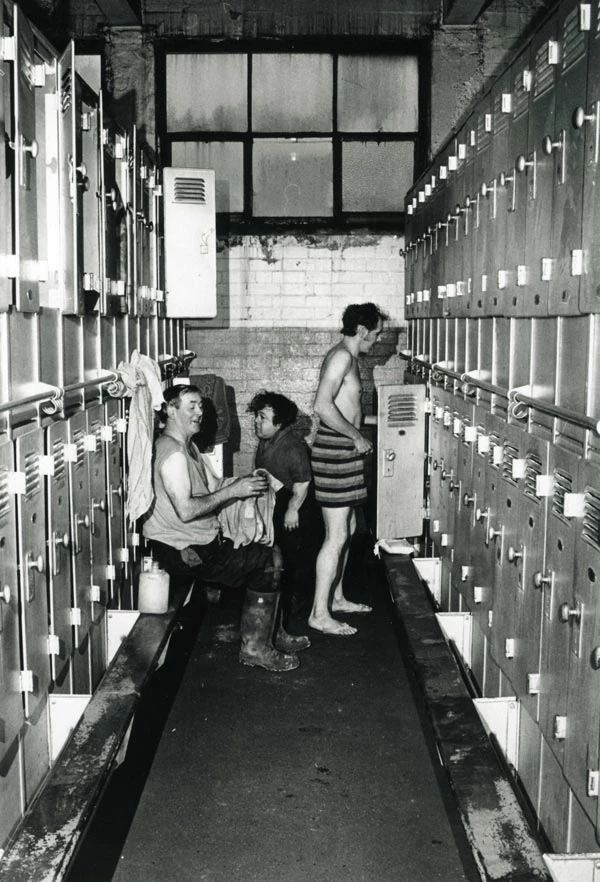
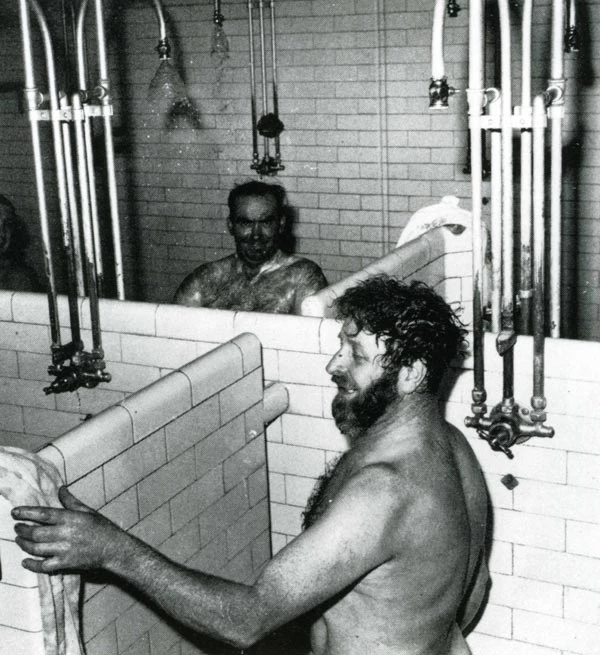
Pithead Baths Ceri Thompson, 30 June 2011 The pithead baths at Bit Pit: National Coal Museum All prevailing coal-dust Before pithead baths became widely available, most coal miners, already exhausted from a day's work had little choice but to travel home from work still filthy with coal dust. Their clothing was often soaking with sweat and mine water and they were at risk from contracting pneumonia, bronchitis or rheumatism. Once home they had the task of removing as much of the dirt as possible in a tin bath in front of the fire. The women of the house were usually responsible for the heating of water for the miner's bath and the cleaning and drying of his clothes. In addition it was a constant battle to clean the house from the all-prevailing coal dust. This was never ending and back breaking work and exhaustion and physical strain often led to serious health problems, leading in some cases to premature births and miscarriages. It took considerable lobbying by social reformers, working under the banner of the 'Pithead Baths Movement', to convince the Government, mine owners and even some of the miners and their wives, that pithead baths were needed. From the initial campaigns of the 1890s it was a long, hard struggle to the establishment in 1926 of a special fund for the building of baths under the auspices of the Miners' Welfare Committee. Social Reform Pithead baths had been in use in Belgium, France and Germany since the 1880s. In 1913, a delegation was sent by David Davies, the proprietor of the Ocean Coal Company and an advocate of social reform, to see these European baths. This visit led to the building of the first Welsh baths at Deep Navigation Colliery, Treharris, in 1916. The success of the Deep Navigation baths played a key part in the propaganda campaign by those who wished to see pithead baths at every Welsh colliery. In 1919 the British Government established a Royal Commission, (the 'Sankey Commission'), to investigate social and living conditions in the coalfields. As a result a 'Miners' Welfare Fund' was set up to '... improve the social well being, recreation, and condition of living of workers in or about coal mines.' This fund gained its income through a levy of a penny on every ton of coal mined. The fund was used for various purposes including the provision of playing fields, swimming pools, libraries, and institutes. From 1926, an additional levy was raised specifically to fund a baths building programme. Modern Architectural style During the period the Miners' Welfare Fund was in existence, from 1921 to 1952, over 400 pithead baths were built in Britain. The Miners' Welfare Committee's own architects' department established the most cost-effective way of constructing, equipping and operating baths buildings. By the 1930s, a 'house style' had developed, based on the 'International Modern Movement' of architectural design. Baths stood out amongst other colliery buildings with their flat roofs, clean lines and the plentiful use of glass to give a natural light and airy feel. Some baths, such as the one at Big Pit, were rendered white which, even today, makes it a prominent landmark on the hillside. The limited resources available to the Miners' Welfare Committee meant that many Welsh collieries were not provided with baths until the 1950s. After the nationalisation of the coal industry in 1947 the provision of pithead baths became the responsibility of the National Coal Board.
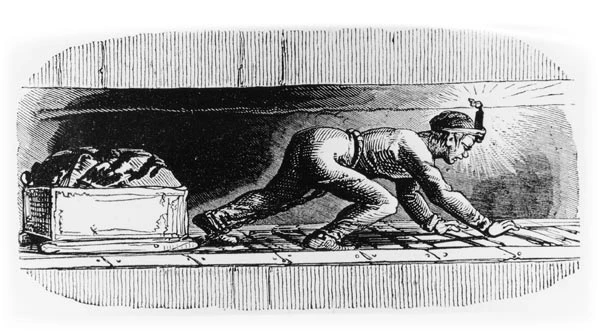
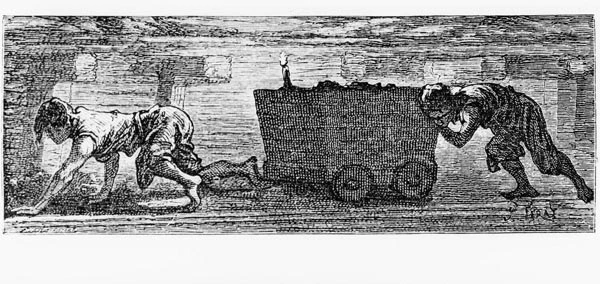
Children in Mines 11 April 2011 All alone in the dark Mary Davis was a 'pretty little girl' of six years old. The Government Inspector found her fast asleep against a large stone underground in the Plymouth Mines, Merthyr. After being wakened she said: "I went to sleep because my lamp had gone out for want of oil. I was frightened for someone had stolen my bread and cheese. I think it was the rats." Susan Reece, also six years of age and a door keeper in the same colliery said: "I have been below six or eight months and I don't like it much. I come here at six in the morning and leave at six at night. When my lamp goes out, or I am hungry, I run home. I haven't been hurt yet." In Harm's Way A coal mine was a dangerous place for adults, so it is no surprise that many children were badly injured underground. "Nearly a year ago there was an accident and most of us were burned. I was carried home by a man. It hurt very much because the skin was burnt off my face. I couldn't work for six months." Phillip Phillips, aged 9, Plymouth Mines, Merthyr "I got my head crushed a short time since by a piece of roof falling..." William Skidmore, aged 8, Buttery Hatch Colliery, Mynydd Islwyn "...got my legs crushed some time since, which threw me off work some weeks." John Reece, aged 14, Hengoed Colliery Child Colliers and Horse Drivers Some children spent up to twelve hours on their own. However, Susan Reece's brother, John, worked alongside his father on the coalface:- "I help my father and I have been working here for twelve months. I carry his tools for him and fill the drams with the coal he has cut or blasted down. I went to school for a few days and learned my a.b.c." John Reece, aged 8, Plymouth Mines, Merthyr Philip Davies had a horse for company. He was pale and undernourished in appearance. His clothing was worn and ragged. He could not read:- "I have been driving horses since I was seven but for one year before that I looked after an air door. I would like to go to school but I am too tired as I work for twelve hours." Philip Davies, aged 10, Dinas Colliery, Rhondda Drammers pulled their carts by a chain attached at their waist. They worked in the low tunnels between the coalfaces and the higher main roadways where horses might be used. The carts weighed about 1½cwt. of coal and had to be dragged a distance of about 50 yards in a height of about 3 feet. "My employment is to cart coals from the head to the main road; the distance is 60 yards; there are no wheels to the carts; I push them before me; sometimes I drag them, as the cart sometimes is pulled on us, and we get crushed often." Edward Edwards, aged 9, Yskyn Colliery, Briton Ferry For this a drammer would earn about 5p a day. Three Sisters The Dowlais iron works also owned iron and coal mines; they were the largest in the world at this time and supplied products to many parts of the world. However, they still relied on children for their profits. Three sisters worked in one of their coal mines:- "We are doorkeepers in the four-foot level. We leave the house before six each morning and are in the level until seven o’clock and sometimes later. We get 2p a day and our light costs us 2½p a week. Rachel was in a day school and she can read a little. She was run over by a dram a while ago and was home ill a long time, but she has got over it." Elizabeth Williams, aged 10 and Mary and Rachel Enoch, 11 and 12 respectively, Dowlais Pits, Merthyr After the Act The publication of the Report and the ensuing public outcry made legislation inevitable. The Coal Mines Regulation Act was finally passed on 4 August 1842. From 1 March 1843 it became illegal for women or any child under the age of ten to work underground in Britain. There was no compensation for those made unemployed which caused much hardship. However, evasion of the Act was easy - there was only one inspector to cover the whole of Britain and he had to give prior notice before visiting collieries. Therefore many women probably carried on working illegally for several years, their presence only being revealed when they were killed or injured. The concept of women as wage earners became less acceptable in the mining industry as the years went by. However, a small number of female surface workers could be found in Wales well into the twentieth century. In 1990 the protective legacy was repealed and after 150 years women are once again able to work underground.
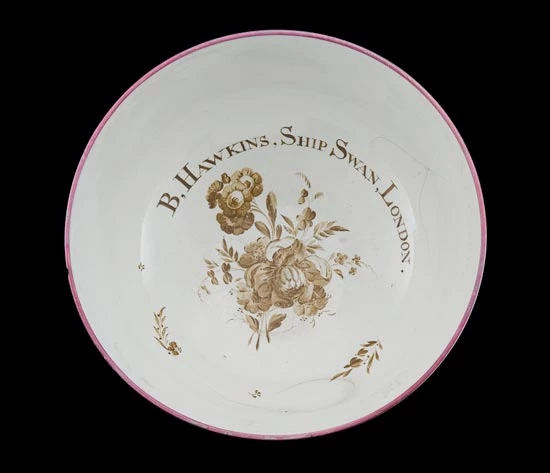
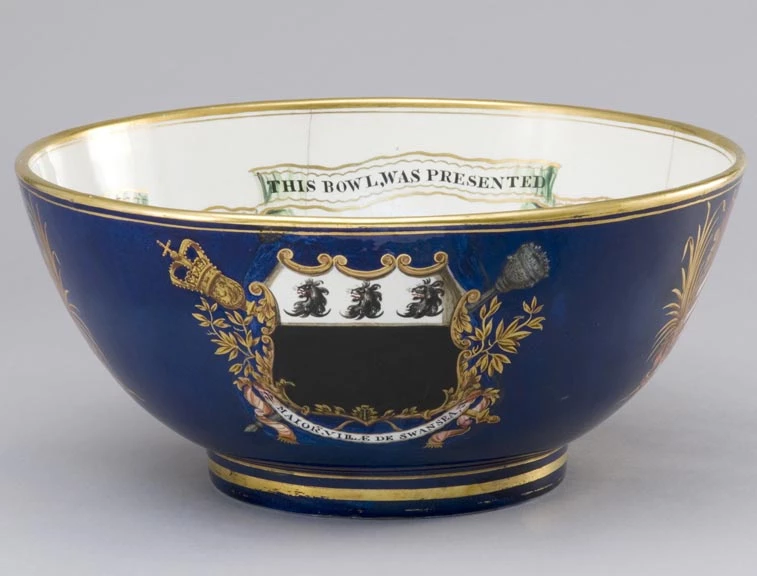
Drinking punch in the eighteenth century Rachel Conroy, 28 January 2011 Figure 1: Silver punch ladle with mahogany handle, by Dorothy Mills and Thomas Sarbitt, London, 1752-3. Figure 2: Silver gilt punch bowl designed by Robert Adam and made by Thomas Heming, London, 1771-2. Punch was first drunk in Britain in the 1650s. This was around the same time that tea, coffee and hot chocolate became available. By the turn of the eighteenth century, it was an incredibly popular drink. Making punch Punch was made using a mixture of expensive imported ingredients. The alcohol content was provided by rum or brandy, to which sugar, citrus fruit, spices – usually grated nutmeg – and water were added. The Punch Bowl Using an elegant ladle, punch was served from large communal bowls into individual glasses (Figure 1). One of the most important punch bowls in Amgueddfa Cymru’s collection is that designed by Robert Adam for Sir Watkin Williams-Wynn (Figure 2). It was commissioned to celebrate the success of Sir Watkin's horse, Fop, at the Chester Races and would have been displayed prominently on the sideboard at his fashionable London home. Punch was often drunk at gatherings of clubs and societies, usually held in taverns, coffee houses, or special punch-houses (Figure 3). These were almost exclusively attended by men. Drinking punch seems to have been a highly sociable act that strengthened social ties. A letter published in 1736 describes this eloquently: "…we hope nothing will ever hinder a Man drinking a Bowl of Punch with his Friend, that’s one of the greatest pleasures we enjoy in the Country, after our labour. Figure 3: Earthenware punch bowl by the Cambrian Pottery, Swansea, about 1800-1810. It is inscribed 'B, HAWKINS, SHIP SWAN, LONDON', suggesting it was used at a tavern or punch-house. Figure 4: Delftware punch bowl inscribed 'Edward Jones Scoole Master 1751', probably Liverpool, 1751. Figure 5: Large salt-glazed stoneware goblet, possibly by Mortlake, c. 1794-5. Punch bowls were made to commemorate special events; they were decorated with the names of guilds or societies, or masculine symbols such as ships. An interesting example in Amgueddfa Cymru’s collection is inscribed ‘Edward Jones Scoole Master 1751’ (Figure 4). It has a painting of a school teacher and his pupils reading together. It is easy to imagine such a personal object being commissioned by Edward Jones, or perhaps given to him as a gift. Raucous and uncivilised parties: During the first half of the eighteenth century, there was widespread alarm about the dangers of alcoholism, particularly resulting from the widespread availability of cheap, home-distilled gin. Excessive punch drinking was often associated with bad behaviour. Excessive drinking in general was often linked with moral decline, and punch parties were usually satirised by contemporary artists as raucous and uncivilised. William Hogarth’s A Midnight Modern Conversation, published in 1732/33, is perhaps the best known illustration of a punch party. It was immensely popular and was soon reproduced on punch bowls and other vessels for consuming and serving alcohol (Figure 5). Eighteenth century binge drinking Old Bailey records often support the linking of excessive punch drinking with unsociable, even criminal behaviour. This includes stealing expensive punch bowls from public houses and people’s homes and sharing a bowl of punch with a victim before swindling them. From around the 1750s, punch also began to be served from porcelain and earthenware punch-pots. These are very similar in form and sometimes in decoration to teapots, but are much larger (Figure 6). Unlike open punch bowls, punch pots enabled the drink to be served in a controlled manner by one person – just like tea. This mediated form of serving might have been considered more civilised and refined than communal punch bowls, where people could help themselves and easily drink to excess. Punch drinking was at its most popular during the mid-eighteenth century, but it continued to be enjoyed into the nineteenth century. A fine earthenware punch bowl was made for John Richardson by the Cambrian Pottery in 1845, the same year that he served as Mayor of Swansea (Figure 7). Interestingly, he commissioned the bowl as a birthday gift for his infant grandson and it is decorated with several Richardson coats of arms. Part of the inscription reads ‘GAILY STILL OUR MOMENTS ROLL, WHILST WE QUAFF THE FLOWING BOWL’. Figure 6: Soft-paste porcelain punch pot, Derby, 1760-2 Figure 7: Earthenware punch bowl by the Cambrian Pottery, Swansea, 1845. References: Harvey, Karen. 'Barbarity in a tea-cup? Punch, domesticity and gender in the eighteenth century', Journal of Design History, 21 (3) (2008), pp. 205-21. (unknown) 1736 A collection of all the pamphlets that were written pro and con on the British distillery, whilst the act for laying a duty upon the retailers of spirituous liquors, and for licensing the retailers thereof, was depending in Parliament. London. Eighteenth Century Collections Online. Web. 12 Jan 2010. http://galenet.galegroup.com/servlet/ECCO http://www.oldbaileyonline.org
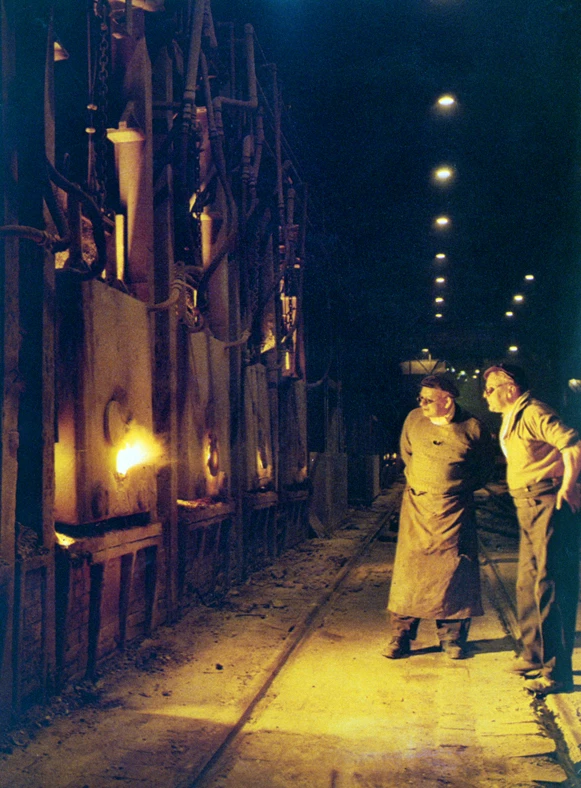
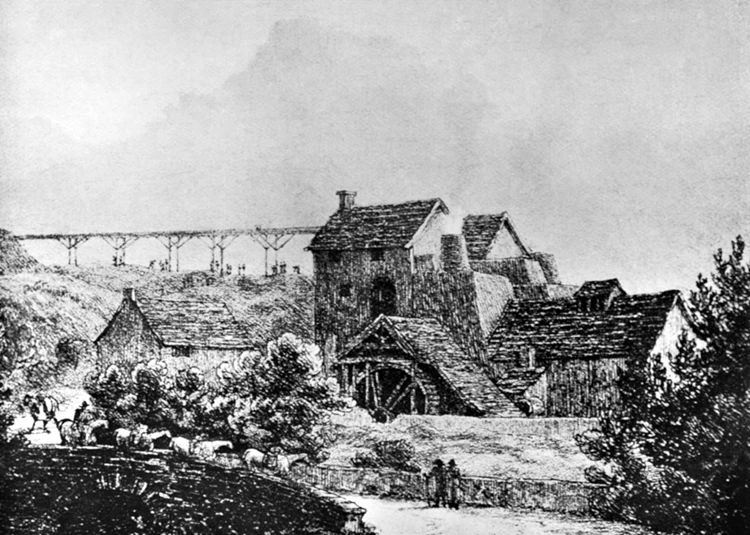
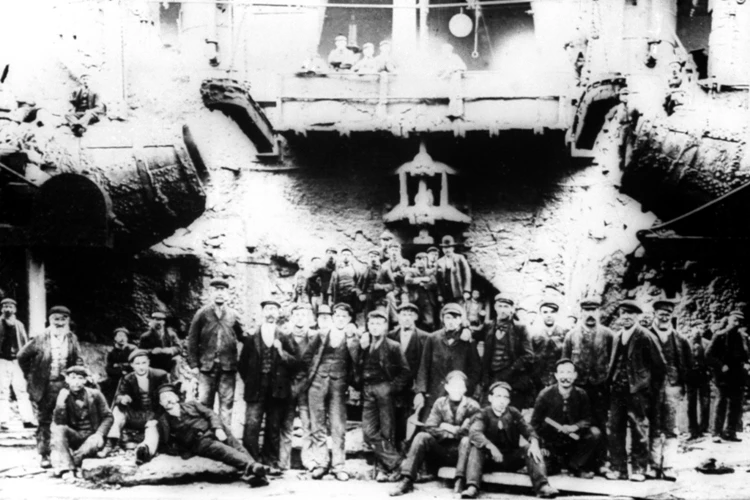
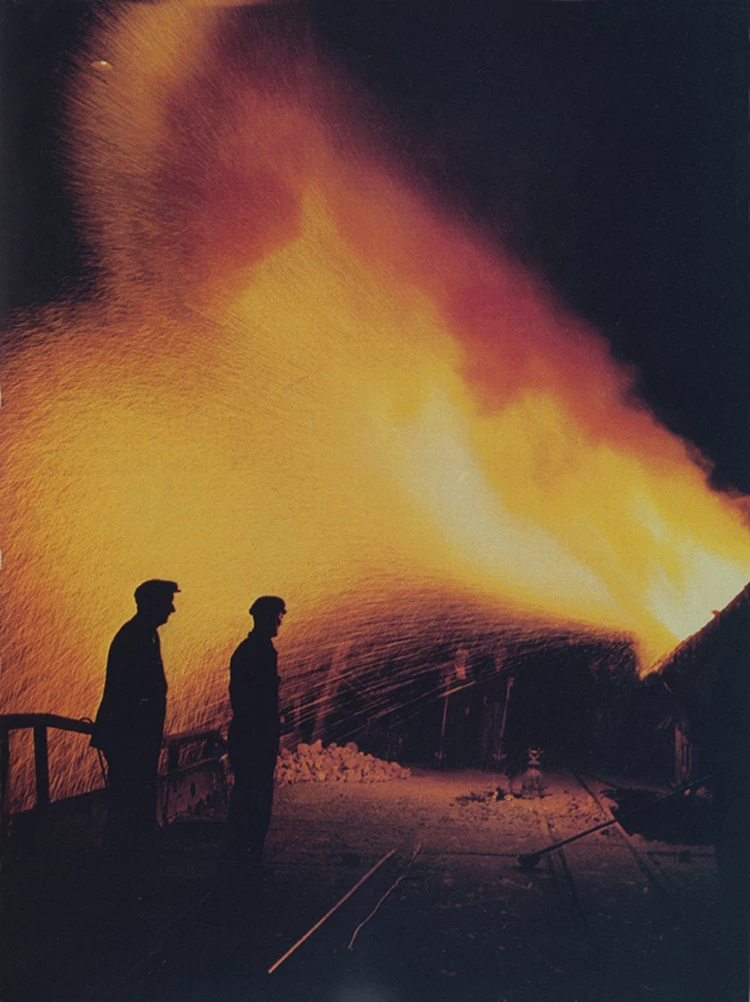
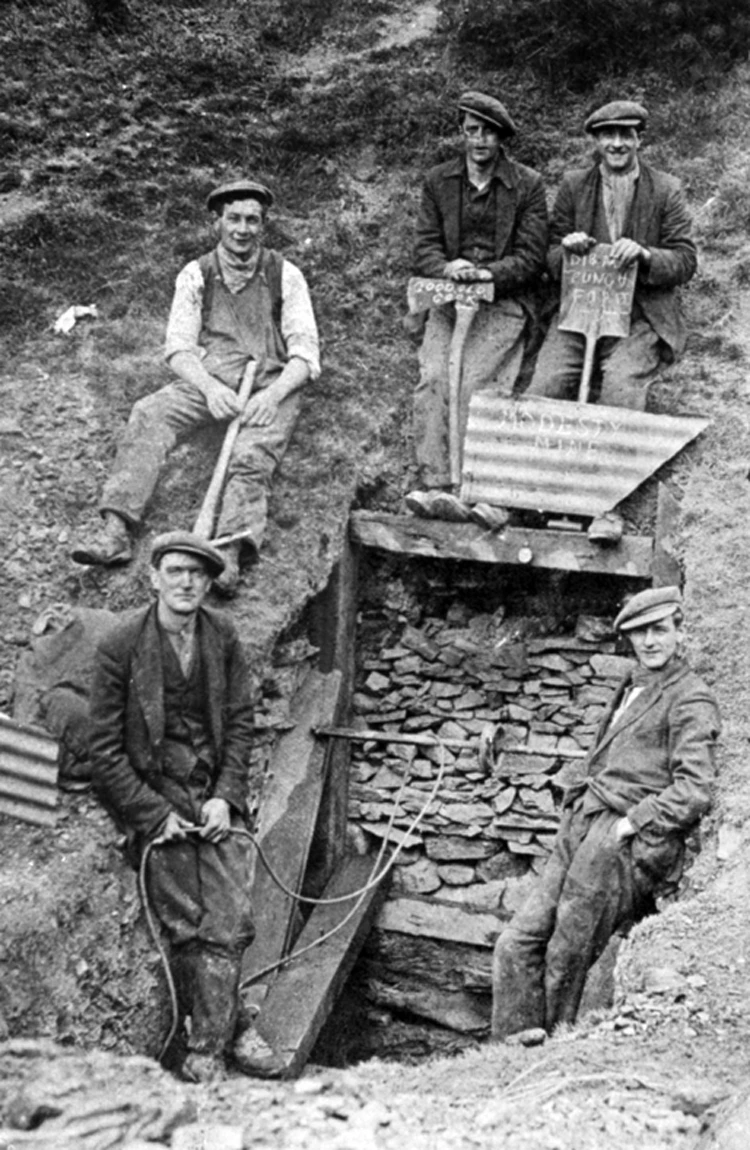
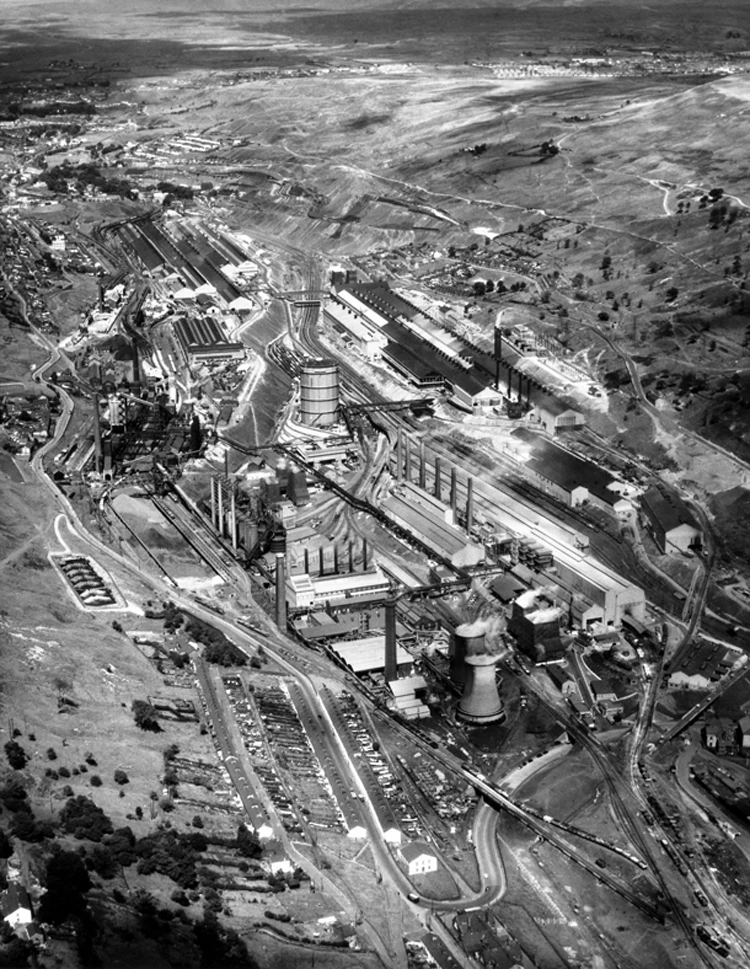
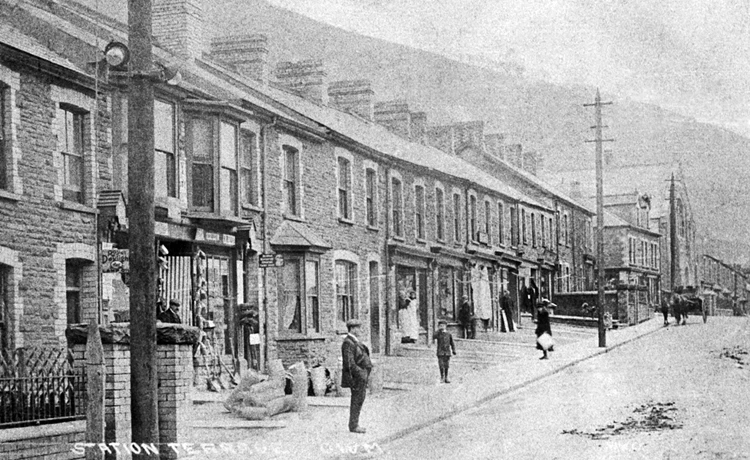
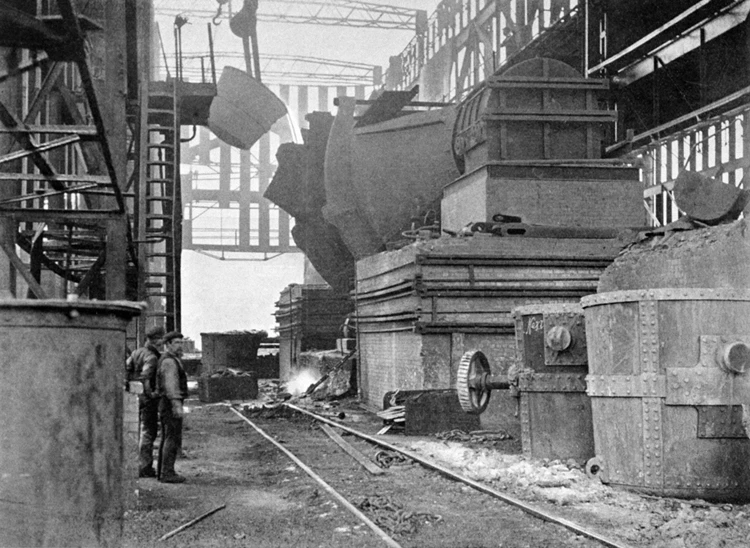
The Ebbw Vale Steel, Iron & Coal Company 23 July 2010 Ebbw Vale Open Hearth Furnaces, 1960s. The early iron industry of South Wales was small scale and rural; blast furnaces at Clydach Ironworks, 1813. Sir Henry Bessemer paid the Ebbw Vale Company £30,000 for their patents on steel making (George Parry received £10,000) and in 1866-68 the company erected six Bessemer Converters to make steel, one of the first two installations in Britain. A Bessemer converter "on the blow" is a dramatic sight. The process had not changed at Ebbw Vale in the 1950s when this photograph was taken. The Ebbw Vale Steel, Iron & Coal Company The Ebbw Vale Steel, Iron & Coal Company was based in south Wales. Founded in 1790, it was the largest tinplate producer in the country, until its closure in 2002. In the Edwardian period it employed 34,000 men, and by the mid-nineteenth century it was at the forefront of technological development, especially in the conversion of iron to steel. It gained further British technological firsts after a complete rebuild in 1936-8 and went on to outlast all the other Heads of the Valleys iron and steel plants. Beginnings Ebbw Vale Ironworks was part of a chain of works along the northern rim of the south Wales coalfield where the raw materials for making iron - iron ore, coal and limestone - occurred together. It was established in 1790 by a partnership led by Jeremiah Homfray, owner of the Penydarren Ironworks at Merthyr Tydfil. In 1796 he sold the works to the Harford family who ran it for the next half a century, building three more blast furnaces, puddling furnaces to produce wrought iron and rolling mills to make rails. The Harfords also bought the three blast furnaces at Sirhowy in 1818, to increase their supplies of pig iron for the furnaces and mills. Expansion The Harfords went bankrupt in 1842 when their overseas investments collapsed. Their works were kept going by trustees and in 1844 Abraham Derby IV, the Coalbrookdale ironmaster, came out of semi-retirement to form the Ebbw Vale Company. The company rapidly expanded, buying the neighbouring Victoria Ironworks in 1848, Abersychan Ironworks in 1852, Pentwyn Ironworks in 1858 and Pontypool Ironworks in 1872. When the local iron ores became exhausted the company bought iron mines in Somerset, Gloucestershire and Spain during the 1850s. In 1854-5 George Parry, the works chemist, experimented with steel making but it was not until 1868, when the company installed a Bessemer plant, that regular steel production began. The cost of expansion The company was reformed as the Ebbw Vale Steel, Iron & Coal Company Limited in 1868. The cost of continued expansion in the boom of the early 1870s crippled the company in the depression that came later in the decade. Iron trade declined as steel superseded iron - fortunately the Ebbw Vale Company had been an early innovator in steel production. From 1873 the company was controlled by Manchester financiers, who did not seem to understand the iron and steel trade. The works declined; Pentwyn closed in 1868, Sirhowy and Abersychan closed in 1882-3, Pontypool in 1890 and by 1892 the concern was almost bankrupt, with the plant described as obsolete and the machinery in disrepair. Changing direction — the insatiable demand for Welsh Coal From the 1870s onwards the Ebbw Vale Steel, Iron & Coal Company's prosperity lay in coal rather than iron and steel. In 1873 it was already the largest coal producer in south Wales, but the bulk of its coal was being used in the coke ovens and the steam engines of the ironworks. In the 1870s and 1880s the company switched direction to take advantage of the spectacular growth in demand for Welsh steam coal to drive the world's ships, trains and steam engines. As the older collieries in the Ebbw Vale area were becoming exhausted it sank two new collieries - Waunlwyd (1874-7) and Marine Colliery at Cwm (1889-91). Ebbw Vale coal became a familiar sight all over the world. The increasingly insatiable demand for Welsh steam coal during the first two decades of the twentieth century enabled the company to rapidly expand and modernise its collieries. Some of the older collieries were closed and output was doubled at Waunlwyd and Marine. In twenty years the company doubled its output to 2 million tons. More coal meant more miners and the company's workforce rose to nearly 6,000, and profits rose dramatically too. Digging for coal at Llangynidr Road during the 1926 miner's lockout. An air view of the works in August 1957 As Marine Colliery expanded so did the village of Cwm where the bulk of the miners and families lived. Station Terrace, Cwm's first major shopping centre, in 1913. The 750-ton hot metal receiver in the Bessemer Steel Works was the largest in the World when installed in 1905-06. On 30 October 1929 the works were closed. In 1936 they were demolished. Coal mining and its landscape, Waunlwyd, 1950s Modernisation In 1892 control of the company returned to iron and steel interests. The companies finances were consolidated, with expansion and modernisation beginning in 1897. In 1910 a number of south Wales colliery owners led by Viscount Rhondda became directors. In May 1911, under the impression that profits would be increased by concentrating on coal production alone, they closed the iron and steel works. However, their hopes were not fulfilled and those works reopened in April 1912. The last act of expansion before the First World War was the construction of sheet mills in 1912. Between 1918 and 1920 the company increased its capital from £1.8 million to £7.7 million and embarked on further expansion. Two modern blast furnaces built at Victoria in 1920-23 replaced the four old Ebbw Vale blast furnaces. Plants were installed to produce steel railway sleepers and weldless tubes and couplings. However, the international iron and steel trade slumped in the early 1920s. Troubled times The golden age of the early twentieth century was shattered from the 1920s onwards. The boom in the coal export market collapsed as ships switched to oil for fuel. After 1922 the company's high profits turned into big losses. Closure The 1920s and 1930s were the "Years of the Locust" as wages fell, collieries closed and unemployment rocketed. There were bitter and long industrial disputes in 1921 and 1926 and the financial crisis of 1929 affected the Ebbw Vale company badly. Its works closed, putting almost half the town's population out of work. In 1935 the company went into liquidation and all its collieries were sold to Partridge Jones and John Paton Ltd, the largest colliery owner in the Gwent valleys. Rebuilding To remain internationally competitive, Britain's tinplate industry required an American-style steel stripmill. A new stripmill was planned in Lincolnshire but Government intervention caused it to be relocated to Ebbw Vale, and in 1936-8 the old works was cleared and an integrated iron, steel and tinplate plant built. The former collieries of the Ebbw Vale Steel, Iron & Coal Company were taken over by the National Coal Board when the whole industry was nationalised in 1947. In that year, three were still in production — Waunlwyd, Cwmcarn and Marine. They were closed in 1964, 1968 and 1988 respectively. Up to the present The first electrolytic line outside the USA was built at Ebbw Vale in 1947-8. The Bessemer and open hearth steel plants were expanded and in 1960 Britain's first LD converter was installed at the works. Such plant was soon to supersede all Bessemer and open hearth steel plants in the UK. Two further electrolytic tinning lines were installed in 1961 and 1969, with galvanising lines added in 1957 and 1969. Rationalisation in the steel industry following nationalisation in 1967 led to the steel plant at Ebbw Vale closing in 1978. Until closure in 2002 the works concentrated on tinplating and galvanising, and was the largest tinplate producer in Britain.