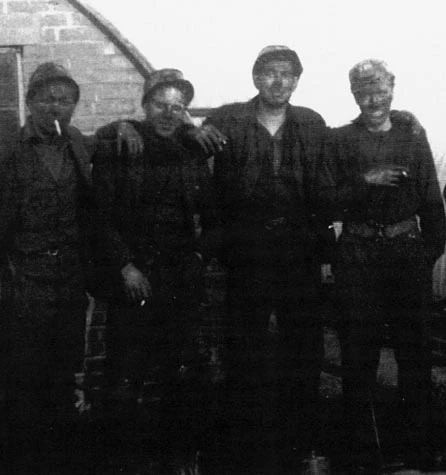
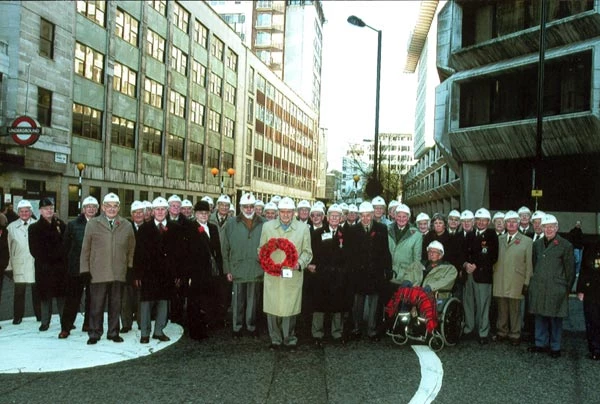
Remembering the Bevin Boys in the Second World War 3 January 2008 Bevin Boys commemorative banner Bevin Boys from South Wales Bevin Boys Association blazer badge. A retired pit pony poses with two former Bevin Boys at the annual reunion at Trentham Gardens, Stoke-on-Trent. Former Bevin Boys attending the Remembrance Parade in London on the 14th November 2004 The underground front The story of the Bevin Boys miners has been largely untold; those many men who spent their war on the so-called 'underground front' went unrecognized for almost half a century. When Britain declared war in 1939, thousands of experienced miners left the mines to join the armed services or transfer to higher-paid 'war industries'. By the summer of 1943 over 36,000 men had left the coal industry . The British government decided that it needed around 40,000 men to take their places. Ernest Bevin In December 1943, Ernest Bevin, the wartime Minister of Labour and National Service, devised a scheme whereby a ballot took place to put a proportion of conscripted men into the collieries rather than the armed services. Every month, ten numbers were placed in a hat; two numbers were drawn out, and those whose National Service registration number ended with those numbers were directed to the mining industry. These "ballotees" became known as "Bevin Boys". Alongside the ballotees were the "optants", men who had volunteered for service in the coal mines rather than the armed services. Between 1943 and 1948, 48,000 young men were conscripted for National Service Employment in British coal mines. Contrary to a common belief at the time, only 41 of them were conscientious objectors. Bevin Boys, therefore, came from all social classes and regions in Britain, not just the mining areas. Many had only been vaguely aware of the mining industry before being drafted. Most had set their sights on a career in the armed services and were horrified to be sent to the collieries instead. Punishment In April 1944 the Colliery Guardian reported that 135 ballotees had been prosecuted for failing to comply with the direct labour order. Thirty two went to prison, although 19 of them were released when they eventually agreed to go into the mining industry. Picks and shovels Unlike the ordinary miners, who wore their own clothes, Bevin Boys were issued with overalls, safety helmet and working boots. However, they still had to pay for their own tools and equipment, which led to complaints that the infantry were not expected to supply their own rifles so why were they expected to buy picks and shovels! Only a small proportion of Bevin Boys were actually employed cutting coal on the coal face, although some worked as colliers' assistants filling tubs or drams. The majority worked on the maintenance of haulage roads, or generally controlled the movement of underground transport. A small number who had previous electrical or engineering experience were given similar work in the collieries. Bevin Boys suffered from resentment from local mining families who had seen their own children drafted into the armed services only to be replaced by "outsiders". In addition, just being young men out of uniform could lead to abuse from the public or attention from the police as possible deserters, "army dodgers" or even enemy spies. It is not surprising that they suffered from high absentee rates. A very small number stayed in mining after the war, but most couldn't wait to leave. Official records destroyed The ballots were suspended in May 1945, with the last Bevin Boys being demobbed in 1948. Unlike other conscripts, they had no right to go back to their previous occupations, they received no service medals, "demob" suit or even a letter of thanks. Because the official records were destroyed in the 1950s, former Bevin Boy ballotees cannot even prove their service unless they have kept their personal documents. The first official Bevin Boys reunion was held at the former Chatterley Whitfield Mining Museum in 1989. More have been held at various venues since then. However, it was not until 1995, 50 years after Victory in Europe Day, that the British government finally recognized their service to the war effort and former Bevin Boys are now officially allowed to take part in the Remembrance Day service at Whitehall. For any information on the Bevin Boys Association please contact: Warwick H Taylor, Vice President, Bevin Boys Association, 1 Rundlestone Court, Dorchester Dorset, DT1 3TN This article forms part of a booklet in the series ' Glo ' produced by Big Pit: National Mining Museum.
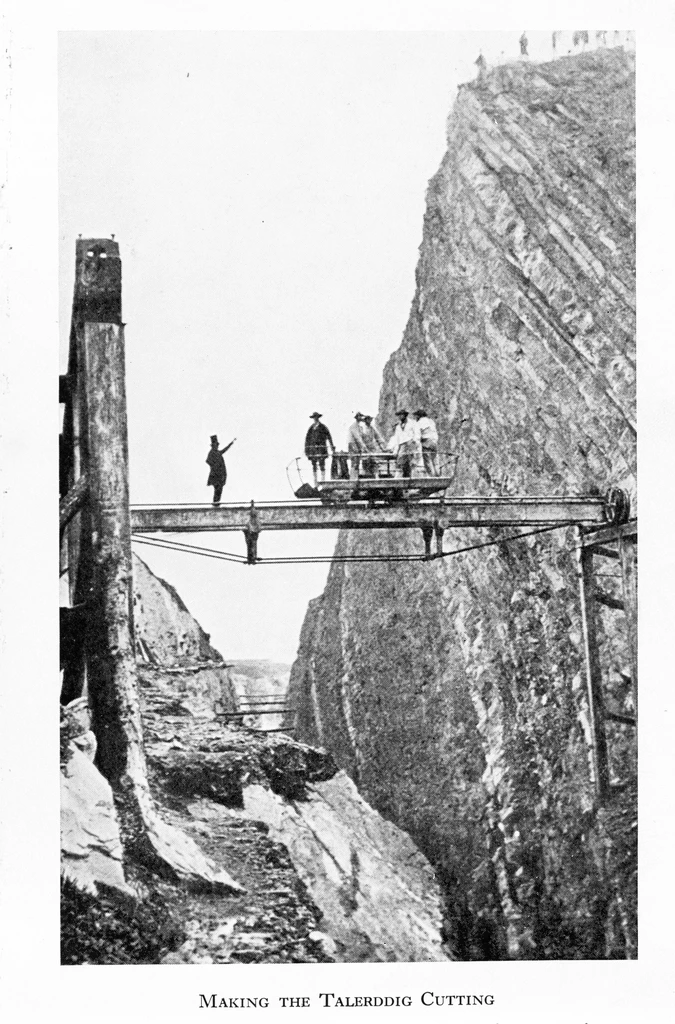
The industrial legacy of David Davies 29 July 2007 David Davies (1818-1890) This image shows him in a rare moment of repose. Private collection (Lord Davies) The completed Talerddig cutting, the deepest in the world at that time. Private Collection (Lord Davies) No.1 dock in 1913, when Barry docks exported 11m tons of coal. What appears to be a solid level surface in the right foreground of this scene in is fact water — thick with coal dust. David Davies of Llandinam The gifts and bequests of Gwendoline and Margaret Davies completely transformed the range and quality of Wales's national art collection. The sisters were the granddaughters of David Davies of Llandinam, one of the great entrepreneurs of 19th–century Wales. Gwendoline and Margaret Davies were the granddaughters of David Davies of Llandinam, one of the great entrepreneurs of 19th–century Wales. David Davies started in life as a tenant farmer and sawyer. He made his fortune during the industrialisation of Victorian Wales. He built much of the railway system in mid-Wales, became a pioneer of the coal industry in the Rhondda valley and was the driving force behind the construction of Barry dock in south Wales. Railways Starting with the construction of the Newtown & Llanidloes Railway in 1859, he became involved in the construction of a number of railways in mid-Wales, the Vale of Clwyd and Pembrokeshire. His greatest achievement as a railway engineer was the great Talerddig cutting on the Newtown & Machynlleth Railway, completed in 1862 and the deepest in the world at that time. Not all the ventures in which Davies was involved succeeded — the grandly named Manchester & Milford Railway reached neither destination! Coal – 'Davies yr Ocean' 1864 marked a decisive turning point in David Davies's career when he took out a pioneering mineral lease in the south Wales valleys. It took two years before the first pits were in full production. Five more collieries were opened by 1886. In the following year they were vested in a new public limited company, the Ocean Coal Co. Ltd. At the time of Davies's death in 1890, it was the largest and most profitable coal company in south Wales. From pit to port The crowning achievement of David Davies's career was the construction of the dock at Barry, south Wales. Davies and a number of fellow Rhondda colliery owners came together to solve congestion both on the Taff Vale Railway and at Cardiff's Bute docks. They promoted the construction of a railway from the coalfield to a new dock facility at Barry, then a tiny hamlet. Despite fierce opposition from the Bute faction, the dock opened in 1889. The application of wealth David Davies was a passionate supporter of Calvinistic Methodism — a strict non-conformist faith unique to Wales and distinct from Wesleyan Methodism. Like all of Gwendoline and Margaret's family he was a life-long Sabbatarian and teetotaller. It instilled in him a profound sense of philanthropy and public service. He gave generously to religious and educational causes. Having received a very basic schooling himself, the provision of university education in Wales was a cause close to his heart. He was a staunch supporter of the first college at Aberystwyth, opened in 1872. He served as Liberal MP for Cardigan Boroughs during 1874-86 and was elected to the first Montgomeryshire County Council upon its creation in 1889. After David Davies David Davies died in 1890 and was succeeded by his son Edward, who found the stresses of running the business empire so overwhelming that he died just eight years later. He in turn was succeeded by Gwendoline and Margaret's brother David, later 1st Lord Davies, who had to contend with the depression of the inter-war years. The post-war nationalisation of the coal, dock and railway industries saw the family lose control of their vast undertaking. Today, all the Ocean pits have closed, as has much of the railway system created by David Davies, and Barry dock sees little activity.
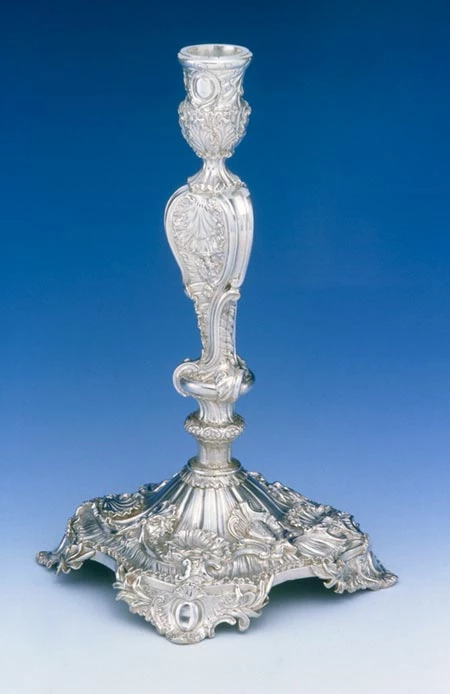
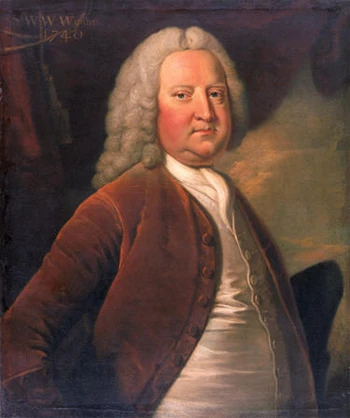
One of the wealthiest families of Wales 26 July 2007 Candlestick made in 1734 by the French protestant silversmith Lewis Pantin in the newly fashionable rococo style. Sir Watkin Williams Wynn (1693-1749) - 1740, oil on canvas. 76.2 x 63.2 cm Williams-Wynn of Wynnstay The Williams-Wynn family of Wynnstay in Denbighshire emerged as one of Wales's wealthiest in the early 18th century, a status they were to retain for over two hundred years. Several members of the family had an interest in the arts, and Sir Watkin Williams-Wynn (1749-1789), 4th baronet, was to be one of Wales's greatest patrons of the visual arts and music. Much of his collection is now housed at Amgueddfa Cymru. 'The great Sir Watkin' Sir Watkin Williams-Wynn (1693—1749), 3rd baronet, was the greatest landowner in Wales during the 1730s and 1740s, and a national leader of the Tory party in the House of Commons. He was the grandson of the politician Sir William Williams (1633/4—1700) who had acquired estates in Denbighshire and Shropshire. However, much of his great wealth was not passed down from his farther, but was generated by to a series of fortunate inheritances from female relations. In 1719 he inherited the Wynnstay estate in Denbighshire, together with other lands in Caernarfon and Merioneth from his mother's cousin, Sir John Wynn. In 1715 he had married the younger daughter of Edward Vaughan of Llwydiarth, and by 1725 the death of his wife's parents and older sister had brought him further estates in Montgomery, Denbigh, and Merioneth. He now owned over 100,000 acres, worth between £15,000 and £20,000 a year, which also gave him great influence over parliamentary elections. On the death of his wife Ann Vaughan in May 1748, Wynn married his god-daughter Frances Shakerley (1717—1803). Their son, also Sir Watkin Williams-Wynn, and the 4th baronet, was born in April 1749. Wynn, who was known as 'the great Sir Watkin' and 'the Prince of Wales', was killed in a hunting accident in September 1749. There are two portraits of 'the great Sir Watkin' in the collections of Amgueddfa Cymru . One of these is the work of Thomas Hudson a fashionable London portraitist who produced polished formal likenesses. The other is a pastel by William Hoare of Bath, and one of a group of pictures commissioned by Wynn's associate Lord Lichfield. Wealth and cultural sophistication Two pieces of silver also reflect the wealth and cultural sophistication of Wynnstay in his time. These are a pair of large candlesticks, and a massive tripod stand for a tea kettle. The candlesticks were made in London in 1734 by the French protestant silversmith Lewis Pantin, and are chased and cast with flowers, shells and scrolls —in the newly fashionable rococo style. They formed part of a set of four and are listed in an inventory of silver made on Sir Watkin's death. A small amount of silver purchased by the family in 1720 survives as an extraordinary rarity as only a handful of these pieces of silver furniture have escaped being melted down for reuse.
One of the wealthiest families of Wales 26 July 2007 Williams-Wynn of Wynnstay Sir Watkin Williams Wynn (1693-1749) - 1740, oil on canvas. 76.2 x 63.2 cm The Williams-Wynn family of Wynnstay in Denbighshire emerged as one of Wales's wealthiest in the early 18th century, a status they were to retain for over two hundred years. Several members of the family had an interest in the arts, and Sir Watkin Williams-Wynn (1749-1789), 4th baronet, was to be one of Wales's greatest patrons of the visual arts and music. Much of his collection is now housed at Amgueddfa Cymru. 'The great Sir Watkin' Sir Watkin Williams-Wynn (1693—1749), 3rd baronet, was the greatest landowner in Wales during the 1730s and 1740s, and a national leader of the Tory party in the House of Commons. He was the grandson of the politician Sir William Williams (1633/4—1700) who had acquired estates in Denbighshire and Shropshire. However, much of his great wealth was not passed down from his farther, but was generated by to a series of fortunate inheritances from female relations. In 1719 he inherited the Wynnstay estate in Denbighshire, together with other lands in Caernarfon and Merioneth from his mother's cousin, Sir John Wynn. In 1715 he had married the younger daughter of Edward Vaughan of Llwydiarth, and by 1725 the death of his wife's parents and older sister had brought him further estates in Montgomery, Denbigh, and Merioneth. He now owned over 100,000 acres, worth between £15,000 and £20,000 a year, which also gave him great influence over parliamentary elections. On the death of his wife Ann Vaughan in May 1748, Wynn married his god-daughter Frances Shakerley (1717—1803). Their son, also Sir Watkin Williams-Wynn, and the 4th baronet, was born in April 1749. Wynn, who was known as 'the great Sir Watkin' and 'the Prince of Wales', was killed in a hunting accident in September 1749. There are two portraits of 'the great Sir Watkin' in the collections of Amgueddfa Cymru . One of these is the work of Thomas Hudson a fashionable London portraitist who produced polished formal likenesses. The other is a pastel by William Hoare of Bath, and one of a group of pictures commissioned by Wynn's associate Lord Lichfield. Wealth and cultural sophistication Candlestick made in 1734 by the French protestant silversmith Lewis Pantin in the newly fashionable rococo style. Two pieces of silver also reflect the wealth and cultural sophistication of Wynnstay in his time. These are a pair of large candlesticks, and a massive tripod stand for a tea kettle. The candlesticks were made in London in 1734 by the French protestant silversmith Lewis Pantin, and are chased and cast with flowers, shells and scrolls —in the newly fashionable rococo style. They formed part of a set of four and are listed in an inventory of silver made on Sir Watkin's death. A small amount of silver purchased by the family in 1720 survives as an extraordinary rarity as only a handful of these pieces of silver furniture have escaped being melted down for reuse.
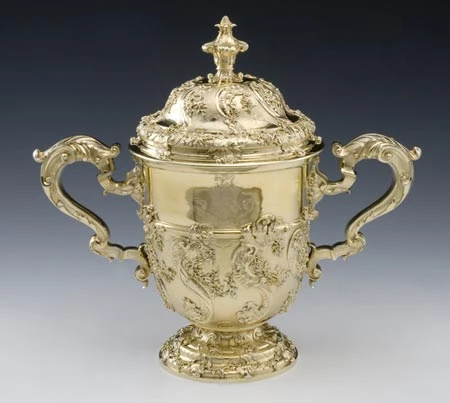
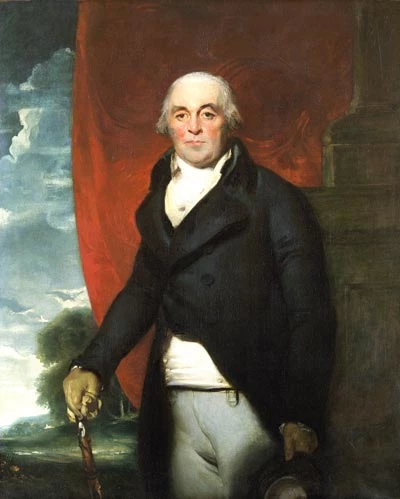
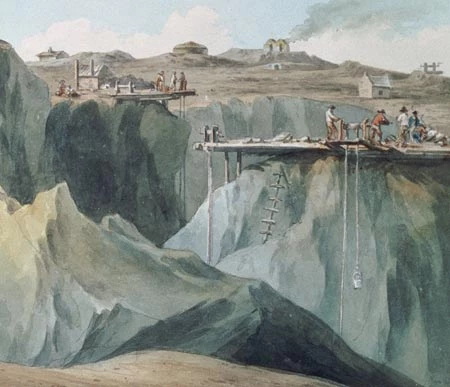
A splendid silver cup for a copper magnate 25 July 2007 Ornamental silver cup and cover Silver Cup and Cover, Paul Crespin, 1733 Owning and displaying a large silver cup and cover was a mark of wealth and status for centuries in Britain. By 1700 such cups were no longer drinking vessels. They became entirely ornamental and a focus for the skills of their designers and makers. William Lewis Hughes Sir Thomas Lawrence's (1769 - 1830) portrait of Thomas Williams (1737-1802) oil on canvas; 127.5 x 102.1 cm. A hundred years later, a particularly splendid cup made in 1733, and now in Amgueddfa Cymru, was the prized possession of one of the wealthiest men in Wales, William Lewis Hughes (1767—1835), of Kinmel Park, Denbighshire. This tells us something about a growing taste at the time for antiques, rather than the new. The cup bears the mark of Paul Crespin, together with London marks for 1733-4. Crespin was born in 1694 into a French Protestant family. He set up business in London in 1720, and although he was recorded as bankrupt in 1747, he seems to have continued working there until 1759. Crespin was one of the most cosmopolitan and sophisticated makers of his day. As early as 1724 he made a "curious silver vessel for bathing, which weighed about 6030 ounces" (now lost) for the King of Portugal. He had many important clients, and his masterpiece is perhaps the celebrated "Neptune" centrepiece of 1741 in the Royal Collection, an elaborate rococo object made for Frederick, Prince of Wales. A large silver cup Partly because of the wealth derived from the Parys copper mine and partly because of the energetic personality of Edward Hughes, the family was to become spectacularly rich. The cup is exceptionally large, standing 14 inches high and weighing over 150 troy ounces — a cup and cover of 1731 by Crespin's associate Abraham Buteaux and described as "large" in 1749 weighed only 94 ounces. It is ornamented entirely in the newly fashionable rococo manner, and would have seemed quite novel. The foliage and vine decoration also appear on a pair of wine coolers made by Crespin for the Duke of Marlborough in the same year, and the double scroll handles appear a little later on cups by George Wickes, Paul de Lamerie, John Le Sage and John White. Coat of arms The arms of William Lewis Hughes of Kinmel. Note the arms of its original owner have been erased. The engraving is of very high quality, remaining crisp, with little sign of surface wear. The arms of its original owner have been erased, presumably because the cup came on the market in the early 19th century. Its surface may originally have been white silver, rather than gilt. The present, rather brassy gilding is contemporary with the later armorials that can be dated to around 1830. It is interesting that the cup was 'improved' and resold in this way. The cup's new owner was William Lewis Hughes of Kinmel. It probably came into his possession before he was raised to the peerage as Lord Dinorben in 1831, as his arms, which are engraved on both sides of the cup, have what appears to be an added Baron's coronet and lack the heraldic supporters that he was to adopt as a peer. Parys copper mine Junction of Mona and Parys Copper Mine as depicted in 1790. Hughes's mother was the niece of William Lewis of Llysdulas, Anglesey. With her husband the Rev. Edward Hughes she became heir of the Llysdulas estate, which included one side of Mynydd Parys. Partly because of the wealth derived from the Parys copper mine and partly because of the energetic personality of Edward Hughes, the family was to become spectacularly rich. The Copper King The cup engraved ornament is of very high quality, remaining crisp, with little sign of surface wear. William Lewis Hughes, the first Lord Dinorben, was colonel of the Anglesey Militia and MP for Wallingford from 1802 to 1831. From 1819 his London home was Bute House, South Audley Street. Edward and William Hughes were business partners of Thomas Williams, the 'copper king', whose portrait by Lawrence is also in the collections of Amgueddfa Cymru. The cup was later owned by the Edwardian financier and philanthropist Sir Ernest Cassel (1852-1921), and was acquired by the Museum in 2005 with the support of the National Heritage Memorial Fund and the Art Fund.