Collections & Research

#DinoOnTheLoose

Jurassic Wales's Wildest Daily, 24 May 2017

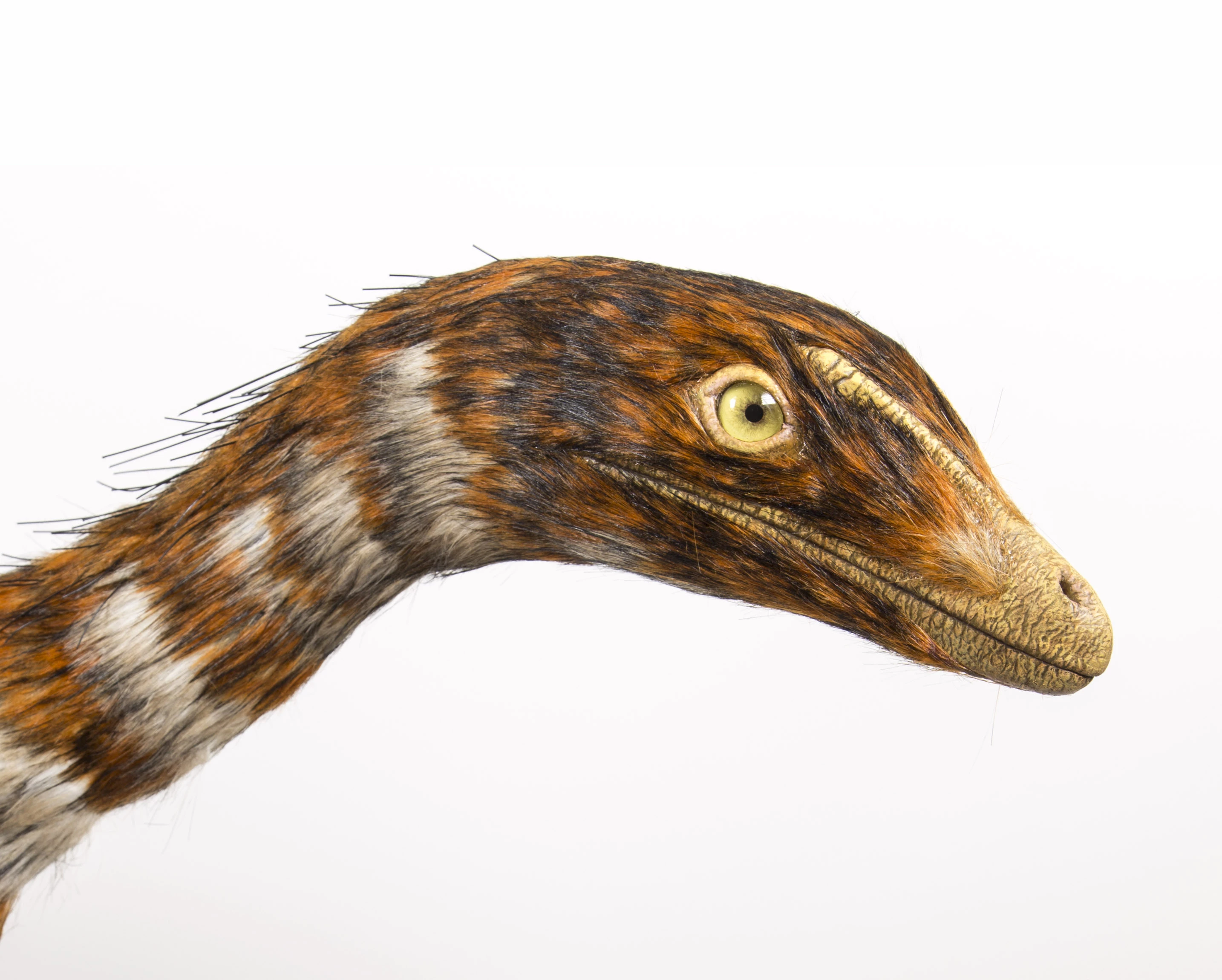
What's all this dinosaur havoc going on around Cardiff City Centre?

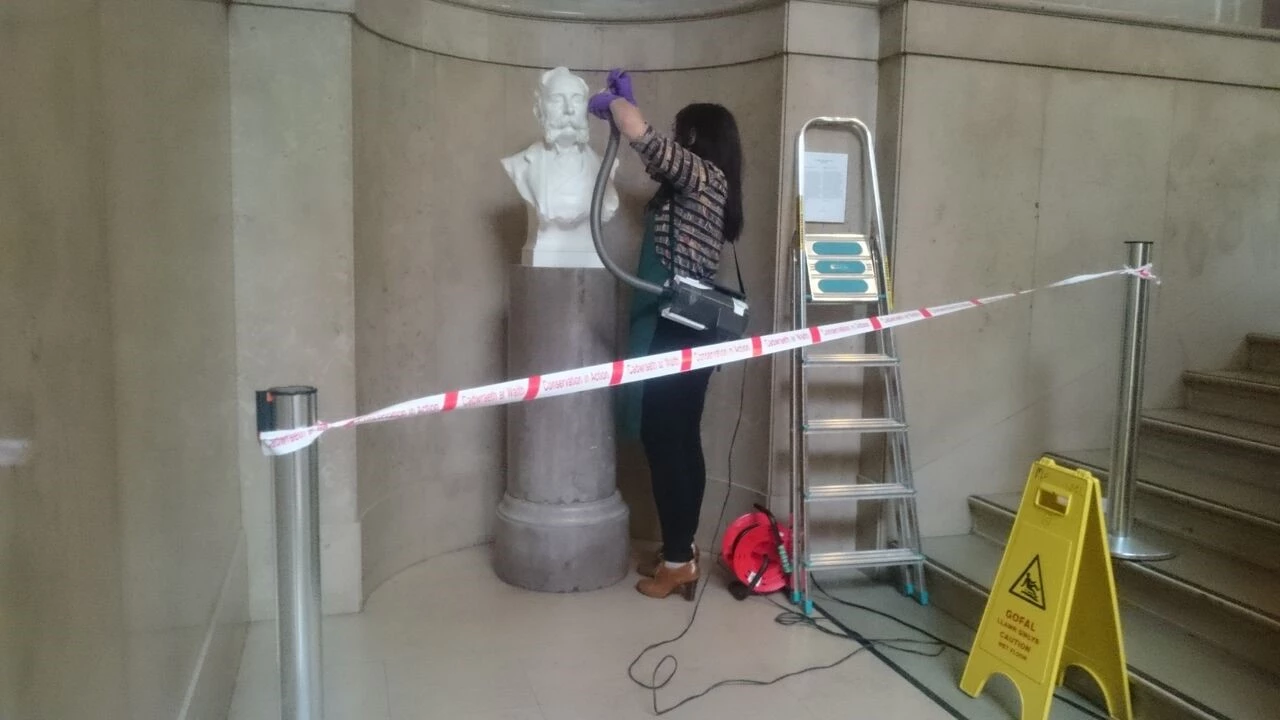
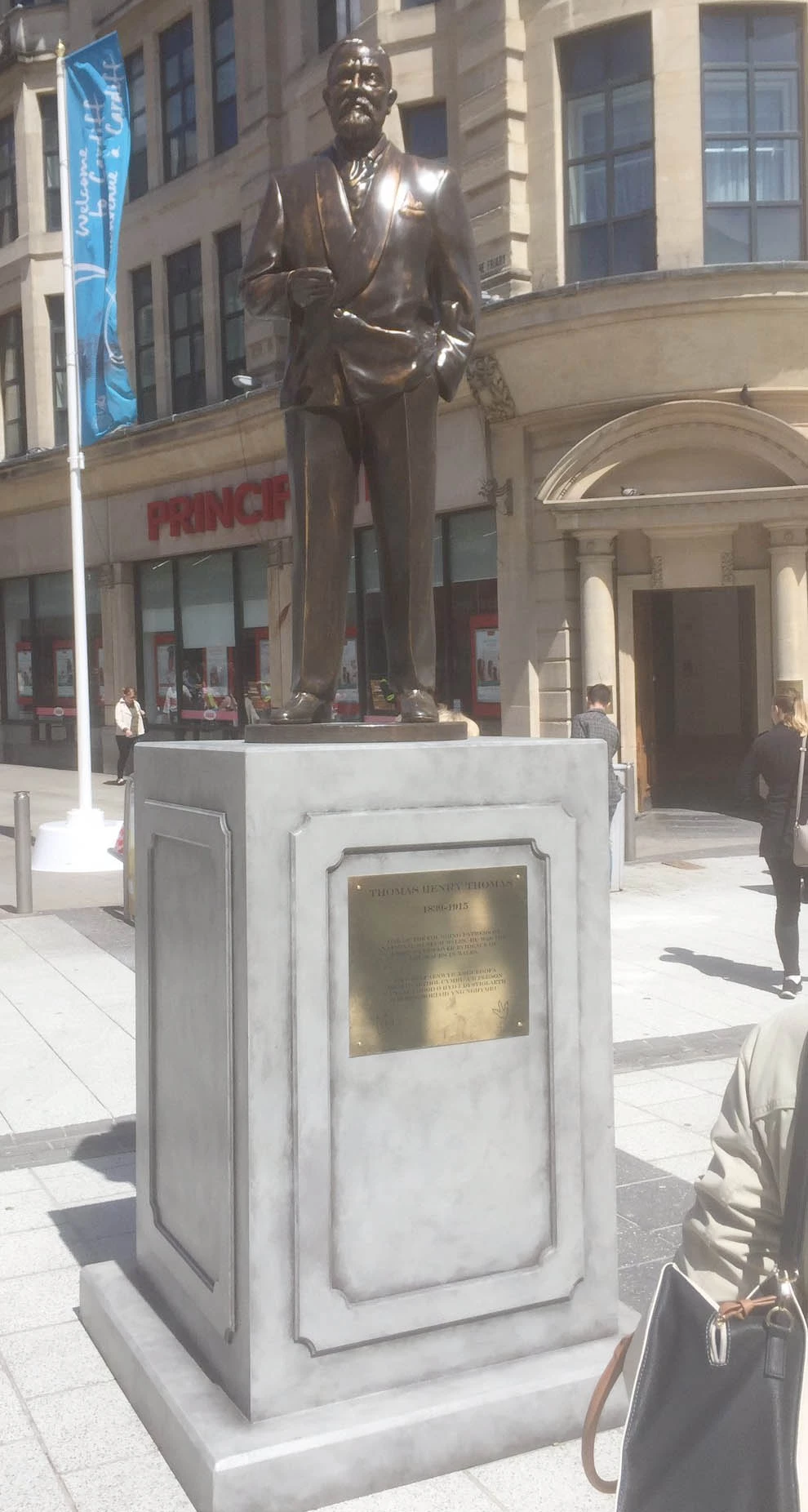
Who (or what?!) damaged our newly erected statue of Thomas H Thomas and is causing mayhem on the streets of Cardiff?!

If you spot any monstrous goings-on or dino-mischief around Cardiff then please let us know over on Twitter using the hashtag #DinoOnTheLoose.

This is an unfolding story - updates will be brought to you as we become aware of them.

Follow the story: #DinoOnTheLoose

Thomas H Thomas and his dinosaur

Cindy Howells, 18 May 2017

The first dinosaur footprints found anywhere in Europe

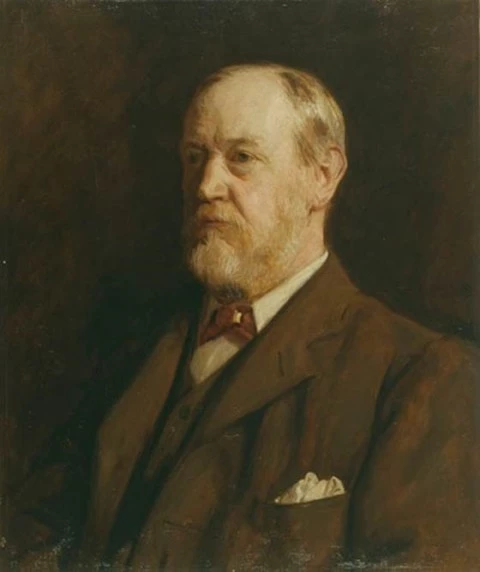
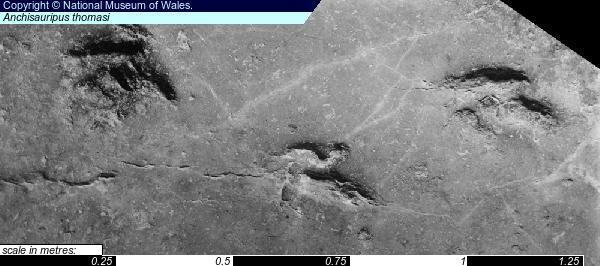
One sunny evening in September 1878, Welsh artist and naturalist Thomas Henry Thomas was wandering around the small village of Nottage, just outside Porthcawl. The rays of the setting sun were shining across a large slab of rock placed on the edge of the churchyard. The local villagers told him that the five strange markings on the rock were the footprints of the devil as he strode across the slab. The rock had lain between the church and the village pub for years, and was a local curiosity.

Thomas was a well-educated man, born in Pontypool in 1839, and had studied Art at the Royal Academy, before returning to Wales. He was a key member of the Cardiff Naturalists Society, and a well-respected artist as well. On discovering the footprints, illuminated by the setting sun in the churchyard, he was struck by the similarity between these markings and newly found dinosaur footprints in North America. He quickly sketched the prints and informed various local geologists. John Storrie, curator of the Cardiff Museum, visited the site and made a cast of the trackway.

The President of the Cardiff Naturalists Society was Colonel Turbervill, who arranged for the rock to be brought to the Cardiff Museum for safe-keeping.

Thomas H. Thomas wrote a short paper, in January 1879, describing the footprints and also his attempts at Bristol Zoo, to persuade a suspicious Emu to walk across modelling clay, for comparison! He described the footprints as "Tridactyl Uniserial Ichnolites", but left it to Professor W Sollas of Bristol University to publish a formal description, with the name Brontozoum thomasi. We now know that these footprints were made 220 million years ago by a medium-sized meat-eating dinosaur, similar to Megalosaurus which evolved later.

The original footprint slab was around 6' 6" long and 5' 6" wide, and about 6 inches thick, although excess rock was later removed to make it easier to handle and display. When the collections of the old Cardiff Museum were transferred to the new National Museum of Wales in 1907, the footprints were one of its most important acquisitions. Currently the fossil is on display in the

Evolution of Wales gallery

, as befitting the first dinosaur footprints found anywhere in Europe.

Wales has an important place in the evolutionary history of dinosaurs; not only this early set of footprints, but also another major trackway site near the town of Barry, which is one of the most significant sites of its age in Europe. The rocks of this area were laid down around 220 million years ago, at a time when Wales was a low-lying desert, similar to those in the Arabian Gulf today, and dinosaurs had just evolved. Over the next 20 million years, the sea-level rose and the deserts disappeared underwater. However the dinosaurs living on higher ground continued to diversify into different species, one of which was Dracoraptor, the small theropod dinosaur found near to Penarth in 2014, and now on display at the National Museum Cardiff.

Magnum photographer, David Hurn, donates his photography collections to AmgueddfaCymru-National Museum Wales

Bronwen Colquhoun, 17 May 2017

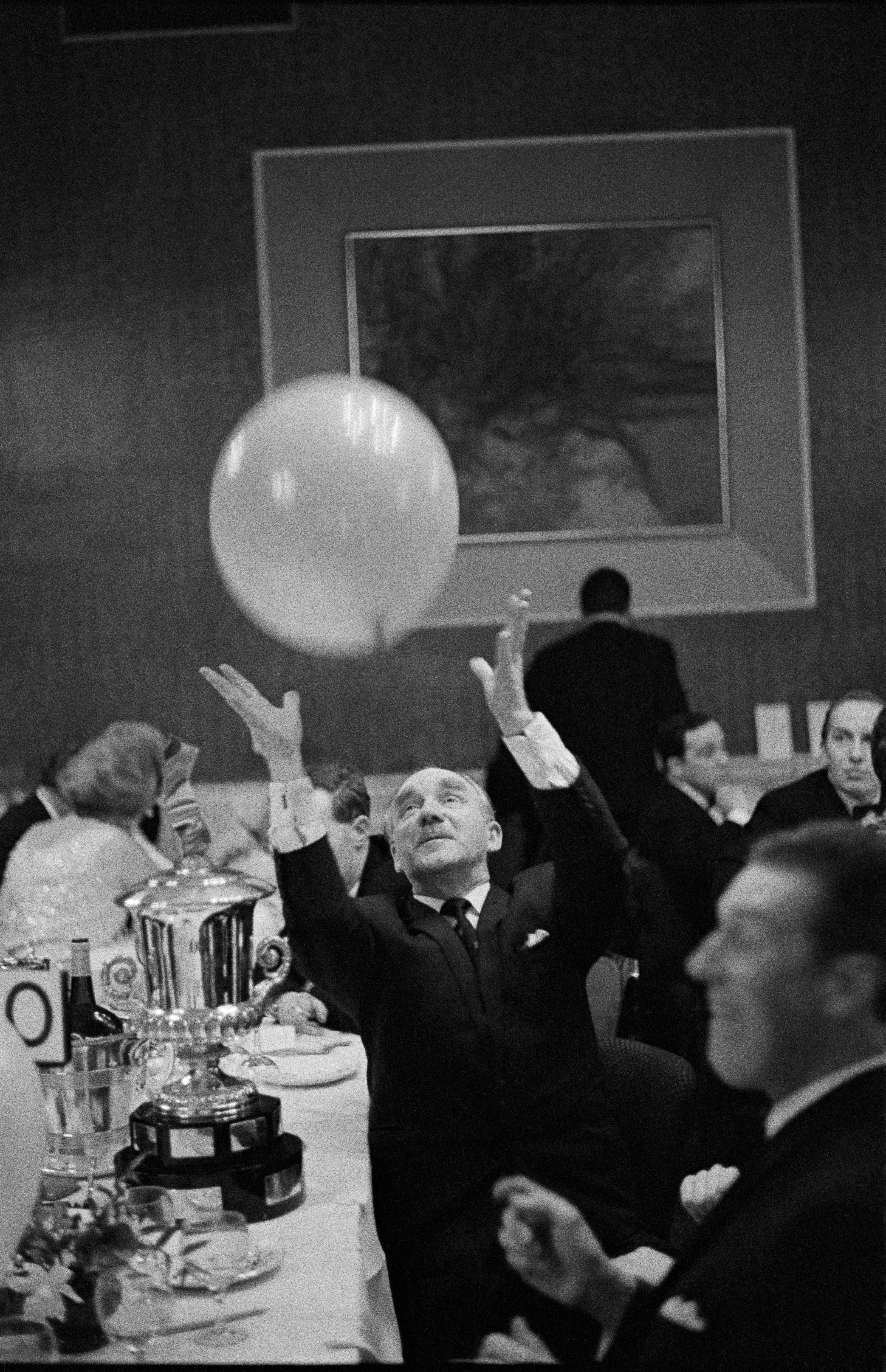
Retired gentleman at the MG Car owners Ball 1967 Copyright David Hurn Magnum Photos

Retired gentleman at the MG Car owners Ball, 1967. G.B. SCOTLAND, Edinburgh. © David Hurn/MAGNUM PHOTOS

Amgueddfa Cymru – National Museum Wales is the recipient of an exceptional gift from Magnum photographer David Hurn. Of Welsh descent, Hurn lives and works in Wales and is one of Britain’s most influential documentary photographers. Now, his home country will benefit from his collection of photographs.

David Hurn’s gift is made up of two collections: approximately 1500 of his own photographs that span his sixty-year career as a documentary photographer; and approximately 700 photographs from his private collection which he has compiled throughout the course of his career. Speaking of his gift, Hurn notes, 

“My earliest visual/cultural memories are visiting the museum when I must have been four or five. I remember the naughty statue - Rodin’s ‘The Kiss’ - and cases full of stuff that people had donated. Well now I have the chance to repay, something of mine will be there forever, I feel very privileged.”

A definitive edit of a life's work

Over the last two years, Hurn has been selecting photographs from his archive to create a definitive edit of his life’s work.

The collection of approximately 1500 new prints includes work made in Wales, England, Scotland, Ireland, Arizona, California and New York. It includes some of Hurn’s most celebrated photographs, such as Queen Charlotte’s BallBarbarella and Grosvenor Square.

However, it is his carefully observed photographs of his home country of Wales that are the focus of the collection. Following his generous gift, National Museum Wales is now the institution with the largest holdings of Hurn’s work worldwide.

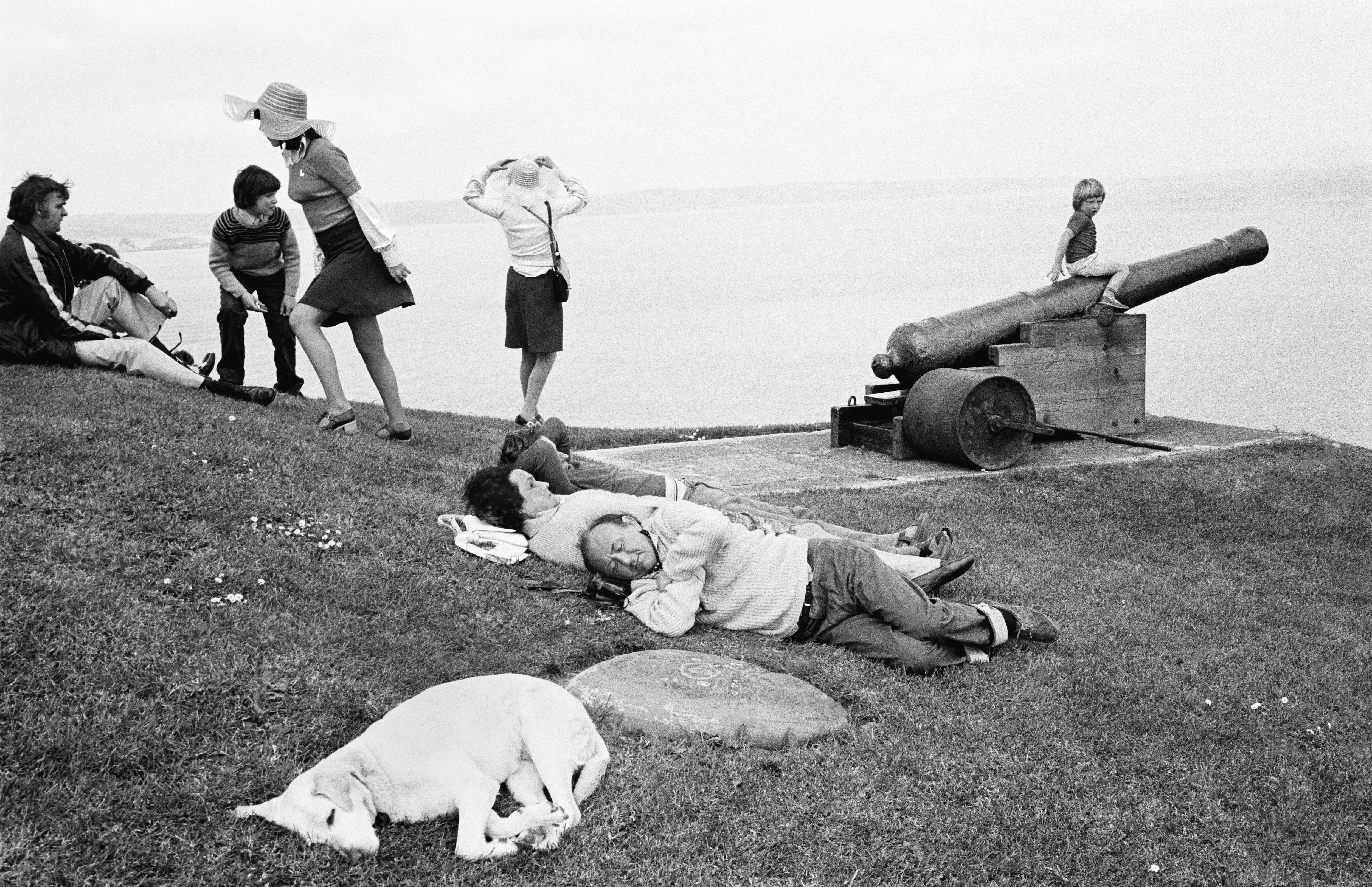
The Promenade at Tenby 1974 Copyright David Hurn Magnum Photos

G.B. WALES. Tenby. The promenade at the elegant seaside town of Tenby, South Wales. 1974 © David Hurn/MAGNUM PHOTOS

A Collection of Swaps

In addition to his own photographs, the Museum is also acquiring approximately 700 photographs from Hurn’s private collection, which he has amassed over the past sixty years.

Throughout the course of his career, Hurn has swapped photographs with fellow photographers, including many of his Magnum colleagues.

In doing so, he has assembled a significant and diverse collection, which includes leading 20th and 21st century photographers such as Henri Cartier-Bresson, Eve Arnold, Sergio Larrain, Bill Brandt, Martine Franck, Bruce Davidson and Martin Parr, through to emerging photographers such as Bieke Depoorter, Clementine Schneidermann and Diana Markosian.

A selection of works from Hurn’s private collection will be on display for the first time at National Museum Cardiff from 30th September 2017, in Swaps: Photographs from the David Hurn Collection of Photography, an exhibition that launches the Museum’s new gallery dedicated to photography. 

Photography Collections at Amgueddfa Cymru - National Museum Wales

National Museum Wales’ existing photography collections are uniquely inter-disciplinary and span subjects including Art, Social and Industrial History and the Natural Sciences.

Importantly it includes some of the earliest photographs taken in Wales by pioneering photographer John Dillwyn Llewelyn and his family. The addition of Hurn’s exceptional donation will transform the Museum’s photography collections and raise the profile of Amgueddfa Cymru - National Museum Wales as an important centre for photography in the UK. 

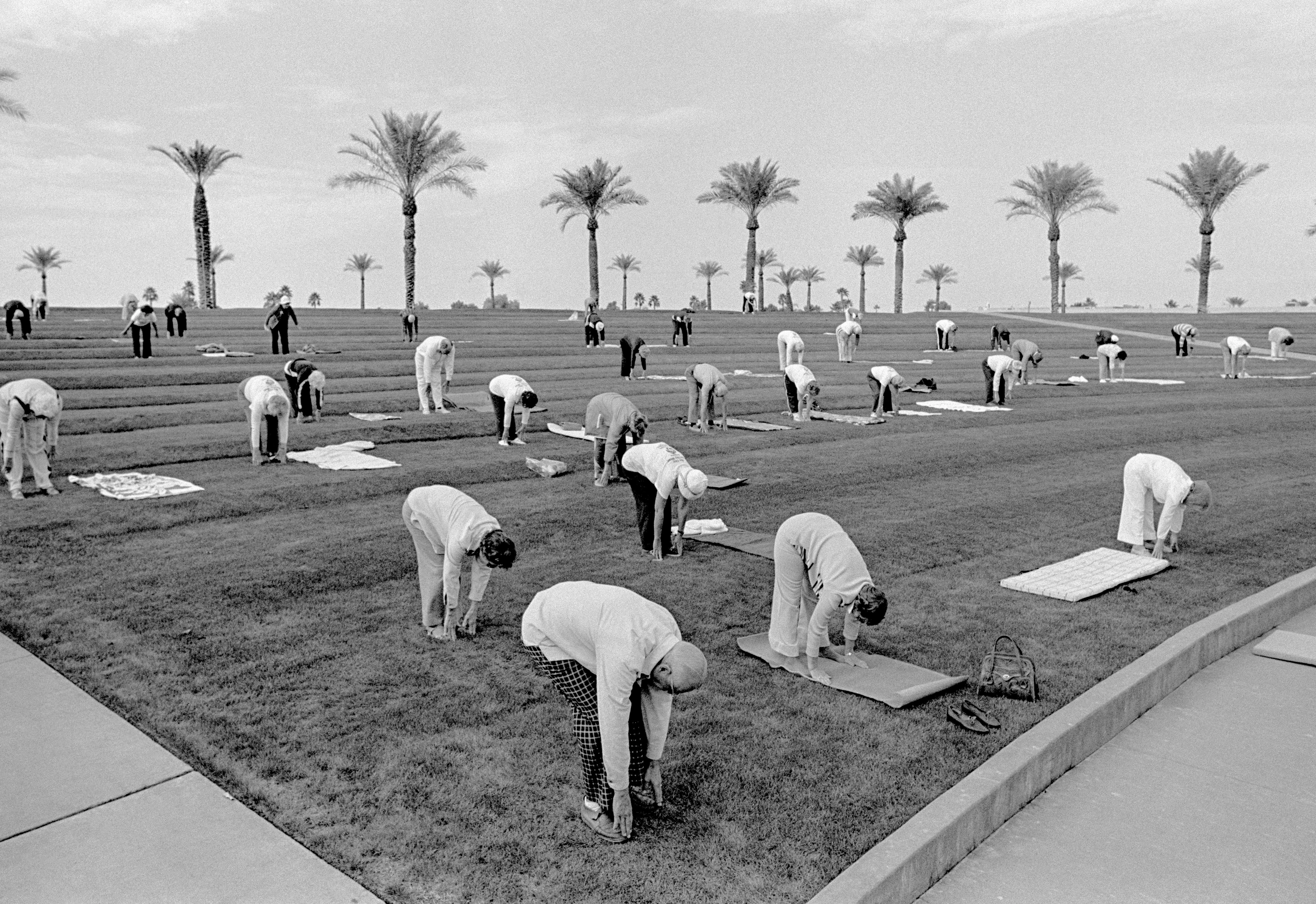
Sun City Outdoor group fitness in Sun City Arizona 1980 Copyright David Hurn Magnum Photos

USA. Arizona. Sun City. Outdoor group fitness early in the morning in the retirement Sun City. Ages range from 60 to a 94 year old who had run a 50 secs hundred meters in the Senior Olympics. The sense of fun and community was very infectious. 1980 © David Hurn/MAGNUM PHOTOS

The exhibition at National Museum Cardiff follows an earlier presentation of Hurn’s collection at Photo London, the international photography event held annually at Somerset House in London. Curated by Martin Parr and David Hurn, the Photo London exhibition, David Hurn’s Swaps marks the 70th anniversary of Magnum Photos.


‘Love the Beautiful' - Discovering the Meaning of Finger Rings

Rhianydd Biebrach, 9 May 2017

Finger rings, made from precious or base metals, plain and decorated, or inset with gems or enamels, were commonly worn by rich and poor alike in the past. Medieval and Renaissance paintings show that several could be worn on the same hand, sometimes above the middle knuckle, and by both sexes. From time to time examples once worn by long dead Welsh men and women are discovered by metal detectorists and reported via the Portable Antiquities Scheme Cymru. If made of precious metal these are declared treasure and are usually acquired by museums across Wales, allowing local communities and visitors to benefit from having these precious remnants of our past on public display. Even now we can appreciate their beauty and craftsmanship, and make connections with the people who lost them long ago.

But beauty is not their only quality, nor does their value lie merely in the gold and silver they are made from. Today we talk about items of jewellery as having ‘sentimental value’, carrying an emotional significance personal to the owner which goes beyond their material or aesthetic qualities. This is also true of the past. For centuries finger rings have been imbued with a range of specific meanings which would have been highly significant for both the wearer and the giver of the ring. Some of these meanings - and the rings themselves - are explored here:

All of these rings, as well as many others which have been unearthed by metal detectorists or found by chance, can be thought of as fragments of intense human emotion. In the

posy , mourning and iconographic rings this is clearly communicated in their designs, which still give us a sense of the love, grief and spirituality which moved their wearers. The signet rings can also be thought of as embodying something of the personal identity of their original owners. Even the purely decorative rings may well have held what we would now describe as ‘sentimental value’ as well as the financial value of the material. In the case of the sapphire, we are reminded that Wales, although on the very edge of Europe, was connected to the Far East through trade.

Perhaps the most important thing to remember is that each ring found represents an individual loss. People do not generally throw away gold and silver objects or precious stones, even if they no longer hold any emotional significance for them. So it is assumed that these rings were accidentally lost, perhaps slipping off a finger or falling out of a purse, and not missed until it was too late. Despite the distance of the centuries it is easy for us to imagine the anguish felt at the loss of a wedding ring, or of a reminder of a dead loved one, or a ring which brought spiritual comfort. These shared emotions bring us into direct contact with the long-dead owners of these lost treasures.

+ ieme la belle, or love the beautiful, which gives name to this article is inscribed on the outside of the 15th century Ewenni Ring, discovered near Ewenni Priory by Mr. G. Gregory in 1988 and now held in the collections of Amgueddfa Cymru).

Posy Rings

Rhianydd Biebrach, 9 May 2017

Posy ring from Henllys

Posy ring from Henllys

Posy ring 'God is my Cumford'

Posy ring 'God is my Cumford'

Posy Ring form St Dogmaels

Posy Ring form St Dogmaels

The exchanging of rings as tokens of love is not just a modern practice. Posy rings, inscribed with mottoes or short phrases indicating love or fidelity have been popular from the Middle Ages. Though we now associate the giving of rings with the formal occasion of an engagement or wedding, historically posy rings may have been given at any stage of the relationship, and by either partner. They may be plain bands, or decorated in a variety of ways, but their most important aspect was not so much their outer appearance as the carefully chosen message they contained, which was intended as a personal and constant reminder of the giver’s feelings towards the recipient. Some mottoes are in Latin or French, the latter being associated with chivalry and courtly love, but many of those discovered recently by metal detectorists in Wales have English phrases, most of which play on the theme of fidelity and constancy.

A particularly delicate and decorative example, from the late 16th or early 17th century was discovered in August 2013 by Mr Simon Harrison at Henllys, Monmouthshire. Made of linked gold roundels and hearts filled with red, white and green enamel, the inner surface is inscribed with the words ‘My ♥ is onely yours’. Several other rings, four of which have been recently acquired by the Saving Treasures; Telling Stories project for national and local collections, have inscriptions communicating a variety of sentiments, but not all of them are as straightforwardly romantic as the Henllys example. ‘Forget not the gift’ urges the decorated gold ring found near St Dogmael’s, Pembrokeshire, by Mr Tom Baxter-Campbell in June 2011. This suggests that the ‘gift’ of the ring should act as a reminder of the giver: was he or she about to go away? Was there perhaps some doubt that their feelings might not be returned?

A similar ring, also of gold and dated to the late 16th or early 17th century, found at Llantwit Major by Mr David Hughes in April 2013, bears the enigmatic legend ‘Such is my love.’ The precise meaning of this phrase is unclear, but the intention could be that the giver’s love is enduring and precious, like gold, and eternal, a quality associated with the ring’s shape, which has no beginning and no end. Presumably the receiver of the ring understood exactly how to interpret the message.

Although posy rings are associated with messages of love, some examples recently discovered in Wales strike a decidedly sober tone. A late 17th or early 18th century silver-gilt ring found near Caerphilly in June 2013 by Mr T.M. Davies, and now in the collection of the Winding House Museum in Tredegar, looks very much like a modern plain wedding band. On the inner surface is the inscription ‘Keep faith tell [till] death’, a rather sombre sentiment somewhat out of step with lighter modern endearments but utterly in keeping with past understandings of the indissolubility of marriage. In an age when divorce was virtually impossible, marital relationships were for life. Not all posy rings carried statements of love, however: a plain silver-gilt band discovered at Llangibby, Monmouthshire, by Mr Glen Flynn in 2012 declares ‘God is my cumford [comfort]’. Does this suggest that the ring was given at a time of personal distress, sorrow or illness for the wearer, or does it merely reflect their personal piety?

A notable feature of all of these rings, as with some of those featured below, is that these mottoes are inscribed on the inside, rather than the outside, of the band. But why would these ardent suitors want to hide their declarations of love instead of setting them where all could see? The likely reason is that the messages were private, intended to have significance only for the giver and for the wearer, who bore the message next to the skin, emphasising the intimacy of the relationship.