
Aluminium Palaces - life in a prefab
19 February 2007

Living Room
Living Room
An aluminium prefab prototype being installed, ready for exhibition, outside the Tate Gallery in London, 1945. Crown copyright NMR
English
English is now the most widely used language in the world. An estimated 760 million people use English worldwide — more speakers than any other language apart from Mandarin Chinese.
However, only 400 years ago it had only 7 million speakers and was mostly unknown outside the British Isles. It was used in most of England and south and east Scotland, but Welsh was still spoken through most of Wales, Cornish was still heard in Cornwall, and Gaelic was the language of Ireland, the Isle of Man and the Western Islands and Highlands of Scotland.
Between the reign of Elizabeth I (1603) and Elizabeth II (1952), the number of English speakers increased fiftyfold to about 250 million. The speed of its expansion since the 1950s has been even more staggering.
Why has this happened? During the 17th and 18th centuries, English was the language of the leading colonial nation — Britain. Then in the 19th century it became the language of the leaders of the industrial revolution. By the 20th century, it was the language of the USA, the most dominant economic power in the world. And of course now it is the language of the Internet — or is it? Contrary to expectations, English has not totally dominated the World Wide Web. There are over 1000 languages on the Internet. In fact, it is estimated that by now less than 50% of the Internet is in English.
Map showing distribution of Welsh speakers, 2001 census.
For the majority of people living in Wales, English is their first and only language. This was not always so. Only a couple of centuries ago, Welsh was the language of most of Wales, apart from a few Englishries such as South Pembrokeshire and the Gower peninsula. Welsh was even spoken in some parts of Herefordshire at one time.
Different parts of Wales have a very different history in relation to the English language, and this is reflected in the local English accent or dialect. Some regions became English-speaking many centuries ago, while in others (such as the South Wales Valleys) English has taken over comparatively recently. There are still areas where English is very much a second language with Welsh being the everyday means of communication. In some Welsh accents of English, you can hear the influence of neighbouring English counties, such as Cornwall or Herefordshire. In others, the vocabulary and patterns of the Welsh language can still be heard in today’s English.
Ray Smith introduces himself in 'Radnorian English'.
This is Ray Smith, who now lives in Cardiff but was born in the village of Llangynllo on the border between Radnorshire and England. He still retains his Radnorshire accent, which is not your stereotypical Welsh accent due to the influences of nearby English counties. However, as Ray points out, there has never been a clearly defined border between the Welsh and English in this area. Turn to the next chapter to hear more.
Ray Smith talks about Radnorian English
I was born in a little village called Llangynllo, which is on the border country actually. It borders Shropshire in particular and fairly close to Herefordshire as well. And we spoke English in the home, as a child, and my mother could speak a smattering of Welsh, but Father didn’t and then, of course, we didn't as well, you see. And there wasn’t any Welsh in the schools anyway, so it’s sort of Radnorian English, if there’s such a thing.
Generally people struggle to recognise where I’m from, and even if I tell them where I'm from, they don't know where it is. Radnorshire is one of those little lost counties, I'm afraid, tucked away in a corner of Wales, right on the English border. And so that's really where I get my accent from, you see. People living and working both sides of the border, and intermarrying of course over the border. There was a time when — sometime over a hundred years ago or more when there was more Welsh spoken on both sides of the border, in Hereford and Radnor. In fact, some of the placenames still exist today, Welsh placenames in Herefordshire. Llandinabo is right, well and truly inside Herefordshire, and people still refer to them as being Welsh.
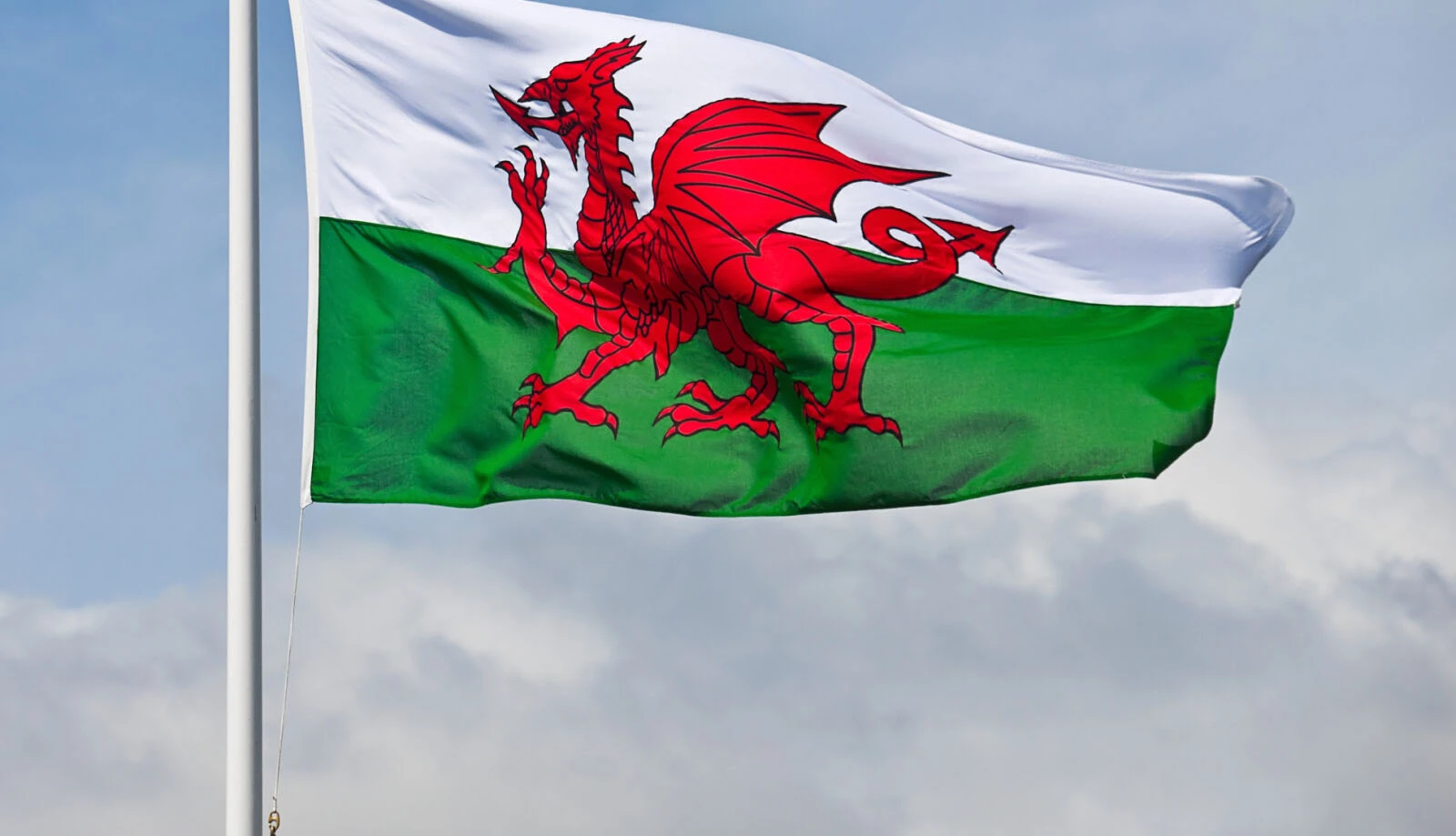
St David’s Day (Welsh: Dydd Gŵyl Dewi Sant) is celebrated every year on 1 March in honour of St David, the patron saint of Wales.
Marked by traditional dress, Welsh emblems such as the leek and daffodil, and celebrations of language and culture, St David’s Day has grown from a medieval religious observance into a national celebration of Welsh identity.
Every year on 1 March, Welsh people celebrate their patron saint, St David.
Little is known about him for certain. What little information we have is based on an account of his life written by Rhigyfarch towards the end of the 11th century.
According to Rhigyfarch's Latin manuscript, St David died in the year 589. His mother was called Non, and his father, Sant, was the son of Ceredig, King of Ceredigion.
After being educated in Cardiganshire, he went on pilgrimage through south Wales and the west of England, where it is said that he founded religious centres such as Glastonbury and Croyland. He even went on a pilgrimage to Jerusalem, where he was made archbishop.
St David eventually settled at Glyn Rhosyn (St David's), in south-west Wales, where he established a very strict ascetic religious community.
Many miracles have been attributed to him, the most incredible of which was performed when he was preaching at the Synod of Llanddewibrefi - he caused the ground to rise underneath him so that he could be seen and heard by all. How much truth is in this account of his life by Rhigyfarch is hard to tell.
It must be considered that Rhigyfarch was the son of the Bishop of St David's, and that the Life was written as propaganda to establish Dewi's superiority and defend the bishopric from being taken over by Canterbury and the Normans.
From the 12th century onwards, St David's fame spread throughout South Wales and as far as Ireland and Brittany. St David's Cathedral became a popular centre of pilgrimage, particularly after Dewi was officially recognised as a Catholic saint in 1120.
Flag of St David
From this period on, he was frequently referred to in the work of medieval Welsh poets such as Iolo Goch and Lewys Glyn Cothi. In 1398, it was ordained that his feast-day was to be kept by every church in the Province of Canterbury.
Though the feast of Dewi as a religious festival came to an end with the Protestant Reformation in the 16th century, the day of his birth became a national festival during the 18th century.
Now March 1 is celebrated by schools and cultural societies throughout Wales. It is the custom on that day to wear either a leek or a daffodil – two national emblems of Wales – and for children to wear the national costume.
It has become the national costume of Wales. But how does it compare with Welsh costumes from the past?
Legend has it that St David ordered his soldiers to wear leeks on their helmets during a battle against the Saxons during the sixth century, while the Battle of Crecy, in 1346, featured loyal and brave Welsh archers who fought in a field of leeks.
By 1536, when Henry VIII gave one to his daughter on 1 March, the leek was already associated with St David's Day. It is possible that the green and white family colours adopted by the Tudors were taken from their liking for the leek.
National emblem - the leek
In comparison with the ancient Welsh associations of the leek, the daffodil has only recently assumed a position of national importance.
National emblem - the daffodil
An increasingly popular flower during the 19th century, especially among women, its status was elevated by the Welsh-born prime minister David Lloyd George, who wore it on St David's Day and used it in ceremonies in 1911 to mark the investiture of the Prince of Wales at Caernarfon.
If you go down to the beach today….
Helios and a Partial Solar Eclipse
SBRAGIO - call-out for creative freelancers!
Curating at St Fagans National Museum of History: What I've learned and why it matters
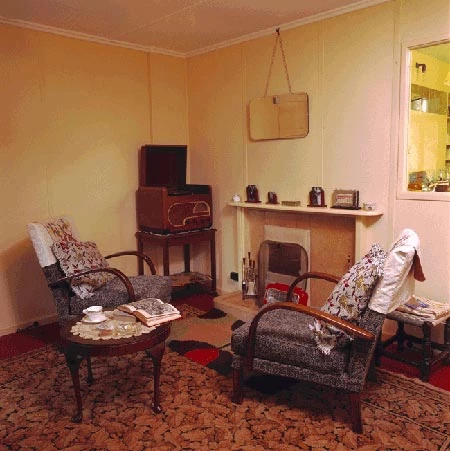
Living Room
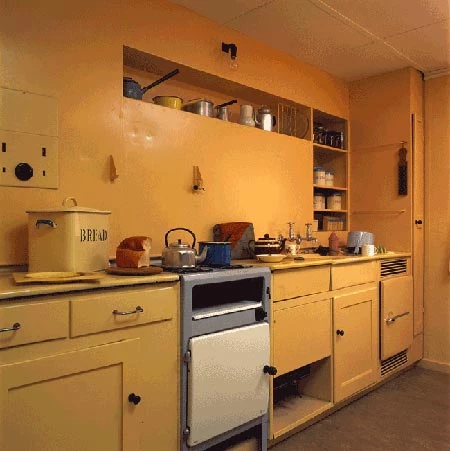
Kichen
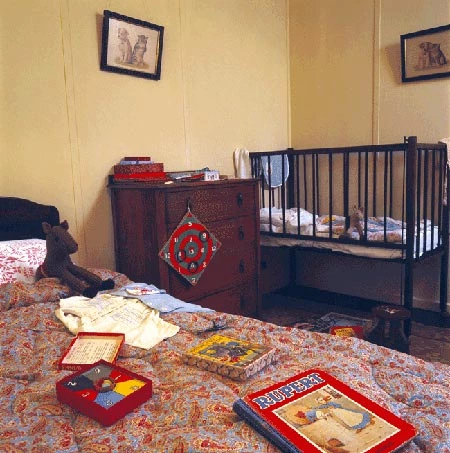
Children's bedroom

An aluminium prefab prototype being installed, ready for exhibition, outside the Tate Gallery in London, 1945. Crown copyright NMR

The Historical Buildings Unit dismantling the prefab at Llandinam Crescent in November 1998.

Some of the vacant prefabs at Llandinam Crescent, waiting to be demolished.
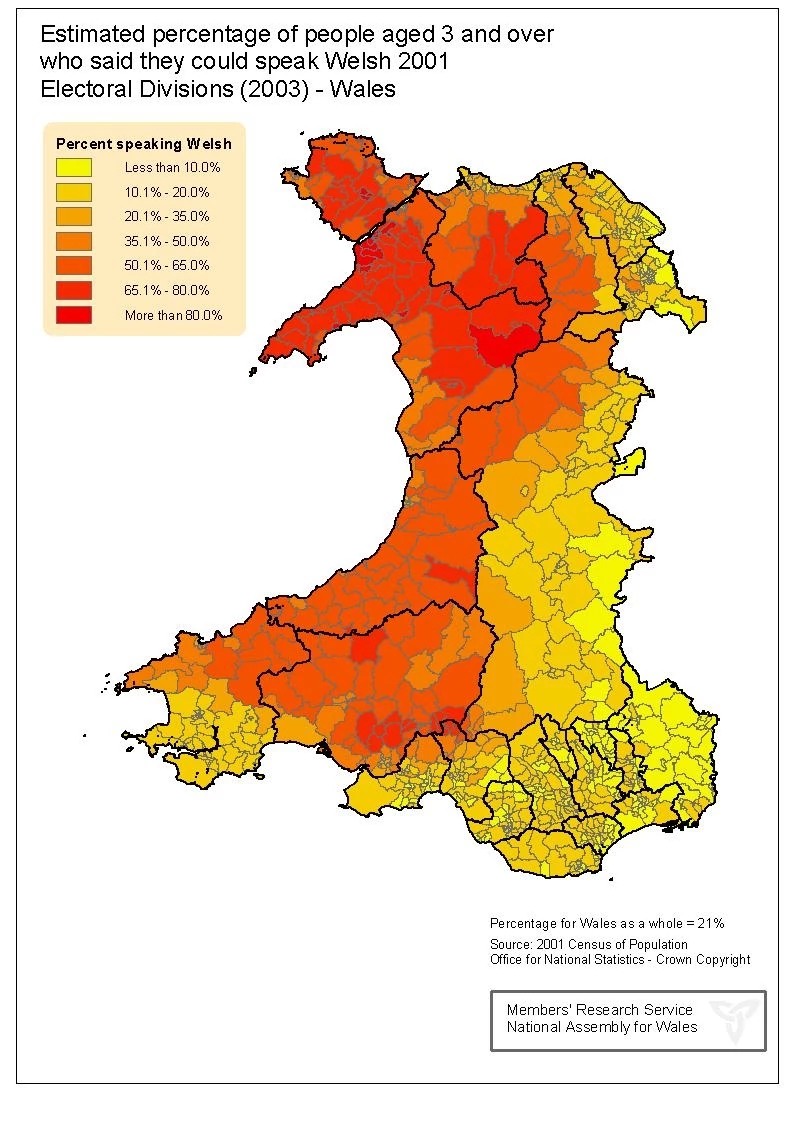
Map showing distribution of Welsh speakers, 2001 census.

Flag of St David

National emblem - the leek