: Re-Erected Buildings

Uncovering our Collections: Half a Million Records now Online

26 March 2018

As we reveal half a million collection records for the first time, we look at some of the strangest and most fascinating objects from National Museum Wales Collections Online.

This article contains photos of human skeletal fragments.

The Biggest

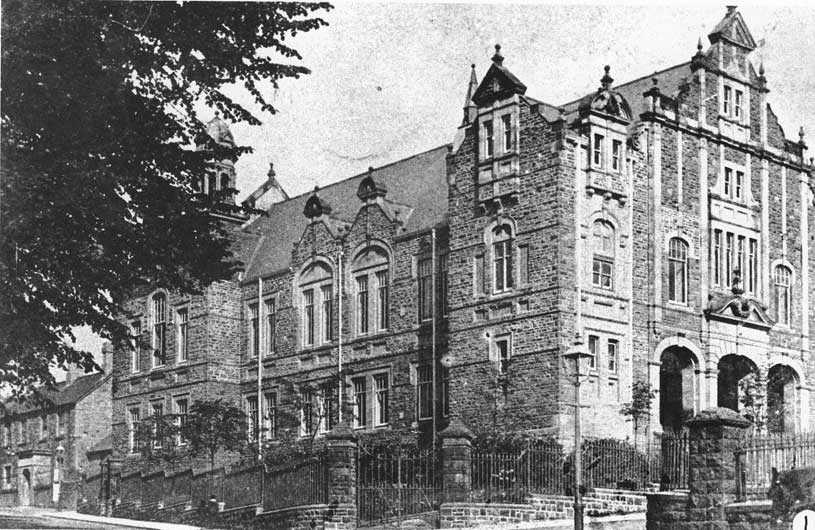
We have some real whoppers in our collections - including a full-size Cardiff Tram and a sea rescue helicopter - but the biggest item in our collection is actually Oakdale Workmen's Institute.

Built in 1917, the Institute features a billiard room, dance hall and library - and is nowadays found in St Fagans National Museum of History.

Photograph from 1908 showing Horace Watkins in a very early, precarious-looking monoplane

Horace Watkins testing his monoplane in 1908

Many of the buildings in St Fagans are part of the national collection - meaning they have the same legal status as one of our masterpiece Monets or this coin hoard. The buildings are dismantled, moved, rebuilt - and cared for using traditional techniques, by the museum's legendary Historic Buildings Unit.
 

The Oldest


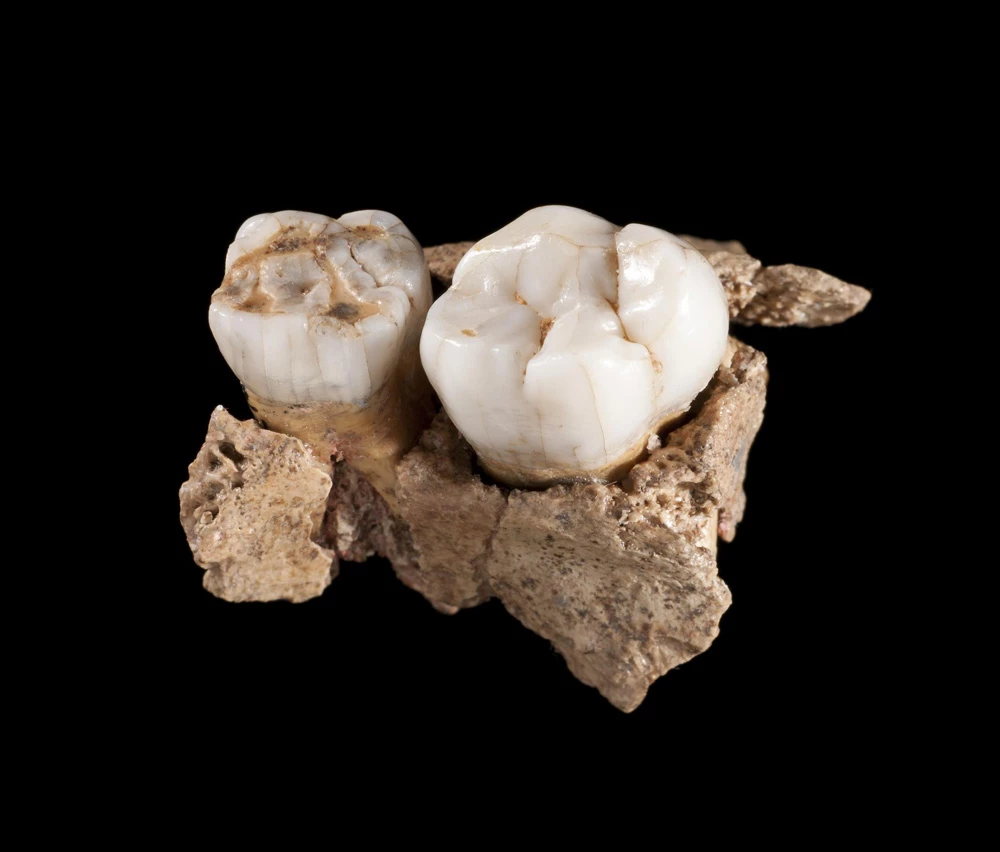
photograph of two teeth, belonging to a Neanderthal boy aged 8

The oldest human remains ever discovered in Wales

These teeth belonged to an eight year-old Neanderthal boy - and at 230,000 years old, they are the oldest human remains in Wales.

They were discovered in a cave near Cefn Meiriadog in Denbighshire, along with a trove of other prehistoric finds, including stone tools and the remains of a bear, a lion, a leopard and a rhinocerous tooth.

These teeth are among some of the incredible objects on display at St Fagans National Museum of History
 

The Shiniest

People in Wales have been making, trading and wearing beautiful treasures from gold for thousands of years - like this Bronze Age hair ornament and this extremely blingy Medieval signet.


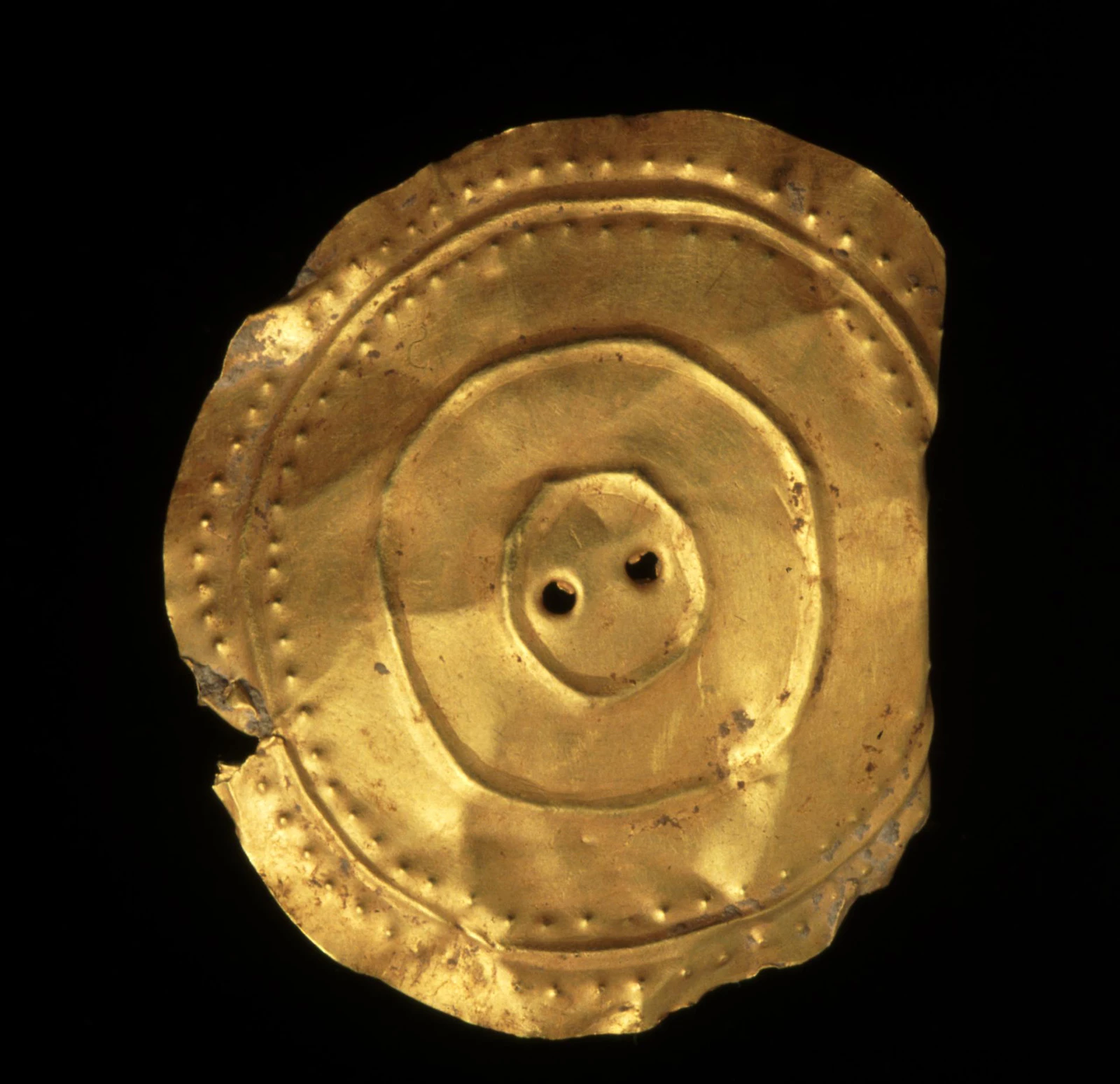
photograph of gold disc with repousse design

At around 4000 years old, this sun disc is one of the earliest and rarest examples of Welsh bling

One of the earliest examples of Welsh bling is this so-called 'sun disc', found near Cwmystwyth in Ceredigion.

Current research suggests that these 'sun discs' were part of ancient funeral practice, most likely sewn onto the clothes of the dead before their funerals. Only six have ever been found in the UK.
 

Most Controversial

At first glance, an ordinary Chapel tea service - used by congregations as they enjoyed a 'paned o de' after a service. A closer look reveals the words - 'Capel Celyn'. The chapel, its graveyard and surrounding village are now under water.


Photograph showing a cup and saucer with 'Capel Celyn' and a ribbon scroll design

Capel Celyn, in the Tryweryn Valley, is now underwater

Flooded in 1965 by the Liverpool Corporation, the Tryweryn valley became a flashpoint for Welsh political activism - creating a new generation of campaigners who pushed for change in how Welsh communities were treated by government and corporations.

Curators from St Fagans collected these as an example of life in Capel Celyn - to serve as a poignant reminder of a displaced community, and to commemorate one of the most politically charged moments of the 20th century in Wales.
 

Honourable Mention: an Airplane made from a Dining Room Chair

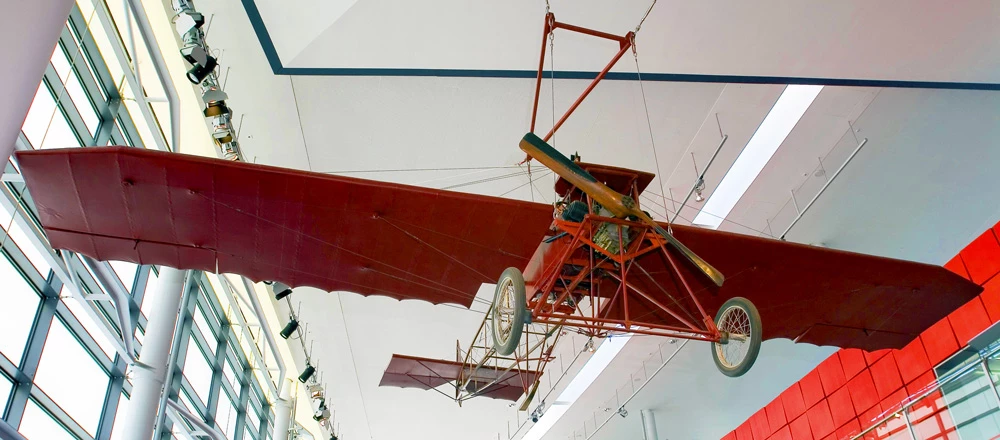
Made from a dining room chair, piano wire and a 40 horsepower engine, the Robin Goch (Red Robin) was built in 1909 - and also features a fuel gauge made from an egg timer.


photograph of a small, early twentieth century airplane with red wings

The Robin Goch (Red Robin) on display at the National Waterfront Museum

Its builder, Horace Watkins, was the son of a Cardiff printer - here he is pictured with an earlier, even more rickety version of his famous monoplane.
 

Photograph from 1908 showing Horace Watkins in a very early, precarious-looking monoplane

Horace Watkins testing his monoplane in 1908

Our collections are full of stories which reflect Wales' unique character and history. The Robin Goch is one of the treasures of the collection, and is an example of Welsh ingenuity at its best.

Half a Million Searchable Items

The launch of Collections Online uncovers half a million records, which are now searchable online for the first time.

“Collections Online represents a huge milestone in our work, to bring more of our collections online and to reach the widest possible audience.

It’s also just the beginning. It’s exciting to think how people in Wales and beyond will explore these objects, form connections, build stories around them, and add to our store of knowledge." – Chris Owen, Web Manager
 

Search Collections Online

Plans for the future

Our next project will be to work through these 500,000 records, adding information and images as we go.

We'll be measuring how people use the collections, to see which objects provoke debate or are popular with our visitors. That way, we can work out what items to photograph next, or which items to consider for display in our seven national museums.

Preparing and photographing the collections can take time, as some items are very fragile and sensitive to light. If you would like to support us as we bring the nation's collections online, please donate today - every donation counts.


Donate Today


We are incredibly grateful to the People's Postcode Lottery for their support in making this collection available online.
 

Laying foundations: Workmen's Institutes

10 February 2010

Workmen's Institutes

Blaenavon Working Men's Institute, early 20th century

Blaenavon Working Men's Institute, early 20th century

Between the 1880s and the 1930s a number of Workmen's Institutes were built in the industrialized townships of south and north-east Wales. Their aim was to provide educational and recreational facilities for workers and their families. They usually housed libraries and reading rooms where daily newspapers were available, but might also include theatres, cinemas and games rooms (snooker, billiards and dominoes were particularly popular). Used for public lectures, political rallies, concerts, dances and eisteddfodau (competitive music and recitation competitions), the Institutes also provided venues where groups and societies could meet and local bands could practise and perform. Some Institute buildings were four or five storeys high and even contained swimming pools!

Oakdale

The Reading Room, Oakdale Institute about 1946

The Reading Room, Oakdale Institute about 1946

The Oakdale Workmen's Institute served the community based around Oakdale Colliery in Monmouthshire. The first shaft had been sunk in this hitherto relatively unspoilt part of the Sirhowy valley in 1906, and a second — the Waterloo shaft — was sunk four years later. The coal seams proved to be outstanding both in terms of quality of coal and thickness of the seams. Accommodation for the workers and their families was provided in a purpose-built ‘model village’ named Oakdale.

Laying foundations

At the heart of the new village was a Workmen's Institute. Construction work began in 1917 and on 3 July that year a ceremony was held at which two foundation stones were laid. Specially engraved trowels were presented to the two main participants: Harry Blount, on behalf of the workers, and Alfred S. Tallis, Managing Director of the Tredegar Iron and Coal Company, which owned the Oakdale mine. The building was finished the following year when, presumably, a 'topping out' ceremony would have been held to mark the completion of building works.

The building was officially opened on 10 September 1917, and a special key was presented to A S Tallis, representing the mine owners, as a token of the building committee's appreciation for the loan of £10,000 given by the company towards the cost of erecting the building.

A new life at St Fagans

The Oakdale Institute was donated to St Fagans National Museum of History (then called the National Folk Museum of Wales) in 1987. It was dismantled, re-erected and refurbished to its late 1930s appearance and opened to the public in 1995. The two trowels used at the ceremony to mark the laying of the foundation stones were donated to the Museum in the months leading up to the opening by relatives of their original recipients. (One trowel had found its way to the Isle of Wight, while the other was in Swansea.) The building was officially opened by the Rt. Hon. Neil Kinnock, then European Commissioner for Transport, but formerly leader of the Labour Party and MP for the constituency of Bedwellty within which Oakdale was situated. Days before the opening, the engraved key given to the Tredegar Iron and Coal Company was also donated to the Museum.

The 'Stute

The 'Stute is a prize-winning animation made by the animation company Cinetig with pupils from two South Wales schools. It celebrates the crucial role Oakdale Workmen's Institute, Gwent, had in the mining community and draws on oral testimony from the archives at St Fagans.

The 'Stute is a prize-winning animation made by the animation company Cinetig with pupils from two South Wales schools. It celebrates the crucial role Oakdale Workmen's Institute, Gwent, had in the mining community and draws on oral testimony from the archives at St Fagans.

St Teilo's

12 March 2008

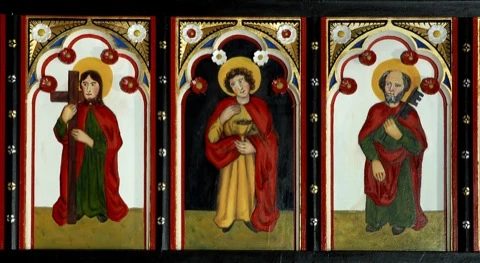
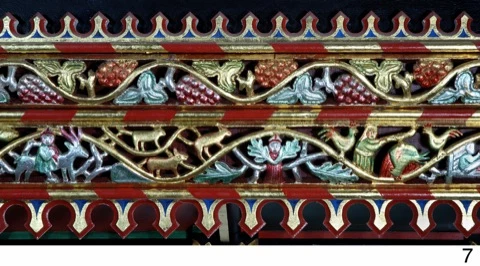
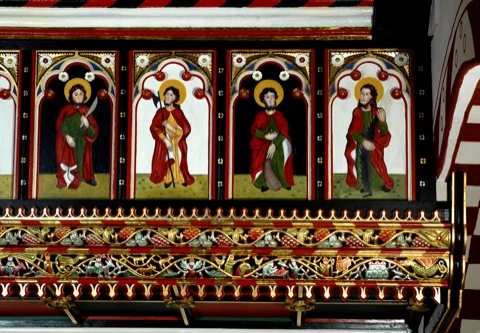
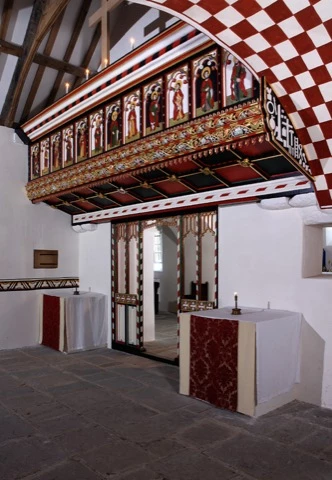
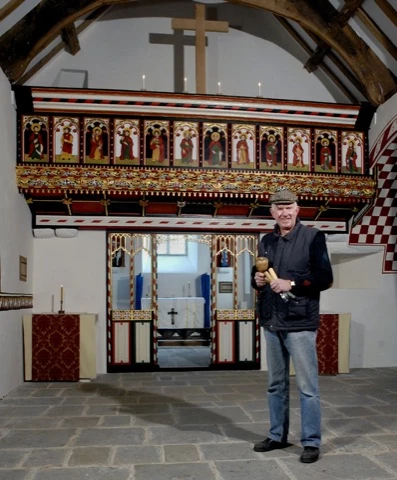
A selection of images from St Teilo's Church

Neges Nadoligaidd o Eglwys Teilo Sant

Sara Huws, 20 December 2007

Mae'r flwyddyn yn tynnu at ei therfyn, ac o gofio'r holl gynnwrf sydd 'di bod rownd yr adeilad (ac ynddo fe hefyd), mae'n braf gweld Eglwys Teilo Sant yn cael chydig o lonydd. Yn lliwiau diwrnod crenshlyd, oer fel heddiw, roedd yr adeilad yn edrych fel tase fe'n anadlu mas yn hir a dwfwn - yn paratoi i dorri gwreiddie ar dir Sain Ffagan. Mae 'di bod trwy ddipyn leni, ac ar ôl yr holl redeg ogwmpas, mae'n gret gallu camu 'nôl a gwerthfawrogi scale y peth. Mae fy ngwaith o ddydd i ddydd yn ymwneud fwyfwy â manylion bychain - esbonio symbolau, gwrthrychau a cherfiadau delicet. Fel y murlunwyr addurnodd yr eglwys 'nôl ym 1520, ma gafael reit wan 'da fi ar bersbectif ambell waith. Mae maint yn prosiect yn enfawr, a'r adeilad yn un arbennig (a lwcus) iawn.

Wrth gwrs, er ei bod hi'n ymddangos yn dawel iawn yma, dyn ni'n yr adran addysg di bod fel wiwerod yn ceisio diwygio gwefan yr eglwys. (Sôn am wiwerod - mae'r rhai sy'n frith dros y safle bron yn barod i gysgu dros y gaea - a ma nhw'n hiwj! Ga'n nhw fyw ar eu bloneg, nawr, tan y gwanwyn...). Ta waeth - y wefan - bydd newidiadau'n digwydd gan bwyll bach ym mis Ionawr. Bydd llawer mwy o orielau lluniau, a gwybodaeth am ddigwyddiadau - fe fyddai'n eich hysbysu chi hefyd, o broses yr ail beintio. Mae'r murlunwyr yn dod yn ôl i orffen yr addurno ym mis Ionawr, a gallwch eu gwylio'n gweithio, gobeithio! Hoffwn i wbod be 'dych chi'n feddwl o'r safle newydd felly cofiwch ymweld ag e yn y flwyddyn newydd!

Reit - cwpwl o anrhegion i chi cyn mynd...

Podlediad yr Eglwys - taith sain o amgylch yr Eglwys, a lluniau bach hyfryd i'ch diddanu. Lawrlwythwch e mewn i'ch gajets, impress friends and family gyda ffeithiau diddorol ambyti'r Oesoedd Canol rownd y bwrdd cinio 'Dolig...

Siop-Eglwysi Brooklyn - rhwbeth bach yn fwy modern, wedi'i ddarganfod ar flog technoleg a diwylliant boingboing.

...aaac un bach am lwc stori ar wefan y BBC i chi eu dreulio. Mwy fyth o dystiolaeth 'mod i wedi fy ngeni yn y ganrif rong - roedd y Tuduriaid yn iachach eu deiet na'r Rhufeiniaid, hyd yn oed!


Nadolig Llawen i chi o Eglwys Teilo Sant - gobeithio y gwelai chi yn y flwyddyn newydd!

Discoveries from underneath a medieval church

1 May 2007

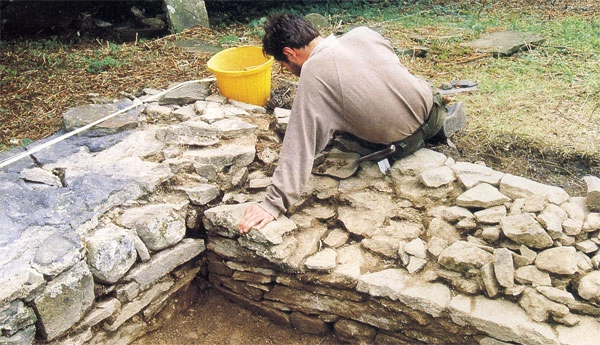
Cleaning the south wall of the medieval church

Cleaning the south wall of the medieval church

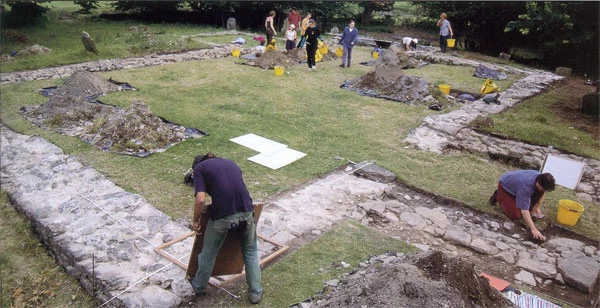
Recording and cleaning in progress (nave and porch in foreground)

Recording and cleaning in progress (nave and porch in foreground)

Following the dismantling of St Teilos Church at Pontardulais, west Glamorgan, and its removal to St Fagans, excavations on the foundations uncovered further clues to the history of this medieval church.

The dismantling and re-erection of the church made it possible to investigate the foundations of the church in a way that would be impossible otherwise. A detailed understanding of the building is essential in any investigation of a church's development. For churches still in use, only fleeting glimpses of the hidden fabric may be provided as opportunities arise. In the case of the dismantled St Teilo's church, it was possible to produce an accurate, stone-by-stone plan.

Before excavation began, a geophysical survey of the area, using ground- penetrating radar, revealed evidence of numerous burials, and within the church itself a number of areas were identified that could have been related to structural activity.

After excavating and surveying was done, details of the construction from the 12th or 13th century onwards were revealed. The present church probably dates from the 15th century. Before excavation, it was thought that the last addition was a small chapel on the north side of the chancel.

The earliest recognisable phase of the building appears to be a small rectangular nave and chancel. To this was added a north and south transept, probably during the 14th or early 15th century (though not necessarily at the same time).

Important churches in Wales during the later Middle Ages often had a cruciform plan. A south aisle was probably added in the late 15th century to provide for an expanding congregation, and finally a porch was added to the south side of the aisle. A buried grave-slab was found, at the junction of the chancel and north transept, to Mary Bevans of Killa, who died in 1717 aged 64. A section of rubble on the south side of the church, which appears to have been out-of-use by the time the porch was constructed, may have been the base for a churchyard cross.

The excavation has significantly altered the understanding of the development of the church.

The 12th century witnessed an explosion in church building, and much of what remains of the early stone phase of St Teilo's probably dates from about this period.

Although the church can be matched with 'Lan Teliav Talypont', one of four places in Glamorgan called after St Teilo that are mentioned in the 12th century Liber Landavensis (The Book of Llandaff), no carved stones or evidence for a earlier timber construction have been discovered.