: Historical Buildings at St Fagans

Uncovering our Collections: Half a Million Records now Online

26 March 2018

As we reveal half a million collection records for the first time, we look at some of the strangest and most fascinating objects from National Museum Wales Collections Online.

This article contains photos of human skeletal fragments.

The Biggest

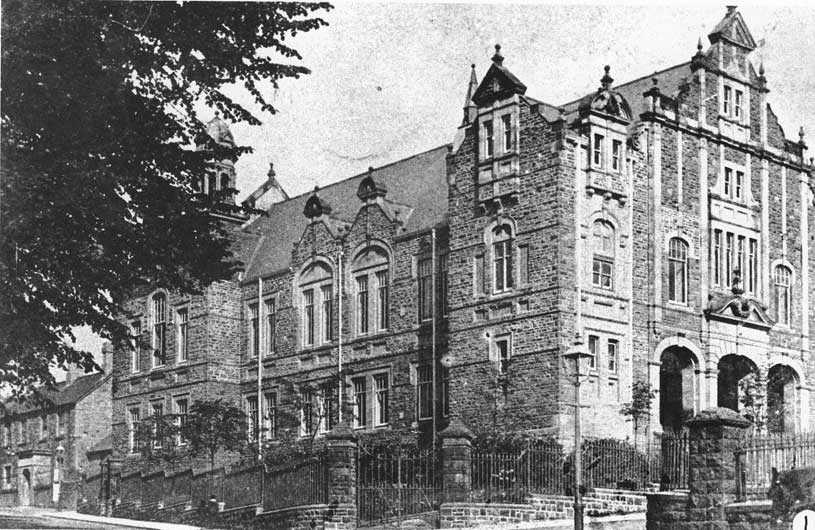
We have some real whoppers in our collections - including a full-size Cardiff Tram and a sea rescue helicopter - but the biggest item in our collection is actually Oakdale Workmen's Institute.

Built in 1917, the Institute features a billiard room, dance hall and library - and is nowadays found in St Fagans National Museum of History.

Photograph from 1908 showing Horace Watkins in a very early, precarious-looking monoplane

Horace Watkins testing his monoplane in 1908

Many of the buildings in St Fagans are part of the national collection - meaning they have the same legal status as one of our masterpiece Monets or this coin hoard. The buildings are dismantled, moved, rebuilt - and cared for using traditional techniques, by the museum's legendary Historic Buildings Unit.
 

The Oldest


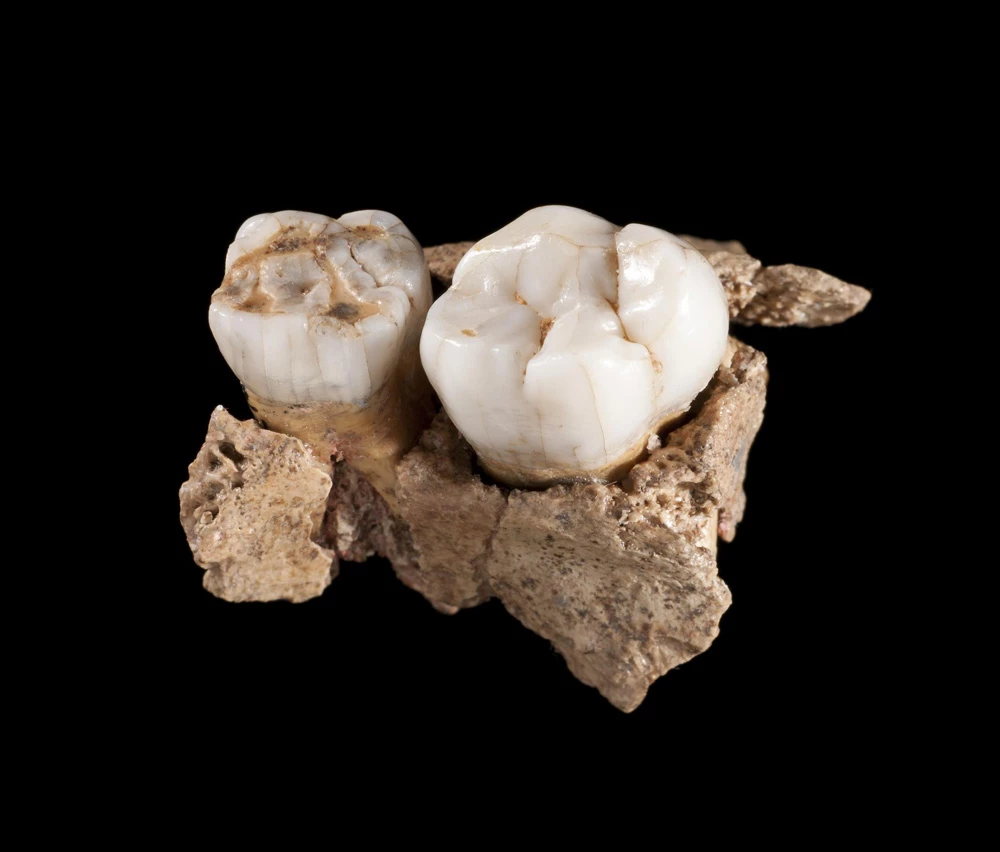
photograph of two teeth, belonging to a Neanderthal boy aged 8

The oldest human remains ever discovered in Wales

These teeth belonged to an eight year-old Neanderthal boy - and at 230,000 years old, they are the oldest human remains in Wales.

They were discovered in a cave near Cefn Meiriadog in Denbighshire, along with a trove of other prehistoric finds, including stone tools and the remains of a bear, a lion, a leopard and a rhinocerous tooth.

These teeth are among some of the incredible objects on display at St Fagans National Museum of History
 

The Shiniest

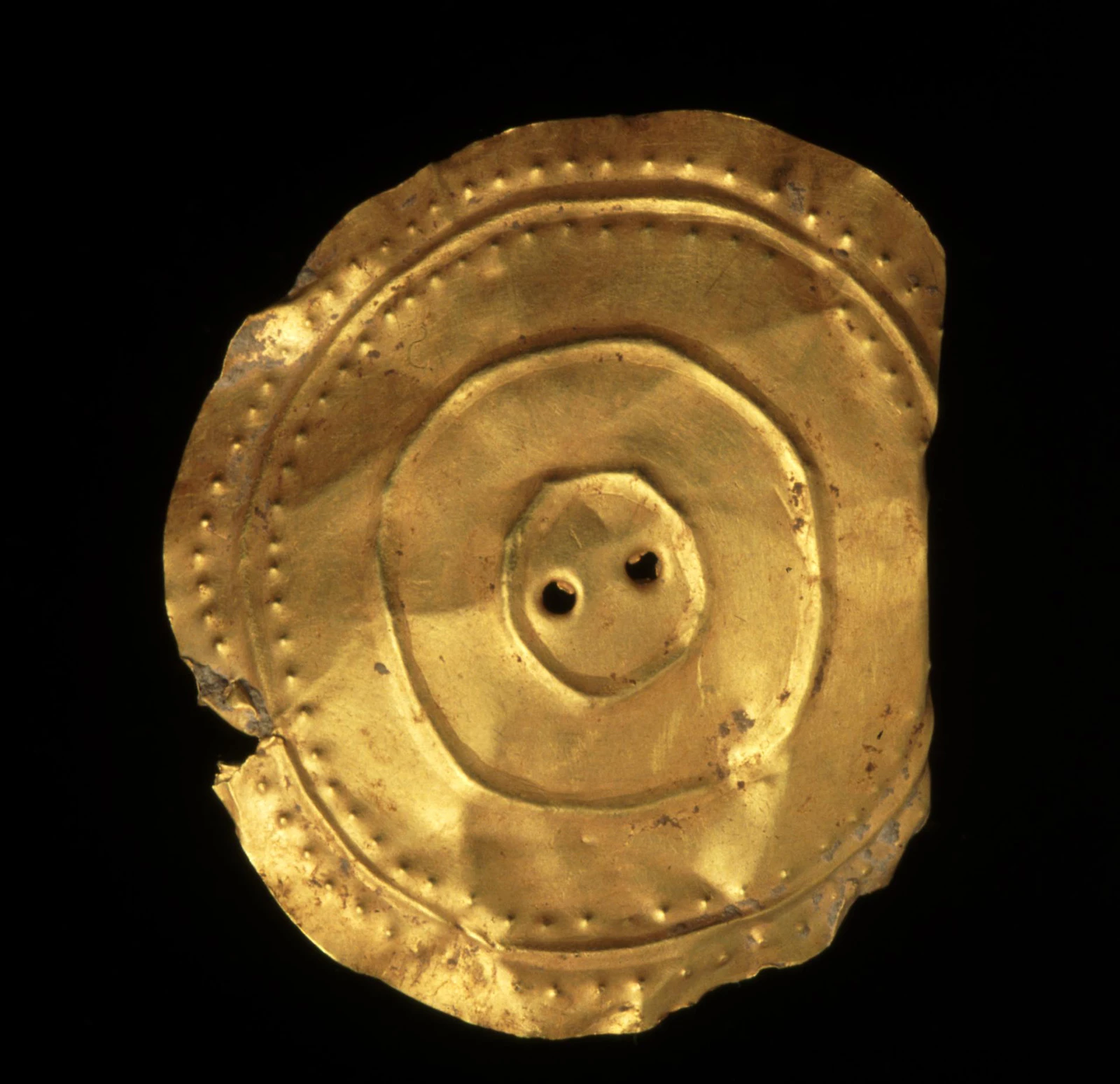
People in Wales have been making, trading and wearing beautiful treasures from gold for thousands of years - like this Bronze Age hair ornament and this extremely blingy Medieval signet.


photograph of gold disc with repousse design

At around 4000 years old, this sun disc is one of the earliest and rarest examples of Welsh bling

One of the earliest examples of Welsh bling is this so-called 'sun disc', found near Cwmystwyth in Ceredigion.

Current research suggests that these 'sun discs' were part of ancient funeral practice, most likely sewn onto the clothes of the dead before their funerals. Only six have ever been found in the UK.
 

Most Controversial

At first glance, an ordinary Chapel tea service - used by congregations as they enjoyed a 'paned o de' after a service. A closer look reveals the words - 'Capel Celyn'. The chapel, its graveyard and surrounding village are now under water.


Photograph showing a cup and saucer with 'Capel Celyn' and a ribbon scroll design

Capel Celyn, in the Tryweryn Valley, is now underwater

Flooded in 1965 by the Liverpool Corporation, the Tryweryn valley became a flashpoint for Welsh political activism - creating a new generation of campaigners who pushed for change in how Welsh communities were treated by government and corporations.

Curators from St Fagans collected these as an example of life in Capel Celyn - to serve as a poignant reminder of a displaced community, and to commemorate one of the most politically charged moments of the 20th century in Wales.
 

Honourable Mention: an Airplane made from a Dining Room Chair

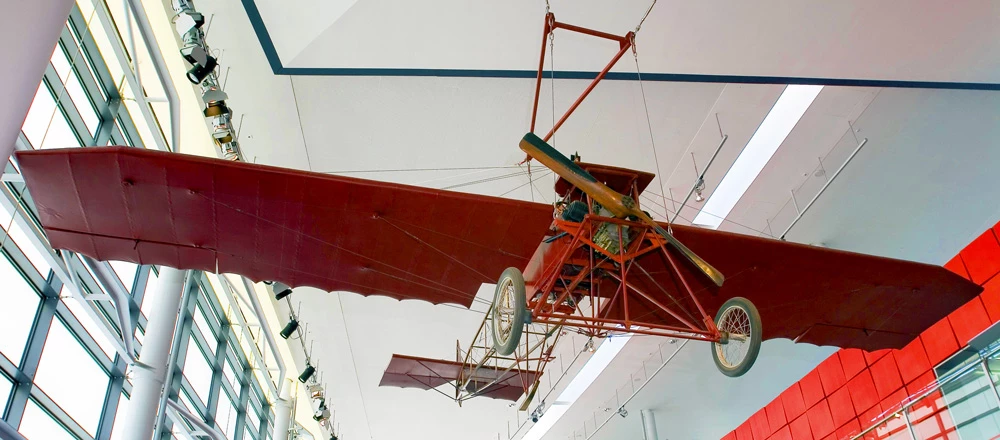
Made from a dining room chair, piano wire and a 40 horsepower engine, the Robin Goch (Red Robin) was built in 1909 - and also features a fuel gauge made from an egg timer.


photograph of a small, early twentieth century airplane with red wings

The Robin Goch (Red Robin) on display at the National Waterfront Museum

Its builder, Horace Watkins, was the son of a Cardiff printer - here he is pictured with an earlier, even more rickety version of his famous monoplane.
 

Photograph from 1908 showing Horace Watkins in a very early, precarious-looking monoplane

Horace Watkins testing his monoplane in 1908

Our collections are full of stories which reflect Wales' unique character and history. The Robin Goch is one of the treasures of the collection, and is an example of Welsh ingenuity at its best.

Half a Million Searchable Items

The launch of Collections Online uncovers half a million records, which are now searchable online for the first time.

“Collections Online represents a huge milestone in our work, to bring more of our collections online and to reach the widest possible audience.

It’s also just the beginning. It’s exciting to think how people in Wales and beyond will explore these objects, form connections, build stories around them, and add to our store of knowledge." – Chris Owen, Web Manager
 

Search Collections Online

Plans for the future

Our next project will be to work through these 500,000 records, adding information and images as we go.

We'll be measuring how people use the collections, to see which objects provoke debate or are popular with our visitors. That way, we can work out what items to photograph next, or which items to consider for display in our seven national museums.

Preparing and photographing the collections can take time, as some items are very fragile and sensitive to light. If you would like to support us as we bring the nation's collections online, please donate today - every donation counts.


Donate Today


We are incredibly grateful to the People's Postcode Lottery for their support in making this collection available online.
 

Laying foundations: Workmen's Institutes

10 February 2010

Workmen's Institutes

Blaenavon Working Men's Institute, early 20th century

Blaenavon Working Men's Institute, early 20th century

Between the 1880s and the 1930s a number of Workmen's Institutes were built in the industrialized townships of south and north-east Wales. Their aim was to provide educational and recreational facilities for workers and their families. They usually housed libraries and reading rooms where daily newspapers were available, but might also include theatres, cinemas and games rooms (snooker, billiards and dominoes were particularly popular). Used for public lectures, political rallies, concerts, dances and eisteddfodau (competitive music and recitation competitions), the Institutes also provided venues where groups and societies could meet and local bands could practise and perform. Some Institute buildings were four or five storeys high and even contained swimming pools!

Oakdale

The Reading Room, Oakdale Institute about 1946

The Reading Room, Oakdale Institute about 1946

The Oakdale Workmen's Institute served the community based around Oakdale Colliery in Monmouthshire. The first shaft had been sunk in this hitherto relatively unspoilt part of the Sirhowy valley in 1906, and a second — the Waterloo shaft — was sunk four years later. The coal seams proved to be outstanding both in terms of quality of coal and thickness of the seams. Accommodation for the workers and their families was provided in a purpose-built ‘model village’ named Oakdale.

Laying foundations

At the heart of the new village was a Workmen's Institute. Construction work began in 1917 and on 3 July that year a ceremony was held at which two foundation stones were laid. Specially engraved trowels were presented to the two main participants: Harry Blount, on behalf of the workers, and Alfred S. Tallis, Managing Director of the Tredegar Iron and Coal Company, which owned the Oakdale mine. The building was finished the following year when, presumably, a 'topping out' ceremony would have been held to mark the completion of building works.

The building was officially opened on 10 September 1917, and a special key was presented to A S Tallis, representing the mine owners, as a token of the building committee's appreciation for the loan of £10,000 given by the company towards the cost of erecting the building.

A new life at St Fagans

The Oakdale Institute was donated to St Fagans National Museum of History (then called the National Folk Museum of Wales) in 1987. It was dismantled, re-erected and refurbished to its late 1930s appearance and opened to the public in 1995. The two trowels used at the ceremony to mark the laying of the foundation stones were donated to the Museum in the months leading up to the opening by relatives of their original recipients. (One trowel had found its way to the Isle of Wight, while the other was in Swansea.) The building was officially opened by the Rt. Hon. Neil Kinnock, then European Commissioner for Transport, but formerly leader of the Labour Party and MP for the constituency of Bedwellty within which Oakdale was situated. Days before the opening, the engraved key given to the Tredegar Iron and Coal Company was also donated to the Museum.

The 'Stute

The 'Stute is a prize-winning animation made by the animation company Cinetig with pupils from two South Wales schools. It celebrates the crucial role Oakdale Workmen's Institute, Gwent, had in the mining community and draws on oral testimony from the archives at St Fagans.

The 'Stute is a prize-winning animation made by the animation company Cinetig with pupils from two South Wales schools. It celebrates the crucial role Oakdale Workmen's Institute, Gwent, had in the mining community and draws on oral testimony from the archives at St Fagans.

Wales's smallest post office at St Fagans

11 April 2007

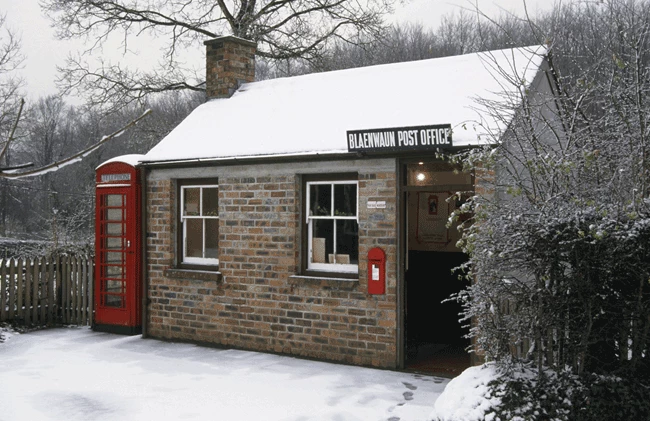
In 1992 Wales's smallest post office was delivered to Amgueddfa Cymru. Thanks to the generosity of Post Office Counters Ltd, who financed the project, the small brick building was dismantled, transported and then re-built at St Fagans National Museum of History by the Museum's specialist re-erected buildings team.

Village post offices have played an important role in community life throughout Wales for the past 90 years. By the 1950s, virtually every village had its own branch, from which mail was distributed, parcels were collected and people gathered to catch up on all the local news. The country postman/postwoman on their bicycle, and later, in the red-painted Morris Minor or Fordson van, helped to keep people in rural communities in touch with one another by maintaining links and regular contact.

Wales's smallest post office at Blaenwaun, Carmarthenshire

Wales's smallest post office at Blaenwaun, Carmarthenshire

Blaenwaen Post Office at St Fagans National Museum of History

Blaenwaun Post Office at St Fagans National Museum of History

The Country Post Office

Of course, country post offices were very rarely housed in the impressive buildings of those found in towns. They usually occupied a corner of the village store or the front room of a house. Sometimes these post offices sold a range of items, but some relied on the sale of stamps, postal orders, licences and savings certificates as their only means of income.

Blaenwaun Post Office, located about eight miles north of Whitland in Dyfed, was one such business. It was built in 1936 by Evan Isaac, a stonemason and his cousin David Williams, a carpenter. The Post Office was run by Mrs Hannah Beatrice Griffiths (nee Isaac), Evan Isaac's daughter, who also ran the pub across the road, the Lamb Inn, with her husband.

Mail was brought daily from Whitland and was sorted at the Post Office on a low bench in the back room. It was delivered to the local community by Mrs Griffiths, who completed the eight-mile round journey on her bicycle before going across the road to work in the Inn. Any customers who arrived at the Post Office when the Griffithses were working in the public house could press a button which rang a bell behind the bar.

The Post Office, which measured just 5m long by 2.9m wide, comprised of two rooms: an outer serving room with a counter and an inner office or sorting room with a small fireplace and a bench under the window. A timber partition wall separated the two rooms. The internal walls were painted chocolate brown to a height of about a metre above the floor then cream to the ceiling, with a broad black band between the two.

A painted sign made of heavy tin sheet on a wooden board was fixed outside above the serving room window. It read BLAENWAUN POST OFFICE. A small post box was mounted against the wall between this window and the entrance door.

In the early days, there was a telephone on the counter for the use of the Post Office and, one assumes, the villagers. Later, a public kiosk was erected outside the small building. In the office was a War Department Receiver for receiving urgent messages in times of emergency.

Following Mr Griffiths' death in the early 1960s, the business was relocated to a new bungalow built by his daughter, Mrs Evanna James. The old Post Office stood empty from that time until it was offered to Amgueddfa Cymru in 1991.

It can be visited today at St Fagans National Museum of History in the 'village' section of the open-air museum, near the bakery and the tailor's shop. It has been refurbished to its war-time appearance, and represents a period of Welsh history not covered in any of the Museum's other buildings.