Welsh Blankets – Beauty, Warmth, and a Little Bit of Home
, 5 May 2020
The National Wool Museum in Drefach Felindre is home to a comprehensive collection of tools and machinery involved throughout history in the processing of woollen fleece into cloth. It also holds the national flat textile collection and the best collection of Welsh Woollen blankets with documented providence dating back to the 1850s. These range from large double cloth tapestry blankets that are now very collectable, to plain white single utility blankets from WWII. In this blog, Mark Lucas, Curator of the Woollen Industry Collection for Amgueddfa Cymru – National Museum Wales, shares his knowledge of the heritage of Welsh blankets and some fine examples from this important collection.
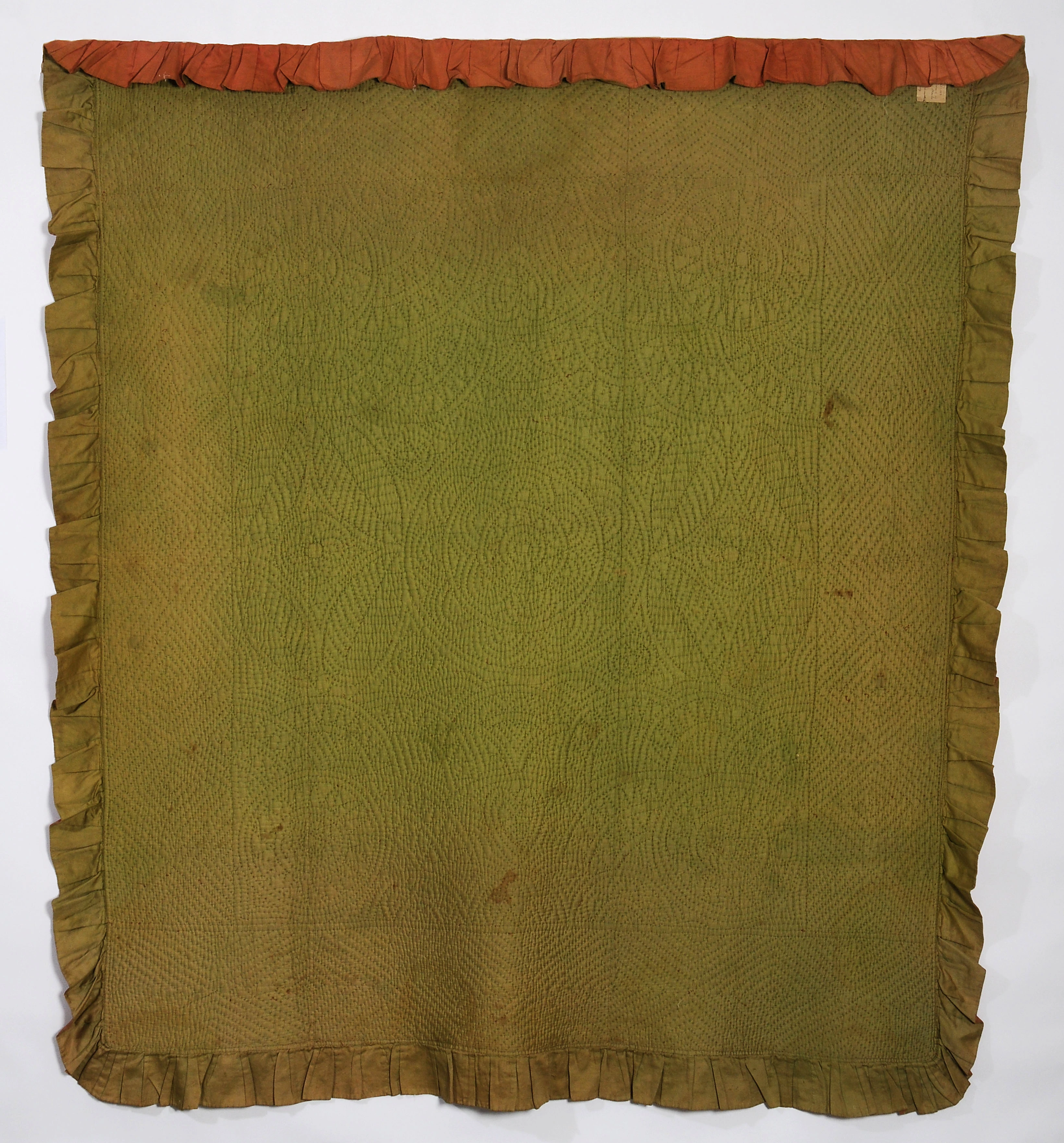
Welsh Blankets traditionally formed part of the bottom draw for Welsh brides. A pair of Welsh blankets was also commonly given as a wedding gift. The would have travelled great distances with people moving during the Industrial Revolution looking for work, but wanting to keep a small piece of home with them. Thus, Welsh blankets have found their way across the world, adding a touch of homely aesthetic to a room by day and providing warmth at night.
Narrow Width Blankets

Narrow Width Blanket - two narrow lengths stitched together.
Narrow width blankets were the earliest, woven on a single loom. They were made of two narrow widths hand sewn together to form a larger blanket. Single loom blankets of this type were the norm before the turn of the twentieth century when the introduction of the double loom enabled the weaving of broader widths of fabric. However, many of the smaller mills, as well as individual weavers, did not convert to wider looms and, as a result, narrow-loom blankets continued to be produced in significant quantities during the 1920s, 30s and even later.
Plaid Blankets
Plaid Blanket
Plaids were popular during the nineteenth century, usually featuring strong colours against a natural cream background. The introduction of synthetic dyes in the late 19th century allowed weavers to mix more coloured yarns into the designs, although some colour combinations were subtle, others could be gaudy. Many smaller mills continued the use of natural dyes well into the 20th century. The natural dyes were made from madder and cochineal for reds, woad and indigo for blues, and various berries and lichens for other shades. The National Wool Museum has its own natural dye garden and hosts courses and talks throughout the year on natural dyeing
Tapestry Blankets
Tapestry Blanket
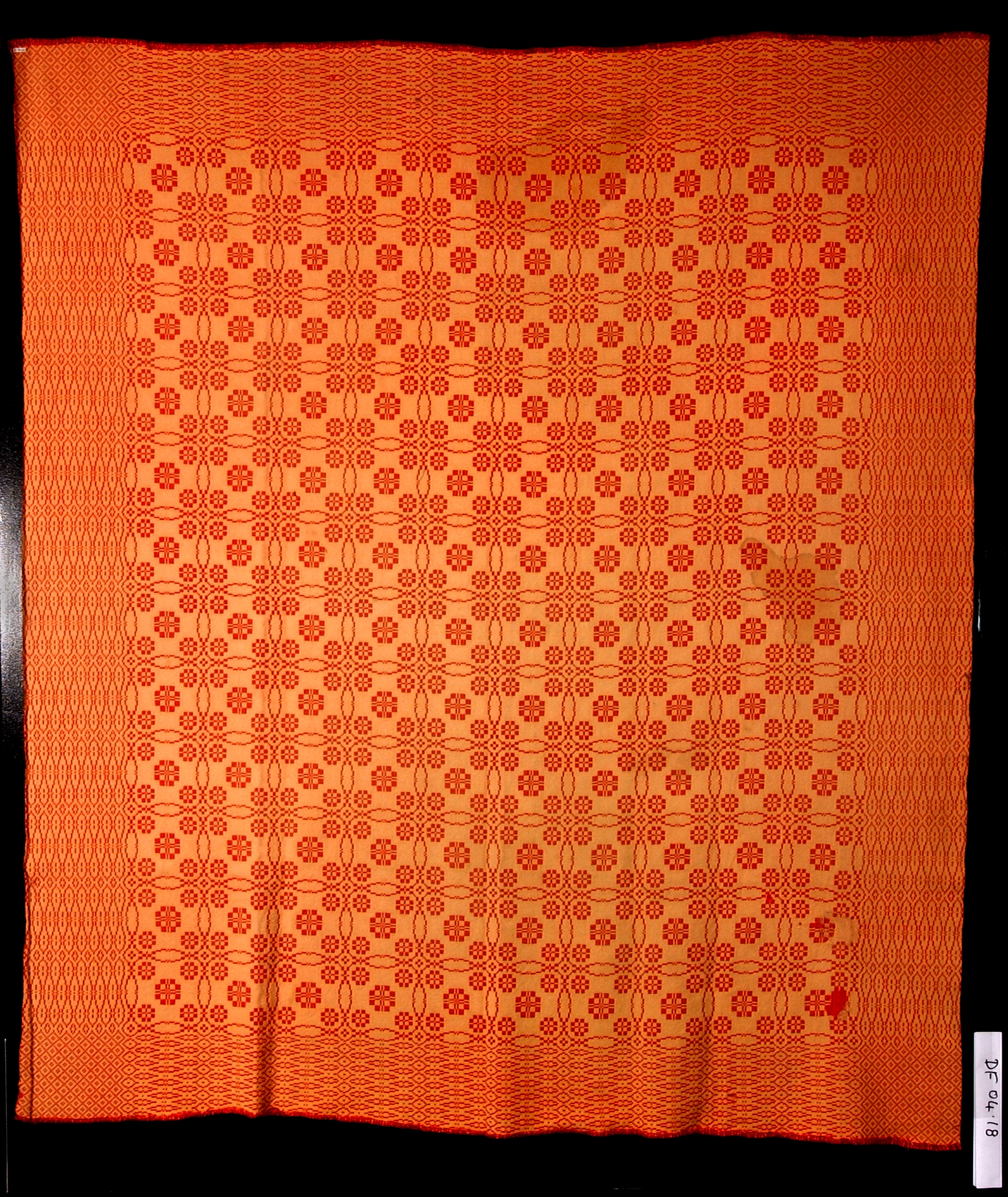
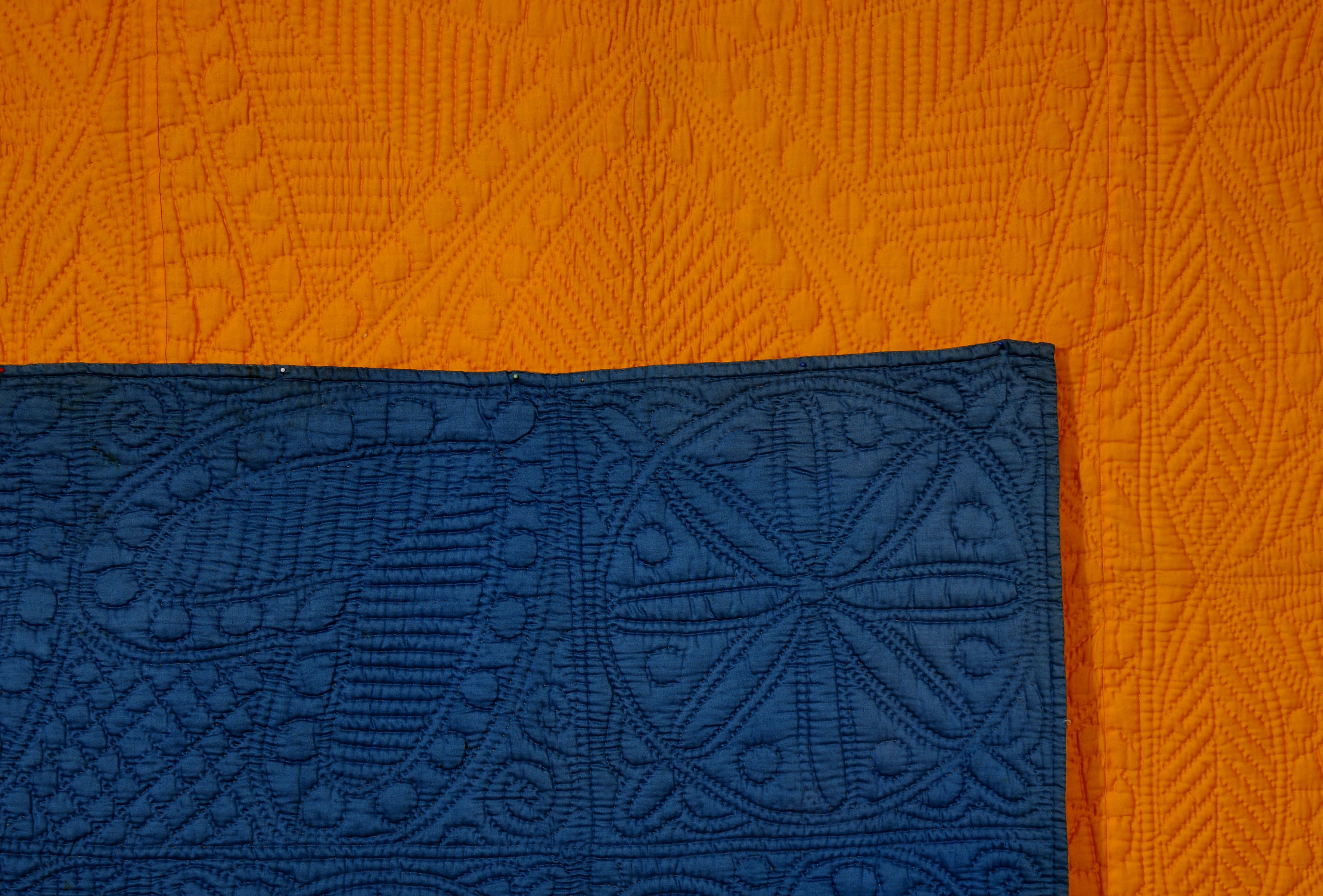
Welsh Tapestry is the term applied to double cloth woven blankets, producing a pattern on both sides that is reversible and is the icon of the Welsh woollen industry. Examples of Welsh tapestry blankets survive from the eighteenth century and a pattern book from 1775 by William Jones of Holt in Denbighshire, shows many different examples of tapestry patterns. Double cloth was first used to make blankets, but its success as a product for sale to tourists in the 1960s led to its use as clothing, placemats, coasters, bookmarkers, tea cozies, purses, handbags and spectacle cases. Because of the hardwearing quality of the double cloth weave the material has also been used for reversible rugs and carpeting.
Honeycomb blankets
Honeycomb Blanket
Honeycomb blankets are a mixture of bright and soft colours. As the name implies the surface is woven to produce deep square waffle effect giving the blanket a honeycomb appearance. This type of weave produces a blanket that is warm and light.
With the current resurgence of Welsh blankets for a decorative home-style item there is much interest in old blankets and the designs patterns. Antique blankets have become very popular with interior designers and feature heavily in home décor magazines. They are used as throws and bed coverings in modern homes with many high-end textile designers as well as students researching old patterns for inspiration for their new designs.
Caernarfon Blanket
Many of the fine examples in the Museums’ blanket collection come from mills across Wales that ceased production long ago. A highlight is the collection of Caernarfon Blankets. These were produced on Jacquard looms in a range of colourways. Only a few mills used Jacquard looms, which can make complicated designs and pictures. The Caernarfon blankets show two pictures one with Caernarfon Castle with the words CYMRU FU (Wales was) and a picture of Aberystwyth University with the words CYMRU FYDD (Wales Will Be). It is believed that these blankets were first been made in the 1860s, and last produced for the investiture of Prince Charles in 1969. A recent donation to the museum is an earlier example of the blanket featuring two images of Caernarfon castle. Woven by hand it contains a critical spelling error - Anglicising the name to Carnarvon.