A new lease of life for Cambrian Railways Coach No.238 4 July 2007 The coach before work began The interior of the main part of the coach The completed coach A 19th-century railway coach has been at the centre of one the largest conservation and reconstruction programmes undertaken by Amgueddfa Cymru. 19th-century passenger railways At the end of the 19th century, Cambrian Railways covered much of mid-Wales. Unlike the lines in south Wales, whose main purpose was to carry iron and coal from the valleys the short distance to the coast, Cambrian Railways provided long-distance passenger services. They connected coastal resorts such as Aberystwyth to the large cities of Liverpool, Manchester, Birmingham and London. Quality and luxury In comparison to today's trains, passenger coaches in the 19th century were quite complicated. Coach No.238 had a small luggage compartment at one end, then two first-class compartments and four third-class compartments. There were three toilets, one allocated to first-class use only. To make sure there was no mixing of classes, the corridors for first and third-class compartments were on opposite sides of the coach. Coach No.238 was built in Birmingham in 1895 to very high standards, its original plans stating: “Interior panelling of polished sycamore framed with walnut wood and gold lined”. From luxury coach to hollow shell The coach entered service in 1895 and was used mainly between Aberystwyth and Manchester before finally being withdrawn in 1939. During the Second World War it was converted into a wireless van. Later it was put into storage before being transferred to Amgueddfa Cymru in 1991 by which time the coach was essentially a hollow shell. The Museum decided to restore one first-class and one third-class compartment at either end of the coach, with the rest of the space to be used for groups of visitors. A special canopy was constructed to house the coach, allowing the restoration to go ahead even in bad weather. Restoration of the coach Work began with re-roofing the coach, then replacing the floor with 'tongue and groove' planks. The first-class compartment was found to have one set of planks laid at 45 degrees to the body of the coach, with a top layer laid at 90 degrees to the lower layer. Apparently this gave a quieter ride for the first-class passengers. Next to be renewed were the external panelling and mouldings, then the internal partitions and seat frameworks, all following the original plans. Such was the attention to detail that the metal brackets supporting the luggage rack were copied from an original with replicas being made in the brass foundry at the National Slate Museum in Llanberis. The coach originally had 14 coats of paint; fortunately, modern paints do not require such methods. The lower half of the coach is finished in Cambrian Green, with an original sample of paint used to produce the appropriate shade. Finishing touches The coat-of-arms of the Cambrian Railway Company and the Prince of Wales feathers provided the finishing touches. These were taken from originals that were photographed, scanned and laser printed to provide identical copies. The glory of this coach will serve as a reminder of the halcyon days at the beginning of the 20th century when people travelled from all over England to visit Cardigan Bay.
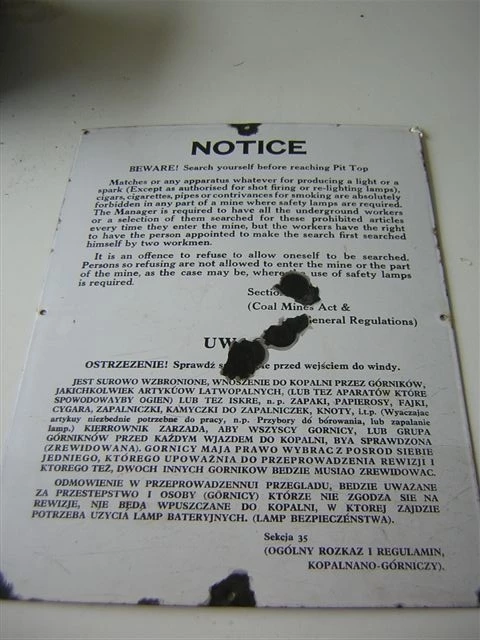
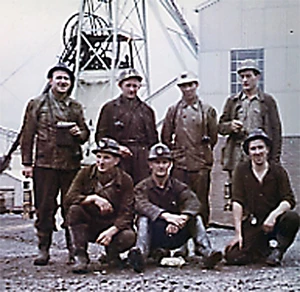
Scattered by war and revolution 12 June 2007 Colliery sign in English and Polish German mine workers at a south Wales coal pit After the Second World War the demand for coal was high and there was a need to recruit new miners. One source for these was amongst the thousands of Europeans who had to flee their home countries during the Second World War. In January 1947, a national agreement was made between the National Union of Mineworkers (NUM) and the National Coal Board (NCB) to recruit from the large number of Polish soldiers who had fought with the Allies during the war. However, there was much resistance amongst local unions. By the end of May 1947 there were Poles whose training was complete but no collieries willing to take them. The NCB appealed for help from the NUM who put a strong resolution to a delegate conference in favour of the acceptance of the Poles and most found places eventually. A scheme to recruit other eastern European displaced persons began in September 1947. There was again fierce opposition from local unions and by the winter only a minority found collieries willing to take them. By 1951 only 10,000 of the 18,000 foreign workers still remained in the mines and a new scheme to recruit Italians was launched. Again there was local opposition, only 400 found placements and the recruitment stopped in April 1952. It was no better when the National Coal Board tried to recruit amongst refugees who had fled from Hungary during the 1956 revolution. There were over 4,000 volunteers but under a third of them found places, the rest went to other industries. The 'foreign workers' came to Wales after years of hardship and danger. The ones that found employment in the coal industry eventually gained a reputation for hard work and respectability. Wales should be proud of them and the part they played in its industrial history.
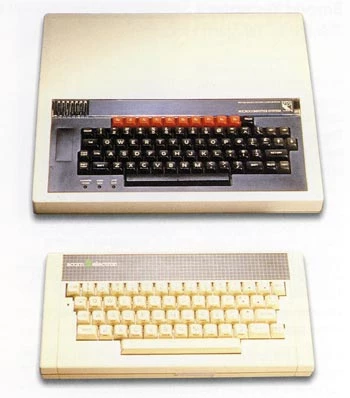
Dragons, zebras and doorstops - building a collection of Welsh computers 16 May 2007 The BBC model B (top) and the Acorn Electron. The Dragon 32 (left) and the Spectrum Plus. In the early 1980s Wales produced many of the world's home computers. Over the years, Amgueddfa Cymru has been trying to add an example of every computer manufactured in Wales to its collection. In 1943, Thomas Watson snr, Chairman of IBM, imagined that the future world computer market would be made up of only five different computers. However, in the 1980s, there were at least six different models being manufactured in Wales alone. Zebras and Dragons The 'Zebra' and 'Dragon' were both types of early computers. The 'Zebra' was produced in the 1960s. Only forty were ever made and most of them were exported overseas. The Zebra machine in the Museum's collection was manufactured in Newport, south Wales and was donated by Cardiff University. The 'Dragon' was available in two versions, the thirty-two and the sixty-four. These numbers refer to the amount of memory each machine had. Although this is much less memory than computers today, this was considered very powerful in the 1980s. Tracking down information about where early computers were made has proved difficult. However, a number of scrapbooks providing useful information were discovered in the Glamorgan Record Office, and were donated to the museum by 'AB Electronics' of Abercynon. The scrapbooks revealed that AB Electronics had produced most of the computer models made in Wales, and also provided information about other Welsh manufacturers. The Electron & The BBC The Electron was made by the Acorn Company, best known for producing the BBC computer. It was much cheaper and less powerful than the BBC, which was the most powerful and expensive home computer available in the 1980s. Although primarily used as an educational machine some of the games written for the BBC are some of the best produced for any computer of any era. The scrapbooks showed that a number of Electron machines were manufactured by AB Electronics and a Welsh made machine was kindly given to the museum by the Chairman of the Electron User Group. The books also showed that three firms had manufactured the BBC in Wales: AB Electronics of Abercynon, Race Electronics of Llantrisant and ICL of Kidsgrove. A dealer in vintage Acorn hardware gave the museum a BBC computer, for its collection, that had been manufactured by Race Electronics. ZX Spectrum Despite the Spectrum's popularity and availability, locating a Welsh-built model was difficult. Once again AB Electronics at Abercynon had made the Spectrum, but the majority had been produced by the Timex factory in Dundee. Eventually the Museum did manage to obtain an example of a Spectrum Plus built by AB Electronics and added it to its collection. Torch Computers The AB scrapbooks referred to 'Torch Computers of Cambridge' who had a factory in Caernarfon and built machines aimed at the business market. After contacting the company, they generously offered us an example of a machine built in North Wales. The Museum now only needs three machines to complete its collection of computers made in Wales. One of these is the Apple iMac manufactured by the LG Corporation of Newport. There are many websites on the internet which can give you more information about early computers. Some sites also offer software for the early machines and there are even programs to run on your modern PC which mimic the behaviour of the old machines, allowing you to see how much computers have moved on.
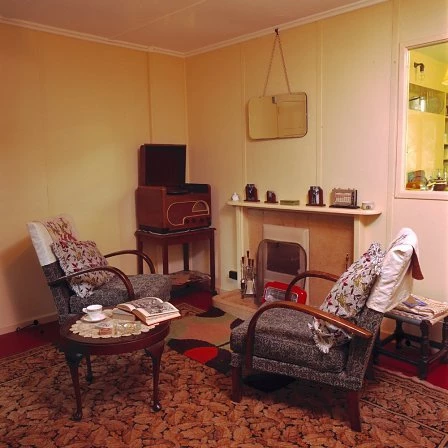
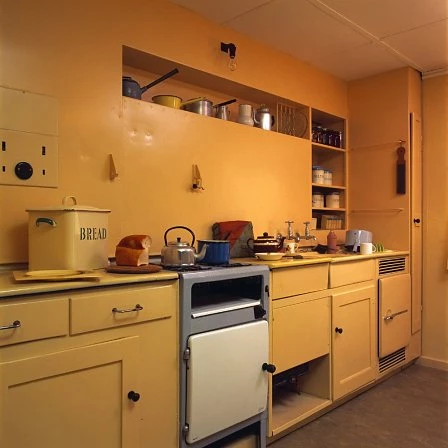
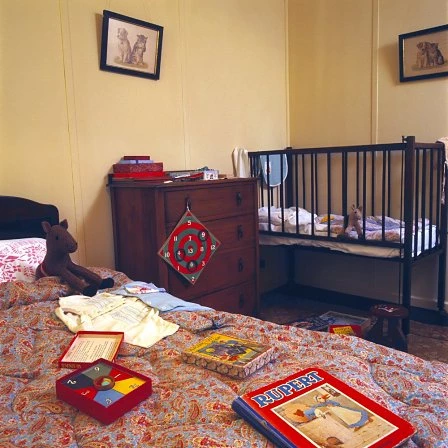
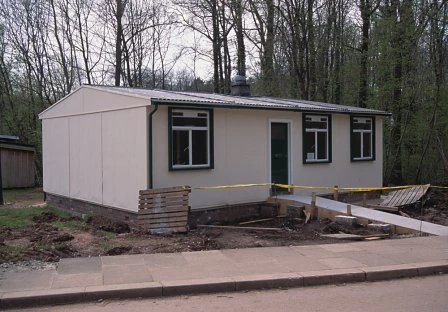
From Blitz to Prefab - How the Second World War altered housing in Wales 26 April 2007 The living room.
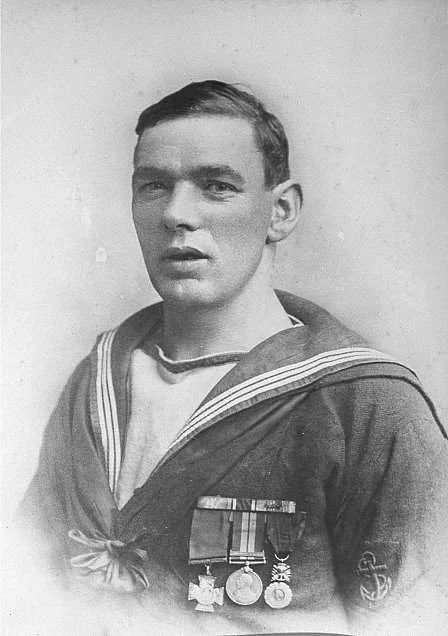
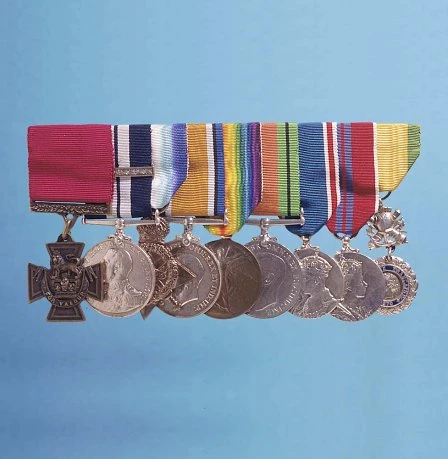
A 'mystery' Victoria Cross and a stuffed parrot 26 April 2007 William Williams VC. Image © Kenneth Williams Collection. William Williams' medals. Left to right: Victoria Cross, Distinguished Service Medal with second award bar, Great War service medals (1914-15 Star, War Medal, Victory Medal), Defence Medal 1939-45, Coronation Medals (1937 and 1953), France, Médaille Militaire. In 1917 William Williams was awarded the Victoria Cross for his role in the sinking of a German submarine. On 21 July 1917 an Anglesey seaman, William Williams, received the Victoria Cross, Britain's foremost gallantry award. The citation on the award read 'selected by the ship's company of one of H.M. ships to receive the Victoria Cross under Rule 13 of the Royal Warrant'. This vague citation led this and other similar cases to become known as the 'Mystery VCs'. What lay behind it? U-boats and Q-ships During World War I (1914-18), the German Navy attempted to blockade Great Britain, using its submarine (U-boat) fleet to cut off food and vital supplies. One tactic used by Britain to trick the German submarines was to use armed ships disguised as merchant ships. These were known as 'Q-ships'. These ships went to great lengths to ensure that they were attacked, in the hope that the submarine would then surface and expose itself to the hidden guns of the Q-ships. Williams served on several Q-ships and already held the Distinguished Service Medal for his part in the sinking of a German submarine in February 1917. H.M.S. Pargust Williams was awarded the Victoria Cross for his involvement in the sinking of the German submarine UC-29 on 7th June 1917. The H.M.S Pargust was torpedoed and the crew were seen to abandon their disguised Q-ship - complete with a stuffed parrot in a cage - but unknown to the Germans, a small number of men remained hidden on board. For over 30 minutes, Seaman Williams held in place the starboard gun port, its releasing weights having been freed by the torpedo's explosion. His actions prevented premature exposure of the gun until the moment came to open fire when the German submarine eventually surfaced nearby. The achievement of sinking UC-29 was recognized by the award of the Victoria Cross to H.M.S. Pargust, the first time a ship had been honoured under the Rule for rewarding an act of collective gallantry. One officer (Lieutenant R.N. Stuart) and one rating were elected by the crew to receive the award. Williams, whose quick thinking and strenuous effort had saved the day, was the rating. His distinguished career held one more twist: on 8 August 1917, H.M.S. Dunraven (Pargust's successor and another Cardiff ship) was sunk off the French coast after a five-hour battle with another submarine. Williams received a bar (second award) to his DSM for his gunnery work on this occasion: his third gallantry award in under six months! William Williams was discharged from the Royal Naval Reserve in November 1918. He settled in Holyhead and was a founder member of the local branch of the British Legion. He died on 23 October 1965. Background Reading My mystery ships by G. Campbell. Published by Hodder & Stoughton (1928). Sea killers in disguise by T. Bridgeland. Published by Leo Cooper (1999).