: The 20th Century

The Davies Sisters during the First World War

29 July 2007

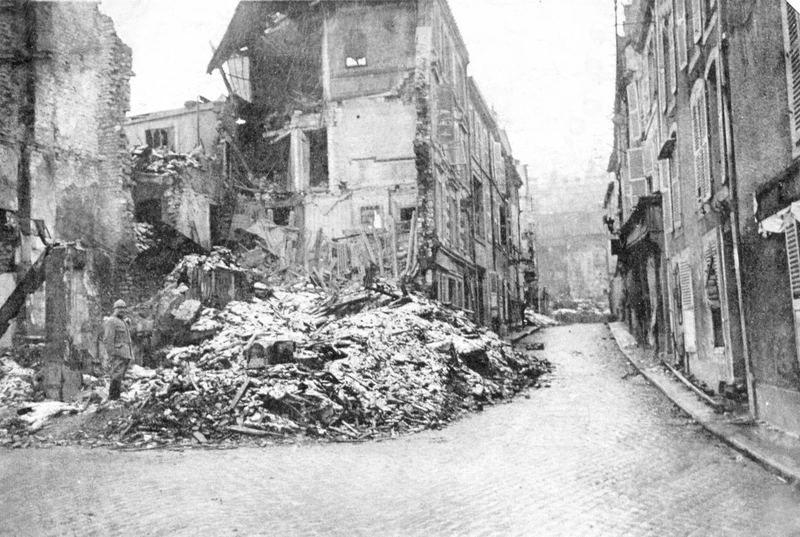
Black-and-white photograph of a road junction in a French city, with the building on one corner reduced to rubble

Gwendoline Davies visited the damaged and largely empty French city of Verdun on 9 and 10 March 1917, where she acquired this postcard image as a souvenir. Private collection (Lord Davies)

The First World War had a profound effect on the lives of Gwendoline and Margaret Davies, two sisters from mid Wales whose gifts and bequests completely transformed the range and quality of Wales's national art collection.

They lost much-loved relatives and served with the Red Cross in France, seeing the destruction first hand. They were deeply conscious of the horrors experienced by both British and French soldiers, and shocked at the suffering of civilian refugees.

While their brother David flung himself into the cause of international peace, the sisters hoped to repair the lives of ex-soldiers traumatized by the war, through education in the crafts and through music. Out of this grew the idea of Gregynog, as a centre for the arts, and for the discussion of social problems.

Bringing Refugee Artists to Wales

On 4 August 1914 Germany invaded Belgium, precipitating the First World War. Over a million Belgians fled their homes.

The Davies family decided that Belgian artists should be brought to Wales, where they could work in safety, and inspire the country's art students. Major Burdon-Evans, their agent, and their friend Thomas Jones journeyed to Belgium where they assembled a group of ninety-one refugees, including the sculptor George Minne, and the painters Valerius de Saedeleer and Gustave van de Woestyne and their families.

All three artists were to spend the rest of the war as refugees, largely dependent on the Davies family for support. While their impact on the arts in Wales was limited, the work of all three was to be profoundly influenced by their Welsh exile.

The Sisters in France, 1916–1918

Initially the sisters undertook charitable work at home in connection with the war. They were keen to do more 'in the way of helping', but few women managed to go out to France. One way of doing so was to volunteer through the London Committee of the French Red Cross.

There was little provision in the French army for the welfare of the ordinary soldier, and the Committee sent women to operate canteens at railway stations, hospitals and transit camps.

In July 1916 Gwendoline was posted to a transit camp near Troyes. Margaret joined the canteen there in June 1917, and her journals record their lives at this period.

The sisters were deeply moved by the stoicism of the ordinary soldiers of the French army and by the suffering of exhausted, sick, and hungry refugees.

Wartime collecting

The sisters sometimes managed to add to their art collection during the First World War. Although wartime travel in France was difficult, trips to Paris on Red Cross business provided Gwendoline with opportunities to visit the Bernheim-Jeune gallery.

She bought a Daumier and a Carrière there in April 1917, and paintings by Renoir, Manet and Monet in December. In February 1918 she bought her two celebrated landscapes by Cézanne, The François Zola Dam and Provençal Landscape, which are among her most important and far-sighted purchases.

In February 1916, Gwendoline Davies spent £2,350 on ten oils and a drawing by Augustus John. Both she and Margaret went on to acquire more works by John, and they collected the work of no other artist on this scale.

Gwendoline was determined that the work of Augustus John be seen at Amgueddfa Cymru, later placing several of her own purchases on loan to the Museum.

Guide to the paintings

Paul Cézanne (1839-1906), Provençal Landscape, oil on canvas, about 1887-8.
Paul Cézanne

(1839–1906), Provençal Landscape, oil on canvas, about 1887–8

Bought by Gwendoline Davies with Cézanne's The François Zola Dam in 1918, this picture cost half as much, £1,250. It was probably painted at his family's property outside Aix-en-Provence. Full of the shimmering colour of the South of France where the sisters had holidayed in 1913–14, it must have seemed a world away from war-time Paris in winter.

Amgueddfa Cymru (Bequest of Gwendoline Davies, 1951) NMW A 2438.

Paul Cézanne (1839-1906), The François Zola Dam, oil on canvas, about 1879
Paul Cézanne

(1839–1906), The François Zola Dam, oil on canvas, about 1879

This landscape is one of Gwendoline Davies's greatest pictures, bought in Paris for £2,500 in February 1918. The Troyes canteen was closed for repairs. She was in the city, then under intermittent German bombardment, on Red Cross business. She may have seen it on a previous visit, as in January Margaret had translated from the French the art dealer Ambroise Vollard's anecdotal account of Cézanne's life. Together with Provençal Landscape acquired with it, this was one of the first Cézannes to enter a British collection.

Amgueddfa Cymru (Bequest of Gwendoline Davies, 1951) NMW A 2439.

Camille Pissarro (1831-1903), Sunset, the Port of Rouen (Steamboats), oil on canvas, 1898.
Camille Pissarro

(1831–1903), Sunset, the Port of Rouen (Steamboats), oil on canvas, 1898

Margaret Davies bought several works by Pissarro at the Leicester Galleries, London, in June 1920. This was the most expensive at £550. The previous year she had worked at a canteen in Rouen run by the Scottish Churches Huts Committee.

Amgueddfa Cymru (Bequest of Margaret Davies, 1963) NMW A 2492.
When Welsh ships sailed the seas

6 July 2007

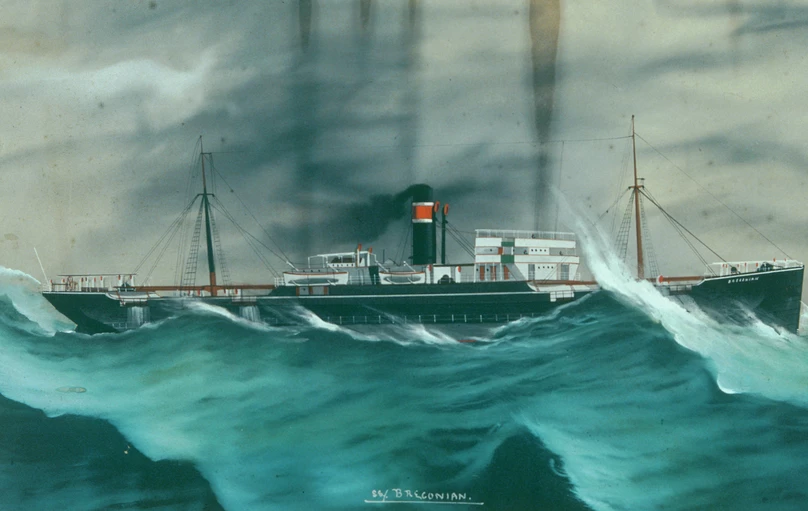
Painting of the Breconian.

Painting of the Breconian

The Breconian

The Breconian was built in 1906; she was registered in Aberystwyth and was sailed by Welshmen across the oceans of the world for thirty years. Her portrait, one of the industrial paintings of ships in Amgueddfa Cymru's collection, reveals a fascinating insight into days gone by.

Ship Paintings

The industrial collections house some 250 ship paintings. Few of these could be described as fine art, but they do provide an invaluable archive of Welsh maritime history. Most of these paintings are the work of Mediterranean 'pierhead painters' who, for a small sum, would produce simple colourful pictures of a vessel for the owner, captain or crew members.

Originally, they were painted in pairs, one painting of the vessel on a calm sea and the other in a storm. What these paintings lack in artistic quality is made up for by their technical accuracy. These paintings became objects of pride and sentiment, as much to the ship's owner as to the captain's wife.

A ship with a new design

The painting of the Breconian is an unsigned storm-scene portrait. The steamship was built for John Mathias & Sons of Aberystwyth. She was unusual in that she had been built with a new, narrower deck, the turret-deck, superimposed upon the vessel's hull, extending from stem to stern. This new design made the vessel more profitable to operate. The design was so successful that 429 turret-deckers were built between 1892 and1911.

The company that owned the Breconian began back in 1869 when John Mathias, an ambitious Aberystwyth greengrocer, decided to venture into shipowning, buying the schooner Miss Evans.

In 1883 he moved from sail to steam, forming the Glanrheidol Steamship Company Limited. By the time that the Breconian joined the Mathias fleet, the business had been grandly renamed the Cambrian Steam Navigation Company Limited, with the seven ships of the line being named, rather unusually, after public schools. This led to seamen at Cardiff giving the company the nickname of 'the College line'.

The Breconian, named after Christ College, Brecon, was the only vessel named after a Welsh school; the others being Etonian, Harrovian, Rugbeian and so on.

Coal out, grain home

Like most tramp steamers of the period, the Breconian would have sailed chiefly in the so-called 'coal out, grain home' trades, taking coal from south Wales across the world and returning with a cargo of cereals. She was manned mainly by Welshmen; in 1911, her master was Captain David Jones of Aberystwyth and 20 of her 28 strong crew came from Welsh coastal towns and villages.

In 1917, The Breconian was sold to the Tyneside Line Limited of Newcastle and in 1926 she was sold on to a Genoese shipowner, Giovanni Bozzo, who renamed her Lorenzo Bozzo after his son. Six years later she was broken up. Today, only the painting remains to remind us of just one aspect of the flourishing Welsh maritime enterprise and the capable Welsh seamen who sailed the world's oceans.

Distinguished photographer's industrial prints

6 July 2007

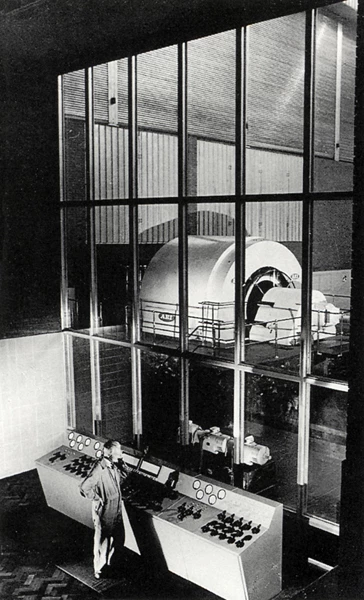
A Walter Nurnberg photograph of the Rogerstone Aluminium Works, Gwent

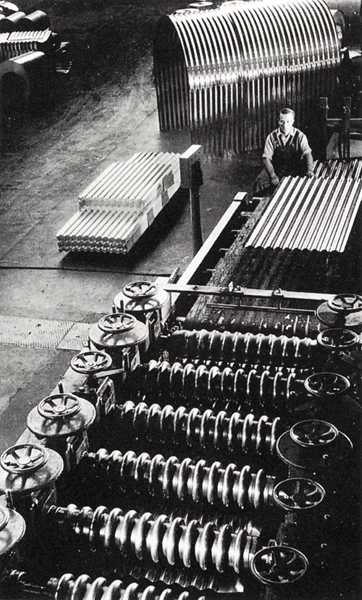
A Walter Nurnberg photograph of the Rogerstone Aluminium Works, Gwent

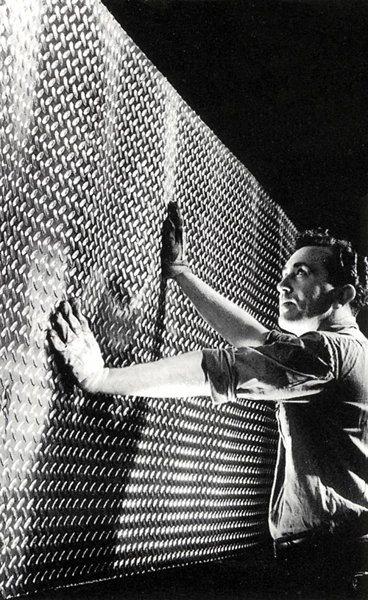
A Walter Nurnberg photograph of the Rogerstone Aluminium Works, Gwent

A Walter Nurnberg photograph of the Rogerstone Aluminium Works, Gwent

A Walter Nurnberg photograph of the Rogerstone Aluminium Works, Gwent

A Walter Nurnberg photograph of the Rogerstone Aluminium Works, Gwent

Amgueddfa Cymru holds in its photographic archives a number of prints taken by the distinguished industrial photographer Walter Nurnberg OBE. The images show interior views of the Rogerstone Aluminium Works in Gwent taken in 1968.

From Banking to Photography

Walter Nurnberg was born in Berlin on 18 April 1907. He followed his father into banking and became a member of the stock exchange, but found the work rather tedious. He became interested in photography while visiting the Reimann College of Art in Berlin, and in 1931 and enrolled for classes in the college.

Whilst studying, Nurnberg was greatly influenced by the works of Albert Renger-Pratsch and Selmar Lerski. In the 1920s they had revolutionised photography with an imaginative approach to the dramatic presentation of mundane objects. Nurnburg was also influenced by the new ideas of the 'Neue Sachlichkeit' (New Objectivity) school of thinking and by the work of the Bauhaus design institute at Dessau. Both emphasised an analytical approach to the photography of objects, revealing precision, realism and form.

<23>From Berlin to London

During 1934 Nurnberg travelled to London and set up as a successful advertising and commercial photographer.

Nurnberg enlisted in the army pioneer corps during World War Two, serving until 1944. He became a naturalised British subject three years later. After leaving the army he set up an industrial photographic business. He described himself as 'one of those mad photographers who would hang upside-down on the end of cranes to achieve dynamic angle perspectives.'

Later on in life Nurnberg lectured at the Polytechnic of Central London and at Harrow and Ealing College. In 1968 he became head of the Guildford School of Photography at West Surrey College of Art and Design. He also wrote two text books on photographic lighting techniques.

Dramatic lighting

Nurnburg preferred to use tungsten lighting, because he could see exactly the effect he wanted using lamps with sharp, clear light. He would even stop production lines if necessary and install extra power cables, to get his unique photographs. His photographs clearly show the effective use of lighting. They create a dramatic effect reminiscent of American films of the 1940s. The pictures are strong and dynamic, full of the power of the industrial world.

On his retirement in 1974 Nurnburg was awarded an O.B.E. for his services to photography and industry. He received many other awards for his achievements in photography. As well as Amgueddfa Cymru, collections of his photographs can be found at the National Museum of Photography, Film and Television in Bradford, The Royal Photographic Society and the Faculty of Engineering and Science at the Polytechnic of Central London.

Walter Nurnberg died at the age of 84 in 1991.

A Sisley painting of the south Wales coast

6 July 2007

La falaise a Penarth, le soir, marée basseby Alfred Sisley
La falaise a Penarth, le soir, marée basse

by Alfred Sisley

The view at the same location today

The view at the same location today

Sisley and south Wales

Within the Museum's art collections is a view of the south Wales coast painted by Alfred Sisley - La falaise a Penarth, le soir, marée basse ('The cliff at Penarth, the evening, low tide'). Sisley's coastal views of 1897 are the only pictures of Wales ever painted by a leading Impressionist.

The first Impressionist exhibition

Born in Paris in 1839 to British parents, Alfred Sisley became a leading member of the circle of young painters who stood in opposition to the traditional art taught at the French Académie. In 1874, this group mounted the show that has gone down in history as the 'First Impressionist Exhibition'. Sisley participated in three of the next seven shows organized by the Impressionists between 1876 and 1886.

He never enjoyed the success of his friends Monet, Renoir and Pissarro and in 1882 he withdrew to the small town of Moret-sur-Loing near Fontainebleau, where he worked for the rest of his career, dying there in 1899.

a

Sisley paints south Wales

In the summer of 1897, Sisley visited south Wales, staying at 4 Clive Place, Penarth and on 5 August he married Eugenié Lescouezec at Cardiff Town Hall.

Sisley found Penarth stimulating. On 16 July he wrote "I have been here for a week ... The countryside is very pretty and the Roads with the big ships sailing into and out of Cardiff, is superb ... I don't know how long I shall stay at Penarth. I am very comfortable here, 'in lodgings' with some very decent folk. The climate is very mild, and has indeed been too hot these last few days, especially now as I write. I hope to make good use of what I see around me and to return to Moret in October, or thereabouts".

Sisley's 19 or so oil paintings of Penarth and Langland Bay near Swansea (where he stayed from 15 August until his return to Moret on 1 October) are his only sea pieces and show the energy and excitement of a new discovery. The Penarth seascapes are more atmospheric than the Langland views, which capture the intense heat and light of the Gower Peninsula.

Six Penarth views have so far been identified. One shows a tree at the cliff's edge with shipping and Penarth Pier in the background. Two show the view northwards up the Bristol Channel and three show the view southwards looking along the cliff's edge towards Lavernock. La falaise a Penarth is one of these southward looking views.

The evening light rakes sharply from the west, casting a mauvish shadow from the steep cliff over the beach below. It depicts low tide, with the rocks of Ranny Point and Lavernock Point clearly visible.

On 4 October 1897 an article in the French paper Le Journal observed: "The Impressionist master has brought back from Penarth and Langland Bay a series of admirable sea pieces, in which the strange flavour of that landscape, little frequented by painters, is rendered with an art that is as captivating as it is personal."

Sisley's vision marks a fundamental change in the interpretation of the Welsh landscape, replacing the Romantic outlook of Turner and his successors. He and his fellow Impressionists blazed a trail for the next generation, led by the native Welsh artists Augustus John and James Dickson Innes.