The Clothes Moth - Museums' No.1 Insect Pest
5 April 2007

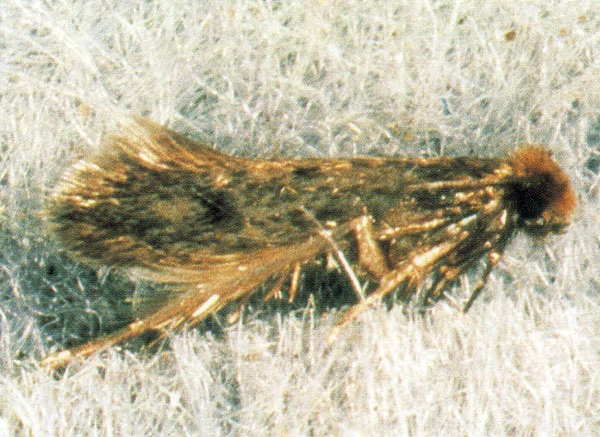
Webbing cloths moth — Tineola bisselliella
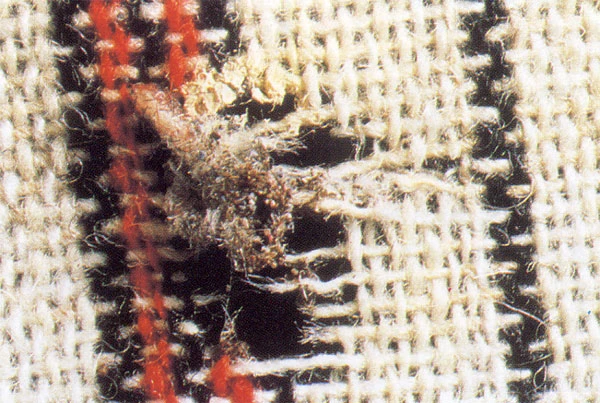
Moth damage.
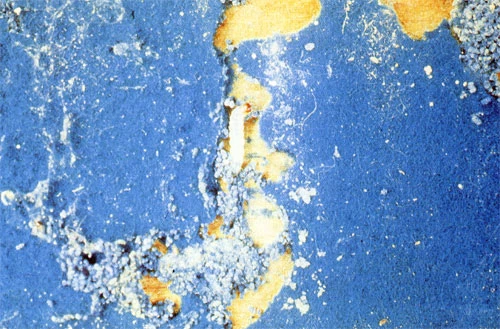
Moth larvae on piano felt.
The humble clothes moth - Tineola bisselliella - is thought to be the number one insect pest in museums throughout the world. It is capable of destroying huge amounts of animal-based material. Amgueddfa Cymru is in the forefront of developing new methods in controlling this pest.
Know your enemy
In the past, museums fumigated collections regularly with large amounts of highly toxic insecticides to stop attacks. Modern methods of control try to recognise any problems early before any damage is caused - The key to good pest management is knowing your enemy.
The common clothes moth
The common, or webbing clothes moth, is a small shiny golden-coloured insect 6-8mm. long, often seen scuttling over infested material or fluttering around rooms somewhat aimlessly. The sole purpose of the males is to mate with the females (who do not fly), before dying.
The females then lay tiny eggs pushed in between fibres and hairs. It is the larvae that hatch from these eggs that cause the damage. They are able to digest keratin, which is found in fur, wool, feathers, hair, finger nails etc. As this is rather a sparse diet on its own, the clothes moth larvae prefer food that is stained or dirty, meaning that dirty woollen clothing is usually attacked as are the edges of carpets where a vacuum cleaner may not reach.
A protective silky web
The larvae protect themselves by weaving silky tubes where they live and feed. These silky cases give it the name webbing clothes moth. When the larvae are fully grown they will pupate inside these cases and after a few weeks the adult moths emerge.
The adults do not eat or cause damage themselves, but mate and start the life cycle all over again. On dirty wool in warm, moist conditions, two or three generations in a year are possible. With the humid climate of the UK and the centrally heated stores and galleries of museums, it is easy to see why the clothes moth is such a major pest.
Formerly in the Museum, the practice was to react after damage was found. Now the aim is to prevent the insects entering the Museum in the first place and to make it as uninviting as possible. Store rooms have well sealed doors and windows along with filtered air conditioning systems. As museums are public buildings, then some moths, be it as adults, larvae or eggs will inevitably be brought in.
A new generation of insect traps
Keeping an eye out for insects and insect damage is part of the conservator's routine work which includes carefully inspecting for signs of damage, and using traps. The Museum is in the forefront of developing a new generation of insect traps designed to catch specific species such as the common clothes moth.
These new traps are based on the power of sex. Females give off a scent, or pheromone - which can attract males from many metres away. This proves very effective for the moths in small areas such as cupboards and small rooms.
Traps are lined with a sticky adhesive along with a synthetic version of the clothes moth pheromone.
Insecticides as a last resort
If, despite all these precautions, moths still manage to attack material, we only use insecticides as a last resort. A major form of pest control at the Museum is to put the object in a plastic bag and place it in a deep freeze for two to three days, killing the insects, eggs and larvae without any damage to the object or toxic residues.
Through the combination of vigilance, good housekeeping and expertise, outbreaks of insect pests such as the common clothes moth are these days thankfully rare and dealt with rapidly.