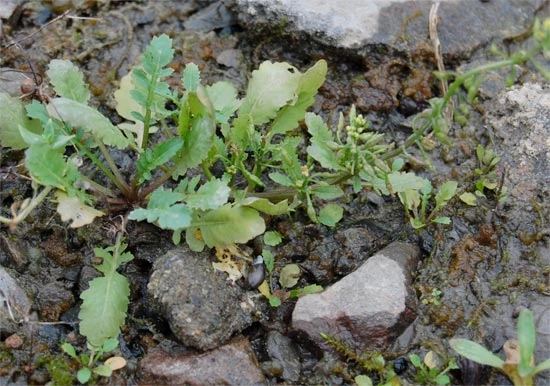
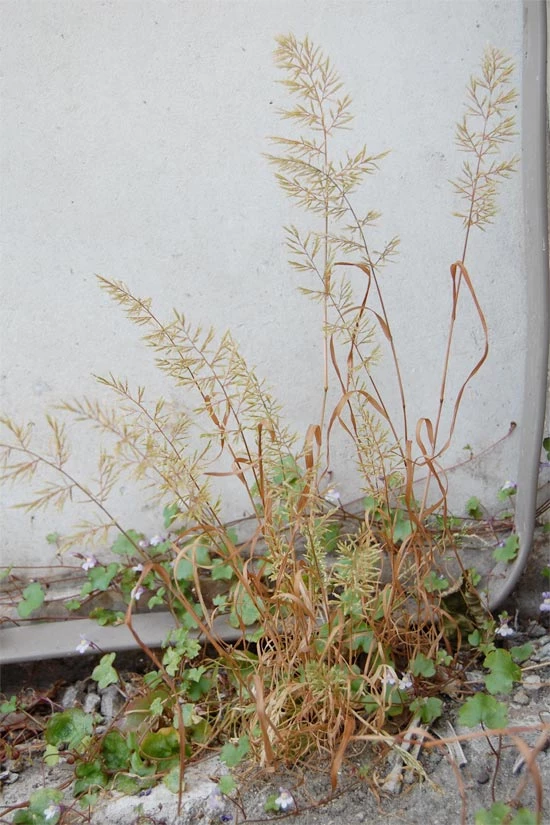
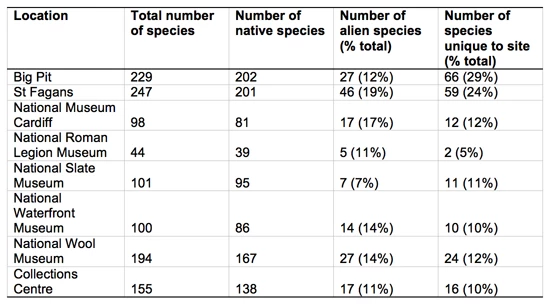
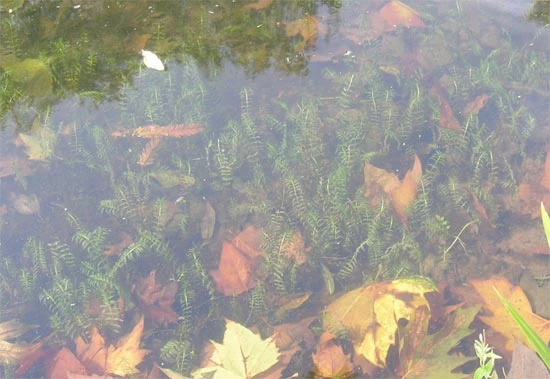
The nature of museums: Vascular plants at Amgueddfa Cymru 7 June 2010 A few species of conservation interest were found. Groenlandia densa (Opposite-leaved pondweed) is a declining aquatic plant and the ornamental ponds at St Fagans, where it is abundant, is of its very few remaining Welsh sites. It is classed as Vulnerable on the Red List for Wales (Dines 2008). A small quantity of Rorippa islandica (Northern Yellowcress) was found on damp waste ground at the Collections Centre in Nantgarw. This species has been spreading rapidly in south Wales during the last decade. Catapodium rigidum subsp. majus (Fern grass) is a rare grass that has been persistent, despite herbicide treatment, on the cobbles at National Museum Cardiff since at least 1997. Studies of vascular plant species across Amgueddfa Cymru's eight locations reveal the importance of protecting fragile ecosystems.Recent legislation, the so-called "Biodiversity Duty" (Section 40 of the Natural Environment and Rural Communities Act 2006), aims to raise the profile and visibility of biodiversity and states that "Every public authority must, in exercising its functions, have regard, so far as is consistent with the proper exercise of those functions, to the purpose of conserving biodiversity".In response, we are carrying out biodiversity surveys at the eight Amgueddfa Cymru locations. The aim is to find out which species are present so that the biodiversity of the sites can be maintained and enhanced. In this article we're looking at the vascular plants — flowers, ferns, trees and so forth.The methodThe surveys were carried out in 2008 and 2009. All vascular plant species, except deliberately planted or cultivated species, were recorded with notes on their frequency and habitats.ResultsIn all, 456 species were recorded; 364 (80%) were natives or aliens known to be here since before the year 1500, and 92 were alien species introduced since 1500. There are about 1,400 plant species in Wales that are native or known to have been here since 1500, excluding critical genera such as Hieracium, Taraxacum and Rubus (T. Dines (2008) A vascular plant Red Data List for Wales. Plantlife International, London). Amgueddfa Cymru's eight locations have 26% of the Welsh flora.The number of species present at each site varied, partly depending on the size of the site and partly on the habitats (Table 1). The richest sites were St Fagans, where there are extensive gardens and woodland, and Big Pit, which has coal tips and moorland as well as buildings and grassland. The sites with lowest diversities were the National Roman Legion Museum at Caerleon, where land is essentially restricted to a garden, and National Museum Cardiff and the National Waterfront Museum in Swansea, which are mostly urban grasslands.The numbers of alien species also varied, the highest proportion being at St Fagans, where many aliens had naturalised from gardens, and National Museum Cardiff in Cardiff city centre. The National Slate Museum in Llanberis had significantly fewer aliens. The only serious alien infestations were of Himalayan Balsam (Impatiens glandulifera) at the National Wool Museum in Dre-fach Felindre and St Fagans, and Japanese Knotweed (Fallopia japonica) at St Fagans.200 (45%) of the species occur only at one or other of the sites (Figure 1), and protecting these is clearly important for maintaining Amgueddfa Cymru's overall biodiversity. The high number of unique species at Big Pit is largely due to the occurrence of moorland and coal tips with a different flora to the other, largely lowland, sites. 16 species were found at all eight sites.Other plants of interest included Monks-hood (Aconitum napellus), Sea Stork's-bill (Erodium maritimum), Glabrous whitlowgrass (Erophila glabrescens), Ivy Broomrape (Orobanche hederae) and Southern Polypody (Polypodium cambricum). Potamogeton trichoides, recorded in several of the St Fagans ponds in 1992, was not refound. Other than these, most of the plants found are relatively common and widespread in Wales.The overall number of plant species was quite surprising, even if it largely consisted of relatively common species. The diversity at Big Pit, St Fagans and the National Wool Museum means that those museum sites can be used for education. The more interesting species can now be monitored and looked after. Table 1. Summary of species data for Amgueddfa Cymru locations. Figure 1. Frequencies of the number of locations in which each species has been recorded. Overview of all locationsAmgueddfa Cymru: Full Report Big Pit National Coal Museum National Museum Cardiff National Wool Museum National Slate Museum Collections Centre Nantgarw St. Fagans: National History Museum National Waterfront Museum
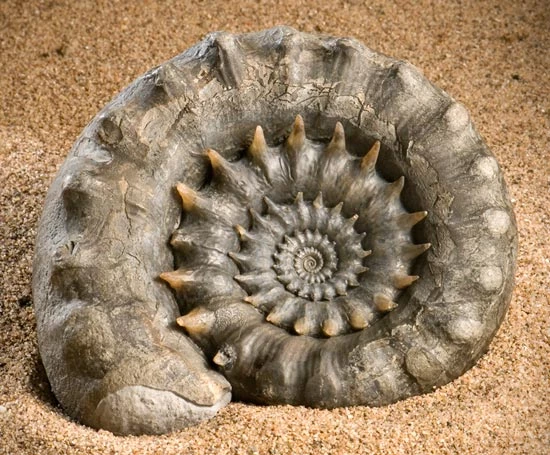
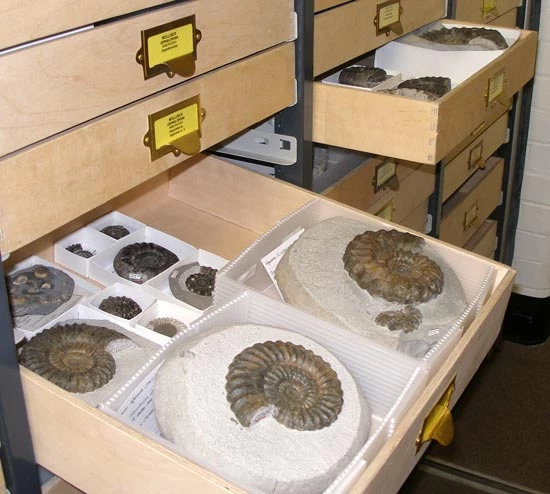
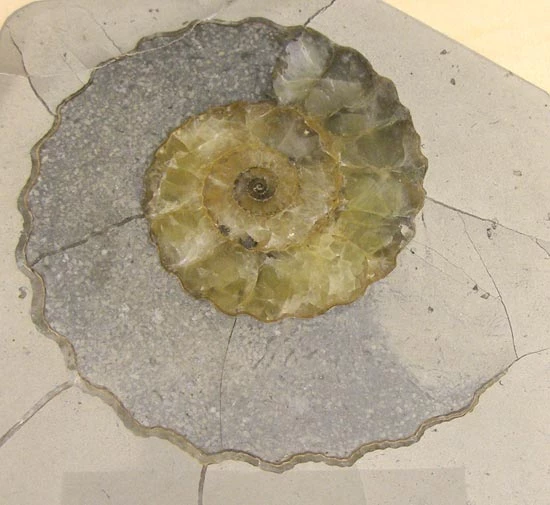
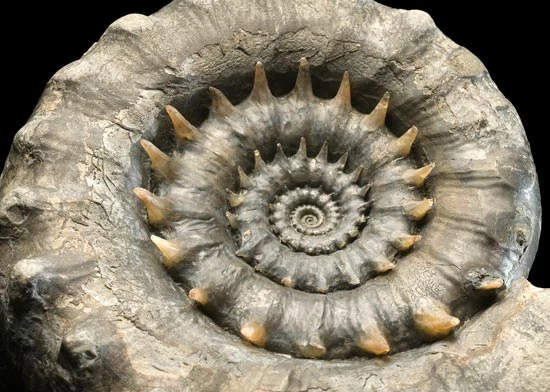
Secrets of the ammonites Cindy Howells, 26 February 2010 The specimen after preparation, revealing the delicate spines Ammonites in the collections at Amgueddfa Cymru Section through an ammonite showing the chambers Underside of the prepared specimen Delicate spines on the inner whorls. Similar spines would originally have been present on the outer part of the ammonite as well, but these had been worn away by erosion Scientists have managed to dissolve the rock surrounding the fossil of a 190-million-year-old ammonite, revealing, for the first time its intricate pattern of spines. When you pick up a fossil on a beach it is often broken or eroded. You might discard it because it is poorly preserved or incomplete. But most fossils are found partially concealed in rock, and in these cases they can carry hidden secrets. One such ammonite fossil had been lying in a drawer in the Geology Department at the Museum for 50 years. It is part of a collection of almost 6,000 fossils donated by James Frederick Jackson in 1960. James Frederick Jackson Jackson lived in a small cottage at Charmouth near Lyme Regis, and spent his spare time collecting rocks and fossils around the Dorset coast. From 1914 to 1919 he worked at the Museum, and over his lifetime he donated almost 21,000 specimens. Palaeontologists regularly consult the Jackson collection because it contains a complete and valuable record of Dorset's Jurassic fossils. A few years ago, one such researcher noticed that a particular ammonite was unusual. However, much of it remained concealed in rock, which needed to be carefully removed by specialists to reveal the fossil. A year of preparation After a year of painstaking work, the specimen was finally returned to the Museum to take pride of place in the collections. The limestone sediment had been completely removed with a solution of weak acid and, for the first time, the detail of delicate spines on the inner whorls could be seen. Similar spines would originally have been present on the outer part of the ammonite as well, but these had been worn away by erosion. The specimen features in a recently published monograph of the Palaeontographical Society, in a series devoted to the scientific description and illustration of British fossils, under the formal scientific name of Eoderoceras obesum (Spath). Ammonites Ammonites lived in the Mesozoic Era (251-65.5 million years ago) and were marine animals related to the Nautilus. They swam in the sea, preying on smaller marine animals. They usually had a spiral shell which could be from 5mm to 2m across. Their shells could be smooth, ribbed or knobbly, or even spiny. They lived in the outer whorl of their shell, while the inner part consisted of gas-filled chambers used for buoyancy. You can often see an intricate pattern on the surface of ammonite shells, which marks the division between each chamber. All these features are used by palaeontologists to identify different species of ammonites. The Museum has large and scientifically important collections of ammonites, mainly from south-west Britain. They are a valuable tool in helping scientists understand the geology and palaeontology of Britain.

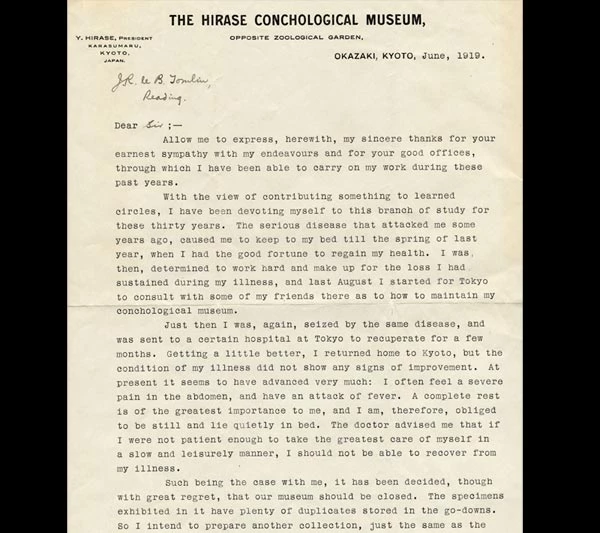
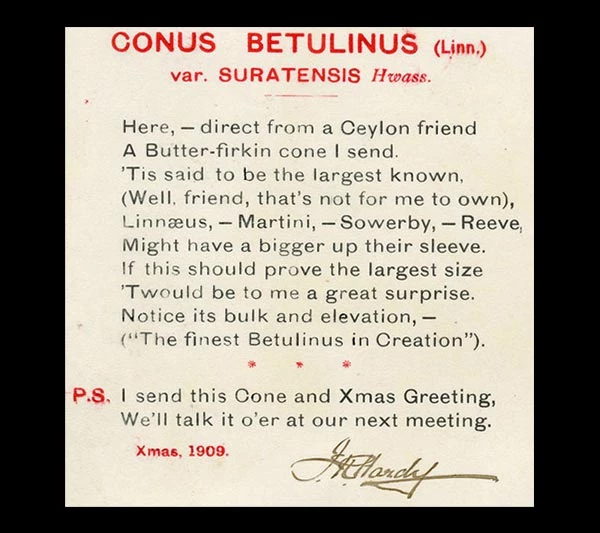
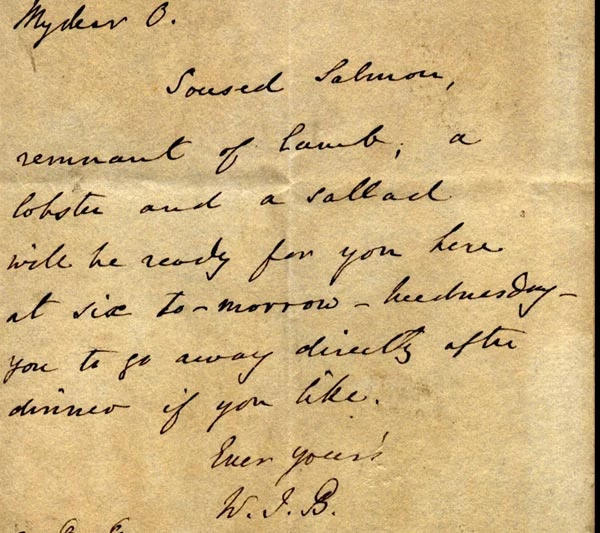
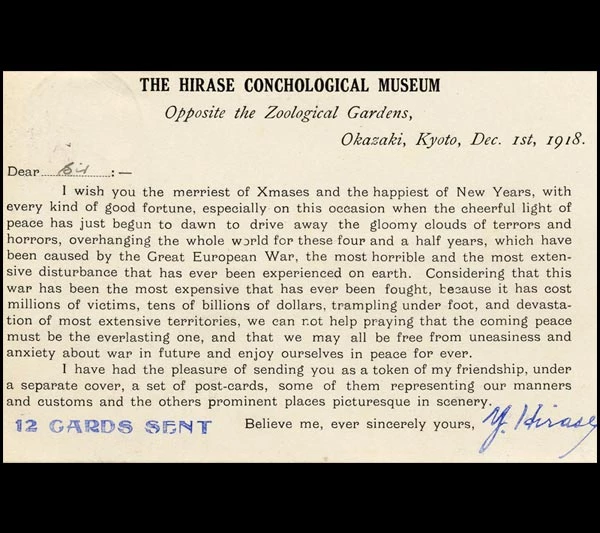
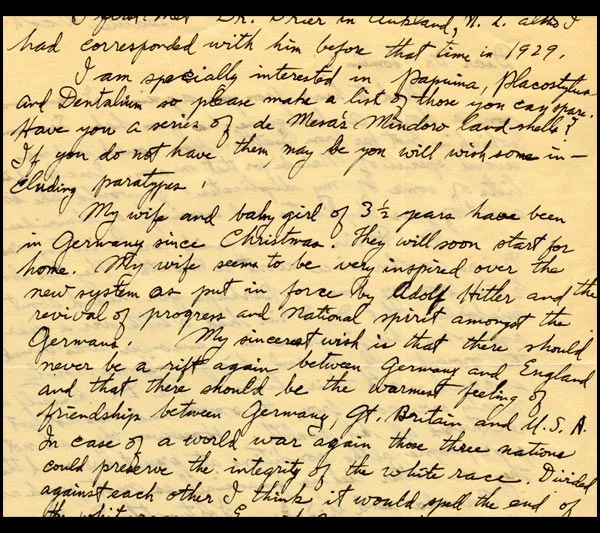
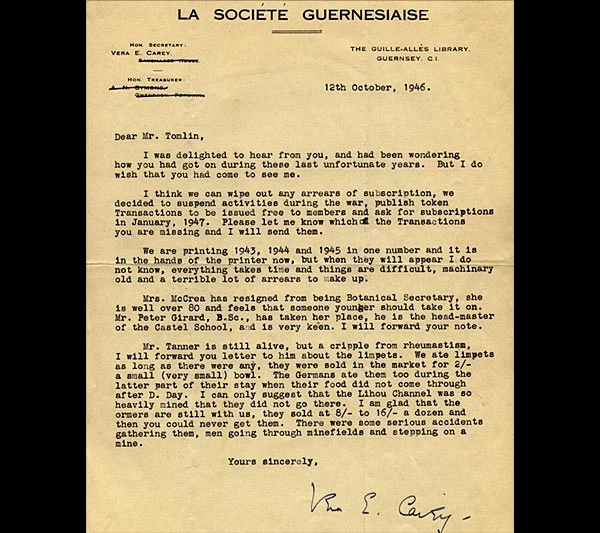
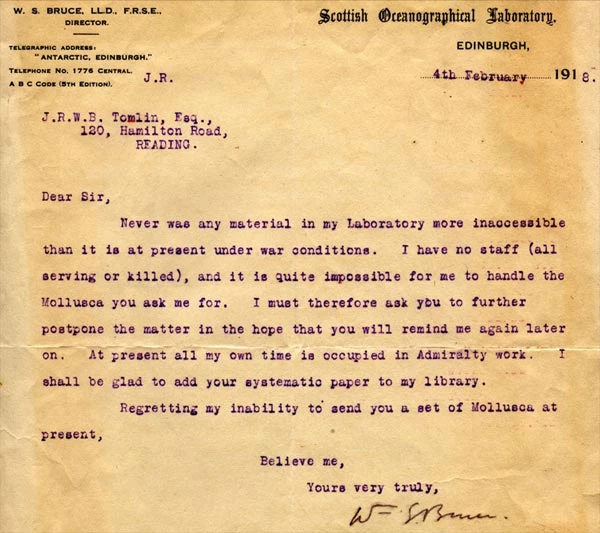
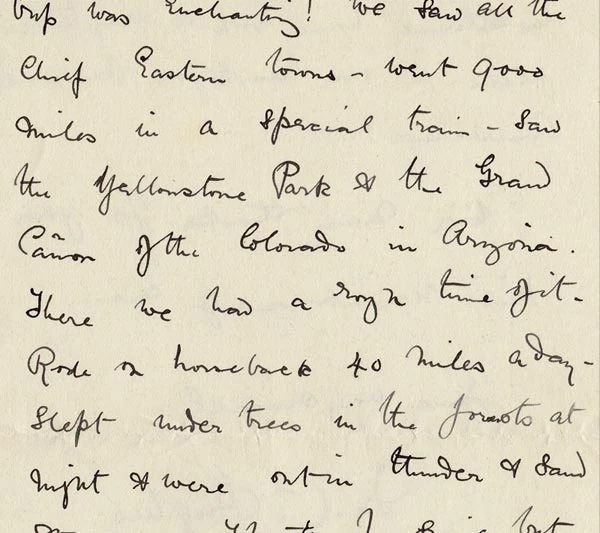
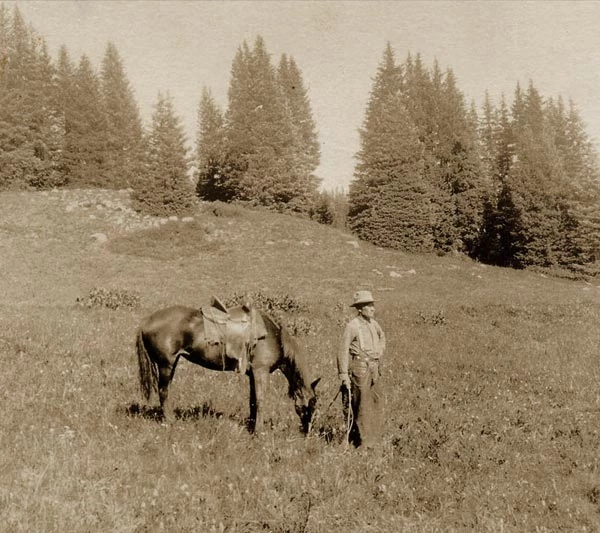
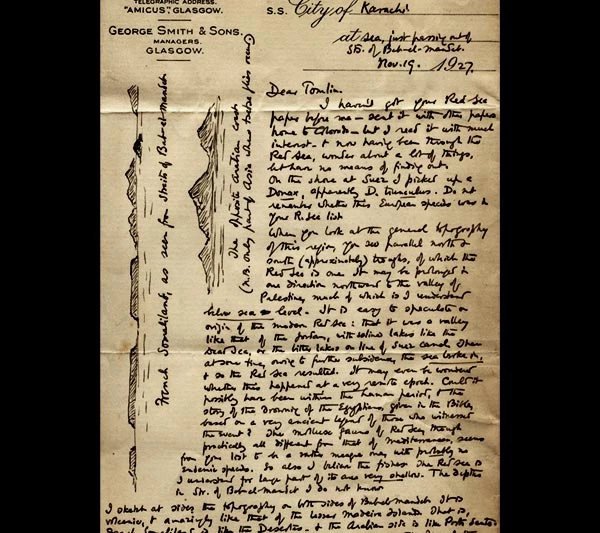
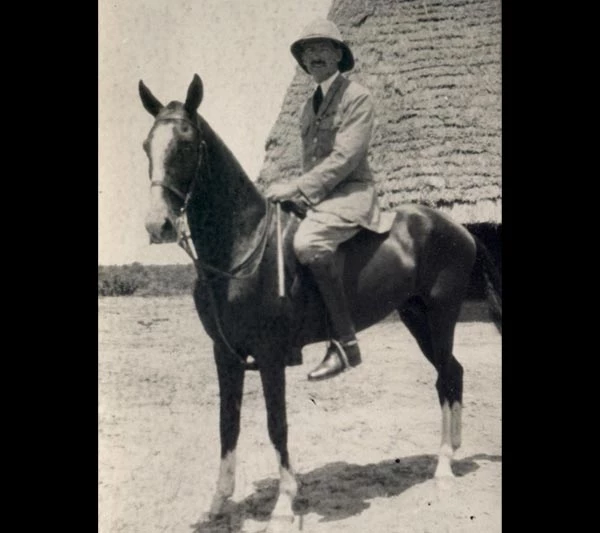
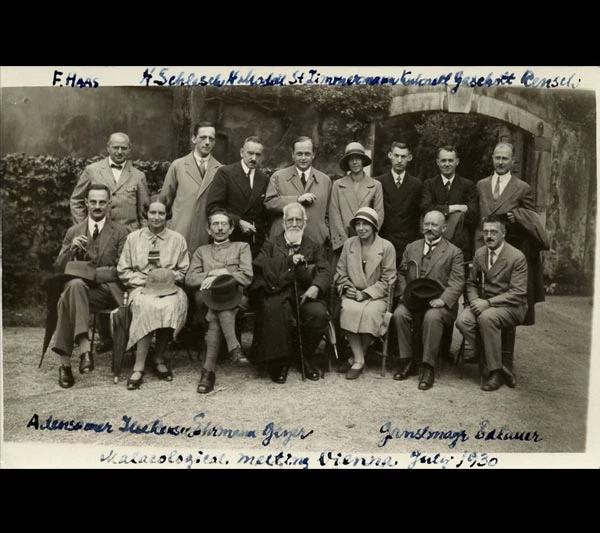
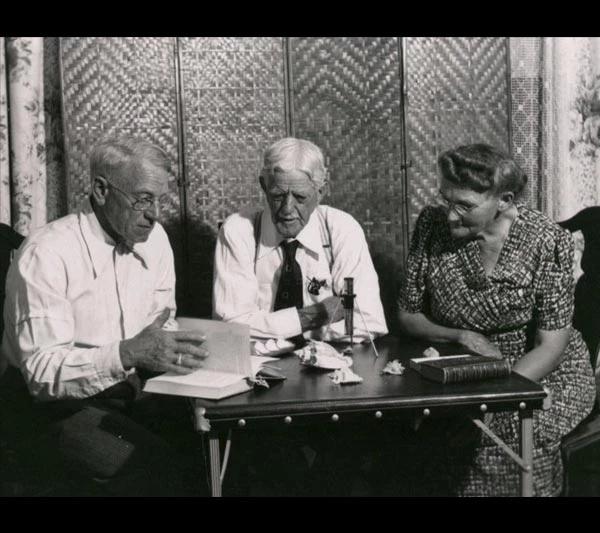
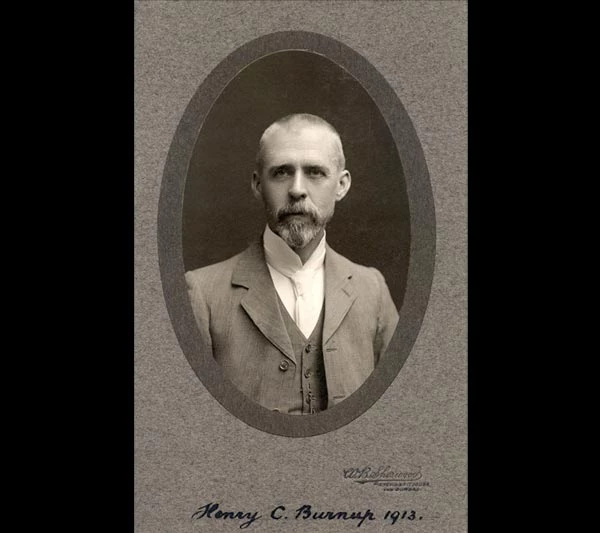
Documenting the Past - The Tomlin archive 15 February 2010 John Read le Brockton Tomlin was one of the most highly respected shell collectors of his time. Amgueddfa Cymru holds both his extensive shell collection and his archive of correspondence. It is an archive not only of scientific history, capturing a bygone era of collecting, but also a personal insight into the lives of some of the most famous shell collectors of the day. The archive is estimated to contain well over a thousand documents dating from the early 1800's through to the mid 1900's. It is a collection of all of the correspondence between Tomlin and his many shell associates around the world. Many interesting discoveries have been made whilst cataloguing this archive. It has brought into focus aspects of the lives of collectors, recounting expeditions and voyages, personal illness and hardship, war, dinner invitations and Christmas cards. A selection of items from the archive have been made available below. Tomlin Archive INTIMATE INSIGHTS: A photograph of the Japanese shell collector, Shintaro Hirase, his wife and six children. INTIMATE INSIGHTS: A letter from Yoichiro Hirase relating how his ill health has led to the closure of his museum in Kyoto, Japan. "I often feel a sever pain in the abdomen and an attack of fever. A complete rest is of the greatest importance to me, and I am, therefore, obliged to be still and lie quietly in bed". INTIMATE INSIGHTS: A Christmas card from William Evens Hoyle, the first director of Amgueddfa Cymru, 1909-1926. INTIMATE INSIGHTS: Seasons greetings and a poem! "Here, direct from a Ceylon friend A Butter-firkin cone I send. 'Tis said to be the largest known, (Well, friend, that's not for me to own) Linnaeus, Martini, Sowerby, Reeve, Might have a bigger up their sleeve. If this should prove the largest size 'Twould be to me a great surprise. Notice its bulk and elevation, ("The finest Betulinus in Creation"). INTIMATE INSIGHTS: Letter from the American shell collector, Joseph Emerson, announcing his retirement. "...Now I am 86 and a half years old and I must say finis to a work which I love and have been engaged in so long. It is too great a tax on my nerves...". INTIMATE INSIGHTS: A dinner invitation "Soused salmon, remnant of lamb and a salad will be ready for you here at six tomorrow". INTIMATE INSIGHTS: An invitation from Reverend Ellerton Alderson to Tomlin, proposing a visit to his house in West Sussex. "The nearest railway station at Goring is practically useless, the train service being, as you justly remark 'putidious' ". COLLECTING IN ADVERSITY / WAR: Postcard from W. Junk, Berlin, 18 April 1933. "Though of Jewish origin, I have not been disturbed". COLLECTING IN ADVERSITY / WAR: A postcard from a German shell collector and dealer Martin Holtz, 1 February 1928. "By the war however my whole existence is destroyed and especially as naturalist, traveller and dealer. In want of means and without support, I am unable to continue my scientifical enterprises". COLLECTING IN ADVERSITY / WAR: A postcard from the Japanese conchologist Yoichiro Hirase, 1 December 1918. "I wish you the merriest of Xmases and the happiest of new Years, with every kind of good fortune, especially on this occasion when the cheerful light of peace has begun to dawn to drive away the gloomy clouds of terrors and horrors, overhanging the whole world for these four and a half years, which have been caused by the Great European War, the most horrible and the most extensive disturbance that has ever been experienced on earth". COLLECTING IN ADVERSITY / WAR: Letter from the American conchologist Walter Eyerdam, 4 August 1935. "My wife and baby girl of 3 and a half years have been in Germany since Christmas. They will soon start for home. My wife seems to be very inspired over the new system as put in force by Adolf Hitler and the revival of progress and national Spirit amongst the Germans. My sincerest wish is that there should never be a rift again between Germany and England...". COLLECTING IN ADVERSITY / WAR: Letter from La Société Guernesiaise, 12 October 1946. "We ate limpets as long as there were any, they were sold in the market for 2/- a small (very small) bowl. The Germans ate them too during the latter part of their stay when their food did not come through after D. Day". COLLECTING IN ADVERSITY / WAR: Letter from the Scottish Oceanographical Laboratory, Edinburgh. 4 February 1918 "Never was any material in my laboratory more inaccessible than it is at present under war conditions. I have no staff (all serving or killed), and it is quite impossible for me to handle the Mollusca you ask me for". COLLECTING IN ADVERSITY / WAR: Letter from the Honorary Secretary of the Biology War Committee, 4 December 1944. "The Biology War Committee has been asked...for information on the dangers of swimming in tropical waters...I should be very grateful if you could give me any information on the distribution of clams or other mollusca which might either catch swimmers or in any way inconvenience them". COLLECTING IN ADVERSITY / WAR: Portrait of Arthur Douglas Bacchus. (Reserve) Household Battalian, Combermere Barracks, Windsor. 17 January 1917 EXPEDITIONS AND HOLIDAYS: Letter from C. Hughes describing his holiday in America, 19 April 1892. "Our American trip was enchanting! We saw all the Chief Eastern towns — went 9000 miles in a special train — saw the Yellowstone Park and the Grand Canyon of the Colorado in Arizona...Rode on horseback 40 miles a day, slept under trees in the forests at night and were out in the thunder and sand storms...The Grand Canyon was beyond words...". EXPEDITIONS AND HOLIDAYS: An American conchologist, Junius Henderson, collecting molluscs in Colorado. "A sort of a conchologist in 'cowboy' leather 'chaps' collecting molluska on Grand Mesa, Colorado at an altitude of 10000 ft. 1923...". EXPEDITIONS AND HOLIDAYS: Letter from the Australian conchologist, Charles Hedley recounting a long holiday in Africa. 11 April 1925 "I wondered leisurely through the Great Rift Valley, one of the geological wonders of the world, down to Nairobi. After wasting a week trying to buy a giraffe for the Sydney Zoo, I moved on to Kilimanjaro". EXPEDITIONS AND HOLIDAYS: Continuation of letter from Theodore Dru Alison Cockerell, 19 November 1927. "We left the boat at Port Said and went to Cairo and saw Pyramids and Sphinx. The things in Museum at Cairo are more splendid than the published pictures could reveal...We had about 8 hours at Naples — saw the Zoological Station and went to Pompei". EXPEDITIONS AND HOLIDAYS: Letter written at sea by Theodore Dru Alison Cockerell. 'Just passing out of Bab-el-Mandeb' [a strait located between Yemen, Djibouti and Eritrea], 19 November 1927 "I sketch at sides the topography on both sides of Bab-el-Mandeb. It is volcanic and amazingly like that of the lesser Madeira Islands. That is French Somaliland is like the Desertas and the Arabian side is like Porto Santo". EXPEDITIONS AND HOLIDAYS: Anthony Arkell — Sudan (c. 1925) COLLECTORS AND COLLECTING: "Just me in one of my dreams". Thompson van Hyning - Florida State Museum, 27 April 1925. COLLECTORS AND COLLECTING: Photograph of a meeting in Vienna, July 1930. COLLECTORS AND COLLECTING: The collectors Phillipe Dautzenberg, Charles Hedley and Henri Fischer - Paris, October 1912. COLLECTORS AND COLLECTING: The collectors Emery and Elsie Chace and Daniel Emery - St Petersburg, Florida. COLLECTORS AND COLLECTING: The French collector Eugène Caziot, 1923. COLLECTORS AND COLLECTING: John Wesley Carr from the Natural History Museum, Nottingham. COLLECTORS AND COLLECTING: Amateur conchologist, Henry Burnup who settled in South Africa in 1894. COLLECTORS AND COLLECTING: The British collector Arthur Edwin Boycott, 1925. COLLECTORS AND COLLECTING: The American collector Frank Collins Baker in his collection. COLLECTORS AND COLLECTING: Collectors Robert Tucker Abbott, Bill Clench and Emery Chace - San Pedro, 1940.
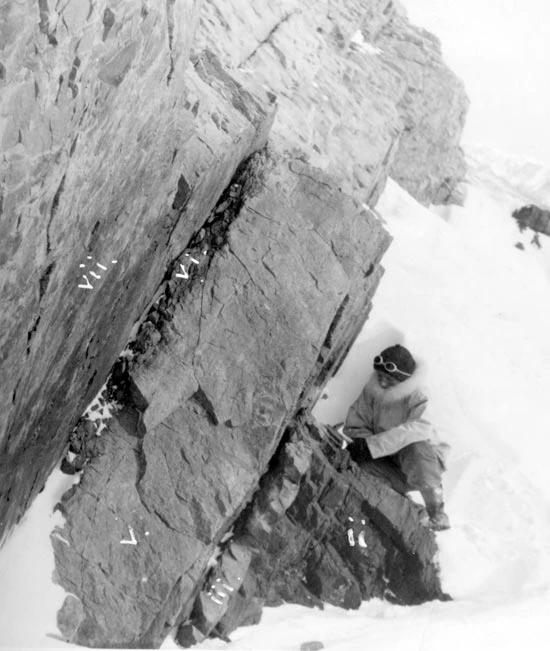
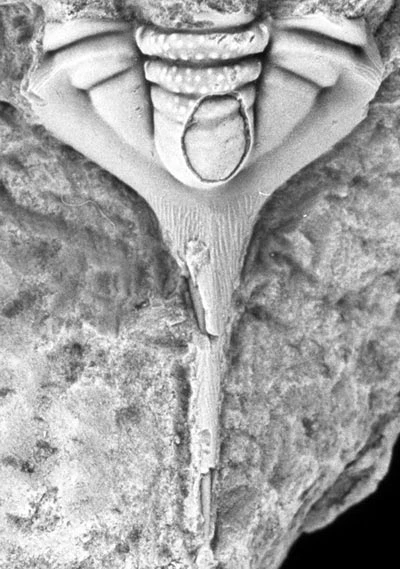
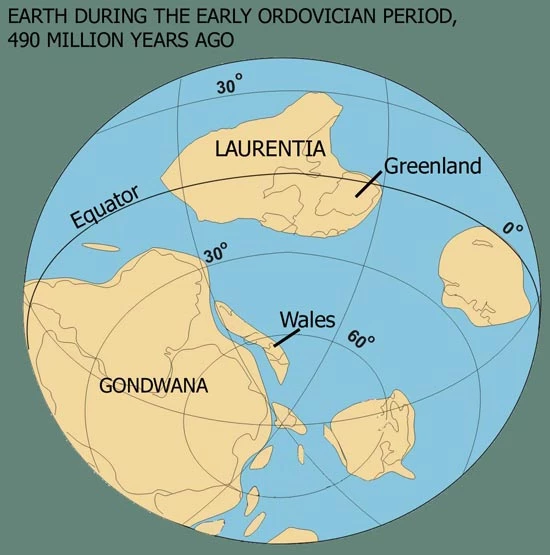
Tropical trilobites from frozen Greenland Lucy McCobb, 5 August 2009 Collecting fossils in the snow. 1950s. Aerial Photo of Greenland: The fossils were collected from the area shaded in red. The large fossilised eye of Carolinites, a trilobite which swam in the open ocean searching for food. The tail of the trilobite Acidiphorus has an impressive spine. The Museum's extensive holding of fossils include a collection of Ordovician age (470-490 million years old) trilobite fossils from Greenland. Although the continent is now cold and icy, it was not always so. British explorers in the icy north Greenland is a very difficult place in which to study and collect fossils. Most of it remains ice-covered throughout the year, and rock outcrops are readily accessible only in coastal areas during the summer months. Expeditions to explore the geology of Greenland began in the late nineteenth century, and continue to the present day. These have been organised by the Greenland Geological Survey, based in Copenhagen. In the 1990s, the Museum was presented with a collection of Cambrian and Ordovician trilobites from central east Greenland made between 1950 and 1954 by Dr John Cowie, formerly of the University of Bristol, and a colleague, Dr Peter Adams. Globe-trotting Greenland Today, we are familiar with Greenland as a cold, icy place, but this has not always been the case. The tectonic plates that make up the Earth's lithosphere have moved around throughout its history, and geologists have demonstrated that during the Ordovician Period Greenland lay close to the equator, and together with North America and Spitsbergen formed the ancient continent of Laurentia. At this time, Wales lay far away in cool, high southern latitudes, close to the vast continent of Gondwana. The fossil faunas of the shallow Ordovician seas around Laurentia and Gondwana are very different, and no trilobite species is common to Greenland and Wales. Earth during the early Ordovician Period, 490 million years ago Tropical trilobites new to science. The Ordovician trilobites of Greenland are preserved in limestone which accumulated on the floor of warm, shallow sub-tropical seas. Around forty different species have been identified in our Greenland collection, and several are new to science. Research has confirmed they are common to, or closely related, to those from other parts of Laurentia. Features of different trilobite species provide clues as to how they lived. Most were probably benthic (living on the sea floor), and were either scavengers or deposit feeders. Others have features such as very large eyes, showing that they were pelagic (swimmers); such forms were widely distributed in the Ordovician oceans, and found in other tropical regions apart from Laurentia.
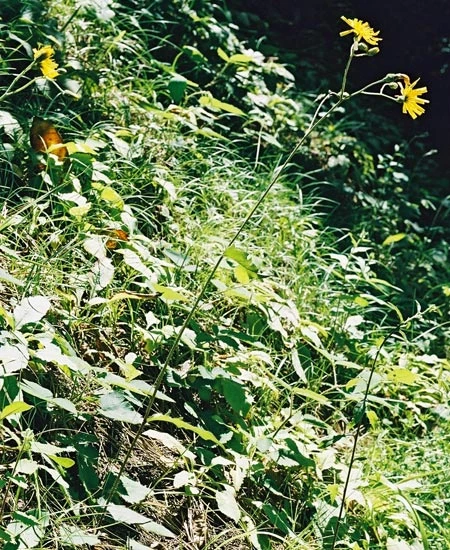
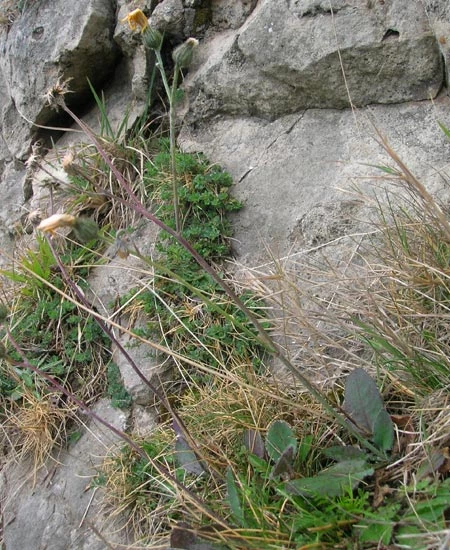
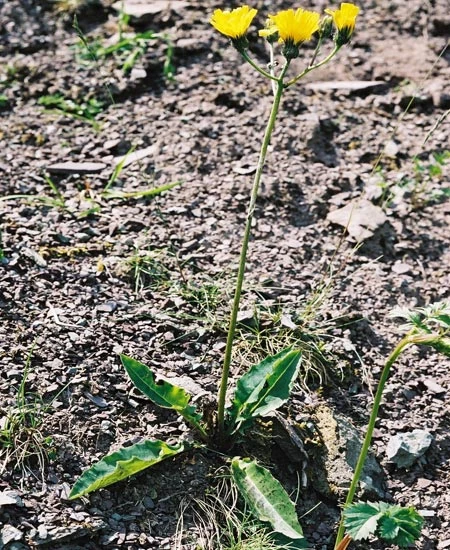
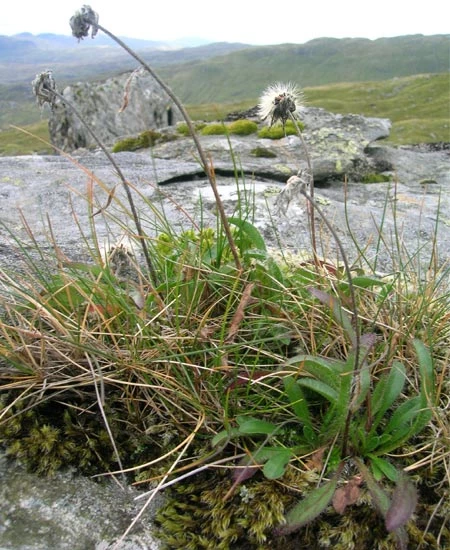
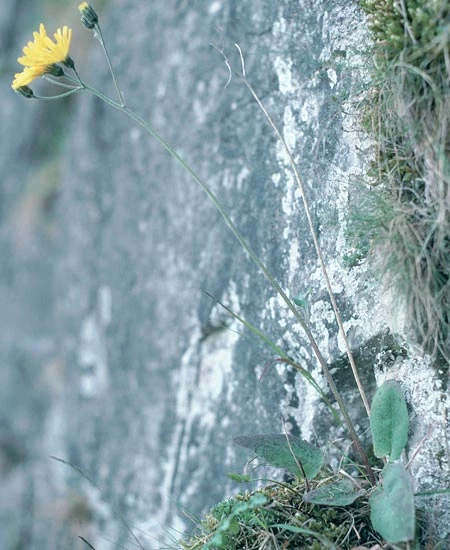
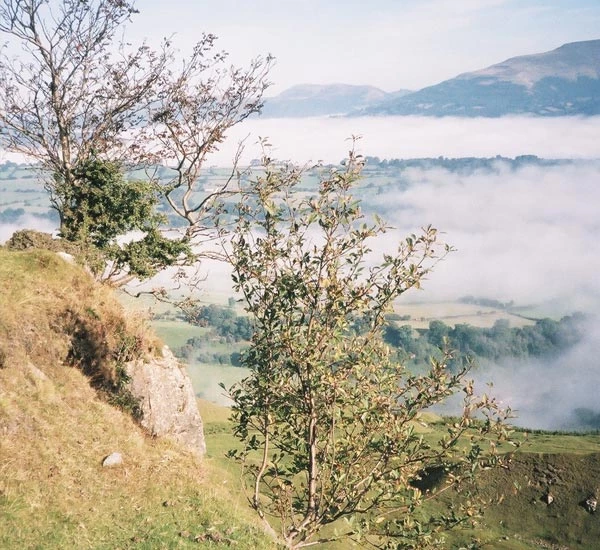
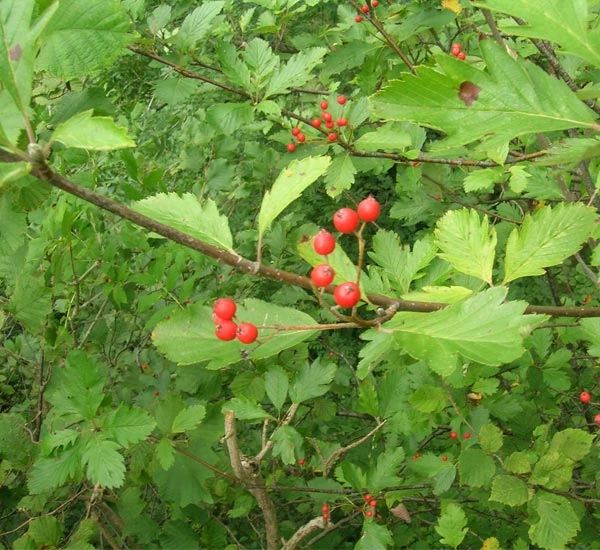
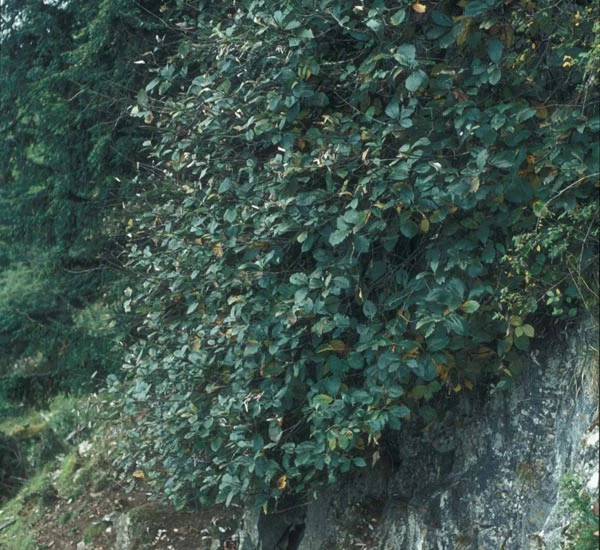
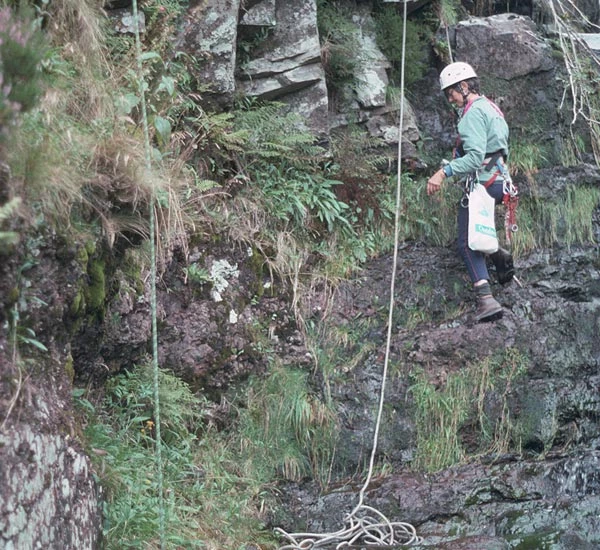
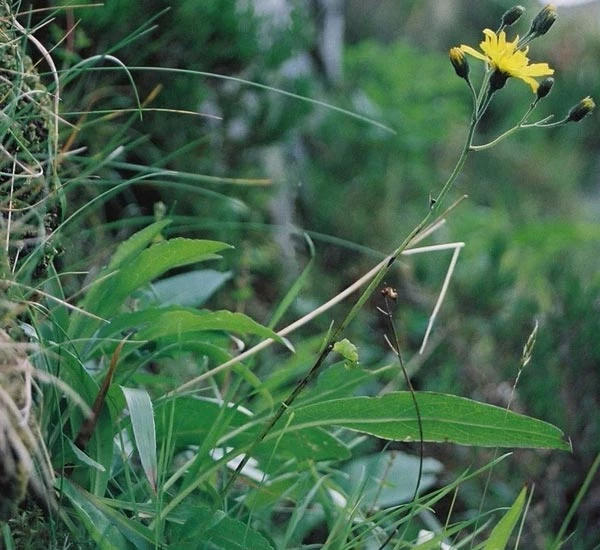
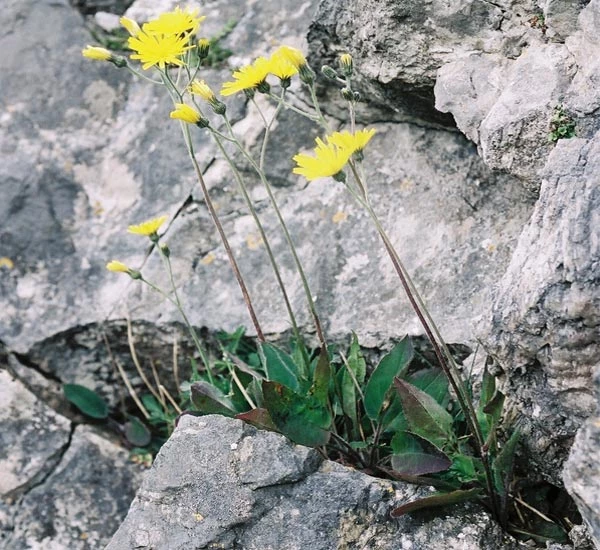
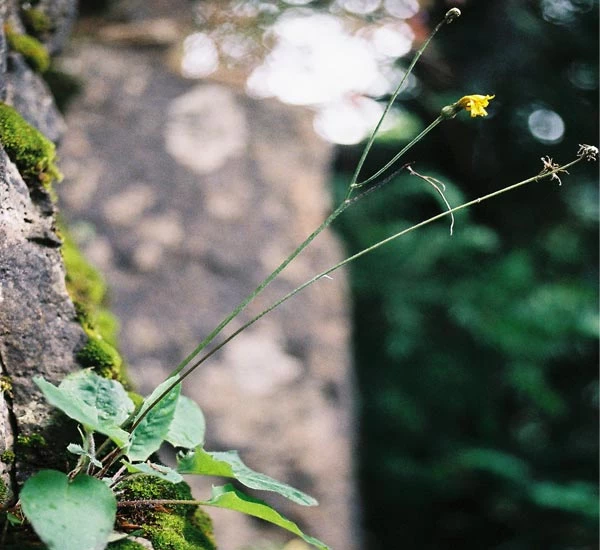
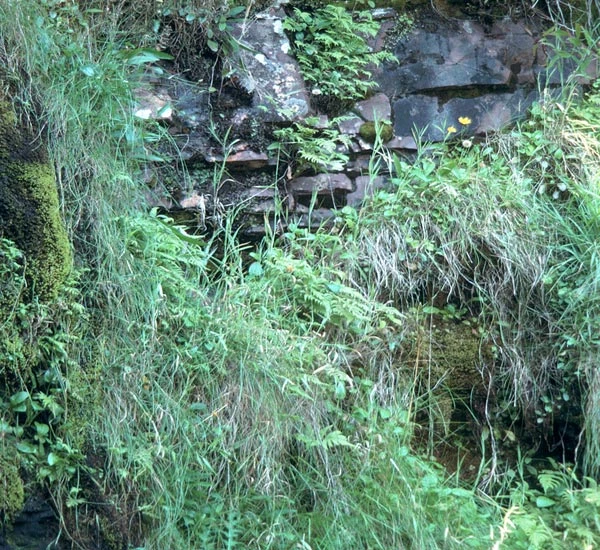
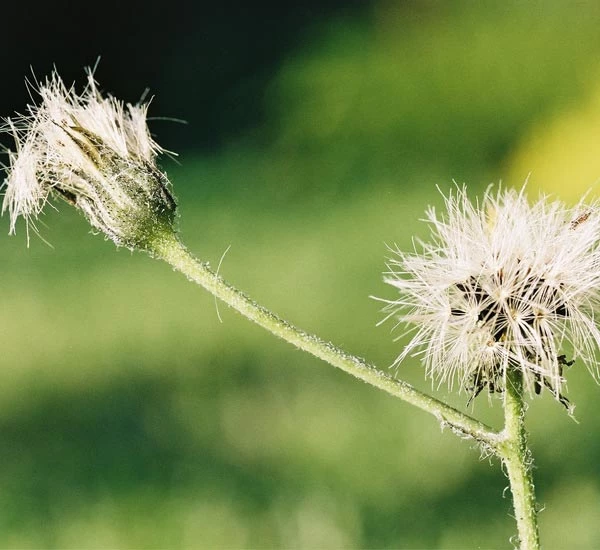
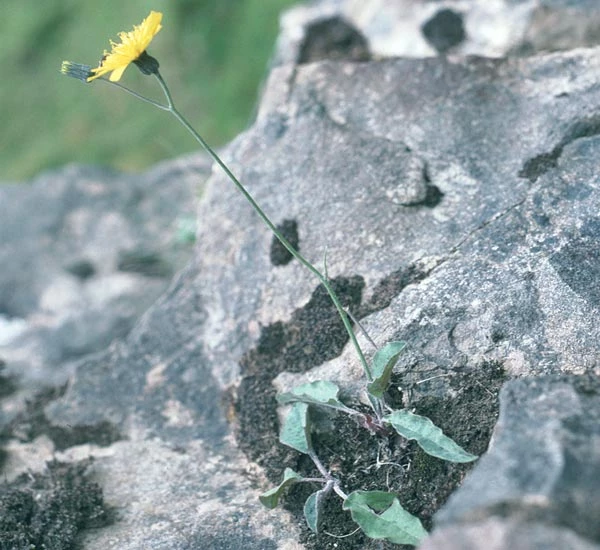
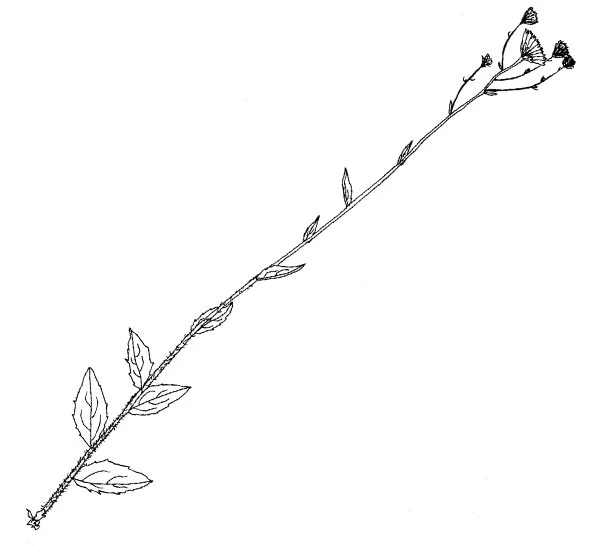
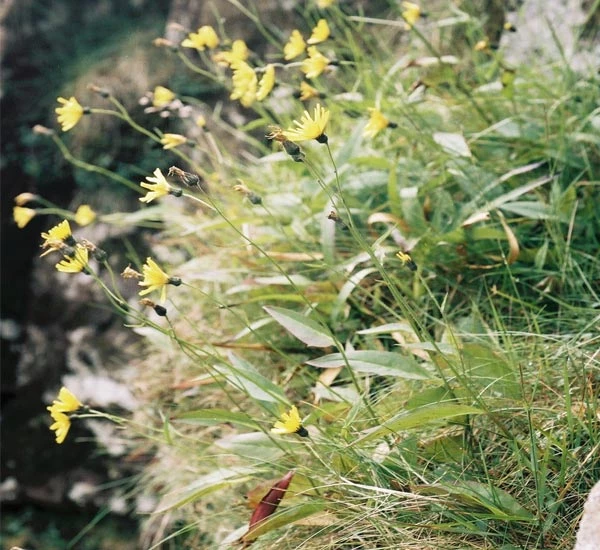
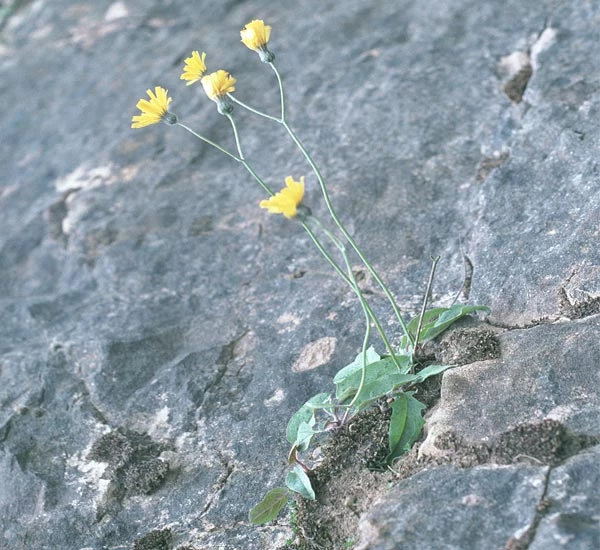
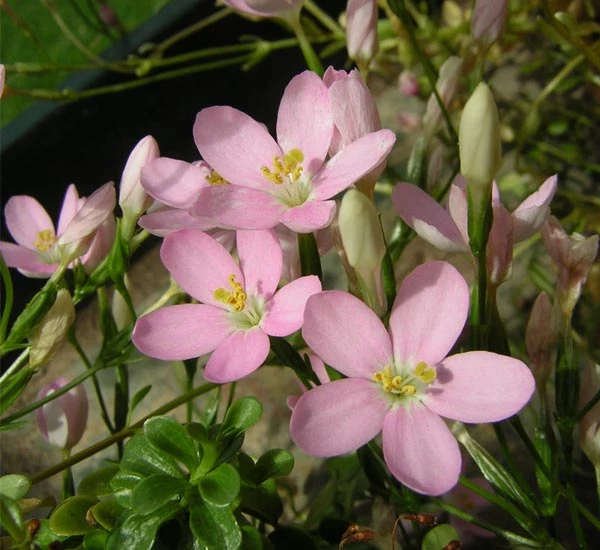
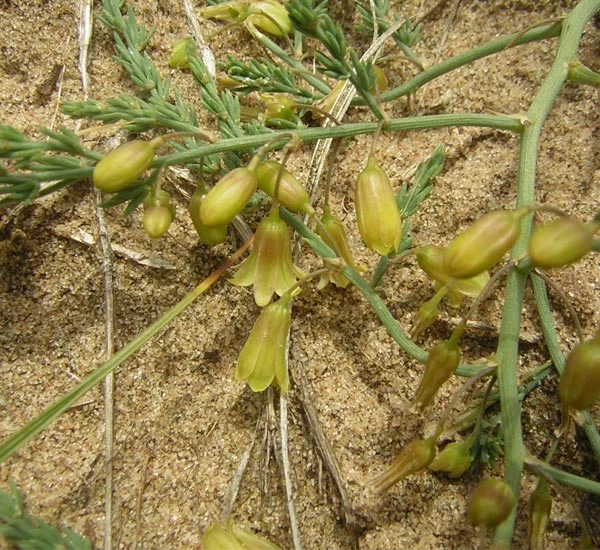
The rarest plants in Wales 1 April 2009 Scientists at Amgueddfa Cymru have been researching the possibility that the Perennial Centuary (Centaurium scilloides) colonised Britain by sea. For its size, Wales has a rich flora. The variation in rock types and landscapes from the limestones of the Gower Peninsular to the mud-stones and volcanic rocks of Snowdonia support many different and special plants. Wales is home to a number of rare plants. Some rare species are endemic to Wales and occur nowhere else in the world, such as Ley's Whitebeam or the Black Mountain Hawkweed. Other rare plants occur elsewhere but in the British Isles only occur in Wales, such as the Snowdon Lily or Yellow Whitlow Grass. Others are rare on an international basis, such as Perennial Centaury or Wild Asparagus. The Welsh Rare Plants Project aims to help conserve threatened Welsh plants by providing a firm scientific basis for their conservation. The advice is provided by collecting information on the size and location of rare plant populations, assessing threats to their survival, collecting ecological information, analysing genetic variation and making recommendations for habitat management. It is a joint project between Amgueddfa Cymru — National Museum Wales and the National Botanic Garden of Wales, with part funding from the Countryside Council for Wales. Click on the thumbnails below for information on each rare plant: Rare Plants Project Hieracium radyrense, Radyr HawkweedRadyr Hawkweed is a very rare Welsh endemic, recorded from two sites in Glamorgan. In Radyr in 1998, a total of nine plants were found in one garden where it grows on grassy banks and lawns, often in shade. It was not found at the type locality of Radyr Quarry, near where it was last seen in 1985. Neither the species nor the sites have any legal protection, and it could be under significant threat of survival in the long term from inappropriate gardening. Seed has been sent to the Millennium Seed Bank, and plants are being cultivated at National Botanic Garden of Wales. The work has been carried out in collaboration with Cardiff County Council. Download publication: http://archive.bsbi.org.uk/25_4_HutchinsonHieracium.pdf Hieracium pseudoleyi, Purple-flushed HawkweedReviews of historical data were combined with field surveys to assess the status of H. pseudoleyi, a rare endemic of North Wales. It has been recorded historically in three sites, and there are doubtful or erroneous records from four sites. In 2006, 798 plants were found on the Great Orme and 53 plants on the Little Orme. It was not refound at another site. It occurs on limestone rocks and in crevices in open vegetation. Under the IUCN (2001) threat criteria it is probably best regarded as 'Vulnerable'. Hieracium neocoracinum, Craig Cerrig-glaisiad HawkweedThis is a very rare, endemic plant, confined to Craig Cerrig-gleisiad National Nature Reserve in the Brecon Beacons (V.c. 42), Wales. It was first found in 1895 and has occurred in at least two places within Craig Cerrig-gleisiad. In 1975, its population was estimated to be 60 plants in one population. Field surveys in 2003 revealed 147 plants at the same place, and it was not refound in the second site but one plants was refound there in 2007. The population increase is probably due to colonisation of bare ground created by a landslip, and relaxation of grazing. Seed was collected for the Millennium Seedbank, and it is being cultivated at the National Botanic Garden of Wales.Download publication: http://archive.bsbi.org.uk/25_3_RichHieracium.pdf Hieracium holosericeum, Beautiful HawkweedHieracium holosericeum, Beautiful Hawkweed, is a British endemic alpine plant which is widespread and locally frequent in the Scottish Highlands but occurs more rarely in southern Scotland, the Lake District and Snowdonia. Historical records indicated between five and seven sites in Snowdonia, and it was locally abundant in at least some of those. Field surveys in 2000 and 2002 revealed only three remaining sites, but several more sites have come to light since. The most likely cause of the decline is over-grazing. The shyness of flowering in the wild may be a consequence of sub-optimal climatic conditions, and longer-term there may be significant implications for its survival from global warming. It does not grow well in cultivation. Hieracium asteridiophyllum, Llangattock Hawkweed Llangattock Hawkweed is a rare endemic species confined to cliffs around Craig y Cilau National Nature Reserve, Brecon in South Wales. In June 2000 surveys were carried out of the entire populations to assess its requirements for conservation. 512 plants of were found. Compared with population sizes in the National Nature Reserve in 1975, fewer of H. asteridiophyllum were found but the differences are probably due to the problems of recording. It is 'Critically Endangered' under the I.U.C.N. criteria, but is probably not at significant risk. Seeds have been sent to the Millennium Seed Bank, and plants are being cultivated at National Botanic Garden of Wales. Download publication: http://archive.bsbi.org.uk/2409Rich.pdf Sorbus minima, Least WhitebeamSorbus minima is a very rare Welsh tree, endemic to the Llangattock escarpment in the Brecon Beacons. It was first found by Augustin Ley in 1893 'in great abundance' at Craig y Cilau, where 744 trees were counted in 2002, and also at Blaen Onneu where it appears to have been destroyed by quarrying. One tree is also known at Craig y Castell and 27 at Cwm Claisfer. Quarrying of the Llangattock Quarries has probably also reduced the Craig y Cilau population markedly; populations on the quarried areas are c. 40% of those on intact cliffs. None-the-less it is regenerating and spreading back, and with time may recover its former population size. It is believed to have arisen as a cross between Mountain Ash (S. aucuparia) and possibly the Rock Whitebeam (S. rupicola). It is poorly fertile. Download publication: http://archive.bsbi.org.uk/25_4_WelshSorbus.pdf Sorbus leyana, Ley's WhitebeamThis species is only found in the wild in South Wales, on two steep limestone cliffs in the Brecon Beacons where it was first discovered in 1896. The total known population in the wild is probably no more than 16 adult trees. In August 1998 it was described as "Britain's rarest tree" and placed it in the highest category of threat: a "Critically Endangered" species. National Botanic Garden of Wales has collections in cultivation from a number of wild trees in the Brecon Beacons either as seedlings or grafted collections. Further research is being carried out into its genetic variation in collaboration with the Royal Botanic Gardens, Kew. Download publication: http://archive.bsbi.org.uk/25_4_WelshSorbus.pdf Sorbus leptophylla, Thin-leaved Whitebeam Thin-leaved Whitebeam was first described by E. F. Warburg in 1952, and is known from only two in the Brecon Beacons, Craig Rhiwarth (29 trees) and Craig y Cilau (45 trees). It is thus a very rare Welsh endemic. It occurs on Carboniferous Limestone and volcanic rocks, usually rooted directly into crevices, or occasionally on small ledges. Like other whitebeams it varies in fruit production, 1999 being a poor year and 2000 and 2002 being good years. Most fruits contain 2 or 3 large seeds which are highly fertile. Trees previously referred to this species from Craig Breiddan in Montgomeryshire are to be described as a new species. Download publication: http://archive.bsbi.org.uk/25_4_WelshSorbus.pdf Hieracium tavense, Black Mountain HawkweedBlack Mountain Hawkweed, is a very rare species endemic to Wales. It is restricted to one site in the Upper Tawe Valley, Brecon. It grows on base-rich ledges of a where thirteen plants were counted by climbing in 1998. The only real threat to its survival is a rock fall. Seed has been deposited in the Millennium Seed Bank, and it is being grown in cultivation at National Botanic Garden of Wales. Download publication: http://archive.bsbi.org.uk/Wats23p311.pdf Hieracium snowdoniense, Snowdonia HawkweedSnowdonia Hawkweed is a rare Welsh endemic restricted to Snowdonia. It was known historically from seven sites in Snowdonia, but it was last seen in 1967. After a number of unsuccessful searches it was feared extinct, but finally in July 2002 one plant was refound on a steep, north-facing, rocky cliff. Seeds were collected and 26 seedlings are now being cultivated at the National Botanic Garden of Wales. Download publication: http://archive.bsbi.org.uk/2438Rich.pdf Hieracium riddelsdellii, Riddelsdell's HawkweedRiddelsdell's Hawkweed is a very rare, Welsh endemic plant, confined to the western Brecon Beacons. It was first found in 1899. Field work in 2003-4 revealed about 870 plants in three localities, and it has either been lost naturally or destroyed in another three sites. Seed has been deposited in the Millennium Seed Bank and it is being cultivated at the National Botanic Garden for Wales.Download publication: http://archive.bsbi.org.uk/Wats26p139.pdf Hieracium pachyphylloides, Carboniferous HawkweedA review of historical data combined with field surveys were out to assess the status of H. pachyphylloides, which is endemic to the Wye Valley. It has declined from six sites to one site, and is 'Critically Endangered' under the IUCN threat criteria. The main threats are rock climbing, closure of woodland canopies and spread of alien plants. Hieracium linguans, Tongue HawkweedHieracium linguans, Tongue Hawkweed, is a very rare endemic Welsh species. It was first found in 1898 by A. Ley in the Brecon Beacons, Wales. The historical herbarium and literature records were somewhat confusing, but indicate three localities in the Tawe Valley. In 1999 and 2000, only one population of 80 plants was found, and it was not refound in the other two localities. It is a perennial which flowers in July-August, and regenerates readily from wind-dispersed seeds. Seed has been deposited in the Millennium Seed Bank and it is being cultivated at the National Botanic Garden for Wales. Download publication: http://archive.bsbi.org.uk/Wats23p517.pdf Hieracium cyathis, Chalice HawkweedHieracium cyathis, Chalice Hawkweed, is a rare British endemic recorded from eight sites in Somerset and Brecon. Between 2000 and 2002 its sites were surveyed to establish its current status and determine its need for conservation. A total of 1304 plants were found in 8 sites. It is probably extinct in Carmarthenshire, has declined markedly at Cheddar Gorge, and may have declined at Craig y Cilau. Field, cultivation and genetic investigations of its variation give little support for the suggestions that plants from the Mendips differ from those in Brecon.Download publication: http://www3.interscience.wiley.com/journal/119394264/abstract Hieracium cillense, Craig y Cilau Hawkweed Craig y Cilau Hawkweed, is a rare endemic species confined to cliffs around Craig y Cilau National Nature Reserve, Brecon in South Wales. It was first found in the 1890s and named as a variety, and was later raised to species status. In 1975, 253 plants were reported from the NNR. In June 2000, 204 plants were found. The decline might be due to differences in recording, or may be real and attributable to sheep grazing. However, another 263 plants were found in an extension of the population to the east outside the NNR. Seeds have been sent to the Millennium Seed Bank, and plants are being cultivated at National Botanic Garden of Wales. Download publication: http://archive.bsbi.org.uk/2409Rich.pdf Hieracium cambricogothicum, Llanfairfechan HawkweedHieracium cambricogothicum has been recorded from four, disjunct localities in England, Scotland and Wales but a review of its status by Sawtschuk & Rich (2006) indicated that it was only known with certainty from its type locality in Llanfairfechan (V.c. 49), and doubt exists about the identification of material from Kent (and possibly Forres in the absence of a specimen). No plants were refound in 2004 or 2006 and, sadly, it is currently regarded as extinct in the wild. Hieracium cacuminum, Summit HawkweedThis is a rare endemic Welsh hawkweed which has been confused with H. siluriense. A review of the records and fresh field work showed that 240 plants are known in three sites; it was not refound in three other sites. It occurs on Old Red Sandstone cliffs and rocks in the Brecon Beacons. It is 'Endangered' under the IUCN Threat Criteria. Hieracium cambricum, Welsh HawkweedHieracium cambricum, Welsh Hawkweed, is a rare species endemic to Wales. Its three known sites were surveyed in 1998. It is probably extinct at Treorchy due to a rock fall. 38 plants were refound at Llangollen (the first time it has been recorded since 1907) and on the Great Orme, the population is estimated to be c. 300 plants. Seed has been deposited in the Millennium Seed Bank, and it is being grown in cultivation at National Botanic Garden of Wales. Download publication: http://archive.bsbi.org.uk/Wats23p305.pdf Centaurium scilloides - Perennial CentuaryCentaurium scilloides, Perennial Centaury, is a western European endemic with a very restricted distribution in the Azores, Portugal, Spain, France, England and Wales. To date, data have been compiled to provide the first distribution map of this species, field studies have been carried out on its ecology and its genetic variation is being investigated.Download publications: http://archive.bsbi.org.uk/25_4_RichCentaurium.pdf http://archive.bsbi.org.uk/Wats25p275.pdf Asparagus prostratus, Wild AsparagusAsparagus prostratus is a Red Data Book species and is listed as a Priority Species under the UK Biodiversity Action Plan. Historical records have been researched and collated with recent field surveys for Britain. It has been recorded from at least 34 sites but has not been recorded recently in six sites (18% decline). It is extinct in West Sussex and Anglesey and is on the verge of extinction in Dorset. Of the 28 extant populations, nine have fewer than ten plants and only three sites have more than 100 plants. Download PDF Publication: http://archive.bsbi.org.uk/2414Rich.pdf Request Publication