: Plants & Animals

14 new trees discovered in the UK and Ireland

5 March 2009

Motley's Whitebeam
Motley's Whitebeam

- Sorbus x motleyi
A new hybrid known only from one site near Merthyr Tydfil, where just two young trees are known.

Stirton's Whitebeam
Stirton's Whitebeam

- Sorbus stirtoniana
About 40 trees can be found on the cliffs of Craig Breidden, Montgomeryshire.

Houston's Whitebeam with Ms Libby houston
Houston's Whitebeam Sorbus x houstoniae

A hybrid between the Common Whitebeam and the Bristol Whitebeam. The only one example can be found on a cliff in the Avon Gorge, inaccessible without ropes. where it was found by Ms Libby Houston (pictured) in 2005.

Robertson's Whitebeam

- Sorbus x robertsonii
A new hybrid between the Common whitebeam and the Round-leaved Whitebeam. Only one tree is known so far, but it could be widespread in South-West England.

Maura Scannell's Whitebeam

- Sorbus scannelliana
A new species first confirmed as distinct in September 2008. Five trees are known in the Killarney National Park, County Kerry, Republic of Ireland, where it probably originated from the Rock Whitebeam crossing with Rowan.

Leigh Woods Whitebeam
Leigh Woods Whitebeam Sorbus leighensis

A new species which has been known since the 1980s, but whose differences from the Grey-leaved Whitebeam has only recently been clarified using DNA. It is common at Leigh Woods on the Somerset side of the Avon Gorge, where about 100 trees are known.

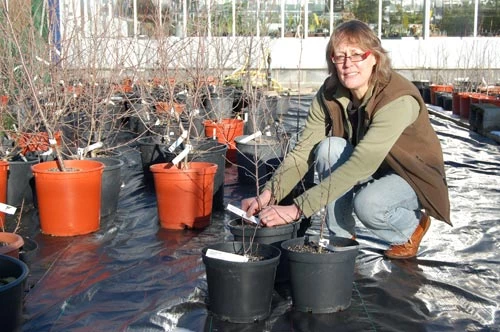
Jess Gould potting on young <em>Sorbus stirtoniana </em> at the National Botanic Gardens of Wales.

Jess Gould potting on young Sorbus stirtoniana at the National Botanic Garden of Wales.

Llangollen Whitebeam

Llangollen Whitebeam, a rare tree confined to the cliffs of Eglwyseg Mountain, Denbighshire.

<strong>Y Gerddinen Gymreig</strong> - <em>Sorbus cambrensis</em>
Welsh Whitebeam

- Sorbus cambrensis - First found in 1874 and classed as Grey-leaved Whitebeam, biochemical studies have recently shown this to be a new species.

A new plantation of Motley's Whitebeam (Sorbus x motleyi)at the National Botanic Garden of Wales

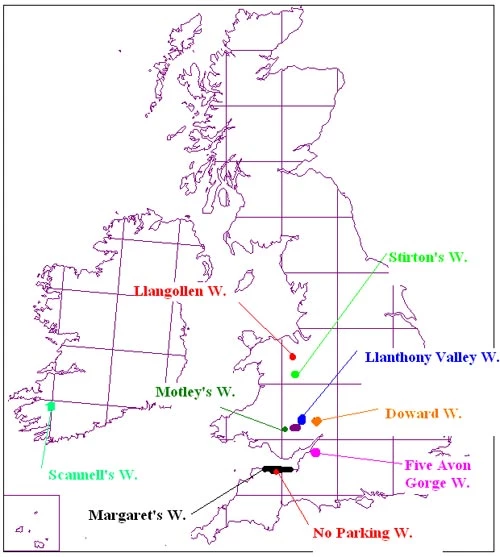
Map showing where the new trees were found

Map showing where the new trees were found (Key: W. = Whitebeam)

Botanists at National Museum Cardiff in conjunction with scientists from Bristol University, Exeter University, Oxford University and the Royal Botanic Gardens, Kew have named new kinds of tree in Wales, England and Ireland, all of which are rare and need to be protected.

Of the 14 finds which have been named officially in Watsonia, the scientific journal of the Botanical Society of the British Isles, six occur in Wales. These are:

  • Stirton's Whitebeam (Sorbus stirtoniana) which can only be found in one place in the World - on the cliffs of Craig Breidden, Montgomeryshire;
  • Llangollen Whitebeam (Sorbus cuneifolia) - a rare tree confined to the cliffs of Eglwyseg Mountain, Denbighshire where about 240 plants are known;
  • Welsh Whitebeam (Sorbus cambrensis) found in the Brecon Beacons west of Abergavenny and Llanthony Valley Whitebeam (Sorbus stenophylla) - two closely related species from Wales;
  • Doward Whitebeam (Sorbus eminentiformis) known only from the Wye Valley in England and Wales;
  • Motley's Whitebeam (Sorbus x motleyi) - a new hybrid from one site near Merthyr Tydfil, where two young trees have been discovered.

Evolution in Action

The discovery of Motley's Whitebeam is an example of evolution in action. It originated as a hybrid between Ley's Whitebeam and Rowan in a wood after one of the few remaining Ley's Whitebeams was blown down in the 1989 Hurricane. The extra light from the gap in the woodland canopy allowed seeds in the soil to germinate and grow;

These new finds, in addition to seven new types in England and one in Ireland are all members of the Sorbus group, which includes whitebeams, rowans and service trees, increasing the number of this type of tree by over 50%.

DNA discovery

Dr Rich led this project which was primarily funded by The Leverhulme Foundation and Amgueddfa Cymru - National Museum Wales, with contributions from Countryside Council for Wales, Natural England and Royal Botanic Gardens, Kew.

Some of these trees have probably developed recently and are examples of on-going evolution of new species. Others are older types which have been known for some time but are only now described as 'species' thanks to modern DNA methods.

The type specimens of the trees are held in the Welsh National Herbarium at National Museum Cardiff, and three of the Welsh species — Stirton's Whitebeam, Motley's Whitebeam and Welsh Whitebeam can be seen growing at the National Botanic Garden of Wales.

New species and hybrids

Wales

Llangollen Whitebeam - Sorbus cuneifolia

  • A new species from North Wales, Llangollen Whitebeam has probably evolved from the English Whitebeam;
  • The Latin name cuneifolia refers to the narrower leaf bases, its distinguishing feature from the English Whitebeam;
  • It is a rare tree confined to the cliffs of Eglwyseg Mountain north of Llangollen, Denbighshire, where about 240 plants are known.

Motley's Whitebeam - Sorbus x motleyi

  • A new hybrid known only from one site near Merthyr Tydfil, where only two young trees are known;
  • This is an example of evolution in action.  It originated as a hybrid between Ley's Whitebeam and Rowan in a wood after one of the few remaining Ley's Whitebeams was blown down in the 1989 Hurricane.  The extra light from the gap in the woodland canopy allowed seeds in the soil to germinate and grow;
  • It was first found in 1999 by Graham Motley of the Countryside Council for Wales when he was monitoring the very rare Ley's Whitebeam, and is named after him.

Stirton's Whitebeam - Sorbus stirtoniana

  • A new species, recently recognised as different from Thin-leaved Whitebeam with which it had been confused;
  • About 40 trees can be found on the cliffs of Craig Breidden, Montgomeryshire;
  • It has been named in honour of Prof. Charles Stirton in recognition of his inspirational work establishing the National Botanic Garden of Wales;
  • Trees are held in cultivation at the Gardens.

Welsh Whitebeam - Sorbus cambrensis and Llanthony Valley Whitebeam - Sorbus stenophylla

  • Two new, closely related species from Wales;
  • Biochemical studies have shown these species differ from each other and from the more widespread Grey-leaved Whitebeam, within which they were formally included;
  • About 100 plants of the Welsh Whitebeam are known from the eastern Brecon Beacons west of Abergavenny;
  • The Llanthony Valley Whitebeam was first found in 1874 by the Rev. Augustin Ley;
  • There are probably about 100-200 plants in the Llanthony Valley.

England

Avon Gorge Whitebeam - Sorbus x avonensis

  • A hybrid between Common Whitebeam and Grey-leaved Whitebeam;
  • It was first found by Dr Tim Rich, Ashley Robertson and Libby Houston whilst studying whitebeams in the Avon Gorge in 2004;
  • It has only so far been confirmed for the Avon Gorge in Bristol, but may occur locally in South-west England where the parents grow together.

Houston's Whitebeam - Sorbus  x houstoniae

  • A hybrid between the Common Whitebeam and the Bristol Whitebeam;
  • The only one example can be found on a cliff in the Avon Gorge, where it was found by Ms Libby Houston in 2005 which makes it inaccessible without ropes.

Leigh Woods Whitebeam - Sorbus leighensis

  • A new species which has been known since the 1980s, but whose differences from the Grey-leaved Whitebeam has only recently been clarified using DNA; 
  • It is common at Leigh Woods on the Somerset side of the Avon Gorge;
  • About 100 trees are known.

Margaret's Whitebeam - Sorbus margaretae

  • Related to the Rock Whitebeam and the Bloody Whitebeam;
  • It was first recognised as a distinct species by Margaret E. Bradshaw during her surveys of the rare Whitebeams of South-west England in 1984, and it is named after her. 
  • It occurs only on the cliffs along the north coast of Devon and Somerset, where at least 120 trees are known. 

No Parking Whitebeam - Sorbus admonitor

  • The No Parking Whitebeam was first noted to be different from the more widespread Devon Whitebeam in the 1930s, but has only recently been demonstrated to be a different species using biochemical analyses; 
  • The name originates from the time in the 1930s when a ‘No Parking' notice was nailed to a tree by a small layby at Watersmeet in North Devon.
  • It is common to the Watersmeet area of North Devon where there are at least 110 trees.

Proctor's Rowan - Sorbus x proctoris

  • A new hybrid between Rowan and Sichuan Rowan;
  • It is named after Dr Michael Proctor, an eminent senior botanist of Exeter University, for his excellent work on British Whitebeams;
  • Only one tree has been found in the wild in the Avon Gorge, where there is a nature conservation dilemma.  As one of its parents is a garden tree from China, there is the potential for genes of the Sichuan Rowan to spread into the native rowan population in the Avon Gorge. To prevent this happening, one option would be to destroy/remove the only example of this tree!

Robertson's Whitebeam - Sorbus x robertsonii

  • A new hybrid between the Common whitebeam and the Round-leaved Whitebeam; 
  • Only one tree is known so far, but it could be widespread in South-West England; 
  • It was first found by Dr Tim Rich, Ashley Robertson and Libby Houston whilst studying whitebeams in the Avon Gorge;
  • It is named after Dr Ashley Robertson for his outstanding work in clarifying the evolution of the whitebeams in the Avon Gorge.

Wales & England

Doward Whitebeam - Sorbus eminentiformis

  • A new species, known only from the Wye Valley in England and Wales. 
  • The total population is probably under 100 trees, most of which occur on the Great Doward. 

Ireland

Maura Scannell's Whitebeam - Sorbus scannelliana

  • A new species first confirmed as distinct in September 2008; 
  • Five trees are known in the Killarney National Park, County Kerry, Republic of Ireland, where it probably originated from the Rock Whitebeam crossing with Rowan;
  • It is named after one the great Irish botanist Maura Scannell, formerly of the National Botanic Gardens Glasnevin, whose knowledge of Irish botany is unrivalled.

References:

  • Rich, T. C. G. & Proctor, M. C. F. (2009).  Some new British and Irish Sorbus L. taxa (Rosaceae).  Watsonia 27: 207-216.
  • Rich, T. C. G., Harris, S. A. & Hiscock, S. J. (2009).  Five new Sorbus (Rosaceae) taxa from the Avon Gorge, England.  Watsonia 27: 217-228.

Gas-guzzling clams

1 April 2008

The new species and Genus Spinaxinus sentosus, collected from the organic cargo of the sunken ship Francois Vieljeux

The new species and Genus Spinaxinus sentosus, collected from the organic cargo of the sunken ship Francois Vieljeux. The genus bears little resemblance to other known thyasirids and remains the only record of this species.

Thyasira methanophila Clam
Thyasira methanophila

, a clam new to science from a methane seepage area off Concepción, Chile. Its name suggests its dependence on methane.

An extreme magnification of the exterior shell of Spinaxinus sentosus

An extreme magnification of the exterior shell covering of Spinaxinus sentosus, recovered from the organic cargo of the sunken ship Francois Vieljeux. The spines witnessed at this magnification lead scientists at the Museum to name the new genus 'Spinaxinus'.

Deep beneath the sea floor there are large reservoirs of oil and natural gas, but it is only relatively recently that methane has been discovered to seep from the surface of the sea bed. These areas are known as 'gas seeps' and certain animals have evolved specifically to take advantage of this unique environment.

A diet of methane and sulphur

Found alongside these methane gas seeps are communities of clams that use the gas as a source of food. They don't actually eat the gas but they have evolved to harbour bacteria in their tissues that do the job for them.

These organisms are known as 'chemosymbiotic' and a few groups of clams have been very successful in adapting to this environment.

The same group of clams can also exploit sulphur and these are found living in areas where there are layers of rotting vegetation, around decaying whale carcasses, at hot vents and even on mud contaminated with diesel oil.

Because these clams come from unusual environments and often from deep water, many have yet to be studied in detail. A number of these gas guzzling clams were sent to Amgueddfa Cymru - National Museum Wales for identification and description. Several scientific papers have now been written on these species new to science

Clams from Chile

Clam shells and whole specimens were sent to the Museum following the discovery of a methane seep off the coast of Chile at a depth of 700-900m. One of these species, belonging go the genus Thyasira, was new to science and has been described in a scientific paper. The bacteria in the gill tissue of the clam were studied using a scanning electron microscope. This confirmed the symbiosis (reliance) between the bacteria and the clam.

A species of the genus Lucinoma was also discovered to be new to science but only shells have been found so far. It is likely that the majority of species living at this site are endemic (restricted to this location) and found nowhere else in the world.

The Pakistan Margin

From the other side of the world, we were sent a small species from the same group as the Chilean bivalve - Thyasira - but from the Indus Fan, off the coast of Pakistan, collected while investigating the unusual fauna that live in the very low oxygen waters of this region. The Museum worked with the Natural History Museum, London to investigate the DNA alongside describing the anatomy and shell of this bivalve.

A clam with a taste for shipwrecks

Man-made sources of methane and sulphur are also exploited and one of the strangest was the cargo of the sunken container ship Francois Vieljeux. This ship sank off the north coast of Spain in 1,160m of waters, taking with it its cargo of castor beans and sunflower seeds.

During attempts to salvage the vessel it was noted that clams had settled and grown on the cargo. All the clams belonged to chemosymbiotic groups and were exploiting the sulphur released by the rotting cargo. One clam was a Thyasira, similar to the specimen from Chile.

Cascadia Basin, off Washington State

The Baby Bare Seamount in the north-east Pacific Ocean is a hot spring and home to a new species of Axinus (similar to Thyasira). This site is unusual in that no other species of bivalve typically found at other methane seeps and hot vent sites are found here. Methane and Hydrogen sulphide levels are low, so initially it was a mystery as to what these animals were using as nutrition.

Cadiz Mud Volcanos

Off the Southern coast of Portugal there are numerous marine mud volcanoes created by stresses on the African and Eurasian tectonic plates. These stresses cause hot, methane and sulphur rich fluids to eject from deep within the volcanoes out into the sea bed above. By the time the fluids reach the sediment surface they are cold, so the mud volcanoes are classed as cold-seeps. Many species of Thyasira clams are found at some of these sites, but only a few are known to harbour the chemosymbiotic bacteria that help them to extract nutrition from sulphur and methane. A collaboration between the Museum and Cadiz University, Spain has resulted in the newly described species Thyasira vulcolutre , meaning 'belonging to mud volcano'.

Finally, in conjunction with Bangor University, the Museum is carrying out the taxonomic work on a Thyasira collected from a mud volcano in the Arctic and a mussel of the genus Idas which was collected from diesel contaminated mud beneath an oil rig in the North Sea.

This work by Amgueddfa Cymru - National Museum Wales is helping research the possibility of using these clams to clean up contaminated areas of the sea bed.

Drawn from nature: Botanical illustrations

20 August 2007

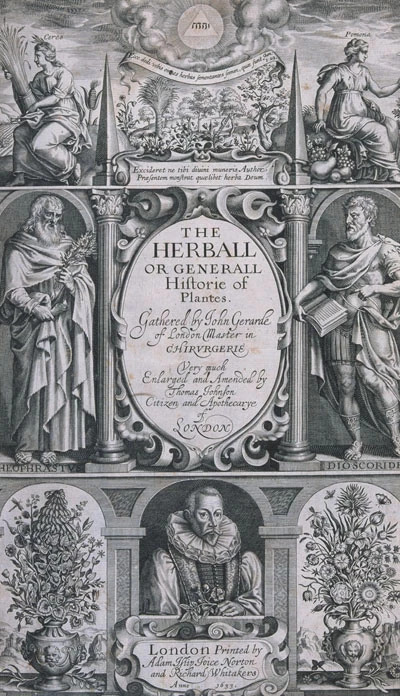
Old herbal

Throughout the Dark Ages, disease and poor hygiene were rife and people relied on herbalists and their remedies. Cure for deafness: take rat's urine, the oil of eels, the house leek, the juice of travellers' joy and a boiled egg.

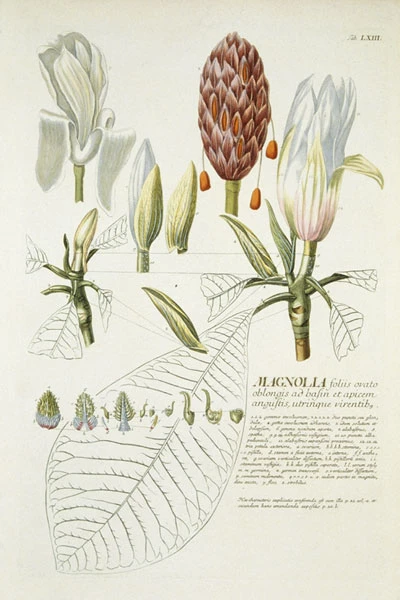
Magnolia

Plant collectors travelled to remote parts of the world. Finding new plants meant exploring new lands - often without accurate maps, through country without roads, and with few settlements.

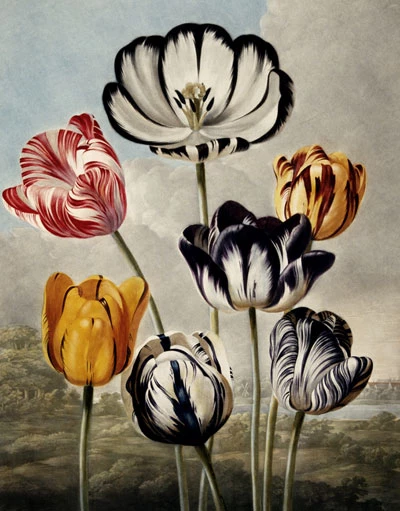
Tulips

In the 17th century, travel and trade brought many new exotic plants to Europe. So-called 'Tulipomania' rose from the passionate desire of the wealthy to own the rarest plants. In Holland, a single tulip bulb was bought for 4,600 florins, plus a coach and a pair of dappled greys.

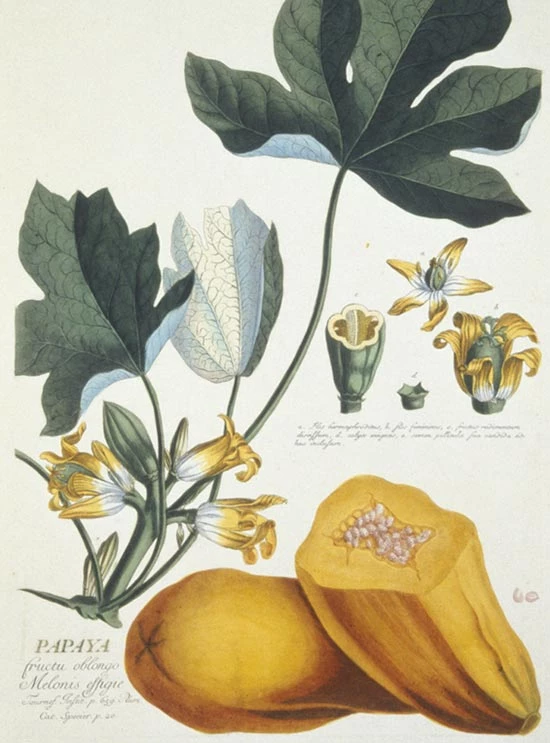
Papaya

Many of the exotic fruits such as the Paw-paw and Pineapple discovered on the voyages of discovery quickly became fashionable in Europe. The Paw-paw (papaya) is a native of tropical America.

Mankind has always been fascinated by flowers, by their beauty, and by their possibilities for healing and knowledge. Amgueddfa Cymru holds a unique collection of more than 9,000 botanical illustrations spanning five centuries.

After a small exhibition at National Museum, Cardiff in 1942, the illustrations were put into store. Fifty years later the breadth and significance of the collection was rediscovered and their exquisite draughtsmanship fully appreciated.

The collection comprises work ranging from professional engravings to amateur watercolours, and includes several items by acknowledged masters such as Georg Dionysius Ehret and Pierre Joseph Redouté.

500 years of botanical illustrations

The collection traces the development of botanical illustration and its relationship between art and science from the medieval herbals of the Dark Ages, when man feared nature, through the Enlightenment and the great voyages of discovery to the contemporary illustrations of the 21st century.

Floras

By 1600, after the early woodblocked herbals, the process of engraving on metal allowed a finer delineation of every minute detail, revolutionising botanical illustration. Flora Londinensis (1777-87) by William Curtis is one of the most famous British floras listing all the plants within a ten-mile radius of London. An important early 19th century European flora is the Flora Danica (1763-1885), which took almost a hundred years to complete.

In the 17th century, plants were grown for their beauty as well as practical and scientific use. The wealthy produced 'florilegias' illustrating the rare and beautiful plants on their estates, while scientific guides were full of precise illustrations from a whole range of plants.

The collection contains many original prints from the 17th century, including work by Redoute, Sowerby, Fitch and the Welsh-born Sydenham Edwards.

The introduction of taxonomy

In 1753 the Swedish naturalist Carl Linnaeus developed a new system of naming and classifying all living things. Everything was given two names in Latin: a genus name and a species name. This had a profound impact on the style of botanical illustration. Emphasis was now on the plant's sexual organs — much to the alarm of polite society.

The acceptance of the new Linnaean system was helped, in part, by the high quality of illustrations produced by G. D. Ehret at that time. The Museum holds illustrations by Ehret from Plantae Selectae (1750-73) and also a collection by J. S. Miller from Bute's Botanical Tables (1785), commissioned by John Stuart, 3rd Earl of Bute.

The collection also includes works by Redouté, Kirchner and Elizabeth Blackwell. Backwell illustrated a herbal entitled A Curious Herbal to free her husband from incarceration in a debtor's prison.

Voyages of discovery

Botanists accompanying the epic voyages of discovery in the 18th and 19th centuries were the first to record and collect the exotic plants encountered in the remote uncharted lands. For the first time Europeans saw pictures of exotic fruits such as pineapples, paw-paws and pomegranates. Examples in the collections include Banks' Florilegium and works from Curtis's Botanical Magazine.

Victorian enthusiasm

The Victorians brought about an immense enthusiasm for science. Engravings of newly introduced plants became widely available through journals and popular magazines, such as Carter's Floral Illustrations and Paxton's Floral Garden.

With the discovery of Victoria regia, the giant water lily from the Amazon, there was much rivalry between the gardeners of the stately houses of England as to who would be first to induce it to flower in Britain. Joseph Paxton, the gardener at Chatsworth, won the race. It is said that the structure of the huge leaf inspired his design for the Crystal Palace.

The largest turtle in the world

15 August 2007

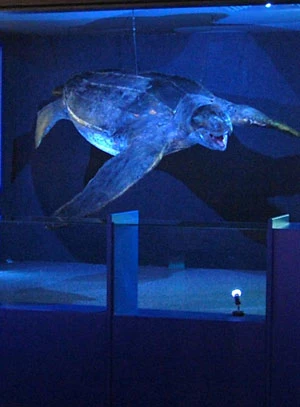
The leatherback turtle on display at National Museum Cardiff was washed ashore on Harlech beach, Gwynedd in September 1988. Sadly, the turtle had drowned after being trapped by fishing lines. It was approximately 100 years old when it died. The turtle attracted worldwide attention as it was the largest and heaviest turtle ever recorded, measuring almost 3m (9ft) in length and weighing 914 kilos (2,016 pounds).

The turtle's arrival on the beach saw a flurry of activity by Museum staff who were keen to exhibit the turtle. However, preparing such a specimen for display was not straightforward.

Leatherback turtle

The turtle had to be flipped upside down before repairing cracks on the underside.

Displaying the world's largest turtle

After undergoing an autopsy for scientific information, the skin was removed and preserved and a mould of the body shape was made. The preserved skin was stretched over the mould to produce a lifelike pose.

The skeleton was also removed and prepared for display alongside the body. The taxidermy mount and associated skeleton were then put on display in their own gallery, with linking displays on the leatherback's history, threats, ecology and conservation.

Leatherback turtle

The Leatherback being cleaned and repaired

Sixteen years on

After 16 years on display, significant cracks had started to appear on the specimen. There had long been problems with cracking, and it had been patched up over the years. Low humidity was identified as a cause, so there was no choice but to close the gallery and conserve this popular specimen properly.

The first stage was to clean the turtle of its layer of dust and oily grime. A non-ionic detergent removed the worst of the dirt.

Once reasonably clean the next stage was to return the distorted parts of the specimen back to the correct shape. This involved soaking the exterior with a solution of deionised water, salt and detergent, enabling it to be moved back into position.

Removing old repairs

Once the specimen was dry, the old repairs were removed. This was a long and slow process requiring care so as not to damage the turtle's skin any further. A large amount of the skin had been painted black some years before, so this also had to be removed. This was achieved with acetone and a mobile fume extraction system.

Once the previous repairs and paint were removed, the turtle's original patterns and skin texture could be seen once more. Gaps and splits in the specimen were then filled in and painted over to blend with the turtle's original skin colour and texture.

Letherback turtle

The Turtle after conservation

Leatherback Turtle

The leatherback turtle in its new display at the National Museum, Cardiff

Redisplaying

The skeleton was also carefully cleaned before the finished turtle was re-hung as before. After 4 months of work, the turtle gallery could finally be re-opened to the public.

Another journey for the turtle

Conditions in the turtle gallery were continuing to cause conservation problems. As a result, during 2006 the turtle was moved to a new location in the adjoining 'Man and the Environment' gallery, next to the humpbacked whale. The new space has better environmental conditions, allowing the turtle to remain on open display. In addition, the information panels have been renewed with up-to-date information. The turtle now sits as a fine addition to this gallery space.

Up close with nature

3 August 2007

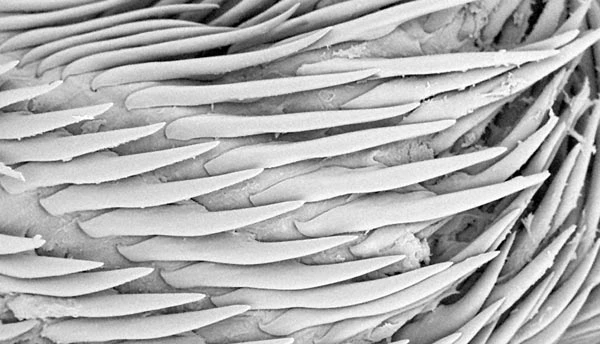
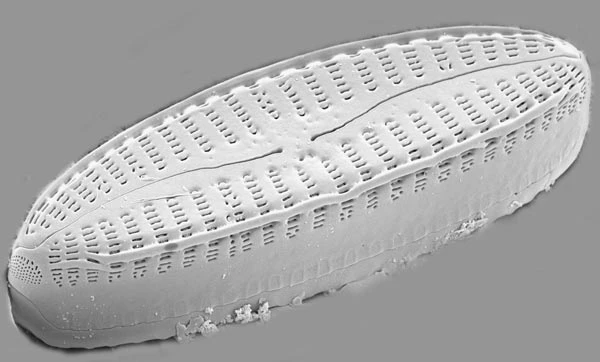
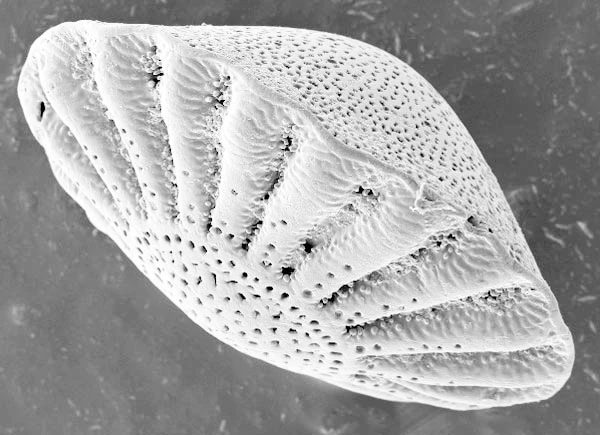
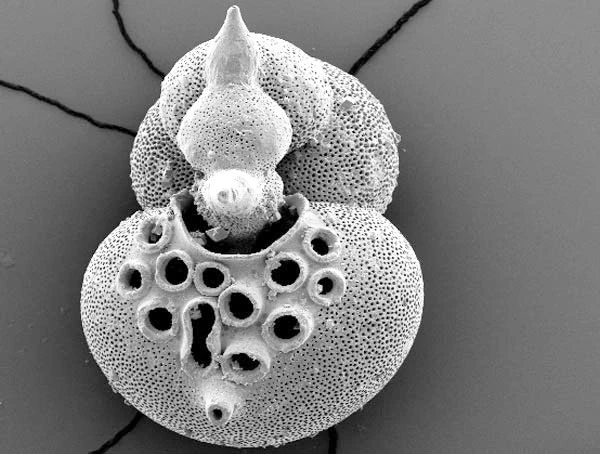
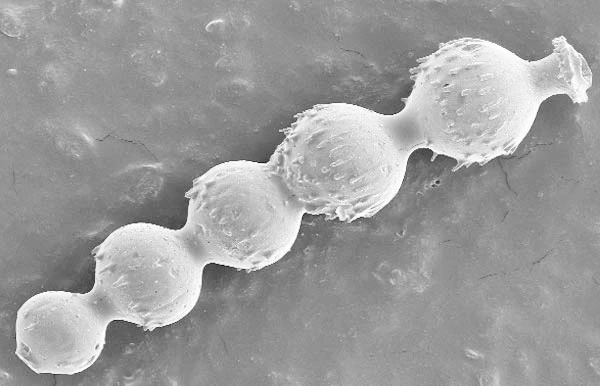
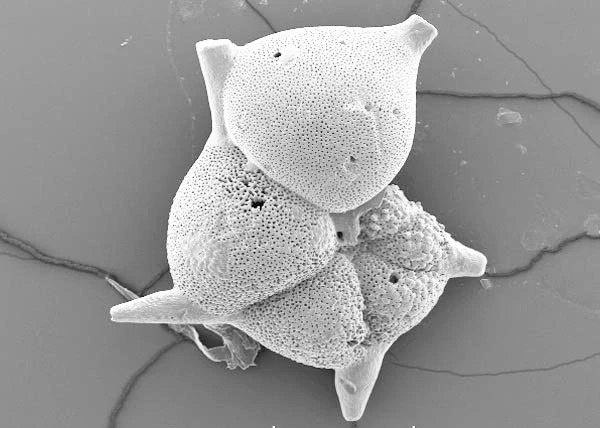
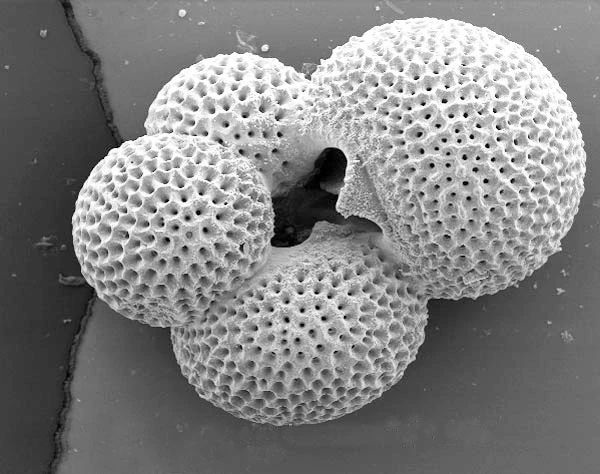
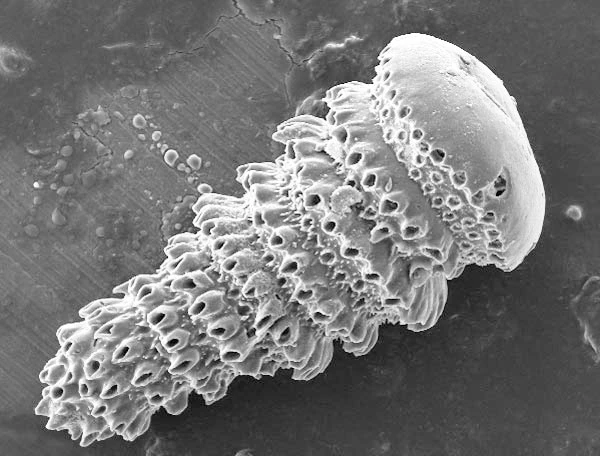
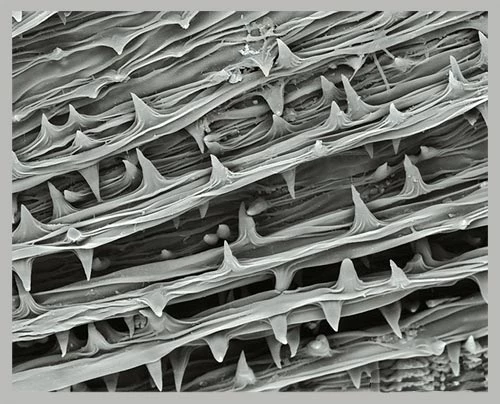
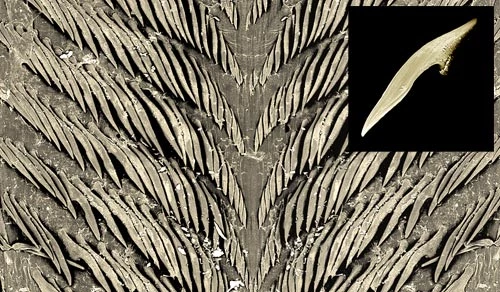
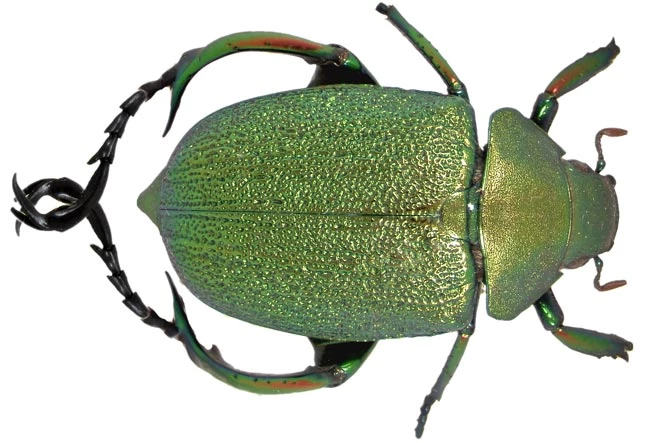
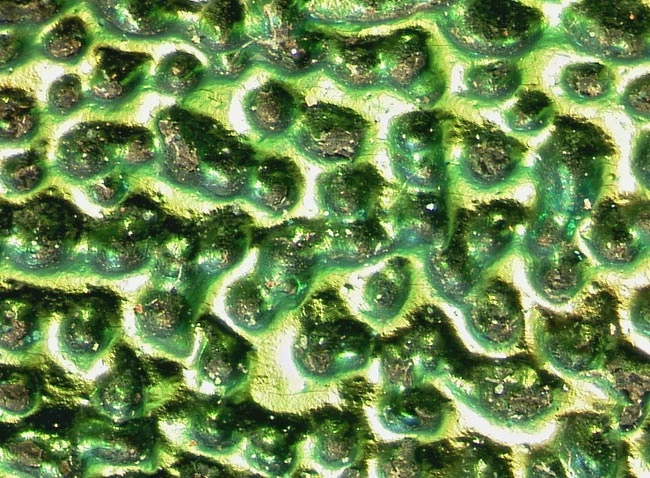
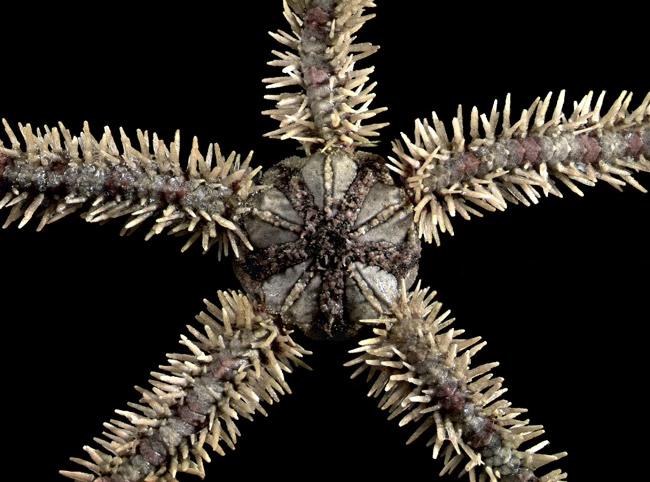
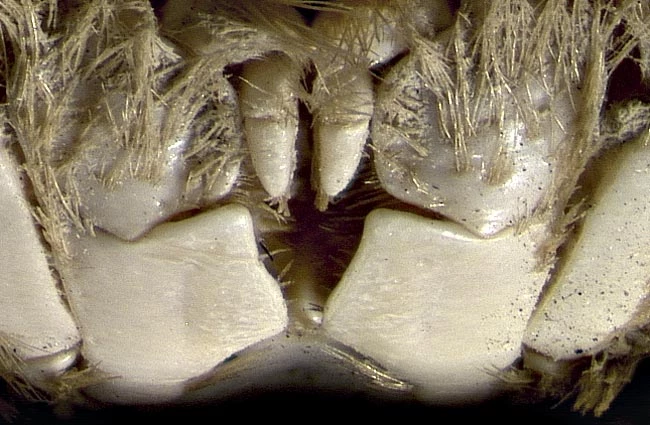
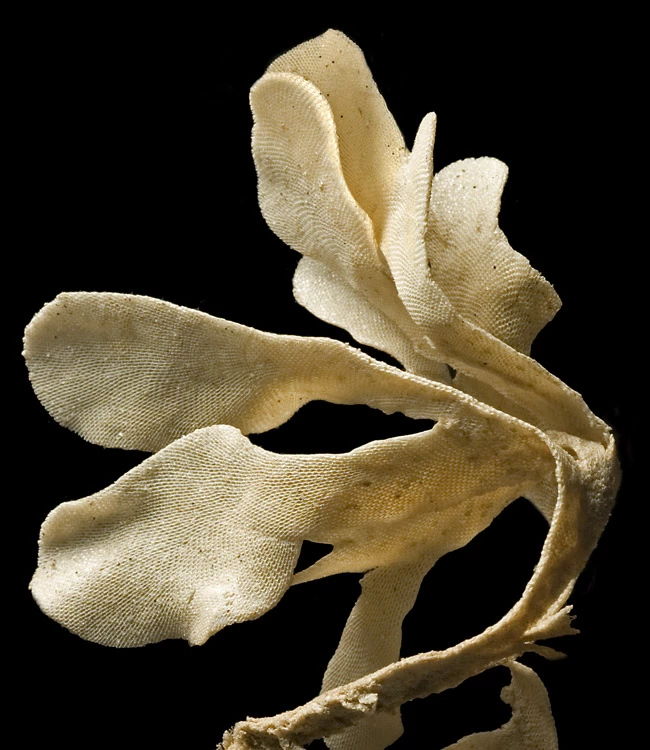
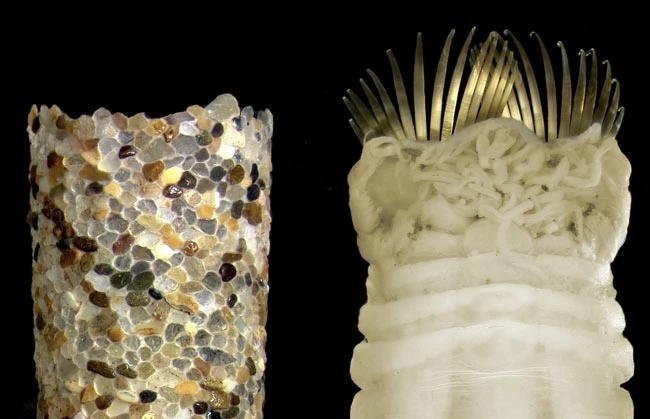
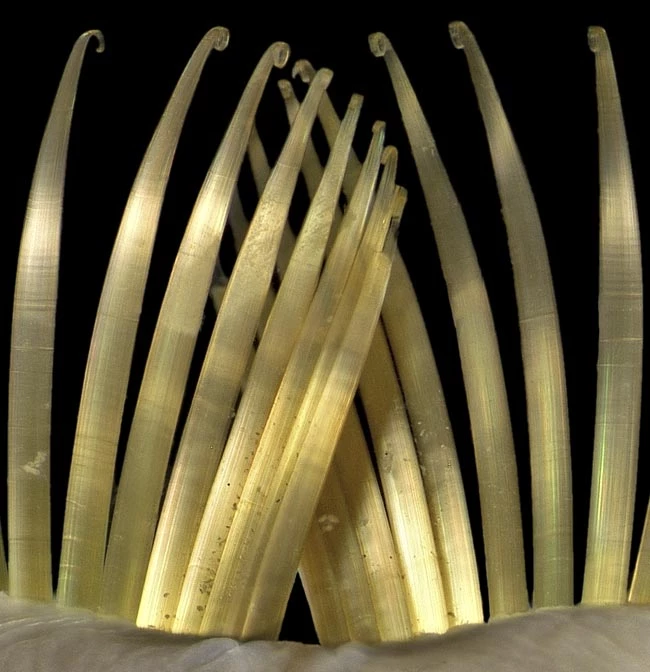
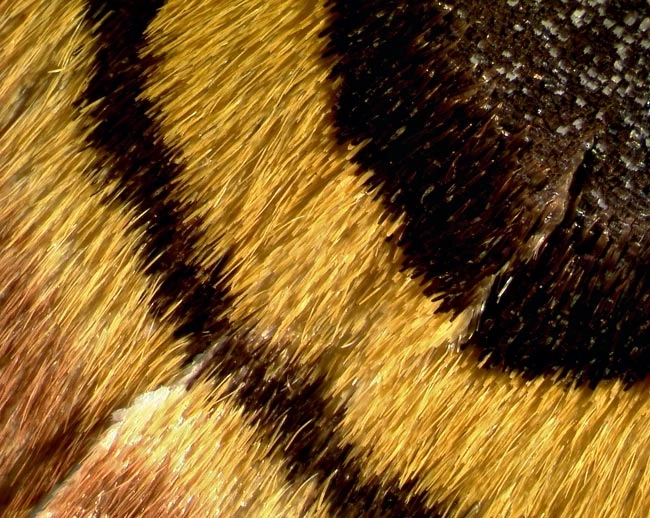
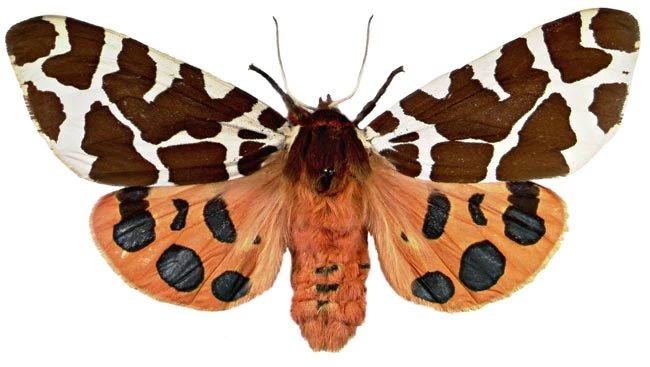
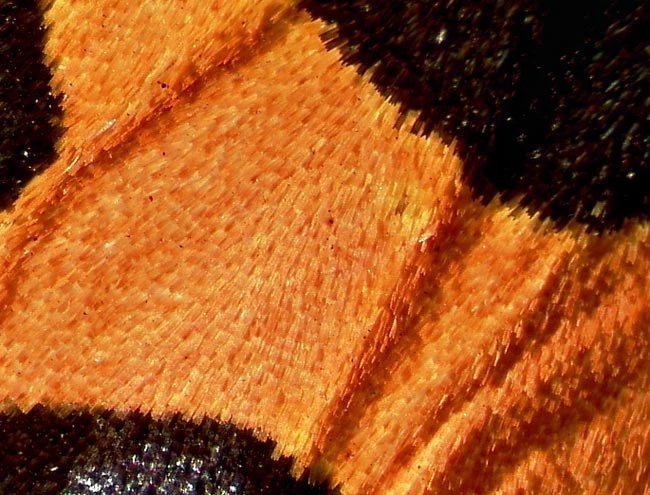
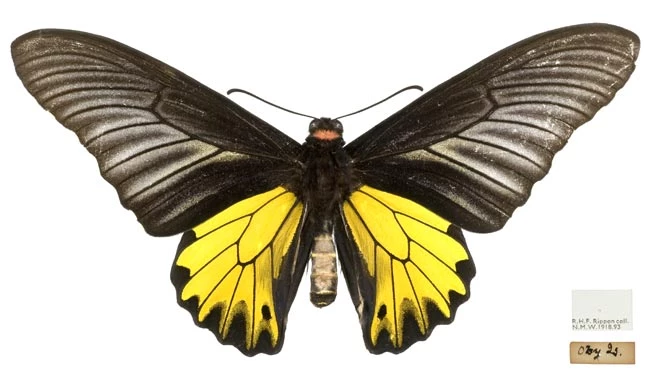
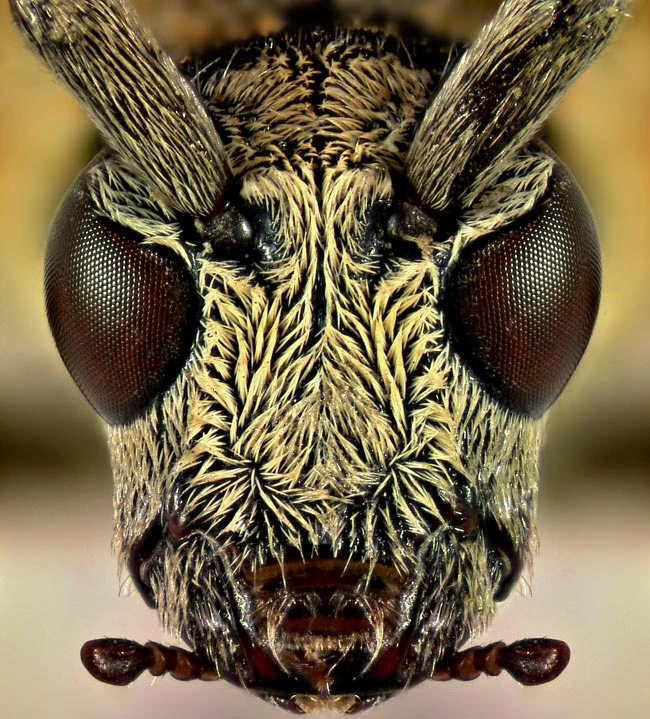
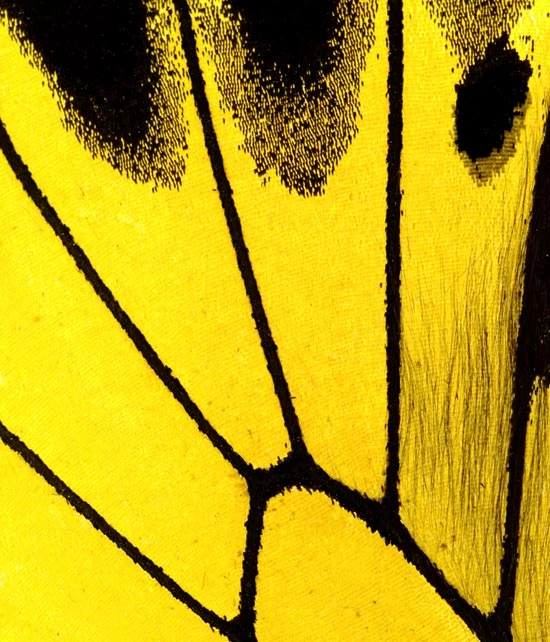
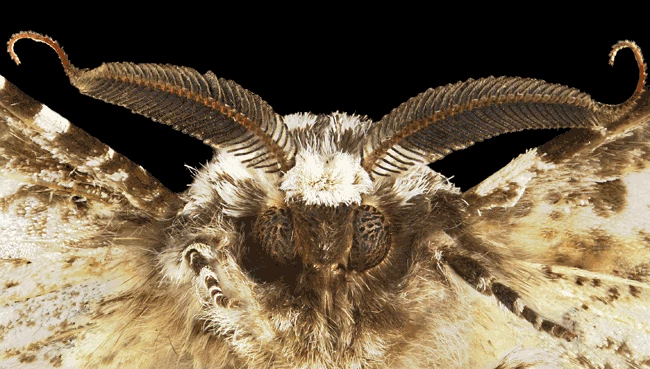
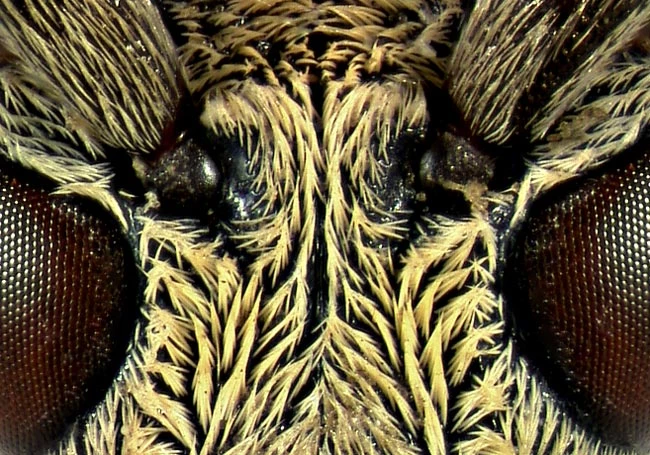
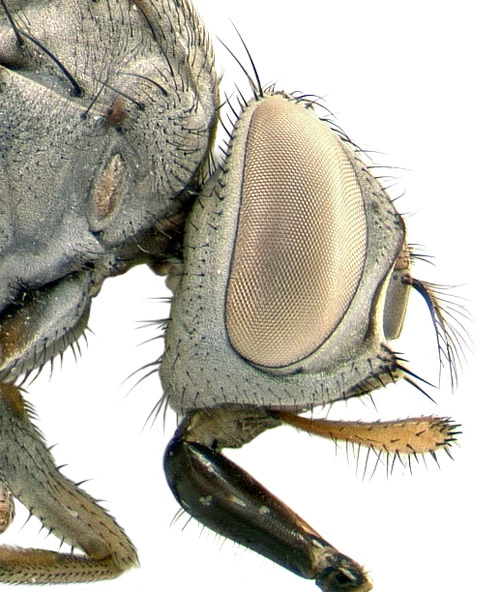
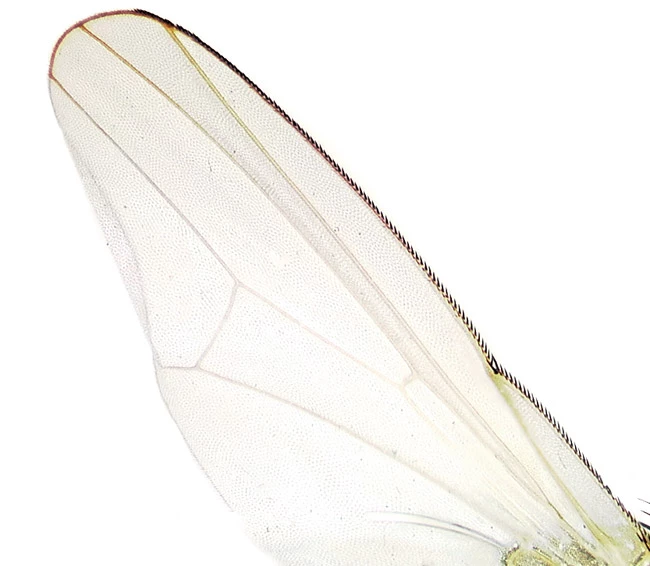
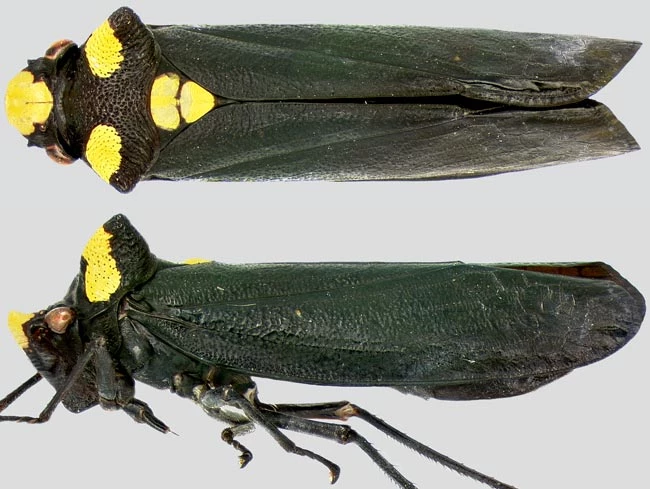
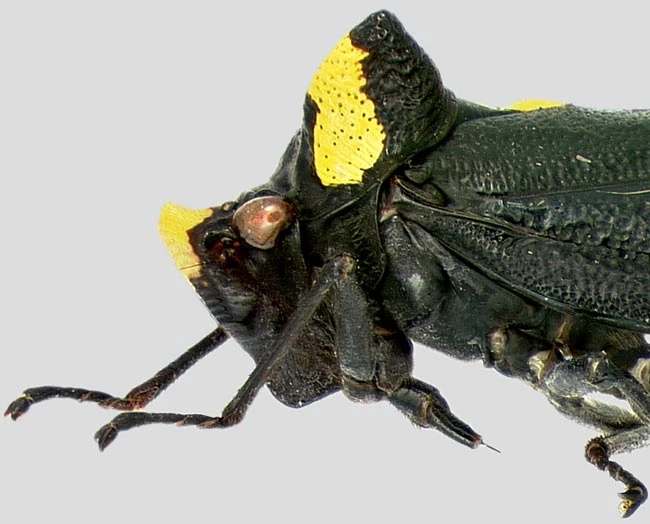
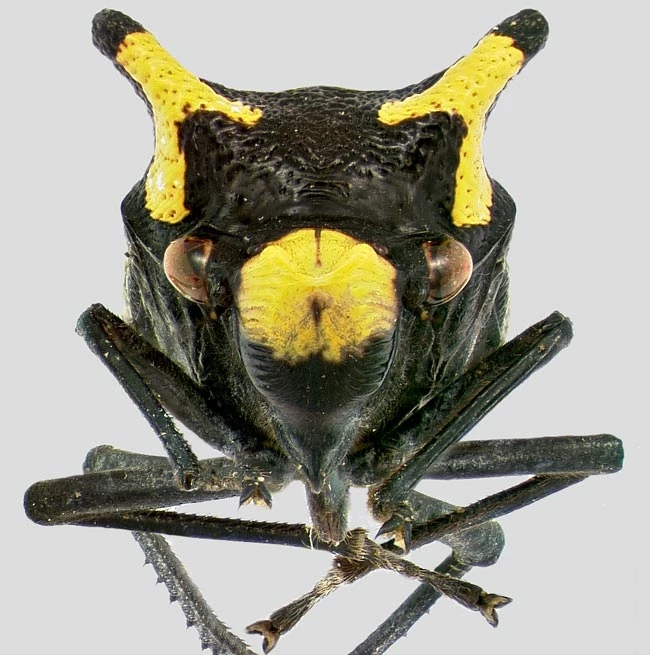
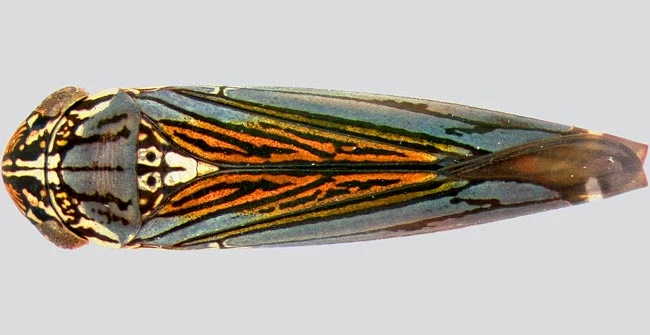
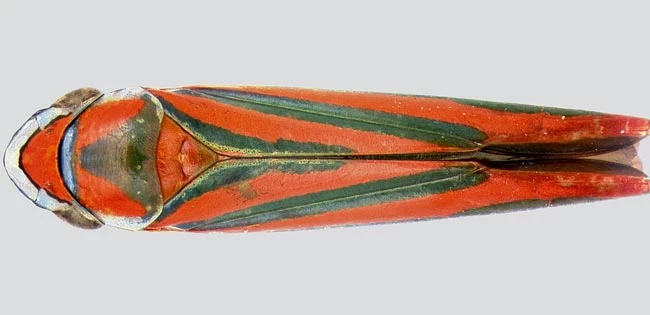
Witness the bizarre structures and patterns of nature close up. These amazing images have been created by the scientists at Amgueddfa Cymru using highly magnified photography. From butterflies to microscopic plankton - remarkable details are revealed in a whole new light in these breathtaking pictures, which are to be admired for their striking beauty as well as the scientific value they hold.

At this level of magnification, reality becomes quite surprising, click on the images below to discover more...