West African Worms that Dig

Katie Mortimer-Jones, 30 January 2017

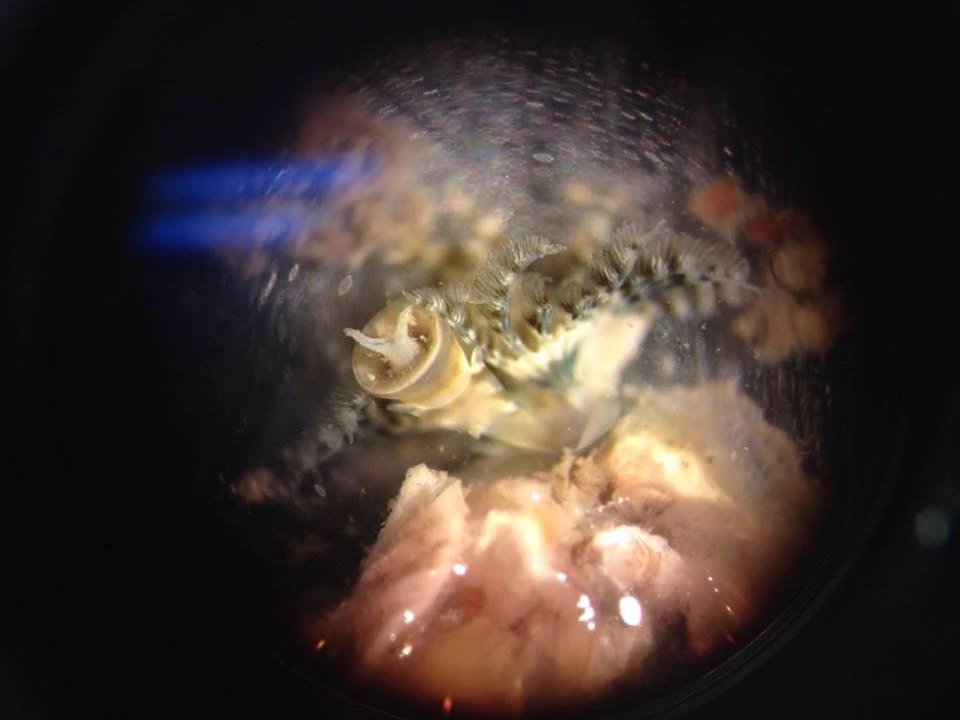
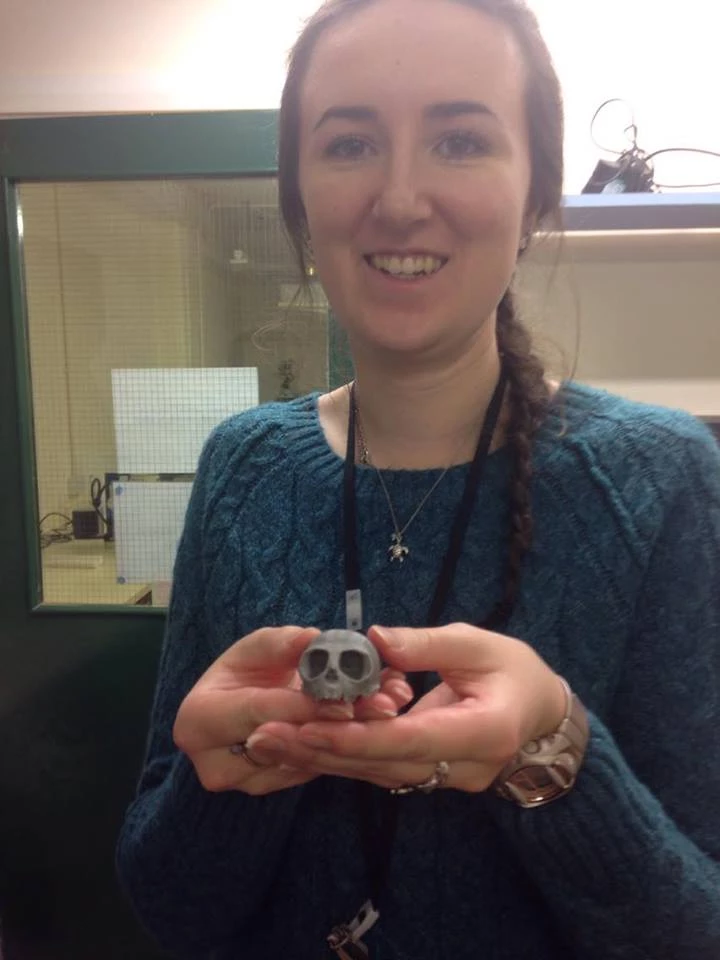
I have been specialising in a group of marine bristleworms called magelonids for the last 17 years. Magelonids are known as shovelhead worms due to their distinctive spade-like heads that they use to dig in the soft sediments in which they live. Shovelhead worms have a world-wide distribution, generally living in shallow waters, although a few deep water species are known. I study the taxonomy of the group - a branch of science concerned with the classification of all living things, involving describing species, some which may be new to science. Principally I have worked on specimens from Europe, the Indian Ocean and the seas surrounding the Arabian Peninsula. However, more recently I have also been studying the behaviour of this fascinating group, investigating how they feed, burrow and move etc.

I was invited to colloborate with the University Museum of Bergen (UMB), Norway back in 2013 to work on shovelhead worms from Western Africa. The project, The Marine Invertebrates of Western Africa aims to investigate seabed samples from the West African continental shelf from Morocco to Angola. Very little is known about the shovelhead worms of this region, with only three species currently described, all from South Africa. Therefore I visited the lab at UMB to work with the team back in 2015 on MIWA material. The results from that trip were very exciting and approximately 20 different species of shovelhead worms were found in the material, many of which were likely to be new to science. Whilst work on these specimens carried on back at National Museum Cardiff, it was felt that it would be beneficial to re-vist Bergen to carry on the colloborative work. So consequently UMB invited me back to work with them once more this January. So for the last two weeks I have been studying more material from the region in order to find specimens for DNA analysis. DNA (Deoxyribonucleic acid) is found inside every cell of every living thing and is different in every individual. We can use DNA analysis to see the difference between very similar looking animals and thus we can see whether animals belong to the same or different species. We can then compare this information to what the species looks like (morphology). We have now selected 74 specimens which will be sent off for DNA sequencing and hopefully the results from that will come back shortly.

In the mean time work will begin on drawing, describing and imagining all the shovelhead worms from Western Africa. It is likely that there will be many new species within these samples, so we will need to decide on names for all of them and these will then be published in scientific papers. Once published this information will be used for example, by people monitoring the health of the seabed within this region.

To read more about the work on MIWA shovelhead worms click here 


Radical by Tradition: Cardiff and Contemporary Art

30 January 2017

The UK's largest international art prize, Artes Mundi, draws to a close this February in Cardiff. As we celebrate the announcement that video artist John Akomfrah has won this year's prize, for his work exploring 400 years of human migration: let's take a look back at Cardiff's long tradition of celebrating radical and thought-provoking art.

The Davies Sisters - Collecting Light

Gwendolene Davies and Mary Davies were two Methodist sisters who collected cutting-edge art at the beginning of the 20th century. The artworks they bought with their coal-boom wealth are now considered quite respectable: lillies by Monet, Venetian seascapes, open-air studies of the French middle class. It wasn't always so: in 1874, popular journalists described the Impressionists' method as: "Smear a panel with grey, plonk some black and yellow lines across it, and the enlightened few, the visionaries, exclaim: Isn't that ... perfect ..?".

As some of the earliest UK patrons for the Impressionists, the sisters donated these works to the nation between 1951-63 - creating a huge boost for the national collection, displayed today in National Museum Cardiff.

In addition to the Impressionists, you can now visit works by artists who, at the turn of the 20th century, responded to the impending crisis in Europe. Both Gwendoline and Mary opened the doors of their home to artists, such as those fleeing the German invasion of Belgium in 1914. The museum, in turn, collected works by David Jones, Paul Nash and many others who had taken part in campaigns during the two World Wars that were to follow.


Charing Cross Bridge, Claude Monet, 1902

Wales Tomorrow - The Future of Art (in 1969)

By the time the Impressionists had passed into quiet respectability, artists in the UK emerged from the post-war period eager to experiment with new ways of working - performances, happenings and pop art.

Some of the earliest happenings in the UK took place in Swansea, under the care of young performance artist Ivor Davies - who, at 80, held a spectacular show at National Museum Cardiff last year. He also holds the unusual honour of being the first artist to use explosives in an artwork, as he often included film, fire and explosions in his work.

The Reardon Smith Theatre at the Museum hosted the first even 'happening' in Wales, as well as intervenions by international artists. The legendary Yoko Ono didn't attend her performance piece in person, preferring instead to send a cardboard cutout of herslf to Cardiff, by taxi.

National Museum Cardiff captured this new, rebellious spirit by embracing artists using new materials - such as inflatable vinyl, recycled waste and perspex - in its show 'Cymru Yfory', held in 1969. Artists were invited to imagine the 'Wales of Tomorrow' - a Wales with a bright future, booming industry and plenty of go-go boots.


A Home for Contemporary Art

National Museum Cardiff's commitment to showing art from the 'here and now' continues: The Colwinston Gallery's exhibitions are varied and showcase the work of artists responding to the world around them today. It has recently been home to a golden, 12' high self-destructing loudspeaker; an installation of mosses grown in the museum's research herbarium; Welsh landscapes inspired by Allan Ginsberg's famous acid trip in the Welsh hills; and most recently, arresting contemporary portraits of people from Aberfan, taken by Shimon Attie to mark the anniversary of the disaster.

Curators maintain the tradition of radical collecting and display, encouraging visitors to smash a ceramic display in 'Fragile?', and even joining in on the cowbell during Ivor Davies' playful performance art.

Artes Mundi has played a part in keeping the museum's link to social activism alive. The competition bring artists from all over the world to Cardiff - and encourages us to view global issues through the eyes of contemporary practitioners.

It is art that responds to the world around us, and asks questions about the 'status quo'. The national collection, displayed alongside, reminds us that even Monet's waterlilies was considered unusual, transgressive and rebellious, once. Hear more about free events and exhibitions at the museum by keeping in touch with their monthly newsletter.

Through the duration of the show, friendly gallery guides will be available to make the show as accessible as possible - and this year, a brand new programme of events for adults will be held for free at National Museum Cardiff. Visit the show between 21 October and February 15th - and find out more about contemporary art near you through Arts Council Wales.

You can see the Artes Mundi entries at National Museum Cardiff and Chapter Arts Centre. For the latest from Artes Mundi, sign up to receive their e-newsletter.


Visitors breaking tiles in 'Fragile' at National Museum Cardiff

Wales and the World Wars: Kate Rowlands' Diaries

27 January 2017

The twitter account @DyddiadurKate shares entries from the diaries of Kate Rowlands, Sarnau. Over a century later, her entries from 1915 tell a story about life in Wales during the First World War.

The diary was donated to the Museum in 1969, during a period when archive staff travelled to communities across Wales to record people telling their stories, in their own words.

Kate Rowlands' 1915 diary is a rich and nuanced account of life in rural Wales during the Great War. It gives us glimpses into everyday tasks, the names of fields and farms, local characters, dialects, as well chapel and farm life.

The diary is reproduced in Welsh, exactly as it was written, on twitter. You can read more about the personal stories we've uncovered about the First World War on the museum blog.

More about the Diary

The Author

Kate Rowlands' diary from 1915 was donated to the Museum in 1969. She also recorded a number of Oral History recordings with curators from the Museum, all of which add to our understanding of her life in rural North Wales, in the early to mid twentieth-century.

She was born in Brymbo, near Wrexham, in 1892. Her mother, Alice Jane, was originally from Hendre, Cefnddwysarn, and nine months after Kate was born, both mother and daughter returned to this area, following the sudden death of Kate's father from an illness sustained working in the steel industry. Her mother's family had a great influence on her upbringing - in one oral history interview with the Museum, Kate states that "y nhw oedd y canllawie gathon ni gychwyn arnyn nhw" - "they were the ones who guided us as we got started in life".


Homework to farm work

Kate's mother remarried with Ellis Roberts Ellis, who is also mentioned in the diary. In 1897, when Kate was five years old, the family moved to a small farm near Llantisilio, Llangollen, and then to Tyhen, Sarnau - the location of the diary. An only child, she left school at fourteen to help her parents with work on the farm.

"My parents lost their health to an extent. That really went across my going ahead with my education. I had to be home, you see... A bit of everything, jack of all trade. I had to help a lot with horses and things like that. Heating up the big oven to cook bread, and churning when it was called for, two times a week or so."

Oral History

Kate Rowlands donated her diary after being interviewed in 1969. Due to the tireless work of St Fagans' early curators, the archive now holds a rich collection of items, documents and recordings relating to women's history, especially women living and working in rural communities.

Kate also donated her 1946 diary to the Museum. This volume is also available online on twitter.

Read more about Welsh Women's History.

Kate Rowlands - Early life (Welsh recording)
Kate Rowlands - Week on the Farm (Welsh recording)
Kate Rowlands - Playing Steddfod and Leaving School (Welsh recording)

You can download an electronic version of the diary here:

Dyddiadur Kate E-book (PDF)

PLEASE NOTE: The diary is in Welsh

Crocus or Daffodil?

Penny Dacey, 20 January 2017

Hi Bulb Buddies,

Thank you to those of you who have shared your photos, I’ve posted some of these to the right. It’s exciting that some of your plants have started sprouting. In my last Blog I asked whether you thought that the Crocus or Daffodil would flower first. Now I thought we could take a closer look at the plants themselves, to help us decipher which is which. I’ve attached photos of a young Crocus plant and Daffodils to the right, these are labelled so that you can tell which is which. What are the differences between these two plants?  

Can you tell whether your Daffodil, Crocus or both are sprouting? How tall are they? It’s interesting to compare the height of the two plants, and to see how much they grow each week.

Watch your plants closely so that you can record the date that your plant flowers, and it’s height on that day. You can then upload your flower record to the website. There’s a resource entitled ‘Keeping Flower Records’ under ‘Teaching Resources’ on the Spring Bulbs webpage: https://museum.wales/spring-bulbs/

Another resource that would be interesting to use now that you can see your plants are growing is  ‘Make your own mini-origami booklet’. This resource looks at the lifecycle of a bulb.

If you complete any of the activities from the website or create your own in class, please share them with us. It’s always interesting to see the work you are doing.

Thank you for sending in your weather updates. I’ve answered some of your comments below.

Your comments:

Comments about the weather:

Ysgol Pentrefoelas: Dim llawer o law a chynnes. Pawb yn ymarfer pel-droed at y twrnament ac felly yn gallu bod allan bob dydd. Llawer o blant wedi cael balaclafas capiau anifeiliaid i gadw eu pennau'n gynnes.

Athro’r Ardd: Gobeithio gwnaethoch yn dda yn y twrnamaint! Rwy’n hoffi meddwl am bawb rhedeg o gwmpas hefo capiau anifeiliaid gwahanol! Am anrhegion da i gael am Nadolig!

Arkholme CE Primary School: We had quite a wet week. It was fairly warm and some bulbs are sprouting from last year.

Broad Haven Primary School: We hoped we would have snow. But we just had a really cold wind -Northerly- and a bit of sleet. The sea was very rough and the waves came over the road.

Darran Park Primary: The temperature has lowered throughout the week. There has been a little amount of rain.

YGG Tonyrefail: It wasn't very wet this week but it was quiet warm.

Stanford in the Vale Primary School: Hello, the mornings of this week have been very cold and icy. We have had a rainy week this week. bye,bye

Auchenlodment Primary School: It has been a very warm week even though it's January!

Broad Haven Primary School: A cloudy week until today it is very sunny but cold

Comments about the project:

Ysgol Bro Ogwr: Yr wythnos yma fe dorrodd y dyfais i gasglu dwr ar ddydd Iau pan ddaeth y glaw. Roedd split ynddo a mae'r athro wedi defnyddio duct tape i rhoi fe yn ol at ei gilydd. Fe all hyn olygu bod ein canlyniadau ni ddim yn hollol gywir.

Athro’r Ardd: Diolch am roi gwybod am y broblem. Da iawn i'ch athro am drwsio’r mesurydd glaw . Gadewch i mi wybod os ydych yn angen mesurydd glaw newydd.

Comments about your plants:

Ysgol Pennant: Maer bylbiau yn dechrau tyfu!

St Clare's Catholic Primary School: Some of our bulbs have started to shoot this week!

Ladygrove Park Primary School: nothing growing yet

Professor Plant: Don’t worry Bulb Buddies, I’m sure you will see something soon!

Garstang St. Thomas' CE Primary School: It was a really rainy week but it was quite warm outside. We have noticed some of our bulbs are growing because we can see pointy green shoots poking through the soil!

Arkholme CE Primary School: The bulbs in the pots are just starting to sprout and look healthy. We have just noticed that last years plants are also growing. As usual the days in January have been wet so we think that helped them to grow.

Henllys CIW Primary: Our biggest plant is a daffodil that is 2.5 cm tall.

Sizing up Sawfish

Jennifer Gallichan, 19 January 2017

One of the great things about being a museum curator is that I am always learning new things on the job. I have been a museum curator for 15 years.  In this time, my job has been to care for the mollusca collections but I have also now taken on the role of overseeing the care of the vertebrate collections. This has meant a whole raft of new things to learn and deal with, the least of which being that the animals all have backbones!

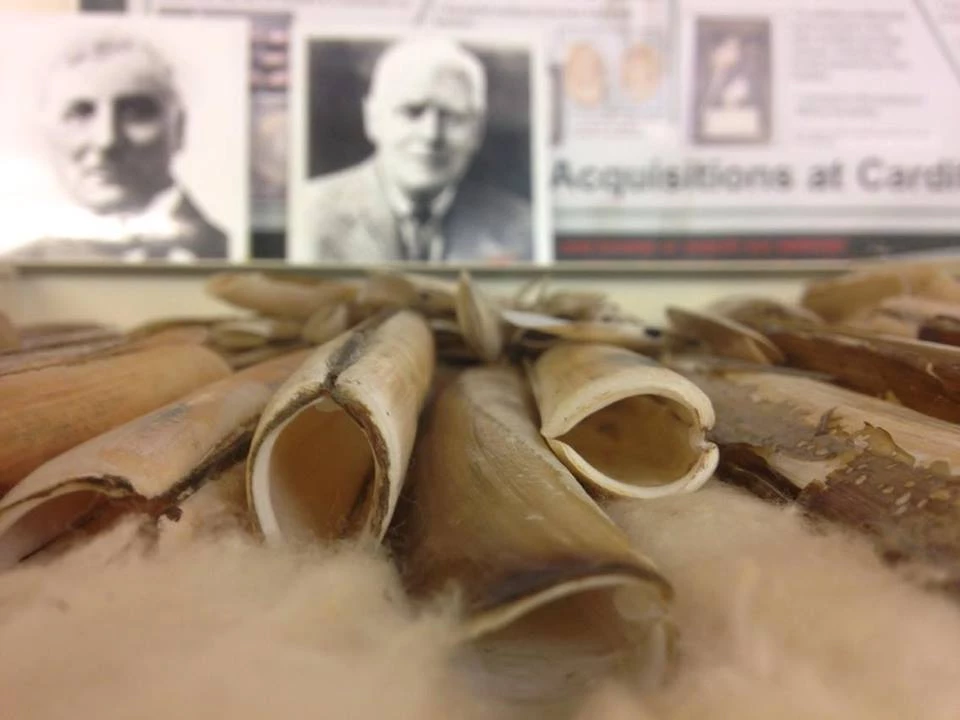
I was recently asked on behalf of the Sawfish Conservation Society (SCS) to investigate what sawfish rostra we have in our collections. So what is a sawfish? And what is a rostrum? Sawfish are incredible. They live in tropical and sub-tropical waters across the world. Also known as Carpenter sharks, they are in the same family as stingrays, electric rays and skates. Their characteristic feature is a long narrow nose extension called a rostrum which is lined with sharp teeth. These run down the length of the nose giving it the appearance of a saw.  To make this nose extension all the weirder, it is covered with electro sensitive pores that allow the sawfish to detect the smallest of movements on the sea floor. Little is known about the wild feeding strategies of sawfish, but it seems they skim the surface of the muddy sea floor looking for fish and crustacea, the way we might swish around a metal detector. The rostrum can be also be used to slash and impale anything that might be passing!

It is mostly due to this excellent nose that all sawfish species are listed as endangered or critically endangered. Seen as a curiosity, these sawfish rostra were prized by collectors. Overfishing and habitat destruction have had a devastating impact upon sawfish numbers, they have disappeared from at least 80-90% of the areas they once inhabited. They are now protected in a large number of countries making it illegal to harm them or trade in the removed saws.

The SCS has come up with a plan to help us better understand these amazing animals. They are partnering with researchers and institutes from around the world, which in the UK includes the Deep Aquarium and The Shark Trust, to launch the ‘See a Saw’ Citizen Science Sawfish Project.  Although the removal of saws has had a negative impact on their populations, researchers want to turn this negative into a positive. By using these saws to learn important information about them, they can then be used to conserve the remaining populations. They have the added bonus that the rostra are much easier to measure if the sawfish is not attached!

So with this in mind, I met with Al Reeve and his volunteer Sharon Williams from the South East Wales Biodiversity Records Centre (SEWBRec). Al is an avid elasmobranch enthusiast and it is through him that the enquiry first reached me. We set about photographing, measuring and counting the teeth of a whole series of rostra from the collections. It was an amazing experience to handle these specimens and to learn so much from Al about this group of animals. In the future, we may also be taking tissue samples from these rostra to send on to researchers for analysis. I quote Jeff Whitty, Founder and co-administrator of SCS to explain why:

"The data and tissue samples will be used in multiple international studies to further sawfish management and conservation. Sawfish have been suggested to be the most threatened shark or ray in the world and yet we know little about them, which makes conserving the remaining populations difficult. The morphometric data that you provided will help us improve our identification guides of sawfish and will provide us with a better understanding of the distributions of these species. The tissue samples from the rostra will be used by multiple genetic studies that are exploring the differences in the genetic diversity between historic and contemporary populations of various sawfish species. Information from these genetic studies will allow us to better understand if genetic diversity in current populations have declined or remained steady through the years and thus will inform managers if genetic health of a sawfish species or population is a topic of concern."

It is an unbelievably rewarding experience to know that this work can in a small way contribute to the conservation of this most endangered and enigmatic animal. We are often asked why we hold collections in museums. What good can come out of preserving animals? Why would we want to keep such a negative reminder of the wildlife that we have slaughtered on mass in our past? And we can answer that some good can come out of it. To conserve, to learn, to educate, to enthuse, and to help us do things better in the future. It is a great job that I am privileged to hold.

You can learn more about Sawfish by going on the Sawfish Conservation website. You can find out more about the Sawfish project and who else is involved here, or watch this video about measuring saws.