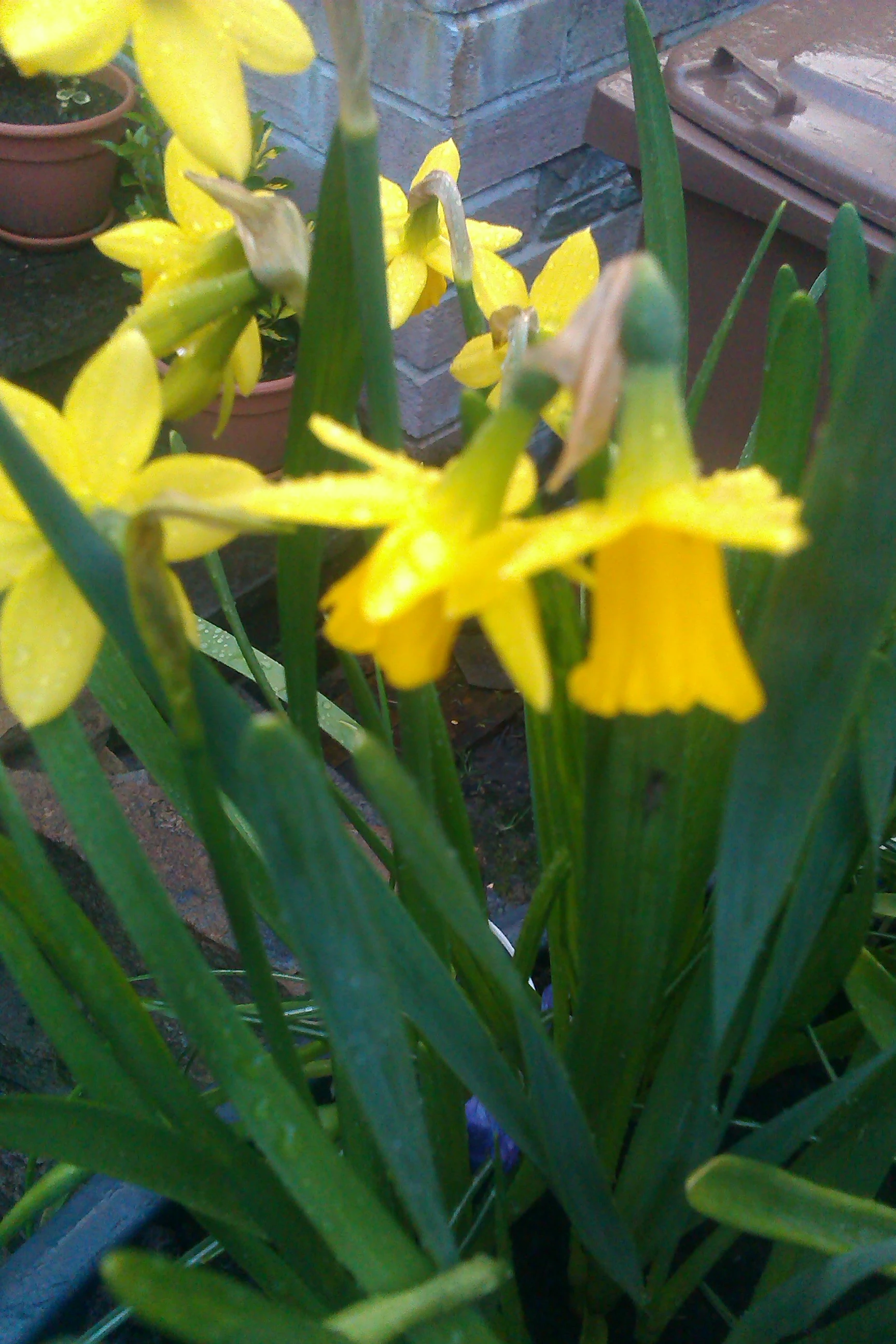
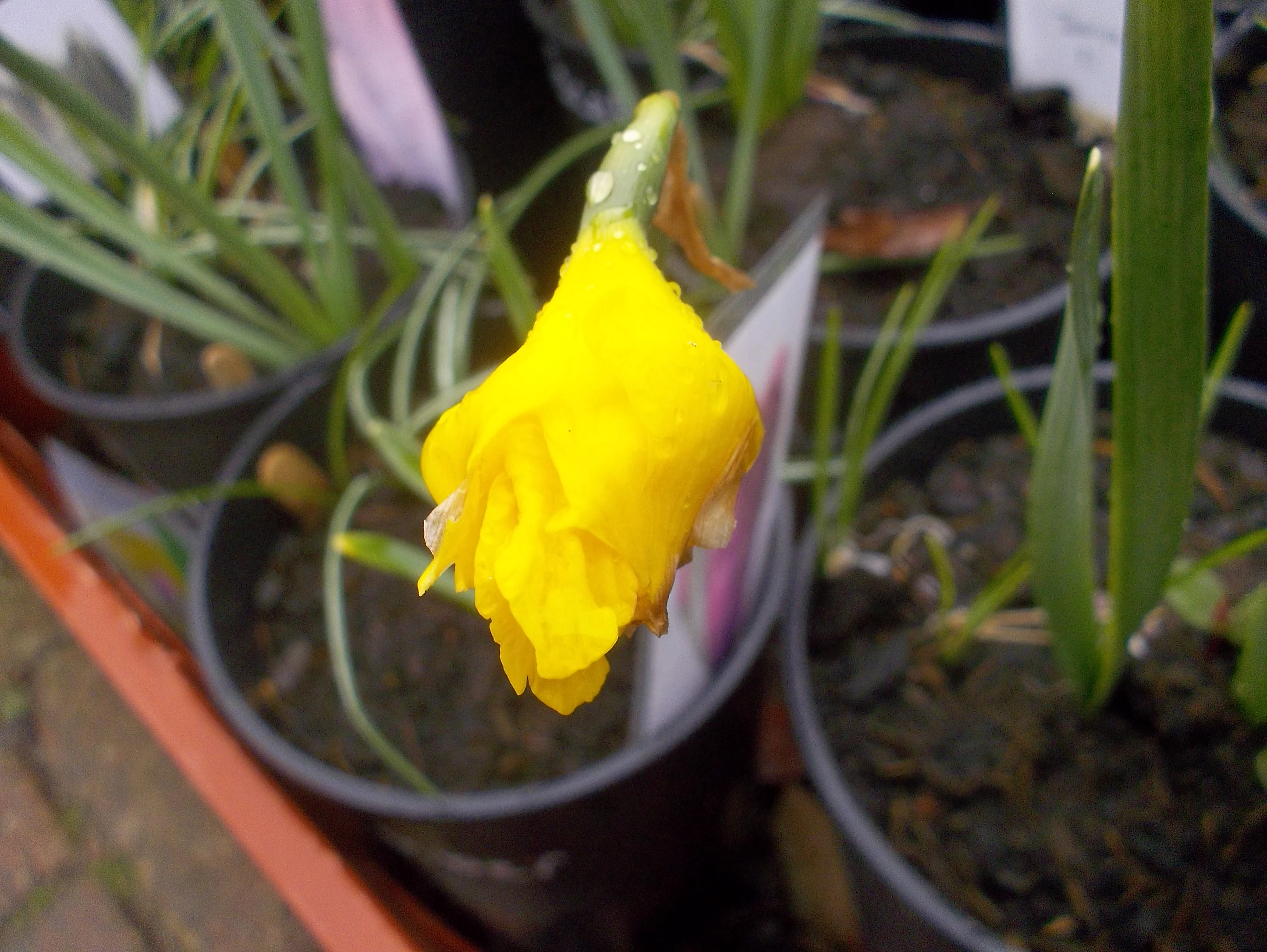
So many flowers! Catalena Angele, 14 March 2014 Wow bulb buddies – so many of you have seen you flowers open since the last blog! It must look beautiful in your playgrounds and school gardens! Thankyou for all your flower records. Which schools have had their first flowers? St Bernadette’s Primary School in Scotland and Abergwili VC Primary, Darran Park Primary, Henllys CIW Primary, Llanishen Fach CP School, Ysgol Bro Tawe and Ysgol Gynradd Dolgellau in Wales, have all seen their first flowers open. In England, Balshaw Lane Community Primary School, Dallas Road Community School, Golden Hill School, Holy Trinity CE Primary School, Manor Road Primary School, Red Marsh School, St Mary’s Catholic Primary School, St Michaels CE (Aided) Primary School, St Nicholas Primary School and The Blessed Sacrament Catholic Primary School all sent their first flower records. Well done to all these schools! Only 2 weeks to send me your records Will you be a Super Scientist this year? The deadline for sending in your records is 28 March. If you send me your weather and flower records (if they have opened) then you will be a Super Scientist! All Super Scientists will receive a Certificate and a fabulous Super Scientist pencil. You will also have the chance to win a Nature Activity trip or some seeds to grow your own Sunflowers! Why not send me your drawings for the Daffodil Drawing Competition? The deadline is also 28 March. For this competition I will be looking for botanical illustrations – these are pictures of plants drawn in a scientific way. Please send me your lovely drawings, but I would also like them to have clear labels to show the different parts of the Daffodil. You can follow this link to see the winners and runners up from last year’s competition. Winners will get a bird watching kit with mini binoculars for their class, runners up will get flower seeds to grow! My plants in pots have still not flowered, but over at St Fagans National History Museum the crocuses growing in their garden look beautiful. The bees like them too, as you can see in the photo! Can you see that the bumblebee has yellow pollen all over its head and body? When it flies off to a different crocus it will pass the pollen on – this is how flowers are fertilised! Your questions, my answers: Raglan VC Primary: Still no sign of the flowers this week! We are having some good weather. Prof P: Don’t worry Raglan School, mine haven’t flowered yet either. Hopefully the good weather will help our plants to flower. Cutteslowe Primary School: Monday 17th - school closed, no heating or hot water. Prof P: Brrrr that sounds very chilly. Manor Road Primary School (Lancashire): One of are crocus bulbs are starting to flower. Prof P: Fantastic news Manor Road, Congratulations! Chatelherault Primary School: Wk 10: Most of our plants have started to too grow. It has raining a lot and some snow. Prof P: We didn’t have any snow at all in Cardiff this year, but we did have lots of rain. The Blessed Sacrament Catholic Primary School: It has been so exciting this week as the buds all suddenly started to appear and on Friday some crocus flowers opened! The daffodils have suddenly grown and we know it won't be long before they too flower. They just love the sunshine! Prof P: Hooray! It’s such a lovely feeling to see your flowers open isn’t it? Greyfriars RC Primary School: S - ten of our crocuses have budded. Prof P: Great news S. at Greyfriars, I’m sure the other crocuses won’t be far behind. Dallas Road Community Primary School: Super Fun!!! Prof P: I’m so glad you think so Dallas Road! Science IS Super Fun! Many Thanks Professor Plant
The 1st flower records for Scotland! Catalena Angele, 7 March 2014 Congratulations to Ladywell Primary School for sending in the first flower records for Scotland! Lakeside Primary School in Wales have also sent in their first flower records – their first crocus and first daffodil opened in the same week! Great work bulb buddies.Three weeks to go… The deadline for sending in your weather and flower records is Friday 28 March, so there are just three weeks to go! If you have been keeping records but haven’t sent them to me yet then please send them soon – all your weather and flower records are really important to me! Every record you send in will make the Spring Bulbs Investigation better and more accurate.Don’t worry if your flowers haven’t opened yet, a lot can happen in three weeks, especially if the sun shines!Would you like to do a Super Scientific Investigation with your plants? I have put together some great ideas for experiments you can do in your school! Can you trick your crocus? Can your daffodil move? Click here to have a look: Professor Plant’s investigation ideas. As well as exciting experiments you will also find my favorite Spring Poem here! It is about daffodils and this is the first verse: DaffodilsI wander’d lonely as a cloudThat floats on high o'er vales and hills,When all at once I saw a crowd,A host, of golden daffodils;Beside the lake, beneath the trees,Fluttering and dancing in the breeze.By William Wordsworth (1770-1850) Beautiful! Have you ever tried to write a poem about Spring? Or about your favourite flower? Why not give it a go?Your questions, my answers:Ladywell Primary School: We have had our computer system upgraded in school and it has been difficult for us to send weekly weather reports because we lost a lot of data which was stored on our apple mac and which we cant convert to PC. However we have been taking temperatures and it has not really been cold and we have had a lot of rain. Some of our plants didn't grow very well but our first daffodil opened today 25th February and it is 28 cm tall. We have another one about to open and some others not far away. We hope this is ok with you and we will send more information soon. Prof P: Sorry to hear you have had computer trouble Ladywell School, don’t worry, I completely understand. Thanks very much for sending your first flower record! Keep up the good work and send in your other flower records when they open.Lakeside Primary: Daffodil comment: Only one is open and the one that has opened has only got half a pot of compost, we think it was knocked over and some soil lost so perhaps less soil has led to quicker flowering, but why? Prof P: Great question Lakeside! Do you have any ideas? This is my theory: A bulb closer to the surface may flower sooner because it warms up quicker and has less soil to push through when it starts to grow. So why don’t we plant them all close to the surface? Well, if there is a very cold winter the frost can damage bulbs that are too close to the surface, and then they may not grow at all.The Blessed Sacrament Catholic Primary School: We all brought our wellies into school this week so that we can go out and look at our bulbs whatever the weather. We went to check on them all on Friday and measured how tall the leaves were, and started recording them in a table like we had been doing in maths. We hope to do this every week now then we can make a graph of the results. Still no sign of flowers yet! Prof P: What a fantastic idea! I love making graphs, they are a great way to see what the numbers are telling me. You must be very dedicated scientists to bring your wellies in to school so you can measure your leaves. Well done, I am very impressed!Many ThanksProfessor Plant
The Healing Power of Dogs Penny Hill, 5 March 2014 This detailed miniature statue of a dog is no more than 4 to 5cms in height, and was probably once coated in tin or silver. Holes in the metal base plate suggest he was attached to a small plinth. One of two miniature statues of dogs found at Llys Awel. His tongue is sticking out in the action of licking. Man’s best friend, the dog has recently been making headlines again through his ability to save life by either sniffing out cancer or licking to help restore circulation to injured limbs. This association between people, dogs and good health is nothing new and was recognised back in antiquity. Housed in the Archaeology collections are 2 small dog figurines, part of a group of objects found at Llys Awel, Conwy. There are also two copper alloy plaques. One is decorated with a dot-punched outline of a dog; the second is not so well preserved, the dotted outline is less clear and it could either be another dog or a name, possibly of a god. The site is believed to be a shrine dedicated to a healing god and the objects themselves date to the Roman period in Britain, sometime between the late first century AD and the end of the fourth century AD. The objects were probably left by people as gifts to the god hoping they would be granted good health and help to recover from an illness. Why dogs? Well, the Greek god of medicine, Asklepios (adopted by the Romans who knew him as Aesculapius), was frequently depicted with a dog as his animal companion. This association probably came about after people observed dogs healing themselves by licking. A major sanctuary to his cult was built in the fourth century BC at Epidaurus, in Greece. This place became one of the major centres for healing in the ancient world. One part of the healing treatment or ritual was to receive licks from a sacred dog kept at the sanctuary. The only known British equivalent of Epidaurus is the cult centre of the Romano-British god Nodens at Lydney in Gloucestershire. Here, 9 representations of dogs were found: like the dogs at Llys Awel these were probably left by visitors seeking cures for their ailments. The dogs are made from copper alloy and are about 5cm tall. They are seated with tails between their legs and tongues sticking out, as if in the action of licking. The figures are incredibly detailed with eyes, ears, nose, paws and fur texture well defined. They were probably made by the lost wax process, so there was only one chance to get the metal casting right. One dog was cast as a single piece, but the other revealed a slightly more complicated construction. During conservation we can find out how the statue was made. Different pieces appear to have been cast separately and soldered together. Illustration of a votive plaque with added shading to highlight the outline of a dog. Illustration of votive leaf plaque. Do the dotted lines in the lower half spell out the name of a long lost god or is it another dog? Conservation During conservation it became apparent the dog was cast in several sections, the head, body, tail and tongue. The individual pieces were then soldered together to create the whole figure. Grooves in the metal at the junction between the head and body support this idea and would have helped the solder grip and hold the two sections together. There is evidence to suggest the craftsman had problems casting the figure, the molten copper alloy failing to flow to all parts of the tiny mould. Repairs had to be made to the nose and the right front leg, the miscast material removed and then new sections recast and soldered in place. The replacement nose has gone, but we still have the replacement leg, which is not as well modelled as the original left leg. The statue was probably given a coat of either tin or silver to hide the construction detail and enhance its appearance, which would have helped elevate our dog to a slightly higher pedigree. Unfortunately analysis of the surface was inconclusive; the coating, if one had existed, did not survive. Therefore we can only imagine its original appearance and wonder if the people who gave this little treasure to the god were ever granted their wish.
Signs of Spring Catalena Angele, 28 February 2014 The sun is shining through my window here in Cardiff and it feels like Spring has arrived! My own plants are not ready to flower yet, my tallest daffodil is 80mm tall and my crocus is still only 30mm tall, but I am sure they will like the sunshine! I took a photo this morning of daffodils and crocuses blooming in Bute Park, Cardiff, aren’t they beautiful?Which schools have had their first flowers?Ysgol Glan Cleddau in Wales has reported their first crocus has opened, and Archbishop Hutton's Primary School in England have reported that their first daffodil has opened! Congratulations and well done for sending in your records.Rougemont Junior School in Wales sent me this message: Well Professor Plant great excitement here at Rougemont School ... our MYSTERY BULBS have started to flower! They look very healthy, shorter in stem than the other Daffodil bulbs that we planted too. We think they could be Narcissus maybe Tete a tete? Will send a photo soon.Prof. P: That is very exciting Rougemont School, and well done for investigating what kind of Narcissus they might be – Great work! I look forward to seeing your photos.And Kilmaron Special School in Scotland said: THIS IS AN OBSERVATION OF LAST YEARS BULBS. We have been monitoring last years crocus and daffodil bulbs to see if older bulbs flower before newly planted bulbs. After our 1/2 term holiday we came back to find the crocus bulbs planted in the pots from last year had opened while this years crocus bulbs look to be about 7-10 days behind in their flowering. We are expecting to post this years results towards the end of next week.Prof. P: This is really excellent monitoring and investigating Kilmaron! I am very impressed. You are right that older bulbs usually flower sooner than new baby bulbs, one reason for this is that they have had an extra year to grow and store up food.I wonder where flowers will open next? You can see where flowers have opened so far by looking at this map. If your flowers haven’t opened yet then watch them closely as they may open very soon!Remember to send me you flower records as soon as your flowers open. To remind yourself what to do, please use my PowerPoint presentation how to keep flower records, and read the What and when to record page on my website.TOP TIPS: Every pupil in the class can send in their flower record! All the data that is sent in is used to create an average flowering date for each school. Watch the crocus chart and daffodil chart to see the tables change as the data comes in. It is really important that each pupil sends in their record - so the website can calculate the average flowering date for your school. Daffodils tilt their heads downwards just before opening. This prevents them from filling with rain after they open. You need to all send in your flower records to win the Super Scientist Competition! Your questions, my answers:Ysgol Terrig: It snowed heavily on Monday morning and stopped about lunch time. Our bulbs are starting to grow :) Prof P: I’m glad your bulbs are growing, did you go out to play in the snow?Raglan VC Primary: We missed Tuesday because it was raining cat's and dog's, and we had bike training. Prof P: I love that saying! Can you imagine what it would be like if it really did rain cats and dogs? How would we measure that in our rain gauge?Chatelherault Primary School: Sorry we did not record information on Thursday because we were away all day at a school trip. We were excited to see little green shoots in some of the plants. Prof P: Thanks for letting me know Chatelherault, I hope you had fun on your school trip.Greyfriars RC Primary School: The plants are growing well and it's wonderful seeing them grow up. The mystery bulbs are really a mystery. from A and A :) Prof P: I hope your mystery will soon be solved Greyfriars!Arkholme CE Primary School: Unfortunately the plant pots are standing in water this week. Let's hope next week is drier. The mystery bulbs are growing better than the others. Flower buds just appearing. From H. Prof P: I am sure your plants will survive the rain Arkholme, keep watching those flower buds!Many ThanksProfessor Plant
A Window into the Industry Collections Mark Etheridge, 27 February 2014 This month we have been donated six lamp checks to add to our very comprehensive collection of checks. Lamp checks informed colliery management of who was in work and became vital when rescue services needed to know how many men were actually underground during an incident such as a fire or explosion. Colliery check systems apparently became common during the late nineteenth century and became mandatory in 1913 after an amendment to the 1911 Coal Mines Act. The two lamp checks shown here were manufactured by E. Thomas & Williams at their Cambrian Works in Aberdare in 2013 using original dies owned by the company. The one on the left was produced to celebrate the 30th anniversary of Big Pit operating as a museum. Read more information on checks and tokensYou can also see a selection of checks and tokens from our collection on our online database ‘Images of Industry’.http://museumwales.ac.uk/industry/images/?action=browse_category&category=1716 This ophthalmoscope was used by colliery nurse Sister Iris Evans for checking ears and eyes in Pochin and Oakdale Collieries. After completing her training in 1952 Sister Evans joined the National Coal Board as a nursing officer at Pochin Colliery in 1955. Later she was transferred to Oakdale Colliery. She retired in 1985 finishing her career as Senior Nursing Officer for South Wales Area NCB. During her career she helped out during the Six Bells Colliery disaster in 1960. She also vaccinated many miners at Lady Windsor Colliery during a smallpox outbreak in South Wales in the 1950s. This large 15 ton piece of coal is now located at Bedwellty Park, Tredegar, and is Grade II listed. It was cut at the Yard Level, Tredegar as a single block with the intention to display it at the Great Exhibition of 1851. It was originally 20 tons, however, after a 5 ton piece broke away in transportation it was decided not to transport it to London as it might not survive the journey. It was subsequently set up in the grounds of Bedwellty House. The smaller block of 2 tons (to the left) was cut in 1951 from the same seam as the earlier one. It was exhibited at the Festival of Britain in London, before being placed next to the earlier block in Bedwellty Park. Follow us on Twitter - @IndustryACNMW