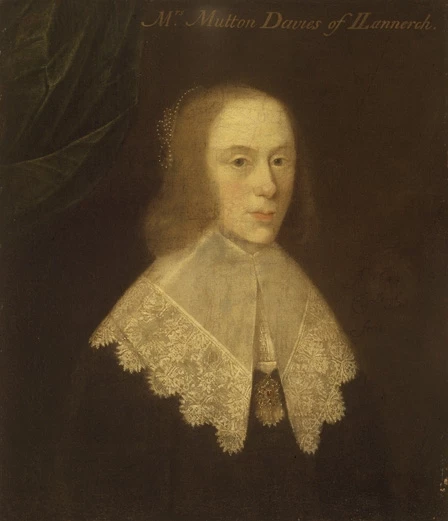
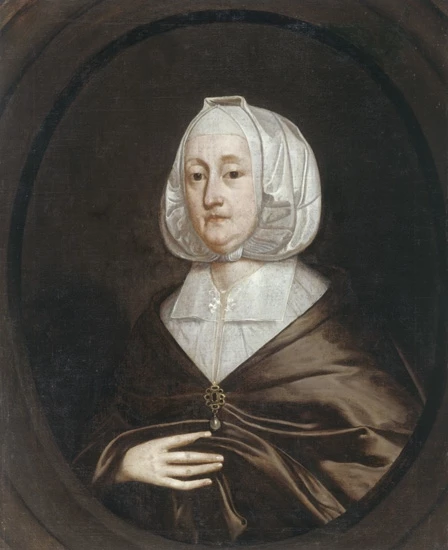
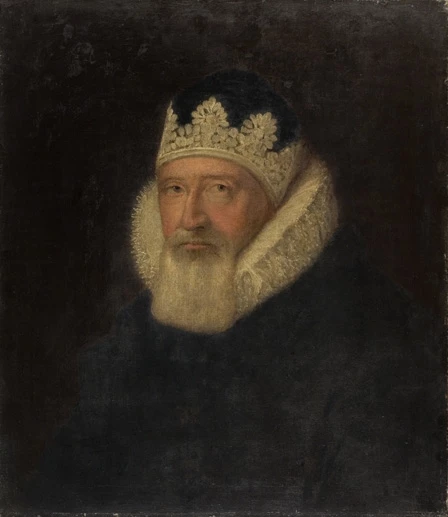
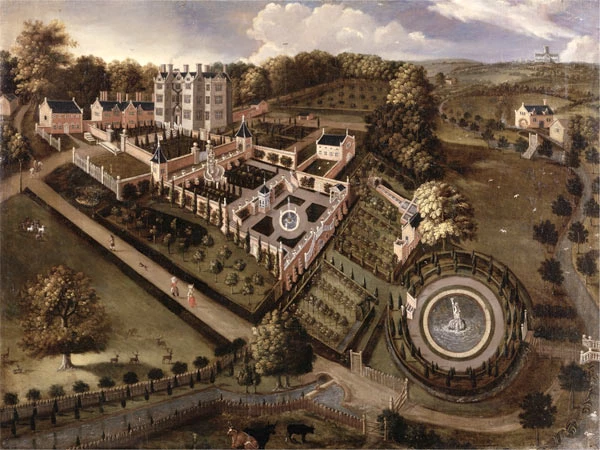
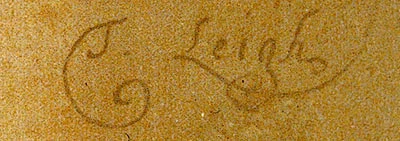
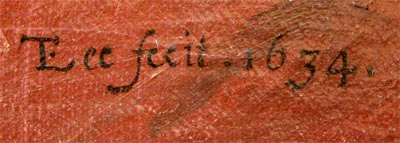
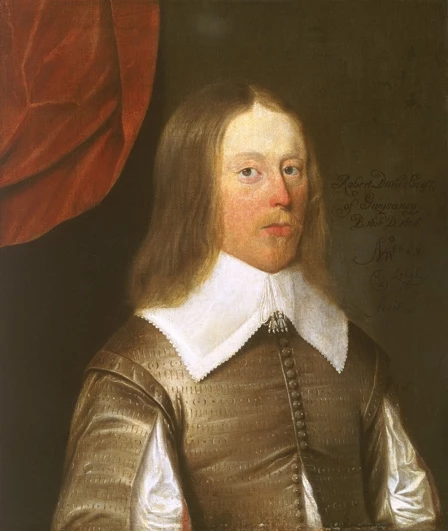
Discovering T. Leigh: in search of a forgotten painter Stephanie Roberts, 26 January 2012 Researchers in Amgueddfa Cymru in collaboration with Concordia University, Montreal have uncovered new information about the life and work of the elusive 17th-century portrait painter, Thomas Leigh. It is now thought that there were two painters named Thomas Leigh – a father and son – but hopefully more paintings can be discovered helping to shed light on the life of these elusive family painters! T. Leigh: the enigma Researching the work of a little-known 17th-century painter can be a difficult task. In some cases all we have left of a painter’s life is the work left behind. Such was the case with Thomas Leigh. In 1941, the art historian Maurice Brockwell sent out a plea for information on the 'obscure' painter T. Leigh. 'It is strange that we still know nothing about his origin, place and date of birth.. marriage, and death,' he wrote.1 At the time Leigh was known by signature alone, which appeared on six portraits including that of Robert Davies of Gwysaney. Even his first name was in doubt. Since then research has uncovered several additional portraits by Leigh, bringing the total up to thirteen; and new evidence has emerged which gives us a tantalising glimpse into his life. Fig.1: Thomas Leigh, Robert Davies III of Gwysaney, 1643, NMW A 20 Fig.2: Thomas Leigh, Anne Davies, 1643, NMW A 21 List of portraits by Thomas Leigh Robert Davies of Gwysaney, 1643 (Amgueddfa Cymru, fig.1) Anne Davies of Gwysaney, 1643 (Amgueddfa Cymru, fig.2) Eleanor Mutton (later Eyton), 1643 (location unknown) Robert Davies of Gwysaney, 1643 (private collection) Anne Davies of Gwysaney, 1643 (private collection) Eleanor Mutton, 1643 (private collection) Margaret Lloyd of Esclus, 1643 (private collection) Robert Ashley, c.1656 (Middle Temple Library, London) Aston Cokayne, c.1635-40 (location unknown) Unknown Lady called Countess of Derby, 1634 (location unknown) Thomas Heyton, 1634 (National Trust, Trerice) Isabel Heyton, 1634 (National Trust, Trerice) David, 1st Earl Barrymore (location unknown) Fig.3: Unknown British artist, Lady Mutton, about 1640, NMW A 3742 Fig.4: Unknown British artist, Sir Peter Mutton, 17th century, NMW A 3741 Fig.5: Unknown British artist, Llanerch, Denbighshire, Wales, c. 1667, Yale Center for British Art, Paul Mellon Collection B1976.7.115 In search of a forgotten painter The process of rediscovering a 'lost' identity involves much trawling through original documents and inventories in local archives. Such searches can yield surprising results. The earliest found reference tells us Leigh was in London in 1613/14, where he was twice called to court: firstly for setting a prisoner loose and secondly for getting into a dispute with a boatman! 2 Records indicate he then left London for Chester, where he began to work for established local painters, including John Souch. A document found in the Cheshire archives produced an unexpected twist. There it is recorded that in 1642 the painter Edward Bellen took on two new journeymen: Thomas Leigh and his son.3 This new piece of evidence suggests that there were in fact two painters called 'T. Leigh', father and son, and that they worked together at one point. A Cheshire man? Evidence suggests that the Leighs not only worked in Cheshire, but most likely came from there too. We may never be able to firmly establish their identities however, as almost twenty Thomas Leighs are recorded as living there in the 17th century — and there may have been more! A large circle of painters were active in 17th-century Chester. Most painted houses, coats of arms and heralds, but the more ambitious tried their hand at portraiture, to meet a growing demand among the gentry for portraits to hang in their country houses. Many portrait painters active in Britain during this period were foreign-born. They brought with them new styles and advanced painting techniques which influenced British painters. Leigh appears to have been influenced by the quiet naturalism of Cornelius Johnson, who was born to Dutch parents. Some believe he may even have trained under him.4 The Davies family portraits Amgueddfa Cymru owns two portraits by Thomas Leigh — those of Robert Davies of Gwysaney, and his wife Anne (figs.1-2). Both were painted in 1643 to hang at Llannerch Hall, the home of Anne's parents, Sir Peter Mutton and his wife (figs.3-5). Leigh also painted Anne's sister Eleanor, but the current location of her portrait is unknown. It was common practice for painters to produce copies of portraits for different members of a family, and Thomas Leigh painted identical versions of these to hang at Gwysaney, the Davies family estate. We do not know why the Davies family commissioned this group of portraits at this point in time, but it may indicate a sense of family pride and achievement. Just a decade earlier Robert had married Anne - who was just 12 years old at the time - uniting the estates of Gwysaney and Llannerch. Can you help? Few painters in the early 17th century signed their work, but two different signatures have been left behind by the Leighs. It is tempting to speculate that one is the signature of the elder Leigh, and the other of his son, but this is difficult to prove. There are doubtless other portraits by Thomas Leigh waiting to be discovered. Have you seen his signature on a portrait other than those listed? It may provide the missing link which could shed more light on the life of these elusive family painters! Signature 1 Signature 2 - Reproduced with kind permission of The National Trust, Trerice Further Reading Stephanie Roberts and Robert Tittler, ‘Discovering ‘T.Leigh’: Tracking the elusive portrait painter through Stuart England and Wales’, British Art Journal X1:2 (2010/11), pp.24-30 Notes Maurice Brockwell, 'T.Leigh, Portrait-Painter, 1643', Notes & Queries no.181 (August, 1941), p.119 'Sessions, 1613: 28 and 30 June' and 'Sessions, 1614: 5 and 6 May', County of Middlesex. Calendar to the sessions records: new series, vol.1: 1612-14 (1935), pp. 117-154 and 400-452; Chester Archive MS G17/2, Minutes of the Company of Painters, Glaziers, Embroiderers and Stationers of Chester 1620-1836, unpagenated vide 1642 J. D. Milner, 'Two English Portrait Painters', Burlington Magazine 29:165 (Dec. 1916), p.374 External links Concordia University, Montreal
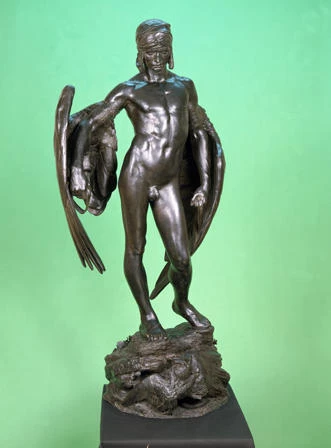
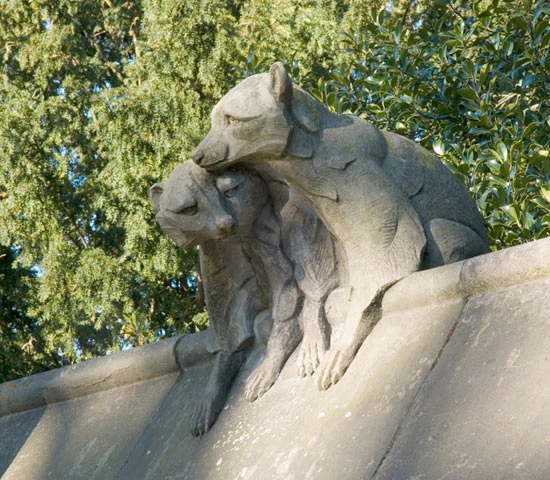
William Goscombe John (1860-1952) Oliver Fairclough, 10 December 2011 Morpheus Sir William Goscombe John (1860 - 1952) Icarus Sir Alfred Gilbert (1854 - 1934) In 1881, William Goscombe John assisted in creating the sculptures for Cardiff Castle's Animal Wall Edwardian Wales, newly wealthy from coal, iron and steel, provided rich opportunities for a sculptor. William Goscombe John's public monuments can be found all over Wales, but nowhere more than in his native Cardiff. He also modelled the prize medals still awarded by the National Eisteddfod today. Making his way He was born William John in Cardiff in March 1860. He assumed the name Goscombe from a Gloucestershire village near his mother's old home. His father Thomas John was a woodcarver in the workshops set up by Lord Bute for the restoration of Cardiff Castle. William joined his father at the age of 14, while also studying drawing at Cardiff School of Art. In 1881 he went to London as a pupil assistant to Thomas Nicholls, the sculptor responsible for the Castle's Animal Wall. He continued his studies at the Kennington School of Art and, from 1884, at the Royal Academy Schools, where he was taught naturalistic modelling in clay in the French manner introduced in London in the 1870s by Jules Dalou. He was an outstanding student, and travelled widely. He spent a year in Paris, including a period in Rodin's studio. In 1890 he returned to London and settled in St John's Wood. His sculpture Morpheus, shown in the Paris Salon of 1892, clearly shows Rodin's influence. The 'New Sculpture' British sculptors of John's generation were trying to make sculpture more dynamic through the vigorously naturalistic representation of the human body. They represent the final flowering of a sculptural tradition that had its roots in the Renaissance, and was revitalised by Rodin and his contemporaries in mid nineteenth-century France. John followed the success of Morpheus with a statue of John the Baptist for Lord Bute, and by a group of life-size nudes including Boy at Play and The Elf. These show complete mastery of anatomical form. By the end of the 1890s Goscombe John had firmly established himself, exhibiting his work both nationally and internationally. He was beginning to win big public commissions and in the years leading up to the First World War he was extremely busy. Wales and the Empire Although based in London, John was careful to position himself as Wales's national sculptor. In 1916 he contributed the central marble figure St David Blessing the People to a group of ten figures made for Cardiff City Hall. He also received commissions for portraits from the leading Welshmen of the day. John may have built his career on local patronage, but he attracted work from across the Empire, such as his tomb in Westminster Abbey to Conservative Prime Minister Lord Salisbury, and his equestrian statue of King Edward VII in Capetown. His first major public sculpture was the King's Regiment memorial (1905) in the centre of Liverpool, incorporating soldiers from the regiment's history, including the vast Drummer Boy, which is his best-known work. The Welsh and the Imperial came together in the commission for the regalia for the investiture of the future Edward VIII as Prince of Wales at Caernarfon Castle in 1911. John designed a crown, a ring, a sceptre and a sword that contained a 'Welsh' iconography of dragons, daffodils and Celtic interlace. John had little sympathy with what he termed the 'Easter Island' style of modern sculpture, with its emphasis on direct carving in stone. Critical opinion was already beginning to leave him behind by 1914, but the First World War tragically brought new commissions for memorials, including many in Wales. Goscombe John and the National Museum Goscombe John was one of the founding fathers of Amgueddfa Cymru. He served on the governing Council for over forty years, and played a major role in establishing the future direction of the art collection. As well as a complete representation of his own work, his gifts to the Museum included work by many of his fellows in the New Sculpture movement, among them the primary cast of Alfred Gilbert's Icarus, and by many other artists he admired.
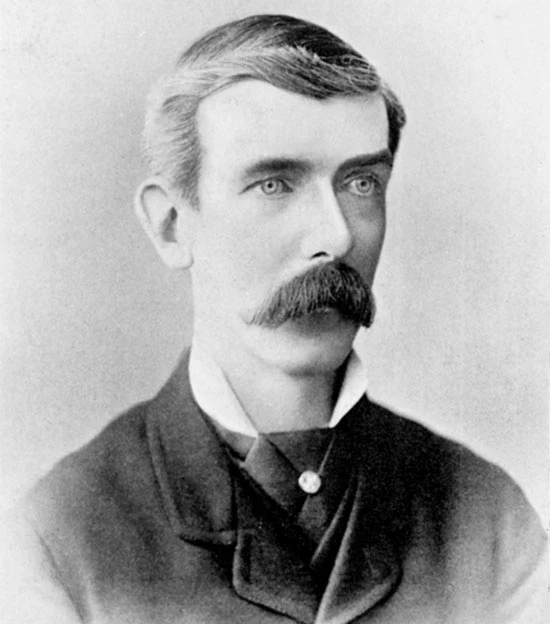
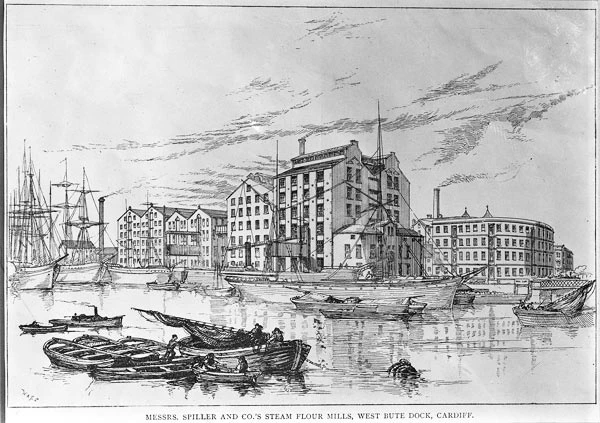
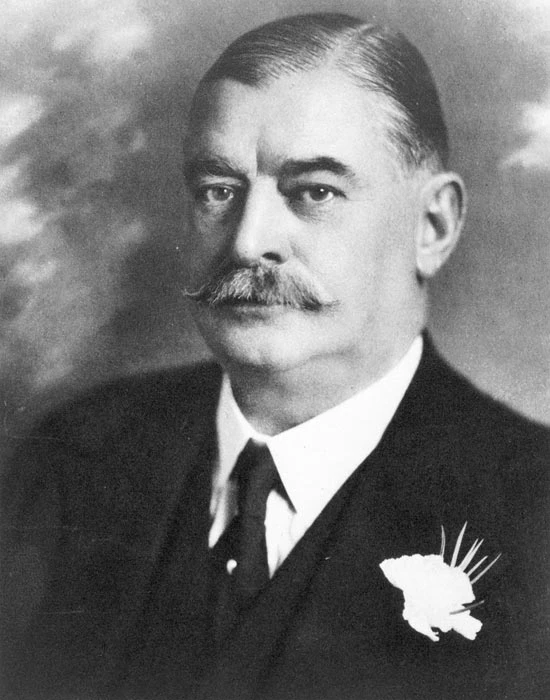
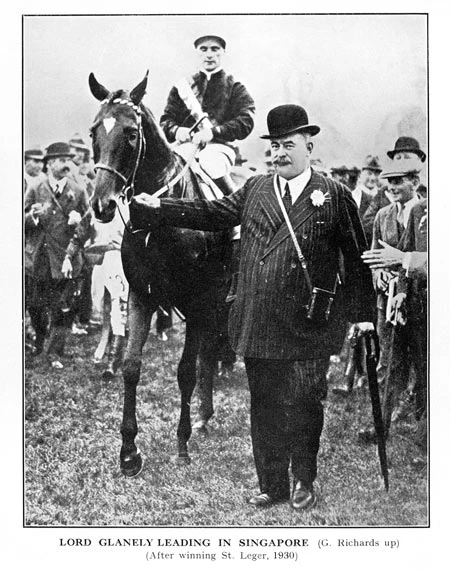
William James Tatem, 1st Baron Glanely (1868-1942) David Jenkins, 30 November 2011 William James Tatem, 1st Baron Glanely of St Fagans. Lord Glanely is probably best remembered today as a noted racehorse owner, whose horses won all five Classic races of the British turf. However, he made his money in shipping, and was generous in his support of numerous worthy causes in south Wales, particularly Amgueddfa Cymru and Cardiff University. Tatem was not Welsh at all; he was born at Appledore in north Devon in 1868, and the early death of his father Thomas led his mother to move her family to Cardiff when Tatem was eighteen. He joined the shipping company Anning Brothers as a clerk and became thoroughly familiar with all aspects of the shipping business. Armed with this knowledge he ventured into shipping on his own account in 1897, and the master of one of his first ships was a fellow-native of Appledore, William Reardon Smith. A substantial fleet By 1914 Tatem had built up a substantial fleet of sixteen ships. He was knighted in 1916 and in 1918 was elevated to the peerage, taking the title Baron Glanely of St Fagans. A perceptive and far-sighted shipowner, he sold off his entire fleet for a vast sum at the height of the post-First World War boom in 1919, only to re-enter shipowning with the purchase of six new ships, obtained at bargain prices, a few years later. This enabled him to survive the depression years far better than many of his contemporaries. Exning, Lord Glanely's palatial Newmarket house. Lord Glanely leads in Singapore, victorious in the 1930 St Leger; the jockey was Gordon Richards 'Sporting Bill' His horse-racing interests expanded considerably after the First World War. In 1919-20 he bought the fine house Exning in Newmarket, together with the nearby Lagrange stables. His first major win came at Royal Ascot in 1919 when his Grand Parade won the Derby. This win caused some controversy, as he had another horse running in the same race, the favourite, Dominion. At the finishing post Dominion was far down the field, while Grand Parade came home first at 33:1 — and all of Glanely's money was on the latter horse! He was a familiar figure at all the major race meetings and was popularly known as "sporting Bill". Philanthropy and charitable causes He was generous in his financial support of the National Museum, and this is recalled by the Glanely gallery in National Museum Cardiff. He was twice president of the University College of South Wales and Monmouthshire, in 1920-25 and 1934-42, where he had funded the construction of new scientific laboratories. During the Spanish Civil War he employed two of his own ships to transport a large number of Basque refugees to south Wales, and he also endowed a charity to support them thereafter. Despite his success in so many endeavours, personal happiness eluded him. His only son Shandon died aged just six in 1905, and Lady Glanely died following injuries sustained in a car accident in 1930. He was killed in an air-raid on Weston-Super-Mare on 24 June 1942.
Conserving Kew Garden's Wax Orchid Flower Collection Annette Townsend, 2 November 2011 Conservation experts at Amgueddfa Cymru are called upon by the Royal Botanic Kew to conserve a collection of 25 intricate replicas of orchids — made of beeswax, silk, wire, feather and hair Annette Townsend conserving the wax orchid models Spathglotis lobbi Rchb.f. in W.G.Walpers & Oncidium varicosum Lindl. Models in archival packaging In 2005, Amgueddfa Cymru conservators Annette Townsend and Vicky Purewal were asked to survey a collection of wax models belonging to the Royal Botanic Gardens, Kew, London. It consisted of 25 lifelike models of orchids copied from Kew's living collection of plants by the botanical artist Edith Delta Blackman (1868-1947). Made from beeswax, silk, wire, feather and hair, the models varied in size from a small group of flowers only 10 cm x 10 cm, to a large arching spray over 1 m wide. Correspondence in Kew Garden's archive showed that the models were commissioned in 1893 by their former Director William Thiselton-Dyer at a cost of 4 pounds and 4 shillings per model. Damage and neglect The orchid models were on display at Kew for many years and were then put into storage. An atmosphere that was warmer and drier than ideal took its toll. Such conditions caused the wax to soften, peel and crack, and allowed dirt and dust to permeate the surface of the models, and over time more dust accumulated. The conservation project Fortunately, a visitor to the gardens fell in love with the damaged models and kindly sponsored the conservation of the whole collection. Annette and Vicky have unrivalled experience within the UK in conserving such botanical wax models, gained over many years working together on the Amgueddfa Cymru's unique collection of more than 1000 wax models. Therefore they were approached by Kew to undertake the work. Slow and painstaking process The project was carried out in stages over several years. Wax model conservation is a slow and painstaking process and the extreme fragility of the objects makes their transportation difficult. In 2007, the first group of models was packed up and transported along the M4 to Cardiff for the work to begin. Small pieces of the broken wax were analysed using Fourier Transform Infra Red (FTIR) to determine the composition, so that suitable materials could be chosen for the repairs. Each of the models was photographed, documented, cleaned and restored. Finally, they were very carefully packaged in custom made boxes. Before transportation, each package was tested for stability for the journey back to Kew. The final repair work was completed in 2010 and the last of the models returned to Kew. Restored wax Orchids redisplayed The orchids are currently on display in the Herbarium building at Kew, and can be viewed by visitors to the herbarium. Cymbidium lowianum (Rchb. f.) Rchb. f. Model packaged in a custom made box Vanda coerulea Griff. ex Lindl. Close-up of damaged leaves before conservation. Vanda coerulea Griff. ex Lindl - before conservation Vanda coerulea Griff. ex Lindl - After conservation Bulbophyllum grandiflorum Blume. Leaf showing area where dust has been removed Caularthron bicornutum (Hook.) Raf. Section of model before conservation. External links Royal Botanic Gardens Kew