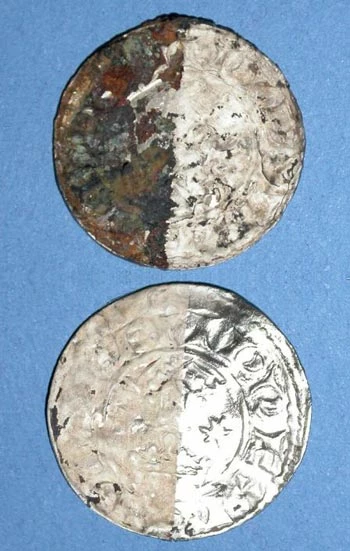
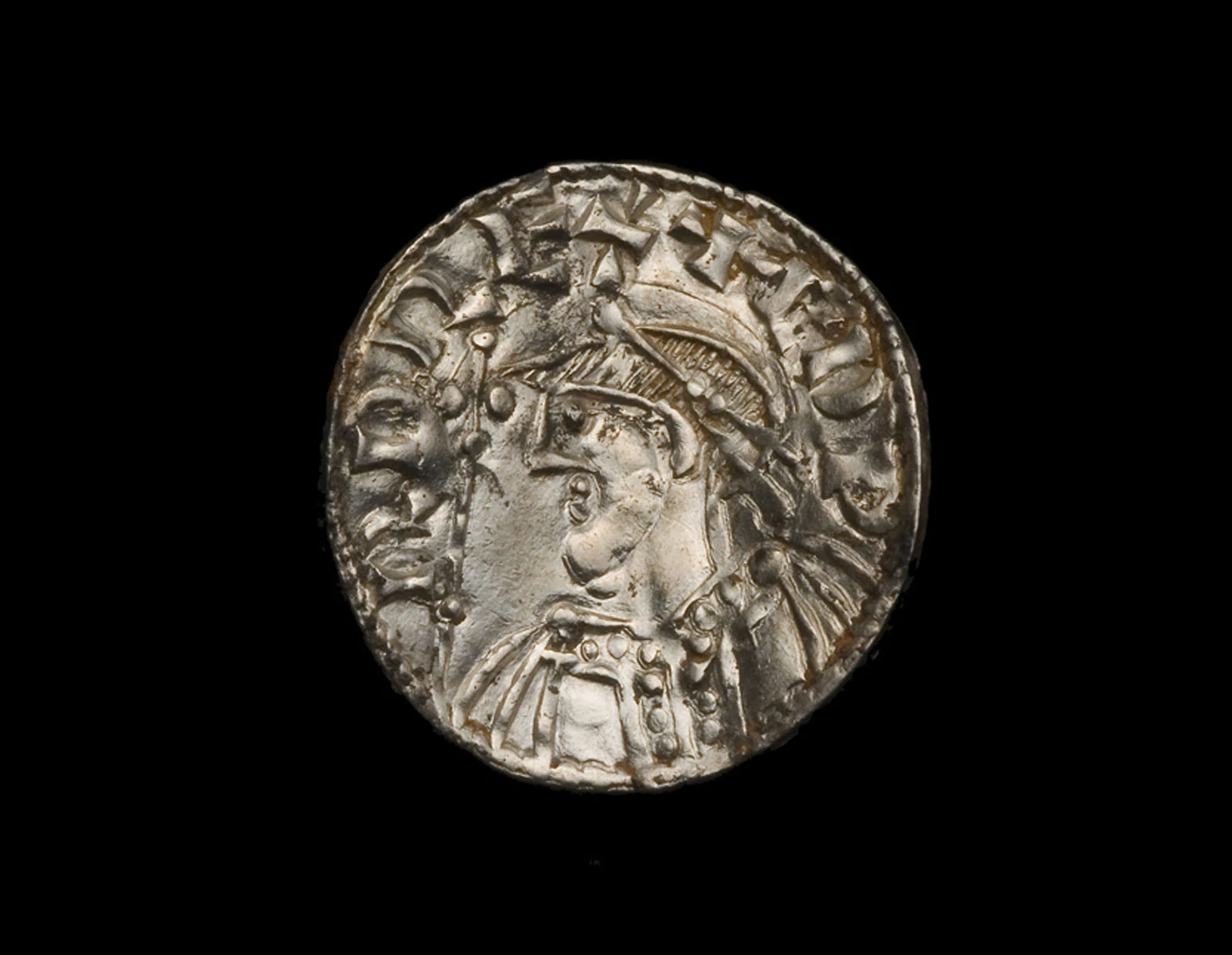
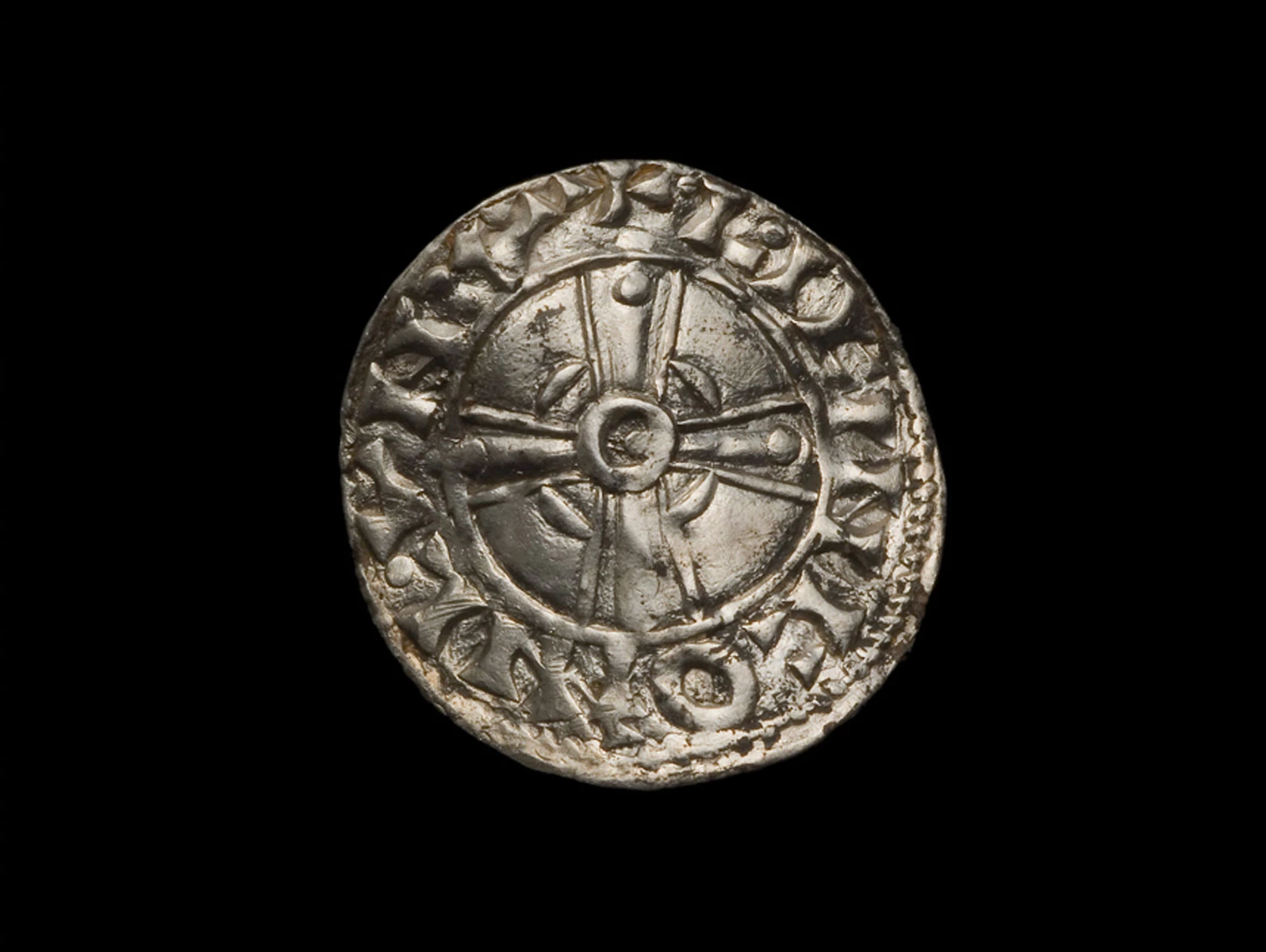
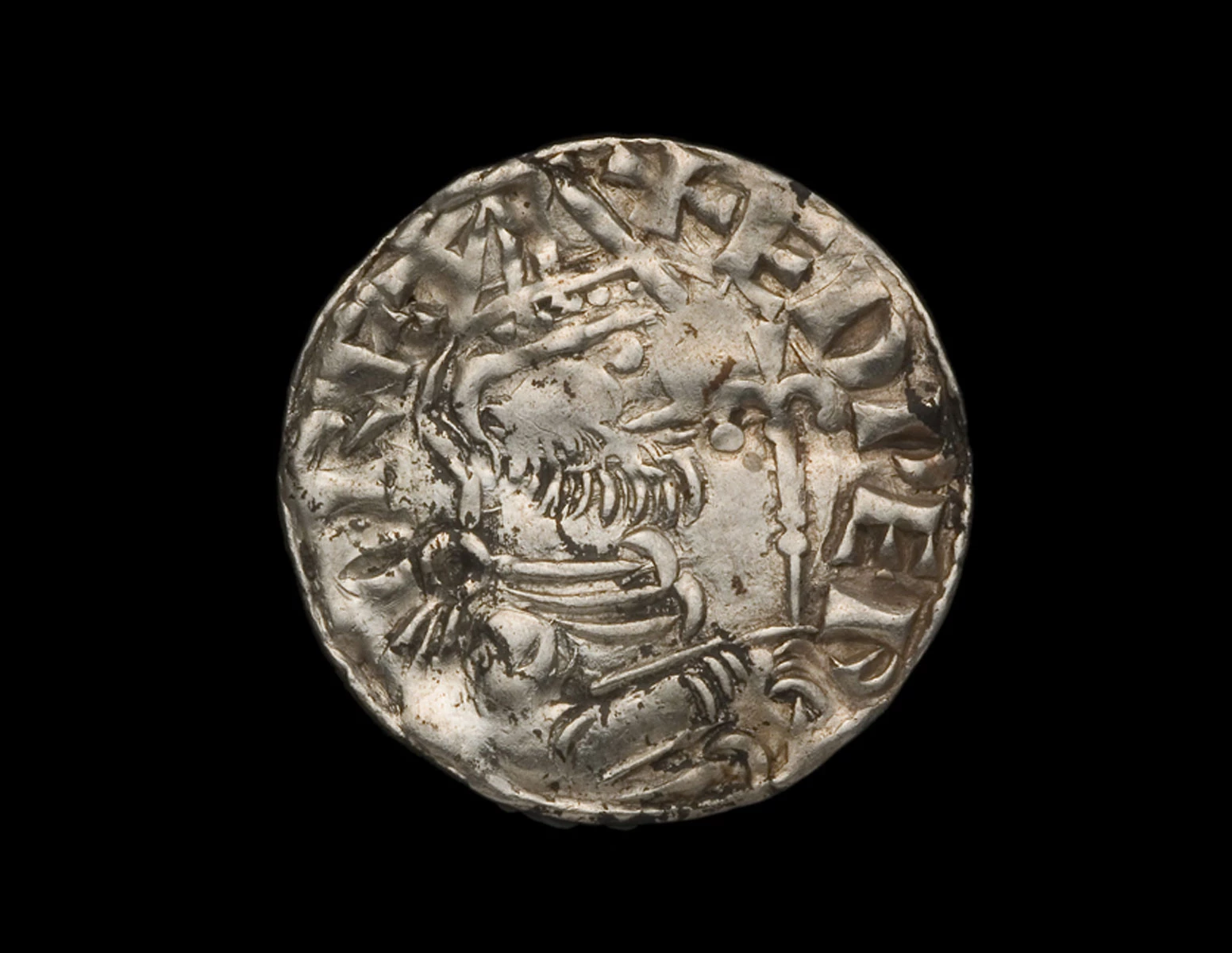
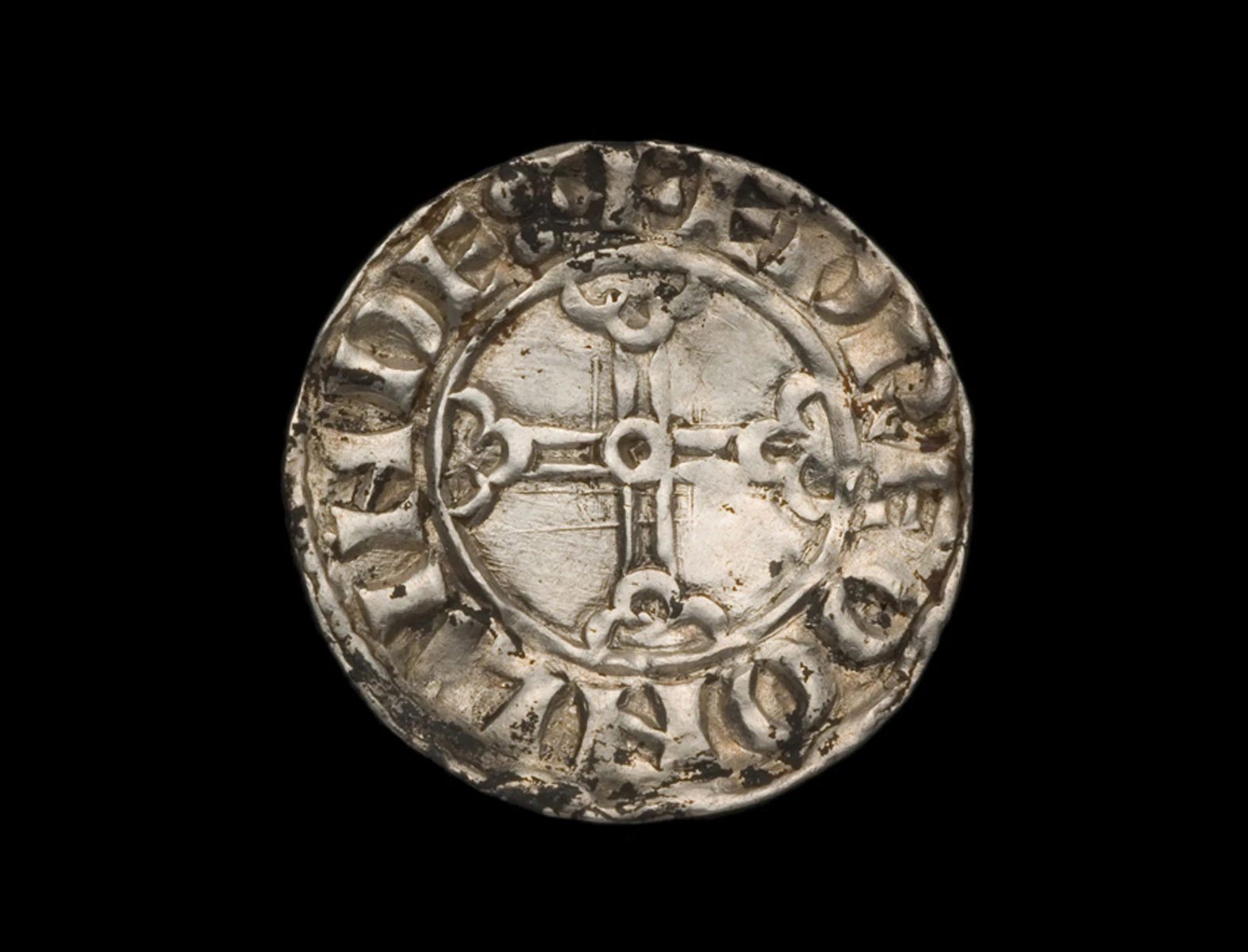
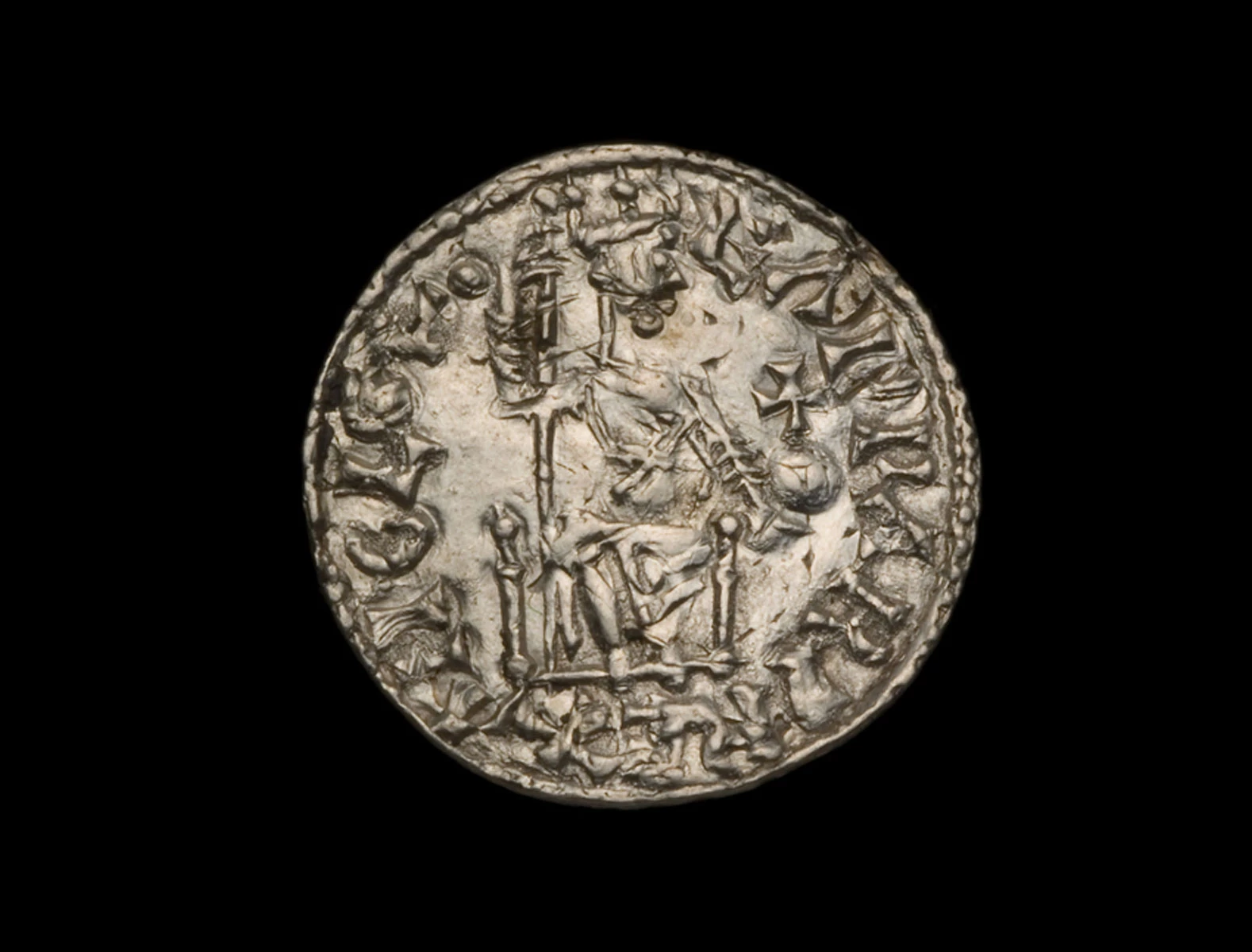
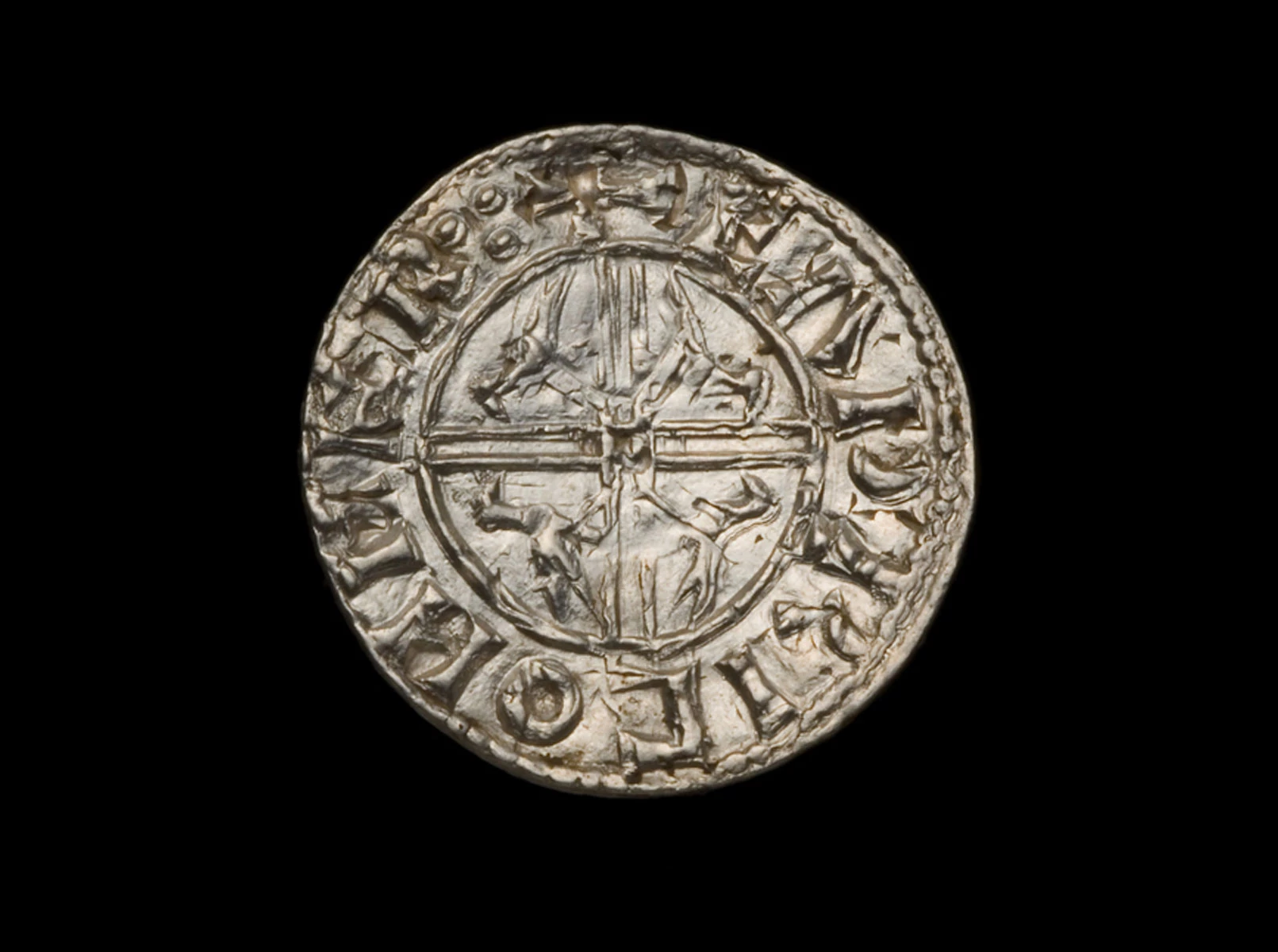
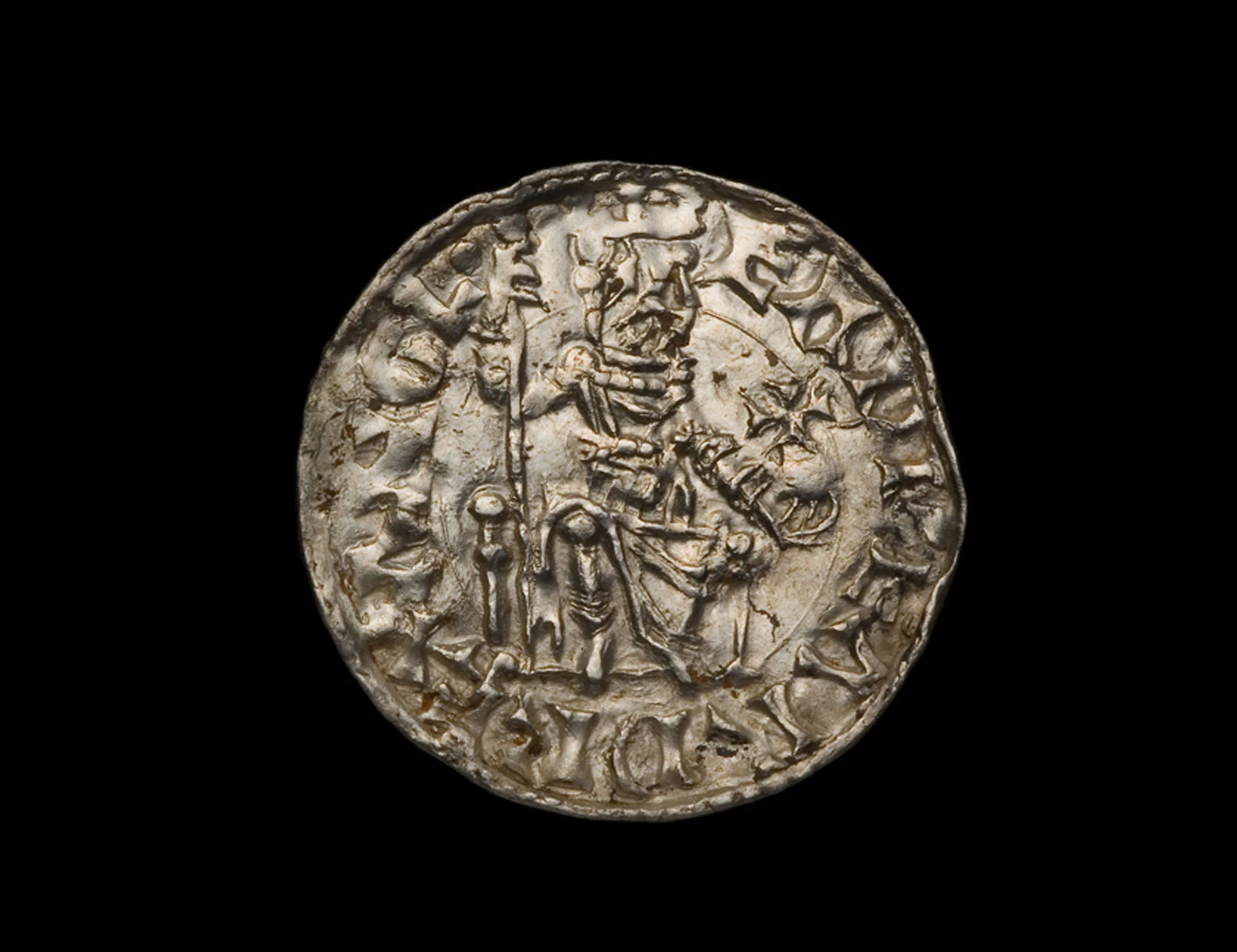
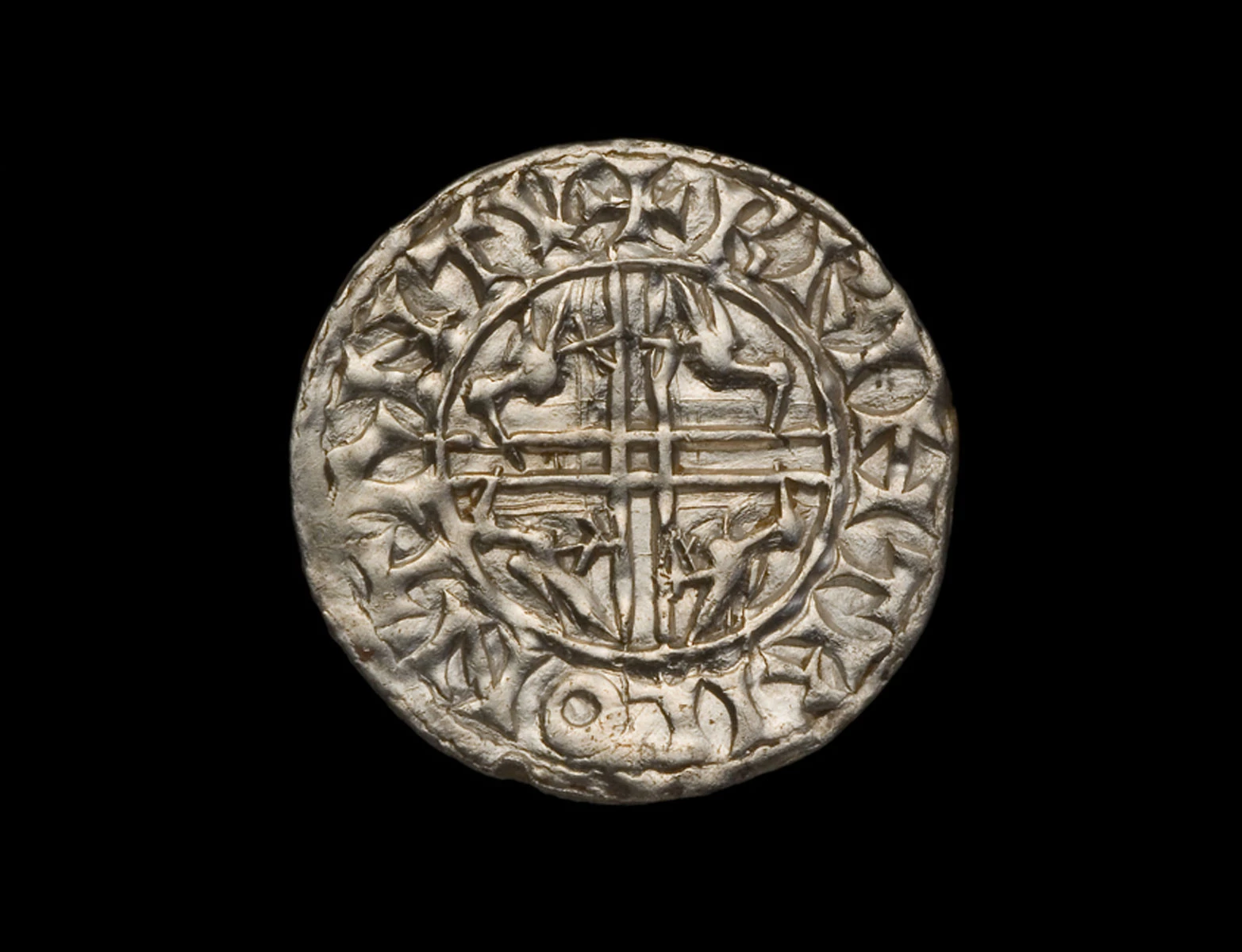
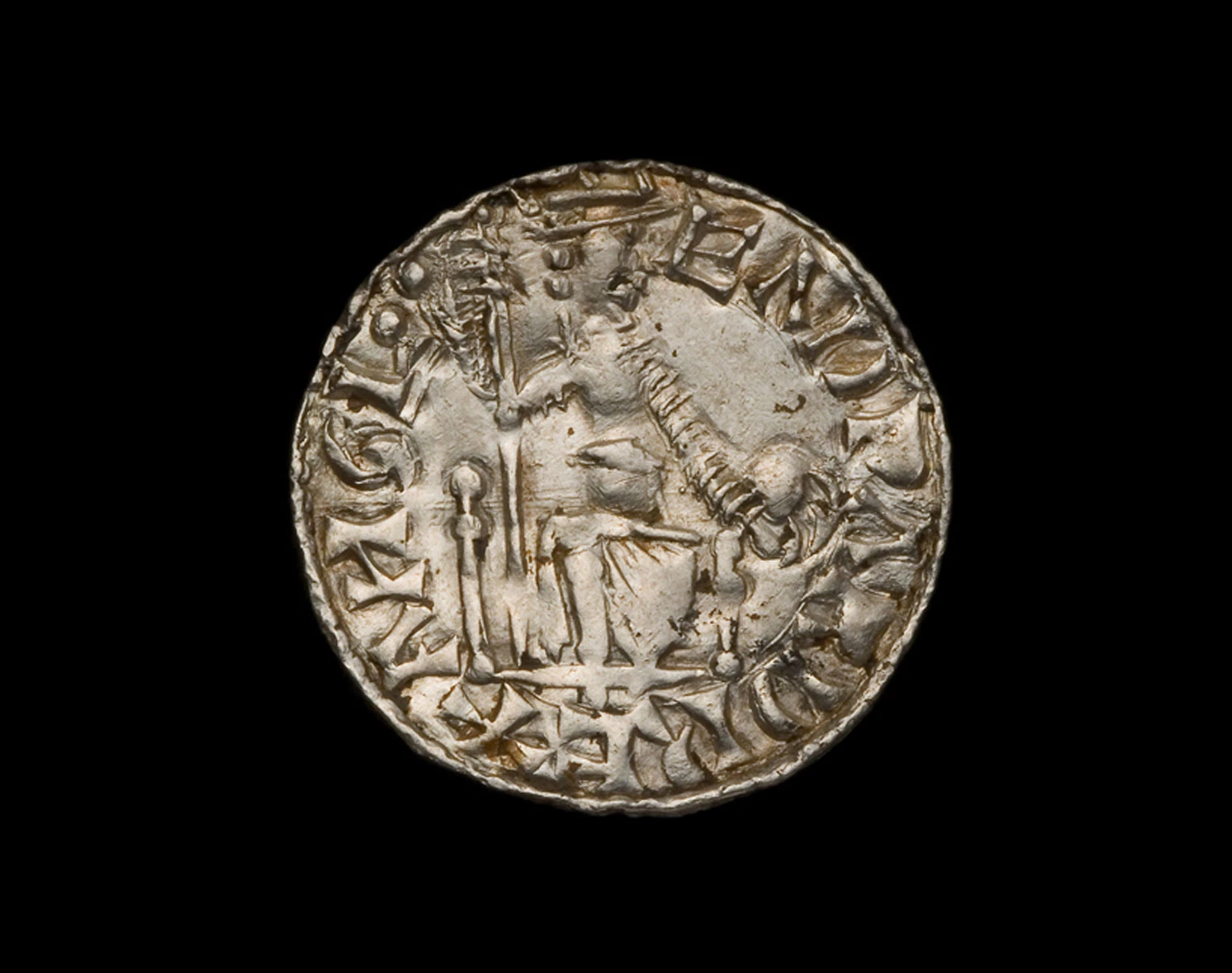
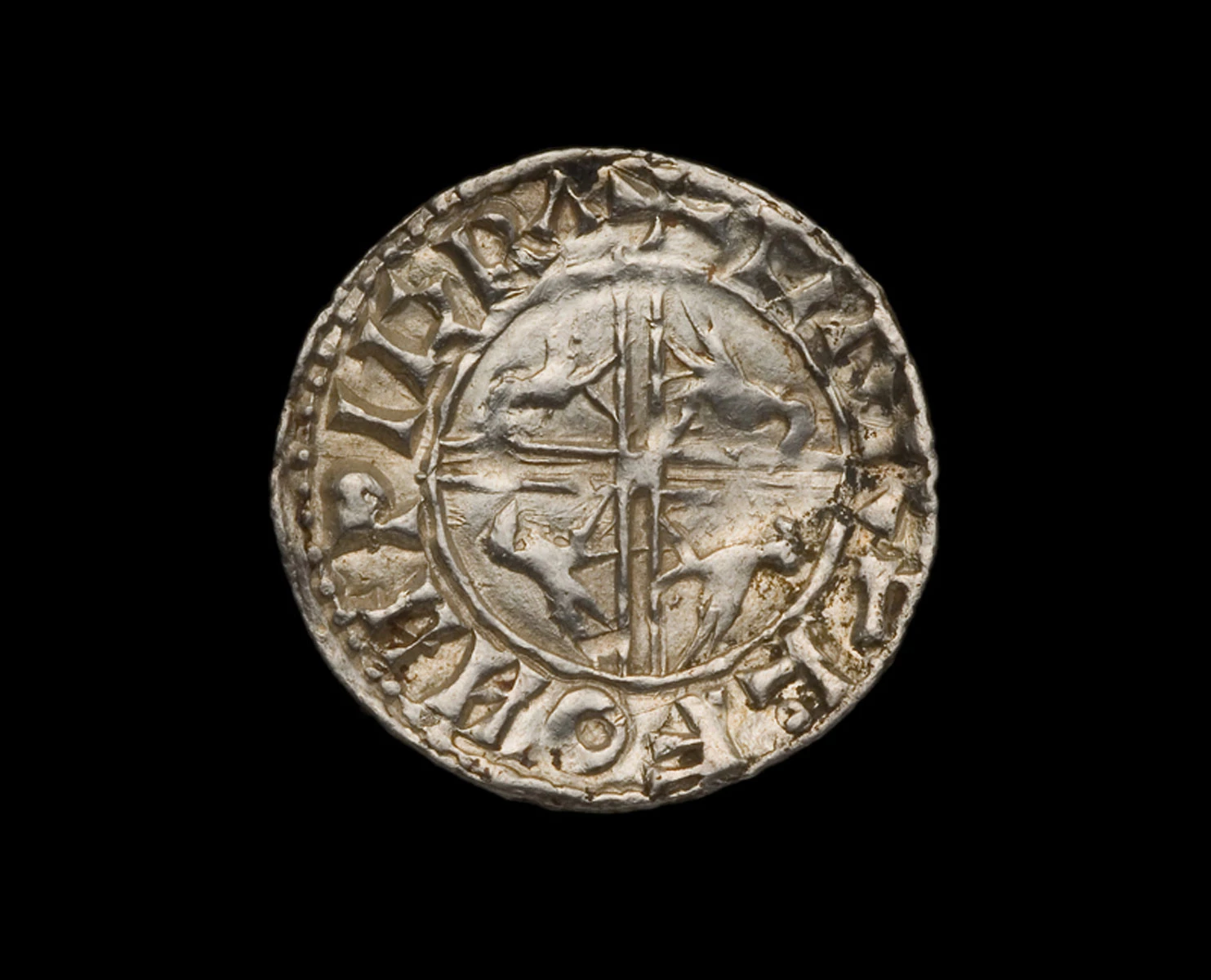
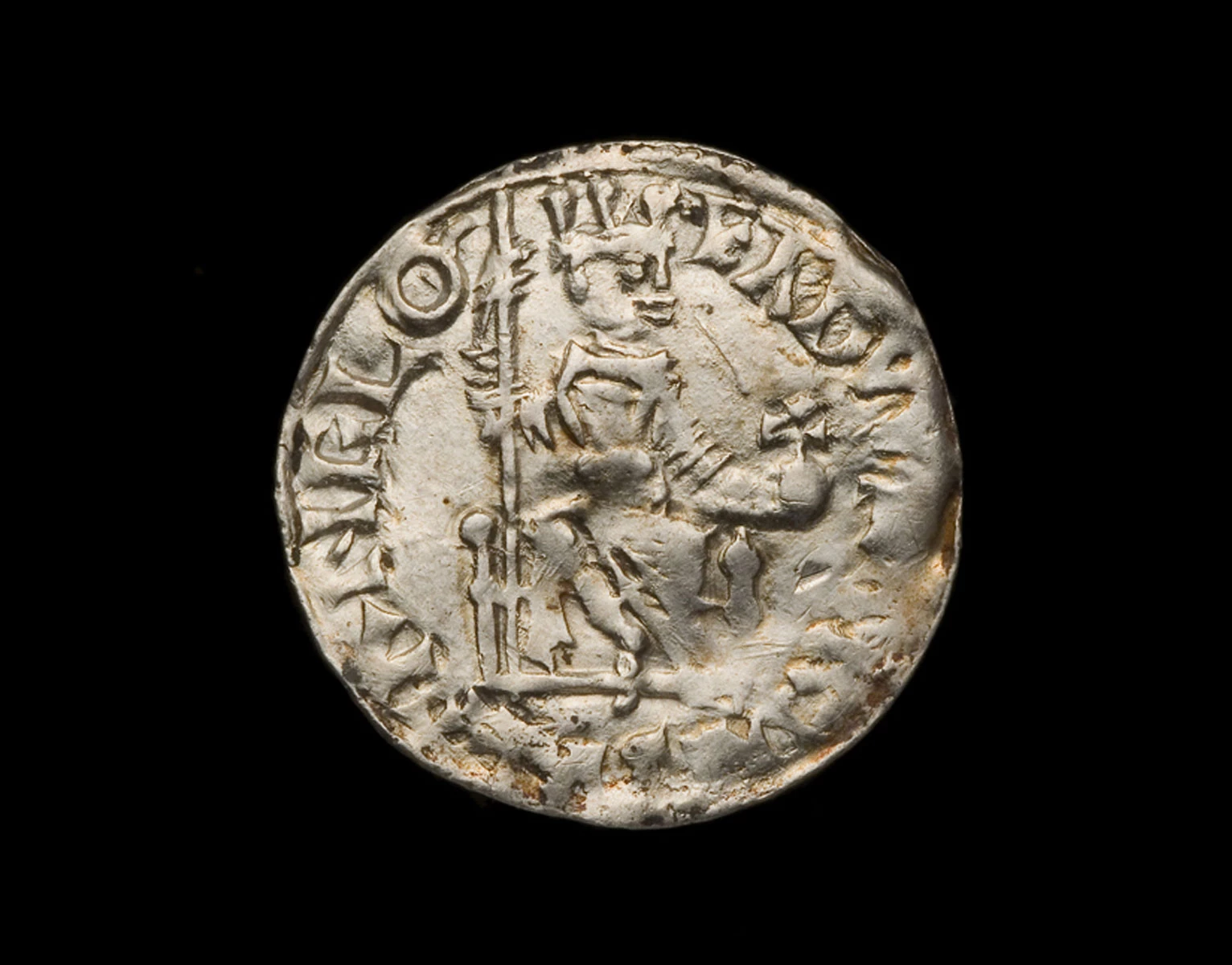
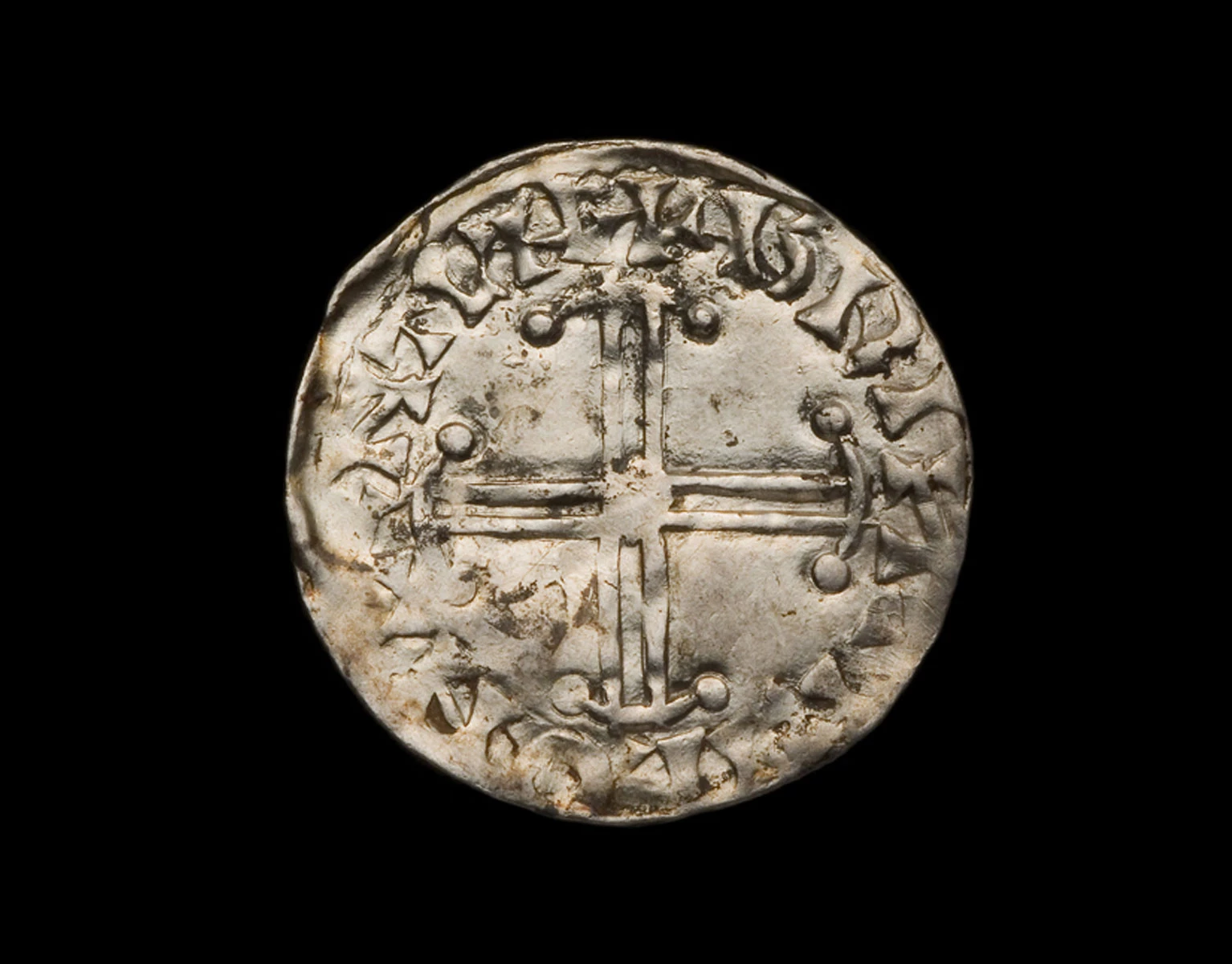
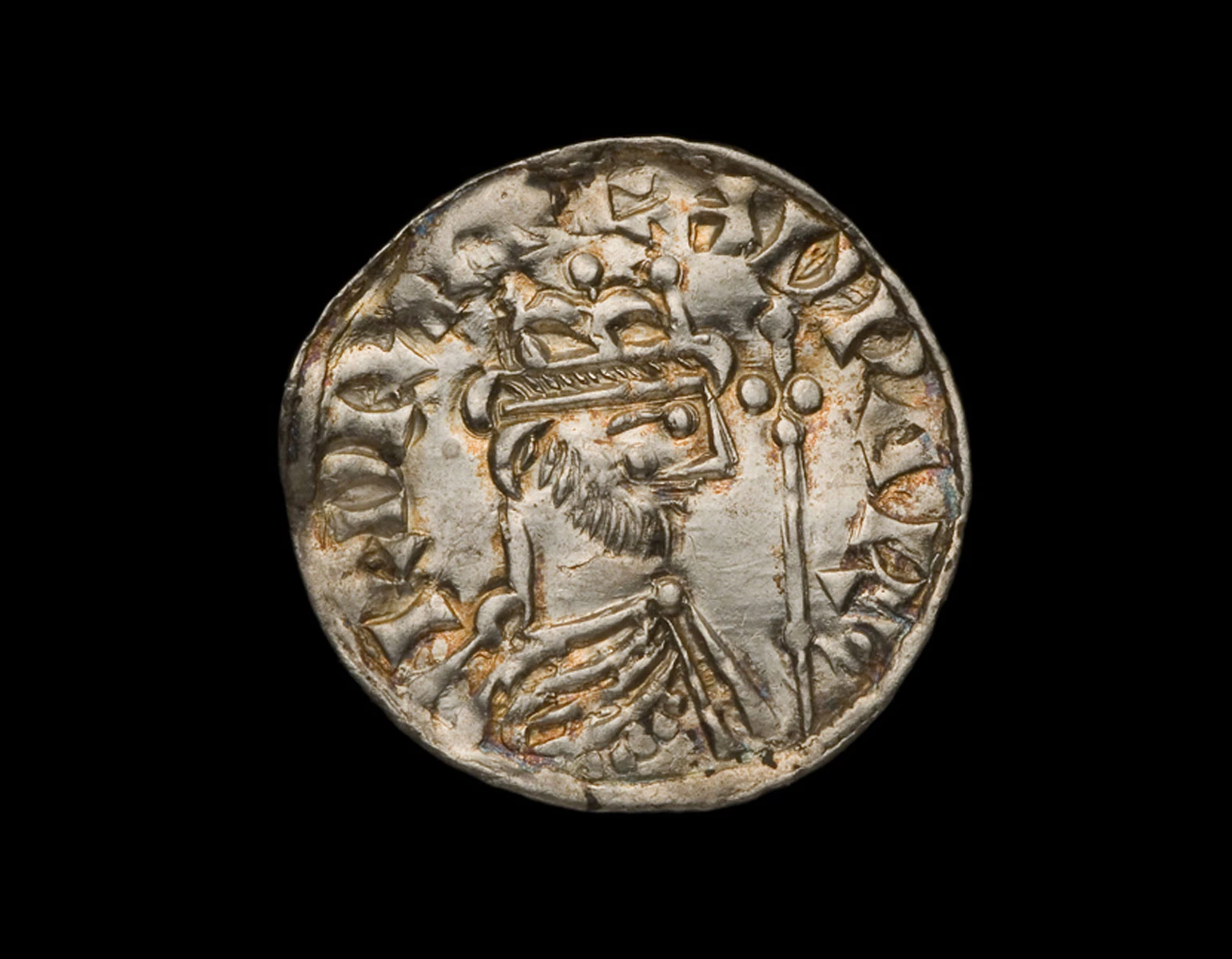
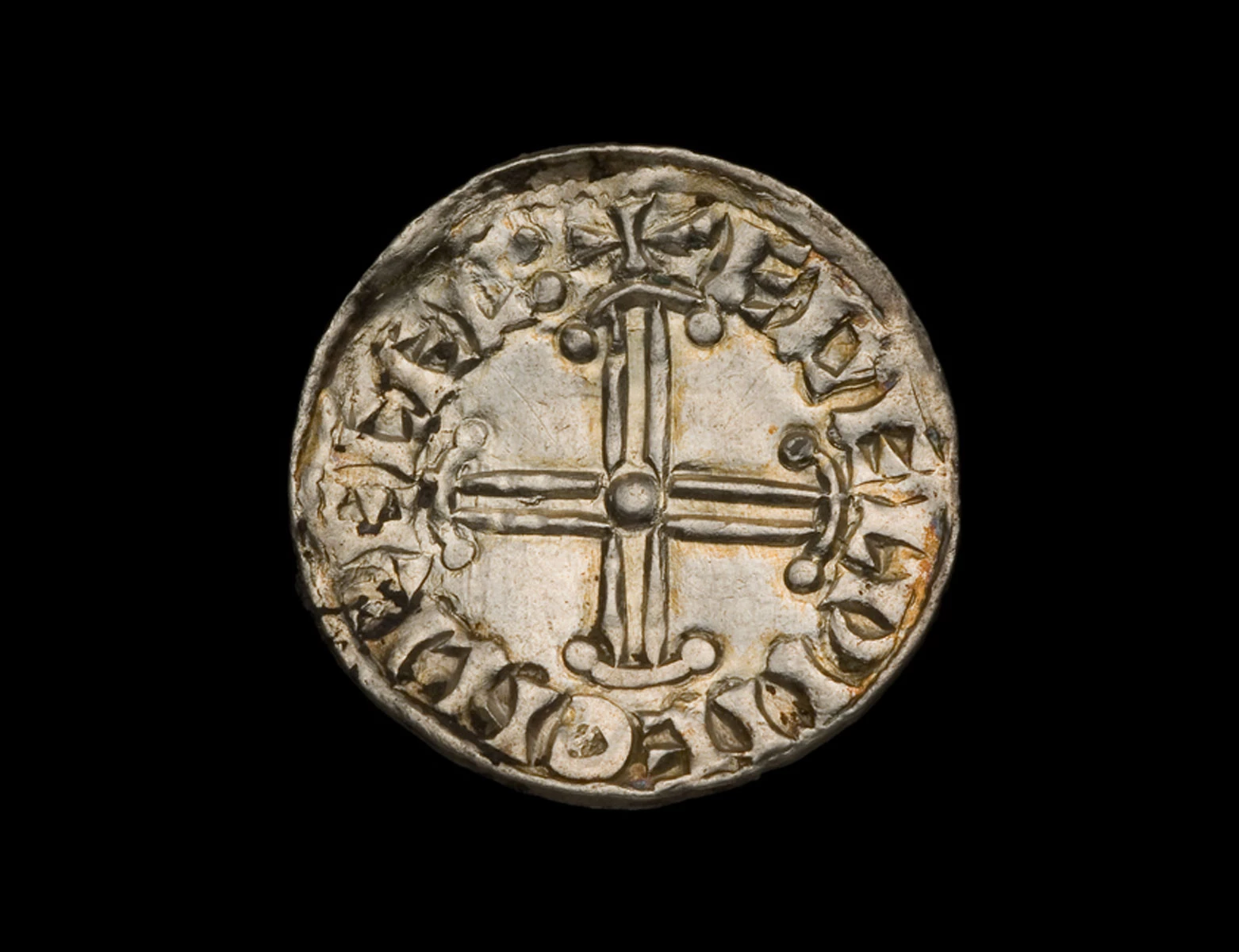
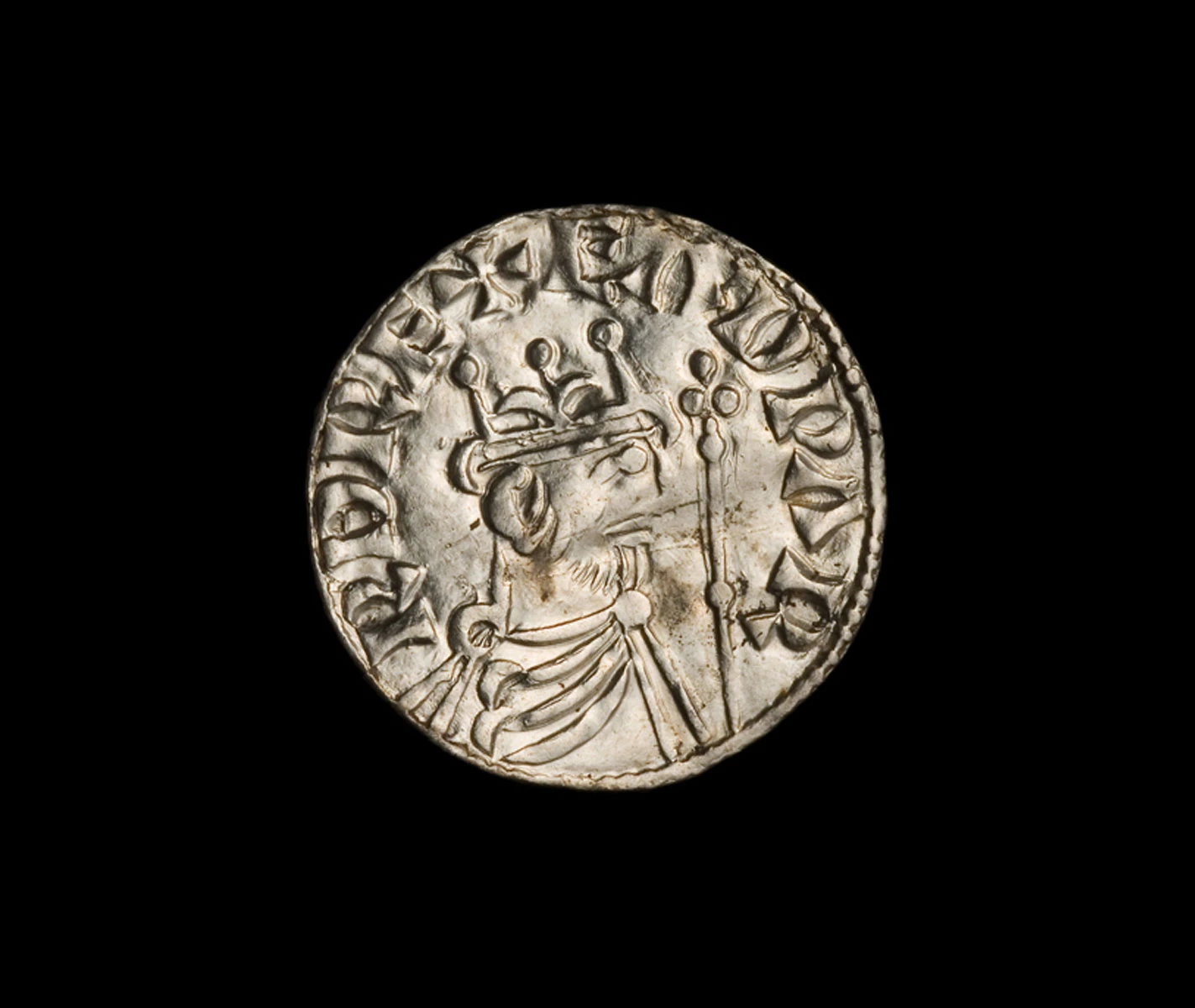
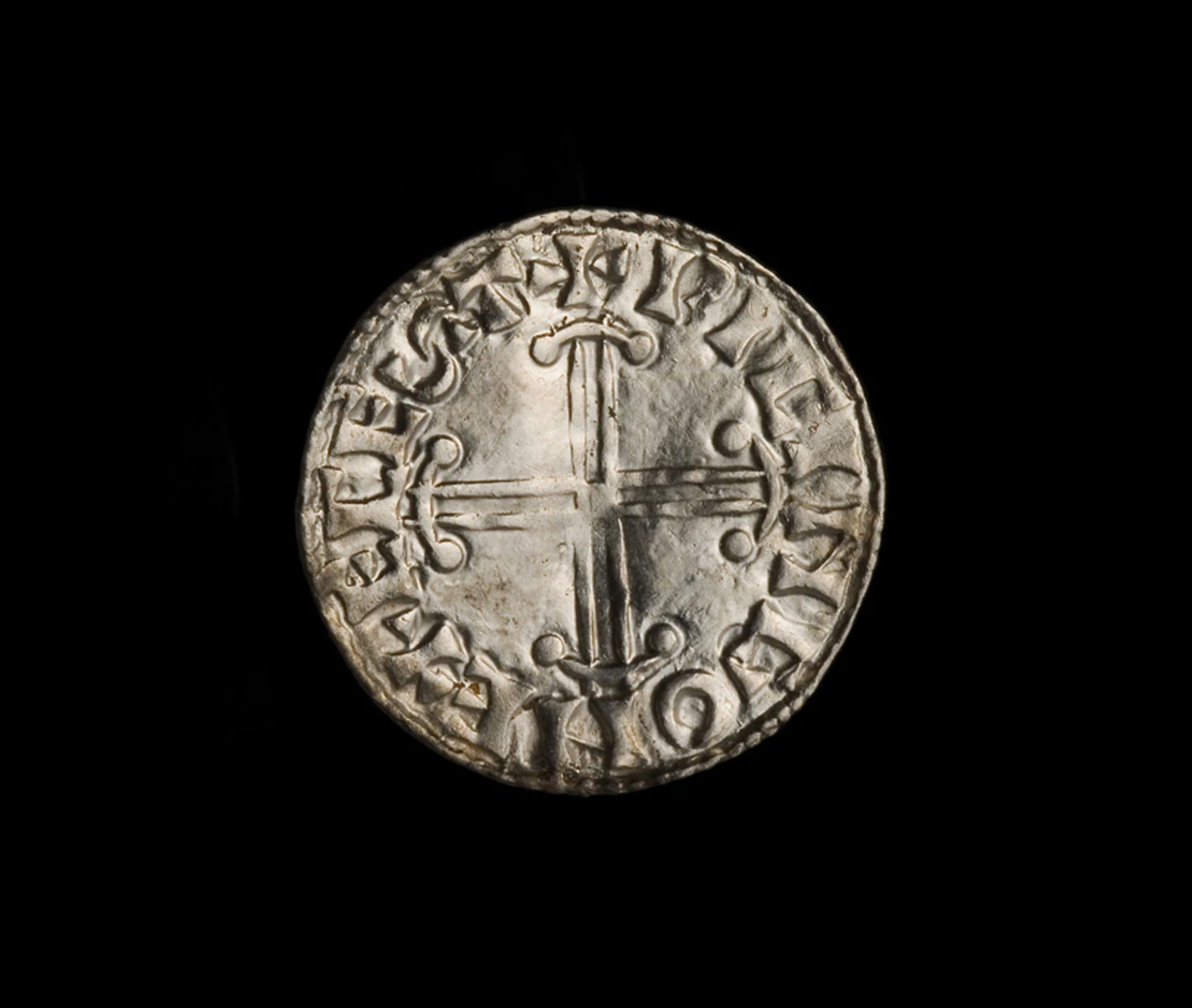
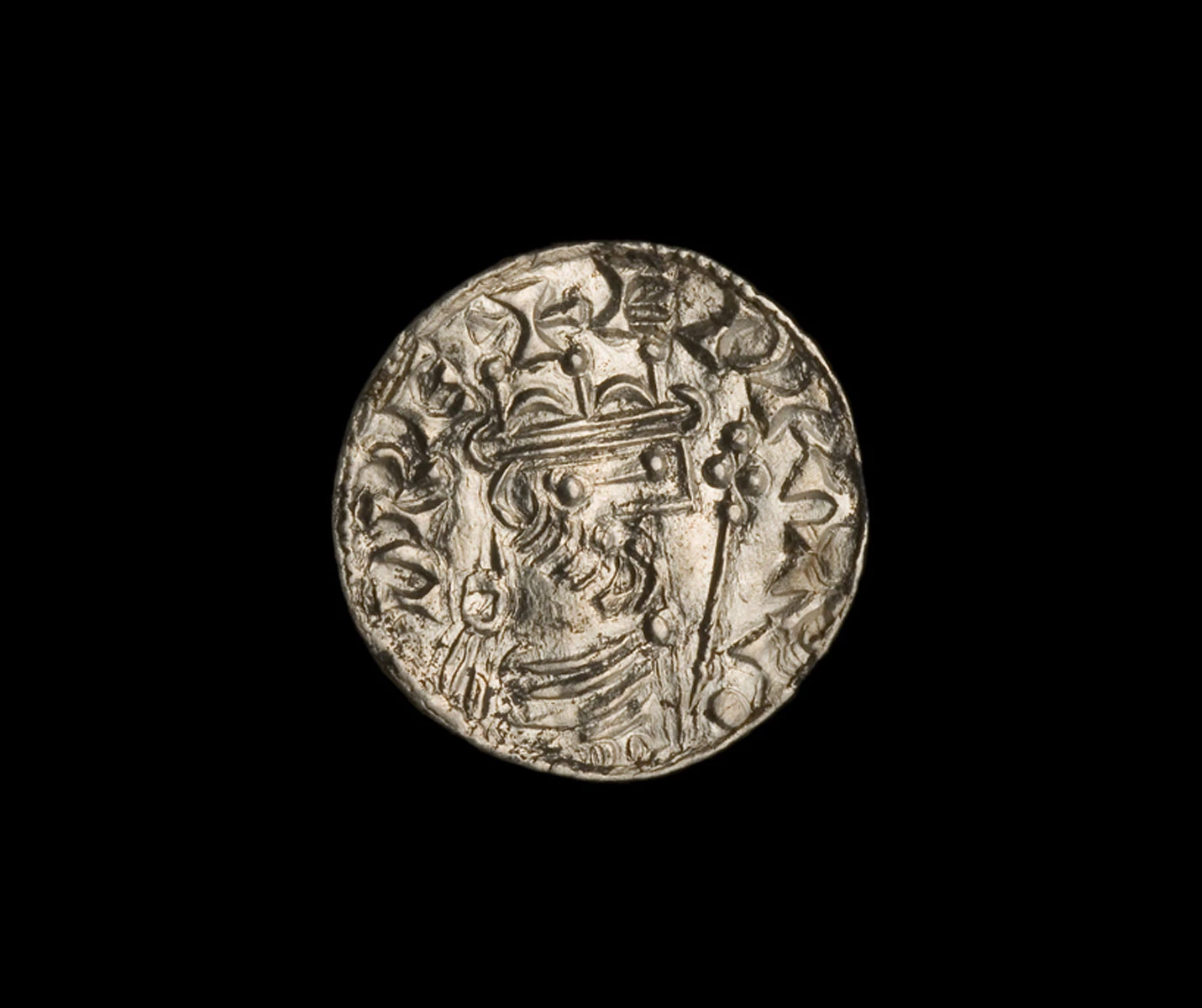
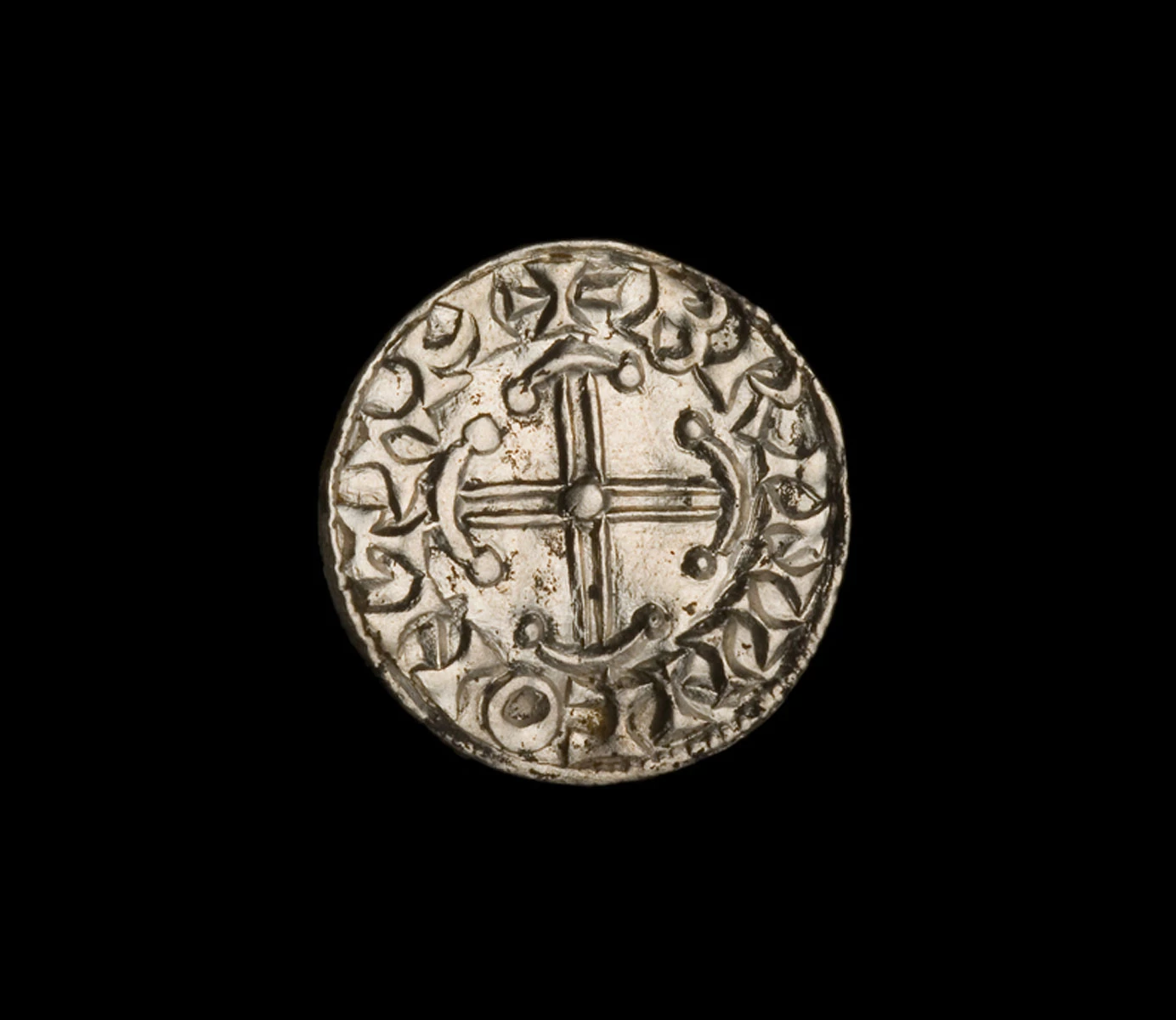
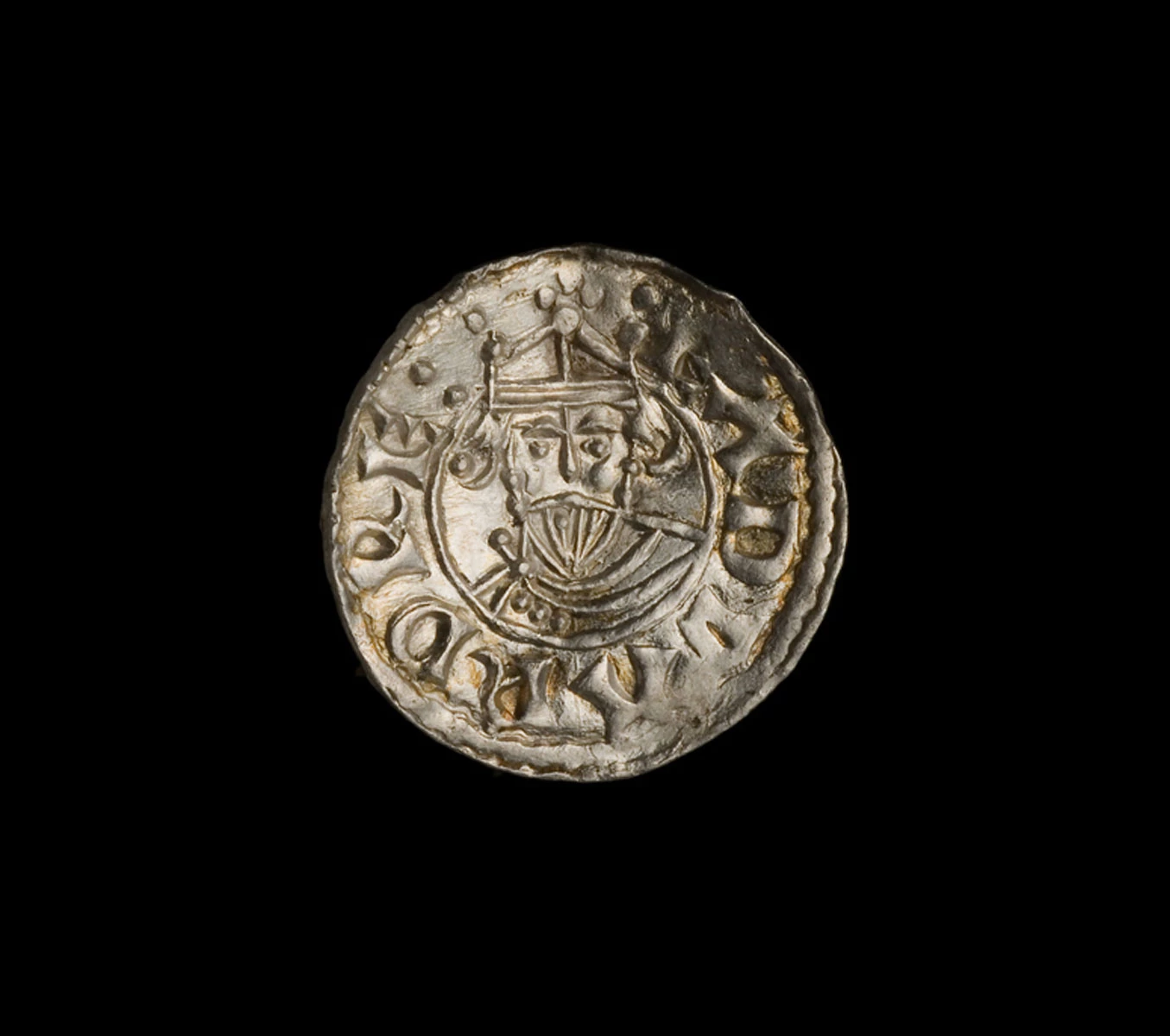
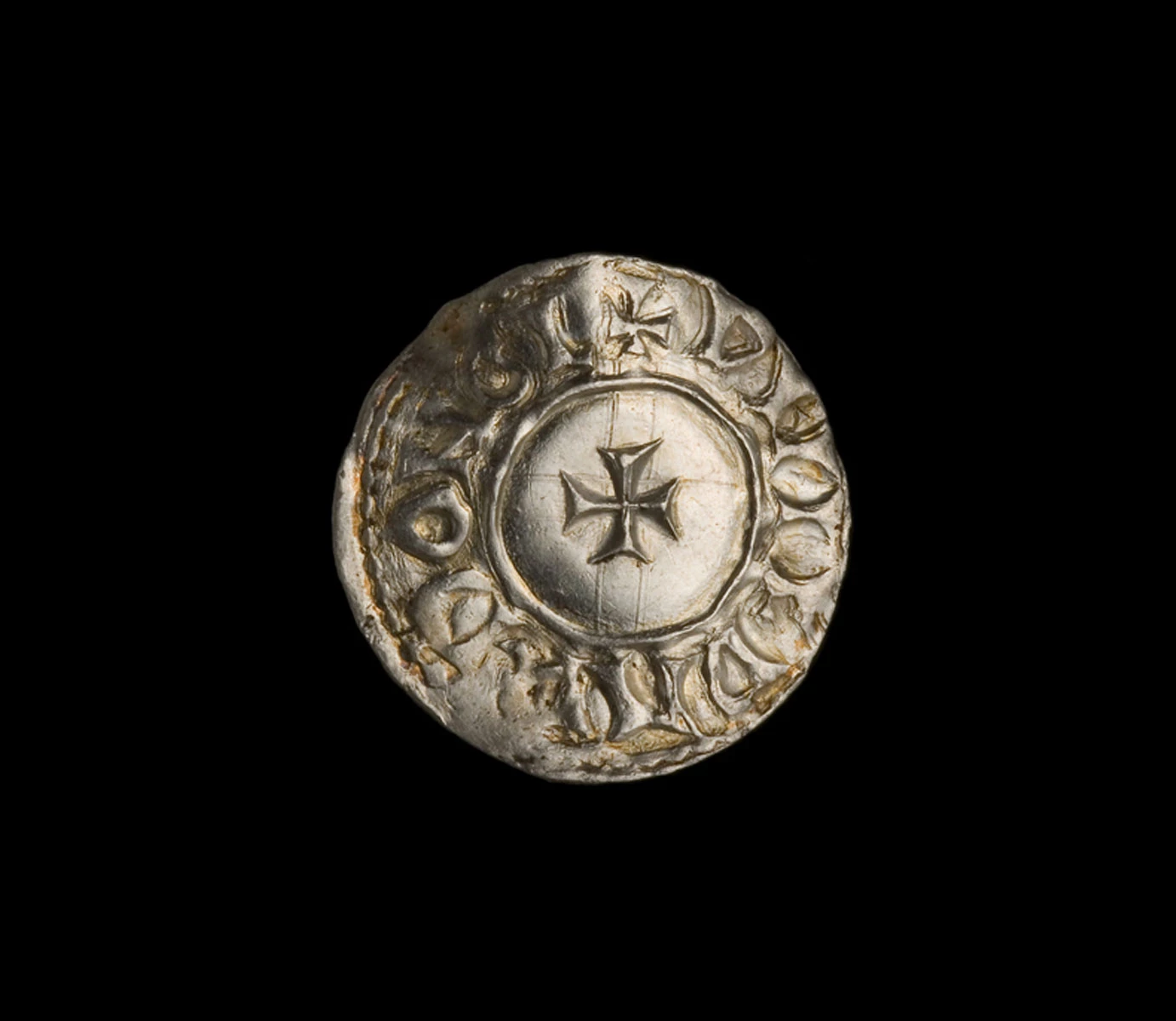
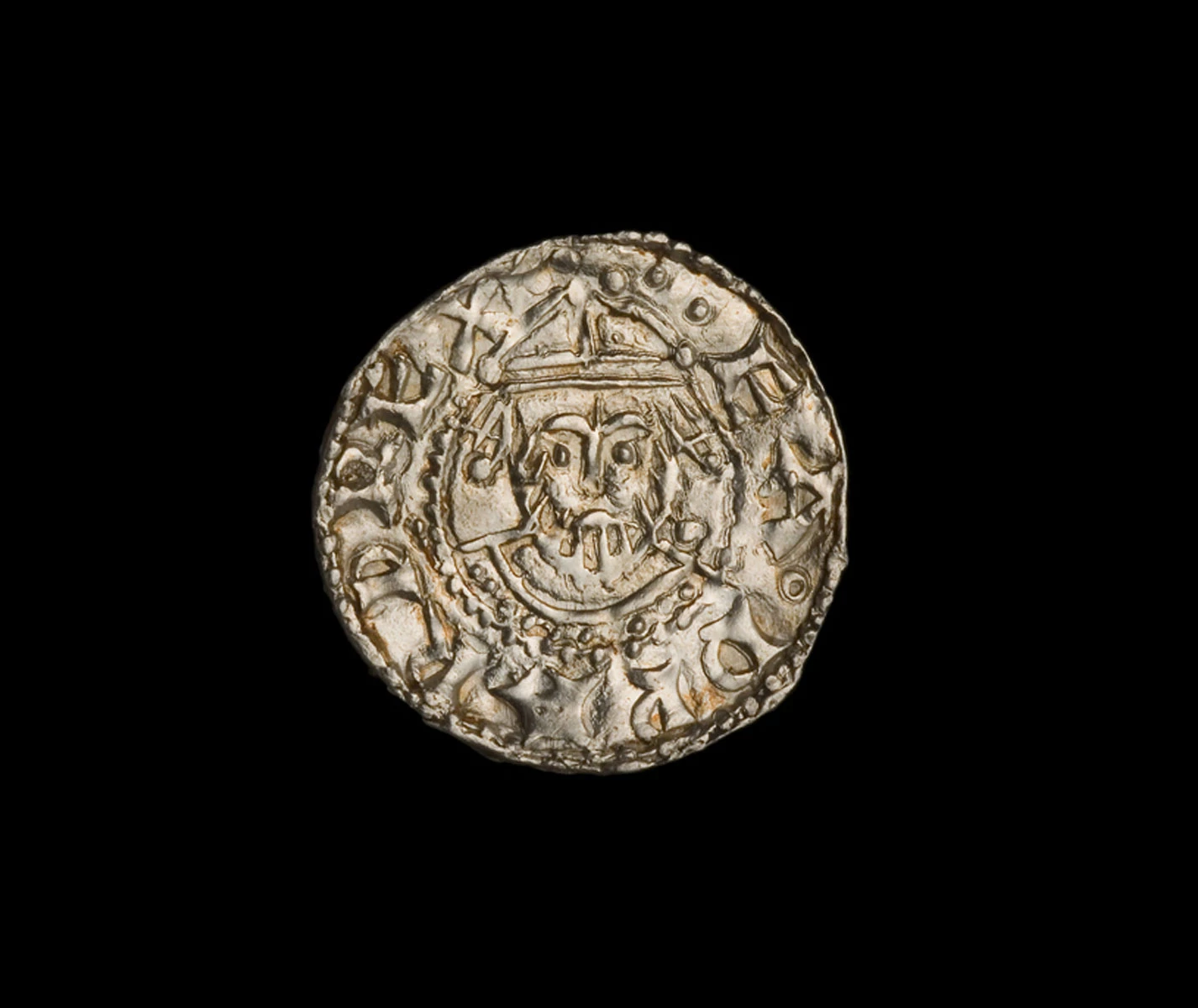
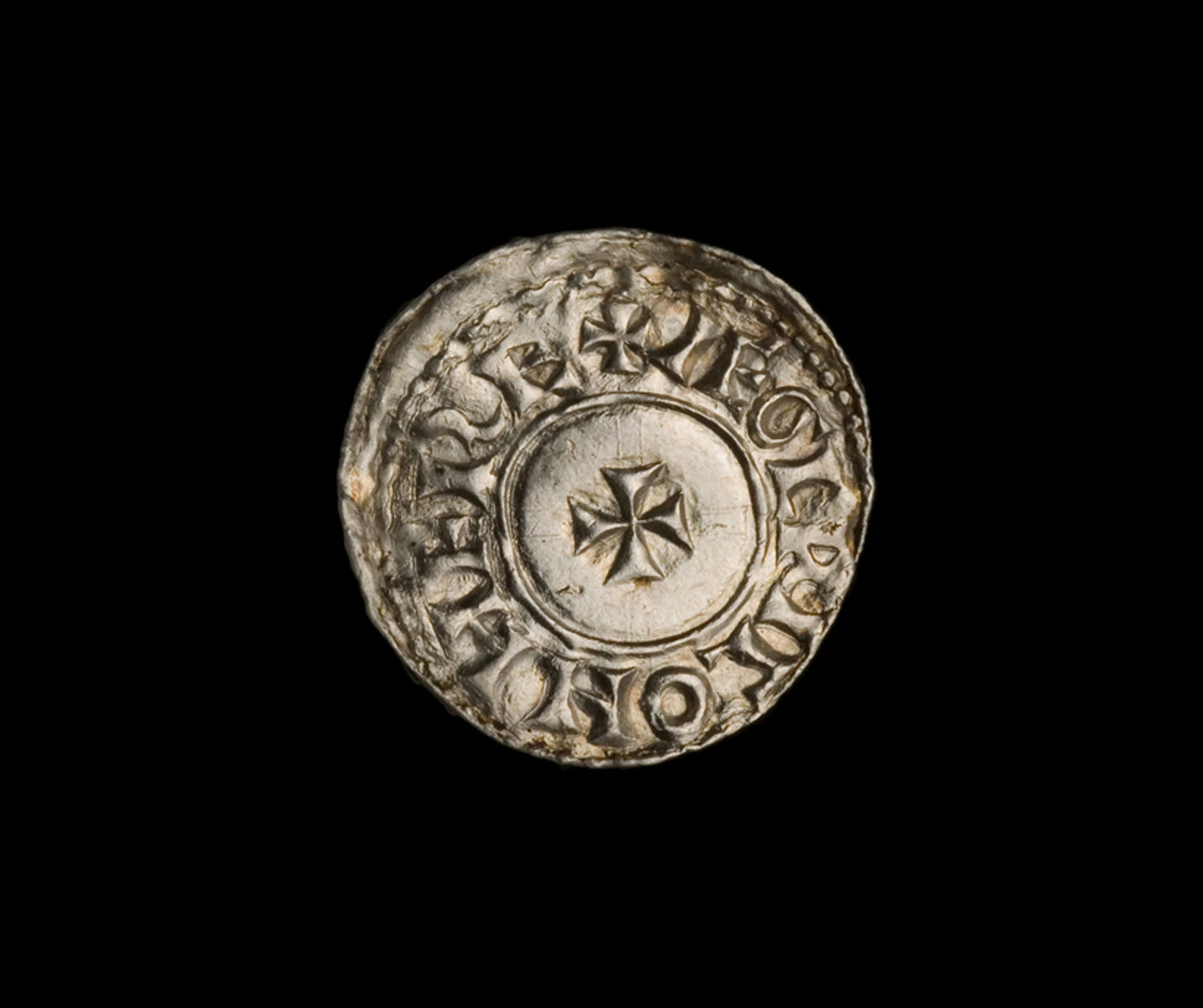
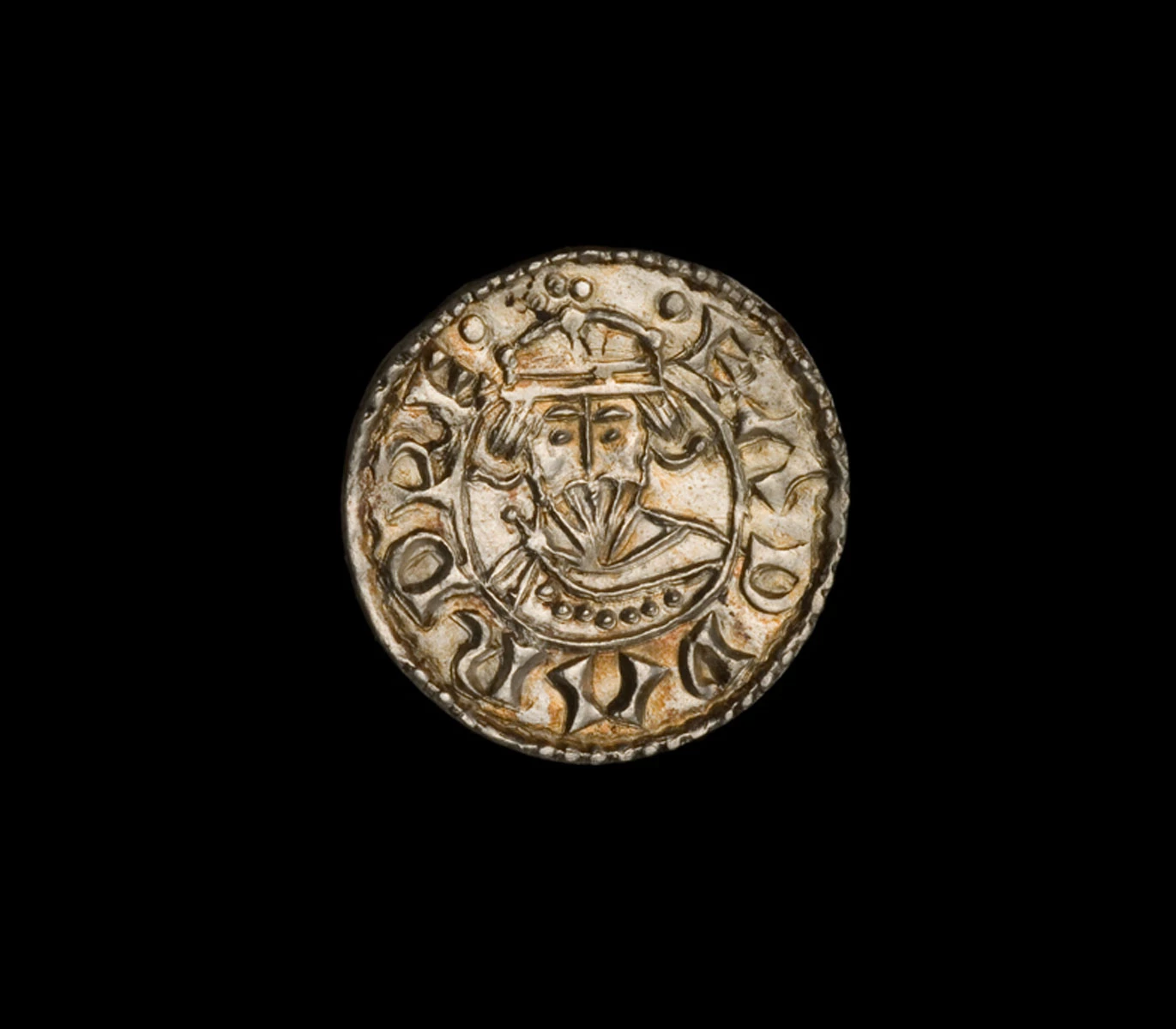
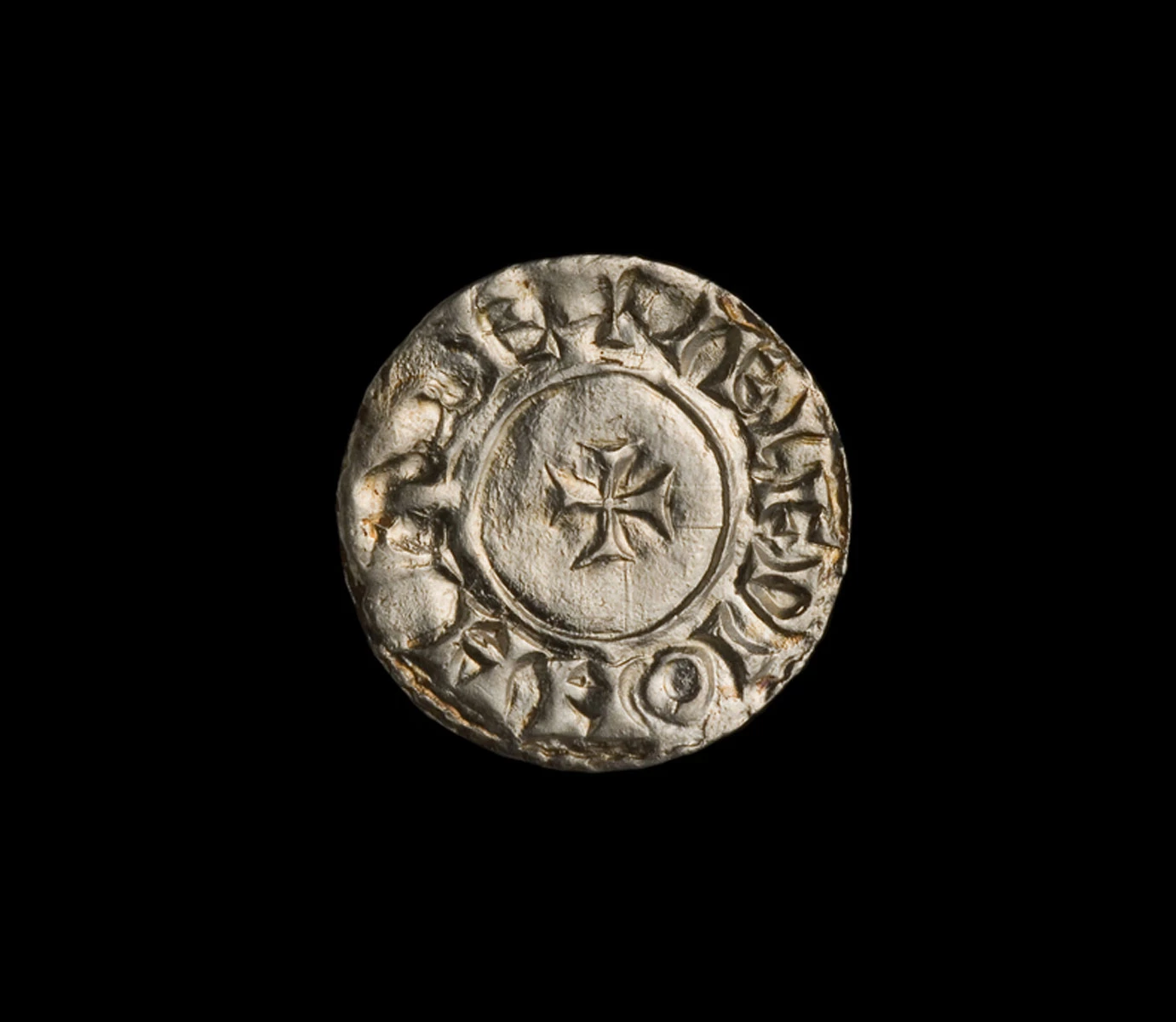
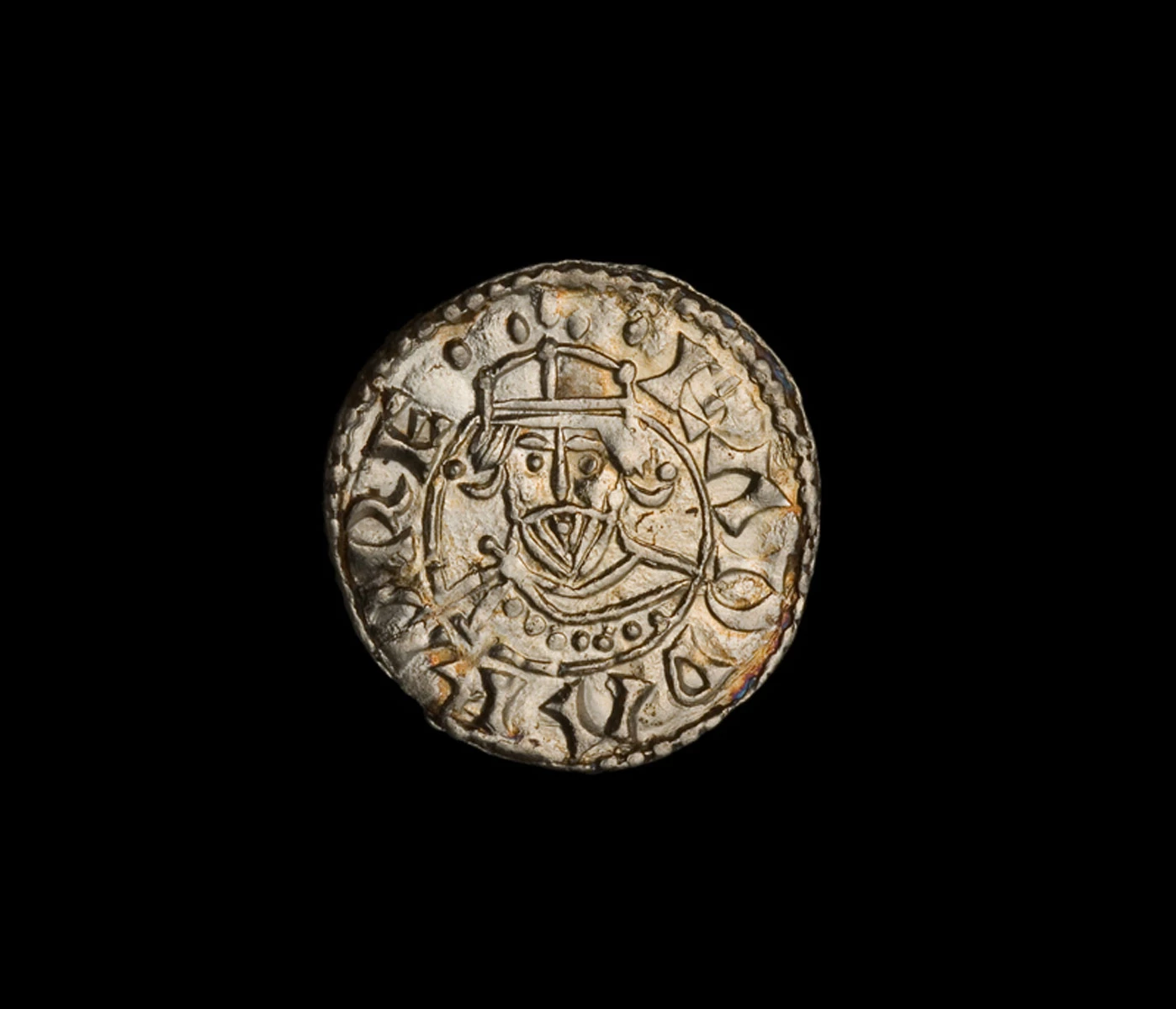
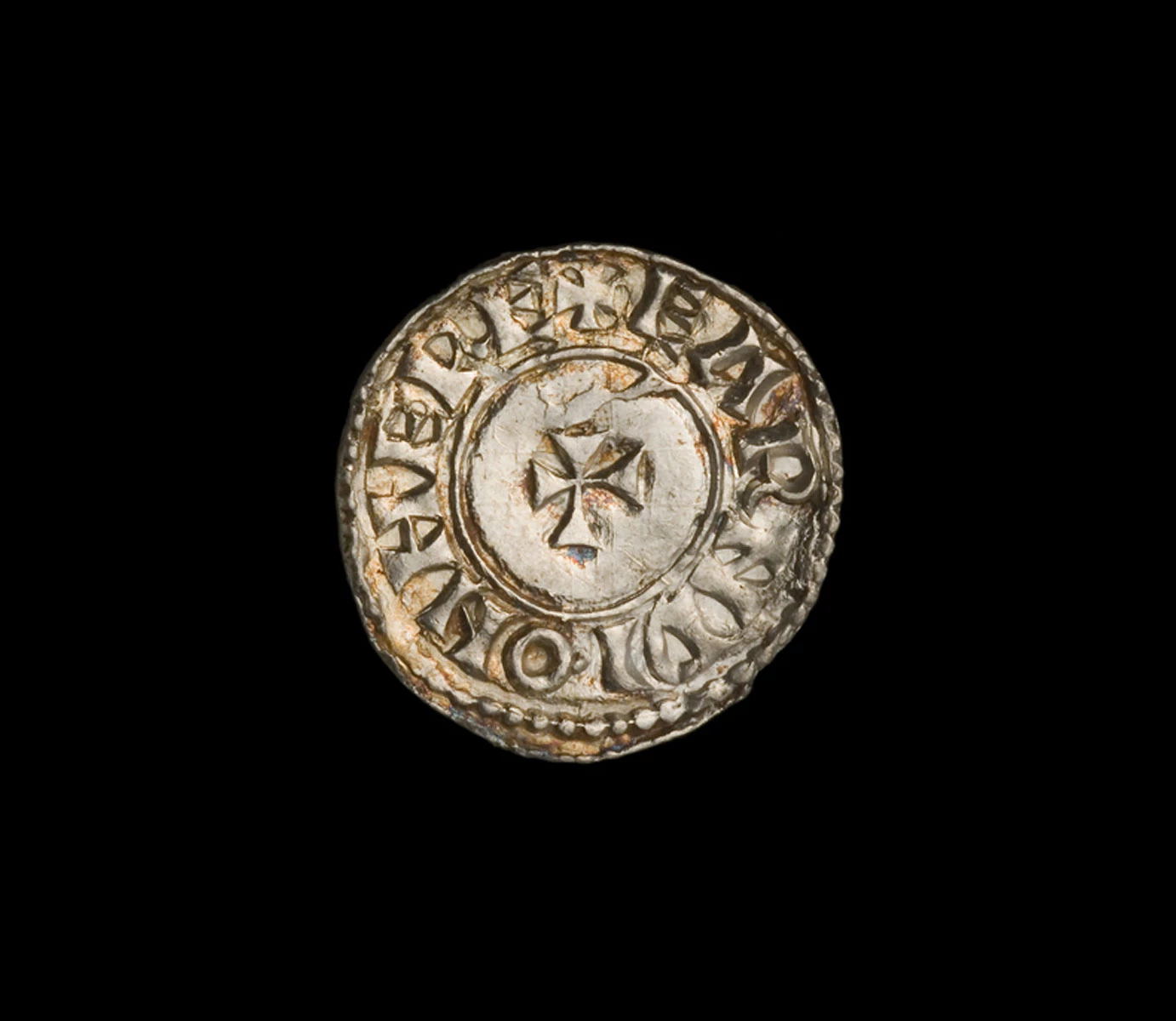
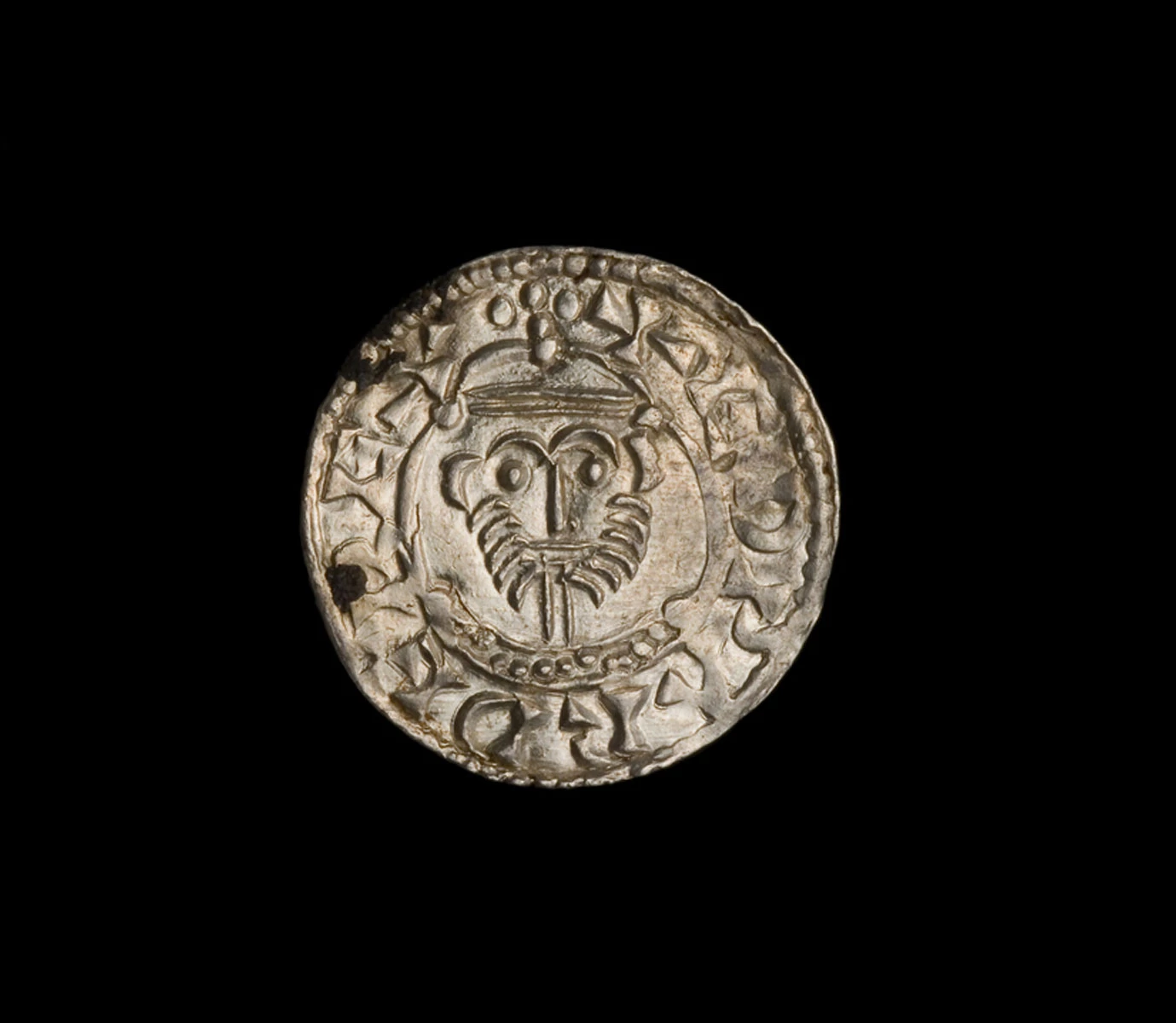
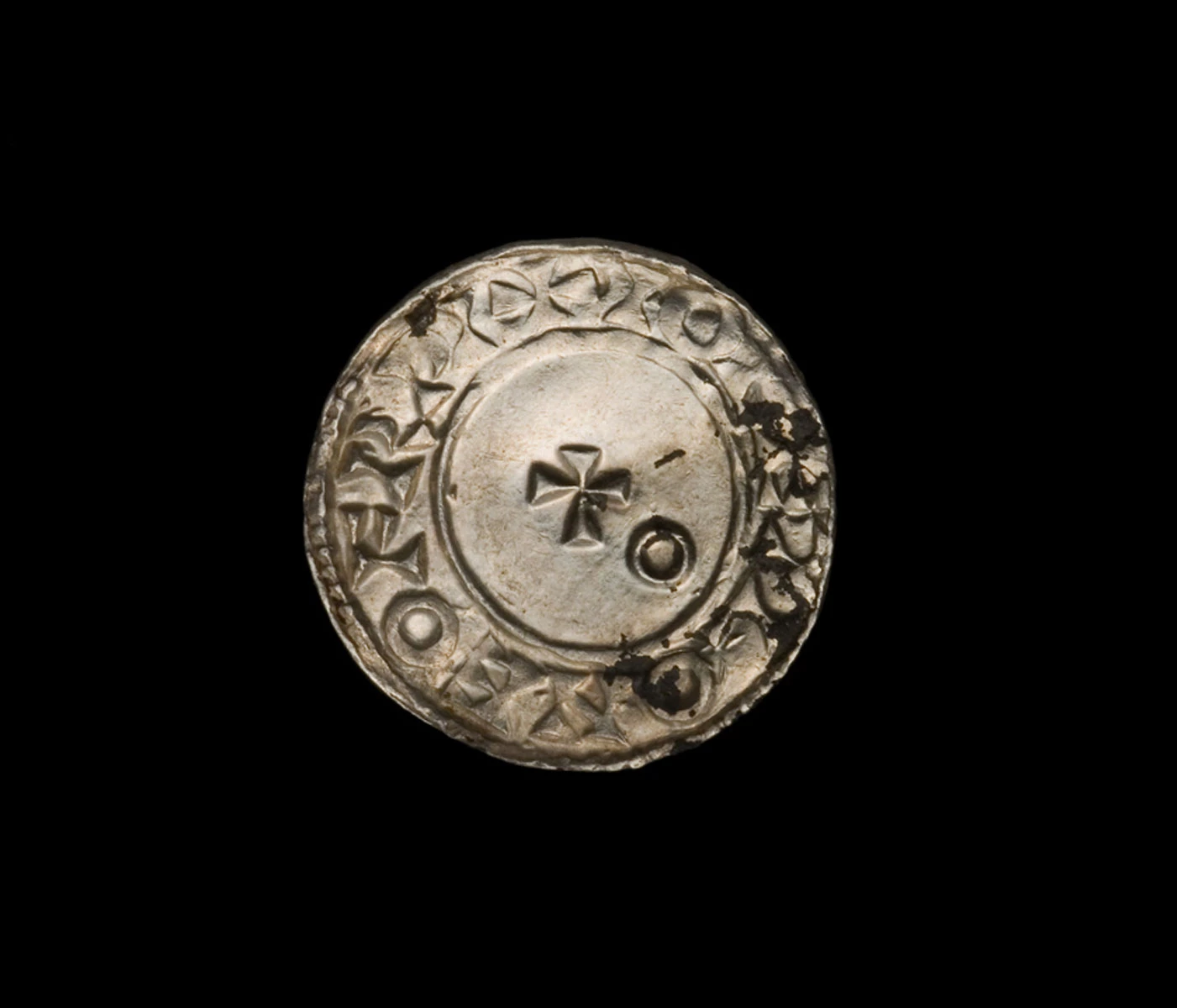
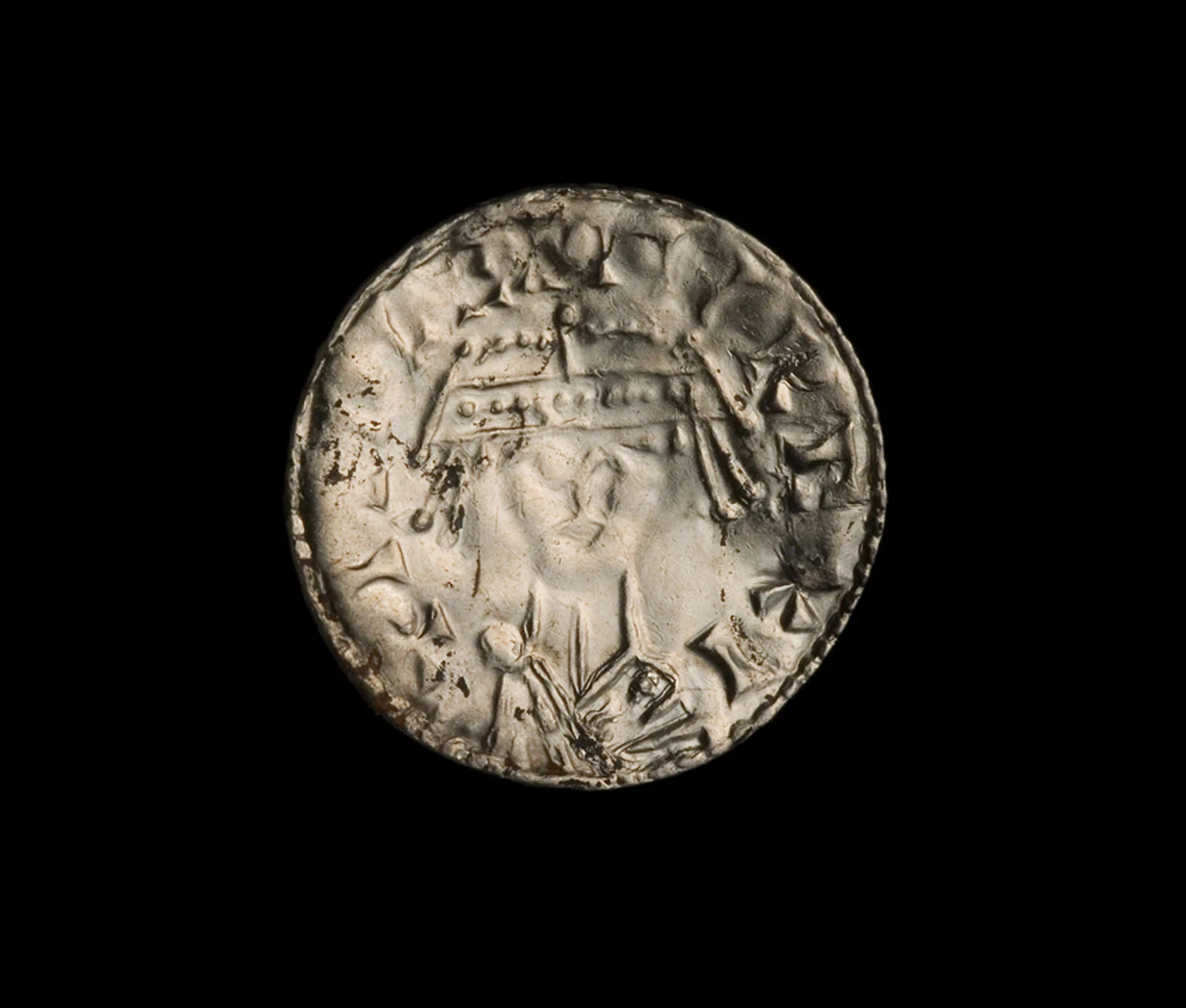
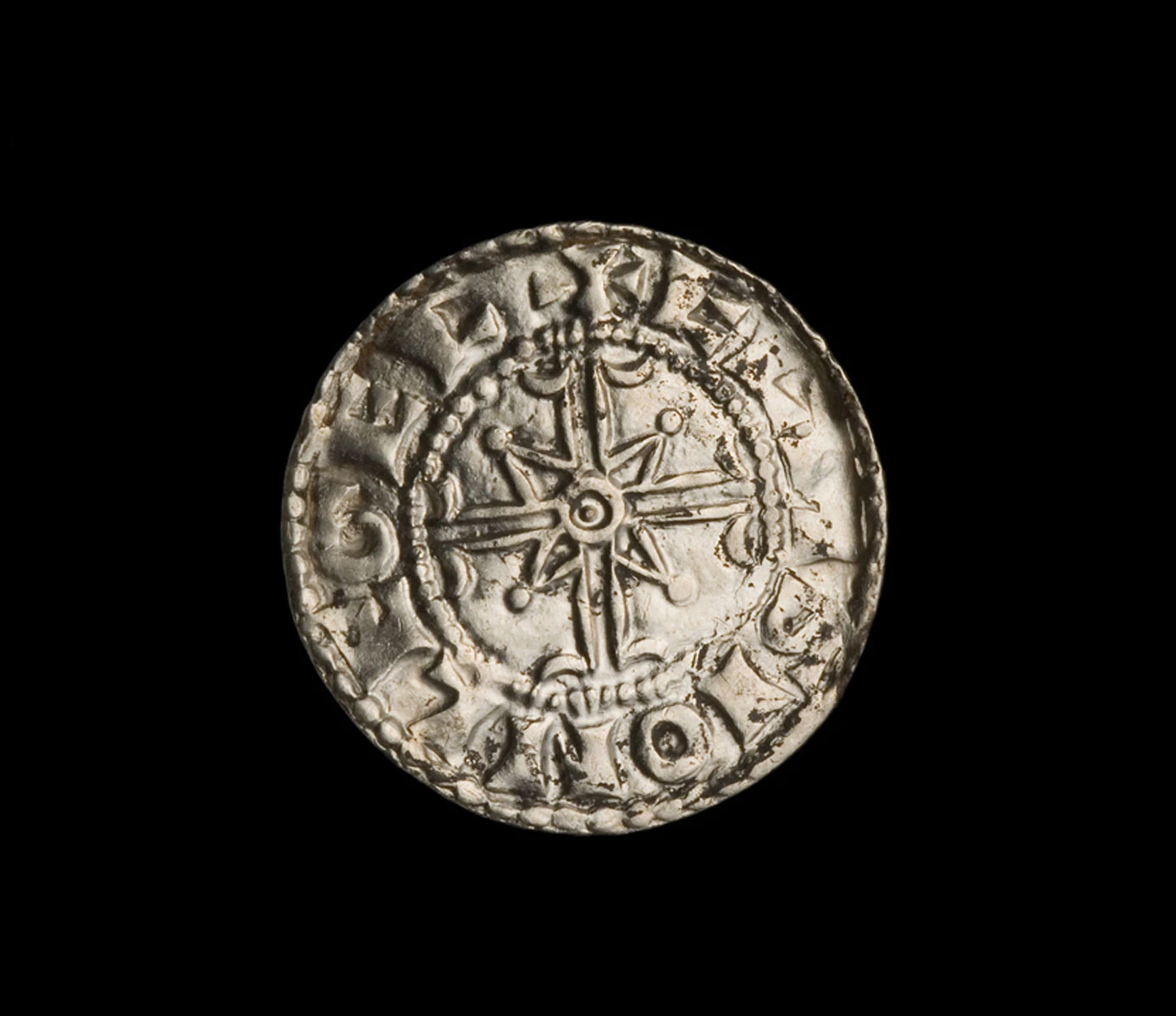
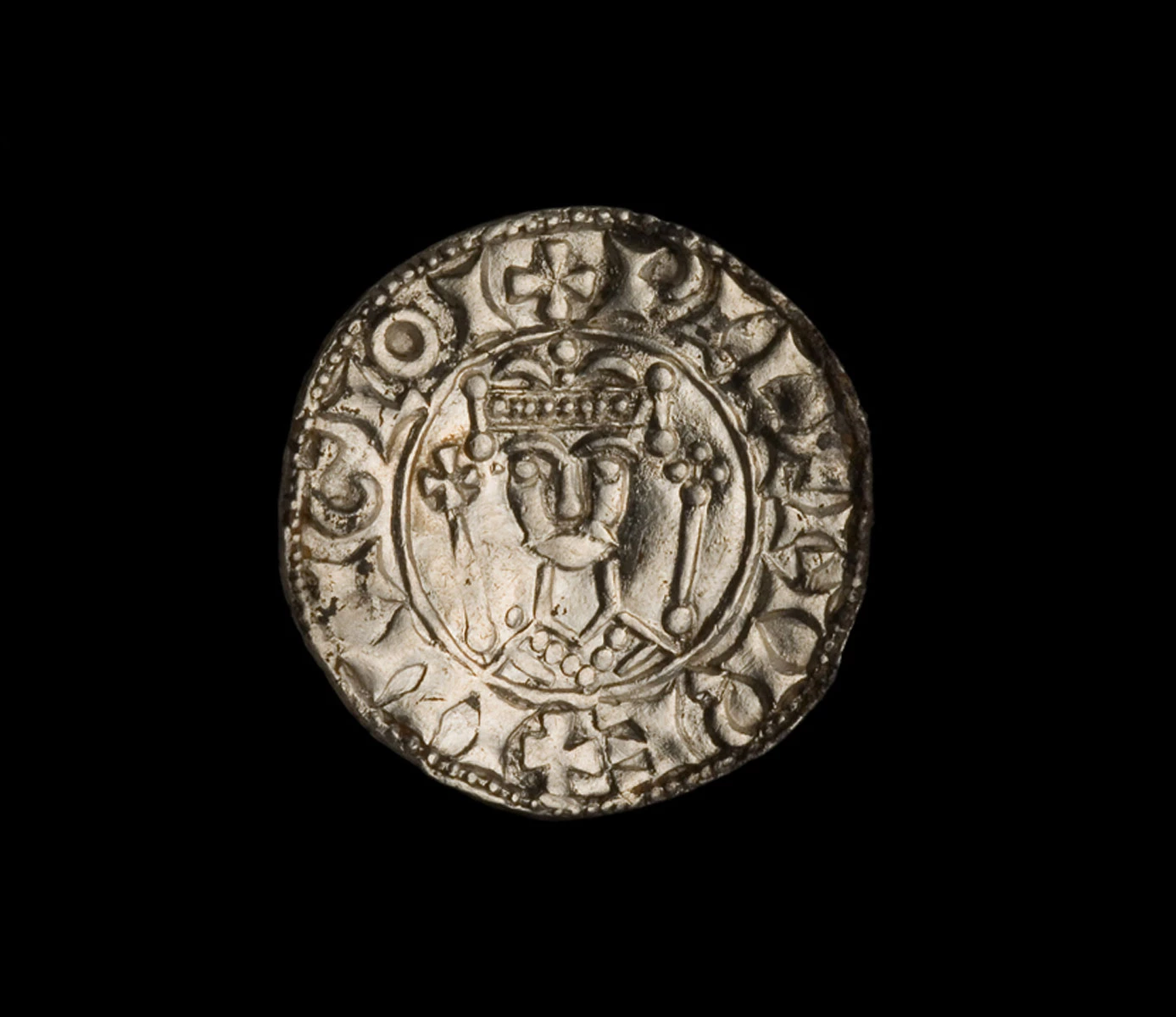
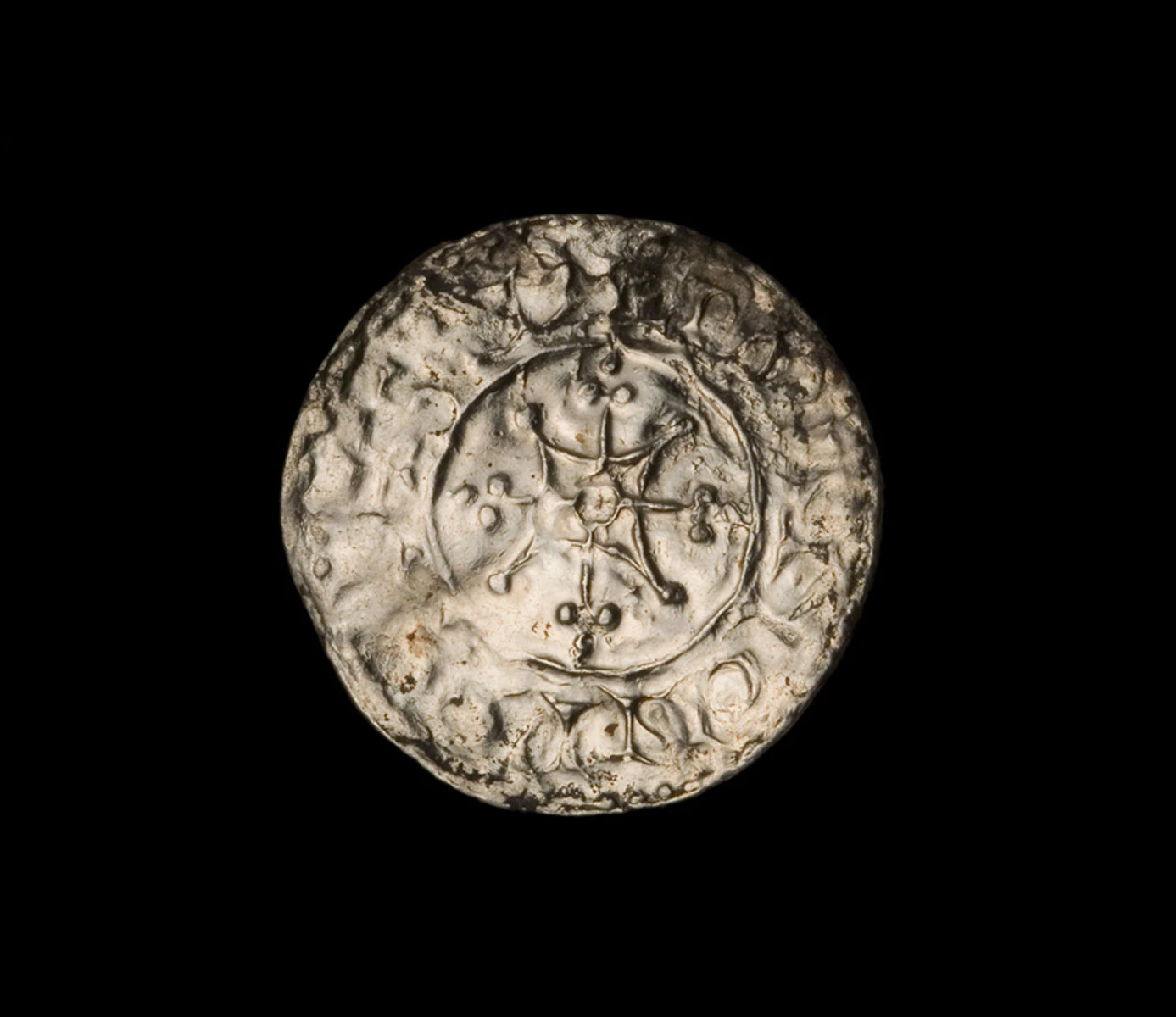
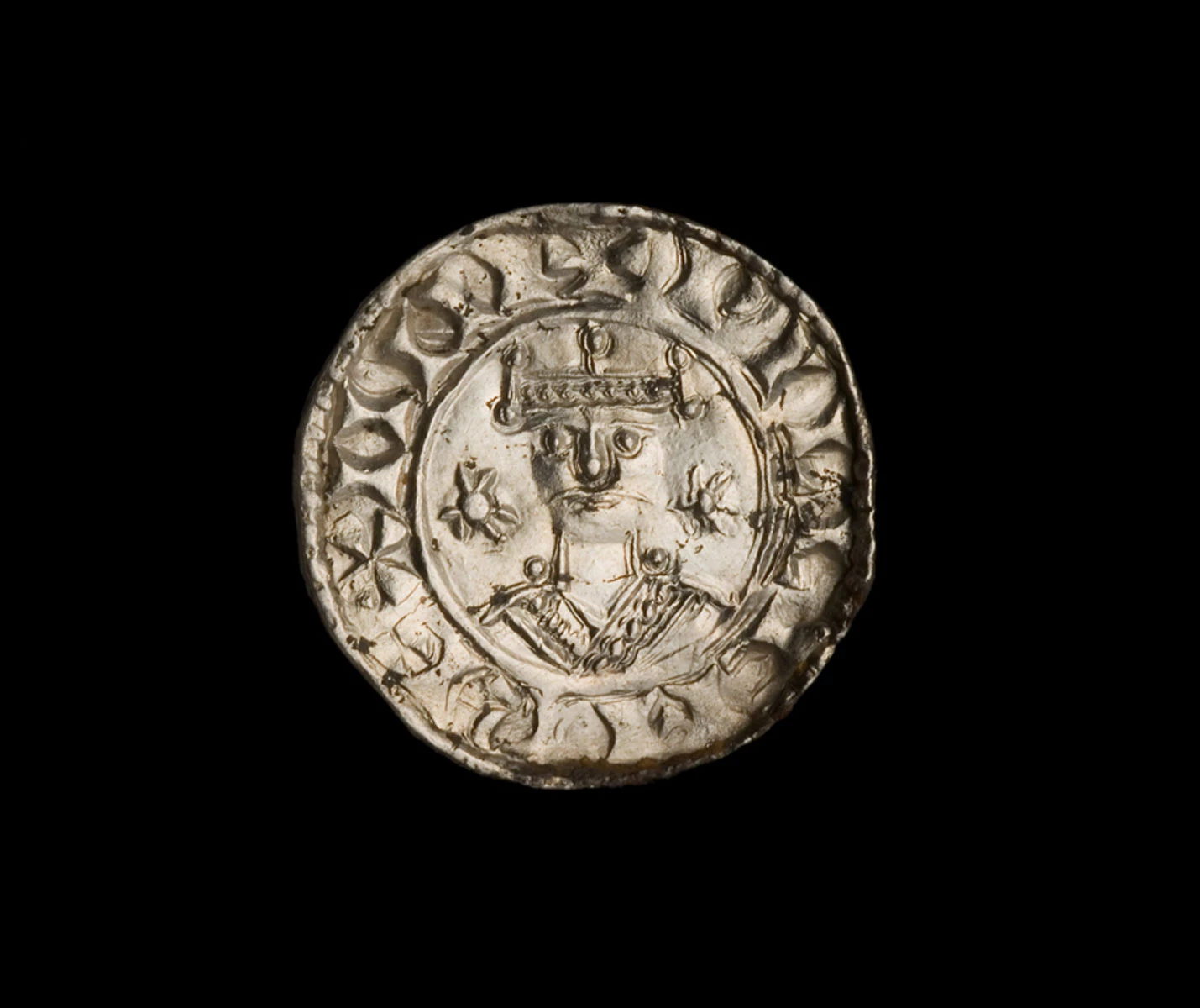
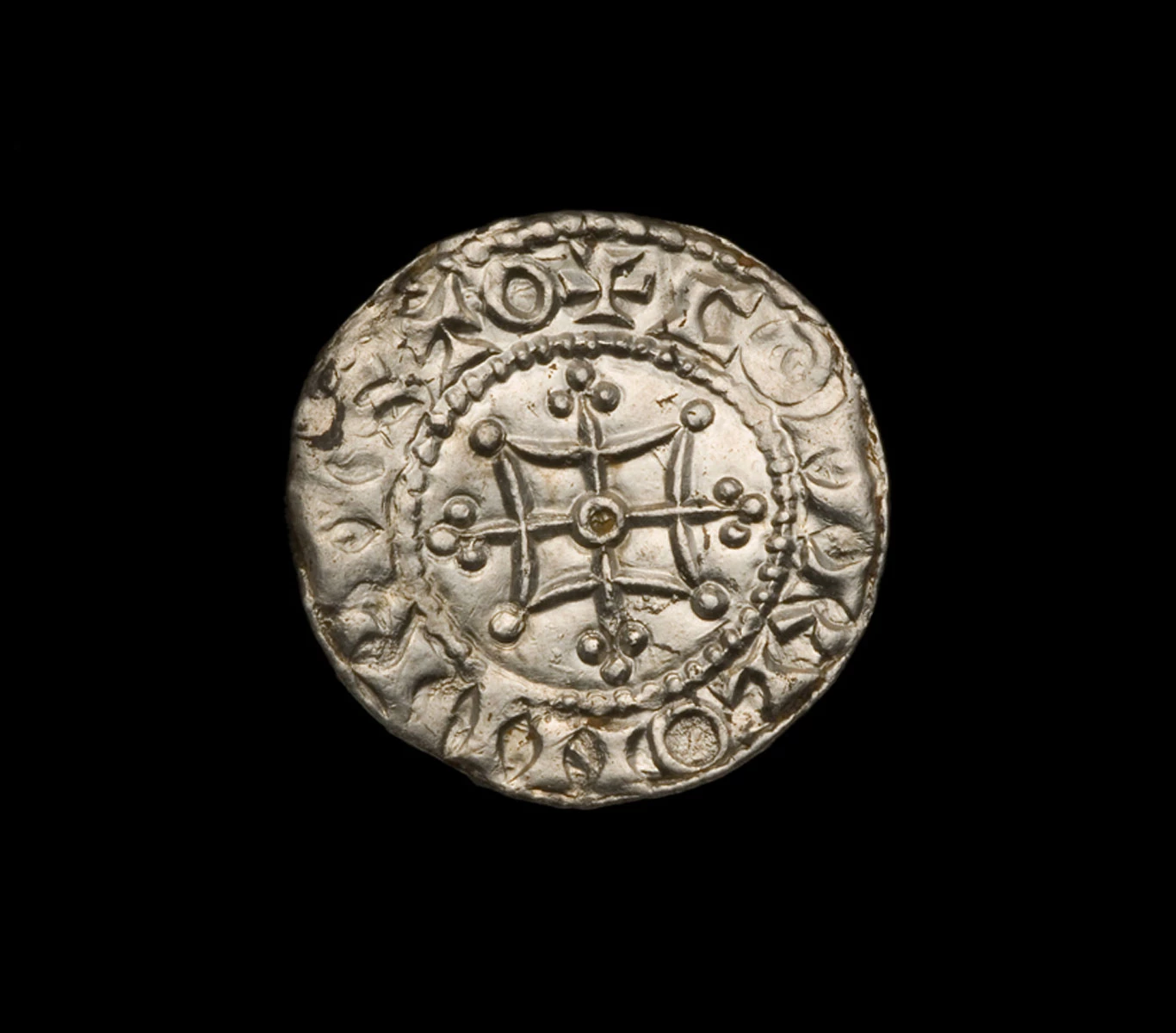
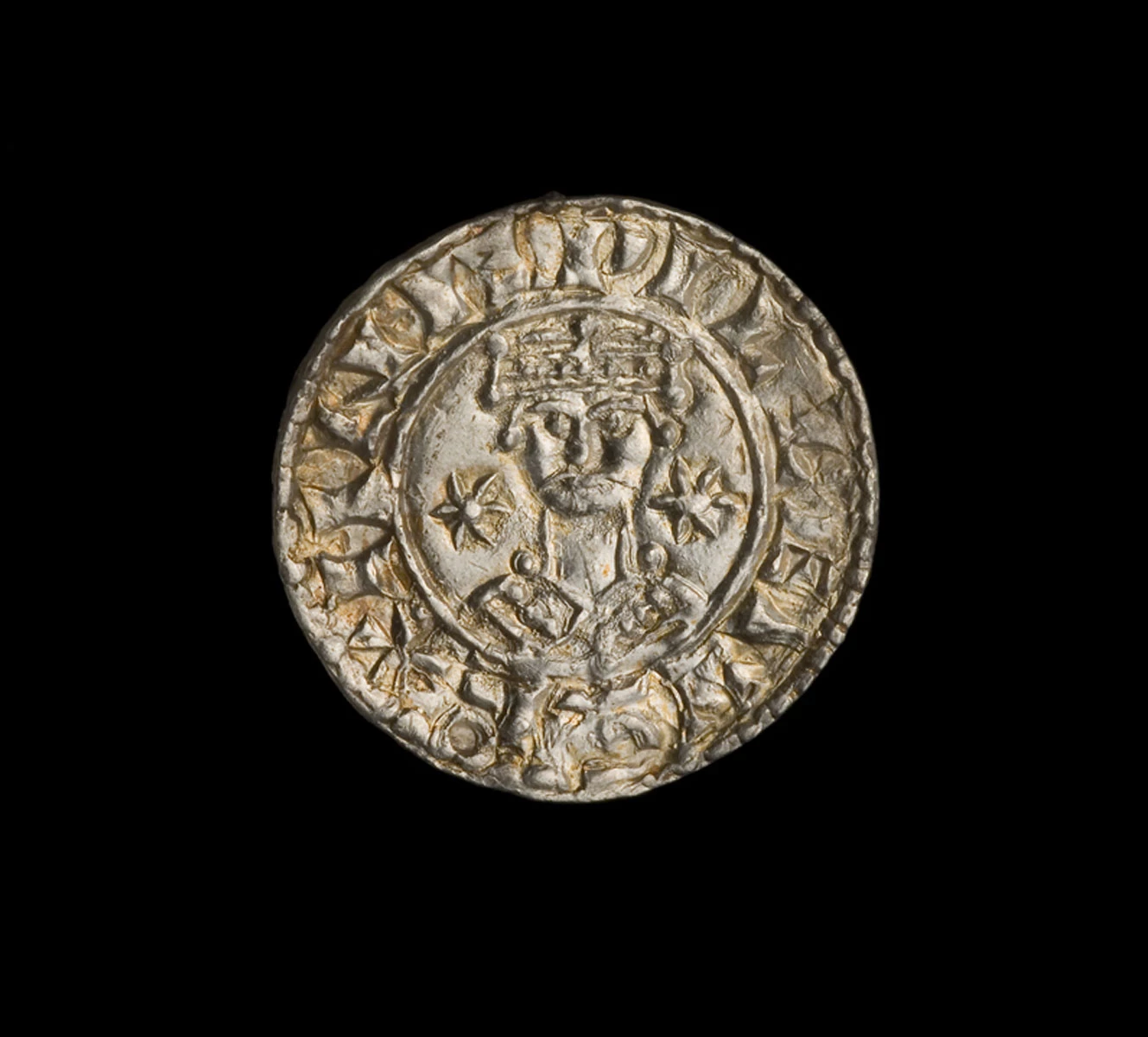
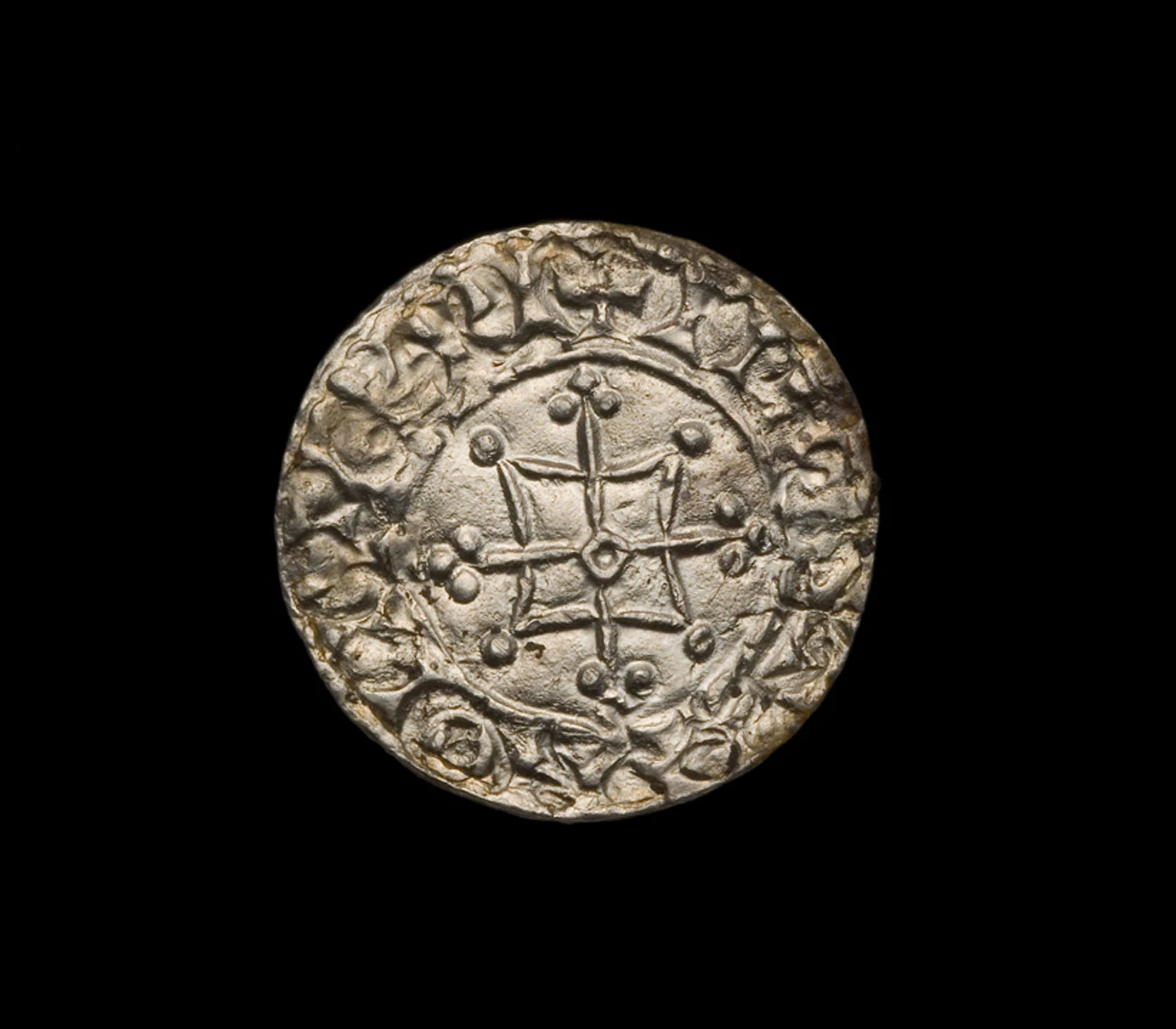
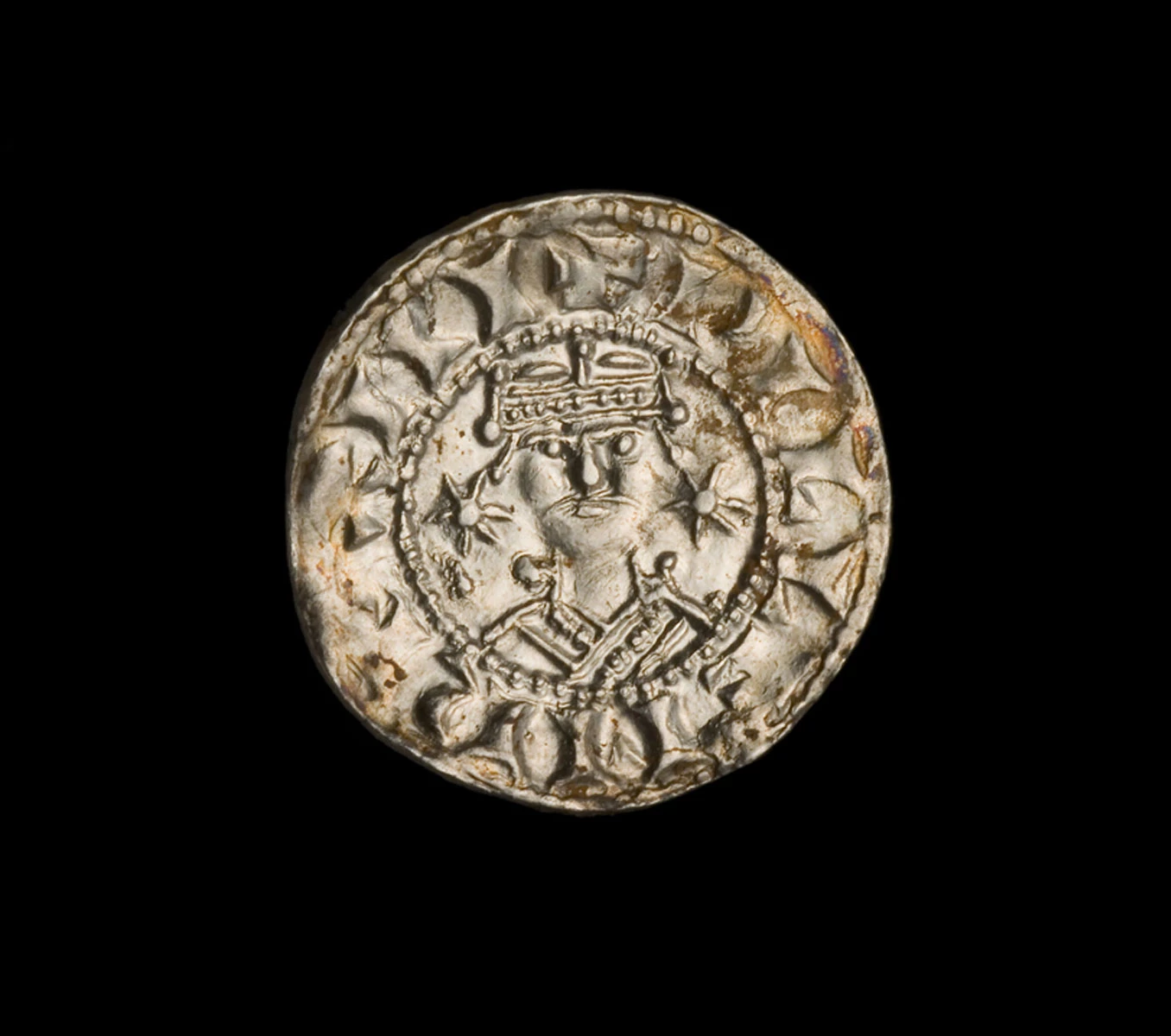
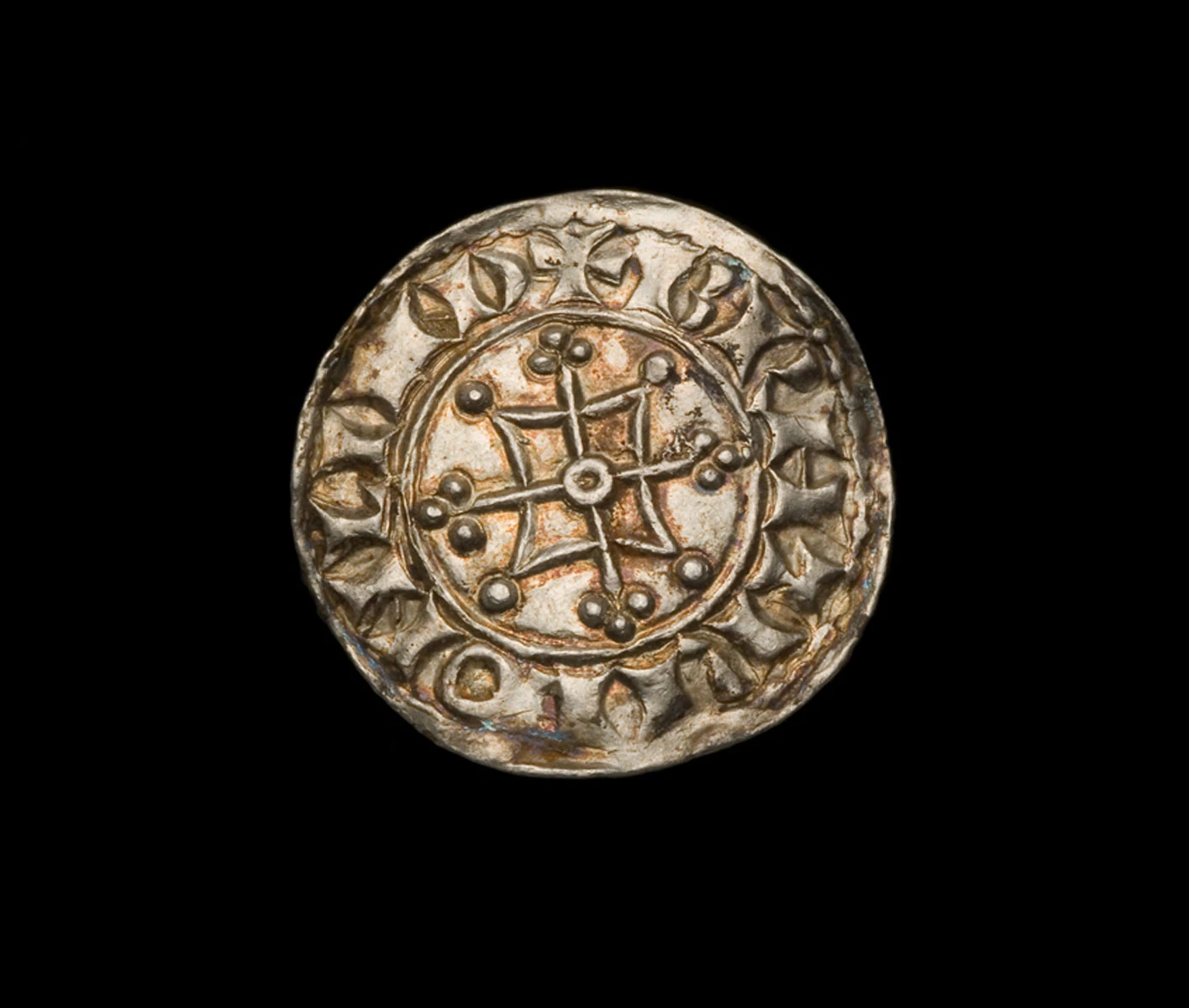
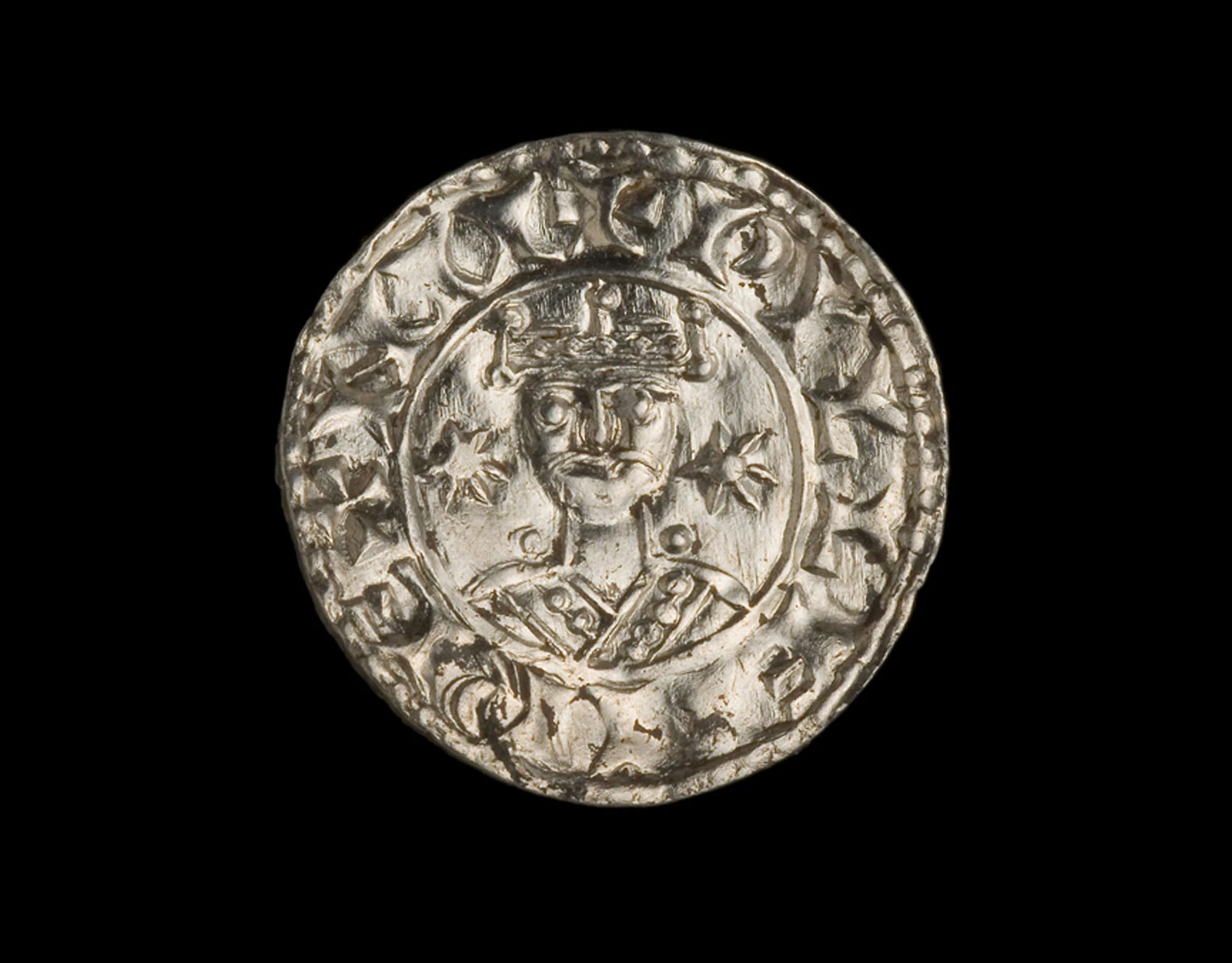
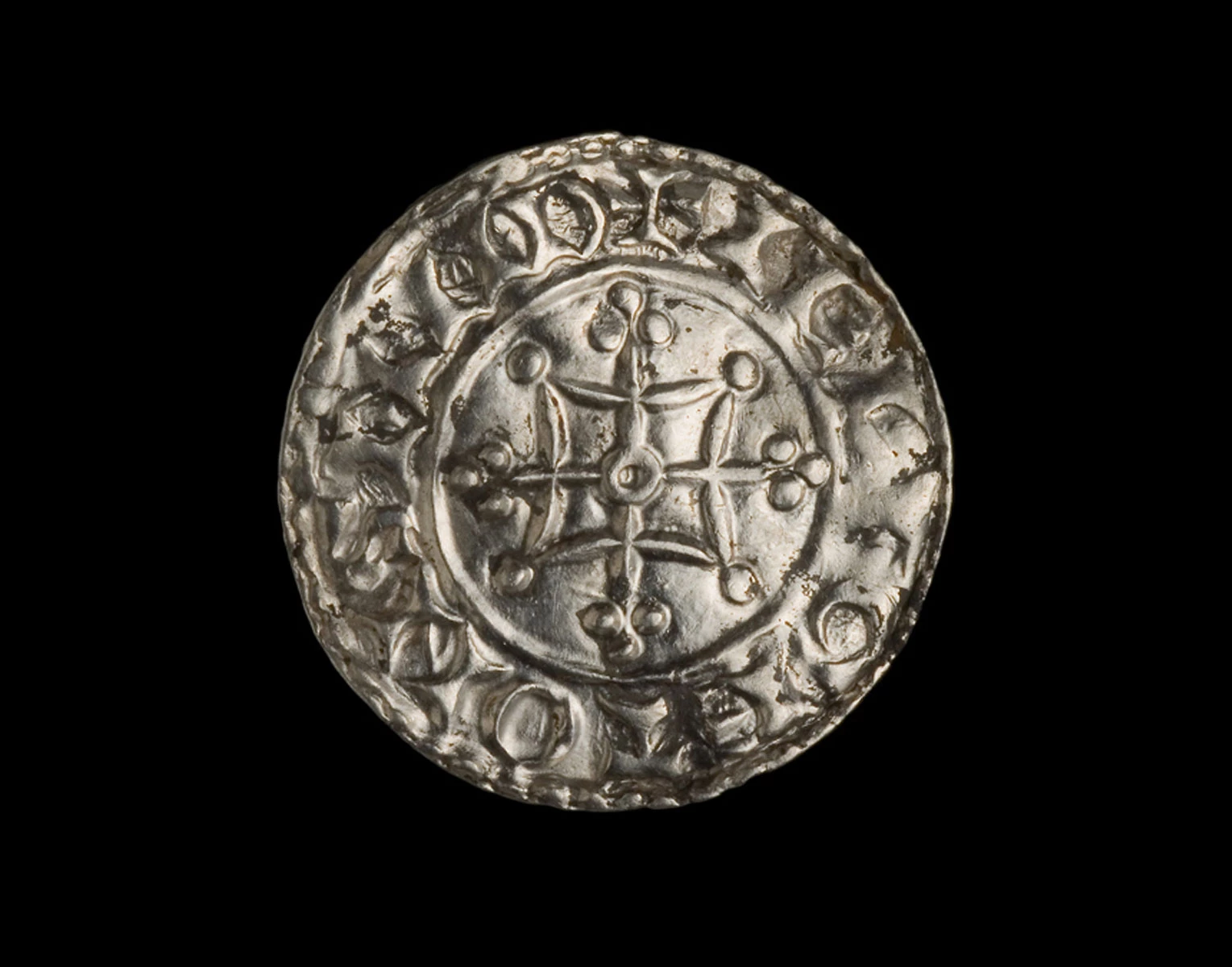
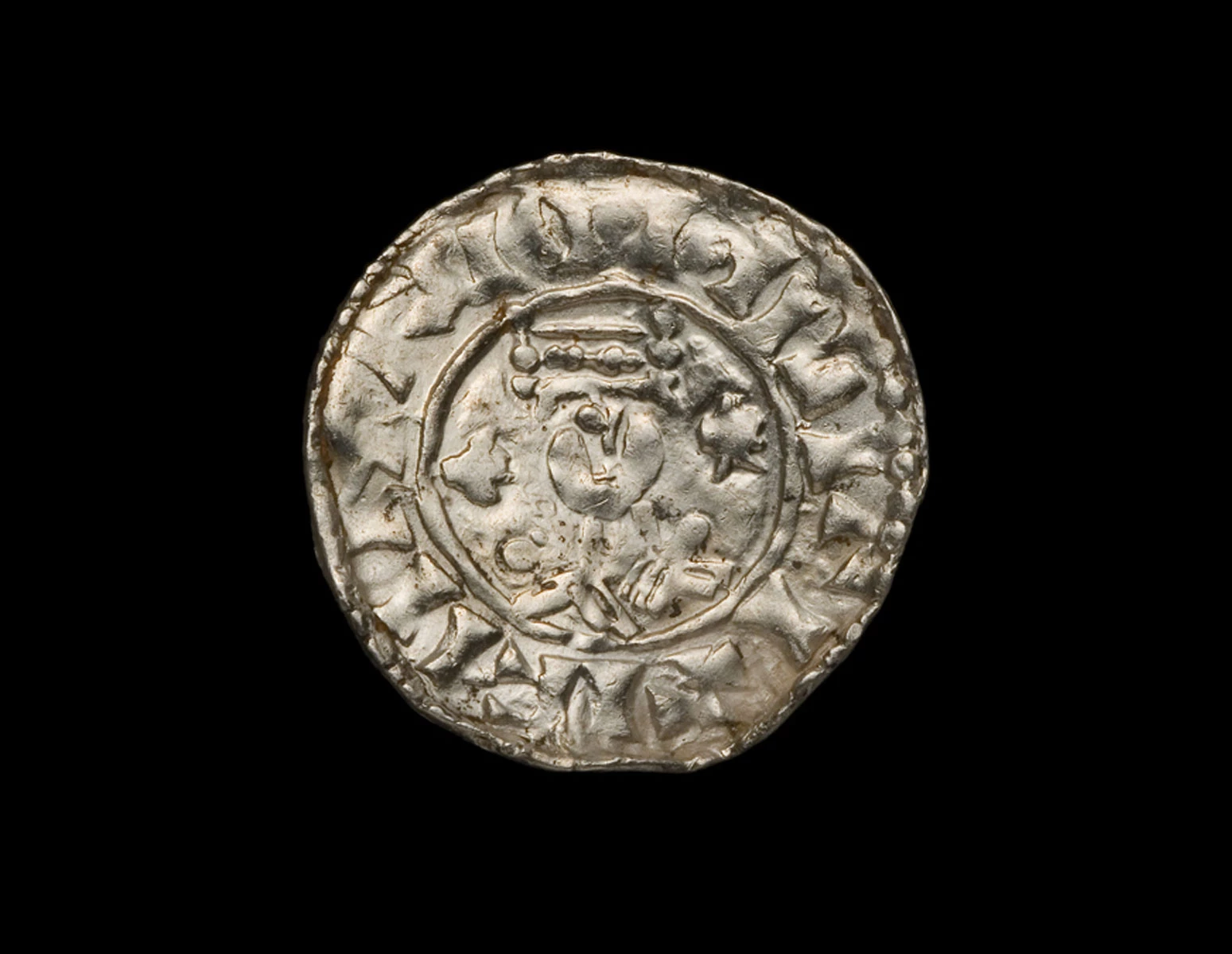
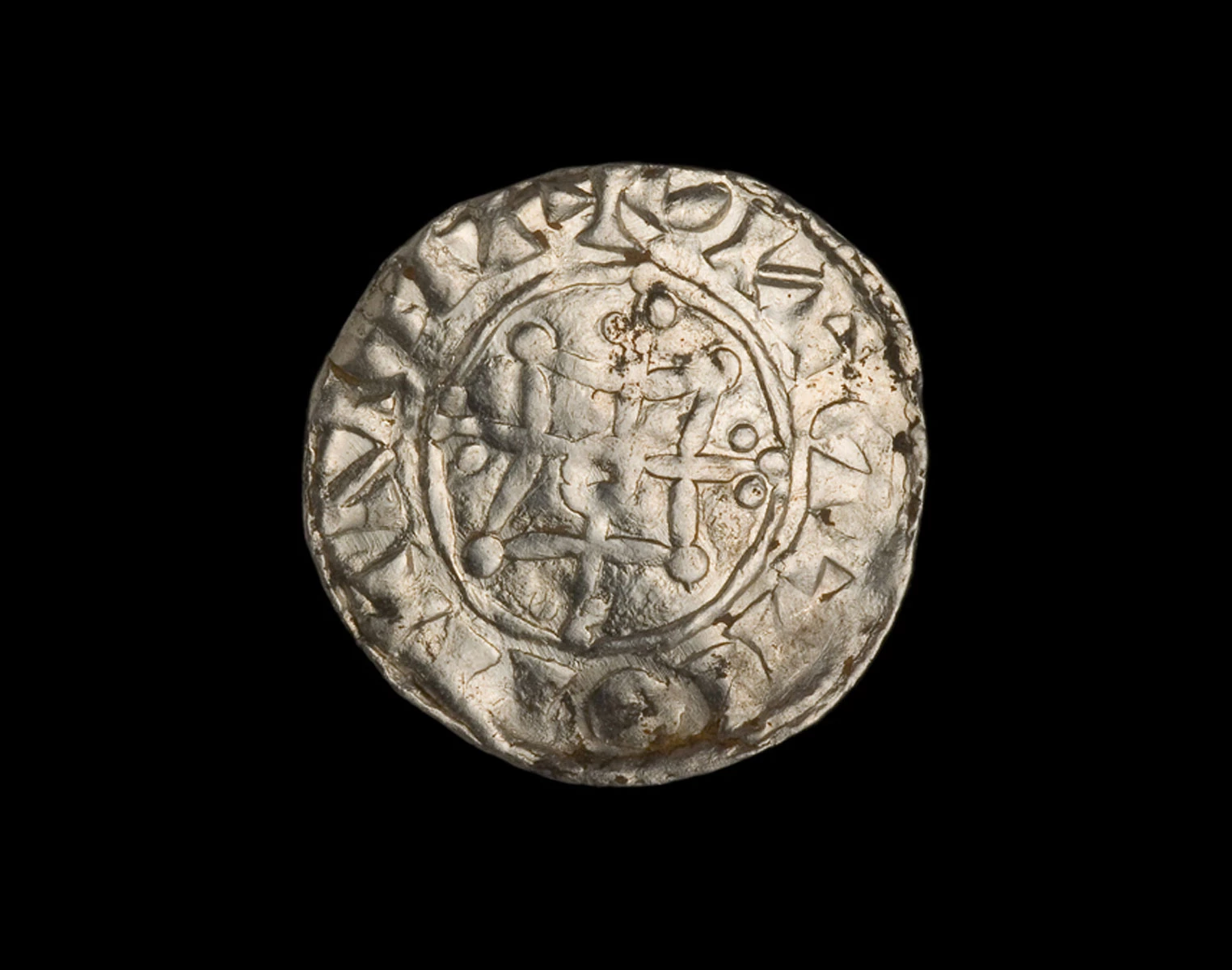
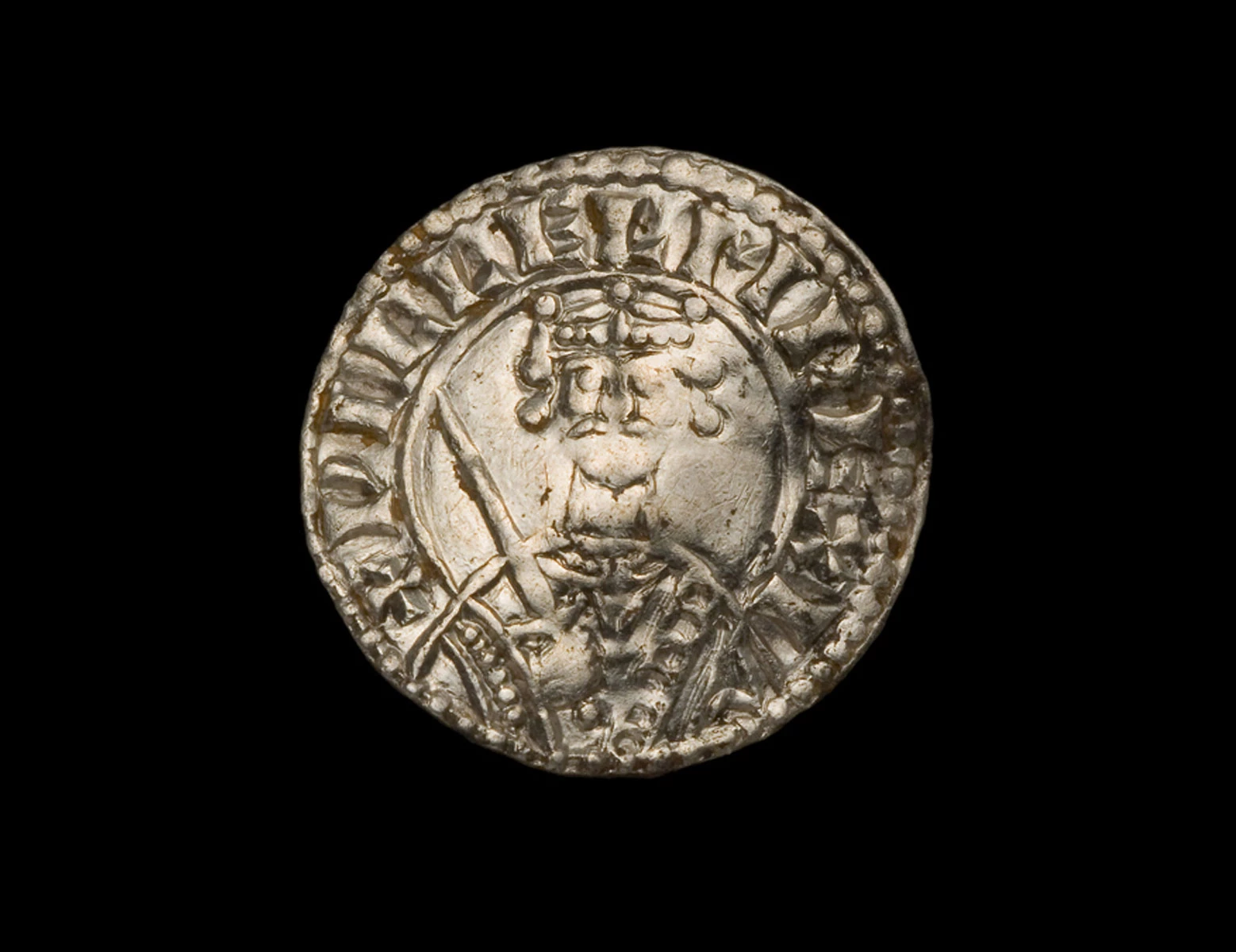
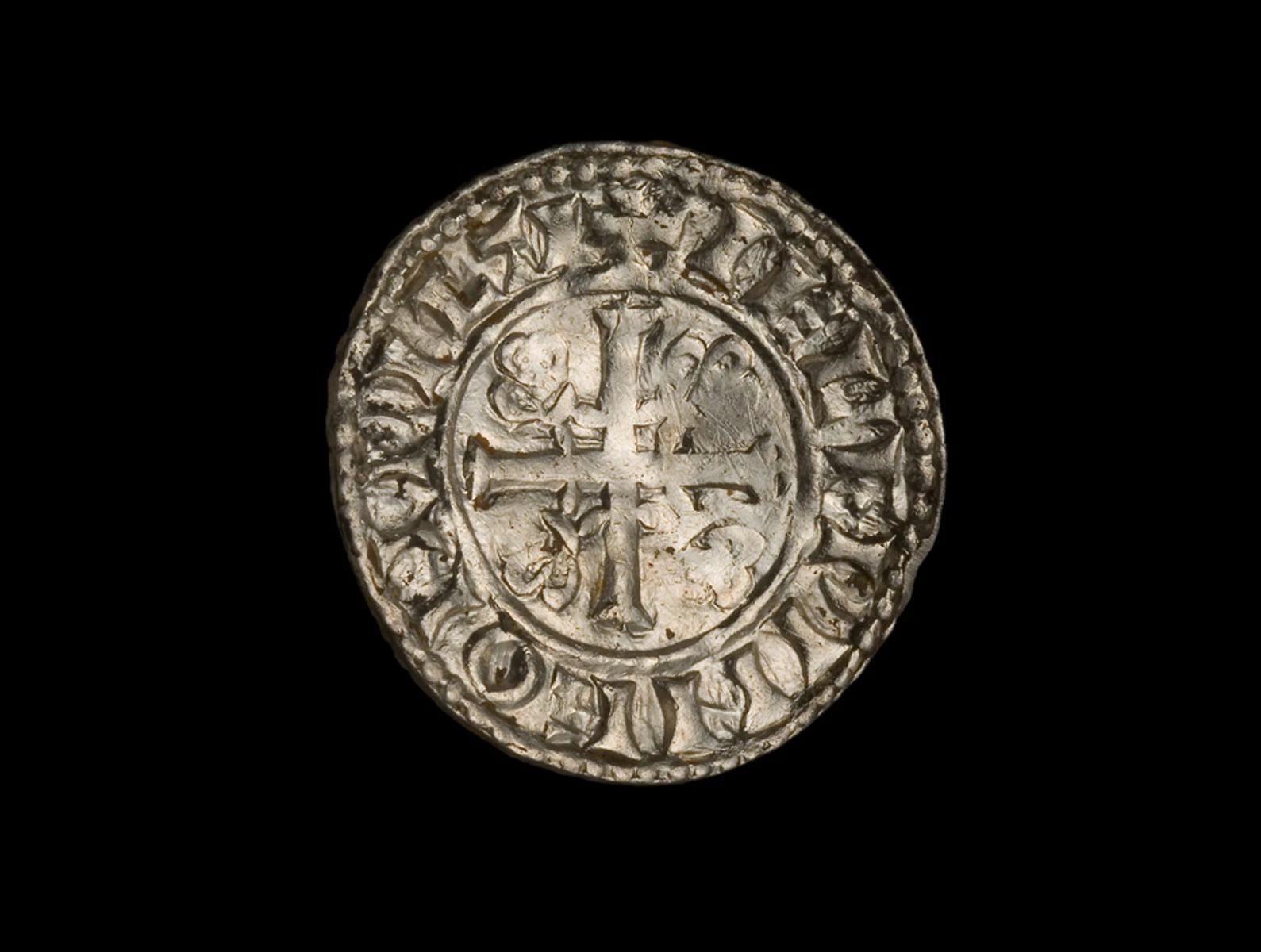
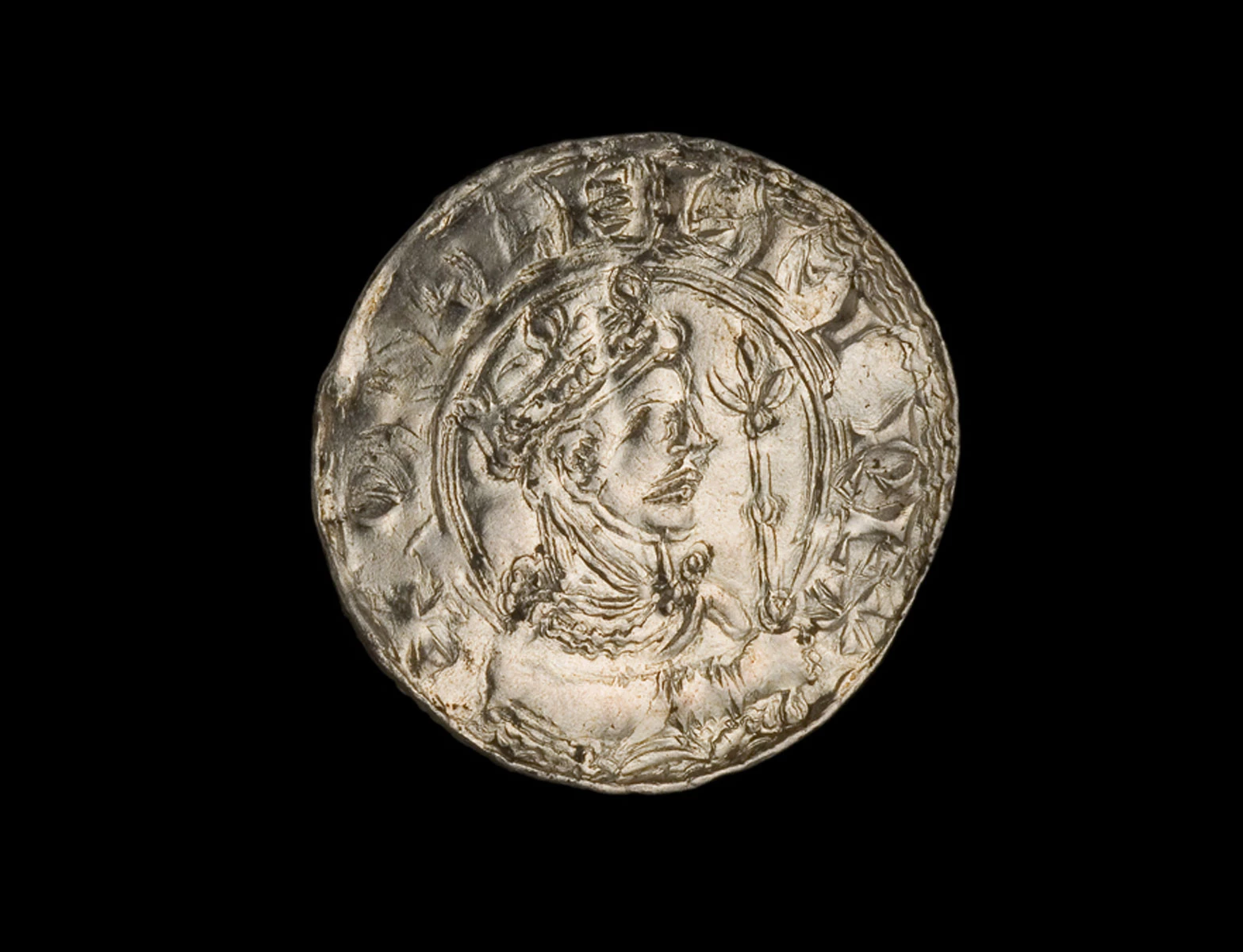
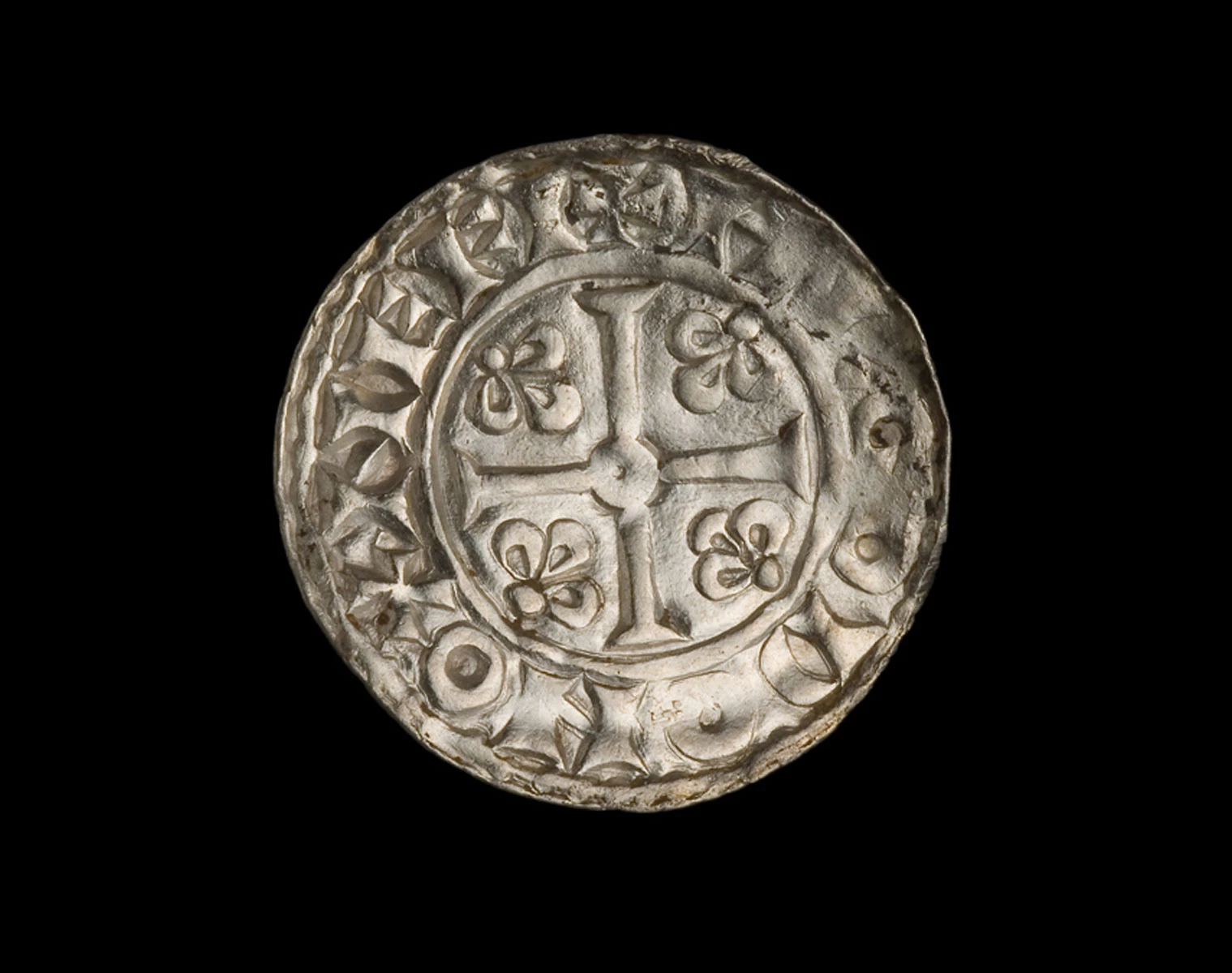
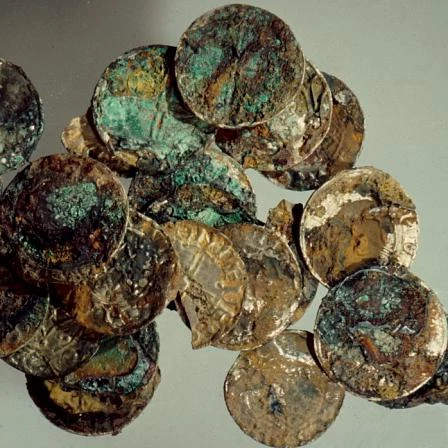
199 Silver Pennies - the Abergavenny Hoard Edward Besly, 6 January 2017 Part of the Abergavenny hoard as discovered. In April 2002 three metal-detectorists (John L Jones, Richard Johns and Fred Edwards) had the find of their lives in a field near Abergavenny, Monmouthshire: a scattered hoard of 199 silver pennies. The hoard included coins of the Anglo-Saxon king Edward the Confessor (1042-66) and the Norman king William the Conqueror (1066-87). The hoard probably pre-dates the founding of Abergavenny near by in the 1080s. The hoard was heavily encrusted with iron deposits, including traces of fabric, suggesting that the coins had originally been held in a cloth bag. It is not clear whether they had been deliberately hidden, or simply lost. Either way their owner was the poorer by a significant amount: sixteen shillings and seven pence (16s 7d, or £0.83p) would for most have represented several months' wages. Minting coins Anglo-Saxon and Norman coins form an unique historical source: each names its place of minting and the moneyer responsible. People had easy access to a network of mints across England (there were none in Wales) and every few years existing money was called in to be re-minted with a new design. The King, of course, took a cut on each occasion. The Abergavenny hoard includes 36 identifiable mints, as well as some irregular issues which cannot at present be located. Coins from mints in the region, like Hereford (34 coins) and Bristol (24), are commonest, outweighing big mints such as London (19) and Winchester (20). At the other end of the scale there are single coins from small mints such as Bridport (Dorset), or distant ones such as Thetford (Norfolk) and Derby. Hoards from western Britain are rare, so the Abergavenny Hoard has produced many previously unrecorded combinations of mint, moneyer, and issue. We shall probably never know quite why these coins ended up in the corner of a field in Monmouthshire but, as well as expanding our knowledge of the coinage itself, they will cast new light on monetary conditions in the area after the Norman Conquest. Conservation The coins were found covered in iron concretions and many of them were stuck to each other. This disfigured the coins and obscured vital details. Removing this concretion with mechanical methods, such as using a scalpel, would have damaged the silver, and chemicals failed to shift the iron. The solution to the problem was found in an unexpected, but thoroughly modern tool - the laser. A laser is a source of light providing energy in the form of a very intense single wavelength, with a narrow beam which only spreads a few millimetres. As laser radiation is of a single colour (infrared light was used in this case) the beam will interact intensely with some materials, but hardly at all with others. This infrared source was absorbed better by the darker overlying iron corrosion than by the light silver metal. The laser was successful at removing much of the iron crust, but initially left a very thin oxide film on the surface. When this was removed, the detail revealed on the underlying coin was excellent; it was possible to see rough out and polishing marks transferred to the coin from the original die, as well as the inscribed legend. Abergavenny Hoard Edward the Confessor, 'Expanding Cross'; London, Lifing Edward the Confessor, 'Expanding Cross'; London, Lifing Edward, 'Pointed Helmet'; London, Eadred Edward, 'Pointed Helmet'; London, Eadred Edward, 'Sovereign'; Hereford, Eadric Edward, 'Sovereign'; Hereford, Eadric Edward, 'Sovereign'; Taunton, Brihtric Edward, 'Sovereign'; Taunton, Brihtric Edward, 'Sovereign'; Worcester, Garulf Edward, 'Sovereign'; Worcester, Garulf Edward, 'Sovereign/Hammer Cross'; Taunton, Brihtric Edward, 'Sovereign/Hammer Cross'; Taunton, Brihtric Edward, 'Hammer Cross'; Cricklade, Æthelwine Edward, 'Hammer Cross'; Cricklade, Æthelwine Edward, 'Hammer Cross'; Exeter, Wicing Edward, 'Hammer Cross'; Exeter, Wicing Edward, 'Hammer Cross'; Tamworth, Brininc Edward, 'Hammer Cross'; Tamworth, Brininc Edward, 'Bust Facing'; Gloucester, Wulfweard Edward, 'Bust Facing'; Gloucester, Wulfweard Edward, 'Bust Facing'; Hereford, Ægelric Edward, 'Bust Facing'; Hereford, Ægelric Edward, 'Bust Facing'; Hereford, Ælfwi Edward, 'Bust Facing'; Hereford, Ælfwi Edward, 'Bust Facing'; Hereford, Earnwi Edward, 'Bust Facing'; Hereford, Earnwi Edward, 'Bust Facing'; York, Iocetel Edward, 'Bust Facing'; York, Iocetel William I, 'Bonnet'; Chester, Ælfsige William I, 'Bonnet'; Chester, Ælfsige William, 'Two Sceptres/Two Stars'; Wareham, Sideman William, 'Two Sceptres/Two Stars'; Wareham, Sideman William, 'Two Stars'; Bristol, Ceorl William, 'Two Stars'; Bristol, Ceorl William, 'Two Stars'; Hereford, Leofstan William, 'Two Stars'; Hereford, Leofstan William, 'Two Stars'; London, Brihtric William, 'Two Stars'; London, Brihtric William, 'Two Stars'; Sandwich, Ælfget William, 'Two Stars'; Sandwich, Ælfget William, 'Two Stars'; irregular issue William, 'Two Stars'; irregular issue William, 'Sword'; Wilton, Ælfwine William, 'Sword'; Wilton, Ælfwine William, 'Profile Right'; Oxford, Heregod William, 'Profile Right'; Oxford, Heregod Background Reading Conquest, Coexistence, and Change. Wales 1063-1415 by R. R. Davies. Published by Oxford University Press (1987). The Norman Conquest and the English Coinage by Michael Dolley. Published by Spink and Son (1966).
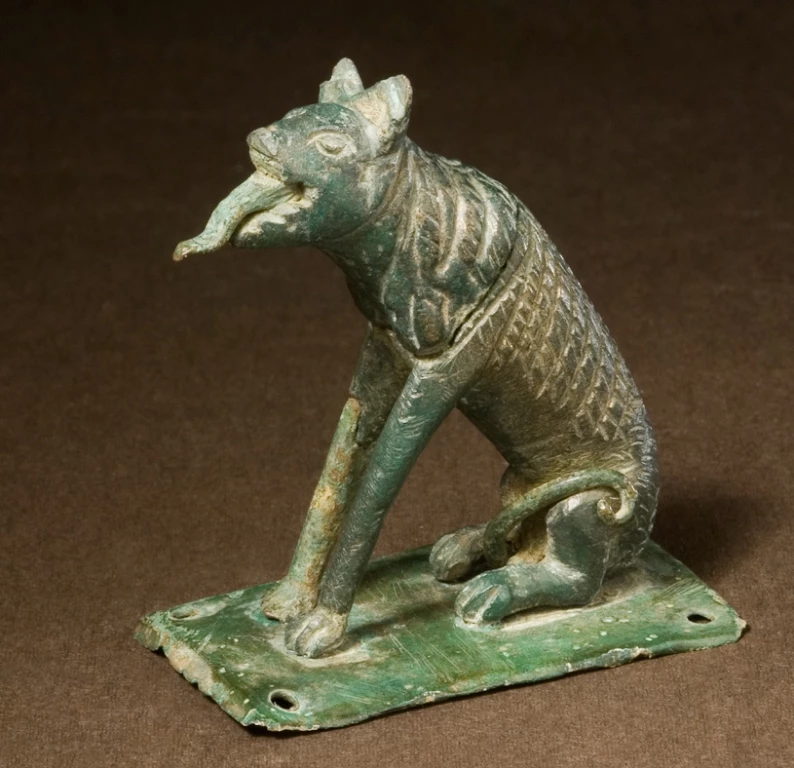
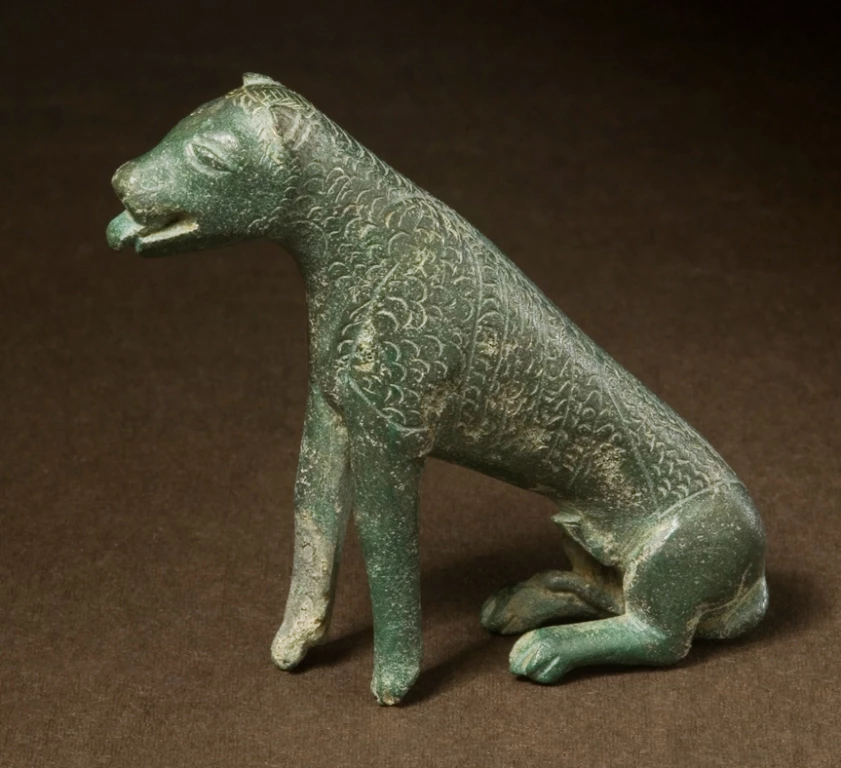
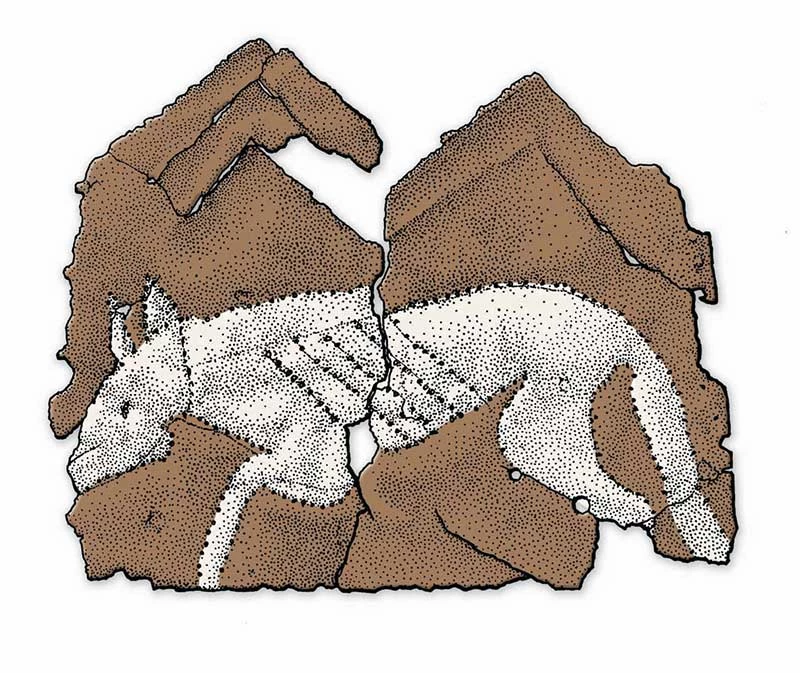
The Healing Power of Dogs Penny Hill, 5 March 2014 This detailed miniature statue of a dog is no more than 4 to 5cms in height, and was probably once coated in tin or silver. Holes in the metal base plate suggest he was attached to a small plinth. One of two miniature statues of dogs found at Llys Awel. His tongue is sticking out in the action of licking. Man’s best friend, the dog has recently been making headlines again through his ability to save life by either sniffing out cancer or licking to help restore circulation to injured limbs. This association between people, dogs and good health is nothing new and was recognised back in antiquity. Housed in the Archaeology collections are 2 small dog figurines, part of a group of objects found at Llys Awel, Conwy. There are also two copper alloy plaques. One is decorated with a dot-punched outline of a dog; the second is not so well preserved, the dotted outline is less clear and it could either be another dog or a name, possibly of a god. The site is believed to be a shrine dedicated to a healing god and the objects themselves date to the Roman period in Britain, sometime between the late first century AD and the end of the fourth century AD. The objects were probably left by people as gifts to the god hoping they would be granted good health and help to recover from an illness. Why dogs? Well, the Greek god of medicine, Asklepios (adopted by the Romans who knew him as Aesculapius), was frequently depicted with a dog as his animal companion. This association probably came about after people observed dogs healing themselves by licking. A major sanctuary to his cult was built in the fourth century BC at Epidaurus, in Greece. This place became one of the major centres for healing in the ancient world. One part of the healing treatment or ritual was to receive licks from a sacred dog kept at the sanctuary. The only known British equivalent of Epidaurus is the cult centre of the Romano-British god Nodens at Lydney in Gloucestershire. Here, 9 representations of dogs were found: like the dogs at Llys Awel these were probably left by visitors seeking cures for their ailments. The dogs are made from copper alloy and are about 5cm tall. They are seated with tails between their legs and tongues sticking out, as if in the action of licking. The figures are incredibly detailed with eyes, ears, nose, paws and fur texture well defined. They were probably made by the lost wax process, so there was only one chance to get the metal casting right. One dog was cast as a single piece, but the other revealed a slightly more complicated construction. During conservation we can find out how the statue was made. Different pieces appear to have been cast separately and soldered together. Illustration of a votive plaque with added shading to highlight the outline of a dog. Illustration of votive leaf plaque. Do the dotted lines in the lower half spell out the name of a long lost god or is it another dog? Conservation During conservation it became apparent the dog was cast in several sections, the head, body, tail and tongue. The individual pieces were then soldered together to create the whole figure. Grooves in the metal at the junction between the head and body support this idea and would have helped the solder grip and hold the two sections together. There is evidence to suggest the craftsman had problems casting the figure, the molten copper alloy failing to flow to all parts of the tiny mould. Repairs had to be made to the nose and the right front leg, the miscast material removed and then new sections recast and soldered in place. The replacement nose has gone, but we still have the replacement leg, which is not as well modelled as the original left leg. The statue was probably given a coat of either tin or silver to hide the construction detail and enhance its appearance, which would have helped elevate our dog to a slightly higher pedigree. Unfortunately analysis of the surface was inconclusive; the coating, if one had existed, did not survive. Therefore we can only imagine its original appearance and wonder if the people who gave this little treasure to the god were ever granted their wish.
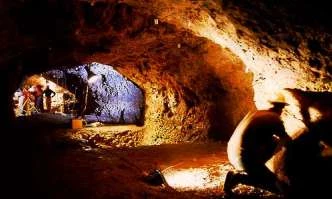
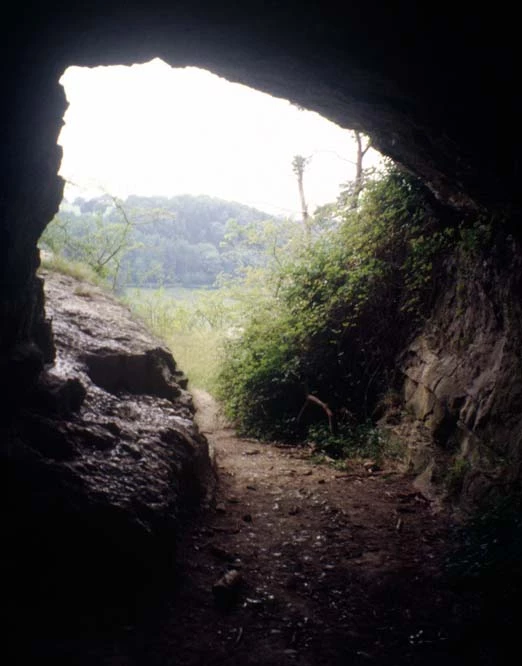
The Caves at Cefn: Tales of strange creatures and evidence of Wales's earliest humans. Elizabeth Walker, 7 March 2013 The complex of caves found at Cefn, just outside St Asaph in north Wales, has been the focus of much interest over the years. Full of animal bones and home to early Neanderthals , the caves have drawn many notable visitors, including Charles Darwin in 1831. Pontnewydd Cave excavations Teeth from Pontnewydd cave Pontnewydd Cave Cefn Cave looking out The caves in the parish of Cefn Meiriadog, Denbighshire, have long been places of interest for scientists, artists, poets and antiquarians. The Denbigh to Abergele road once passed through the rock arch beside the River Elwy and many people stopped here to enjoy the beautiful scenery. The antiquarian John Leland wrote about Cefn during the 1530s 'On the farther ripe of Elwy a 3. or 4. miles above S. Asaphes is a stony rok caullid Kereg the tylluaine, i.e. the rok with hole stones, wher a great cave is, having divers romes in it hewid out of the mayne rok.' Writers Thomas Pennant, Richard Fenton and Edward Pugh were among many visitors to the Cefn Caves in the years before 1830. Bones in the mud Charles Darwin visited Cefn in August 1831 during a geological tour with Professor Adam Sedgwick. Darwin described the limestone at Cefn and an entry in his notebook observes that Sedgwick spotted rhinoceros bones in mud in the cave; Sedgwick's notes state that a rhinoceros tooth was found. Unfortunately neither commented on the palaeontological significance of the find. Which cave did Darwin visit? Cefn Cave is the more likely, as records of a visit by the Reverend Edward Stanley the following year inform us that landscaping had left 'bones in the mud for the taking' and that many bones were spread as fertiliser on the fields below. Stanley recorded seeing a rhinoceros tooth in the landowner's collection - could this be the tooth found by Sedgwick and Darwin? We shall never know for sure. Hippopotamus, Rhinoceros and Elephants Stanley described the landscaping of Cefn and the construction of walks through the valley which involved removing some of the projecting areas of cliff face on Cefn Rocks. A series of gentle steps and staircases were created from the valley bottom and through Cefn Cave. Huge quantities of deposit were removed from the cave to create a single passage connecting the two cave entrances. Stanley excavated within Cefn Cave in 1832. He found bones of straight-tusked elephant, rhinoceros and hippopotamus of last interglacial age (c. 125,000 years old), and deposits that interested many geologists and other scientists who visited the caves. Debates about the antiquity of humans and their relation to extinct animals were raging in the learned societies at this time. So an article that appeared in The Times on 20th October 1870 claiming the existence of a strange amphibian living in Cefn Cave caused considerable interest. It called upon naturalists to investigate the survival of an ancient creature in North Wales. The Flintshire Observer for 4th November 1870 told a tale of a living lizard, four feet seven in length and very much like a crocodile which had emerged from the depths of Cefn Cave. This lizard had reportedly been slain by a valiant Welshman, Mr Thomas Hughes, chimney sweep of Rhyl. The tale as retold suggests that the crocodile did not reach Cefn at all: it apparently died whilst a part of a travelling menagerie visiting Rhyl. On learning of this Mr Hughes ingeniously devised the tale of its capture in the cave and having purchased it proceeded to show it as the marvellous lizard of Cefn. Pontnewydd Cave In 1872 Professor Sir William Boyd Dawkins visited Cefn and excavated Pontnewydd Cave . This cave was noted by Stanley as being completely undisturbed when he found it on the valley side a little to the north-west of Cefn Cave. Stanley did not excavate here, but it is believed that the local rector Reverend Thomas, Mrs Williams Wynn (the landowner), and Boyd Dawkins did. In 1874 Thomas McKenny Hughes undertook more extensive work in the cave during which he discovered an exceptionally large human tooth associated with stone tools and animal bones. The Cefn caves were then largely ignored until the 1940s when the army turned Pontnewydd Cave into a store for landmines and depth charges, building the limestone wall, steel doors and guard chamber, with its coke stove to keep the watchman warm. Cefn continued to be a place people would visit, spending Sundays and Bank Holidays exploring the caves. In 1978 the national museum commenced a research project investigating the caves of Cefn starting with excavations in the Pontnewydd Cave and later at Cefn. Pontnewydd has become a site of international importance containing the remains of an evolutionary early form of Neanderthal who used this cave some 230,000 years ago. Today the caves lie on private land belonging to the Cefn Estate and are not accessible to visitors.
Lost Landscapes: Beneath the Eisteddfod of 2012 is a sacred landscape 3 August 2012 At the site of the National Eisteddfod of 2012, four thousand years ago, the people of the Vale buried selected members of their community. Impressive and complex mound constructions marked the resting places of their (and our?) ancestors. In the extreme winter of 1939-40 Sir Cyril Fox, Director of the National Museum, excavated these archaeological monuments. Around him bulldozers were already preparing the ground for the WWII airfield Llandow. Sir Cyril Fox, Lady Fox and "half-a-dozen pick-and-shove men" explored the remains of the past. That winter of 1939-40 was the coldest on record. The future looked very grim. The items in this gallery are a selection of pages from Cyril Fox's own handwritten notebooks from these excavations.
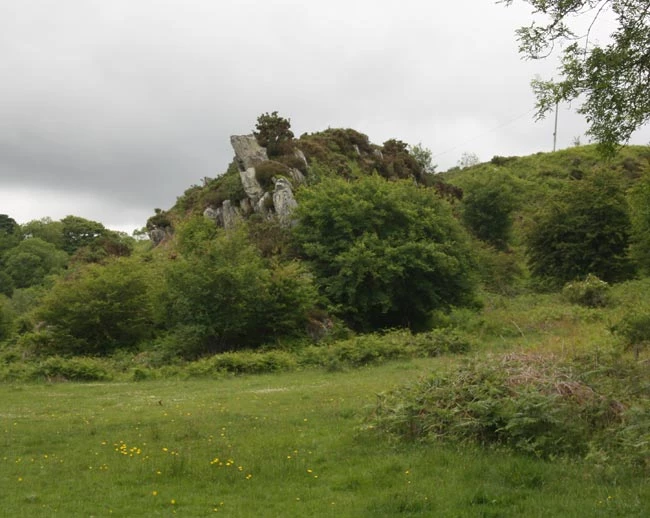
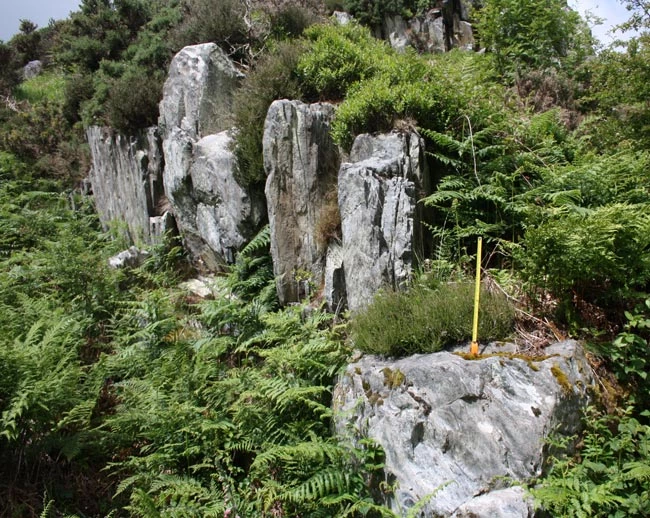
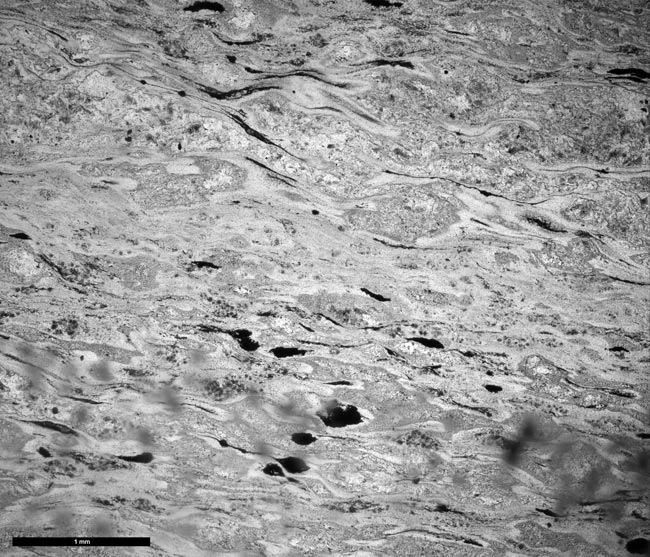
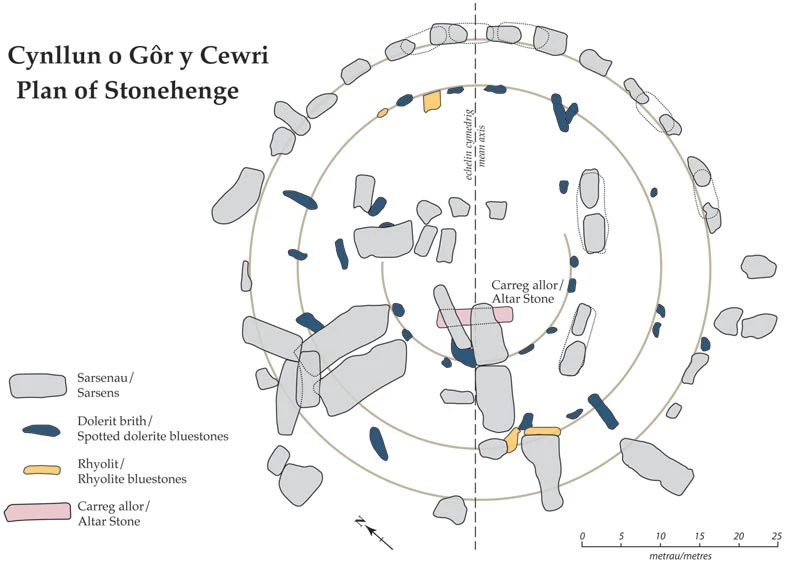
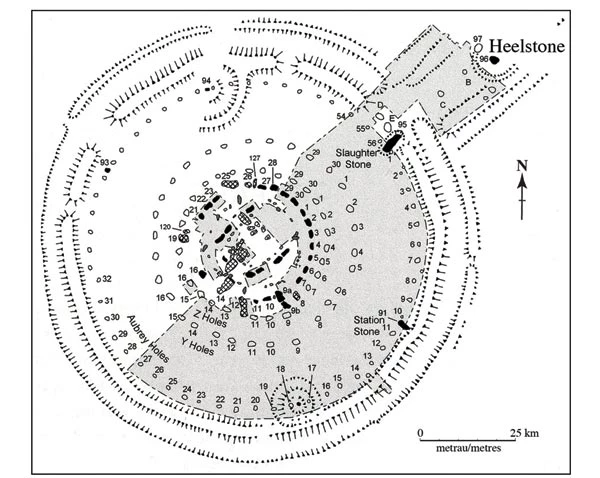
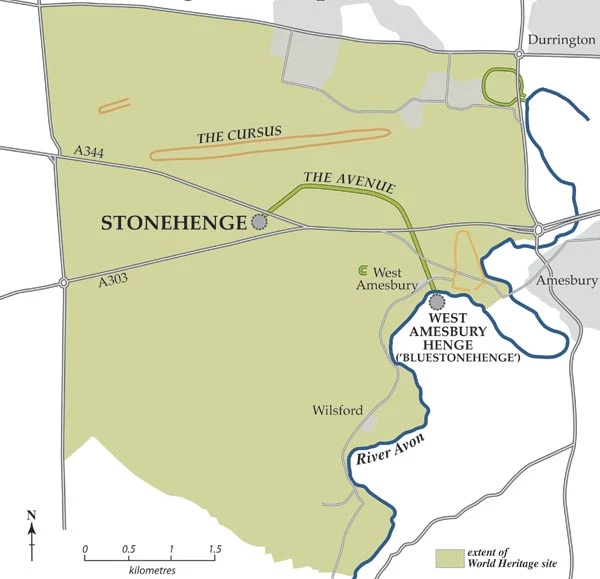
Sourcing the Stonehenge Bluestones Richard Bevins, 21 February 2012 Pont Saeson, June 2011. Close up of the outcroppng rocks, Pont Saeson, June 2011. Microscopic view of the newly identified match to the Stonehenge bluestones The source of the Bluestones at Stonehenge has long been a subject of fascination and controversy. One type was traced to north Pembrokeshire in the early 1920s, but now geologists at Amgueddfa Cymru and University of Leicester have directly matched another type to a different part of north Pembrokeshire. Will this provide us with more ideas about how the stones might have been transported to Stonehenge? The Stonehenge monument Stonehenge, on Salisbury Plain, is one of the world's most iconic ancient monuments. It is designated as a UNESCO World Heritage Site, and it is as recognisable worldwide as sites such as Machu Picchu in Peru and the Xian Terracotta Warriors in China. Stonehenge is a complex site. It is best known, of course, for the standing stones, which comprise the Outer Circle, the Inner Circle, the Inner Horseshoe and the Heel Stone and, within the structure, the so-called Altar Stone. Surrounding the stone circle are further structures, identified by mounds and ditches, and a series of 'holes' thought to have held standing stones of more henges. These holes, known as the Aubrey Holes, are important because they contain debris (or 'debitage' as some archaeologists call the material) whose lithology is not represented among the current standing stones. However, the current Stonehenge monument is only a part of a broader range of contemporary features, including the Avenue, the Cursus and the recently identified West Amesbury Henge (known as Bluestonehenge). Collectively, these comprise the Stonehenge Landscape. The large stones that form the Outer Circle are known as 'Sarsens'. They are hard, resistant sandstones thought to have been collected from the local Salisbury Plain environment. The sources of the smaller stones that form the Inner Circle, the Inner Horseshoe and the Altar Stone, known as the 'Bluestones', are 'exotic' to the Salisbury Plain area. For many years their source baffled eminent Victorian investigators such as Maskelyne, Cunnington, Teal and Judd. This is the so-called Bluestone lithology. The Bluestones In 1923, however, H.H. Thomas from the Geological Survey published a paper in The Antiquaries Journal in which he claimed to have sourced the spotted dolerite component of the Bluestones to hilltop rock outcrops, or 'tors', exposed in the high Preseli, to the west of Crymych in west Wales. Specifically, he thought that the tors on Carn Meini and Carn Marchogion were the likely source outcrops. He went on to speculate about how humans had transported the stones to Salisbury Plain, favouring transport across land rather than a combined land and sea journey. Not all the Bluestone stones standing today at Stonehenge, however, are spotted dolerites. Four of them are ash-flow tuffs, of either dacitic or rhyolitic composition. Debris recovered from the Aubrey Holes, as well as various archaeological excavations at Stonehenge and the Stonehenge Landscape, comprise spotted dolerite and more, and very different, dacitic and rhyolitic Bluestone material. Map of the Preseli area showing the research area, and the proposed origins of the Bluestones Plan of Stonehenge Plan of Stonehenge showing archaeological detail The Stonehenge Landscape Recent discoveries In 2009 Amgueddfa Cymru, in collaboration with Dr Rob Ixer, University of Leicester began new petrological investigations. Examination of debris from the Cursus Field, adjacent to the Cursus, showed the presence of samples identified as being ash-flow tuffs, with tube pumice, crystal fragments and lithic clasts in a fine-grained recrystallized matrix. These were broadly similar to the four dacitic and rhyolitic standing stones, yet showed key differences. Also present were samples that had previously been informally called 'rhyolite with fabric'. This lithology is defined by a very well-developed fabric, present on the millimetre scale. This distinctive rock texture has led Museum scientists to identify the source of the rock to Pont Saeson, in the low ground to the north of Mynydd Preseli. Vaporising the Bluestones To test this match further, quantitative evidence has been acquired by analysing the composition of tiny, micron-sized zircon crystals from Stonehenge and Pont Season rhyolite samples, using a technique known as 'laser ablation inductively coupled plasma mass spectrometry' at Aberystwyth University. The technique is to focus a very high-power laser beam, with a diameter of only 10 microns, onto the zircon crystals (themselves no larger than 100 microns) and 'ablate' them — essentially vaporizing them — so that after analysis the zircon crystals are peppered with small craters. The vapour generated by this process is then analysed in the mass spectrometer, which reveals the chemistry of the zircon crystals. This was the first time zircon chemistry had ever been used to provenance archaeological material. As well as zirconium (and the closely related element hafnium) the crystals contained detectable concentrations of a range of elements including scandium, tantalum, uranium, thorium and the rare earth elements, and the analyses from the two sample sets proved to be near identical, providing a geochemical 'fingerprint'. This result is of considerable significance, and was published in 2011 in the internationally recognised Journal of Archaeological Science. In June 2011 more detailed sampling identified the outcrop known as Craig Rhos-y-felin near Pont Saeson as the source of the majority of the rhyolite debris recovered during excavations at Stonehenge and the vicinity. The results from these latest excavations were published in the journal Archaeology in Wales in December 2011. External links University of Leicester UNESCO: Stonehenge World Heritage Site Aberystwyth University Journal of Archaeological Science Archaeology in Wales Journal