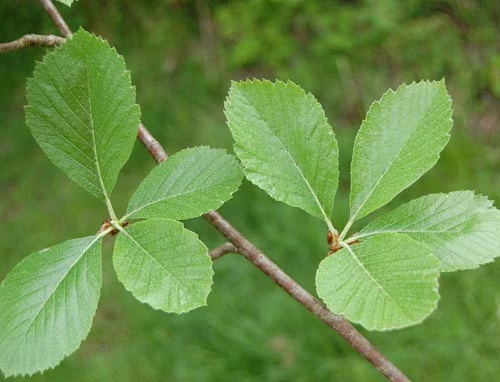
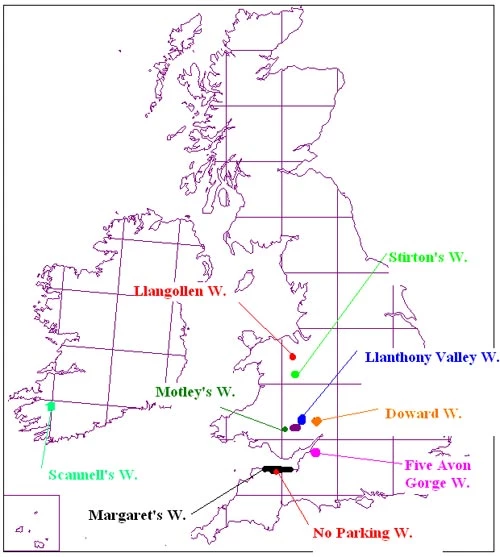
: Taxonomy & Systematics

The nature of museums: Vascular plants at Amgueddfa Cymru

7 June 2010

Groenlandia densa

A few species of conservation interest were found. Groenlandia densa (Opposite-leaved pondweed) is a declining aquatic plant and the ornamental ponds at St Fagans, where it is abundant, is of its very few remaining Welsh sites. It is classed as Vulnerable on the Red List for Wales (Dines 2008).

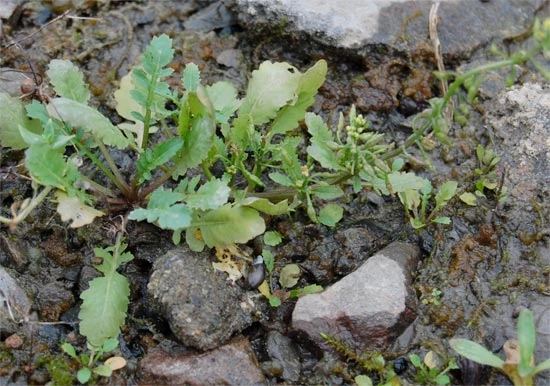
Rorippa islandica

A small quantity of Rorippa islandica (Northern Yellowcress) was found on damp waste ground at the Collections Centre in Nantgarw. This species has been spreading rapidly in south Wales during the last decade.

Catapodium rigidum subsp. majus
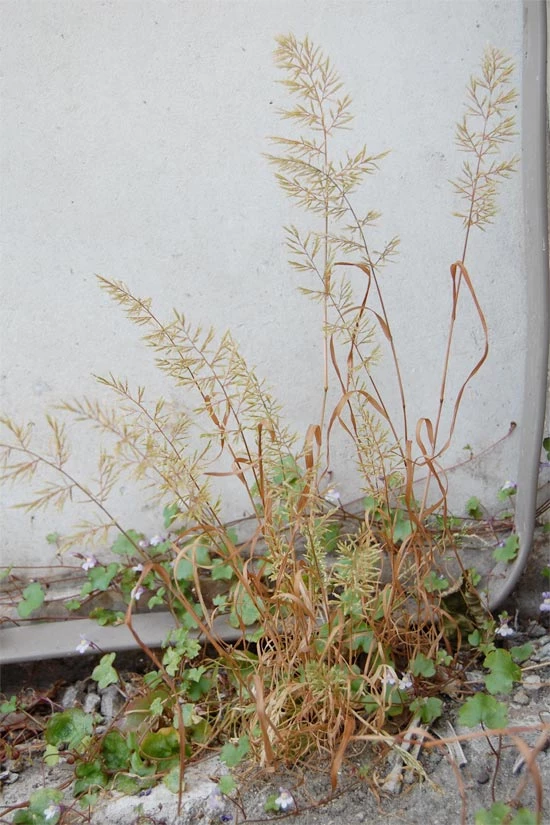
Catapodium rigidum

subsp. majus (Fern grass) is a rare grass that has been persistent, despite herbicide treatment, on the cobbles at National Museum Cardiff since at least 1997.

Studies of vascular plant species across Amgueddfa Cymru's eight locations reveal the importance of protecting fragile ecosystems.

Recent legislation, the so-called "Biodiversity Duty" (Section 40 of the Natural Environment and Rural Communities Act 2006), aims to raise the profile and visibility of biodiversity and states that "Every public authority must, in exercising its functions, have regard, so far as is consistent with the proper exercise of those functions, to the purpose of conserving biodiversity".

In response, we are carrying out biodiversity surveys at the eight Amgueddfa Cymru locations. The aim is to find out which species are present so that the biodiversity of the sites can be maintained and enhanced. In this article we're looking at the vascular plants — flowers, ferns, trees and so forth.

The method

The surveys were carried out in 2008 and 2009. All vascular plant species, except deliberately planted or cultivated species, were recorded with notes on their frequency and habitats.

Results

In all, 456 species were recorded; 364 (80%) were natives or aliens known to be here since before the year 1500, and 92 were alien species introduced since 1500. There are about 1,400 plant species in Wales that are native or known to have been here since 1500, excluding critical genera such as Hieracium, Taraxacum and Rubus (T. Dines (2008) A vascular plant Red Data List for Wales. Plantlife International, London). Amgueddfa Cymru's eight locations have 26% of the Welsh flora.

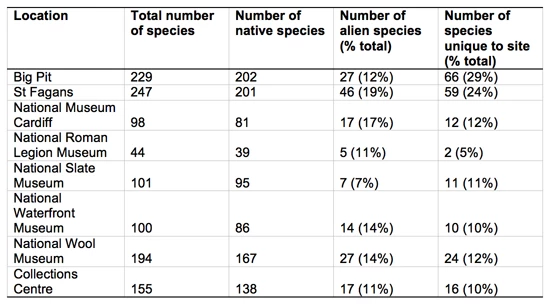
The number of species present at each site varied, partly depending on the size of the site and partly on the habitats (Table 1). The richest sites were St Fagans, where there are extensive gardens and woodland, and Big Pit, which has coal tips and moorland as well as buildings and grassland. The sites with lowest diversities were the National Roman Legion Museum at Caerleon, where land is essentially restricted to a garden, and National Museum Cardiff and the National Waterfront Museum in Swansea, which are mostly urban grasslands.

The numbers of alien species also varied, the highest proportion being at St Fagans, where many aliens had naturalised from gardens, and National Museum Cardiff in Cardiff city centre. The National Slate Museum in Llanberis had significantly fewer aliens. The only serious alien infestations were of Himalayan Balsam (Impatiens glandulifera) at the National Wool Museum in Dre-fach Felindre and St Fagans, and Japanese Knotweed (Fallopia japonica) at St Fagans.

200 (45%) of the species occur only at one or other of the sites (Figure 1), and protecting these is clearly important for maintaining Amgueddfa Cymru's overall biodiversity. The high number of unique species at Big Pit is largely due to the occurrence of moorland and coal tips with a different flora to the other, largely lowland, sites. 16 species were found at all eight sites.

Other plants of interest included Monks-hood (Aconitum napellus), Sea Stork's-bill (Erodium maritimum), Glabrous whitlowgrass (Erophila glabrescens), Ivy Broomrape (Orobanche hederae) and Southern Polypody (Polypodium cambricum). Potamogeton trichoides, recorded in several of the St Fagans ponds in 1992, was not refound. Other than these, most of the plants found are relatively common and widespread in Wales.

The overall number of plant species was quite surprising, even if it largely consisted of relatively common species. The diversity at Big Pit, St Fagans and the National Wool Museum means that those museum sites can be used for education. The more interesting species can now be monitored and looked after.

Table 1.  Summary of species data for Amgueddfa Cymru locations.

Table 1. Summary of species data for Amgueddfa Cymru locations.

Figure 1.  Frequencies of the number of locations in which each species has been recorded.
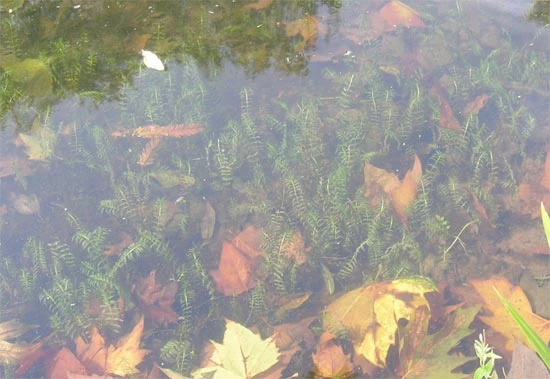
Figure 1. Frequencies of the number of locations in which each species has been recorded.
Overview of all locations

Amgueddfa Cymru: Full Report Big Pit National Coal Museum National Museum Cardiff National Wool Museum National Slate Museum Collections Centre Nantgarw St. Fagans: National History Museum National Waterfront Museum

A great shell collector's work is finally brought together

Harriet Wood and Jennifer Gallichan, 9 November 2009

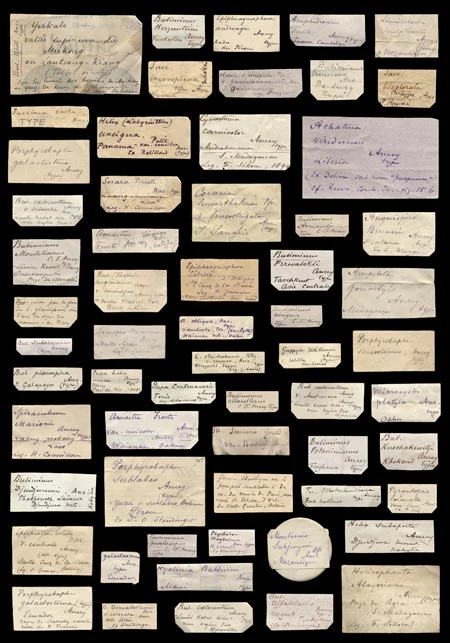
A specimen plate from the <em>The New Molluscan Names of César-Marie-Felix Ancey </em>

A specimen plate from the The New Molluscan Names of César-Marie-Felix Ancey

Amgueddfa Cymru’s mollusc collections are of international significance, and contain hundreds of thousands of specimens. In 2008 the definitive book on the work of the great collector César-Marie-Felix Ancey (1860–1906) was produced.

César-Marie-Felix Ancey named many land and freshwater species new to science. A portion of his collection came to Amgueddfa Cymru in 1955, as part of the Melvill-Tomlin collection.

Museum staff have been researching Ancey’s collection, held in museums across the world, since 2004 and have now produced the most up-to-date and comprehensive list ever of his new scientific names and publications. It forms a reference tool for specialists and researchers worldwide.

César-Marie-Felix Ancey

César-Marie-Felix Ancey was one of the great Victorian collectors and made a huge contribution to science in his short life.

Born in Marseille, France, on 15 November 1860, he showed a keen interest in natural history from an early age. He created his own collection of shells and later wrote and published many papers on conchology.

Aged 23 he was appointed conservator of the Oberthur entomological collections at Rennes, France. He later returned to Marseille to study law, literature and science, and successfully obtained his diploma in 1885.

Two years later he entered the government in Algeria. After 13 years hard work he was promoted to acting administrator at Mascara in Western Algeria. All his mollusc studies were done in his spare time.

Specimens from across the globe

Ancey’s main interest was in small land snails. Through exchange and purchase he collected specimens from all over the world. The Pacific and Asia are particularly strong in his collection, but it also covers Europe, North and South America and Africa.

It was Ancey’s great desire to make a scientific journey to the Cape Verde Islands or South America, but sadly this dream was never realised as Ancey died of a fever at the young age of 46.

The collection gets split up

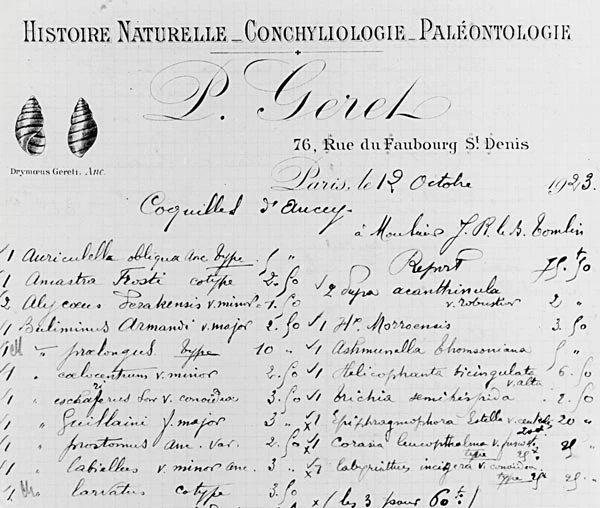
After Ancey’s death his entire collection went to Paul Geret, a shell dealer, who sold it on in 1919 and 1923. It was at this point that the collection was split up — the great private collectors of the time, Tomlin, Dautzenberg and Connolly among others, all competed for a part of it.

A majority of Ancey’s specimens are now held at Amgueddfa Cymru (Cardiff: Melvill-Tomlin collection), the Royal Belgian Institute of Natural Sciences (Brussels: Dautzenberg collection), Muséum National d’Histoire Naturelle (Paris), Bernice P. Bishop Museum (Honolulu) and the Natural History Museum (London: Connolly collection).

A tribute to Ancey’s achievements

In 1908 a list of his mollusc publications was produced, shortly followed by a separate list of the scientific names he had published. These two publications indicated that Ancey had described some 550 scientific names in over 140 papers. The problem was that neither of these lists were complete, and this has caused difficulty to researchers in this field of science ever since.

Staff at Amgueddfa Cymru have now located all of Ancey’s papers to form a comprehensive bibliography listing 176 publications and within these we have identified 756 new scientific names.

From trawling the Melvill-Tomlin collection we know that nearly 300 of these names are represented in our collection of Ancey specimens and that we hold type specimens of 155 of these.

The result of this research is The New Molluscan Names of César-Marie-Felix Ancey, the most complete access to Ancey’s work that has ever been available.

Now the true extent of Ancey’s contribution to science and conchology can be revealed, helping to make his collection more accessible to the scientific community worldwide.

The De la Beche archive at Amgueddfa Cymru

Tom Sharpe, 20 April 2009

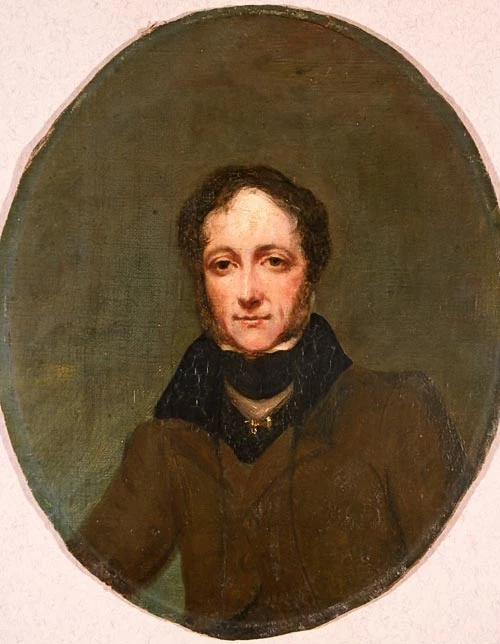
Sir Henry Thomas De la Beche (1796-1855)

Sir Henry Thomas De la Beche (1796-1855)

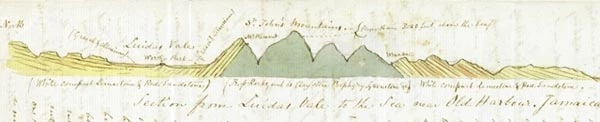
De la Beche's sketch of the Geology of Jamaica

The first geological map of Jamaica

Duria Antiquior - A more Ancient Dorset
Duria Antiquior

- A more Ancient Dorset. A watercolour painted in 1830 by Henry De la Beche. This was the first portrayal of a fossil environment in its entirety, showing the interactions of the various elements of the fossil fauna and flora, in particular the large marine reptiles of the early Jurassic Period.

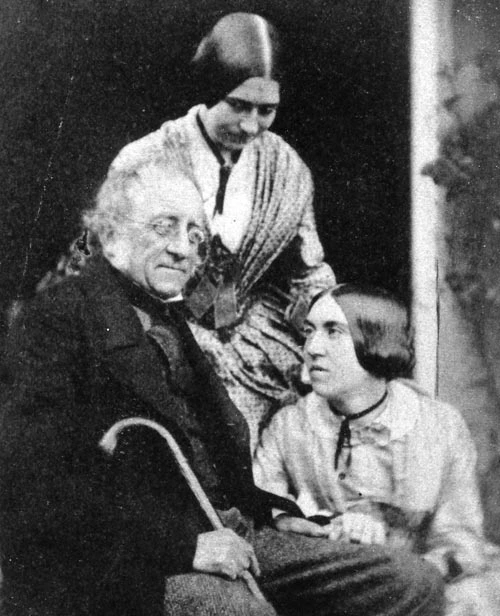
De la Beche and his daughters in Swansea in 1853

De la Beche and his daughters in Swansea, 1853

The Department of Geology at Amgueddfa Cymru houses one of the most important geological archives in the world. It contains over 2,000 items - letters, diaries, journals, sketches and photographs - of one of the leading geologists of the early 19th century, Sir Henry Thomas De la Beche (1796-1855).

During the first half of the 19th century De la Beche played an important role in the new science of geology. In addition to his own scientific contributions, he established geology as a profession and founded several of Britain's major geological institutions, including

  • the British Geological Survey
  • the Museum of Practical Geology (later the Geological Museum and now part of the Natural History Museum in London)
  • the School of Mines (now part of Imperial College London)
  • and the Mining Record Office (now part of the Coal Authority).

De la Beche was born in London and brought up in Devon and in Lyme Regis in Dorset, where he developed an interest in geology through his friendship with a local fossil collector, Mary Anning (1799-1847).

Jamaica

His family wealth came from slavery, and a sugar plantation in Jamaica, and in 1823-4 he spent 12 months on the estate. He toured the island, examining its rock outcrops. On his return to England he published the first description of the geology of Jamaica and its first geological map. De la Beche is regarded as the 'Father of Jamaican geology'.

De la Beche began mapping the rocks of Devon in the early 1830s. However unrest in Jamaica, related to the abolition of slavery and the collapse of the sugar market, left him in financial difficulties and unable to continue his work. He wrote to the Board of Ordnance offering to complete the geological mapping of Devon for the Government for £300. His application was successful and he was appointed Geologist to the Ordnance Trigonometrical Survey.

Founding the British Geological Survey

Once the Devon work was completed, he successfully applied to continue with the geological mapping of Cornwall, and in 1835 the Ordnance Geological Survey was established. From this grew today's British Geological Survey. When most geologists were clerics or interested amateurs of private means, De la Beche was one of the first professionals.

In 1837, De la Beche moved his Geological Survey to Swansea, recognising the economic importance of the Welsh coalfield. He soon became involved in the local scientific scene as a member of the Swansea Philosophical and Literary Institution and a friend of the Swansea naturalist Lewis Weston Dillwyn.

De la Beche was accompanied by his 18-year-old daughter Elizabeth (Bessie). She soon got to know one of Dillwyn's sons,

Lewis Llewelyn Dillwyn , and they married in August 1838. It is from their descendants that the Museum acquired the bulk of the De la Beche archive in the 1930s.

Spectacular fossils discovered

The papers contain a wealth of information about the developing science of geology in the first half of the 19th century. The names of the geological timescale (Cambrian, Ordovician and so on) that we now take so much for granted were being proposed and argued over, new and spectacular fossils were being discovered and evidence of the Ice Age was being recognised for the first time.

De la Beche himself worked on the first descriptions of the large fossil marine reptiles, the ichthyosaurs and the plesiosaurs, and there is much in the papers on the formation of the Geological Survey and the other organizations he established.

Darwin writes to De la Beche

De la Beche corresponded with the leading geologists of the day and, with his experience of Jamaica, was often called on for advice relating to that island. One letter of 1842 in the collection quizzes him about the colours of horses, cattle and other animals bred for a number of generations on the island, and how they had changed. The author was Charles Darwin, at that time formulating his theory of evolution.

De la Beche was a skilled draughtsman and this is evident in the archive, for in addition to faithful landscape views, fossil illustrations and geological cross-sections, he sketched many caricatures and cartoons. Through these he would comment on developments in the science, or on his activities and those of his contemporaries.

The archive is an important resource for the history of geology and is frequently consulted by researchers from Britain and abroad - to arrange a visit, please

contact us .

Editor's note: this article was amended on 28/06/17 to remove a reference to de la Beche being a "fair slave-owner".

14 new trees discovered in the UK and Ireland

5 March 2009

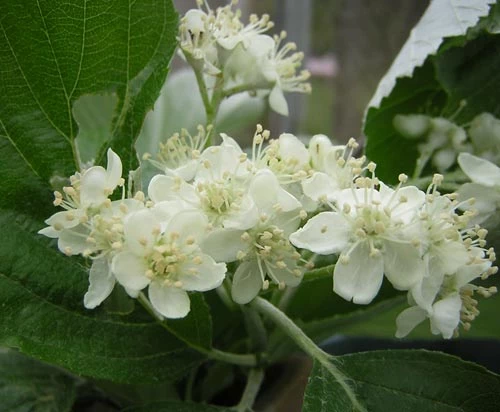
Motley's Whitebeam
Motley's Whitebeam

- Sorbus x motleyi
A new hybrid known only from one site near Merthyr Tydfil, where just two young trees are known.

Stirton's Whitebeam
Stirton's Whitebeam

- Sorbus stirtoniana
About 40 trees can be found on the cliffs of Craig Breidden, Montgomeryshire.

Houston's Whitebeam with Ms Libby houston
Houston's Whitebeam Sorbus x houstoniae

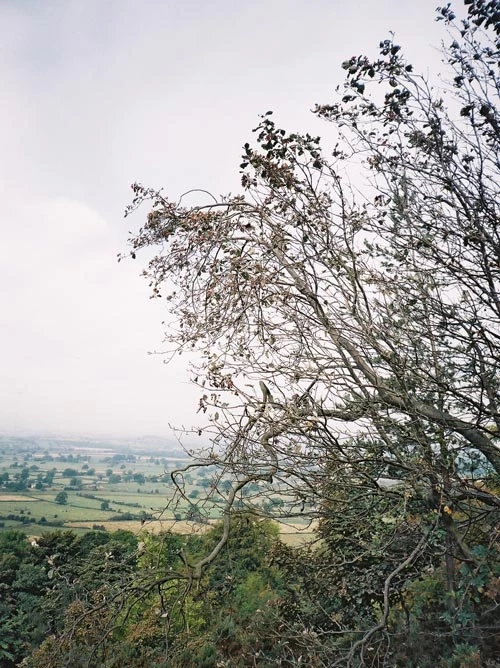
A hybrid between the Common Whitebeam and the Bristol Whitebeam. The only one example can be found on a cliff in the Avon Gorge, inaccessible without ropes. where it was found by Ms Libby Houston (pictured) in 2005.

Robertson's Whitebeam

- Sorbus x robertsonii
A new hybrid between the Common whitebeam and the Round-leaved Whitebeam. Only one tree is known so far, but it could be widespread in South-West England.

Maura Scannell's Whitebeam

- Sorbus scannelliana
A new species first confirmed as distinct in September 2008. Five trees are known in the Killarney National Park, County Kerry, Republic of Ireland, where it probably originated from the Rock Whitebeam crossing with Rowan.

Leigh Woods Whitebeam
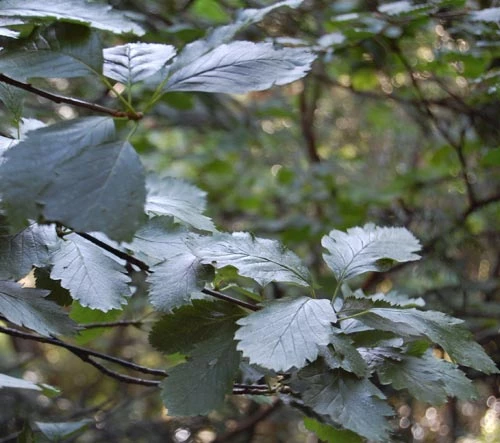
Leigh Woods Whitebeam Sorbus leighensis

A new species which has been known since the 1980s, but whose differences from the Grey-leaved Whitebeam has only recently been clarified using DNA. It is common at Leigh Woods on the Somerset side of the Avon Gorge, where about 100 trees are known.

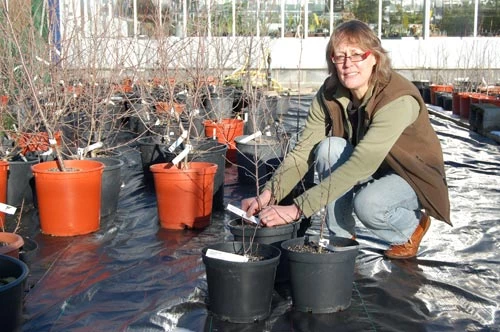
Jess Gould potting on young <em>Sorbus stirtoniana </em> at the National Botanic Gardens of Wales.

Jess Gould potting on young Sorbus stirtoniana at the National Botanic Garden of Wales.

Llangollen Whitebeam

Llangollen Whitebeam, a rare tree confined to the cliffs of Eglwyseg Mountain, Denbighshire.

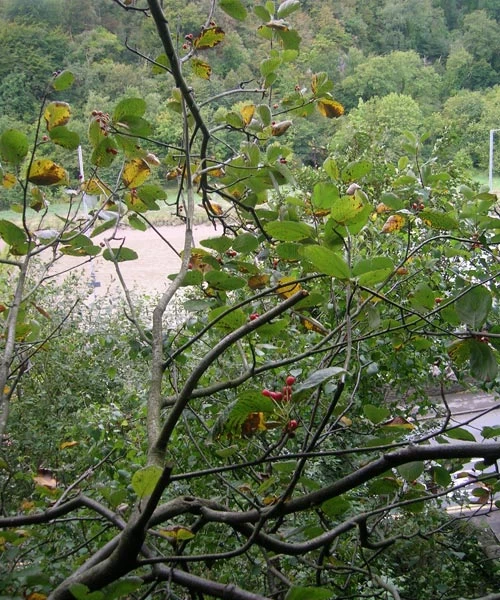
<strong>Y Gerddinen Gymreig</strong> - <em>Sorbus cambrensis</em>
Welsh Whitebeam

- Sorbus cambrensis - First found in 1874 and classed as Grey-leaved Whitebeam, biochemical studies have recently shown this to be a new species.

A new plantation of Motley's Whitebeam (Sorbus x motleyi)at the National Botanic Garden of Wales

Map showing where the new trees were found

Map showing where the new trees were found (Key: W. = Whitebeam)

Botanists at National Museum Cardiff in conjunction with scientists from Bristol University, Exeter University, Oxford University and the Royal Botanic Gardens, Kew have named new kinds of tree in Wales, England and Ireland, all of which are rare and need to be protected.

Of the 14 finds which have been named officially in Watsonia, the scientific journal of the Botanical Society of the British Isles, six occur in Wales. These are:

  • Stirton's Whitebeam (Sorbus stirtoniana) which can only be found in one place in the World - on the cliffs of Craig Breidden, Montgomeryshire;
  • Llangollen Whitebeam (Sorbus cuneifolia) - a rare tree confined to the cliffs of Eglwyseg Mountain, Denbighshire where about 240 plants are known;
  • Welsh Whitebeam (Sorbus cambrensis) found in the Brecon Beacons west of Abergavenny and Llanthony Valley Whitebeam (Sorbus stenophylla) - two closely related species from Wales;
  • Doward Whitebeam (Sorbus eminentiformis) known only from the Wye Valley in England and Wales;
  • Motley's Whitebeam (Sorbus x motleyi) - a new hybrid from one site near Merthyr Tydfil, where two young trees have been discovered.

Evolution in Action

The discovery of Motley's Whitebeam is an example of evolution in action. It originated as a hybrid between Ley's Whitebeam and Rowan in a wood after one of the few remaining Ley's Whitebeams was blown down in the 1989 Hurricane. The extra light from the gap in the woodland canopy allowed seeds in the soil to germinate and grow;

These new finds, in addition to seven new types in England and one in Ireland are all members of the Sorbus group, which includes whitebeams, rowans and service trees, increasing the number of this type of tree by over 50%.

DNA discovery

Dr Rich led this project which was primarily funded by The Leverhulme Foundation and Amgueddfa Cymru - National Museum Wales, with contributions from Countryside Council for Wales, Natural England and Royal Botanic Gardens, Kew.

Some of these trees have probably developed recently and are examples of on-going evolution of new species. Others are older types which have been known for some time but are only now described as 'species' thanks to modern DNA methods.

The type specimens of the trees are held in the Welsh National Herbarium at National Museum Cardiff, and three of the Welsh species — Stirton's Whitebeam, Motley's Whitebeam and Welsh Whitebeam can be seen growing at the National Botanic Garden of Wales.

New species and hybrids

Wales

Llangollen Whitebeam - Sorbus cuneifolia

  • A new species from North Wales, Llangollen Whitebeam has probably evolved from the English Whitebeam;
  • The Latin name cuneifolia refers to the narrower leaf bases, its distinguishing feature from the English Whitebeam;
  • It is a rare tree confined to the cliffs of Eglwyseg Mountain north of Llangollen, Denbighshire, where about 240 plants are known.

Motley's Whitebeam - Sorbus x motleyi

  • A new hybrid known only from one site near Merthyr Tydfil, where only two young trees are known;
  • This is an example of evolution in action.  It originated as a hybrid between Ley's Whitebeam and Rowan in a wood after one of the few remaining Ley's Whitebeams was blown down in the 1989 Hurricane.  The extra light from the gap in the woodland canopy allowed seeds in the soil to germinate and grow;
  • It was first found in 1999 by Graham Motley of the Countryside Council for Wales when he was monitoring the very rare Ley's Whitebeam, and is named after him.

Stirton's Whitebeam - Sorbus stirtoniana

  • A new species, recently recognised as different from Thin-leaved Whitebeam with which it had been confused;
  • About 40 trees can be found on the cliffs of Craig Breidden, Montgomeryshire;
  • It has been named in honour of Prof. Charles Stirton in recognition of his inspirational work establishing the National Botanic Garden of Wales;
  • Trees are held in cultivation at the Gardens.

Welsh Whitebeam - Sorbus cambrensis and Llanthony Valley Whitebeam - Sorbus stenophylla

  • Two new, closely related species from Wales;
  • Biochemical studies have shown these species differ from each other and from the more widespread Grey-leaved Whitebeam, within which they were formally included;
  • About 100 plants of the Welsh Whitebeam are known from the eastern Brecon Beacons west of Abergavenny;
  • The Llanthony Valley Whitebeam was first found in 1874 by the Rev. Augustin Ley;
  • There are probably about 100-200 plants in the Llanthony Valley.

England

Avon Gorge Whitebeam - Sorbus x avonensis

  • A hybrid between Common Whitebeam and Grey-leaved Whitebeam;
  • It was first found by Dr Tim Rich, Ashley Robertson and Libby Houston whilst studying whitebeams in the Avon Gorge in 2004;
  • It has only so far been confirmed for the Avon Gorge in Bristol, but may occur locally in South-west England where the parents grow together.

Houston's Whitebeam - Sorbus  x houstoniae

  • A hybrid between the Common Whitebeam and the Bristol Whitebeam;
  • The only one example can be found on a cliff in the Avon Gorge, where it was found by Ms Libby Houston in 2005 which makes it inaccessible without ropes.

Leigh Woods Whitebeam - Sorbus leighensis

  • A new species which has been known since the 1980s, but whose differences from the Grey-leaved Whitebeam has only recently been clarified using DNA; 
  • It is common at Leigh Woods on the Somerset side of the Avon Gorge;
  • About 100 trees are known.

Margaret's Whitebeam - Sorbus margaretae

  • Related to the Rock Whitebeam and the Bloody Whitebeam;
  • It was first recognised as a distinct species by Margaret E. Bradshaw during her surveys of the rare Whitebeams of South-west England in 1984, and it is named after her. 
  • It occurs only on the cliffs along the north coast of Devon and Somerset, where at least 120 trees are known. 

No Parking Whitebeam - Sorbus admonitor

  • The No Parking Whitebeam was first noted to be different from the more widespread Devon Whitebeam in the 1930s, but has only recently been demonstrated to be a different species using biochemical analyses; 
  • The name originates from the time in the 1930s when a ‘No Parking' notice was nailed to a tree by a small layby at Watersmeet in North Devon.
  • It is common to the Watersmeet area of North Devon where there are at least 110 trees.

Proctor's Rowan - Sorbus x proctoris

  • A new hybrid between Rowan and Sichuan Rowan;
  • It is named after Dr Michael Proctor, an eminent senior botanist of Exeter University, for his excellent work on British Whitebeams;
  • Only one tree has been found in the wild in the Avon Gorge, where there is a nature conservation dilemma.  As one of its parents is a garden tree from China, there is the potential for genes of the Sichuan Rowan to spread into the native rowan population in the Avon Gorge. To prevent this happening, one option would be to destroy/remove the only example of this tree!

Robertson's Whitebeam - Sorbus x robertsonii

  • A new hybrid between the Common whitebeam and the Round-leaved Whitebeam; 
  • Only one tree is known so far, but it could be widespread in South-West England; 
  • It was first found by Dr Tim Rich, Ashley Robertson and Libby Houston whilst studying whitebeams in the Avon Gorge;
  • It is named after Dr Ashley Robertson for his outstanding work in clarifying the evolution of the whitebeams in the Avon Gorge.

Wales & England

Doward Whitebeam - Sorbus eminentiformis

  • A new species, known only from the Wye Valley in England and Wales. 
  • The total population is probably under 100 trees, most of which occur on the Great Doward. 

Ireland

Maura Scannell's Whitebeam - Sorbus scannelliana

  • A new species first confirmed as distinct in September 2008; 
  • Five trees are known in the Killarney National Park, County Kerry, Republic of Ireland, where it probably originated from the Rock Whitebeam crossing with Rowan;
  • It is named after one the great Irish botanist Maura Scannell, formerly of the National Botanic Gardens Glasnevin, whose knowledge of Irish botany is unrivalled.

References:

  • Rich, T. C. G. & Proctor, M. C. F. (2009).  Some new British and Irish Sorbus L. taxa (Rosaceae).  Watsonia 27: 207-216.
  • Rich, T. C. G., Harris, S. A. & Hiscock, S. J. (2009).  Five new Sorbus (Rosaceae) taxa from the Avon Gorge, England.  Watsonia 27: 217-228.

Gas-guzzling clams

1 April 2008

The new species and Genus Spinaxinus sentosus, collected from the organic cargo of the sunken ship Francois Vieljeux

The new species and Genus Spinaxinus sentosus, collected from the organic cargo of the sunken ship Francois Vieljeux. The genus bears little resemblance to other known thyasirids and remains the only record of this species.

Thyasira methanophila Clam
Thyasira methanophila

, a clam new to science from a methane seepage area off Concepción, Chile. Its name suggests its dependence on methane.

An extreme magnification of the exterior shell of Spinaxinus sentosus

An extreme magnification of the exterior shell covering of Spinaxinus sentosus, recovered from the organic cargo of the sunken ship Francois Vieljeux. The spines witnessed at this magnification lead scientists at the Museum to name the new genus 'Spinaxinus'.

Deep beneath the sea floor there are large reservoirs of oil and natural gas, but it is only relatively recently that methane has been discovered to seep from the surface of the sea bed. These areas are known as 'gas seeps' and certain animals have evolved specifically to take advantage of this unique environment.

A diet of methane and sulphur

Found alongside these methane gas seeps are communities of clams that use the gas as a source of food. They don't actually eat the gas but they have evolved to harbour bacteria in their tissues that do the job for them.

These organisms are known as 'chemosymbiotic' and a few groups of clams have been very successful in adapting to this environment.

The same group of clams can also exploit sulphur and these are found living in areas where there are layers of rotting vegetation, around decaying whale carcasses, at hot vents and even on mud contaminated with diesel oil.

Because these clams come from unusual environments and often from deep water, many have yet to be studied in detail. A number of these gas guzzling clams were sent to Amgueddfa Cymru - National Museum Wales for identification and description. Several scientific papers have now been written on these species new to science

Clams from Chile

Clam shells and whole specimens were sent to the Museum following the discovery of a methane seep off the coast of Chile at a depth of 700-900m. One of these species, belonging go the genus Thyasira, was new to science and has been described in a scientific paper. The bacteria in the gill tissue of the clam were studied using a scanning electron microscope. This confirmed the symbiosis (reliance) between the bacteria and the clam.

A species of the genus Lucinoma was also discovered to be new to science but only shells have been found so far. It is likely that the majority of species living at this site are endemic (restricted to this location) and found nowhere else in the world.

The Pakistan Margin

From the other side of the world, we were sent a small species from the same group as the Chilean bivalve - Thyasira - but from the Indus Fan, off the coast of Pakistan, collected while investigating the unusual fauna that live in the very low oxygen waters of this region. The Museum worked with the Natural History Museum, London to investigate the DNA alongside describing the anatomy and shell of this bivalve.

A clam with a taste for shipwrecks

Man-made sources of methane and sulphur are also exploited and one of the strangest was the cargo of the sunken container ship Francois Vieljeux. This ship sank off the north coast of Spain in 1,160m of waters, taking with it its cargo of castor beans and sunflower seeds.

During attempts to salvage the vessel it was noted that clams had settled and grown on the cargo. All the clams belonged to chemosymbiotic groups and were exploiting the sulphur released by the rotting cargo. One clam was a Thyasira, similar to the specimen from Chile.

Cascadia Basin, off Washington State

The Baby Bare Seamount in the north-east Pacific Ocean is a hot spring and home to a new species of Axinus (similar to Thyasira). This site is unusual in that no other species of bivalve typically found at other methane seeps and hot vent sites are found here. Methane and Hydrogen sulphide levels are low, so initially it was a mystery as to what these animals were using as nutrition.

Cadiz Mud Volcanos

Off the Southern coast of Portugal there are numerous marine mud volcanoes created by stresses on the African and Eurasian tectonic plates. These stresses cause hot, methane and sulphur rich fluids to eject from deep within the volcanoes out into the sea bed above. By the time the fluids reach the sediment surface they are cold, so the mud volcanoes are classed as cold-seeps. Many species of Thyasira clams are found at some of these sites, but only a few are known to harbour the chemosymbiotic bacteria that help them to extract nutrition from sulphur and methane. A collaboration between the Museum and Cadiz University, Spain has resulted in the newly described species Thyasira vulcolutre , meaning 'belonging to mud volcano'.

Finally, in conjunction with Bangor University, the Museum is carrying out the taxonomic work on a Thyasira collected from a mud volcano in the Arctic and a mussel of the genus Idas which was collected from diesel contaminated mud beneath an oil rig in the North Sea.

This work by Amgueddfa Cymru - National Museum Wales is helping research the possibility of using these clams to clean up contaminated areas of the sea bed.