: Glass & precious metal objects

Heat, Smoke and Tears - The work of Maurice Marinot

Rachel Conroy, 19 November 2015

'I have never seen anything so beautiful, so precious and at the same time so simple'

(André Derain)

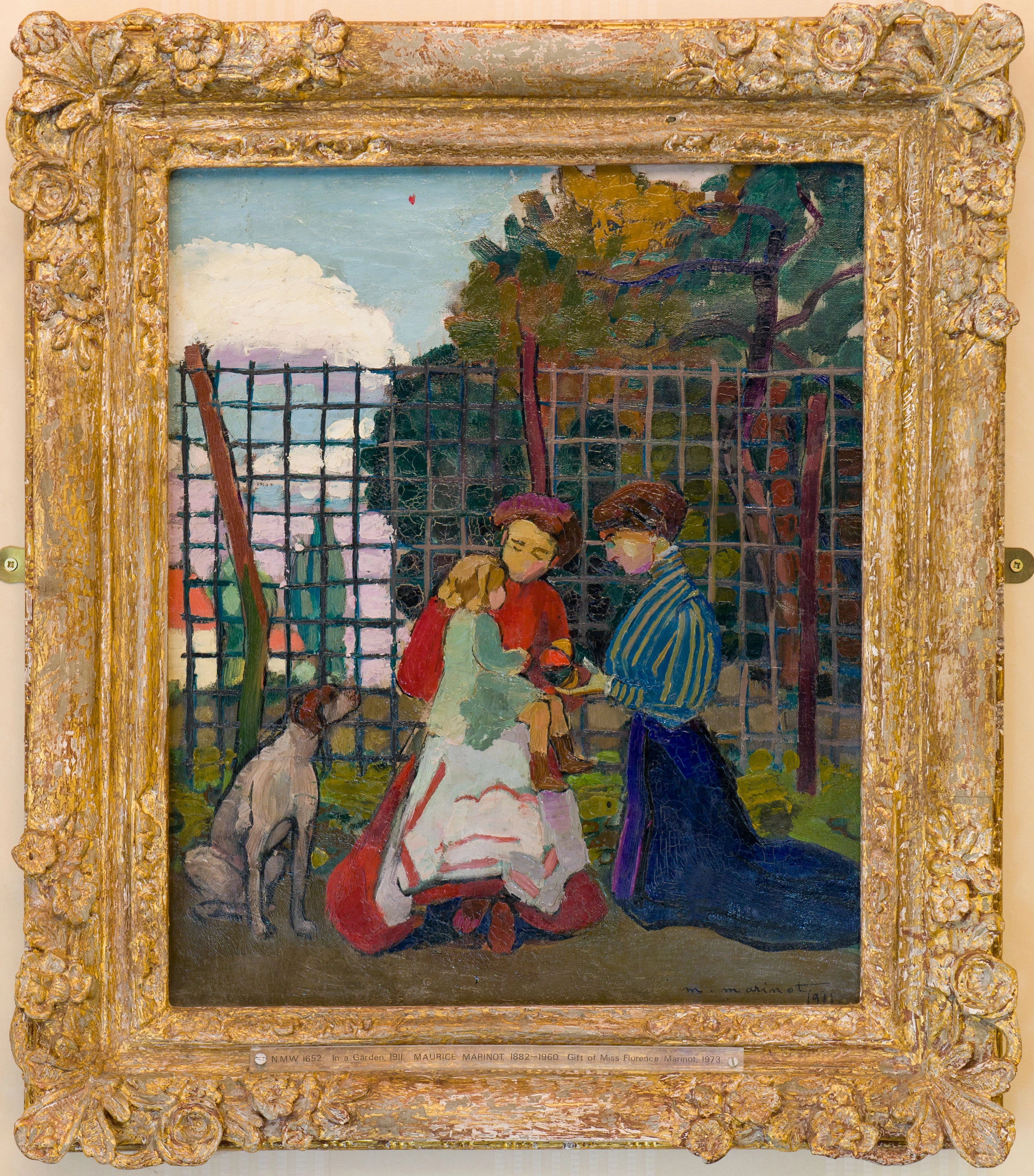
In a Garden, 1908, oil on canvas. (DA007037)

In a Garden, 1908, oil on canvas. (DA007037)

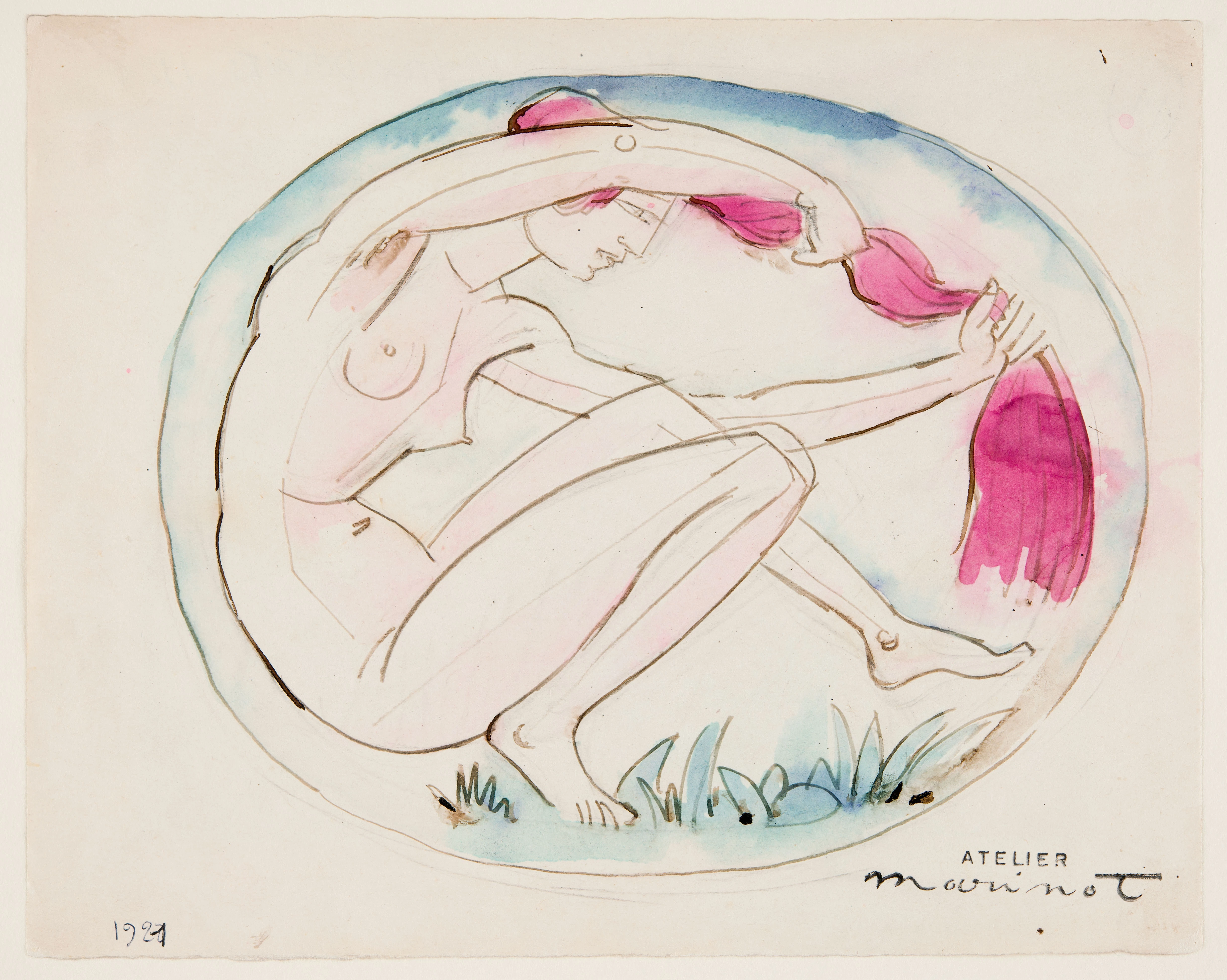
Design for enamelled decoration, 1921, watercolour, ink and pencil on paper. (DA008188)

Design for enamelled decoration, 1921, watercolour, ink and pencil on paper. (DA008188)

Maurice Marinot (1882-1960) is one of the most important glassmakers of the twentieth century. He was a pioneer in the development of glass as an art form. In 1944, a munitions truck exploded outside of his studio, destroying a lifetime of work and making his glass very rare.

Marinot was born in Troyes, south-east of Paris and began his career as a painter. He enrolled at a prestigious Paris art school, but was expelled for being a ‘dangerous non-conformist.’ At the 1905 Salon d’automne in Paris, his paintings were shown alongside those by artists such as Matisse and Derain. Critics attacked the exhibition for its riot of colour, coining the term ‘fauves’ (‘wild beasts’) to describe the artists.

In 1911 Marinot visited the glassworks of his old school friends, Gabriel and Eugène Viard, at Bar-sur-Seine. He was immediately captivated. Desperate to learn the secrets of glassmaking, Marinot persuaded the Viards to give him a work space and tools. He initially drew on his experience as a painter, decorating pieces made by others with vibrant enamels. By the early 1920s, he was sufficiently skilled to begin creating and exhibiting his own glass.

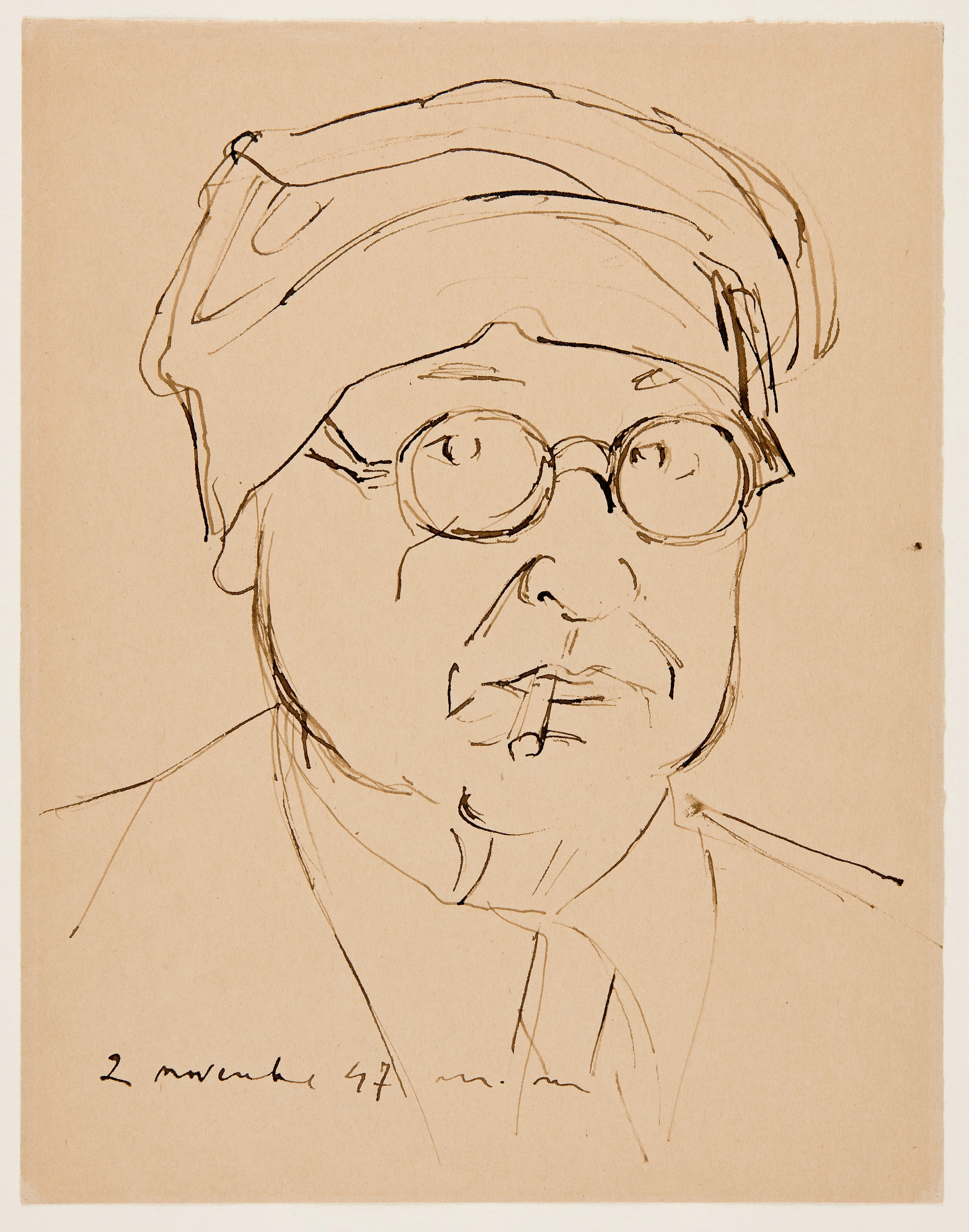
Self portrait, 1947, pen and ink on paper. (DA008196)

Self portrait, 1947, pen and ink on paper. (DA008196)

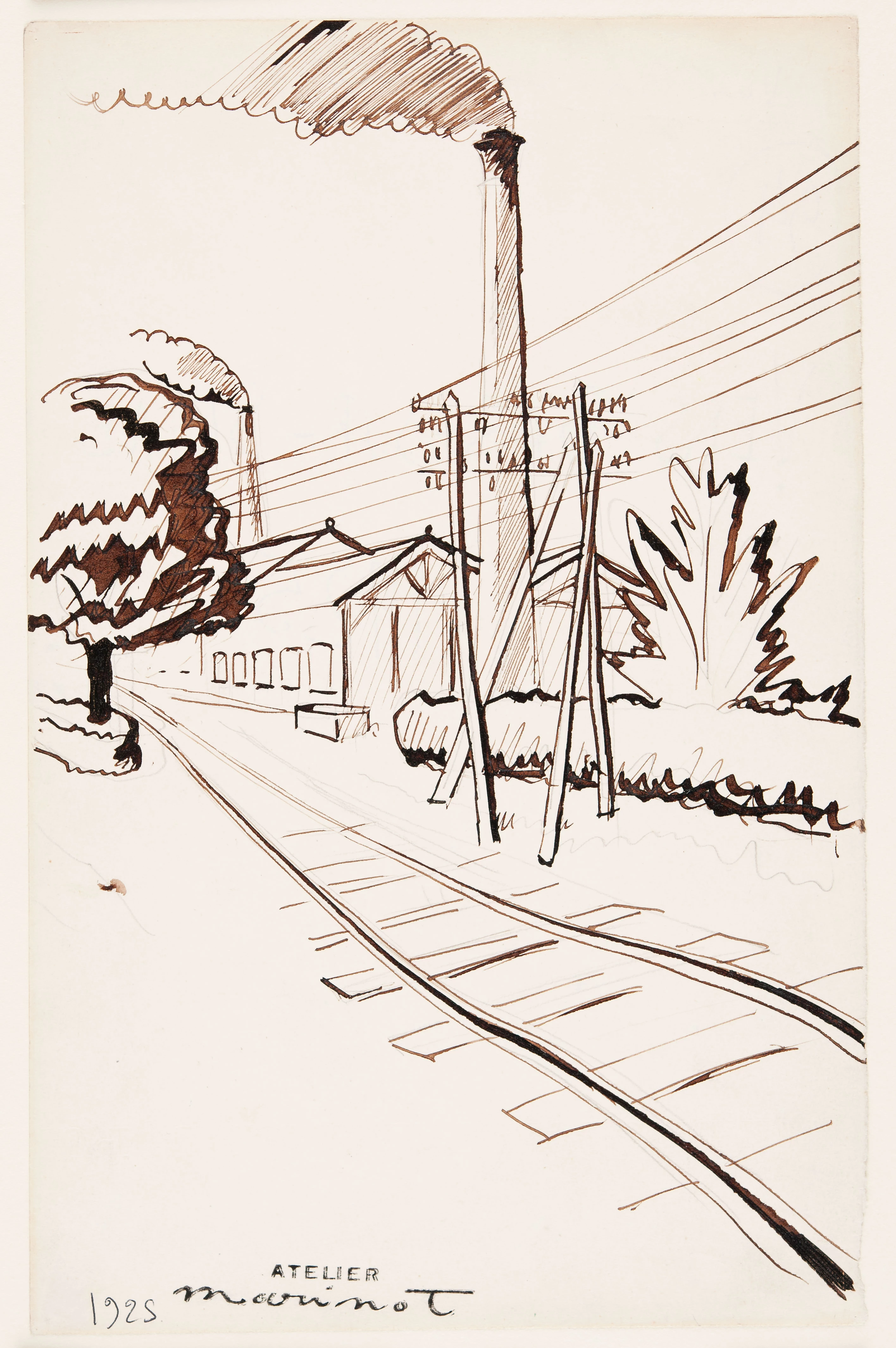
Near Bar-sur-Seine, 1925, pen ink and pencil on paper. (DA006752)

Near Bar-sur-Seine, 1925, pen ink and pencil on paper. (DA006752)

"To be a glassman is to blow the transparent stuff close to the blinding furnace…to work in the roasting heat and the smoke, your eyes full of tears, your hands dirtied with coal-dust and scorched"

(Maurice Marinot, 1920).

Marinot made unique works, entirely by hand, that he considered as creative and meaningful as painting or sculpture. His glass is dense, bold and highly experimental, with an emphasis on form and constant interest in the effects of light. Working in glass provided Marinot with the opportunity to extend his exploration of colour – from delicate, opaque pinks and rich purples, to lucid greens and shimmering metallic. Taking inspiration from nature, his objects can seem as if they are cut from a block of melting ice, carved from granite or filled with murky pond water.

Marinot’s career in glass was intense and very successful, yet relatively brief. In 1937 failing health and a catastrophic fire at the glassworks meant he stopped making after 26 years of experimentation. His extraordinary achievements continue to influence glass artists today.

In 1973 Florence Marinot, the artist’s daughter, gifted works to Amgueddfa Cymru. Florence chose to donate them to this Museum due to the strength of its collection of modern French paintings. Only three other collections in the UK and Ireland hold work by the artist: the Victoria and Albert Museum, New Walk Museum in Leicester and the National Gallery of Ireland.

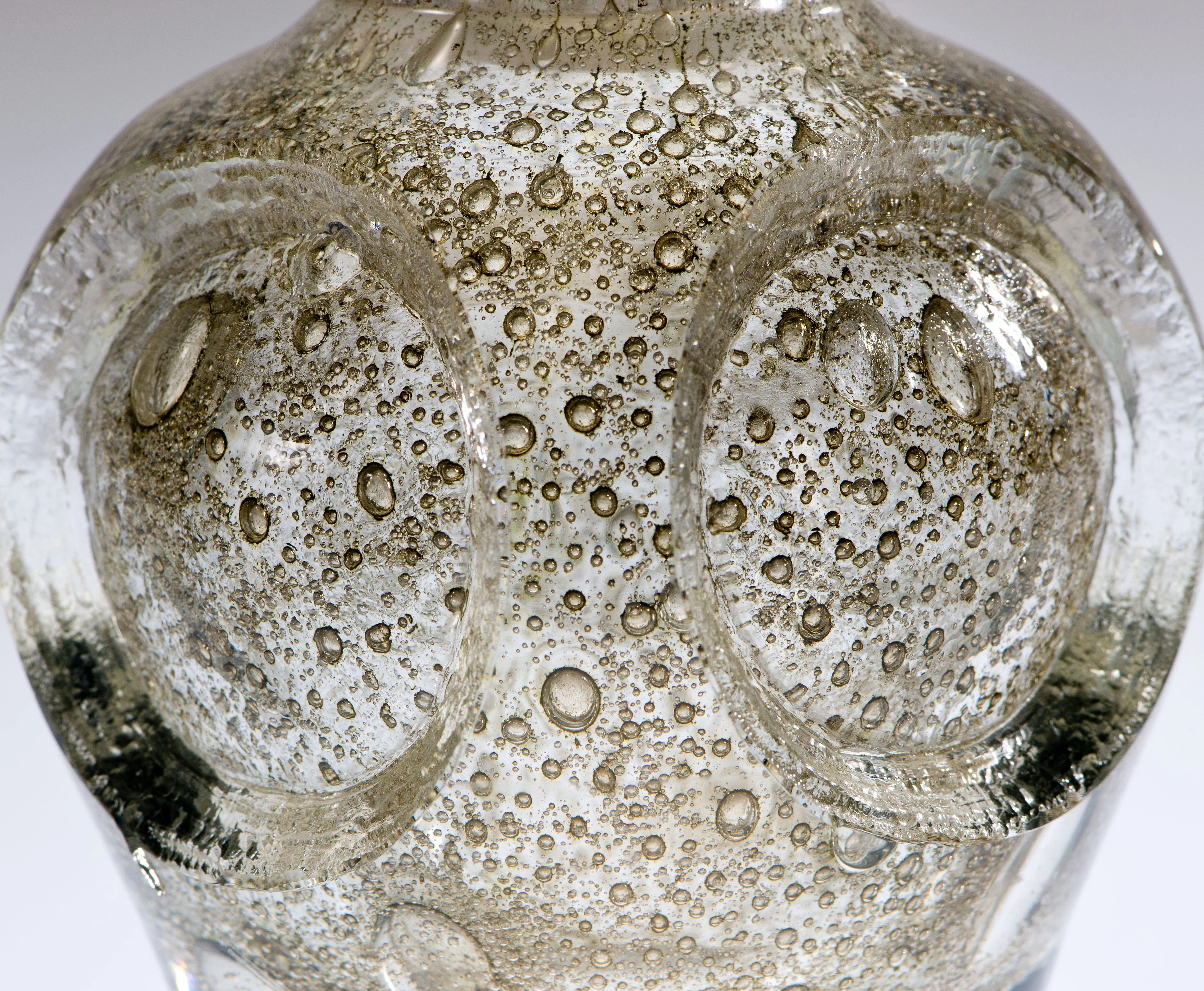
Detail of a bottle, 1929, bubbled and acid-etched glass. (DA008203_05)

Detail of a bottle, 1929, bubbled and acid-etched glass. (DA008203_05)

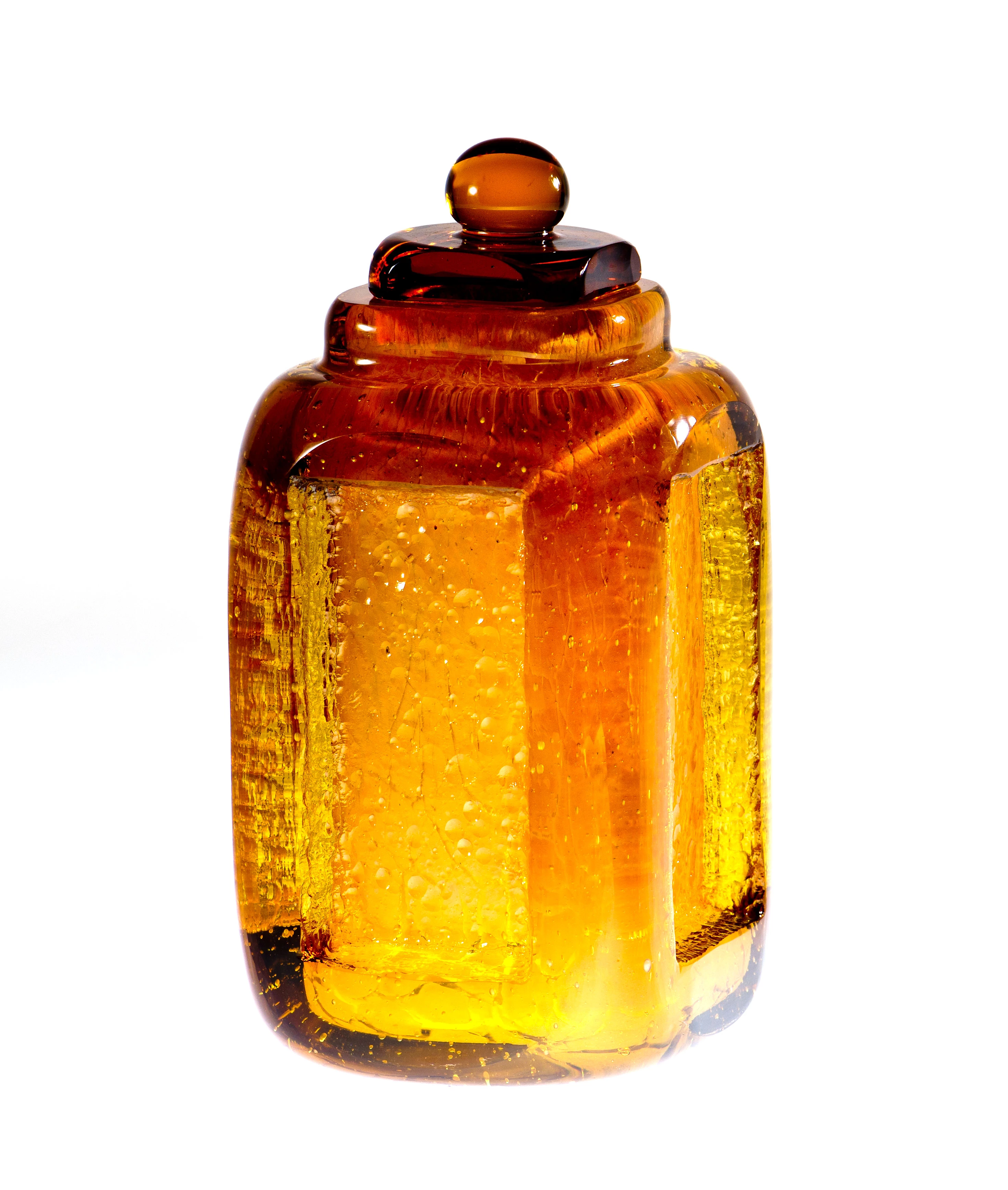
Bottle and stopper, 1929, acid-etche, crackled and cased glass. (DA008205_03)

Bottle and stopper, 1929, acid-etche, crackled and cased glass. (DA008205_03)

With thanks to Dr P. Merat for permission to reproduce images of work. All images © Dr P Merat.
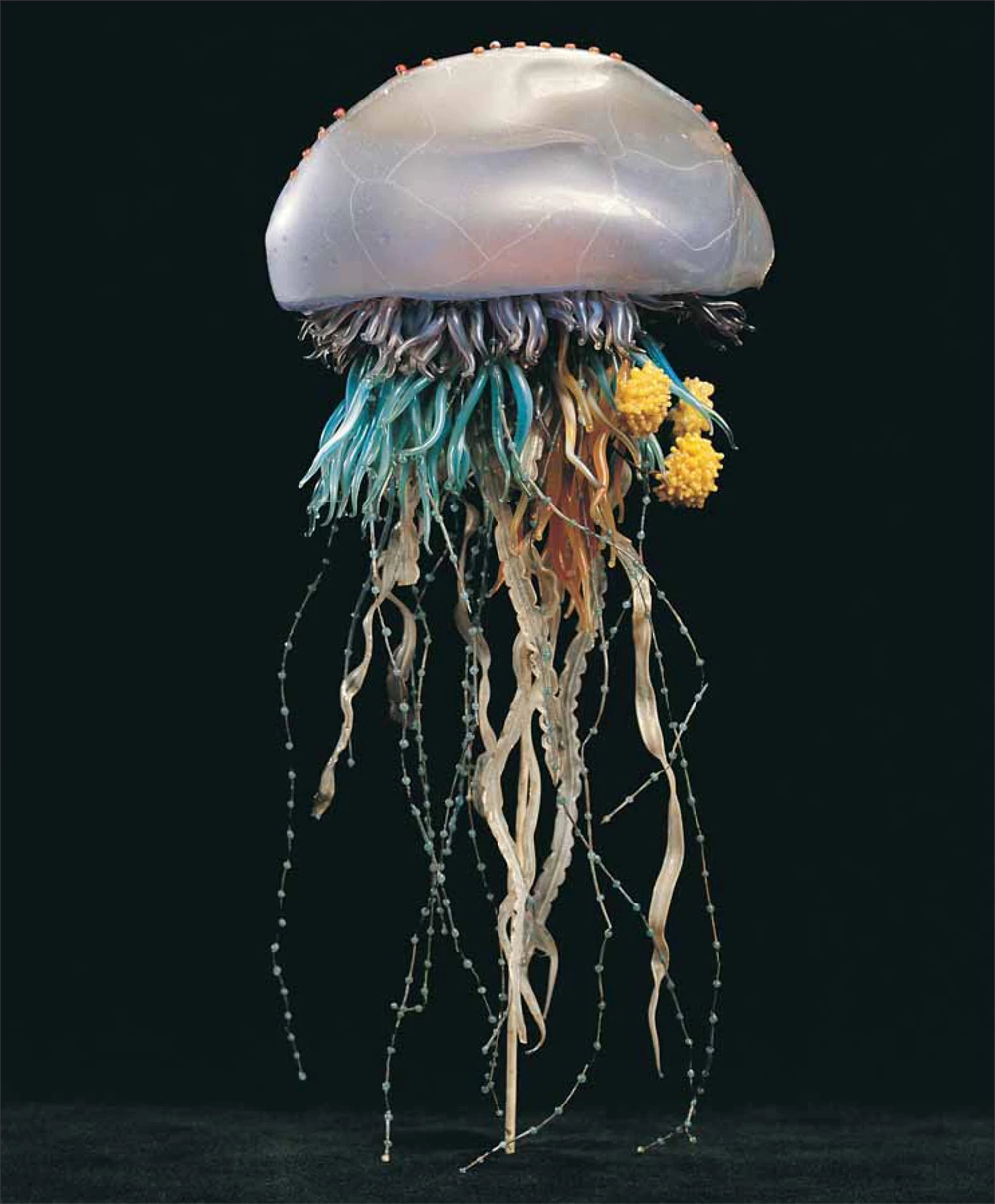
Portuguese Man-of-War Navigator

21 May 2007

Portuguese Man-of-War sea creature - Physalia arethusa.

A colourful model of the Portuguese Man-of-War sea creature - Physalia arethusa.

Sir Charles Jackson’s unique collection of silver

19 February 2007

In 2000, Amgueddfa Cymru learned that hundreds of pieces of rare silver, which had been on loan to the Museum since it first opened its doors, were to be sold.

The items, some of which date back to the 16th century, are from the collection of Sir Charles Jackson (1849-1923), a Welsh lawyer and businessman. Luckily, after much negotiation and fundraising, they were finally secured for the Museum with considerable help from the National Heritage Memorial Fund, the National Art Collections Fund and the Worshipful Company of Goldsmiths.

So why is this collection so important?

Sir Charles Jackson (1849-1923)

Sir Charles Jackson (1849-1923)

Sir Charles Jackson

Sir Charles Jackson was born in Monmouth. He became part of a group of collectors and antiquarians that included Robert Drane, T. H. Thomas and Wilfred de Winton. Together they influenced the development of the Cardiff Museum. They also played a role in making sure the National Museum of Wales would be located in Cardiff.

Remarkable treasures

Some of the objects collected by Jackson are of outstanding aesthetic quality. Rare items include an early 14th century acorn-top spoon, which is one of the very first hallmarked pieces of English silver, and a complete set of 'apostle' spoons (twelve apostles and the 'Master') from 1638.

The most important item is probably a two-handled cup in the 'auricular' style (a 17th century ornamental style based on parts of the human anatomy, particularly the human ear, after which the style is named) associated with the Dutch silversmith Christian van Vianen, who worked for the court of Charles I. Hallmarked 1668, this cup is one of a handful of London-made pieces in this distinctive style. The maker's mark remains unread, but could be either George Bowers or Jean-Gerard Cooques, both goldsmiths to the court of Charles II.

Inspirational rarities

Two-handled cup and cover, London 1668

Two-handled cup and cover, London 1668

Unusual, inspirational pieces in the collection include one of the earliest known silver wine tasters, a 17th century Catholic chalice made in Cork that can be taken apart for concealment, and an inkstand in the form of a library globe. The collection's range of more common objects, such as salt cellars and cream jugs, shows the evolution of shapes over time, and tells us a lot about social customs, particularly relating to dining. The astonishing sequence of spoons contains almost every type made over a period of 400 years.

Unique academic value

Although the collection contains many rare and beautiful objects, the principal reason for keeping it intact is its unique academic value.

Jackson's two principal publications, English Goldsmiths and their Marks (1905) and The Illustrated History of English Plate (1911), are the foundation of modern silver scholarship. In them Jackson relied heavily on his own collection to illustrate marks and the development of styles over time. He corresponded with all the major collectors of his day, and his collection sums up knowledge of historic silver in Britain in the early 1900s. It is therefore a unique reference source and remains the subject of regular enquiries from silver specialists all over the world.

The Jackson collection also complements and enriches the Museum's own outstanding collection of historic silver, much of which is associated with the historic governing families of Wales. The acquisition, after eighty years of display, of half the Jackson collection, and the likelihood that the rest will one day follow, helped the Museum develop its role as the home of one of Britain's principal study collections of historic silver.

Background Reading

Andrew Renton, 'Sir Charles Jackson (1849-1923)' in Silver Studies - the Journal of the Silver Society, vol 19 (2005), 144-6

A grand cup made from solid Welsh gold

19 February 2007

Welsh Gold

Solid gold cup

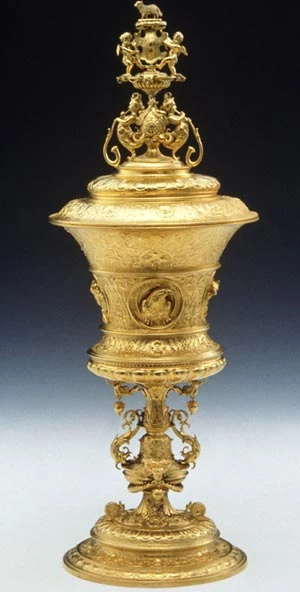
The solid gold cup made from a design on a drawing in the British Museum of a cup given by King Henry VIII to Queen Jane Seymour in 1536. Cup and cover, 22 carat gold, R & S Garrard & Co, London 1867-68. Height: 39.8 cm (15 ''/16 in).

Welsh gold is very rare. The wedding rings of today's British Royal family are made from it. The largest object made of Welsh gold is a copy of a cup Henry VIII gave to one of his wives.

The richest family in Wales

The cup was made in 1867 for the Williams-Wynn family of Ruabon in Denbighshire, using gold from their own mine. At the time, they were the richest family in Wales. They were well known for their wealth, which they spent on grand houses, expensive paintings and silver, much of which is now at the Museum.

The Welsh Gold Rush

While many people know of the California gold rush of 1848, few know that, a few years later, there was a Welsh gold rush. In 1862 gold was discovered in Merioneth and, soon after, Sir Watkin Williams-Wynn (1820-1885) opened the Castell Carn Dochan mine on his land. The mine produced most of its gold between 1865 and 1873.

Payment in Gold

Sir Watkin was paid a large royalty for the gold mined, and he was paid with his own gold ingots. However, he was rich enough not to need this income, and could treat this gold as a novelty.

A Cup of Solid Gold

Some of this gold was used to make a magnificent cup. The cup is nearly 40cm high and made of 22-carat gold. It is inscribed "MADE OF GOLD THE ROYALTY FROM CASTELL CARNDOCHAN MINE 1867" and hallmarked by R & S Garrard and Co., Haymarket, London. It is ornate, in the style popular in the early Renaissance period. It stands on a circular foot, and the stem is flanked by flower heads, dolphins and bells. The cup is inscribed with several family mottoes: eryr eryrod eryri ('the eagle of the eagles of Snowdonia'), y cadarn ar cyfrwys ('the strong and the sly'), bwch yn uchaf ('the ram is on top') and cwrw da yw allwedd calon ('good beer is the key to the heart'). The tall lid has the Williams-Wynn arms, including a young ram on top, supported by a pair of cherubs.

A Royal Design for Henry VIII

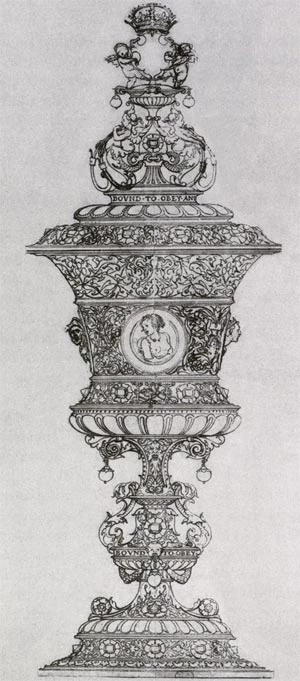
The original design for the cup given to Queen Jayne Seymour in 1536-37

The original design for the cup given to Queen Jayne Seymour in 1536-37 in the British Museum. Hans Holbein the Younger, pen and ink on paper. Copyright British Museum, London

The makers of the cup based the design on a drawing in the British Museum of a cup King Henry VIII gave Queen Jane Seymour in 1536. This cup was set with diamonds and pearls. Jane Seymour's cup was melted down on the orders of King Charles I in 1629, when he was desperate for cash.