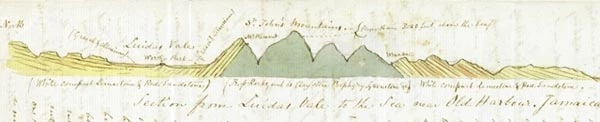
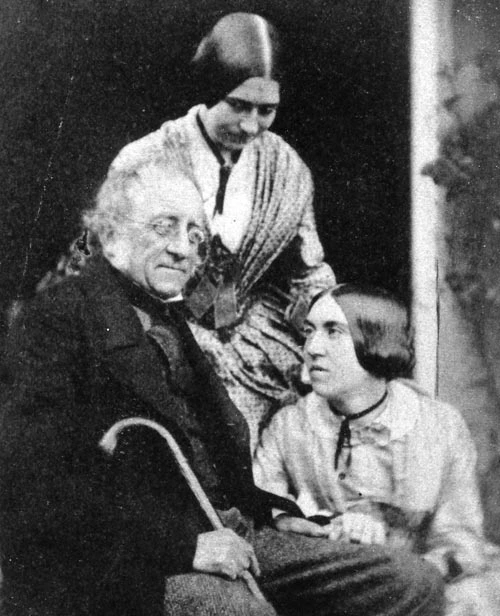
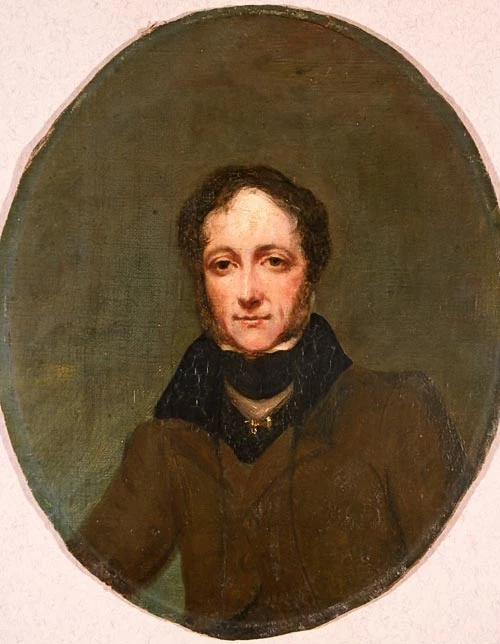
The De la Beche archive at Amgueddfa Cymru Tom Sharpe, 20 April 2009 Sir Henry Thomas De la Beche (1796-1855) The first geological map of Jamaica Duria Antiquior - A more Ancient Dorset. A watercolour painted in 1830 by Henry De la Beche. This was the first portrayal of a fossil environment in its entirety, showing the interactions of the various elements of the fossil fauna and flora, in particular the large marine reptiles of the early Jurassic Period. De la Beche and his daughters in Swansea, 1853 The Department of Geology at Amgueddfa Cymru houses one of the most important geological archives in the world. It contains over 2,000 items - letters, diaries, journals, sketches and photographs - of one of the leading geologists of the early 19th century, Sir Henry Thomas De la Beche (1796-1855). During the first half of the 19th century De la Beche played an important role in the new science of geology. In addition to his own scientific contributions, he established geology as a profession and founded several of Britain's major geological institutions, including the British Geological Survey the Museum of Practical Geology (later the Geological Museum and now part of the Natural History Museum in London) the School of Mines (now part of Imperial College London) and the Mining Record Office (now part of the Coal Authority). De la Beche was born in London and brought up in Devon and in Lyme Regis in Dorset, where he developed an interest in geology through his friendship with a local fossil collector, Mary Anning (1799-1847). Jamaica His family wealth came from slavery, and a sugar plantation in Jamaica, and in 1823-4 he spent 12 months on the estate. He toured the island, examining its rock outcrops. On his return to England he published the first description of the geology of Jamaica and its first geological map. De la Beche is regarded as the 'Father of Jamaican geology'. De la Beche began mapping the rocks of Devon in the early 1830s. However unrest in Jamaica, related to the abolition of slavery and the collapse of the sugar market, left him in financial difficulties and unable to continue his work. He wrote to the Board of Ordnance offering to complete the geological mapping of Devon for the Government for £300. His application was successful and he was appointed Geologist to the Ordnance Trigonometrical Survey. Founding the British Geological Survey Once the Devon work was completed, he successfully applied to continue with the geological mapping of Cornwall, and in 1835 the Ordnance Geological Survey was established. From this grew today's British Geological Survey. When most geologists were clerics or interested amateurs of private means, De la Beche was one of the first professionals. In 1837, De la Beche moved his Geological Survey to Swansea, recognising the economic importance of the Welsh coalfield. He soon became involved in the local scientific scene as a member of the Swansea Philosophical and Literary Institution and a friend of the Swansea naturalist Lewis Weston Dillwyn. De la Beche was accompanied by his 18-year-old daughter Elizabeth (Bessie). She soon got to know one of Dillwyn's sons, Lewis Llewelyn Dillwyn , and they married in August 1838. It is from their descendants that the Museum acquired the bulk of the De la Beche archive in the 1930s. Spectacular fossils discovered The papers contain a wealth of information about the developing science of geology in the first half of the 19th century. The names of the geological timescale (Cambrian, Ordovician and so on) that we now take so much for granted were being proposed and argued over, new and spectacular fossils were being discovered and evidence of the Ice Age was being recognised for the first time. De la Beche himself worked on the first descriptions of the large fossil marine reptiles, the ichthyosaurs and the plesiosaurs, and there is much in the papers on the formation of the Geological Survey and the other organizations he established. Darwin writes to De la Beche De la Beche corresponded with the leading geologists of the day and, with his experience of Jamaica, was often called on for advice relating to that island. One letter of 1842 in the collection quizzes him about the colours of horses, cattle and other animals bred for a number of generations on the island, and how they had changed. The author was Charles Darwin, at that time formulating his theory of evolution. De la Beche was a skilled draughtsman and this is evident in the archive, for in addition to faithful landscape views, fossil illustrations and geological cross-sections, he sketched many caricatures and cartoons. Through these he would comment on developments in the science, or on his activities and those of his contemporaries. The archive is an important resource for the history of geology and is frequently consulted by researchers from Britain and abroad - to arrange a visit, please contact us . Editor's note: this article was amended on 28/06/17 to remove a reference to de la Beche being a "fair slave-owner".
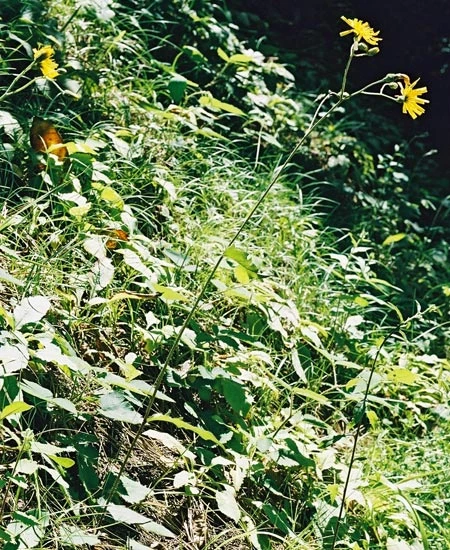
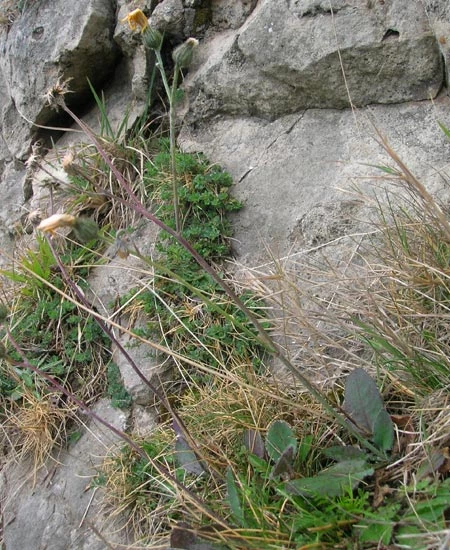
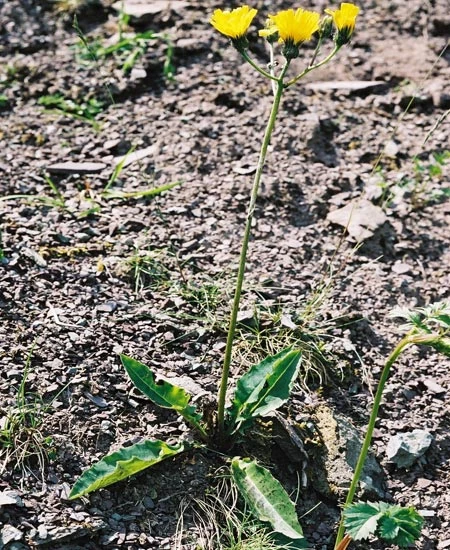
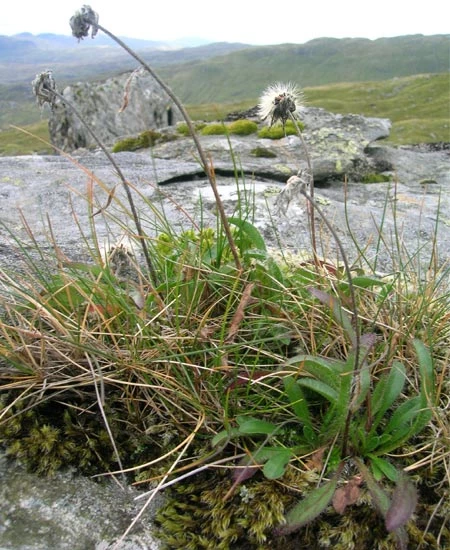
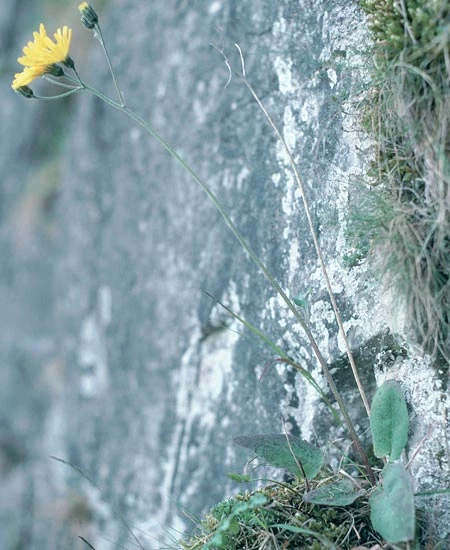
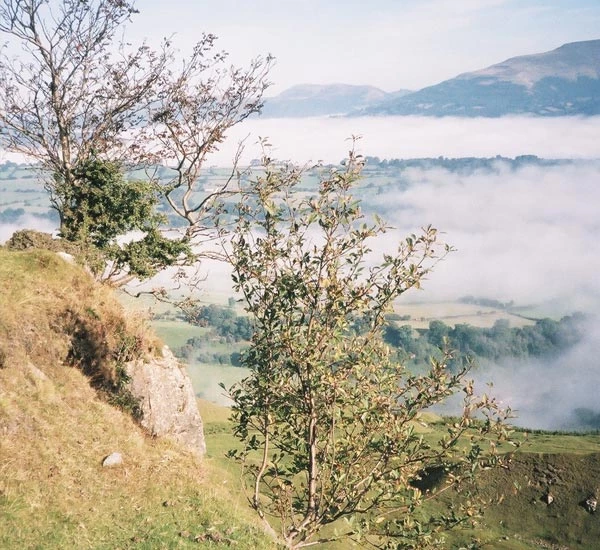
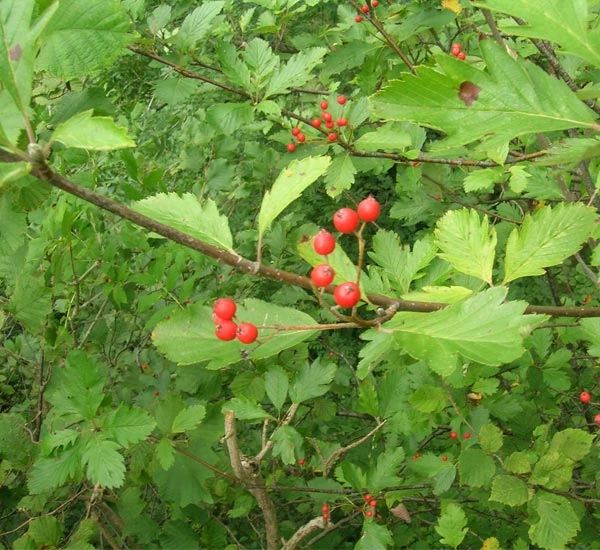
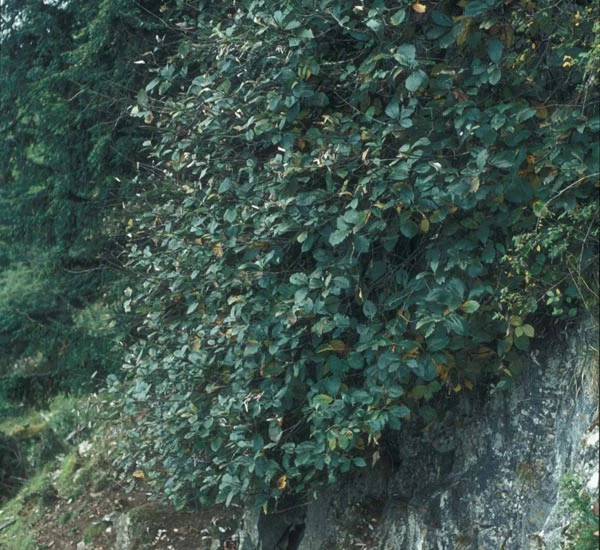
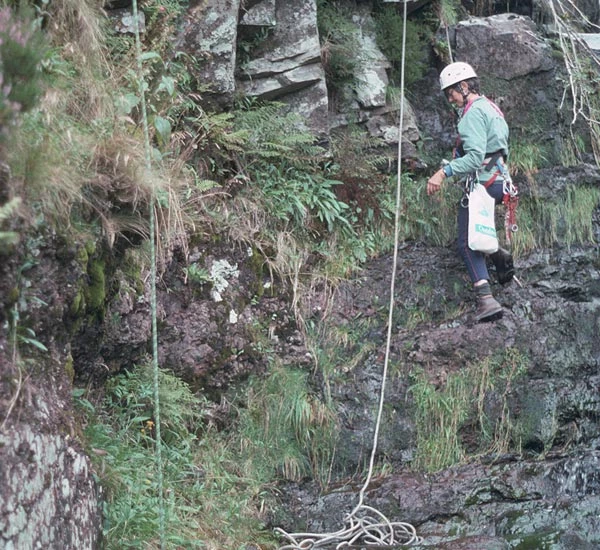
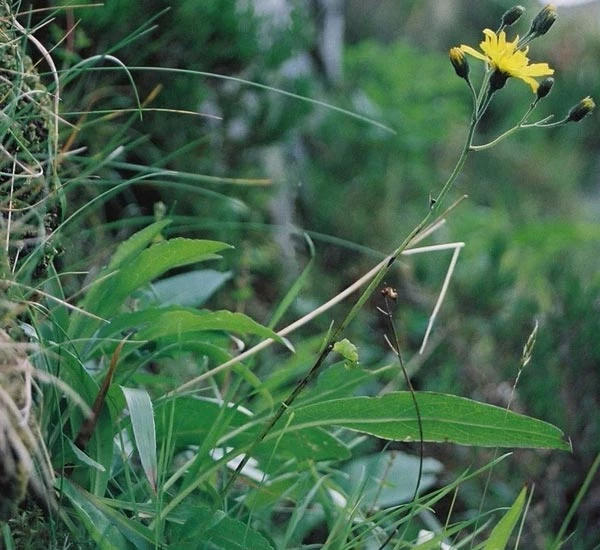
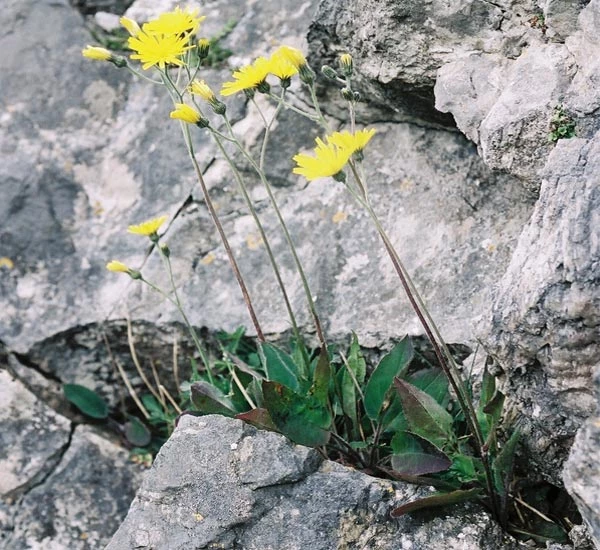
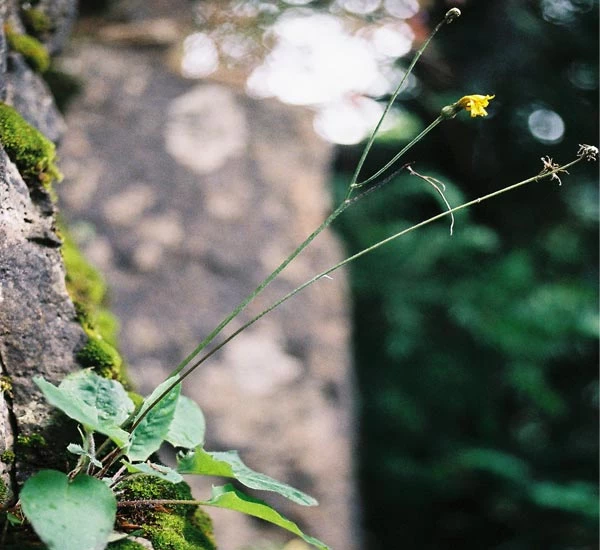
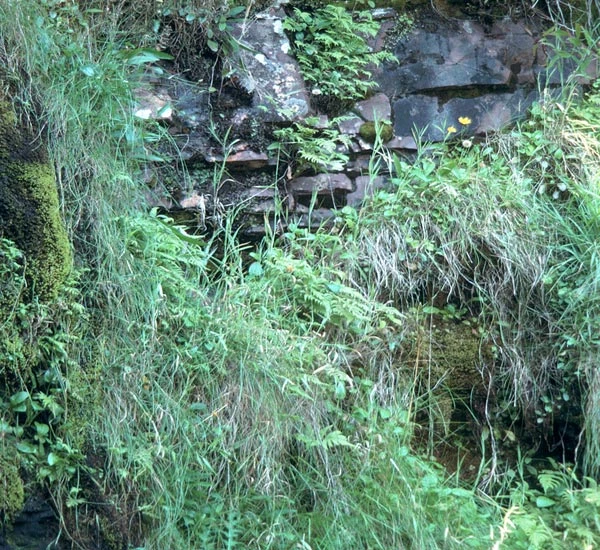
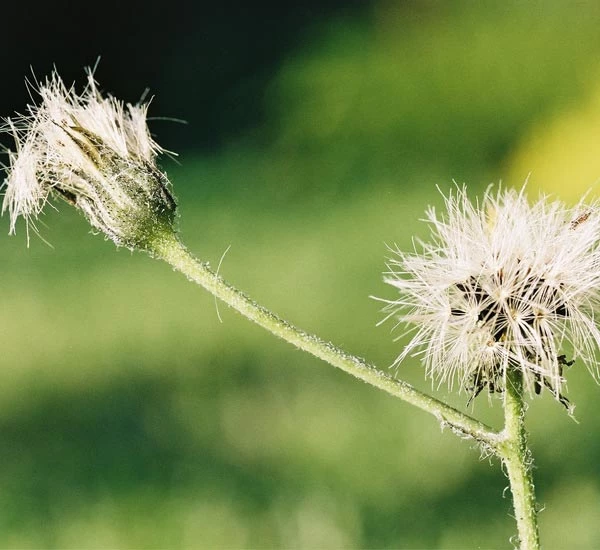
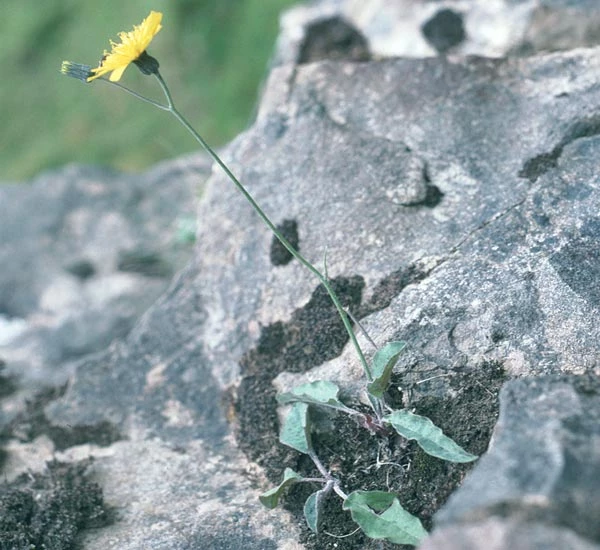
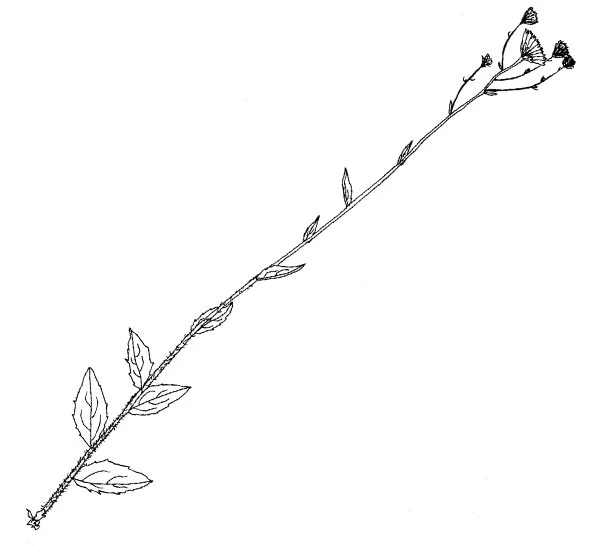
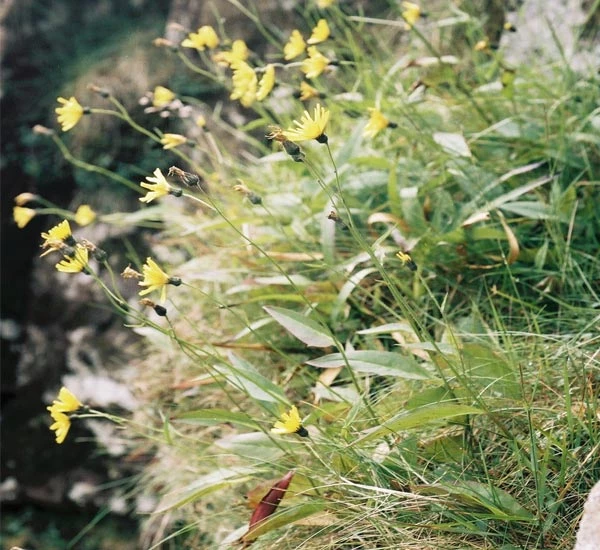
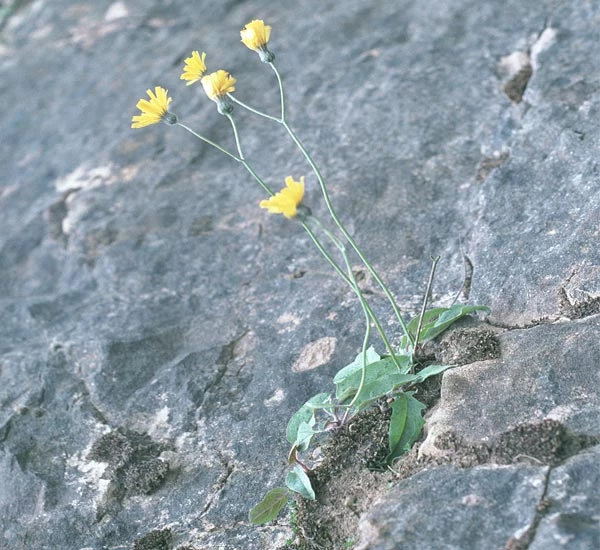
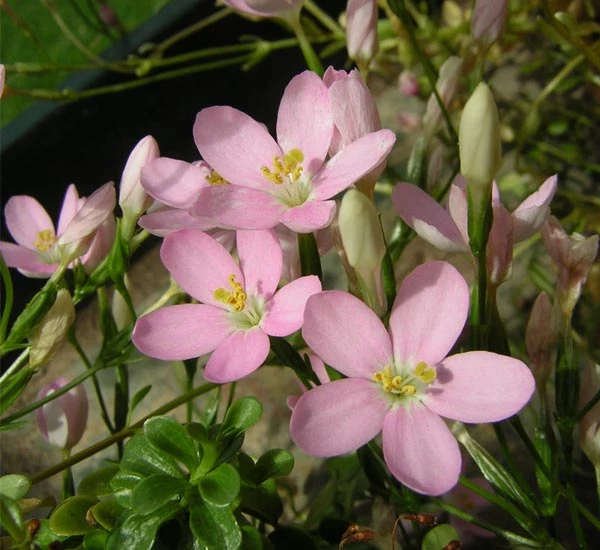
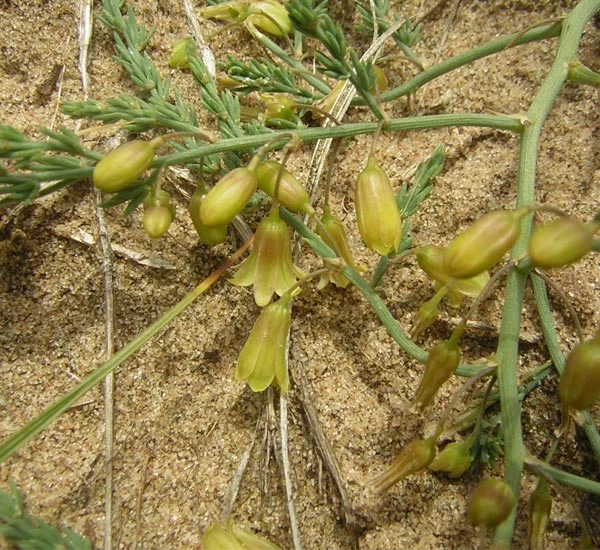
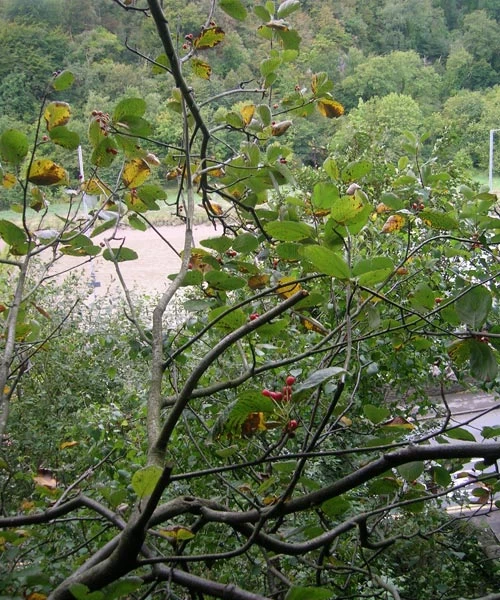
The rarest plants in Wales 1 April 2009 Scientists at Amgueddfa Cymru have been researching the possibility that the Perennial Centuary (Centaurium scilloides) colonised Britain by sea. For its size, Wales has a rich flora. The variation in rock types and landscapes from the limestones of the Gower Peninsular to the mud-stones and volcanic rocks of Snowdonia support many different and special plants. Wales is home to a number of rare plants. Some rare species are endemic to Wales and occur nowhere else in the world, such as Ley's Whitebeam or the Black Mountain Hawkweed. Other rare plants occur elsewhere but in the British Isles only occur in Wales, such as the Snowdon Lily or Yellow Whitlow Grass. Others are rare on an international basis, such as Perennial Centaury or Wild Asparagus. The Welsh Rare Plants Project aims to help conserve threatened Welsh plants by providing a firm scientific basis for their conservation. The advice is provided by collecting information on the size and location of rare plant populations, assessing threats to their survival, collecting ecological information, analysing genetic variation and making recommendations for habitat management. It is a joint project between Amgueddfa Cymru — National Museum Wales and the National Botanic Garden of Wales, with part funding from the Countryside Council for Wales. Click on the thumbnails below for information on each rare plant: Rare Plants Project Hieracium radyrense, Radyr HawkweedRadyr Hawkweed is a very rare Welsh endemic, recorded from two sites in Glamorgan. In Radyr in 1998, a total of nine plants were found in one garden where it grows on grassy banks and lawns, often in shade. It was not found at the type locality of Radyr Quarry, near where it was last seen in 1985. Neither the species nor the sites have any legal protection, and it could be under significant threat of survival in the long term from inappropriate gardening. Seed has been sent to the Millennium Seed Bank, and plants are being cultivated at National Botanic Garden of Wales. The work has been carried out in collaboration with Cardiff County Council. Download publication: http://archive.bsbi.org.uk/25_4_HutchinsonHieracium.pdf Hieracium pseudoleyi, Purple-flushed HawkweedReviews of historical data were combined with field surveys to assess the status of H. pseudoleyi, a rare endemic of North Wales. It has been recorded historically in three sites, and there are doubtful or erroneous records from four sites. In 2006, 798 plants were found on the Great Orme and 53 plants on the Little Orme. It was not refound at another site. It occurs on limestone rocks and in crevices in open vegetation. Under the IUCN (2001) threat criteria it is probably best regarded as 'Vulnerable'. Hieracium neocoracinum, Craig Cerrig-glaisiad HawkweedThis is a very rare, endemic plant, confined to Craig Cerrig-gleisiad National Nature Reserve in the Brecon Beacons (V.c. 42), Wales. It was first found in 1895 and has occurred in at least two places within Craig Cerrig-gleisiad. In 1975, its population was estimated to be 60 plants in one population. Field surveys in 2003 revealed 147 plants at the same place, and it was not refound in the second site but one plants was refound there in 2007. The population increase is probably due to colonisation of bare ground created by a landslip, and relaxation of grazing. Seed was collected for the Millennium Seedbank, and it is being cultivated at the National Botanic Garden of Wales.Download publication: http://archive.bsbi.org.uk/25_3_RichHieracium.pdf Hieracium holosericeum, Beautiful HawkweedHieracium holosericeum, Beautiful Hawkweed, is a British endemic alpine plant which is widespread and locally frequent in the Scottish Highlands but occurs more rarely in southern Scotland, the Lake District and Snowdonia. Historical records indicated between five and seven sites in Snowdonia, and it was locally abundant in at least some of those. Field surveys in 2000 and 2002 revealed only three remaining sites, but several more sites have come to light since. The most likely cause of the decline is over-grazing. The shyness of flowering in the wild may be a consequence of sub-optimal climatic conditions, and longer-term there may be significant implications for its survival from global warming. It does not grow well in cultivation. Hieracium asteridiophyllum, Llangattock Hawkweed Llangattock Hawkweed is a rare endemic species confined to cliffs around Craig y Cilau National Nature Reserve, Brecon in South Wales. In June 2000 surveys were carried out of the entire populations to assess its requirements for conservation. 512 plants of were found. Compared with population sizes in the National Nature Reserve in 1975, fewer of H. asteridiophyllum were found but the differences are probably due to the problems of recording. It is 'Critically Endangered' under the I.U.C.N. criteria, but is probably not at significant risk. Seeds have been sent to the Millennium Seed Bank, and plants are being cultivated at National Botanic Garden of Wales. Download publication: http://archive.bsbi.org.uk/2409Rich.pdf Sorbus minima, Least WhitebeamSorbus minima is a very rare Welsh tree, endemic to the Llangattock escarpment in the Brecon Beacons. It was first found by Augustin Ley in 1893 'in great abundance' at Craig y Cilau, where 744 trees were counted in 2002, and also at Blaen Onneu where it appears to have been destroyed by quarrying. One tree is also known at Craig y Castell and 27 at Cwm Claisfer. Quarrying of the Llangattock Quarries has probably also reduced the Craig y Cilau population markedly; populations on the quarried areas are c. 40% of those on intact cliffs. None-the-less it is regenerating and spreading back, and with time may recover its former population size. It is believed to have arisen as a cross between Mountain Ash (S. aucuparia) and possibly the Rock Whitebeam (S. rupicola). It is poorly fertile. Download publication: http://archive.bsbi.org.uk/25_4_WelshSorbus.pdf Sorbus leyana, Ley's WhitebeamThis species is only found in the wild in South Wales, on two steep limestone cliffs in the Brecon Beacons where it was first discovered in 1896. The total known population in the wild is probably no more than 16 adult trees. In August 1998 it was described as "Britain's rarest tree" and placed it in the highest category of threat: a "Critically Endangered" species. National Botanic Garden of Wales has collections in cultivation from a number of wild trees in the Brecon Beacons either as seedlings or grafted collections. Further research is being carried out into its genetic variation in collaboration with the Royal Botanic Gardens, Kew. Download publication: http://archive.bsbi.org.uk/25_4_WelshSorbus.pdf Sorbus leptophylla, Thin-leaved Whitebeam Thin-leaved Whitebeam was first described by E. F. Warburg in 1952, and is known from only two in the Brecon Beacons, Craig Rhiwarth (29 trees) and Craig y Cilau (45 trees). It is thus a very rare Welsh endemic. It occurs on Carboniferous Limestone and volcanic rocks, usually rooted directly into crevices, or occasionally on small ledges. Like other whitebeams it varies in fruit production, 1999 being a poor year and 2000 and 2002 being good years. Most fruits contain 2 or 3 large seeds which are highly fertile. Trees previously referred to this species from Craig Breiddan in Montgomeryshire are to be described as a new species. Download publication: http://archive.bsbi.org.uk/25_4_WelshSorbus.pdf Hieracium tavense, Black Mountain HawkweedBlack Mountain Hawkweed, is a very rare species endemic to Wales. It is restricted to one site in the Upper Tawe Valley, Brecon. It grows on base-rich ledges of a where thirteen plants were counted by climbing in 1998. The only real threat to its survival is a rock fall. Seed has been deposited in the Millennium Seed Bank, and it is being grown in cultivation at National Botanic Garden of Wales. Download publication: http://archive.bsbi.org.uk/Wats23p311.pdf Hieracium snowdoniense, Snowdonia HawkweedSnowdonia Hawkweed is a rare Welsh endemic restricted to Snowdonia. It was known historically from seven sites in Snowdonia, but it was last seen in 1967. After a number of unsuccessful searches it was feared extinct, but finally in July 2002 one plant was refound on a steep, north-facing, rocky cliff. Seeds were collected and 26 seedlings are now being cultivated at the National Botanic Garden of Wales. Download publication: http://archive.bsbi.org.uk/2438Rich.pdf Hieracium riddelsdellii, Riddelsdell's HawkweedRiddelsdell's Hawkweed is a very rare, Welsh endemic plant, confined to the western Brecon Beacons. It was first found in 1899. Field work in 2003-4 revealed about 870 plants in three localities, and it has either been lost naturally or destroyed in another three sites. Seed has been deposited in the Millennium Seed Bank and it is being cultivated at the National Botanic Garden for Wales.Download publication: http://archive.bsbi.org.uk/Wats26p139.pdf Hieracium pachyphylloides, Carboniferous HawkweedA review of historical data combined with field surveys were out to assess the status of H. pachyphylloides, which is endemic to the Wye Valley. It has declined from six sites to one site, and is 'Critically Endangered' under the IUCN threat criteria. The main threats are rock climbing, closure of woodland canopies and spread of alien plants. Hieracium linguans, Tongue HawkweedHieracium linguans, Tongue Hawkweed, is a very rare endemic Welsh species. It was first found in 1898 by A. Ley in the Brecon Beacons, Wales. The historical herbarium and literature records were somewhat confusing, but indicate three localities in the Tawe Valley. In 1999 and 2000, only one population of 80 plants was found, and it was not refound in the other two localities. It is a perennial which flowers in July-August, and regenerates readily from wind-dispersed seeds. Seed has been deposited in the Millennium Seed Bank and it is being cultivated at the National Botanic Garden for Wales. Download publication: http://archive.bsbi.org.uk/Wats23p517.pdf Hieracium cyathis, Chalice HawkweedHieracium cyathis, Chalice Hawkweed, is a rare British endemic recorded from eight sites in Somerset and Brecon. Between 2000 and 2002 its sites were surveyed to establish its current status and determine its need for conservation. A total of 1304 plants were found in 8 sites. It is probably extinct in Carmarthenshire, has declined markedly at Cheddar Gorge, and may have declined at Craig y Cilau. Field, cultivation and genetic investigations of its variation give little support for the suggestions that plants from the Mendips differ from those in Brecon.Download publication: http://www3.interscience.wiley.com/journal/119394264/abstract Hieracium cillense, Craig y Cilau Hawkweed Craig y Cilau Hawkweed, is a rare endemic species confined to cliffs around Craig y Cilau National Nature Reserve, Brecon in South Wales. It was first found in the 1890s and named as a variety, and was later raised to species status. In 1975, 253 plants were reported from the NNR. In June 2000, 204 plants were found. The decline might be due to differences in recording, or may be real and attributable to sheep grazing. However, another 263 plants were found in an extension of the population to the east outside the NNR. Seeds have been sent to the Millennium Seed Bank, and plants are being cultivated at National Botanic Garden of Wales. Download publication: http://archive.bsbi.org.uk/2409Rich.pdf Hieracium cambricogothicum, Llanfairfechan HawkweedHieracium cambricogothicum has been recorded from four, disjunct localities in England, Scotland and Wales but a review of its status by Sawtschuk & Rich (2006) indicated that it was only known with certainty from its type locality in Llanfairfechan (V.c. 49), and doubt exists about the identification of material from Kent (and possibly Forres in the absence of a specimen). No plants were refound in 2004 or 2006 and, sadly, it is currently regarded as extinct in the wild. Hieracium cacuminum, Summit HawkweedThis is a rare endemic Welsh hawkweed which has been confused with H. siluriense. A review of the records and fresh field work showed that 240 plants are known in three sites; it was not refound in three other sites. It occurs on Old Red Sandstone cliffs and rocks in the Brecon Beacons. It is 'Endangered' under the IUCN Threat Criteria. Hieracium cambricum, Welsh HawkweedHieracium cambricum, Welsh Hawkweed, is a rare species endemic to Wales. Its three known sites were surveyed in 1998. It is probably extinct at Treorchy due to a rock fall. 38 plants were refound at Llangollen (the first time it has been recorded since 1907) and on the Great Orme, the population is estimated to be c. 300 plants. Seed has been deposited in the Millennium Seed Bank, and it is being grown in cultivation at National Botanic Garden of Wales. Download publication: http://archive.bsbi.org.uk/Wats23p305.pdf Centaurium scilloides - Perennial CentuaryCentaurium scilloides, Perennial Centaury, is a western European endemic with a very restricted distribution in the Azores, Portugal, Spain, France, England and Wales. To date, data have been compiled to provide the first distribution map of this species, field studies have been carried out on its ecology and its genetic variation is being investigated.Download publications: http://archive.bsbi.org.uk/25_4_RichCentaurium.pdf http://archive.bsbi.org.uk/Wats25p275.pdf Asparagus prostratus, Wild AsparagusAsparagus prostratus is a Red Data Book species and is listed as a Priority Species under the UK Biodiversity Action Plan. Historical records have been researched and collated with recent field surveys for Britain. It has been recorded from at least 34 sites but has not been recorded recently in six sites (18% decline). It is extinct in West Sussex and Anglesey and is on the verge of extinction in Dorset. Of the 28 extant populations, nine have fewer than ten plants and only three sites have more than 100 plants. Download PDF Publication: http://archive.bsbi.org.uk/2414Rich.pdf Request Publication
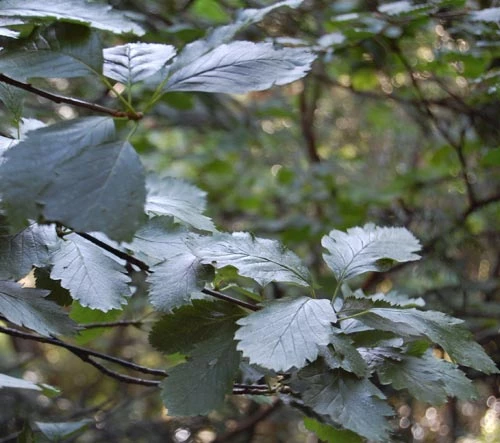
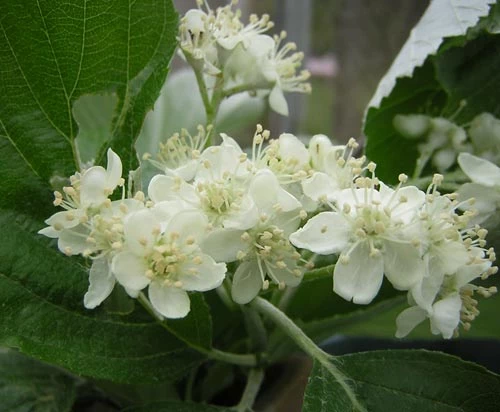
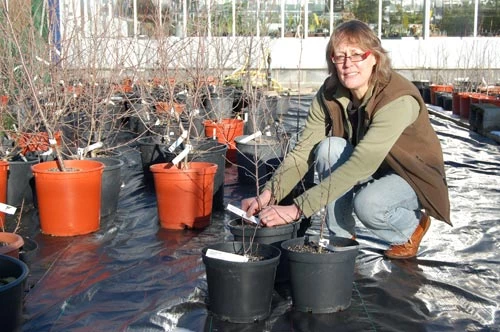
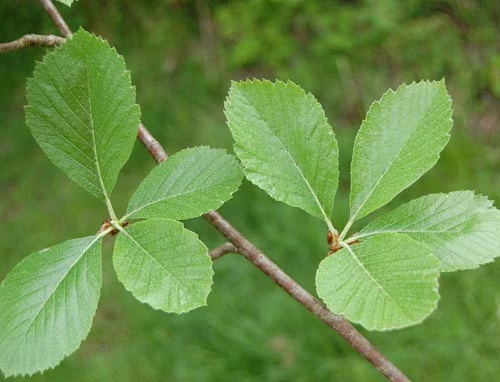
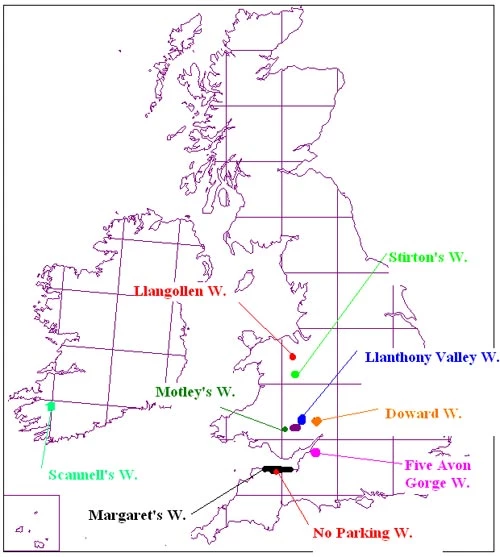
14 new trees discovered in the UK and Ireland 5 March 2009 Motley's Whitebeam - Sorbus x motleyi A new hybrid known only from one site near Merthyr Tydfil, where just two young trees are known. Stirton's Whitebeam - Sorbus stirtoniana About 40 trees can be found on the cliffs of Craig Breidden, Montgomeryshire. Houston's Whitebeam Sorbus x houstoniae A hybrid between the Common Whitebeam and the Bristol Whitebeam. The only one example can be found on a cliff in the Avon Gorge, inaccessible without ropes. where it was found by Ms Libby Houston (pictured) in 2005. Robertson's Whitebeam - Sorbus x robertsonii A new hybrid between the Common whitebeam and the Round-leaved Whitebeam. Only one tree is known so far, but it could be widespread in South-West England. Maura Scannell's Whitebeam - Sorbus scannelliana A new species first confirmed as distinct in September 2008. Five trees are known in the Killarney National Park, County Kerry, Republic of Ireland, where it probably originated from the Rock Whitebeam crossing with Rowan. Leigh Woods Whitebeam Sorbus leighensis A new species which has been known since the 1980s, but whose differences from the Grey-leaved Whitebeam has only recently been clarified using DNA. It is common at Leigh Woods on the Somerset side of the Avon Gorge, where about 100 trees are known. Jess Gould potting on young Sorbus stirtoniana at the National Botanic Garden of Wales. Llangollen Whitebeam, a rare tree confined to the cliffs of Eglwyseg Mountain, Denbighshire. Welsh Whitebeam - Sorbus cambrensis - First found in 1874 and classed as Grey-leaved Whitebeam, biochemical studies have recently shown this to be a new species. A new plantation of Motley's Whitebeam (Sorbus x motleyi)at the National Botanic Garden of Wales Map showing where the new trees were found (Key: W. = Whitebeam) Botanists at National Museum Cardiff in conjunction with scientists from Bristol University, Exeter University, Oxford University and the Royal Botanic Gardens, Kew have named new kinds of tree in Wales, England and Ireland, all of which are rare and need to be protected. Of the 14 finds which have been named officially in Watsonia, the scientific journal of the Botanical Society of the British Isles, six occur in Wales. These are: Stirton's Whitebeam (Sorbus stirtoniana) which can only be found in one place in the World - on the cliffs of Craig Breidden, Montgomeryshire; Llangollen Whitebeam (Sorbus cuneifolia) - a rare tree confined to the cliffs of Eglwyseg Mountain, Denbighshire where about 240 plants are known; Welsh Whitebeam (Sorbus cambrensis) found in the Brecon Beacons west of Abergavenny and Llanthony Valley Whitebeam (Sorbus stenophylla) - two closely related species from Wales; Doward Whitebeam (Sorbus eminentiformis) known only from the Wye Valley in England and Wales; Motley's Whitebeam (Sorbus x motleyi) - a new hybrid from one site near Merthyr Tydfil, where two young trees have been discovered. Evolution in Action The discovery of Motley's Whitebeam is an example of evolution in action. It originated as a hybrid between Ley's Whitebeam and Rowan in a wood after one of the few remaining Ley's Whitebeams was blown down in the 1989 Hurricane. The extra light from the gap in the woodland canopy allowed seeds in the soil to germinate and grow; These new finds, in addition to seven new types in England and one in Ireland are all members of the Sorbus group, which includes whitebeams, rowans and service trees, increasing the number of this type of tree by over 50%. DNA discovery Dr Rich led this project which was primarily funded by The Leverhulme Foundation and Amgueddfa Cymru - National Museum Wales, with contributions from Countryside Council for Wales, Natural England and Royal Botanic Gardens, Kew. Some of these trees have probably developed recently and are examples of on-going evolution of new species. Others are older types which have been known for some time but are only now described as 'species' thanks to modern DNA methods. The type specimens of the trees are held in the Welsh National Herbarium at National Museum Cardiff, and three of the Welsh species — Stirton's Whitebeam, Motley's Whitebeam and Welsh Whitebeam can be seen growing at the National Botanic Garden of Wales. New species and hybrids Wales Llangollen Whitebeam - Sorbus cuneifolia A new species from North Wales, Llangollen Whitebeam has probably evolved from the English Whitebeam; The Latin name cuneifolia refers to the narrower leaf bases, its distinguishing feature from the English Whitebeam; It is a rare tree confined to the cliffs of Eglwyseg Mountain north of Llangollen, Denbighshire, where about 240 plants are known. Motley's Whitebeam - Sorbus x motleyi A new hybrid known only from one site near Merthyr Tydfil, where only two young trees are known; This is an example of evolution in action. It originated as a hybrid between Ley's Whitebeam and Rowan in a wood after one of the few remaining Ley's Whitebeams was blown down in the 1989 Hurricane. The extra light from the gap in the woodland canopy allowed seeds in the soil to germinate and grow; It was first found in 1999 by Graham Motley of the Countryside Council for Wales when he was monitoring the very rare Ley's Whitebeam, and is named after him. Stirton's Whitebeam - Sorbus stirtoniana A new species, recently recognised as different from Thin-leaved Whitebeam with which it had been confused; About 40 trees can be found on the cliffs of Craig Breidden, Montgomeryshire; It has been named in honour of Prof. Charles Stirton in recognition of his inspirational work establishing the National Botanic Garden of Wales; Trees are held in cultivation at the Gardens. Welsh Whitebeam - Sorbus cambrensis and Llanthony Valley Whitebeam - Sorbus stenophylla Two new, closely related species from Wales; Biochemical studies have shown these species differ from each other and from the more widespread Grey-leaved Whitebeam, within which they were formally included; About 100 plants of the Welsh Whitebeam are known from the eastern Brecon Beacons west of Abergavenny; The Llanthony Valley Whitebeam was first found in 1874 by the Rev. Augustin Ley; There are probably about 100-200 plants in the Llanthony Valley. England Avon Gorge Whitebeam - Sorbus x avonensis A hybrid between Common Whitebeam and Grey-leaved Whitebeam; It was first found by Dr Tim Rich, Ashley Robertson and Libby Houston whilst studying whitebeams in the Avon Gorge in 2004; It has only so far been confirmed for the Avon Gorge in Bristol, but may occur locally in South-west England where the parents grow together. Houston's Whitebeam - Sorbus x houstoniae A hybrid between the Common Whitebeam and the Bristol Whitebeam; The only one example can be found on a cliff in the Avon Gorge, where it was found by Ms Libby Houston in 2005 which makes it inaccessible without ropes. Leigh Woods Whitebeam - Sorbus leighensis A new species which has been known since the 1980s, but whose differences from the Grey-leaved Whitebeam has only recently been clarified using DNA; It is common at Leigh Woods on the Somerset side of the Avon Gorge; About 100 trees are known. Margaret's Whitebeam - Sorbus margaretae Related to the Rock Whitebeam and the Bloody Whitebeam; It was first recognised as a distinct species by Margaret E. Bradshaw during her surveys of the rare Whitebeams of South-west England in 1984, and it is named after her. It occurs only on the cliffs along the north coast of Devon and Somerset, where at least 120 trees are known. No Parking Whitebeam - Sorbus admonitor The No Parking Whitebeam was first noted to be different from the more widespread Devon Whitebeam in the 1930s, but has only recently been demonstrated to be a different species using biochemical analyses; The name originates from the time in the 1930s when a ‘No Parking' notice was nailed to a tree by a small layby at Watersmeet in North Devon. It is common to the Watersmeet area of North Devon where there are at least 110 trees. Proctor's Rowan - Sorbus x proctoris A new hybrid between Rowan and Sichuan Rowan; It is named after Dr Michael Proctor, an eminent senior botanist of Exeter University, for his excellent work on British Whitebeams; Only one tree has been found in the wild in the Avon Gorge, where there is a nature conservation dilemma. As one of its parents is a garden tree from China, there is the potential for genes of the Sichuan Rowan to spread into the native rowan population in the Avon Gorge. To prevent this happening, one option would be to destroy/remove the only example of this tree! Robertson's Whitebeam - Sorbus x robertsonii A new hybrid between the Common whitebeam and the Round-leaved Whitebeam; Only one tree is known so far, but it could be widespread in South-West England; It was first found by Dr Tim Rich, Ashley Robertson and Libby Houston whilst studying whitebeams in the Avon Gorge; It is named after Dr Ashley Robertson for his outstanding work in clarifying the evolution of the whitebeams in the Avon Gorge. Wales & England Doward Whitebeam - Sorbus eminentiformis A new species, known only from the Wye Valley in England and Wales. The total population is probably under 100 trees, most of which occur on the Great Doward. Ireland Maura Scannell's Whitebeam - Sorbus scannelliana A new species first confirmed as distinct in September 2008; Five trees are known in the Killarney National Park, County Kerry, Republic of Ireland, where it probably originated from the Rock Whitebeam crossing with Rowan; It is named after one the great Irish botanist Maura Scannell, formerly of the National Botanic Gardens Glasnevin, whose knowledge of Irish botany is unrivalled. References: Rich, T. C. G. & Proctor, M. C. F. (2009). Some new British and Irish Sorbus L. taxa (Rosaceae). Watsonia 27: 207-216. Rich, T. C. G., Harris, S. A. & Hiscock, S. J. (2009). Five new Sorbus (Rosaceae) taxa from the Avon Gorge, England. Watsonia 27: 217-228.
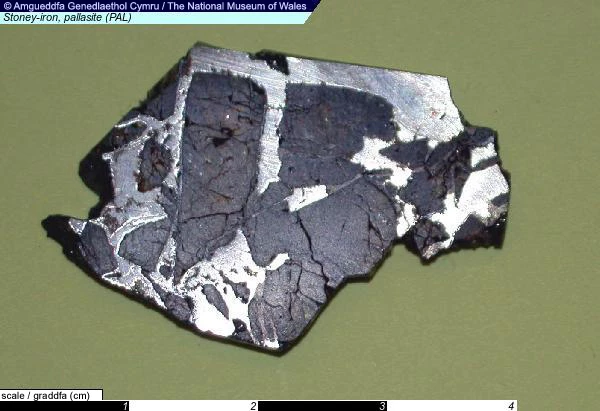
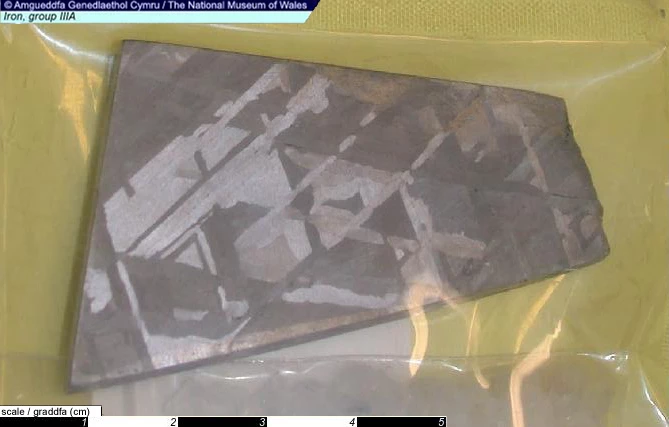
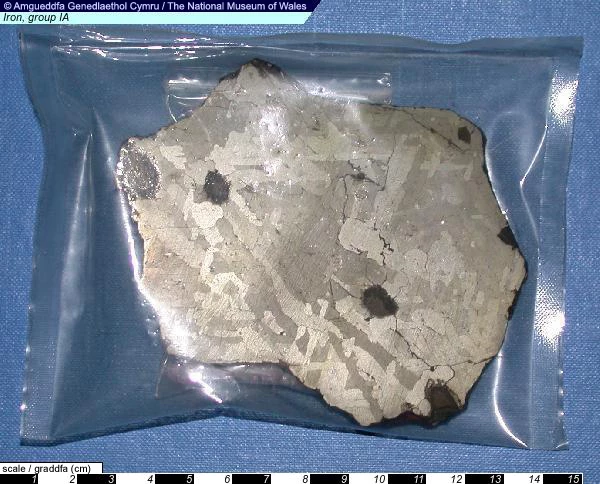
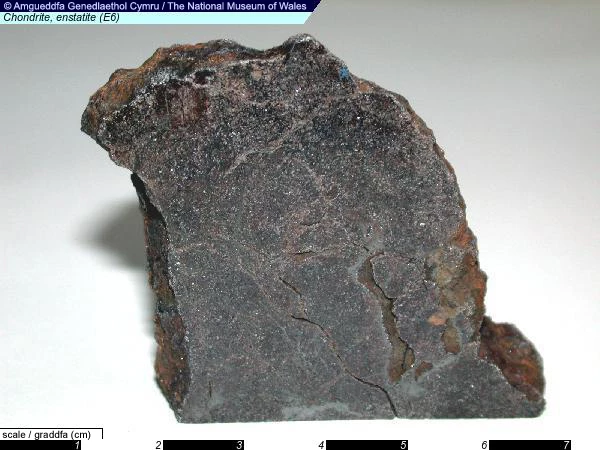
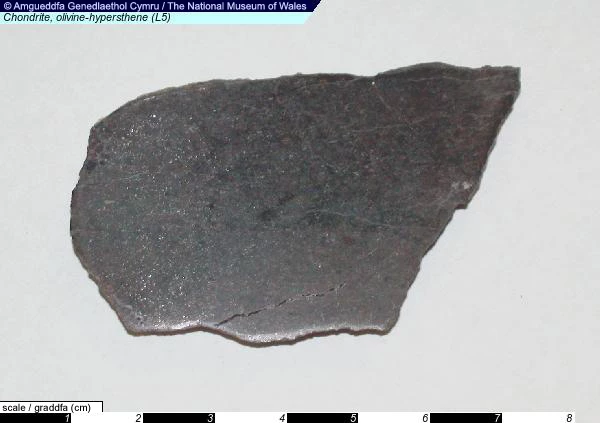
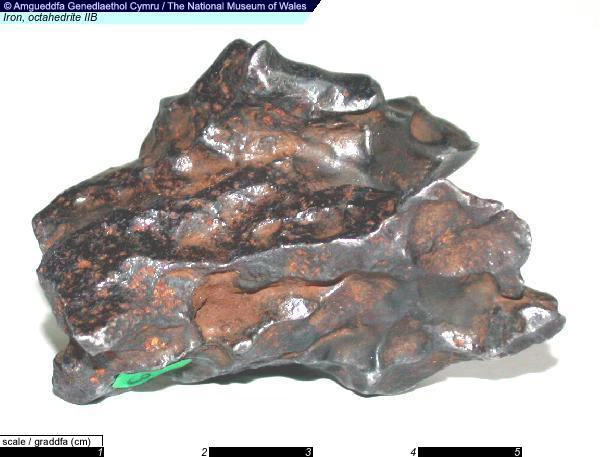
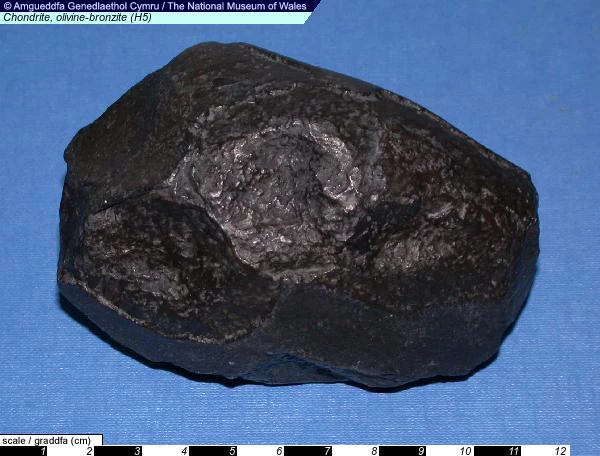
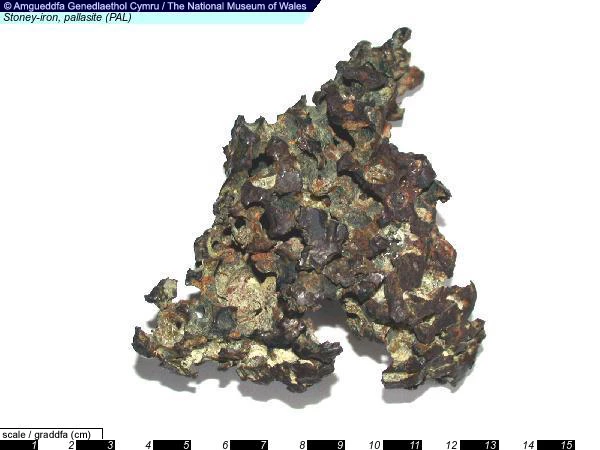
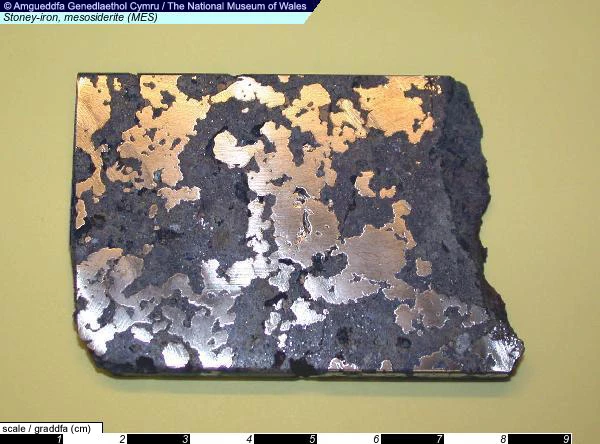
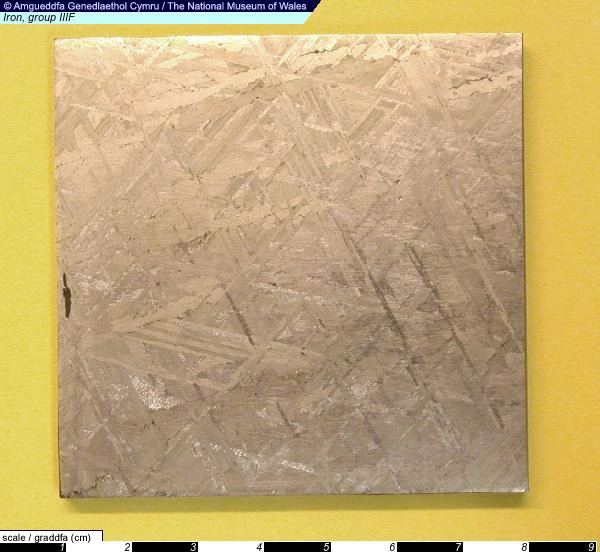
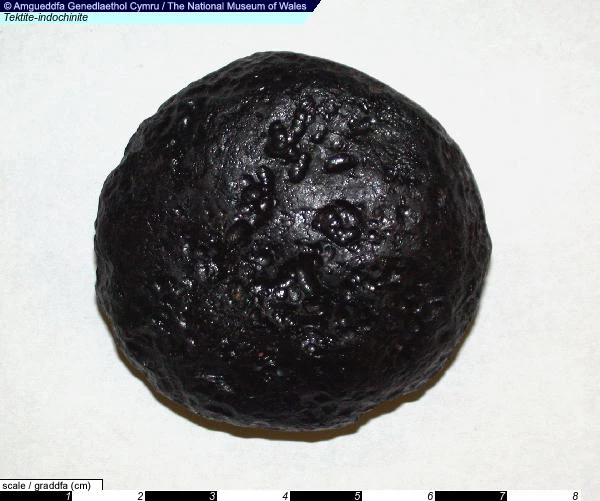
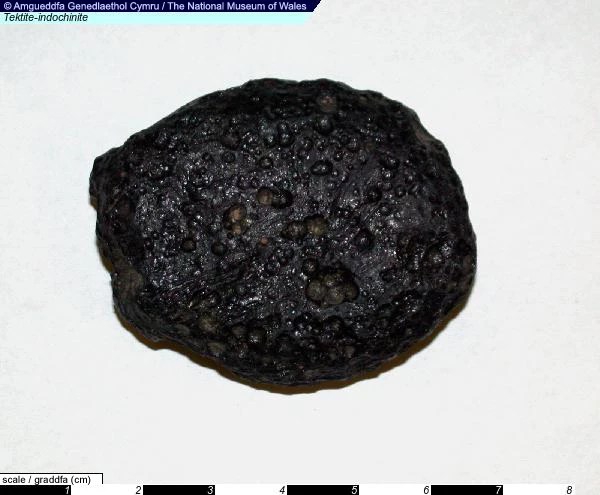
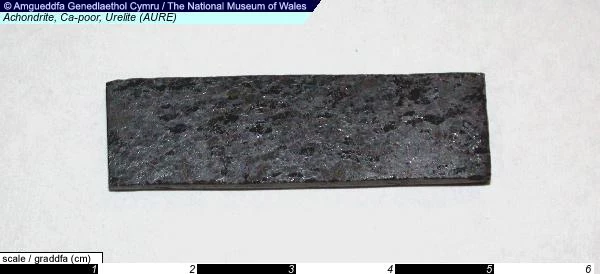
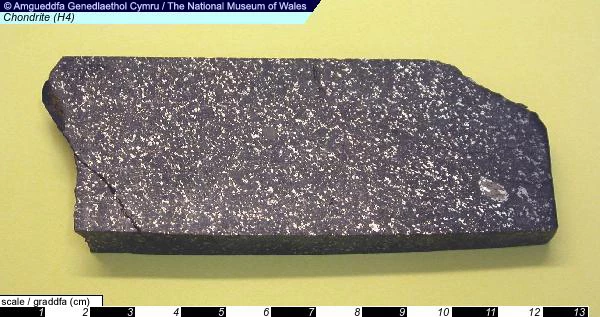
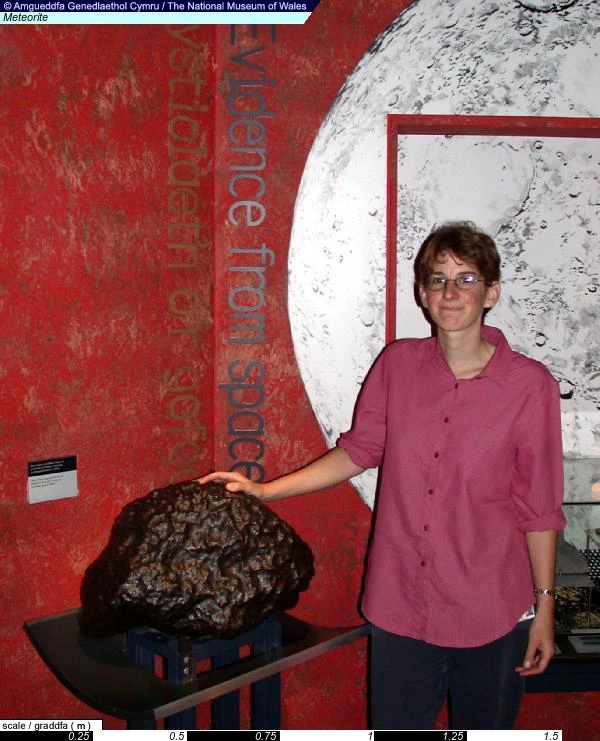
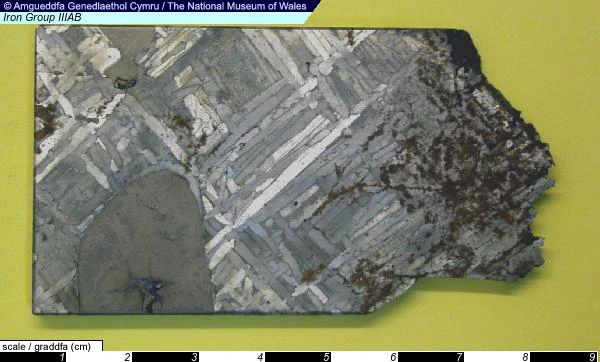
Meteorites 30 July 2008 Meteorites are natural pieces of rock that fall to Earth from outer space. As they pass through the atmosphere, the outer layers are heated by friction, causing them to glow brightly and giving rise to the visual phenomena of a shooting star. Some meteorites are as old, or older, than the age of the Earth. Their chemical composition preserves information on the earliest history of our Solar System and can give clues to how they, and our planet, might have formed. Below is a selection of images from the Meteorite collections held at Amgueddfa Cymru - click on an image to find out more. Meteorites Stoney-iron, pallasite (PAL)Locality: Somervell County, Texas, United States of America. Preparation: Cut and acid-etched. Iron, group IIIALocality: Sacramento Mountains, Eddy County, New Mexico, United States of America. Preparation: Cut and acid-etched to reveal it characteristic stripes, known as Widmanstätten structures. Specimen sealed from atmospheric moisture to prevent oxidising. Iron Group IALocality: Odessa, Ector County, Texas, United States of America. Preparation: Cut and acid-etched to reveal it characteristic stripes, known as Widmanstätten structures. Specimen sealed from atmospheric moisture to prevent oxidising. Iron Group IIIABLocality: Cape York, Greenland, North America. Preparation: Cut and acid-etched to reveal it characteristic stripes, known as Widmanstätten structures. Chondrite, enstatite (E6)Locality: Happy Canyon, Armstrong County, Texas, United States of America. Preparation: Cut. Chondrite, olivine-hypersthene (L5)Locality: Taiban, De Baca County, New Mexico, United States of America. Preparation: Cut and polished slab. Iron, octahedrite IIBLocality: Maritime Province, Russia. Fall recorded at 10:38 am UT on 12th February 1947 in thick forest in the Sikhote Alin Mountains, 40km from Novopoltavka. 106 impact holes identified, largest 28m across over an area of 100 x 660m. Chondrite, olivine-bronzite (H5)Locality: Beddgelert, Snowdonia, Gwynedd, Wales. Preparation: Replica. Stoney-iron, pallasite (PAL)Locality: Krasnojarsk, Yeniseysk, Krasnoyarskiy Kray, Russia. Stoney-iron, mesosiderite (MES)Locality: Estherville, Emmet, Iowa, United States of America. Preparation: Cut and polished. Iron, group IIIFLocality: St Genevieve County, Missouri, United States of America. Preparation: Cut and acid-etched to reveal it characteristic stripes, known as Widmanstätten structures. Tektite-indochiniteLocality: Samrong, Cambodia, Asia. Tektite-indochiniteLocality: Thailand ,Asia.(Method of discovery and exact location unknown). Achondrite, Ca-poor, Urelite (AURE)Locality: Kenna, Roosevelt County, New Mexico, United States of America. Preparation: Cut and polished slab. Chondrite (H4)Locality: Weldona, Morgan County, Colorado, United States of America. Preparation: Cut and polished slab. MeteoriteLocality: Gibeon, Namibia, Africa.
Gas-guzzling clams 1 April 2008 The new species and Genus Spinaxinus sentosus, collected from the organic cargo of the sunken ship Francois Vieljeux. The genus bears little resemblance to other known thyasirids and remains the only record of this species. Thyasira methanophila, a clam new to science from a methane seepage area off Concepción, Chile. Its name suggests its dependence on methane. An extreme magnification of the exterior shell covering of Spinaxinus sentosus, recovered from the organic cargo of the sunken ship Francois Vieljeux. The spines witnessed at this magnification lead scientists at the Museum to name the new genus 'Spinaxinus'. Deep beneath the sea floor there are large reservoirs of oil and natural gas, but it is only relatively recently that methane has been discovered to seep from the surface of the sea bed. These areas are known as 'gas seeps' and certain animals have evolved specifically to take advantage of this unique environment. A diet of methane and sulphur Found alongside these methane gas seeps are communities of clams that use the gas as a source of food. They don't actually eat the gas but they have evolved to harbour bacteria in their tissues that do the job for them. These organisms are known as 'chemosymbiotic' and a few groups of clams have been very successful in adapting to this environment. The same group of clams can also exploit sulphur and these are found living in areas where there are layers of rotting vegetation, around decaying whale carcasses, at hot vents and even on mud contaminated with diesel oil. Because these clams come from unusual environments and often from deep water, many have yet to be studied in detail. A number of these gas guzzling clams were sent to Amgueddfa Cymru - National Museum Wales for identification and description. Several scientific papers have now been written on these species new to science Clams from Chile Clam shells and whole specimens were sent to the Museum following the discovery of a methane seep off the coast of Chile at a depth of 700-900m. One of these species, belonging go the genus Thyasira, was new to science and has been described in a scientific paper. The bacteria in the gill tissue of the clam were studied using a scanning electron microscope. This confirmed the symbiosis (reliance) between the bacteria and the clam. A species of the genus Lucinoma was also discovered to be new to science but only shells have been found so far. It is likely that the majority of species living at this site are endemic (restricted to this location) and found nowhere else in the world. The Pakistan Margin From the other side of the world, we were sent a small species from the same group as the Chilean bivalve - Thyasira - but from the Indus Fan, off the coast of Pakistan, collected while investigating the unusual fauna that live in the very low oxygen waters of this region. The Museum worked with the Natural History Museum, London to investigate the DNA alongside describing the anatomy and shell of this bivalve. A clam with a taste for shipwrecks Man-made sources of methane and sulphur are also exploited and one of the strangest was the cargo of the sunken container ship Francois Vieljeux. This ship sank off the north coast of Spain in 1,160m of waters, taking with it its cargo of castor beans and sunflower seeds. During attempts to salvage the vessel it was noted that clams had settled and grown on the cargo. All the clams belonged to chemosymbiotic groups and were exploiting the sulphur released by the rotting cargo. One clam was a Thyasira, similar to the specimen from Chile. Cascadia Basin, off Washington State The Baby Bare Seamount in the north-east Pacific Ocean is a hot spring and home to a new species of Axinus (similar to Thyasira). This site is unusual in that no other species of bivalve typically found at other methane seeps and hot vent sites are found here. Methane and Hydrogen sulphide levels are low, so initially it was a mystery as to what these animals were using as nutrition. Cadiz Mud Volcanos Off the Southern coast of Portugal there are numerous marine mud volcanoes created by stresses on the African and Eurasian tectonic plates. These stresses cause hot, methane and sulphur rich fluids to eject from deep within the volcanoes out into the sea bed above. By the time the fluids reach the sediment surface they are cold, so the mud volcanoes are classed as cold-seeps. Many species of Thyasira clams are found at some of these sites, but only a few are known to harbour the chemosymbiotic bacteria that help them to extract nutrition from sulphur and methane. A collaboration between the Museum and Cadiz University, Spain has resulted in the newly described species Thyasira vulcolutre , meaning 'belonging to mud volcano'. Finally, in conjunction with Bangor University, the Museum is carrying out the taxonomic work on a Thyasira collected from a mud volcano in the Arctic and a mussel of the genus Idas which was collected from diesel contaminated mud beneath an oil rig in the North Sea. This work by Amgueddfa Cymru - National Museum Wales is helping research the possibility of using these clams to clean up contaminated areas of the sea bed.