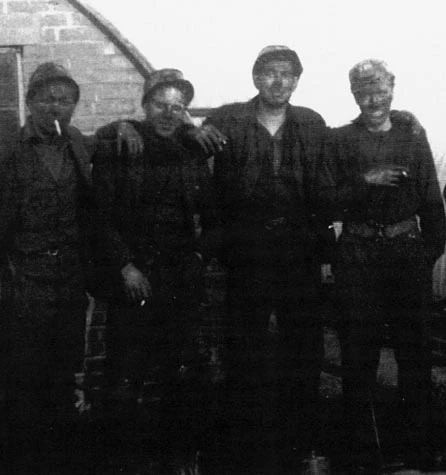
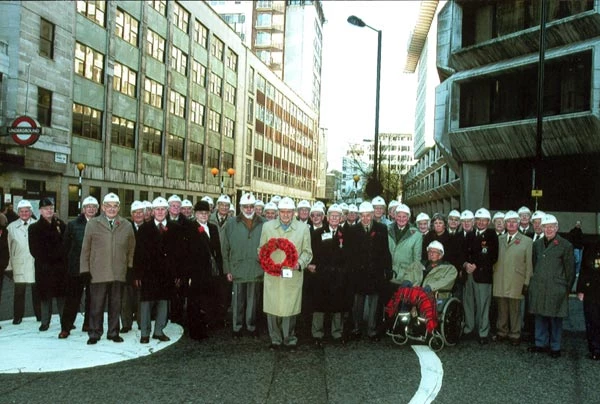
Remembering the Bevin Boys in the Second World War 3 January 2008 Bevin Boys commemorative banner Bevin Boys from South Wales Bevin Boys Association blazer badge. A retired pit pony poses with two former Bevin Boys at the annual reunion at Trentham Gardens, Stoke-on-Trent. Former Bevin Boys attending the Remembrance Parade in London on the 14th November 2004 The underground front The story of the Bevin Boys miners has been largely untold; those many men who spent their war on the so-called 'underground front' went unrecognized for almost half a century. When Britain declared war in 1939, thousands of experienced miners left the mines to join the armed services or transfer to higher-paid 'war industries'. By the summer of 1943 over 36,000 men had left the coal industry . The British government decided that it needed around 40,000 men to take their places. Ernest Bevin In December 1943, Ernest Bevin, the wartime Minister of Labour and National Service, devised a scheme whereby a ballot took place to put a proportion of conscripted men into the collieries rather than the armed services. Every month, ten numbers were placed in a hat; two numbers were drawn out, and those whose National Service registration number ended with those numbers were directed to the mining industry. These "ballotees" became known as "Bevin Boys". Alongside the ballotees were the "optants", men who had volunteered for service in the coal mines rather than the armed services. Between 1943 and 1948, 48,000 young men were conscripted for National Service Employment in British coal mines. Contrary to a common belief at the time, only 41 of them were conscientious objectors. Bevin Boys, therefore, came from all social classes and regions in Britain, not just the mining areas. Many had only been vaguely aware of the mining industry before being drafted. Most had set their sights on a career in the armed services and were horrified to be sent to the collieries instead. Punishment In April 1944 the Colliery Guardian reported that 135 ballotees had been prosecuted for failing to comply with the direct labour order. Thirty two went to prison, although 19 of them were released when they eventually agreed to go into the mining industry. Picks and shovels Unlike the ordinary miners, who wore their own clothes, Bevin Boys were issued with overalls, safety helmet and working boots. However, they still had to pay for their own tools and equipment, which led to complaints that the infantry were not expected to supply their own rifles so why were they expected to buy picks and shovels! Only a small proportion of Bevin Boys were actually employed cutting coal on the coal face, although some worked as colliers' assistants filling tubs or drams. The majority worked on the maintenance of haulage roads, or generally controlled the movement of underground transport. A small number who had previous electrical or engineering experience were given similar work in the collieries. Bevin Boys suffered from resentment from local mining families who had seen their own children drafted into the armed services only to be replaced by "outsiders". In addition, just being young men out of uniform could lead to abuse from the public or attention from the police as possible deserters, "army dodgers" or even enemy spies. It is not surprising that they suffered from high absentee rates. A very small number stayed in mining after the war, but most couldn't wait to leave. Official records destroyed The ballots were suspended in May 1945, with the last Bevin Boys being demobbed in 1948. Unlike other conscripts, they had no right to go back to their previous occupations, they received no service medals, "demob" suit or even a letter of thanks. Because the official records were destroyed in the 1950s, former Bevin Boy ballotees cannot even prove their service unless they have kept their personal documents. The first official Bevin Boys reunion was held at the former Chatterley Whitfield Mining Museum in 1989. More have been held at various venues since then. However, it was not until 1995, 50 years after Victory in Europe Day, that the British government finally recognized their service to the war effort and former Bevin Boys are now officially allowed to take part in the Remembrance Day service at Whitehall. For any information on the Bevin Boys Association please contact: Warwick H Taylor, Vice President, Bevin Boys Association, 1 Rundlestone Court, Dorchester Dorset, DT1 3TN This article forms part of a booklet in the series ' Glo ' produced by Big Pit: National Mining Museum.
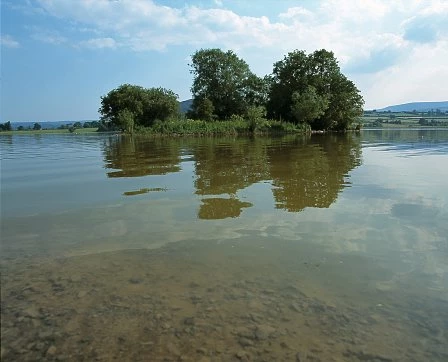
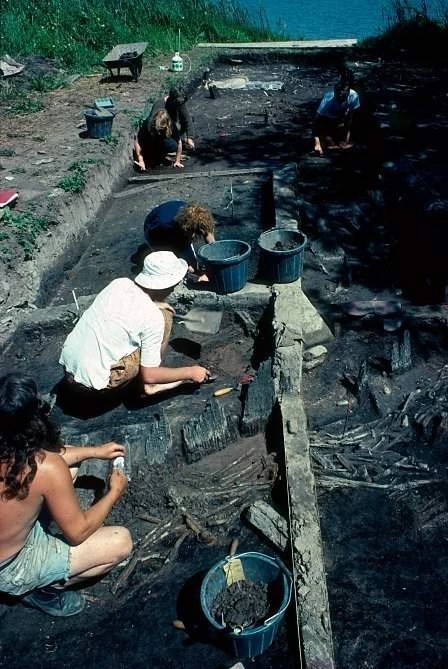
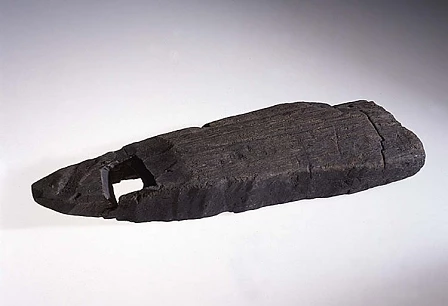
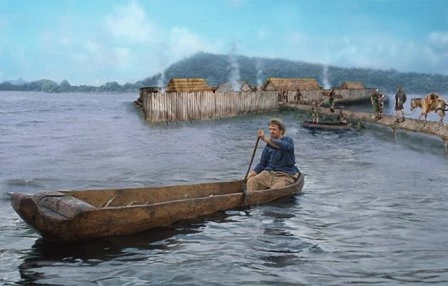
The Palace in the Lake 13 September 2007 Llan-gors Lake, with crannog in background. Image: Cadw (Crown Copyright). Llan-gors crannog during excavation. This image of the 1991 excavations shows planks from the crannog's palisade wall. Oak plank from Llan-gors, 60cm (2 foot) long. Submerged oak planks like this formed part of the palisade around Llan-gors crannog. Reconstruction of Llan-gors crannog, based on the excavation. Excavations at the artificial island or crannog in Llan-gors Lake, near Brecon, have provided a unique glimpse of a royal Welsh court. Excavations between 1989 and 1993 by the National Museum Wales and Cardiff University have revealed that the crannog, the only one known in Wales, was an early medieval royal site of the ruler of the inland kingdom of Brycheiniog. The small early kingdom of Brycheiniog (Brecheiniauc) corresponded approximately to the historical county of Brecknockshire in south Wales. The territory took its name from Brychan, dynastic founder of the royal line according to later legend.. Irish influence The crannog was carefully constructed of brushwood and sandstone boulders, reinforced and surrounded by several lines of oak plank palisade. Tree-ring dating of the well-preserved timbers has established that they were felled between AD889 and AD893. The site seems to have been influenced by Irish building techniques, and was possibly constructed with the assistance of an Irish master craftsman. The kings of Brycheiniog claimed to be descended from a part-Irish dynasty, and their use of such an unusual and impressive construction may have enhanced their political standing and strengthened their claims to Irish ancestry. Objects of high quality As a royal site Llan-gors crannog would have been a centre of administration, as well as a place for hospitality, where the ruler seasonally held court, received tribute and indulged in hunting and fishing. The artefacts uncovered, which include embroidered textile and parts of a portable shrine, confirm the site's aristocratic status. The crannog is attacked The Anglo-Saxon Chronicle records that in AD916 Æthelflaed, 'Lady of the Mercians', sent an army into Wales three days after the murder of Abbot Ecgberht and his companions. The army destroyed Brecenanmere (the Anglo-Saxon name for Llan-gors Lake) and captured 'the king's wife and thirty-three other persons'. This record of an attack probably refers to the crannog, and the capture of the wife of king Tewdwr ap Elisedd. During excavation, a charred, burnt layer was uncovered - probably representing this attack. The site gives an unique glimpse of life on a royal site in the late 9th and early 10th-centuries. Timeline 880s: Elise ap Tewdwr, ruler of Brycheiniog forced by the aggressive actions of Gwynedd to seek overlordship of Alfred the Great. 889-93: Llan-gors crannog constructed by the ruler of Brycheiniog. 894: Vikings ravaged Brycheiniog. 916: Brecenanmere (probably Llan-gors crannog) destroyed by Mercian (Anglo-Saxon) army. Background Reading 'On a crannoge, or stockaded island, in Llangorse Lake, near Brecon' by E. N. Dumbleton. In Archaeologia Cambrensis (4th series) vol. 1, p2-98 (1870). 'The early medieval crannog at Llangorse, Powys: an interim statement on the 1989-1993 seasons'. In The International Journal of Nautical Archaeology vol. 23, p189-205 (1994).
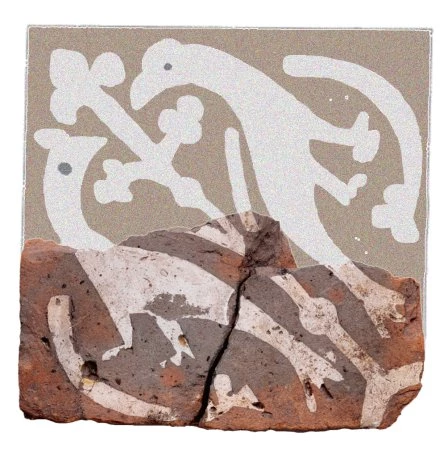
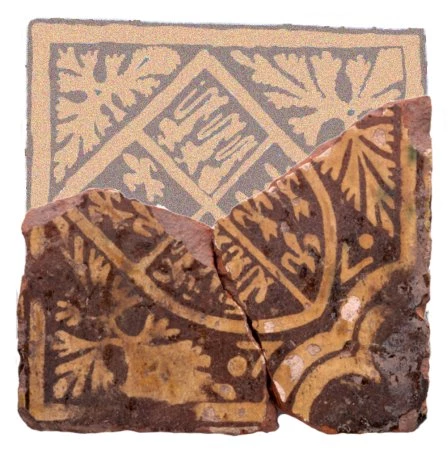
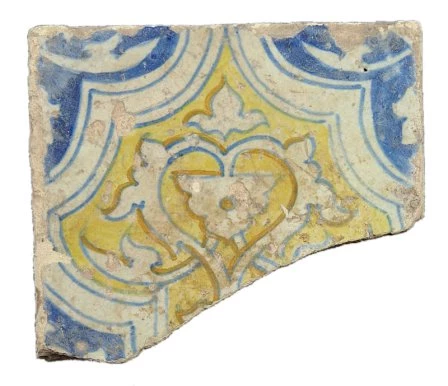
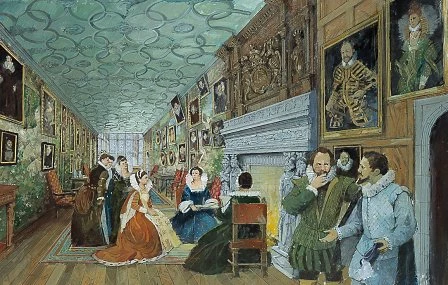
The decorated floor tiles from Raglan Castle 6 September 2007 Raglan Castle. The castle's fortifications, including the Great Tower shown at the centre of this view, were established in the 15th century. Image: Cadw (Crown copyright). Late 13th to early 14th-century tile of the Wessex School from the chapel at Raglan. 15th-century Malvern-school tile used at Raglan. 16th-century maiolica tile from the chapel floor laid by Earl William, probably before 1572. Reconstruction of life at Raglan Castle in the 16th century, at the time of the Third Earl of Worcester. Image: Cadw (Crown copyright). Three centuries of fashion and design can be seen in a collection of decorated floor tiles found during building works at Raglan Castle in 1947. In 1549 William Somerset (1526-1589) succeeded to his father's position as third Earl of Worcester and owner of Raglan Castle. From this base in south-east Wales he launched a career that was to see him thrive at the courts of Edward VI (1547-53), Mary (1553-58) and then Elizabeth I (1558-1603). He is buried in Raglan parish church. Such a prominent figure lived a lifestyle that suited his high social standing, and we can see this aspiration in the extensive remodelling that he undertook of the fortress-mansion he had inherited. He set about an extensive programme of modernisation that affected all parts of the castle and its grounds: the hall and accommodation were improved, kitchen and service areas upgraded, a long gallery was introduced and gardens created in Renaissance style. The Castle's furnishings were also updated with items that reflected contemporary European fashion. This is illustrated in the chapel at Raglan. Raglan Chapel The chapel at Raglan dates from at least the 13th century. It had a floor of thick red earthenware tiles with decoration inlaid into its surface using a contrasting colour. Such two-colour tiles often had designs of shields and monograms, over which a clear glaze would be fired. These tiles were the height of fashion in the mid-14th century. About 1460, these tiles were replaced with two-colour tiles of bright yellows and golden browns. This must have provided a rich backcloth for the treasures of the chapel. However, these designs were not to the taste of Earl William. He preferred the fashionable products of the Spanish Netherlands, and used his considerable wealth to purchase tin-glazed earthenware tiles painted in a polychrome style that was popular in the Renaissance period. The result was a dramatic transformation of the chapel, lightening its interior and adding delicacy to its decoration. Sadly, the abandonment of Raglan in the wake of the English Civil War has left few traces of the other changes that Earl William made to the interior furnishings of his castle. We are left instead to speculate on the luxury he must have brought to it, and to reflect on the transient nature of that wealth, surviving as it does in a small collection of painted floor tiles and a handful of other items. Guide to the Tiles Late 13th- to early 14th-century tile of the Wessex School from the chapel at Raglan. It shows two birds feeding from a central tree. Tiles with this design were also used at nearby Tintern Abbey and White Castle. 15th-century Malvern-school tile used at Raglan. The Latin text reads 'May the peace of Christ be amongst us always. Amen'. 16th-century maiolica tile from the chapel floor laid by Earl William, probably before 1572. These tiles were probably imported from the Spanish Netherlands, perhaps Antwerp, where maiolica production had been established in the early 16th century. Background Reading Raglan Castle by J. R. Kenyon. Cadw (2003). 'The chapel at Raglan Castle and its paving tiles' by J. M. Lewis. In Castles in Wales and the Marches by J. R. Kenyon and R. Avent, pp.143-60. University of Wales Press (1987). The medieval tiles of Wales by J. M. Lewis. Amgueddfa Cymru (1999).
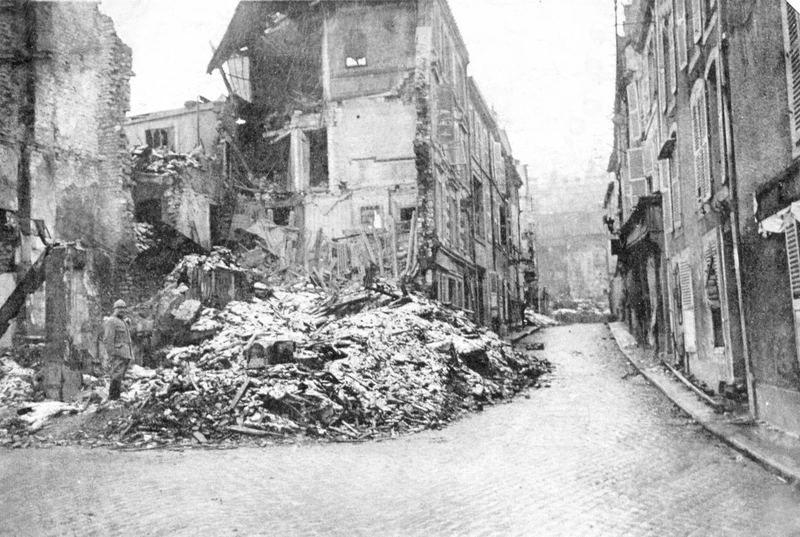
The Davies Sisters during the First World War 29 July 2007 Gwendoline Davies visited the damaged and largely empty French city of Verdun on 9 and 10 March 1917, where she acquired this postcard image as a souvenir. Private collection (Lord Davies) The First World War had a profound effect on the lives of Gwendoline and Margaret Davies, two sisters from mid Wales whose gifts and bequests completely transformed the range and quality of Wales's national art collection. They lost much-loved relatives and served with the Red Cross in France, seeing the destruction first hand. They were deeply conscious of the horrors experienced by both British and French soldiers, and shocked at the suffering of civilian refugees. While their brother David flung himself into the cause of international peace, the sisters hoped to repair the lives of ex-soldiers traumatized by the war, through education in the crafts and through music. Out of this grew the idea of Gregynog, as a centre for the arts, and for the discussion of social problems. Bringing Refugee Artists to Wales On 4 August 1914 Germany invaded Belgium, precipitating the First World War. Over a million Belgians fled their homes. The Davies family decided that Belgian artists should be brought to Wales, where they could work in safety, and inspire the country's art students. Major Burdon-Evans, their agent, and their friend Thomas Jones journeyed to Belgium where they assembled a group of ninety-one refugees, including the sculptor George Minne, and the painters Valerius de Saedeleer and Gustave van de Woestyne and their families. All three artists were to spend the rest of the war as refugees, largely dependent on the Davies family for support. While their impact on the arts in Wales was limited, the work of all three was to be profoundly influenced by their Welsh exile. The Sisters in France, 1916–1918 Initially the sisters undertook charitable work at home in connection with the war. They were keen to do more 'in the way of helping', but few women managed to go out to France. One way of doing so was to volunteer through the London Committee of the French Red Cross. There was little provision in the French army for the welfare of the ordinary soldier, and the Committee sent women to operate canteens at railway stations, hospitals and transit camps. In July 1916 Gwendoline was posted to a transit camp near Troyes. Margaret joined the canteen there in June 1917, and her journals record their lives at this period. The sisters were deeply moved by the stoicism of the ordinary soldiers of the French army and by the suffering of exhausted, sick, and hungry refugees. Wartime collecting The sisters sometimes managed to add to their art collection during the First World War. Although wartime travel in France was difficult, trips to Paris on Red Cross business provided Gwendoline with opportunities to visit the Bernheim-Jeune gallery. She bought a Daumier and a Carrière there in April 1917, and paintings by Renoir, Manet and Monet in December. In February 1918 she bought her two celebrated landscapes by Cézanne, The François Zola Dam and Provençal Landscape, which are among her most important and far-sighted purchases. In February 1916, Gwendoline Davies spent £2,350 on ten oils and a drawing by Augustus John. Both she and Margaret went on to acquire more works by John, and they collected the work of no other artist on this scale. Gwendoline was determined that the work of Augustus John be seen at Amgueddfa Cymru, later placing several of her own purchases on loan to the Museum. Guide to the paintings Paul Cézanne (1839–1906), Provençal Landscape, oil on canvas, about 1887–8 Bought by Gwendoline Davies with Cézanne's The François Zola Dam in 1918, this picture cost half as much, £1,250. It was probably painted at his family's property outside Aix-en-Provence. Full of the shimmering colour of the South of France where the sisters had holidayed in 1913–14, it must have seemed a world away from war-time Paris in winter. Amgueddfa Cymru (Bequest of Gwendoline Davies, 1951) NMW A 2438. Paul Cézanne (1839–1906), The François Zola Dam, oil on canvas, about 1879 This landscape is one of Gwendoline Davies's greatest pictures, bought in Paris for £2,500 in February 1918. The Troyes canteen was closed for repairs. She was in the city, then under intermittent German bombardment, on Red Cross business. She may have seen it on a previous visit, as in January Margaret had translated from the French the art dealer Ambroise Vollard's anecdotal account of Cézanne's life. Together with Provençal Landscape acquired with it, this was one of the first Cézannes to enter a British collection. Amgueddfa Cymru (Bequest of Gwendoline Davies, 1951) NMW A 2439. Camille Pissarro (1831–1903), Sunset, the Port of Rouen (Steamboats), oil on canvas, 1898 Margaret Davies bought several works by Pissarro at the Leicester Galleries, London, in June 1920. This was the most expensive at £550. The previous year she had worked at a canteen in Rouen run by the Scottish Churches Huts Committee. Amgueddfa Cymru (Bequest of Margaret Davies, 1963) NMW A 2492.
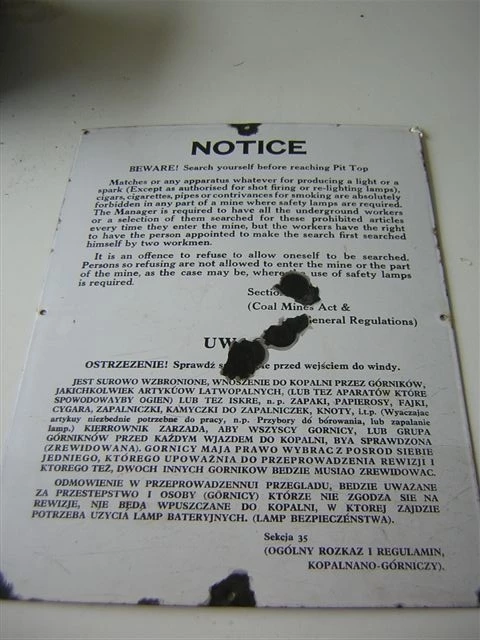
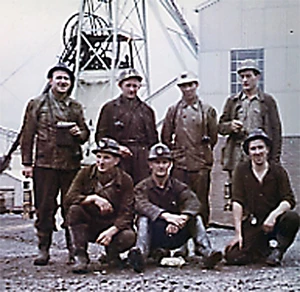
Scattered by war and revolution 12 June 2007 Colliery sign in English and Polish German mine workers at a south Wales coal pit After the Second World War the demand for coal was high and there was a need to recruit new miners. One source for these was amongst the thousands of Europeans who had to flee their home countries during the Second World War. In January 1947, a national agreement was made between the National Union of Mineworkers (NUM) and the National Coal Board (NCB) to recruit from the large number of Polish soldiers who had fought with the Allies during the war. However, there was much resistance amongst local unions. By the end of May 1947 there were Poles whose training was complete but no collieries willing to take them. The NCB appealed for help from the NUM who put a strong resolution to a delegate conference in favour of the acceptance of the Poles and most found places eventually. A scheme to recruit other eastern European displaced persons began in September 1947. There was again fierce opposition from local unions and by the winter only a minority found collieries willing to take them. By 1951 only 10,000 of the 18,000 foreign workers still remained in the mines and a new scheme to recruit Italians was launched. Again there was local opposition, only 400 found placements and the recruitment stopped in April 1952. It was no better when the National Coal Board tried to recruit amongst refugees who had fled from Hungary during the 1956 revolution. There were over 4,000 volunteers but under a third of them found places, the rest went to other industries. The 'foreign workers' came to Wales after years of hardship and danger. The ones that found employment in the coal industry eventually gained a reputation for hard work and respectability. Wales should be proud of them and the part they played in its industrial history.