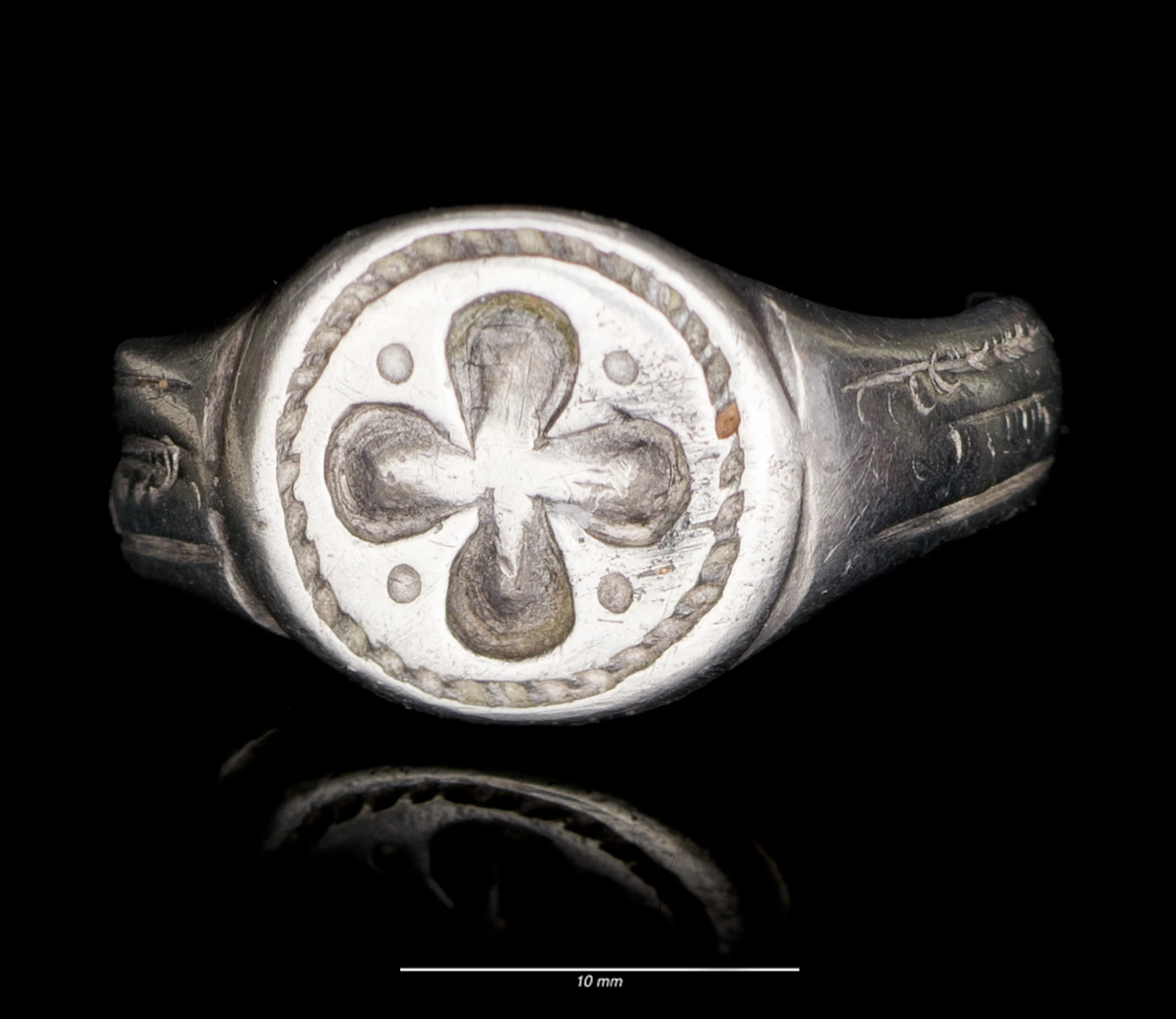
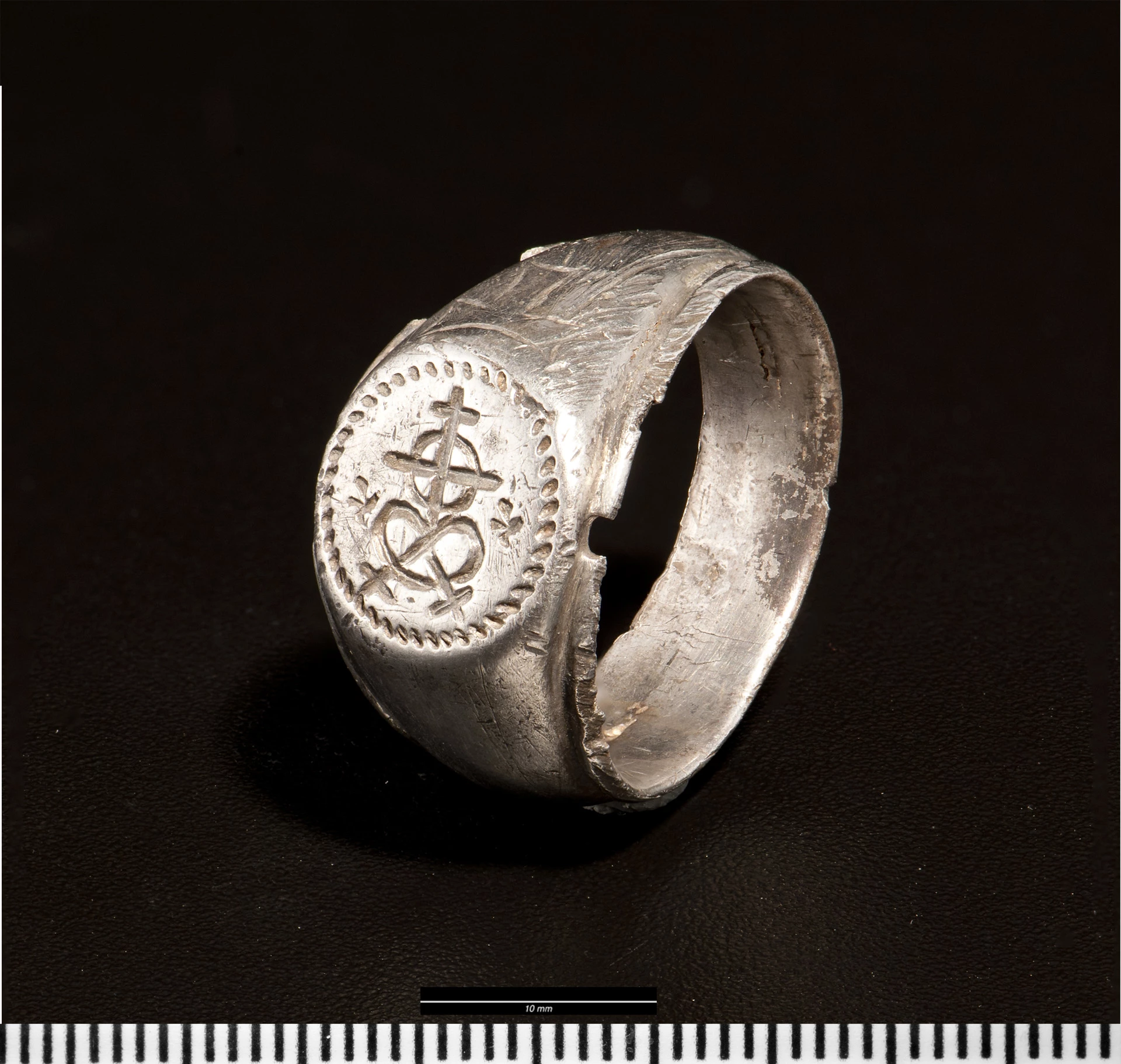
Signet Rings Rhianydd Biebrach, 8 May 2017 Merchant's signet ring from Haverfordwest Signet ring from Sully Meaning was also conveyed in the imagery portrayed on signet rings, which were often worn on the thumb. It is a type of ring still worn today, though now rarely used for its original purpose. In an age when even the wealthy and powerful could not be assumed to be literate, the signet ring featured a personal seal. This was used in place of a signature as a way of authenticating documents and was also an indicator of higher social status. Heraldic devices were used for those who had coats of arms, but for people lower down the social scale a variety of symbols, imagery and lettering could be used. For merchants, heraldry was replaced by merchants’ marks. A fifteenth or early sixteenth-century silver signet ring displaying such a mark was found in 2014 by Mr John Rees at Haverfordwest, and has since been acquired by Saving Treasures; Telling Stories for Haverfordwest Town Museum. The mark, made up of interlaced, curving crosses, is accompanied by a tau cross, associated with St Anthony and the treatment of St Anthony’s Fire, or ergotism, a disease caused by eating contaminated grain. The merchant’s mark itself was a personal device identifying the wearer, but the inclusion of the tau cross gives the ring a separate, religious overtone, and would have been specially chosen. St Anthony was not a saint who was especially popular in late medieval Wales, but as merchants were mobile this devotion could have been picked up elsewhere; west Walian merchants traded all along the Bristol Channel, as well as to Ireland, Spain and Portugal, or it could have belonged to a merchant from overseas. A much simpler signet ring was discovered at Sully in the Vale of Glamorgan in 2013 by Mr Michael Gerry. Made of silver, decorated with a plain, four-petalled flower and dated to the late 15th or 16th century, it is a much more enigmatic example, giving virtually nothing away about the identity, occupation or social status of its owner. Some rings seem to have been hybrids, with more than one purpose or significance. A particularly intriguing example is a 1st or 2nd century silver Roman ring found by Mr Leighton Jones in the Darran Valley, Caerphilly, in March 2010. It once held an oval intaglio, possibly a precious or semi-precious stone, which would have had an incised decoration used for sealing documents. So in one sense this is a signet ring like the ones described above, and would have identified its owner, but the inclusion of a precious or semi-precious stone gave the item at least one additional layer of meaning. The stone was attractive and decorative in its own right, suggesting something about the status and wealth of the individual who could have afforded it. But it would also have been thought to have intrinsic powers of healing or protection, and each gemstone was associated with a variety of medicinal, apotropaic or occult uses.
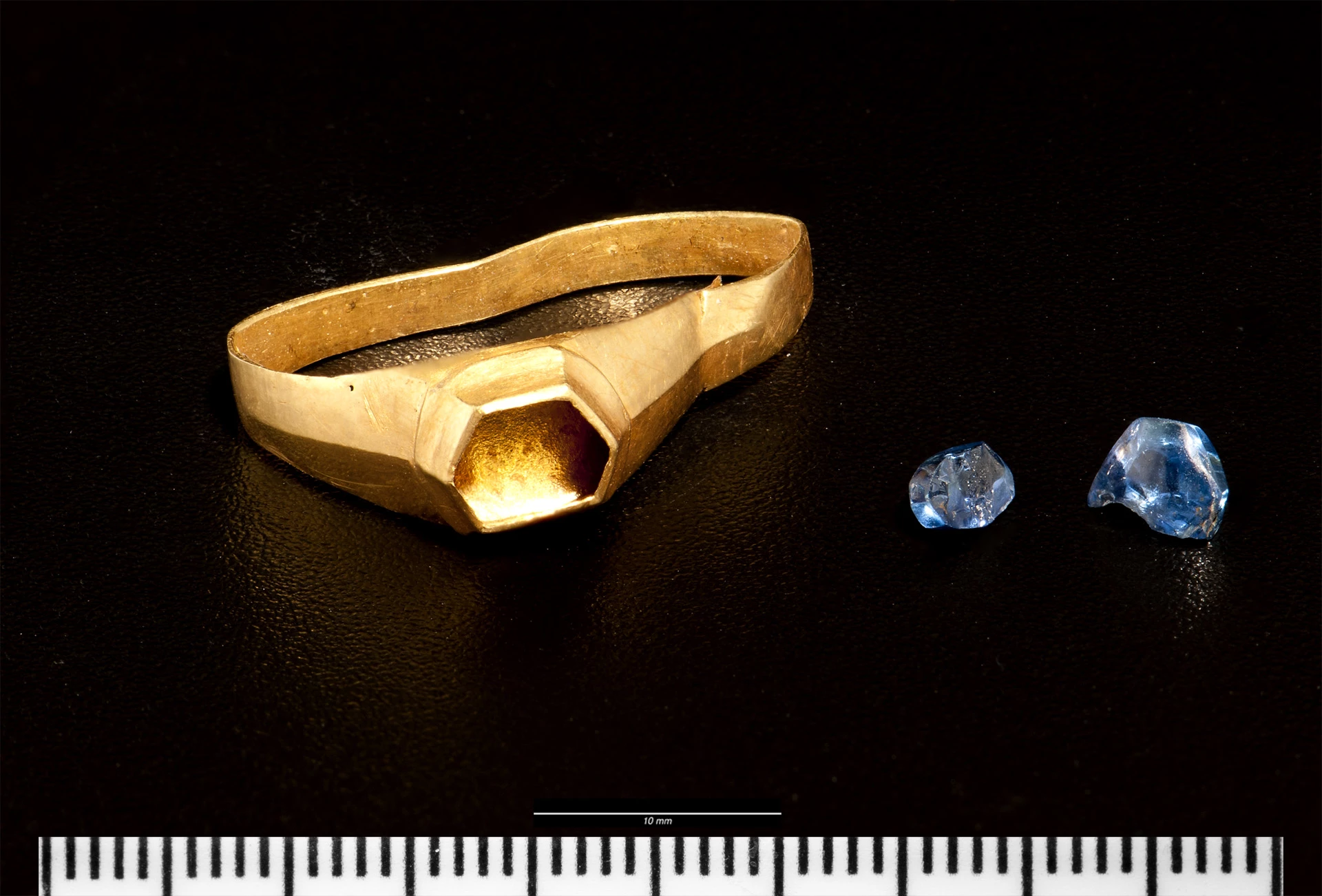
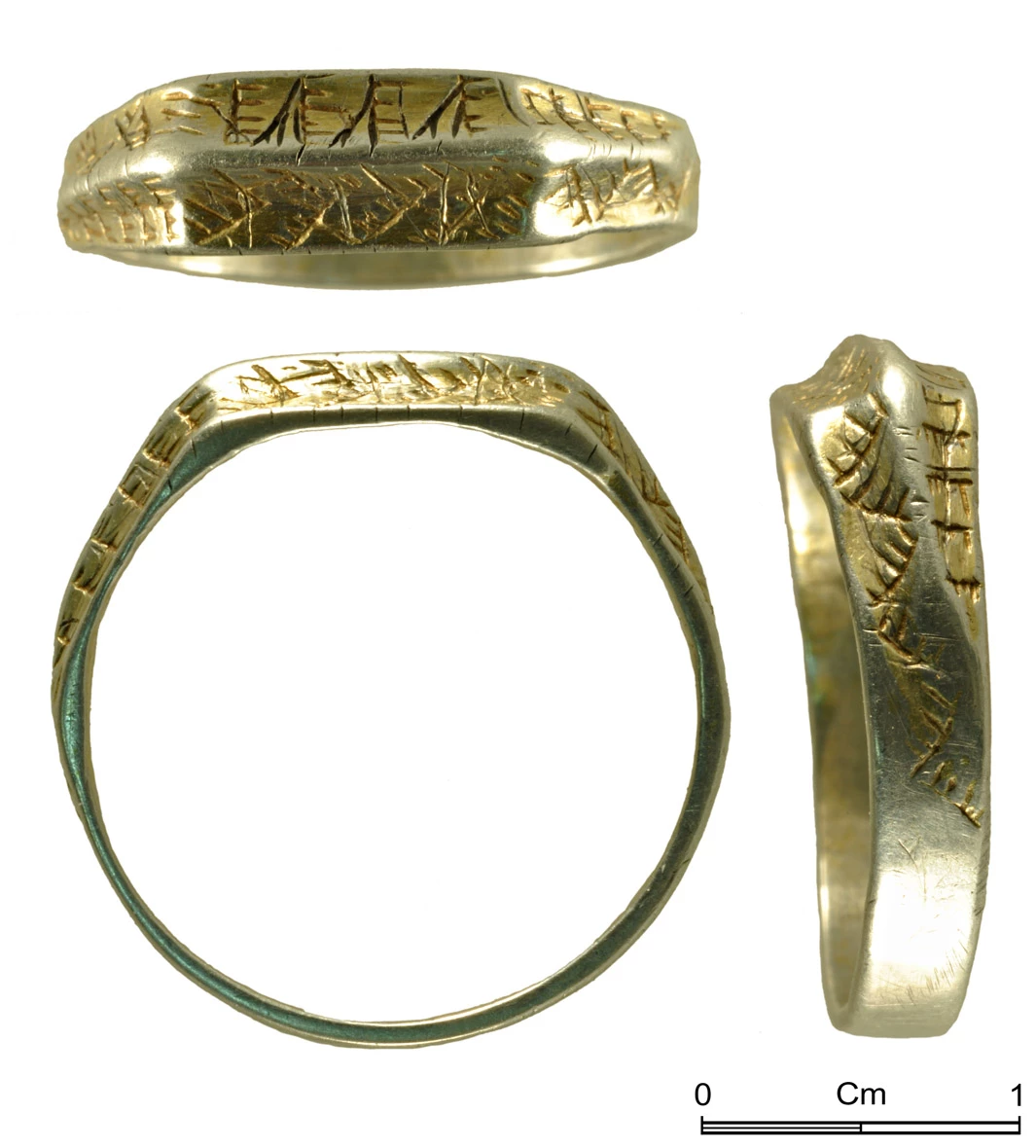
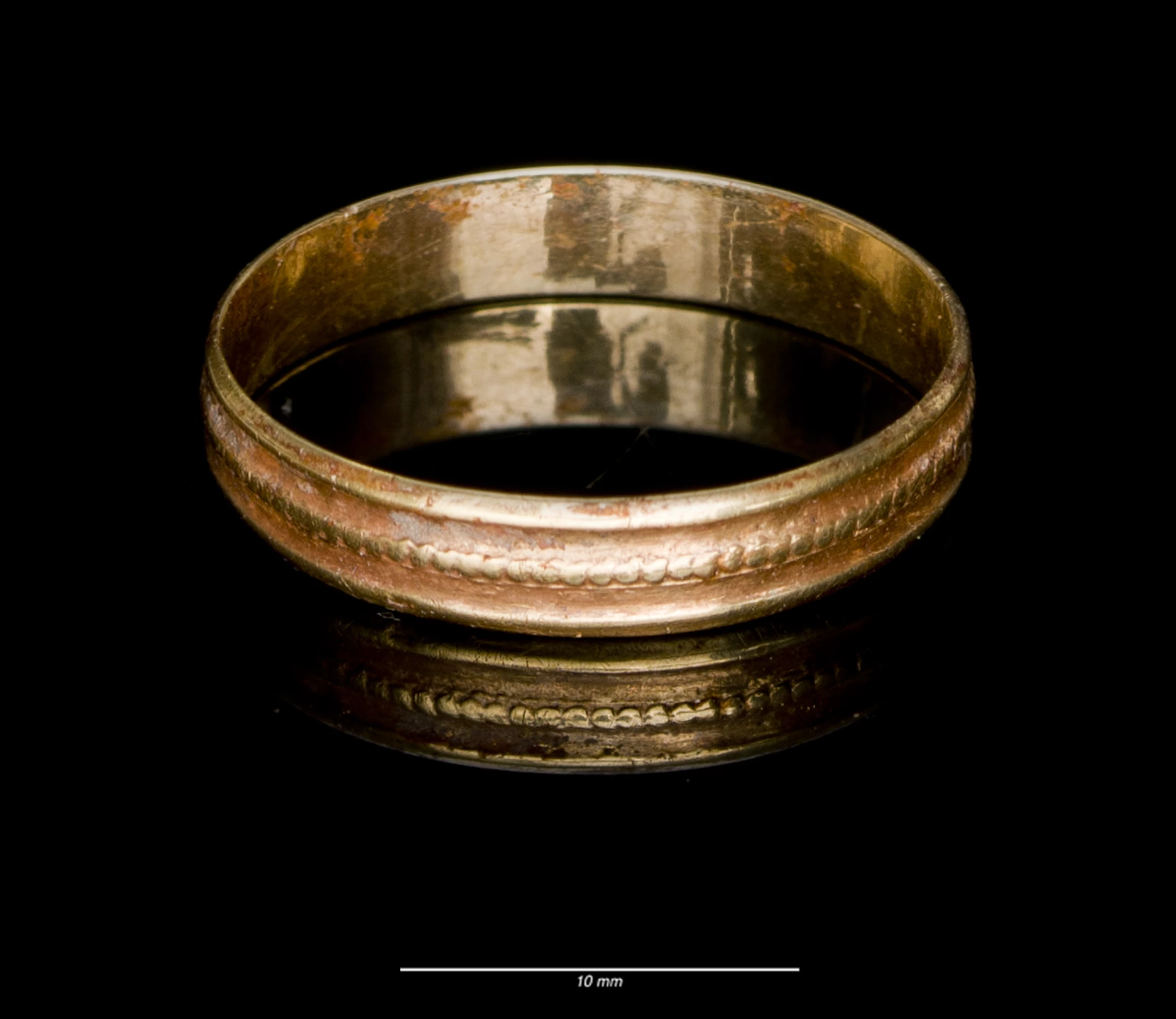
Decorative Rings Rhianydd Biebrach, 8 May 2017 Gold and sapphire ring from Pembroke Decorative ring from Gileston Decorative ring from Holt The final group of rings in this account are much more protective of their secrets. Lacking mottoes or symbols, they are largely decorative in form, and although they may well have had personal significance for their owners, unfortunately we now have no way of uncovering what this could have been. A particularly fine example is the gold and sapphire ring found at Pembroke by Mr Kevin Higgs in February 2014. The sapphire is polished (known as a cabochon), rather than cut, as was common in the Middle Ages, and is placed in a hexagonal setting. Unfortunately, the sapphire has broken in two and has come out of the setting, but it is still clear to see its beauty. Sapphires were imported from Sri Lanka and were thought to have the ability to cure headaches and other ailments and to protect against witchcraft, so maybe this ring’s purpose was not entirely decorative after all. Such an expensive import from the very edge of the known world must have belonged to a very wealthy individual, and it is tempting to speculate that it could have belonged to an inhabitant of Pembroke Castle or the nearby priory. The majority of the other rings in this category, however, lack stones and were decorated only with a series of patterns, ranging from the irregular, crude cross-hatching on a 15th century silver-gilt example discovered near Gileston, Vale of Glamorgan by Mr Mark Watson in 2011, to the sleek, understated band of pellets and raised borders on an early Tudor gold ring found at Holt in 2013 by Mr A. E. Jenkins.
Working Abroad - Welsh Emigration: Gold 19 September 2008 John Davies of Talsarnau, Gwynedd, with his brother and friend. They are seeking gold in Queensland, Australia in the 1880s
Spirit of the miners 1 October 2007 The modern county of Ceredigion is not immediately associated with mining. As you travel towards Aberystwyth on the coast, following the inland valleys of the Ystwyth, Rheidol and the Mynach rivers in the northern part of the county, you could be mistaken in thinking that the economy of Ceredigion - formerly known as Cardiganshire - had always been dependent on agriculture. As you journey through the hills, take a closer look at the changing landscape and a different story unfolds. Driving from one rural settlement to another, the ancient landscape hides many stories, traditions and intrigues of the years gone by. Mining for metals such as copper, lead, zinc and silver has been an important part of the economy of the county for nearly 4,000 years. The scattering of small communities such as Ponterwyd, Pontrhydfendigaid, Ffair Rhos, Cwmystwyth, Ysbyty Ystwyth, Goginan, Ystumtuen, Pontrhydygroes, Cwmsymlog, Taliesin and Talybont often have nothing seemingly in common. However they do have one theme linking them all - the history and legacy of metal mining. This information forms part of the website 'Spirit of the Miners' - a community regeneration project that sets out to create an identity for northern Ceredigion using the legacy of metal mining as a theme for regeneration.
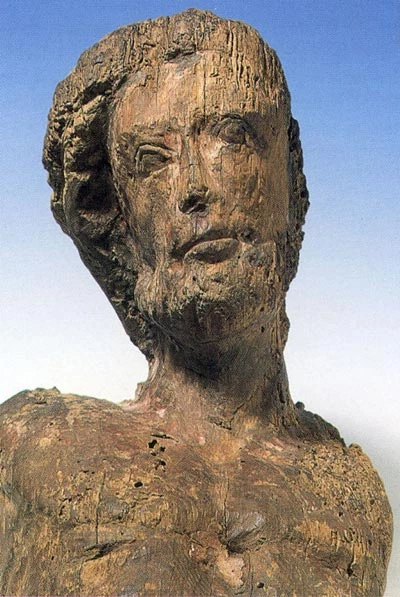
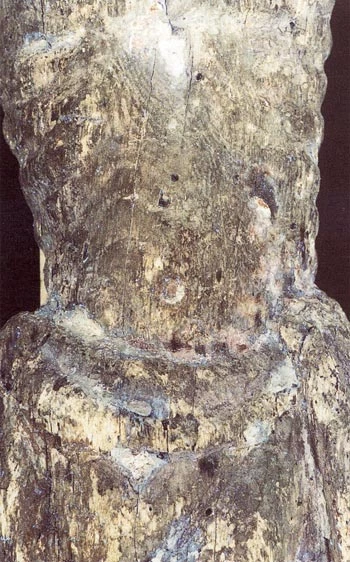
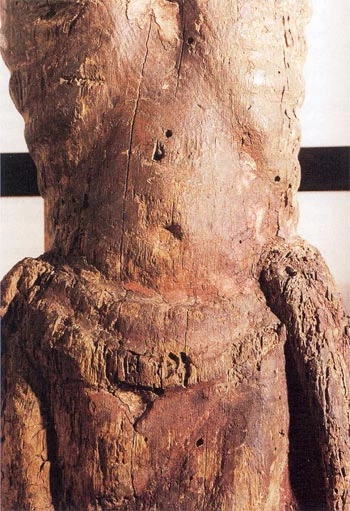
Wooden crucifix originally sparkled with gold 4 September 2007 The crucifix figure from Kenys Inferiour, Monmouthshire Detail of the head of the crucifix figure. Detail of the torso and loin-cloth in UV light. Detail of the torso and loin-cloth in reflected light. Scientific examination of a crucifix of the Middle Ages from Kemeys Inferior, south Wales reveals that the wooden object seen today was once richly decorated in vibrant colours and magnificent gold leaf. In 1850, the remains of a carved wooden figure of Christ were discovered in the church of Kemeys Inferior, a few kilometres east of Caerleon, south Wales. An object of exceptional importance Before the Reformation of the 16th century (when England and Wales officially turned from being a Catholic nation to a Protestant one), such figures of Christ were common throughout England and Wales and the Kemeys Christ is the most complete example of only a handful of medieval fragments to survive in Britain, and so is of exceptional importance. Fragments of the Kemeys Inferior figure were found, 'together with skulls and bones', in 'the blocked up rood-staircase' during repairs and alterations to the church in about 1886. It was transferred in 1930 to Amgueddfa Cymru. Although the figure was thought to be from the 14th century, arguments supporting this have never been set out in detail. Dating the figure relies on comparing other sculptures, and it is now thought to be from the late 13th century. Made in Wales Owing to the rarity of surviving figures in Britain from this period it is necessary to study objects from the continent for further clues. For example, late 13th-century crucifix figures from Sweden share several similar characteristics, whereas the 14th-century Christ from Mochdre, Denbighshire, the only comparable wooden figure from Wales, is quite different. The Kemeys Christ was more than likely to have been made in England or Wales. Investigation and analysis of the crucifix Very little of the colour that once covered the wooden figure can be seen today, but routine work done by Amgueddfa Cymru in 1999 led to in-depth investigation of the surface of the object. The figure was X-rayed and viewed under ultra violet (UV) and infra-red (IR) light before being examined under the microscope. This revealed the original colour scheme, with differences between the torso and the arms, previously considered to have been later additions. Vivid and rich colours In contrast to its present condition, the Kemeys Christ originally boasted a vivid and richly coloured appearance as was popular throughout the Middle Ages. Great care was taken in decorating the figure. When new, it would have shone with gold leaf. Examination of the figure has revealed considerable evidence of polychromy (use of many colours), and, like other examples of medieval sculpture, over-painting. Although little colour survives on the arms, the right arm does have two layers, which may suggest replacement of the left arm either during the first half of the 16th century or even earlier. At least three layers of painting have been detected, though the dating of each is problematic. The secondary colour scheme appears to have included gilding on the hair; gold, red and blue on the inside of the loin-cloth; dark brown and black details on the face; a green crown of thorns; and flesh tones in pale pink, with red emphasising the wounds. Stunning polychrome work like this would have been standard on such an important sculpture. The Kemeys figure clearly represents Christ on the cross, who is portrayed alive, with his eyes still open. The Kemeys Christ is a rare survival of pre-Reformation devotional figures once common in the British Isles. With the original height of about 94 cm, this powerful image of Christ's suffering would have been widely seen and prayed to, and formed a purposeful part of everyday life.