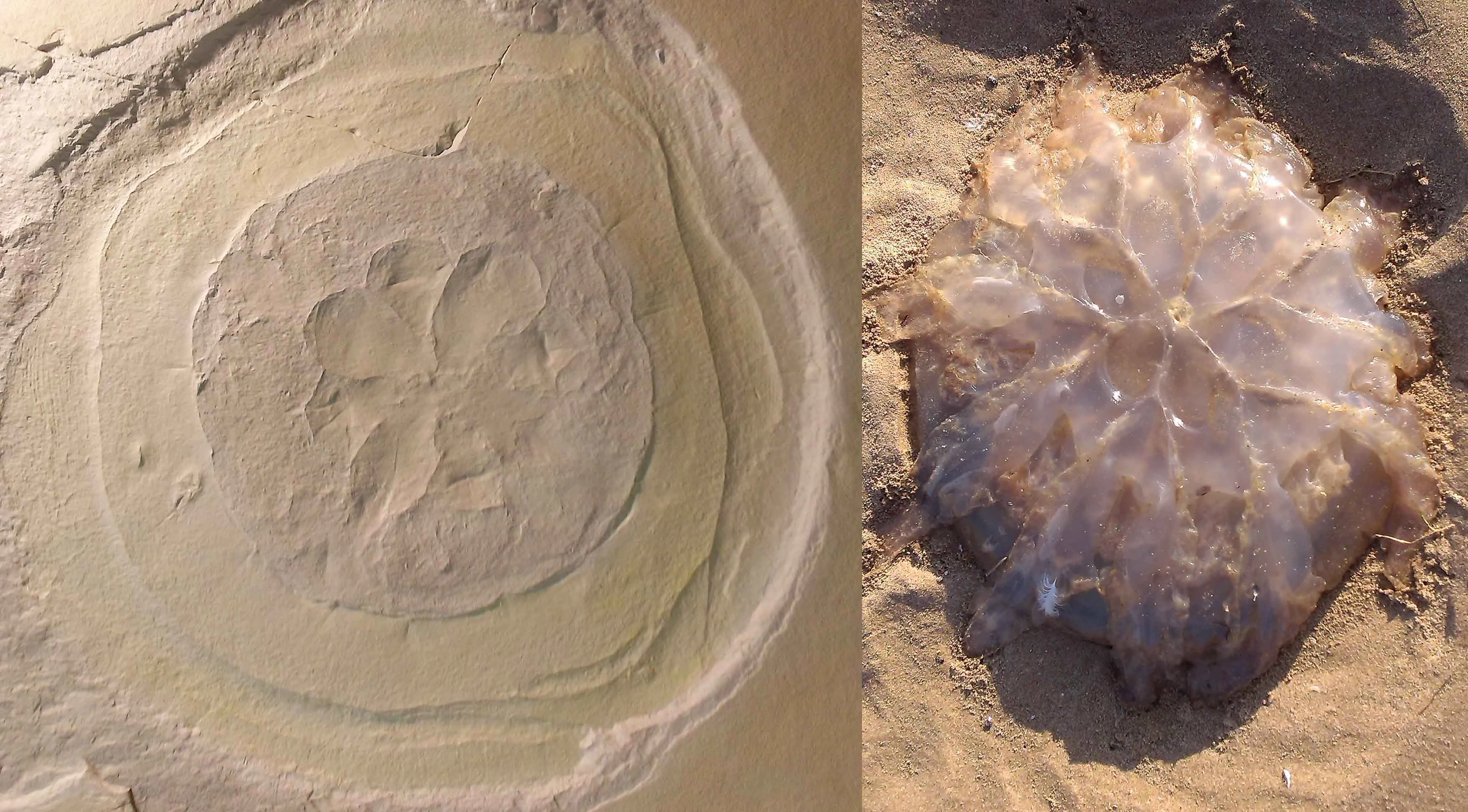
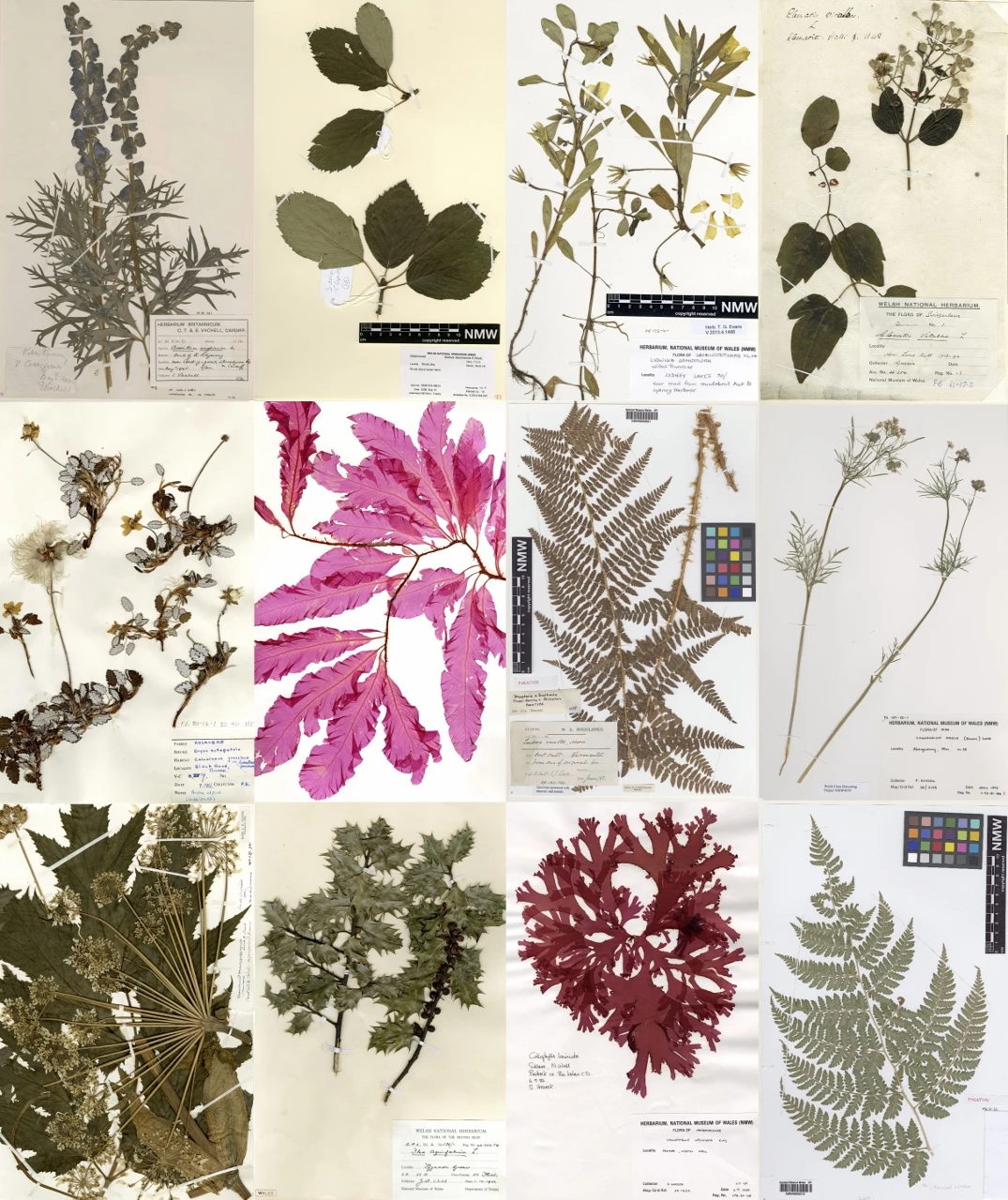
Unknown Wales event 2016 Katherine Slade, 25 October 2016 The Department of Natural Sciences at Amgueddfa Cymru in collaboration with the Wildlife Trust for South and West Wales organised the sixth Unknown Wales for the 8th October. The day to celebrate Welsh wildlife was funded by a generous donation from a museum patron. This year, Dr Richard Bevins, head of the Natural Sciences Department, welcomed a record 240 members of the public to the Reardon Smith lecture theatre at National Museum Cardiff. Attendees came from across South and Mid-Wales as well as from over the Channel in Bristol.We had overwhelming feedback this time - 88 people have responded. A third of respondents were new to the event, but many people return every year: “As usual superb presentations by passionate presenters, many thanks” “Gwych unwaith eto – dw i’n dod pob blwyddyn, diolch!" We always aim for a broad range of natural history topics delivered in an accessible way: “A really enjoyable day and very well pitched at all generations and interests” “John Archer-Thomson – very engaging speaker, made a potentially dry subject [limpets] interesting and informative. Lovely films of Pine Martens.” A-level and University students felt the topics were relevant to their studies. “The enthusiasm of the speakers for their subjects, the beautiful location and applying real ecological issues to my studies (I am a student at Cardiff Uni studying biology)” “Fungi and colliery spoils were especially interesting and the limpets talk gave information that’s very helpful for A-level biology” Our special guest was Prof. Mike Benton from Bristol University. He spoke about how the discovery of Wales’s newest dinosaur, Dracoraptor hanigani, tells us more about the origins of the dinosaurs. “Good to see Palaeontology within context of contemporary talk…Fab.” People have given us many suggestions for topics for next time; “foraging”, “bats” or “urban greening” are just some of the ideas that could be appearing in the future.We sacrificed question and answer time to enable speakers to finish their talks. However, feedback showed many people missed the interactive aspect. There was some chance for people to talk to speakers informally alongside the displays in the Oriel Suite at lunch, but we acknowledge this is not a substitute for audience participation at the time of the talks.The Storify article shows how people followed the event live on the day via social media: https://storify.com/CardiffCurator/unknown-wales-2016For first time we have created a display using the museum collections to link into topics covered at the event. We have just incorporated some of the feedback we received into it. The display is at the top for the restaurant stairs in National Museum Cardiff and runs until 30th October 2016.
Launching ESOL resources Joe Lewis, 24 October 2016 Today we have launched our ESOL (English as Second or Other Language) resources on the museum website. The resources were created by Kate Congdon of Cardiff and the Vale College as part of the HLF (Heritage Lottery Fund) redevelopment of St Fagans National History Museum. In my last blog I discussed how we had trialled the resources with around 300 students from Cardiff and the Vale College. As a result of the trial we had very positive feedback and some minor adjustments were able to be made. There are 6 different levels of resources starting with Lower Beginners up to Upper Intermediate. The 6 different levels focus on different buildings across the museum.There's always a sense of achievement when finishing a project but on this ocassion there is also a feeling of sadness that I have finished working with Cardiff and the Vale college. Working with Kate and the ESOL students from the college has been a pleasure. I want to say a massive thanks to Kate and all the students that took part and I hope we can work together again on future projects.The resources are freely available to anyone wishing to use them on a visit to St Fagans. The resources are currently PDF worksheets but in the coming months my aim will be to convert these resources into digitial worksheets such as on iBooks.
A tulip vase designed by William Burges for Cardiff Castle, 1874 Andrew Renton, 20 October 2016 Tulip vase designed by William Burges, 1874 Amgueddfa Cymru has in its collections a remarkable pottery vase designed by William Burges (1827-1881) for the Summer Smoking Room at Cardiff Castle, the pseudo-mediaeval extravaganza he created for John Patrick Crichton-Stuart, 3rd Marquess of Bute (1847-1900). This vase is among the most important examples of Victorian design with a Welsh connection. It was created as part of one of the pre-eminent architectural and decorative commissions of the nineteenth century, and certainly the most significant in Wales. William Burges (1827-1881) Burges was perhaps the most original and exuberant architect-designer of the 19th century, widely regarded at the time of his early death as the most brilliant of his generation. Burges considered A W N Pugin, famous for the ornamentation of the Palace of Westminster, to be his great hero. However, his strongest early influence was the doctrine of 'progressive eclecticism' of his patron A J B Beresford Hope, who hoped that by drawing on a wide range of historical styles architects would create a new style worthy of the Victorian age. Burges inherited significant wealth, enabling him as a young architect to travel widely in Europe and as far as Turkey, while also studying the arts of Japan, India, Scandinavia and North Africa. As a result, his work is distinguished by its imaginative but informed use of multifarious sources, most obviously the architecture and design of mediaeval Europe but including those of the Islamic world and East Asia, Pompeii and Assyria. The Marquess of Bute’s Castle in Cardiff At Cardiff Castle, given free rein by the hugely wealthy Marquess of Bute, Burges’s imagination created one of the great masterpieces of Victorian architecture. The exteriors of this uninhibited architectural fantasy were inspired by French mediaeval castles, while the interiors are alive with coloured carvings, panelled walls and painted ceilings. The Summer Smoking Room at the top of the Clock Tower was the pièce de résistance, where a set of four tulip vases designed by Burges was integral to the room’s amazingly theatrical effect. Late in his life Burges came to believe that the future of architecture lay in a renaissance of the 'minor arts'. His designs for furniture, metalwork, jewellery, stained glass and ceramics were just as inventive, scholarly and elaborate as those for buildings, and were conceived as integral to the architectural schemes he devised. This made him a key influence on the Arts and Crafts movement. The Summer Smoking Room, Cardiff Castle, c. 1900 The Tulip Vases The vases themselves are made of a white porcelain-like stoneware, hand-painted and gilded. They have a globular body and four smaller necks round the central one. They are painted in the glaze with parakeets sitting in blue scrolling foliage, while around the belly are four oval armorial bearings associated with the Bute family. Inscriptions round the neck (ANNO : DOMINI : 1874) and lower belly (IOHN^S PATC^S MARCQ DE BUTE) identify the patron and date. Unfortunately there is no record of who made or decorated the vases. While it is usually proposed that they were made in Staffordshire, they may in fact have been made by George Maw of Broseley, Shropshire. Best known for their tiles, Maw & Co manufactured Burges’s own tile designs, including those for Cardiff Castle's Summer Smoking Room. They also produced moulded architectural ceramics and were quite capable of making unusual vessel forms, such as the well-known vase in the form of a swan designed by Walter Crane in 1889. They were certainly manufacturing ambitious pottery vessels as early as 1874, as described in The Art Journal that year by a Professor Archer in terms that could apply to the Burges vases: 'Some of the designs, as in that of a jardinière in Louis Quatorze style and in a number of vases formed after Indian, Moorish and classic models, are works which would do credit to the oldest-established potteries, whilst some of the colour-effects displayed upon them have a richness that has never been surpassed. For these articles a white clay is used, and they may be classed as semiporcelain with a very firm, hard texture.' The decoration of the vases may be the work of W B Simpson of 456 West Strand, Maw’s agent in London. Maw sent the ‘majolica tiles for architectural purposes’ which he had developed to Simpson for them to be painted by hand and fired. As the tiles at Cardiff Castle show, these were of outstanding quality, and the Summer Smoking Room vases are very much their equal. The design of the Clock Tower at Cardiff Castle Axel Haig, Design for the Summer Smoking Room at Cardiff Castle, c. 1870 Axel Haig, detail of the design for the Summer Smoking Room at Cardiff Castle, c. 1870 The commission to rebuild Cardiff Castle provided Burges with an unprecedented opportunity to realise his ideas on a grand scale. Bute’s unparalleled wealth, his love of travel and his romantic passion for the Middle Ages made him the ideal patron for Burges. As leading Burges expert J Mordaunt Crook has written, ‘Cardiff was the commission of a lifetime: the chance of creating a dream castle for Maecenas himself.’ The Clock Tower is the most prominent element of Burges's Cardiff Castle and created a sensation when the architect revealed his design at the Royal Academy in 1870. Each apartment was richer than the one below and it culminated in the galleried Summer Smoking Room, probably the finest example of Burges’s fantasy architecture. It was (also in Mordaunt Crook’s words) ‘a veritable skyscraper among palaces. A skyscraper, moreover, clad in the garments of progressive eclecticism.’ The guiding iconographic theme of the Clock Tower is time. The Summer Smoking Room's decorative scheme is inspired by astronomy, illustrating the divisions of Time and the organisation of the Cosmos. Its tiled floor, modelled on tiles before the high altar in Westminster Abbey, depicts the five continents, the Holy City, and the life cycle of the birds and beasts of the earth. The chimneypiece is carved with the amusements of summer, love in particular. A frieze of painted tiles illustrates the legends of the zodiac, with subjects such as Apollo and Cupid, Castor and Pollux, and Europa and the Bull. Paintings around the walls by Frederick Weekes represent seventeen different types of metal and in the spandrels astronomers of the past. In the centre hangs a sun-burst chandelier in the form of Apollo. Between the ribs of the dome are figures of the four elements – earth, fire, air, water – while in the four corners are giant carved anthropomorphic corbels depicting the eight winds of Greek mythology, such as Africus, Auster and Zephyrus. Also designed by Burges, the furniture included luxurious ottomans and inlaid chairs of Jacobean shape and Romanesque decoration. This all typifies Burges’s richly eclectic and allusive approach. Designed to sit as bright highlights in each corner of the room on the carved stone corbels depicting the winds, the set of four tulip vases was an integral part of this amazingly theatrical whole. Axel Haig’s watercolour of about 1870 illustrating Burges’s original vision for the Summer Smoking Room (in Amgueddfa Cymru’s collection) depicts vases in the corners different to the form eventually produced and more generic in character. Comparison with the completed vases shows that Burges subsequently expended special care and imagination on their design to make them play an active role in his concept for the room. Their decorative details contributed to the room’s themes and helped to animate the space. The colours – blue, green, gold and ochre – reflect those elsewhere in the room, such as the orange and blue of the upholstery of the ottomans, while the armorials echo those around the base of the gallery. More particularly, the parakeets – love-birds, an especially favourite motif of Burges – develop the theme of love, echoing the parakeets carved and painted in the hands of the sculpted figure of Amor perched on the chimney hood as well as on the hood itself and painted in roundels on the underside of the room’s gallery. The design and decoration of the vases are an imaginative admixture of sources as varied as mediaeval architecture and illuminated manuscripts, Italian Renaissance maiolica, Dutch Delft pottery and Chinese porcelain. This wide range of allusions was all part of the intellectual games Burges enjoyed playing with the Marquess of Bute. Drawings of vases of similar form appear in Burges’s ‘Vellum Sketchbook’ (Royal Institute of British Architects collection), one in particular annotated ‘this is a pot of glass / in which you put flowers’ and probably based on a glass water sprinkler typical of Catalonia in about 1550-1650. Another source of inspiration for the form was the multi-spouted ceramic flower vases made in Iran both in the 12th century and in the Savafid period (1500-1722). Closest of all are multi-necked Chinese porcelain vases of the late 18th and 19th centuries, a rare form of which two examples can be seen in photographs of Burges's chambers at 15 Buckingham Street, London, in the 1870s. The office in William Burges’s chambers, 15 Buckingham Street, 1876 © Victoria and Albert Museum, London Detail from the office in William Burges’s chambers, 15 Buckingham Street, 1876 © Victoria and Albert Museum, London The kitchen at Marmoutier abbey, from Eugène Viollet-le-Duc, Dictionnaire raisonné de l’architecture française du XIe au XVIe siècle (1856) The form is also an architectural one in miniature, strongly influenced by one of Burges’s favourite mediaeval buildings, the multi-chimneyed kitchen of the Benedictine abbey at Marmoutier near Tours in France. This had been illustrated by the hugely influential French Gothic Revival architect Eugène Viollet-le-Duc in his Dictionnaire raisonné de l’architecture française du XIe au XVIe siècle of 1856. It also reworks one of Burges’s own earlier architectural concepts, his unrealised design for the Bombay School of Art of 1866 the circular smithy of which owed its silhouette to the Marmoutier kitchen. According to critics, the Bombay design ‘caused a major stir in the architectural profession’ and was ‘perhaps the most marvellous design that he ever made.’ The set of four vases was removed from Cardiff Castle by August 1948, after the Castle had been presented to the City of Cardiff in 1947. Two were acquired by poet John Betjeman, who in 1965 gave them to Charles Handley-Read, whose thank-you note read ‘I am near to bursting with gratitude and delight.’ One of these is now at the Victoria and Albert Museum, the other at The Higgins, Bedford. The other two were acquired by the Newport dealer John Kyrle Fletcher, who sold them to a private collector. While one of these has now returned to Cardiff, at the time of writing the fourth vase has had its export licence deferred to give public bodies the opportunity to raise the funding required to keep it in the UK. It is strongly to be hoped that a British institution will be able to raise the funds to acquire it, so that the whole of this important group can be preserved in public ownership in this country in perpetuity, with the chance of exhibiting all four vases together at some point. This acquisition was made possible by the generous support of the National Heritage Memorial Fund, the Art Fund and the Headley Trust. Their grants enabled the Museum to buy the vase, after it too had had its export licence deferred. This article was features in the The Friends newsletter. Find out more about supporting Amgueddfa Cymru by becoming a Friend.
Planting Day 20th October! 2016-10-18 Penny Dacey, 18 October 2016 Hello Bulb Buddies,There isn't long to go until planting day on 20th October! Are you ready? Here are some helpful resources to prepare you for planting your bulbs and for looking after them over the coming months! These are also on the Spring Bulbs for Schools website: https://museum.wales/spring-bulbs/These resources will help you on planting day: A Letter from Professor Plant (introduction to the project) Adopt your Bulb (an overview of the care your Bulbs will need) Planting your Bulbs (guidelines for ensuring a fair experiment) And these activities are fun to complete: Bulb Adoption Certificate Make Bulb Labels It's important that you read these as they contain important information! For example, do you know how deep you need to plant your bulbs? Or how to label your pot so that you know where the Daffodil and Crocus are planted?Remember to take photos of your planting day to enter the Planting Day Photo Competition!Keep an eye on Professor Plant's Twitter page to see photos from other schools: https://twitter.com/professor_plantBest of luck Bulb Buddies! Let us know how you get on!Professor Plant & Baby Bulb
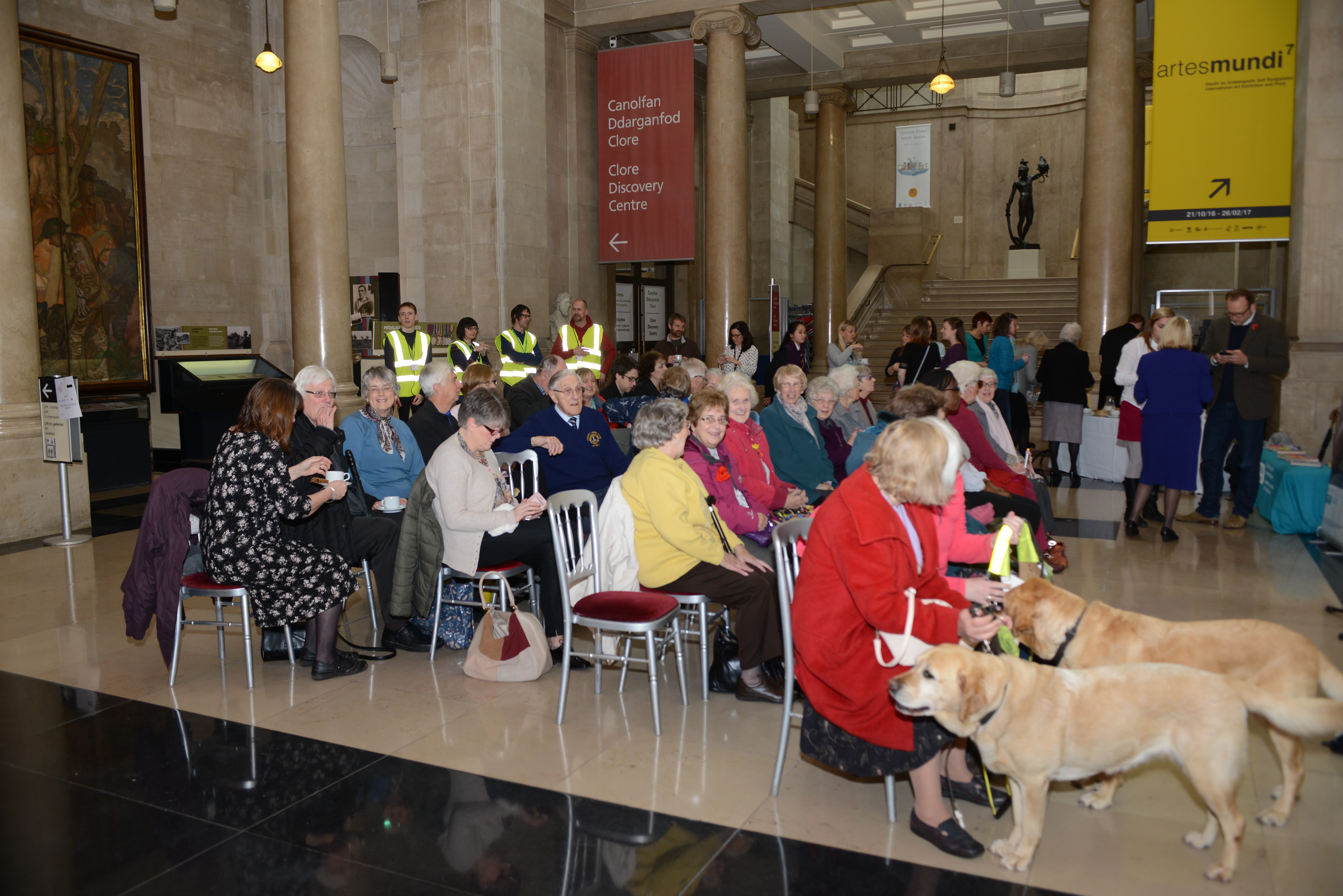
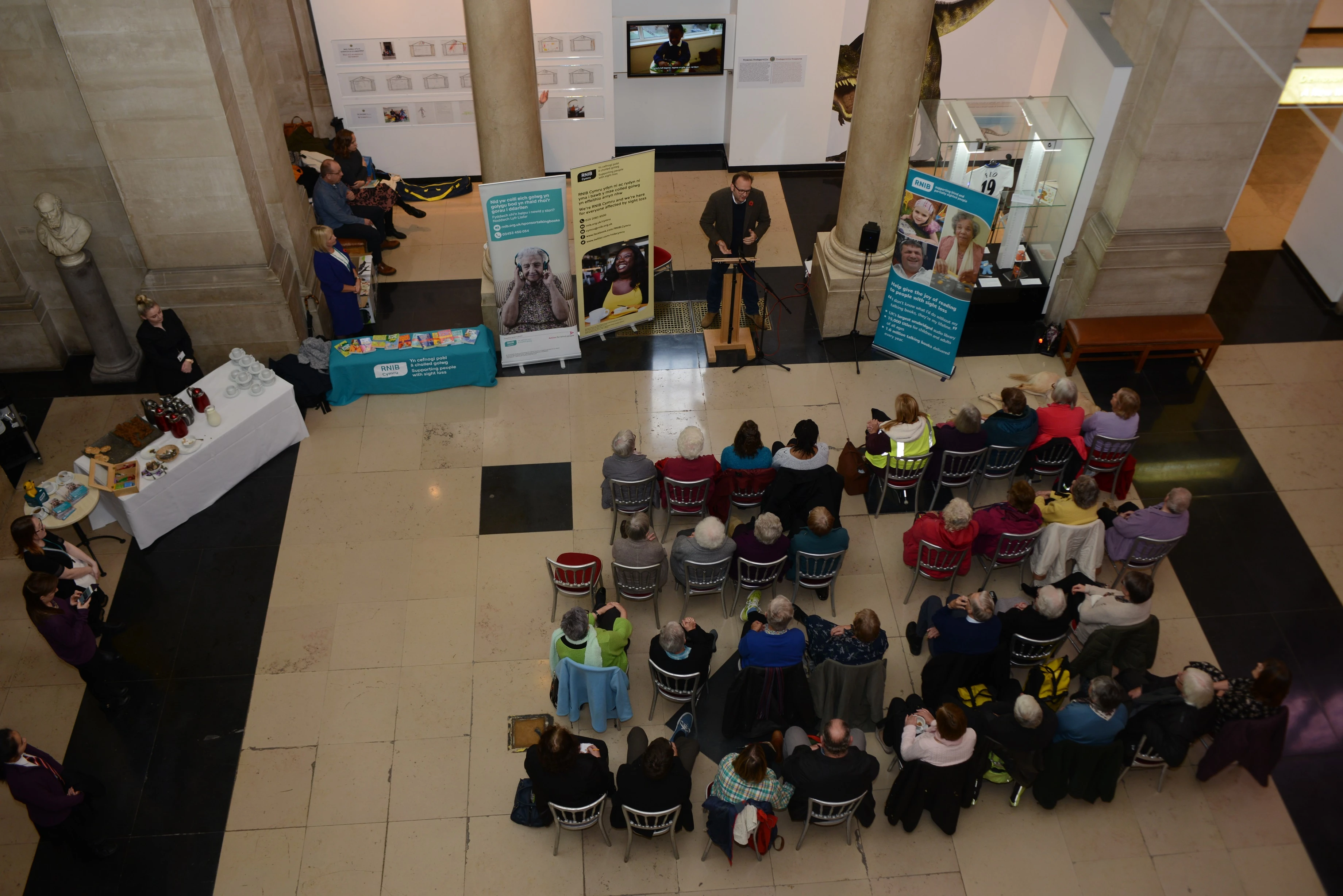
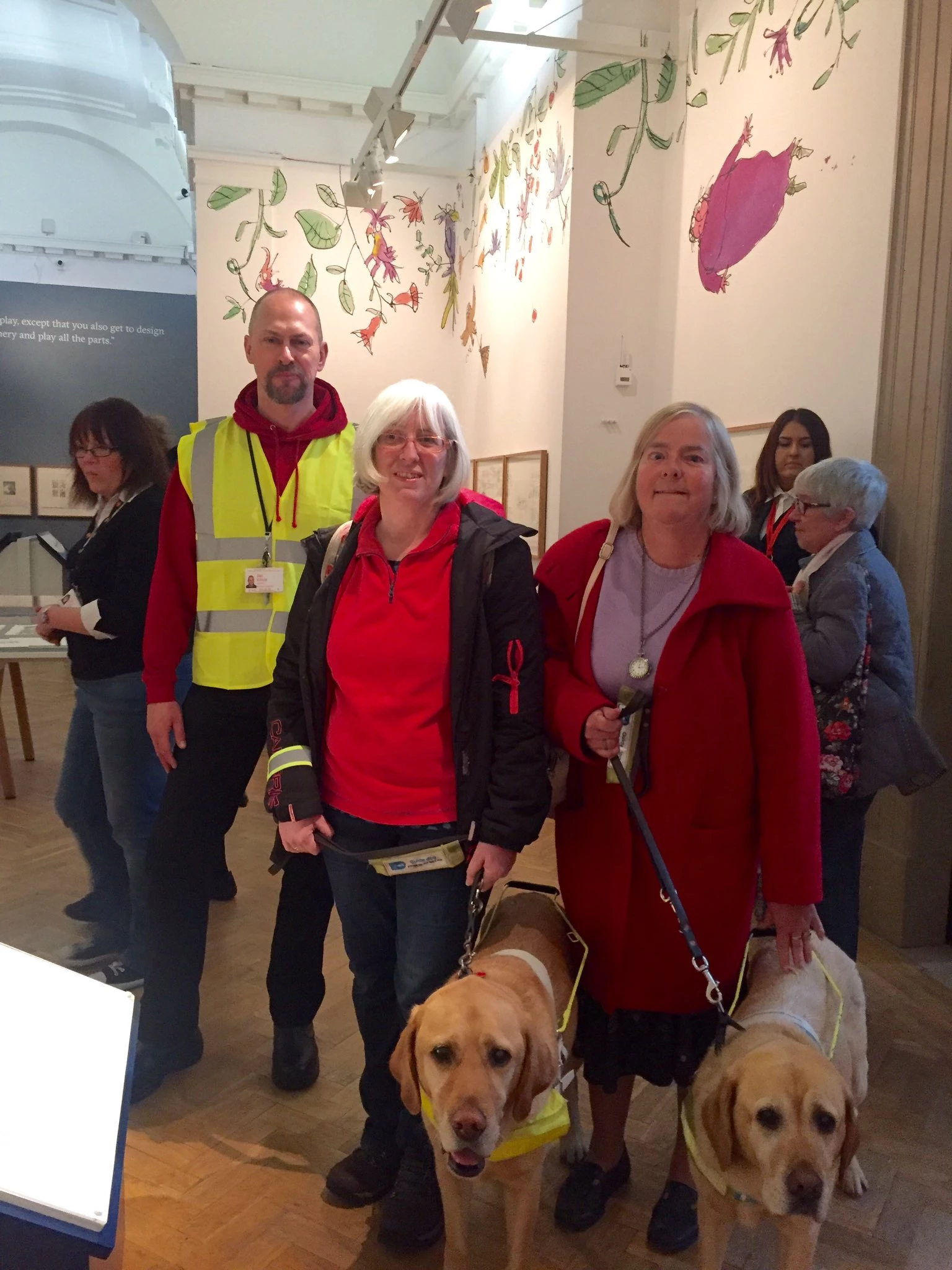
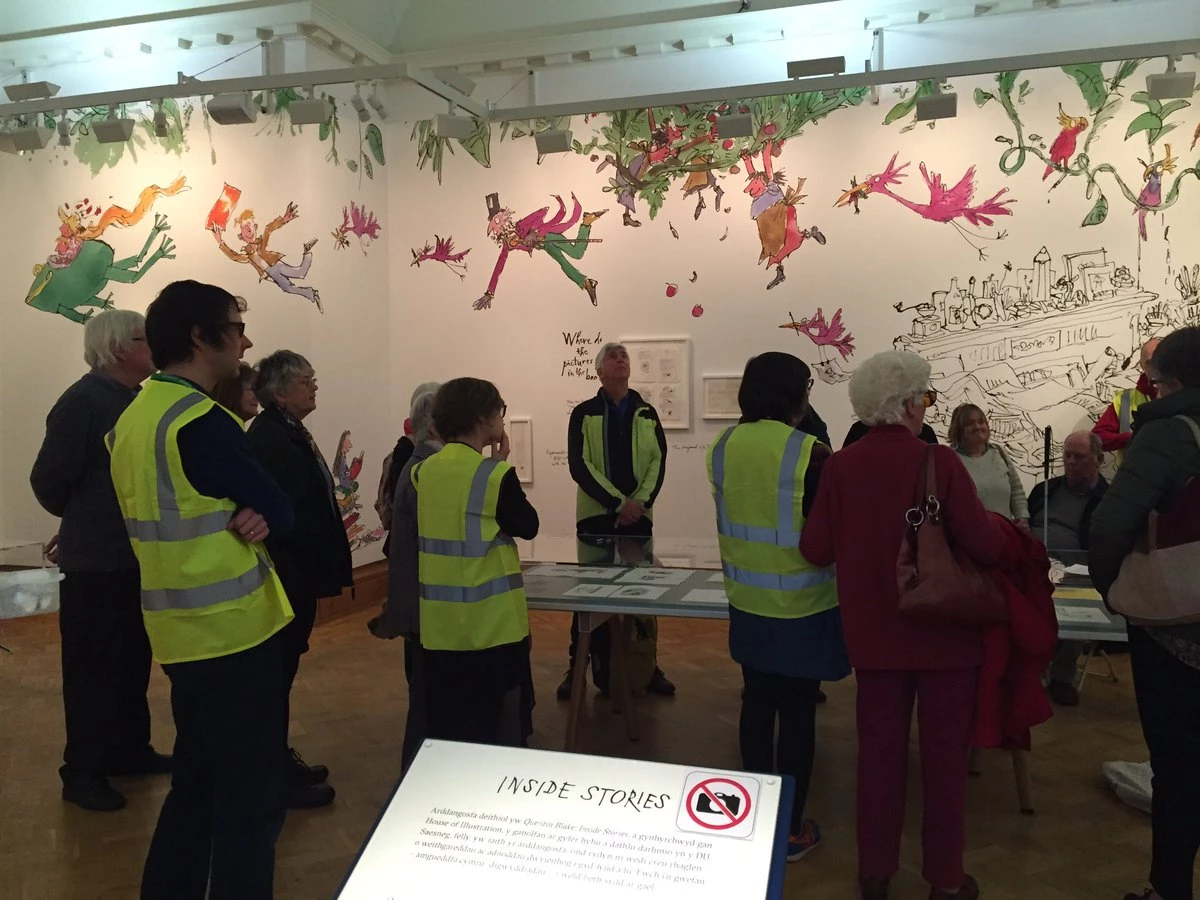
Art and Visual Impairment - Looking at museums in a different way Holly Morgan Davies, Youth Forum, National Museum Cardiff, 18 October 2016 This week’s Youth Forum again made me think about museums and what they can do, and how they should be, in a different way.While looking at art from the First World War had at times been a sensory overload, this time we were trying to understand what it would be like to come to a museum without one specific sense fully intact. How to make museum exhibits more accessible for the partially sighted?Having always gone to museums with my sight in (near enough) tip top condition, I and probably others tended to presume it was a pretty necessary requirement. If I had trouble seeing the paintings/sculptures/artefacts, then I don’t think I’d want to go. Because if seeing is believing, and I couldn’t see what I was supposed to be learning about, then surely I wouldn’t learn very much and would end up feeling quite left out, even though this obviously shouldn’t be the case.And it doesn’t have to be! The paintings and sculptures that we looked up were a bit of a mix, ones that more well-known and some that were completely new. Among the ideas that we came up with, for example, involved the painting Bad News, by James Tissot, incorporating the playing of military marching music alongside the painting to evoke the solemnity and sorrow of leaving your family to go off and fight in another corner of the world.Similarly, for Entrance to Cardiff Docks by Lionel Walden, lighting effects could imitate the lights of the port and the surrounding buildings, with sound effects of ships coming into port, water slapping against the quay, sailors shouting to each other. We could have smells to add to the experience (although maybe not the fish!). Instead of rough sailors accompanying Manet’s San Maggiore by Twilight, it would be the gentle, joyful peel of Italian church bells.In front of a painting of Sir Watkin Williams-Wynn, Thomas Apperly and Edward Hamilton by Pompeo Batoni there could be a table with the objects and chairs laid out exactly as they are in the picture, as if the subjects had just finished the sitting and left only a few moments ago. David Nash’s intriguing sculpture Multi-Cut Column could have smaller imitations made of it, that people could actually pass around and touch, something rarely allowed in any exhibit. I realise there would be some technical issues in making sure it wasn’t distracting or taking away from the other exhibits, and that maybe not all these ideas will actually become a finished product, but I hope that at least some of them do work out. Because who wouldn’t want to experience this? It might be a bit like theatre, the art being brought to life, stepping into the painting. While I’m definitely thankful I’m not visually impaired in any way, I’m also thankful I took the time to try and understand the experience of those who are. Our next Audio Description Tour will take place on 8 December and will be of our Natural History collections.