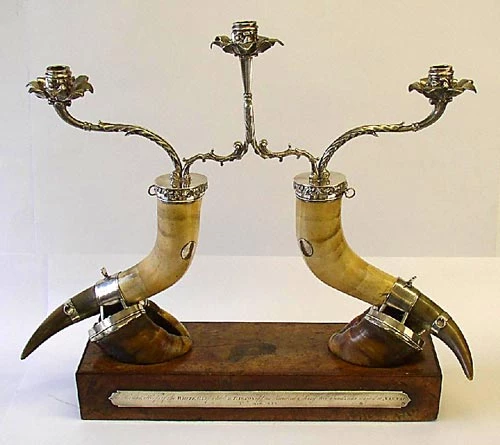
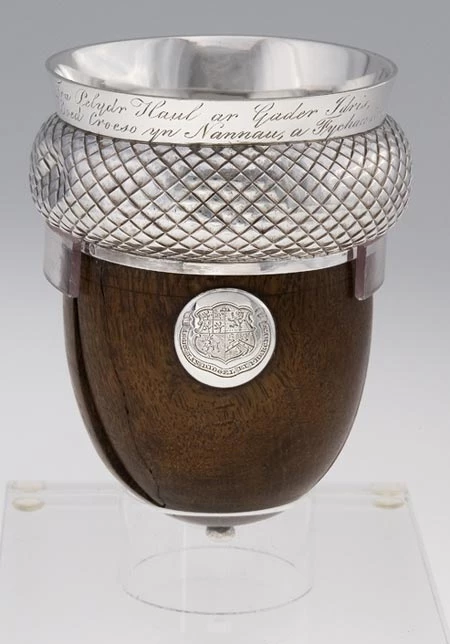
Remembering the white ox of Nannau Oliver Fairclough, 15 September 2009 The Nannau ox painted with the family's cowman, Sion Dafydd, by Daniel Clowes of Chester. The ox was one of the last of an ancient herd of white cattle at Nannau. Sir Robert Williames Vaughan (1768-1843). By permission of Llyfrgell Genedlaethol Cymru / National Library of Wales The candelabrum made from the horns of the Nannau Ox, mounted onto two of its hoofs. The horns can be detached to form two drinking cups. This oak and silver cup is part of a set of six acorn-shaped cups made for the 1824 birthday celebrations at Nannau, using the wood of the Ceubren yr Ellyll. The White OxOn 25 June 1824 one of Wales's grandest 21st-birthday celebrations took place for the son of Merioneth's biggest resident landowner. Held on the Nannau estate, Dolgellau, 200 guests sat down to an extravagant banquet that included a huge joint of beef from the white ox of Nannau. Various items produced to commemorate the event are now in the collections of Amgueddfa Cymru including a candelabrum made from the horns and hoofs of the prized white ox.Heirs to landed estatesFor centuries it was customary for communities to celebrate the coming of age of the heir to a landed estate. This seems to have been especially true in north Wales. Until the Parliamentary reforms of 1832, the region was socially conservative, and its traditional Welsh-language culture remained strong.The best-documented celebrations were those of Robert Williames Vaughan of Nannau.A pillar of the communityThe young man's father, Sir Robert Williames Vaughan (1768-1843), 2nd baronet, was Merioneth's biggest resident landowner and its sole representative in Parliament for over four decades. A pillar of the community, he took pride in maintaining old Welsh customs and kept open house at Nannau, where the neighbourhood came to dinner daily without special invitation.Beef for the poor, beer for the richThe younger Robert Williames Vaughan's coming of age was marked not only by his family but also by the local inhabitants of the nearby towns. It was accompanied by illuminations, fireworks, balloon ascents and cannon fire, and also much eating and drinking, especially of beef, which the poor never otherwise enjoyed, and beer, which the wealthy usually avoided in favour of wine. Oxen were roasted for the poor of Corwen, Barmouth and Bala and subscription dinners were held in Conway, Dolgellau and Chester.Tables bent under the weight of good thingsThe central event was the celebration at Nannau itself on 25 June 1824. A wood, canvas and thatch tent was built in front of the late 18th-century mansion. Here, played in to the tune of The Roast Beef of Old England, 200 guests sat down to "a most sumptuous and plentiful banquet". After a fish course, a huge joint or 'Baron' of beef from a prized white ox, weighing 166lbs, was escorted into the room by the family's cowman, Sion Dafydd. The tables literally bent under the weight of good things. As well as wines, enormous jugs of Cwrw Da ('beer') were placed at proper intervals on the tables.The Vaughans had a long tradition of cultural patronage and Sir Robert's toast to his son encapsulates the spirit of the occasion: "May he fear God and Honour the King; show reverence to his superiors and respect to his inferiors. Heddwch, Dedwyddwch a Chymydogaeth dda".Owain Glyndwr and the hollow oak of the demonThe white ox was commemorated in a painting by Daniel Clowes of Chester, and the horns and hoofs were made into a candelabrum. Sir Robert also had six special toasting cups made for the occasion. They were made from the wood of the Derwen Ceubren yr Ellyll, 'the hollow oak of the demon', an ancient tree at Nannau associated with Owain Glyndwr. These were subsequently cherished by the Vaughans, and are now also in Amgueddfa Cymru's collection.The 1824 celebration was the highpoint of the family's influence. When the region marked Robert Williames Vaughan's wedding eleven years later in 1835 feeling in the neighbourhood was still said to be "worthy of old times when the words Radical & Reform were unknown", but he never enjoyed his father's prestige and died childless in 1859.Article by: Oliver Fairclough, Keeper of Art, Amgueddfa Cymru
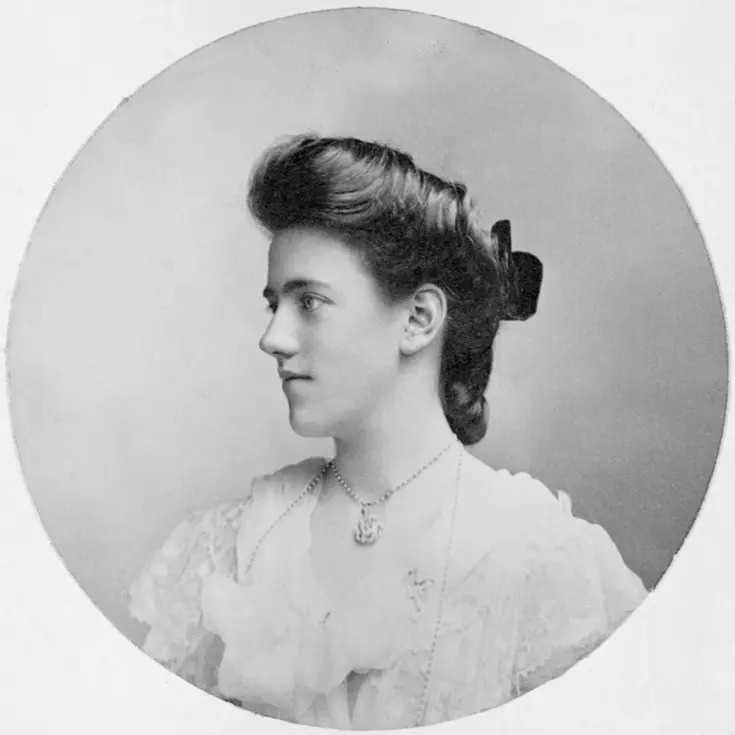
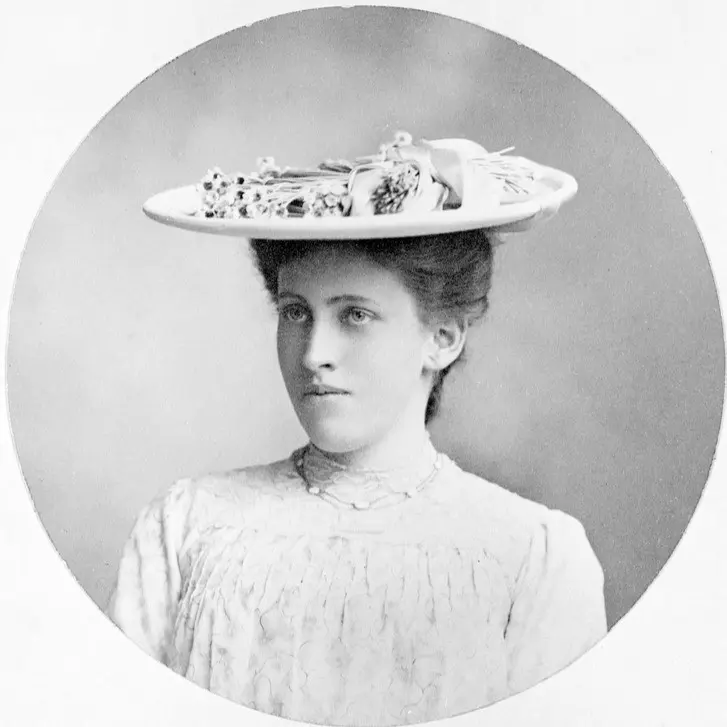
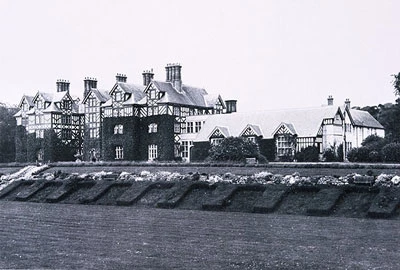
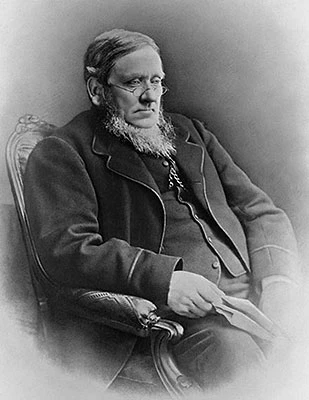
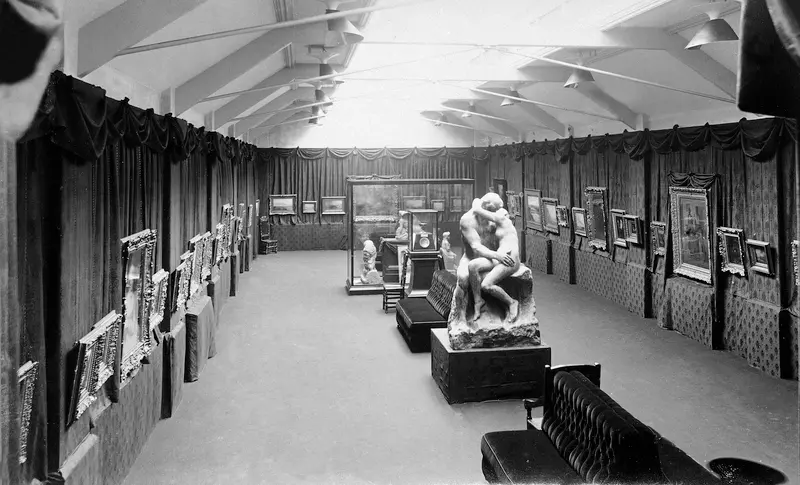
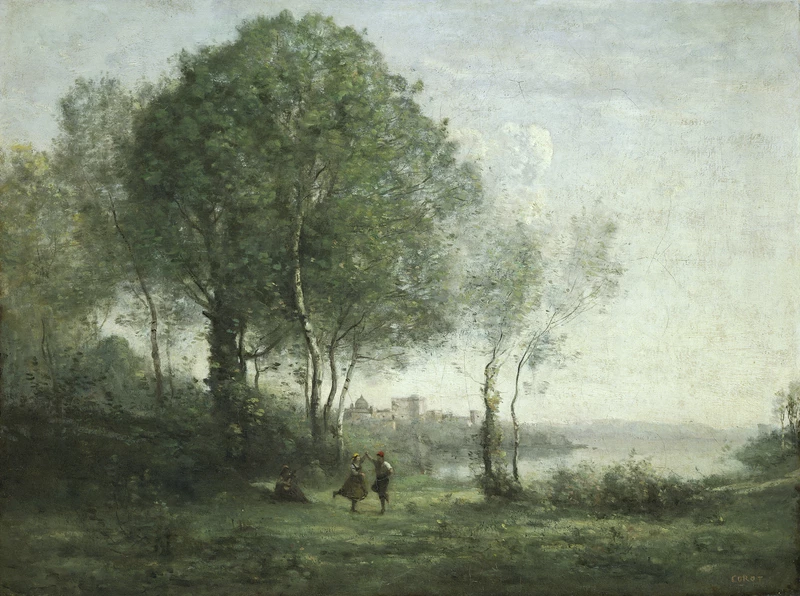
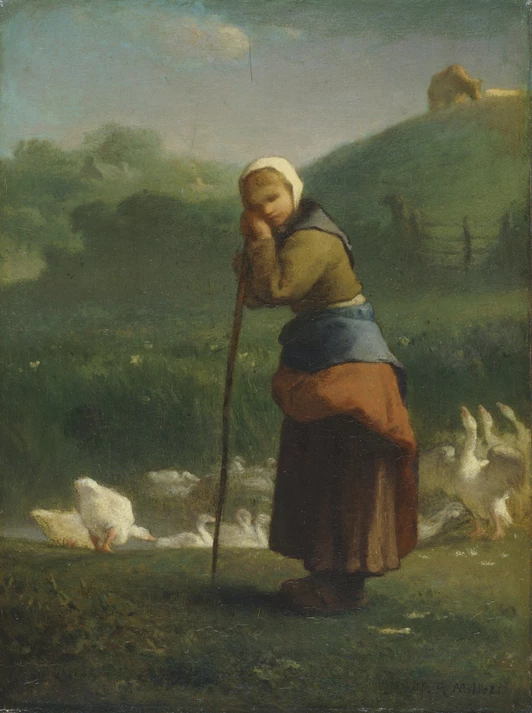
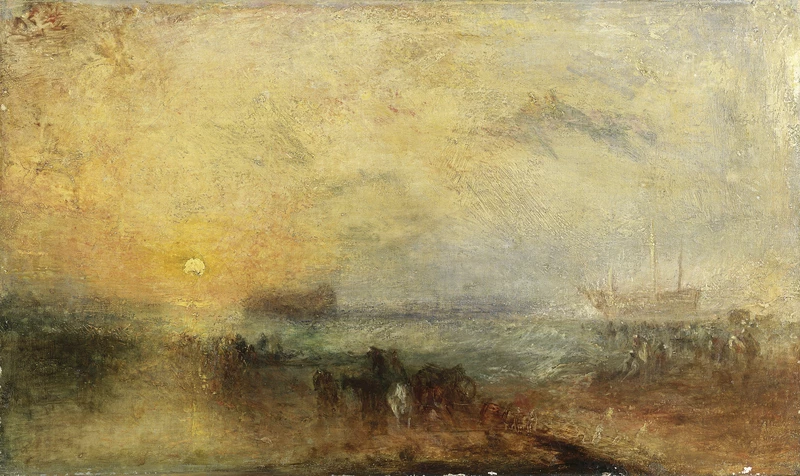
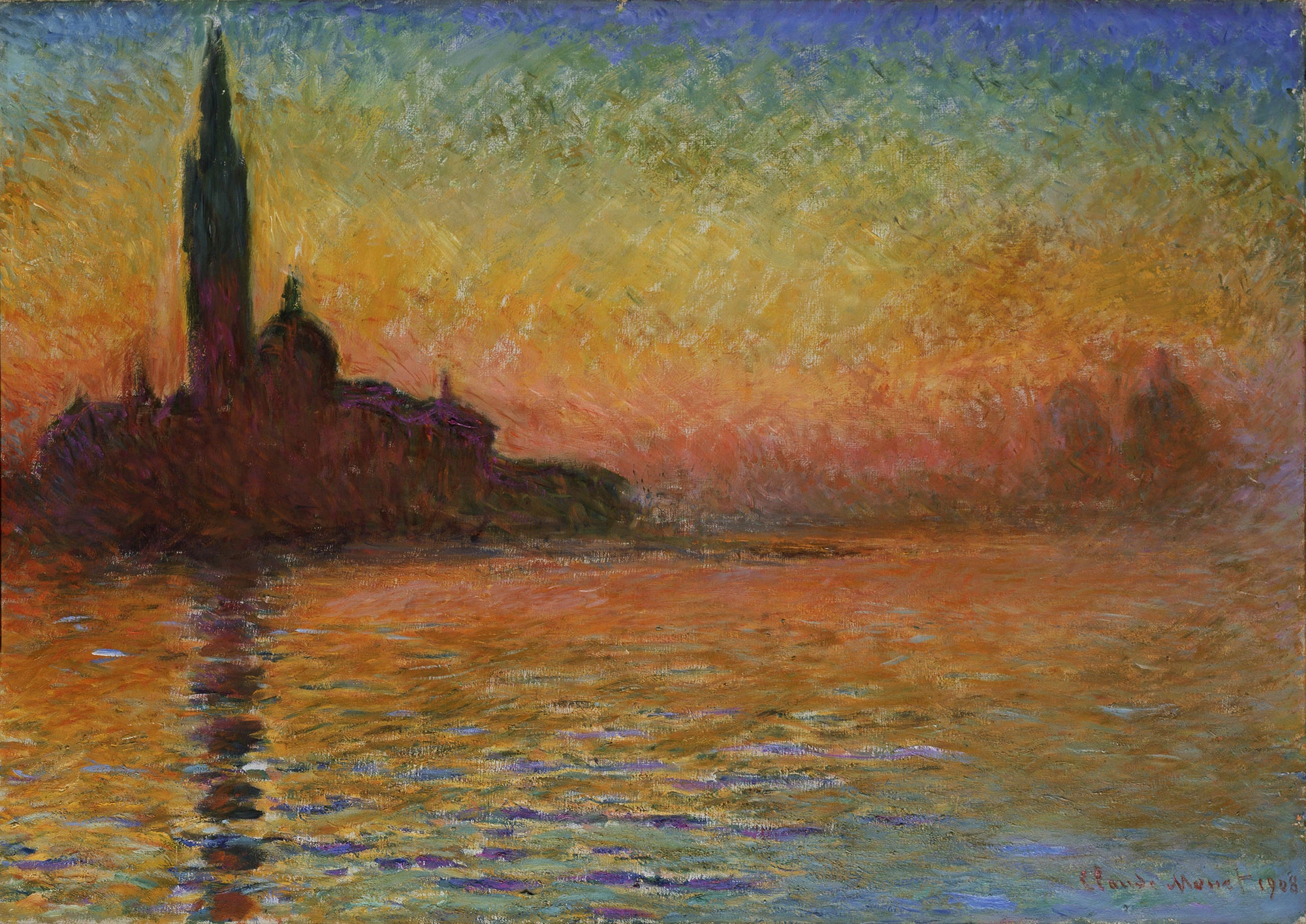
From Industry to Impressionism – what two sisters did for Wales 1 January 2009 Gwendoline Davies (1882-1951)Known as Gwen, the elder, more determined and thoughtful sister, and an accomplished musician. Margaret Davies (1884-1963)Known as Daisy, the younger, more practical sister, and a fine painter and engraver. Gregynog Hall David Davies (1818-1890) This image shows him in a rare moment of repose. Private collection (Lord Davies) 'The Loan Exhibition of Paintings' held in the temporary national museum in Cardiff City Hall in 1913. Gwendoline (1882–1951) and Margaret Davies (1884–1963), two sisters from mid-Wales, were among the first people in Britain to collect French Impressionism and Post-Impressionism. They bequeathed their magnificent art collection to Amgueddfa Cymru, completely transforming the range and quality of Wales’s national art collection.The Davies sisters were the greatest benefactors of the Museum’s first hundred years. Their idealism and generosity had a remarkable impact generally on cultural and intellectual life in Wales and is still with us today.The industrial legacy of David DaviesGwendoline and Margaret were the granddaughters of David Davies of Llandinam, one of the greatest entrepreneurs of the 19th century. He built much of the railway system in mid-Wales and was a pioneer of the coal industry in south Wales.David Davies created a massive fortune. After his death in 1890, his son Edward succeeded him. In turn, Gwendoline, Margaret and their brother David, later 1st Lord Davies, inherited the estate.Their upbringing and childhoodThe sisters had a childhood dominated by the strict religious beliefs of Calvinistic Methodism. They were taught that it was their Christian duty to use well the great wealth they would inherit.After a good and progressive education, they developed a passion for the arts and music. Art history was in its infancy in Britain, so the sisters travelled widely in Europe, studying art in Germany and Italy before beginning their art collecting.Their sophisticated knowledge of art history was unusual for women of this period and their background.Beginning the collectionIn 1908, the sisters began collecting art in earnest. Their early purchases included landscapes by Corot, peasant scenes by Millet and also Turner’s The Storm and Morning after the Storm.In the first six years of collecting, they amassed nearly a hundred paintings and sculptures. Their early taste was quite traditional, but in 1912 they turned to buying Impressionism.ImpressionismTheir Impressionist purchases were generally less expensive than the works they had been acquiring by artists such as Turner and Corot.In 1913, Gwendoline acquired her most important painting, La Parisienne, for £5,000.The impact of the First World WarThe War transformed the lives of Gwendoline and Margaret. They worked as volunteers with the Red Cross in France. However, they still managed to add to their collection during these years. They bought works by Daumier, Carrière, Renoir, Manet and Monet. In 1916 Gwendoline Davies also spent £2,350 on ten oil paintings and a drawing by Augustus John.In 1918, Gwendoline bought her two celebrated landscapes by Cézanne, The François Zola Dam and Provençal Landscape, which are among her most important and visionary purchases.Collecting after the First Word WarIn 1920, Gwendoline acquired perhaps her finest works, Cézanne’s Still-Life with Teapot for £2,000 and Van Gogh’s Rain – Auvers for £2,020.They also spent large sums on Old Masters, including Botticelli’s Virgin and Child with a Pomegranate.Then their collecting suddenly reduced. Gwendoline wrote in 1921 that they could not continue to purchase so much ‘in the face of the appalling need everywhere’.They still spent over £2,000 on Turner’s Beacon Light in 1922 and £6,000 on a Workshop of El Greco Disrobing of Christ in 1923. In 1926, Gwendoline stopped collecting altogether.Gregynog: a centre for the arts, music and craftsThe Davies sisters championed many social, economic, educational and cultural initiatives in Wales during the 1920s and 1930s.In 1920, they bought Gregynog Hall, which they established as a centre for music and the arts in Wales. They also set up the Gregynog Press in 1922, which produced some of the finest books ever illustrated in Britain between the two world wars. Gregynog Hall complemented the Arts and Crafts Museum the sisters had already helped create at Aberystwyth.Gregynog hosted the popular Festivals of Music and Poetry up until the outbreak of war in 1939, when the sisters again turned their attention to the war effort.The end of an eraWhen Gwendoline died in 1951 Margaret kept up such activities as she was able to during her final years. However, without Gwendoline, its ‘chief creator and inspirer’, Gregynog’s heyday was never to be revived. In the year before she died, Margaret gave the house and its grounds to the University of Wales for use as a residential conference centre.From personal to public collectionIn October 1951, Amgueddfa Cymru announced the arrival of ‘the late Miss Gwendoline Davies’ bequest. This was one of the most valuable donations in recent years to any public collection in Britain.Margaret continued to collect art until just before her death in 1963, focusing on work by modern British artists, many of whom were Welsh. Her works were also destined for the Museum and many of her later acquisitions were made with the Museum in mind.In 1963 Margaret’s bequest of 152 objects joined that of Gwendoline. Together, the sisters’ collections completely transformed the Welsh national art collection.A guide to the paintings Jean-Baptiste Camille Corot (1796–1875), Castel Gandolfo, dancing Tyrolean shepherds by Lake Albano, oil on canvas, 1855–60 In 1909 Gwendoline paid £6,350 for this painting, described at the time as one of Corot’s masterpieces. Earlier that year, Margaret recorded seeing ‘several charming pictures by Corot’ at the Louvre.Amgueddfa Cymru, Bequest of Gwendoline Davies, 1951) NMW A 2443 Jean-François Millet (1814–1875), The Goose Girl at Gruchy, oil on canvas, 1854–6 Gwendoline and Margaret Davies bought a number of works by Barbizon School artists in the early years of their collecting. Millet was one of the sisters’ favourites.Amgueddfa Cymru (Bequest of Gwendoline Davies, 1951) NMW A 2479 J.M.W. Turner (1775–1851), The Morning after the Storm, oil on canvas, about 1840–5 Gwendoline purchased this work in November 1908 for £8,085, while Margaret acquired its companion The Storm. Both paintings were apparently inspired by the great storm of 21 November 1840.Amgueddfa Cymru (Bequest of Gwendoline Davies, 1952) NMW A 434. Claude Monet (1840–1926), San Giorgio Maggiore by Twilight, oil on canvas, 1908 The sisters visited Venice in 1908 and 1909. The subject is the Palladian church of San Giorgio Maggiore, shown as a purple silhouette at twilight. Gwendoline acquired this work for £1,000 in October 1912.Amgueddfa Cymru (Bequest of Gwendoline Davies, 1951) NMW A 2485.
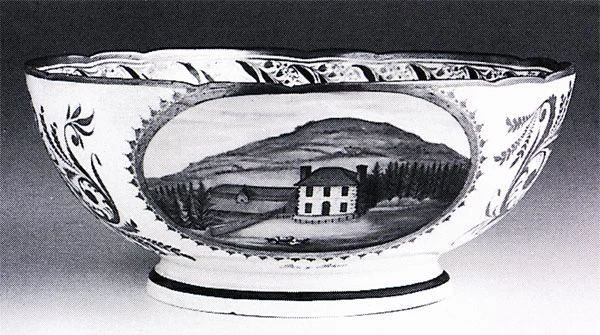
Historical records of a forgotten era 23 October 2007 Nantgarw porcelain bowl painted with Pen-y-Rhos, 1821-3 Bone china cup painted with the Pentwyn ironworks, c. 1835 Landscape views have long been used to decorate cups, saucers, plates, bowls and jugs. Some have been scenes from the artist's imagination; others have been views of real places. Examples on display at National Museum Cardiff include views of Dolgellau and of the Vale of Neath on Nantgarw porcelain and a painting of Castel Gandolfo in Rome on an early 19th-century dish made at the Imperial Porcelain Factory in St Petersburg, Russia. The porcelain painter usually worked from an engraving, but they could also work from memory or from an image that no longer survived, making the decorated piece itself a valuable and precise record of somewhere that might otherwise be forgotten. Pen-Y-Rhos Farmyard, Nantgarw One such important piece in Amgueddfa Cymru's collection is a large porcelain bowl. On the front of the bowl is an oval framed image of a house and barns flanked by trees, with a hill behind. This is inscribed 'Pen-y-Rhos'. On the back of the bowl is an image of a farmyard with cattle and poultry in the foreground. Although the bowl doesn't have any identification marks, the paste, the heavy potting and the decoration are all characteristic of Nantgarw. Other evidence includes a fragment from an identical bowl, which was found at the site of the Nantgarw factory. The painter was probably Thomas Pardoe who worked at Nantgarw from 1821 until his death in 1823. Pen-y-Rhos is a farm one mile from Nantgarw, on the outskirts of Caerphilly. In the early 19th century it was the home of Edward Edmunds. In 1814 he sublet the factory site, a cottage and land next to the Glamorganshire Canal to William Billingsley and Samuel Walker. In 1820 he sublet it again, this time to William Weston Young. Three complete sets of dishes were thought to have been made at the factory for Edmunds and his family. None of these sets survive complete but they are thought to date from Billingsley's ownership of the pottery in 1817–19. The Pen-y-Rhos bowl was not part of these sets but is of a later date. It may have been a gift from Young or Pardoe to Edmunds. So as well as being a key documentary piece of Nantgarw porcelain, the bowl bears a rare view of a Glamorgan farmhouse in the 1820s. Pentwyn Ironworks, south Wales valleys If the Pen-y-Rhos bowl reveals a forgotten agricultural view, then this two-handled Staffordshire bone china bowl or cup reveals a forgotten industrial landscape. Dating from around 1835, this piece is decorated on the front with a view of Pentwyn Ironworks within a gilt frame. On the back is the name I Hunt Esq. ('Esq.', short for 'Esquire', was sometimes used in place of 'Mr'). The Pentwyn Ironworks were on the western edge of Abersychan, three miles from Pontypool in the south Wales valleys. The ironworks were established in 1825 and consisted of three blast furnaces built by the Hunt family. By 1839 the works were the property of the Pentwyn Company, but it is not known whether the Hunt family was still involved. Before 1848 the Pentwyn Company passed to the firm of Williams & Co. and all the buildings were subsequently demolished. The image on this piece, which must have been commissioned for or by one of the Hunt family, is the only known view of this industrial site at that time.
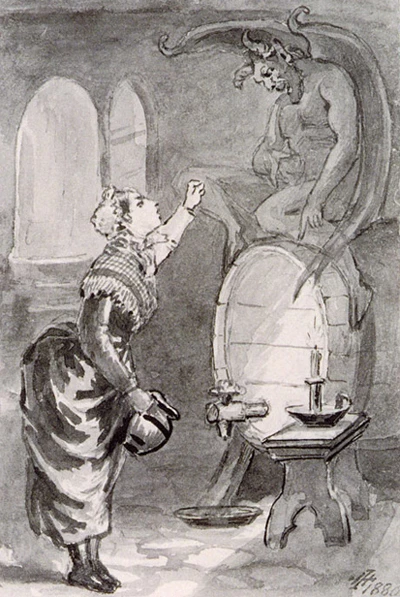
The unique prints and drawings of T. H. Thomas 20 September 2007 T.H.Thomas, 'Mrs Jones, the Devil and the supper beer' (1880), from 58, British Goblins; NMW A 11953, pen, ink and wash on paper. During his lifetime, Thomas Henry Thomas (1839—1915) created a unique catalogue of prints, drawings and watercolours detailing the major concerns of the 19th century. In 1915, the entire catalogue was bequeathed to Amgueddfa Cymru. Thomas Henry Thomas: the collector Thomas Henry Thomas, one of the founding fathers of Amgueddfa Cymru, was born in Pontypool in 1839. He studied at the Royal Academy and spent time in both France and Italy. On his return to London in 1864, he specialised in portraits, design and book illustration. He worked as an artist for The Daily Graphic, from which many illustrations still survive, ranging from work on the Severn tunnel at Portskewett to royal visits. Thomas in Wales Between 1866 and 1878, Thomas settled in Cardiff, where he was to remain for the rest of his life. He became involved with the Eisteddfod and the Gorsedd and joined the Royal Cambrian Academy. He was also a key member of the Cardiff Naturalist's Society, becoming president in 1888. His interest in geology led him to , new to science, in a large stone slab in the churchyard at Newton Nottage. The fossil was named Brontozoum thomasii in tribute. The collection Thomas's collection of over 1,000 prints, drawings and watercolours came to Amgueddfa Cymru following his death in 1915. The main collection comprises three boxes, each containing around seventy folders holding up to ten objects, grouped by subject types. Until recently, it had been assumed that this ordering system was the work of Thomas, but closer inspection of the handwriting revealed it to be that of Isaac Williams, the first Keeper of Art at the Museum. It is not known in what form these works first entered the Museum, although there is reference to a scrapbook which, has not as yet been discovered. As curating methods were rather different at that time, it seems likely that the scrapbook was broken up and its contents reassembled into the folders in which they appear today. Their contents are exceptionally wide-ranging, with topics including rural and industrial life, the natural world, archaeology, book illustration, folklore along with drawings of social and cultural life. Among the miscellaneous objects of the collection is a particularly intriguing object -a cigarette box filled with drawings by children from a school in Oxfordshire. These appear to be part of an experiment by Thomas to analyse the drawing techniques of children. Preserving the cultural life and heritage of Wales Thomas's all-embracing interests somewhat hampered his artistic development. Had he devoted himself solely to art, he could have achieved more widespread recognition. This is not, however, meant as a criticism — the strength of the Thomas material lies not in its artistic quality but in its quirkiness, its breadth, and that it represents an almost complete catalogue of the major concerns of the 19th century. Seen from this perspective, Thomas can be viewed in the tradition of J. W. Goethe and John Ruskin, men whose works spanned many diverse disciplines and wanted to bridge the gap between science and the arts. In addition to this, Thomas was also an avid champion of Welsh art and artists, and worked to support the cultural life and preserve the heritage of Wales wherever he was able. Amgueddfa Cymru is lucky to have received such a comprehensive bequest, especially one that encompasses each of its curatorial departments. T.H.Thomas, 'Effect of explosion at "Cwtch" Colliery', from 115, Mining, NMW A 12383, pen and wash with pencil on paper.
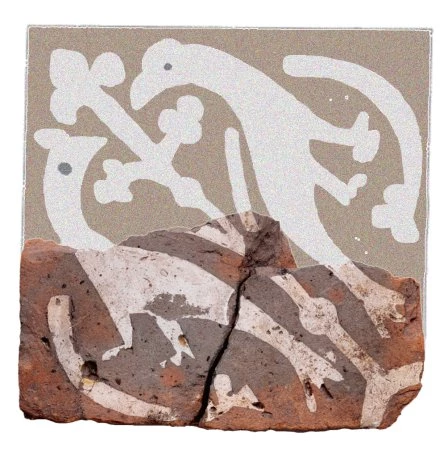
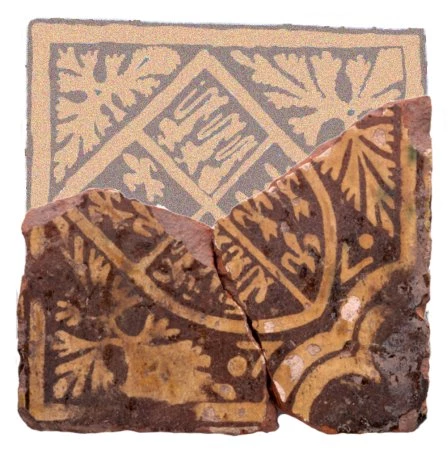
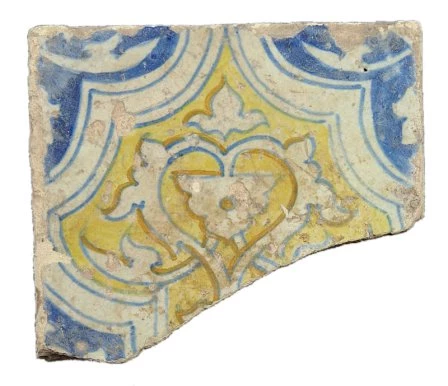
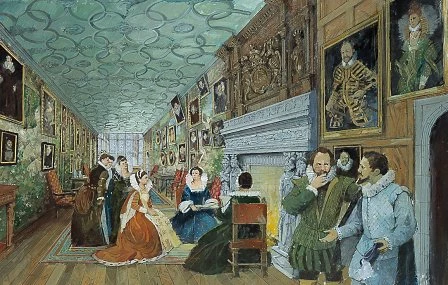
The decorated floor tiles from Raglan Castle 6 September 2007 Raglan Castle. The castle's fortifications, including the Great Tower shown at the centre of this view, were established in the 15th century. Image: Cadw (Crown copyright). Late 13th to early 14th-century tile of the Wessex School from the chapel at Raglan. 15th-century Malvern-school tile used at Raglan. 16th-century maiolica tile from the chapel floor laid by Earl William, probably before 1572. Reconstruction of life at Raglan Castle in the 16th century, at the time of the Third Earl of Worcester. Image: Cadw (Crown copyright). Three centuries of fashion and design can be seen in a collection of decorated floor tiles found during building works at Raglan Castle in 1947. In 1549 William Somerset (1526-1589) succeeded to his father's position as third Earl of Worcester and owner of Raglan Castle. From this base in south-east Wales he launched a career that was to see him thrive at the courts of Edward VI (1547-53), Mary (1553-58) and then Elizabeth I (1558-1603). He is buried in Raglan parish church. Such a prominent figure lived a lifestyle that suited his high social standing, and we can see this aspiration in the extensive remodelling that he undertook of the fortress-mansion he had inherited. He set about an extensive programme of modernisation that affected all parts of the castle and its grounds: the hall and accommodation were improved, kitchen and service areas upgraded, a long gallery was introduced and gardens created in Renaissance style. The Castle's furnishings were also updated with items that reflected contemporary European fashion. This is illustrated in the chapel at Raglan. Raglan Chapel The chapel at Raglan dates from at least the 13th century. It had a floor of thick red earthenware tiles with decoration inlaid into its surface using a contrasting colour. Such two-colour tiles often had designs of shields and monograms, over which a clear glaze would be fired. These tiles were the height of fashion in the mid-14th century. About 1460, these tiles were replaced with two-colour tiles of bright yellows and golden browns. This must have provided a rich backcloth for the treasures of the chapel. However, these designs were not to the taste of Earl William. He preferred the fashionable products of the Spanish Netherlands, and used his considerable wealth to purchase tin-glazed earthenware tiles painted in a polychrome style that was popular in the Renaissance period. The result was a dramatic transformation of the chapel, lightening its interior and adding delicacy to its decoration. Sadly, the abandonment of Raglan in the wake of the English Civil War has left few traces of the other changes that Earl William made to the interior furnishings of his castle. We are left instead to speculate on the luxury he must have brought to it, and to reflect on the transient nature of that wealth, surviving as it does in a small collection of painted floor tiles and a handful of other items. Guide to the Tiles Late 13th- to early 14th-century tile of the Wessex School from the chapel at Raglan. It shows two birds feeding from a central tree. Tiles with this design were also used at nearby Tintern Abbey and White Castle. 15th-century Malvern-school tile used at Raglan. The Latin text reads 'May the peace of Christ be amongst us always. Amen'. 16th-century maiolica tile from the chapel floor laid by Earl William, probably before 1572. These tiles were probably imported from the Spanish Netherlands, perhaps Antwerp, where maiolica production had been established in the early 16th century. Background Reading Raglan Castle by J. R. Kenyon. Cadw (2003). 'The chapel at Raglan Castle and its paving tiles' by J. M. Lewis. In Castles in Wales and the Marches by J. R. Kenyon and R. Avent, pp.143-60. University of Wales Press (1987). The medieval tiles of Wales by J. M. Lewis. Amgueddfa Cymru (1999).