Collections & Research

Invasive Plants

Sophie Hocking, 15 June 2026

Keeping track of plant introductions and invasive plant spread, and knowing how to identify these species is important to conserve our ecosystems – this is where the Welsh National Herbarium comes in…

Have you heard of the term “invasive” species?

As international travel has become easier and more accessible over time, we’ve increasingly moved plants, animals, fungi and algae around the world. Sometimes this happens intentionally – for example, importing pretty plants to be grown in gardens – and sometimes accidentally, such as marine species picked up in the ballast water of cargo ships. You can learn more about invasive species and marine invaders here.

Non-native vs invasive species…

The number of species introduced from their native range (where they originally occur) to new locations has been increasing for years. Species that have been transported to an area they couldn’t have colonised by themselves are called “non-native species”.

Although most of them are harmless, 10-15% of non-native species end up thriving in their introduced habitats – they spread and cause negative impacts to our native biodiversity and ecosystems. These are called “invasive species”, and they can have serious knock-on effects for our health, the climate and our economy.

Why are plants important?

We often forget that we interact with plants every day. The array of habitats found in Britain are made up of a diversity of uniquely adapted species, and plants form the basis of many of these habitats. Plants act as food sources for a huge diversity of organisms (including us!); they also influence our physical environment, for example reducing flood risk by stabilizing riverbanks and storing water. Some plant species are special for being so rare and only growing in the British Isles. However, our flora is changing; we now have more non-native than native plant species in Britain!

Invasive plants – how do they get here and what’s the problem?

There are 36 plant species that are of special concern in Britain, but there are also more species that are considered invasive and have special legislation around how they can be handled to control their spread. Mainly these species have ended up in Britain through horticulture, but less commonly, invasive plants turn up by hitch-hiking in imported materials or in the ballast of ships.

Horticulture

Many species have been imported as ornamental plants because they are pretty and were thought to make for good garden interest – this was particularly common in the Victorian period, before we knew much about the risks of introducing species to new lands!

Japanese knotweed/Clymog Japan is a prime example. This species was introduced to Britain in the 1800’s, where it was propagated and became a popular exotic garden plant. However, records of garden escapes were recorded from as early as 1907 in Glamorganshire and to this day, Japanese knotweed is particularly problematic in South Wales. Evidence indicates that every plant of Japanese knotweed (Reynoutria japonica var. japonica) growing in Britain originated from a single female plant introduced all those years ago! You can find this plant growing along roadsides, riverbanks, railway lines, woodlands and grasslands, where it spreads by deep underground rhizomes (underground stems that produce new shoots) and seriously reduces biodiversity. Around £1.7 million is spent in the UK every year on managing Japanese knotweed and mitigating against its damage!

Japanese knotweed on riverbank in South Wales

Japanese knotweed/Clymog Japan growing in South Wales.

Specimen of Japanese knotweed in the Welsh National Herbarium (Amgueddfa Cymru)

Specimen of Japanese knotweed in the Welsh National Herbarium (Amgueddfa Cymru), collected from St Fagans.

Himalayan balsam/Jac y Neidiwr (Impatiens glandulifera) was also introduced as an ornamental plant from the Himalayas in 1839. It is found today growing along riverbanks, in woodlands and along roads. It has explosive seed pods which allow it to spread across large distances. Although the flowers are beautiful, it outcompetes native species, reducing biodiversity. It also has shallow root systems which can worsen riverbank erosion, which in turn can reduce water quality and increase the risk of flooding. A study by Cardiff student, Amy Wyatt, found that since 1865, Himalayan balsam has evolved to better adapt to its introduced range.

A specimen of Himalayan balsam/Jac y Neidiwr.

A specimen of Himalayan balsam/Jac y Neidiwr.

Contamination of imported materials

Pirri-pirri burr (Acaena novae-zelandiae) found its way to Britain from south-eastern Australia and New Zealand as a hitch-hiker on imported wool. It has hooked seeds which can easily attach themselves to fur and clothing. Like many invasive plants, this species can outcompete our native flora and form dense stands which reduce biodiversity.

Example of Pirri-pirri burr flower, showing hooks/spines that allow seeds to spread by attaching to fur and clothing. 

Example of Pirri-pirri burr flower, showing hooks/spines that allow seeds to spread by attaching to fur and clothing. 

A specimen of Pirri-pirri burr.

A specimen of Pirri-pirri burr.

Ragweed (Ambrosia artemisiifolia) is native to North America and is thought to have arrived in Britain in bird seed, horticultural soil and soil used to ballast ships. It has highly allergenic pollen and can cause hay fever.

Heath Star Moss (Campylopus introflexus) is an invasive moss that is thought to have originated in the Southern hemisphere and to have been introduced with produce transported by ships. It is also known as Tank Moss, for its suspected spread via World War II tanks. An expert coloniser of acidic bare ground, such as that found on coal tips, it is now common in Wales where it threatens these wildlife-rich habitats.

Heath star Moss growing in Tylorstown.

Heath star Moss growing in Tylorstown.

Recently, a new fungus (Bryoscyphus granulosus) has been found infecting Heath Star Moss and closely related mosses. The fungus causes the moss to die back and form dead patches that expand outwards, like a fairy ring. Specimens of this fungus have been donated to the museum recently by former curator George Greiff. These include the ‘holotype’, the original specimen used to describe the fungus as new to science. This fungus parasite has significant ecological importance, perhaps with the potential to control an invasive moss that can cause substantial harm.

How we’re working on invasive plants at Amgueddfa Cymru

The Welsh National Herbarium held at National Museum Cardiff contains over three quarters of a million plant specimens, representing around 300 years of collecting and covering virtually all species found in Wales. The herbarium is a treasure trove of information that acts as a reference point for identifying plants, where species are found, and how non-native and invasive plants are spreading across the British Isles. You can learn more about what an herbarium is and how we preserve plant specimens here. The Botany team work hard to look after and develop these collections of specimens for the benefit of us all, and to support ongoing research into the changing diversity of our ecosystems. We form a small part of the Natural Sciences team at Amgueddfa Cymru, made up of curators who look after the natural history collections. Some of us specialize in species taxonomy (naming and classifying species) and ecology; some of us research non-native and invasive species so we can understand their spread and impacts.

What can you do to help?

There are many ways to help stop the spread of invasive plants. You can find out more here. You can help prevent future invaders by keeping an eye on the plants in your garden and alerting others to species that may jump the garden wall. There are also ways to stop the spread of invasive species in and around water – learn more here.

Gwen John: A Queer Welsh icon?

Helena Anderson, 9 June 2026

In recent years, Gwen John has been reclaimed as a queer Welsh icon. While her sexuality was never hidden (her brother Augustus references her attraction to both men and women in the foreword to her Memorial Exhibition catalogue in 1946 and it has since been discussed in all three of her biographies), this renewed interest encourages us to think about how John’s queerness might influence how she saw the world and made art. How do gender and sexuality affect out reading of an artist’s choice of subject or how they depict people and places?

John had sexual relationships and romantic friendships with both men and women throughout her life. According to Augustus’s autobiography, she had ‘an unhappy crossing in love’ with ‘a certain girl student’ at the Slade School of Art in London which ‘led to a drama’ in which John jealously demanded the girl end an affair with a married man. John’s first biographer, Susan Chitty, suggested that this love interest may have been Grace Westray, a fellow Slade student who shared a flat for a time with Gwen and Augustus. She may be the young woman depicted sitting in the foreground of John’s Portrait Group, one of John’s only surviving student works. Outside the window, we see two figures, possibly Gwen and fellow artist Ambrose McEvoy, another love interest. This group scene represents the tangled web of love, friendship, and family that defined Gwen’s student days. It depicts the shared student flat at 21 Fitzroy Street which served as a hub of creativity that fostered her artistic development, as well as a safe space in which to explore her emerging sexuality.

Gwen John, Group Portrait, 1897

Gwen John, Group Portrait, 1897. UCL Art Collection – currently on display in Gwen John: Strange Beauties

John’s subsequent relationships followed a similar pattern: passionate attachment and deep affection spilling over into overwhelming devotion on John’s part. When she met the sculptor Auguste Rodin after moving to Paris in 1904 she became a favourite model and soon began a romantic relationship with him. This is documented in the hundreds of letters she sent him, now in the archives of the Musée Rodin. While many of them are love letters and some speak frankly about sex and desire, including with other women, others describe her day-to-day modelling for other artists. Among these were many queer women, such as Ottilie Roederstein, Ida Gerhardi, Anna Wood Brown, and Hilda Flodin all of whom were long term clients and friends. While it’s not clear if John ever attended any of the cafés or salons associated with the Parisian sapphic artistic circles to which these women belonged, she would undoubtedly have been aware of them.

Like many of the women John worked with and for, having her own lodgings was essential for both her professional and personal life. Her garret apartment, as depicted in Corner of the Artist’s Room, was both her home and her studio. As art historian Alicia Foster has pointed out, having a ‘room of one’s own’ was essential for her art practice, but as an unmarried woman it was also a space to which she could invite friends and lovers. At a time when even walking city streets unchaperoned could illicit unwanted attention, the ability to rent a small, private space meant freedom, sexual and otherwise. Is it any surprise then that John’s rooms appear so frequently as the subject of her art in its own right? For a single, queer woman and artist, this space represented both sanctuary and livelihood.

Gwen John, Corner of the Artist’s Room in Paris, 1907-9

Gwen John, Corner of the Artist’s Room in Paris, 1907-9, NMW A 3397

In late 1926, John met the famous Catholic philosopher Jacques Maritain, who lived nearby in Meudon with his wife, Raissa, and his sister-in-law, Véra Oumançoff. John quickly became deeply attached to Oumançoff, who became her confidante and spiritual advisor. The two women would often speak after mass at their local church and go for walks in the woods together. John’s affection for Oumançoff developed into romantic feelings, which appear to have been unrequited. Many passionate draft letters addressed to Oumançoff can be found in the Gwen John Papers in the National Library of Wales. In them, John mixes religious thought with romantic devotion, asking God to ‘show her how to love Véra’ and asking Oumanoff to let her ‘kiss her hands’. Oumançoff became overwhelmed by the attention, and asked John to limit her letters and visits to once per week. John duly obeyed, but began bringing not just letters to these rare visits but also drawings, which she called ‘dessins de lundi’ (Monday drawings). Each week for nearly two years, John presented Oumançoff with a drawing or watercolour, some new and others apparently versions of older motifs. The subjects, styles, and mediums are widely varied. Some were presented attached to backing sheets of coloured paper with the title and date given inscribed on the back. The titles of many of John’s works on paper (such as Mademoiselle Pouvereau and Souvenir du Dimanche des rameaux) are known thanks to these inscriptions.

Gwen John, Mademoiselle Pouvereau

Gwen John, Mademoiselle Pouvereau, NMW A 3607

Oumançoff kept these drawings long after the relationship ended, in spite of moving the United States as an exile during the Second World War. Over one hundred of the dessins de lundi were discovered again in the 1960s in the Maritain archive. Several works now in the studio collection at Amgueddfa Cymru are versions of compositions John gave as dessins de lundi. Reading these works through the lens of John’s sexuality, we can see them not just as formal studies of composition or tone, but as tokens of love and affection intended to convey a shared experience of faith and prayer. Furthermore, because John’s ability to communicate with Oumançoff was restricted to just once a week, these drawings became an additional means through which she could communicate to her beloved. They stood in for conversations and letters.

One of the images that John gave to Oumançoff as a dessin de lundi was a drawing of Saint Thérèse of Lisieux (1873-1897). This modern French saint, a close contemporary of John, died young and was canonised very quickly. She was one of the first saints to ever be photographed, a fact that her convent used to help create an iconography for her and advance the cause of her canonisation. The convent in Lisieux published books, prayer cards, and memorabilia with Thérèse’s image on it. As a Catholic convert and an artist, John was fascinated by these photographs which for the first time showed the real face of a saint, rather than an anonymous stylised icon made hundreds of years after their death. She became particularly attached to an image of Thérèse and her older sister, Céline, as children, drawing and painting this composition hundreds of times. These images have tended to be underrepresented in studies about Gwen John’s art, and are often dismissed as obsessive or absent-minded doodles. But this diminishes the importance that the ‘true face’ of a saint just three years older than her would have had for John. Furthermore, by the 1920s when John began drawing her, Thérèse had become a bit of a queer icon herself. Jean Cocteau, Henri Ghéon, Lucie Delarue-Mardrus, Vita Sackville-West, and Radclyffe Hall were all devotees of the saint. Her theology of the ‘Little Way’, which suggested that small, imperfect lives could be made holy through everyday sacrifices appealed to converts, avant-gardists, and other outsiders. John, who would write in her late notebooks about her desire to become a saint, was likewise drawn to Thérèse’s ‘Little Way’. Perhaps as an outsider herself, whose life and sexuality didn’t conform to heteronormative standards, she took particular comfort in Thérèse’s image and doctrine.

Gwen John, Sainte Thérèse of Lisieux and her sister

Gwen John, Sainte Thérèse of Lisieux and her sister, NMW A 15561

Gwen John, Sainte Thérèse of Lisieux and her sister

Gwen John, Sainte Thérèse of Lisieux and her sister, NMW A 15534

Reading John’s art through the lens of her sexual fluidity opens up possibilities for new interpretations of her art. While this article has touched on a few examples, there is still more work to be done. In acknowledging John’s queerness and considering how it might influence her way of seeing the world around her, we add depth and nuance to our understanding. To read more about John as a queer artist, see Norena Shopland’s book Forbidden Lives (2017), Tabitha Deadman’s Art UK article ‘Bi visibility: Gwen John and multiple gender attraction’, and Mair Jones’s Art UK article ‘Queer Welsh women in art’.

Time Travelling in the Archaeology Stores By Aron O’Shea

Aron O'Shea - Archaeology Volunteer, 20 May 2026

Since January 2025, I’ve had the wonderful pleasure of helping Archaeology staff at the National Museum Cardiff alongside my fellow volunteer, Jeff. Together, Jeff and I have worked with the amazing Dr Elizabeth Walker, the all-knowing Evan Chapman, and the excellent Siân Iles (who you might recognise from a previous Museum Voices blog). This is a short blog about what we’ve accomplished so far. At the end, I have linked to some additional online material for those who wish to discover more of what is presented here briefly.

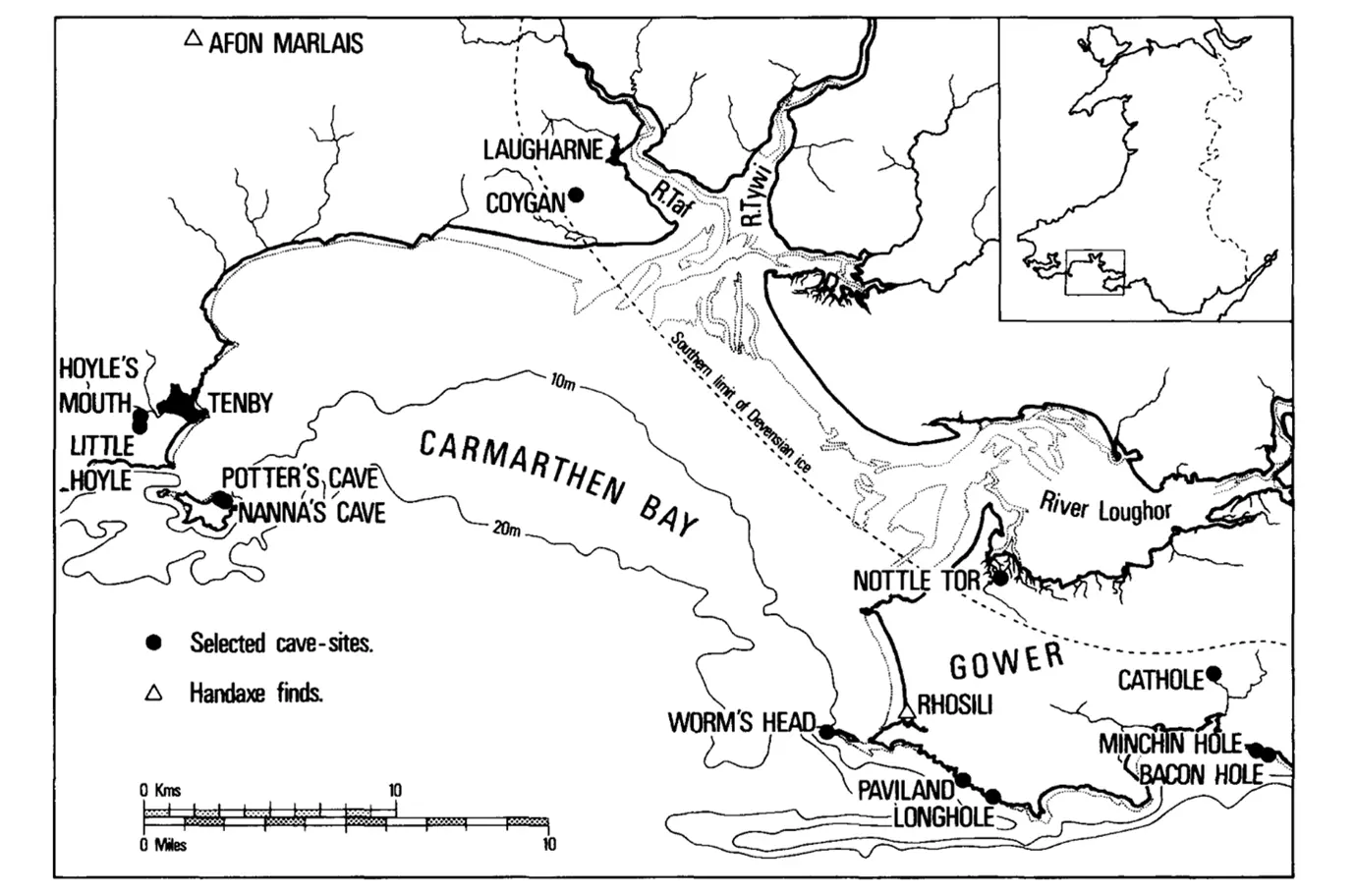
First on our journey through the Archaeology stores is the Stone Age (or the Palaeolithic). Here, Elizabeth introduced us to Coygan Cave, an important Middle Palaeolithic cave site (destroyed by quarrying) near Laugharne, Carmarthenshire.

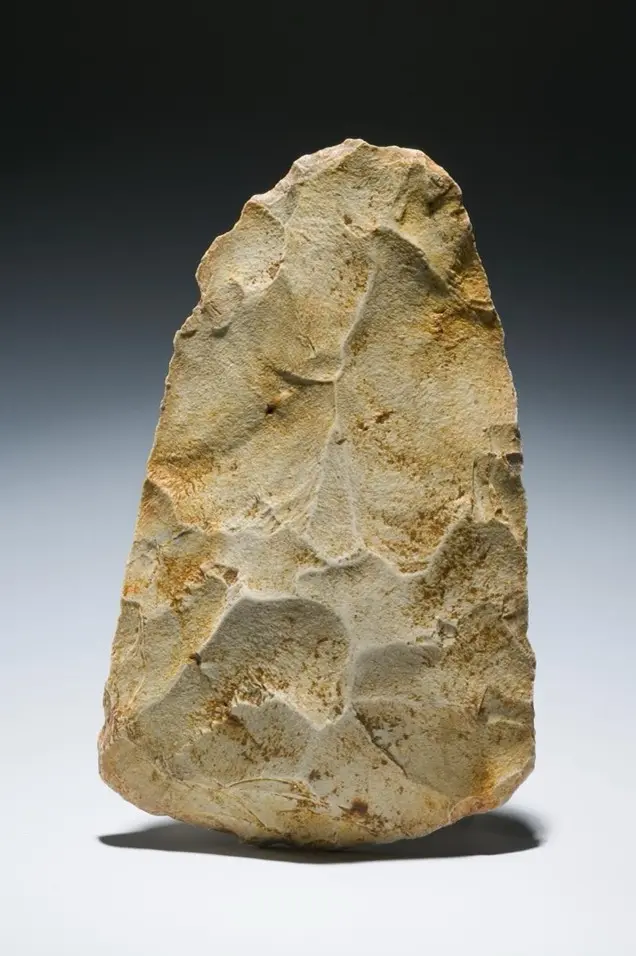
The cave appears to have been used as a den by hyenas for the most part, given the accumulation of large prey animal remains, including those of mammoths, woolly rhinoceros, giant deer, and horse alongside an assortment of small mammals and birds. Remains of some other carnivores were present such as brown bear, wolf, and arctic fox. Equally of note from Coygan are three wonderful examples of so-called bout coupé handaxes, one of which is on display and pictured here. 

Elizabeth kindly took the time to explain how stone tools are made (something which I still find mind boggling) and how to spot signs of their use. Previously, the skeletal remains from Coygan were stored in plastic boxes to keep them in their “comfortable” temperature and humidity ranges. Upgrades to the stores’ environmental conditions meant that the remains could be repackaged into archival cardboard boxes, and the plastic containers repurposed for other artefacts. Jeff and I were tasked to work on rehousing the teeth, bones and coprolites (fossilised dung) whilst tracking their new home location and ticking off each bag of remains from a list. All in all, we transferred over 2,000 bags of remains and managed to reclaim a few shelves of storage space! Having not really considered the life (and death) of prehistoric creatures before, it was humbling (and terrifying) to think of the size and kinds of animals with which Neanderthals and modern humans would have cohabited.

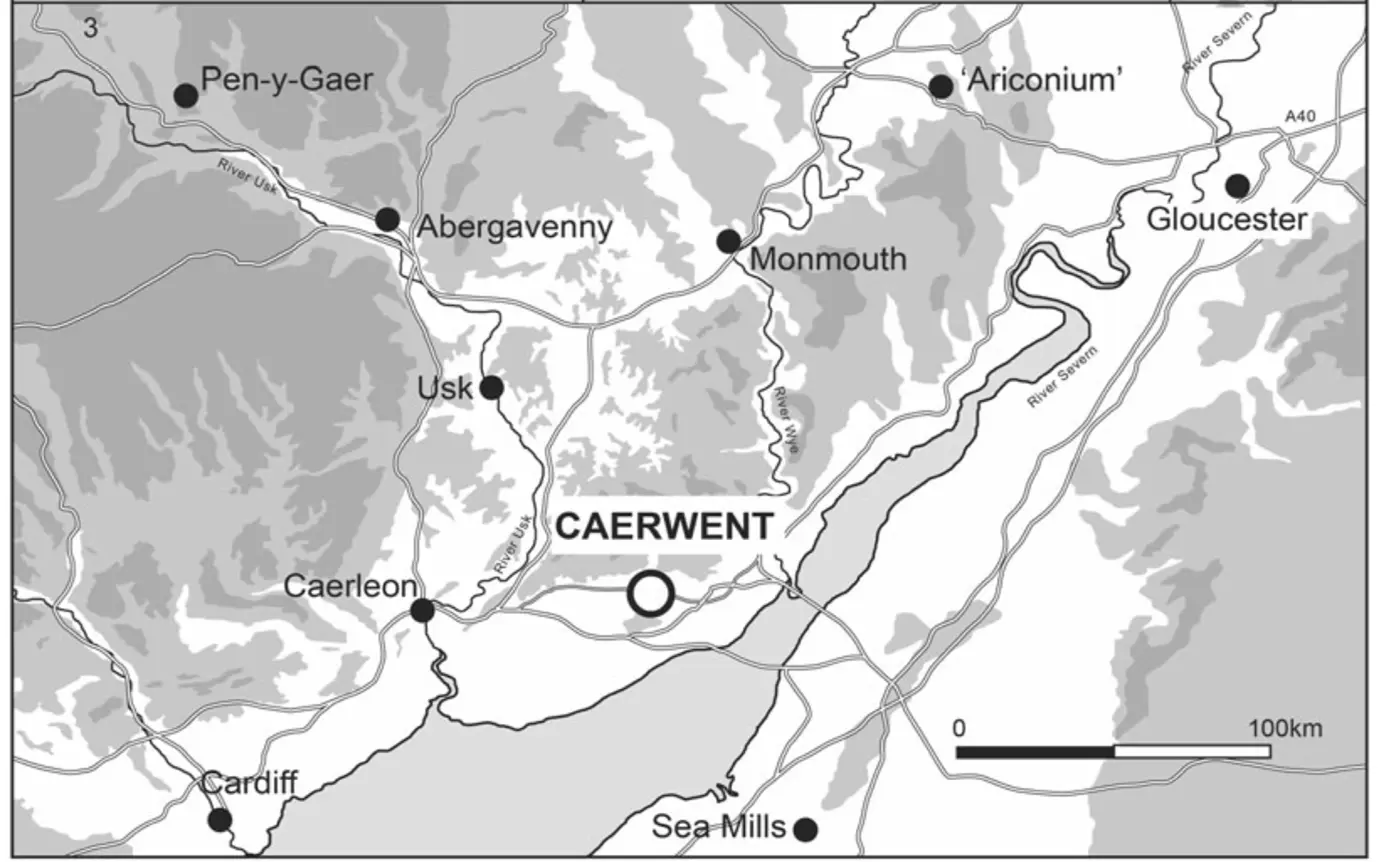
One of our next projects saw us jump forward in time to the Roman occupation of Britain! More specifically, we find ourselves in the Roman city of Venta Silurum, the “market” and administrative capital of the Silures tribe that was established and located in what is now Caerwent.

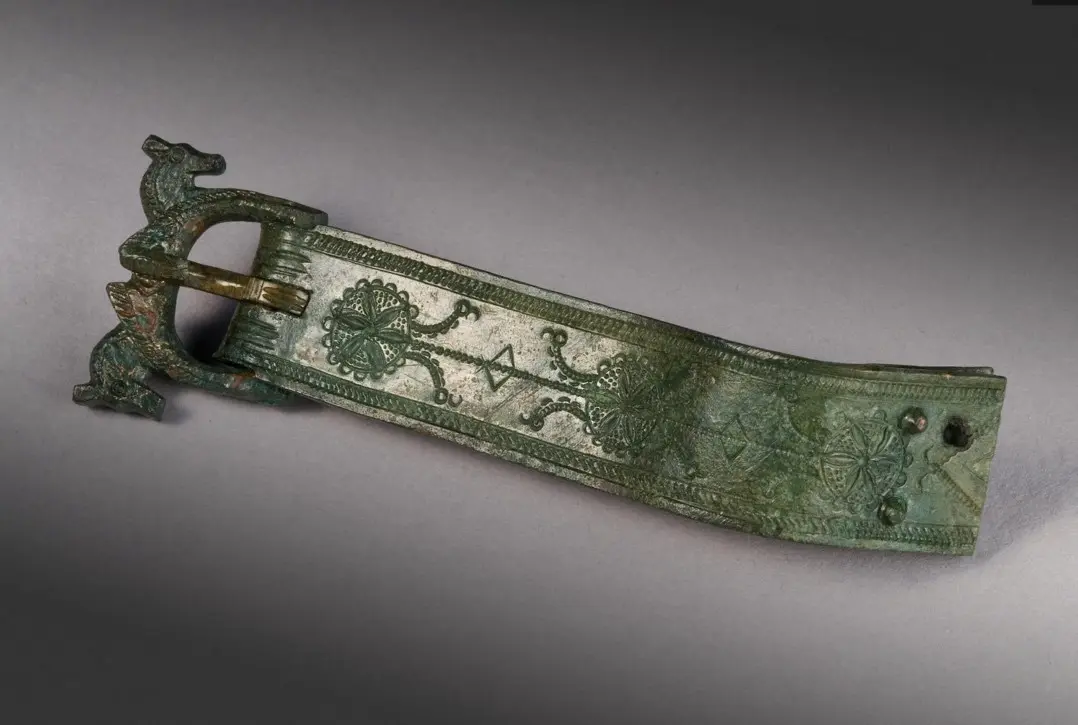
Large portions of the stone city walls and the foundations of some buildings still stand today – visit and see for yourself! Several excavations were undertaken at Venta Silurum,  first by the Caerwent Exploration Fund (CEF) in 1899-1913 and later by Amgueddfa Cymru from 1981 to 1995. Amongst the discoveries from the later excavations (missed by the CEF!) was the beautiful copper alloy belt-buckle below, which you can read more about here.

Besides the wonderfully decorative metalwork, the Museum’s excavations of the forum-basilica (local government building with an open-air market) at Caerwent uncovered a veritable hoard of……oyster shells, thought to have been consumed by the government officials. Curator and fountain of knowledge for all things store-related, Evan, tasked us with the job of auditing these oyster shells and sorting them by excavation phase. While the work was dusty, it was a great opportunity to learn about the more civil dynamic between Empire and local tribes which contrasts sharply with the military fortification at nearby Caerleon.

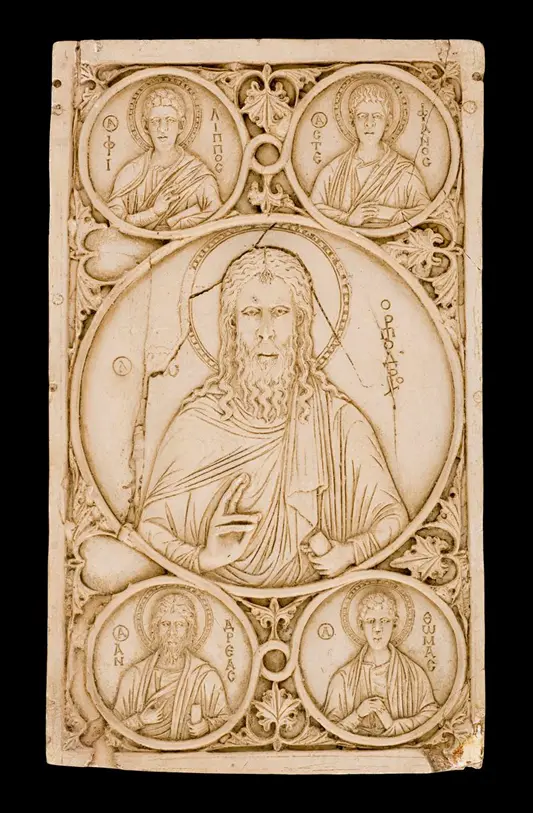
The final highlight in this whistle-stop tour through history lands us in the Medieval period, and to a certain degree at the beginning of the Museum’s collections. Museums have long been places for education and for “showing off” artefacts to which most people have little access; Amgueddfa Cymru, in its early years, was no different. Other than acquiring new and unique artefacts, one way that museums and scholars in the 19th century could display or study artistic or archaeological objects was by replication. A noteworthy example of this practice was the making and sale of plaster copies of carved Medieval ivory objects for example. The skilfully furnished copies were called “fictile ivories”. A recent exhibition by the Courtauld Institute of Art and the Victoria & Albert Museums has also explored this topic, which you can read about (and watch) here. A collection of such fictile ivories had been purchased and catalogued by Amgueddfa Cymru (then the Welsh Museum of Natural History, Arts and Antiquities) and has since been housed within the Archaeology Stores, one example being the panel carving of various saints. 

Siân, Senior Curator Collections Development: Medieval, Jeff and I set about scouring the text-only 1902 catalogue of over 130 “ivories” to attempt to match up the descriptions with what we saw in the collection. The reasoning behind this approach was twofold: firstly, to understand which copies were still present in the collections; secondly, to better be able to identify and connect the artefacts to those housed in museums like the V&A and indeed to the original objects from which the replicas were derived. Fortunately, the magic of photography and extensively digitised collections made the work a little easier, as most of the “ivories” and the Museum’s catalogue reference biblical scenes or mythological scenes less known to contemporary audiences (me!). Though a maddening experience of déjà vu and (carefully) rifling through boxes of (sometimes large and unwieldy) casts, I am honoured to have been connected in some small way to part of the early collections of the Museum. The slightly odd-looking faces and unexpected creatures present were certainly a bonus. 

Were it not abundantly obvious – I’ve had a fantastic time volunteering with Amgueddfa Cymru. Not only was it a chance to get up close and personal with some incredible artefacts and pieces of Welsh history, but I’ve also met some amazing and kind people in the Museum staff. Everyone from the Security to the Volunteering team, to the Archaeology department have been generous and welcoming. I shall treasure the time spent laughing and learning in the Archaeology stores (and in the break room!).

A very special thanks go to Elizabeth Walker, Evan Chapman, and Siân Iles without whom I would not have had the pleasure of the above-described adventure, nor would I have understood half of what I do now. Thanks also to Jeff for his friendship, support and, especially, his voice in reading out various numbers and coordinates.

Further Reading:

The Museum’s Collections Online database is a great place to find photos of and information about objects!

Prehistory

[ARTICLE] ‘A Day in Archaeology – Sorting out the storeroom’ by Elizabeth Walker

https://www.archaeologyuk.org/resource/sorting-out-the-storeroom-dr-elizabeth-a--walker--principal-curator--collections---access--amgueddfa-cymru---national-museum-wales-.html

[ARTICLE] ‘The Cave Men of Ice Age Wales’ by Elizabeth Walker

https://museum.wales/articles/1317/The-Cave-Men-of-Ice-Age-Wales/

[ARTICLE] ‘The oldest people in Wales – Neanderthal teeth from Pontnewydd Cave’ by Elizabeth Walker

https://museum.wales/articles/1014/The-oldest-people-in-Wales---Neanderthal-teeth-from-Pontnewydd-Cave/

[VIDEO] Cambrian Archaeological Association Presidential Address 2022 (Elizabeth A Walker): The significance of Welsh Caves to Palaeolithic Archaeology

https://cambrians.org.uk/elizabeth-a-walker-presidential-address-2022/  [Mention of Coygan begins at 27:16]

Roman

[ARTICLE] ‘A Day in Archaeology – The Llantrisant Fawr Hoard’ by Evan Chapman https://www.archaeologyuk.org/resource/llantrisant-fawr-hoard-by-evan-chapman--senior-curator--archaeology-at-amgueddfa-cymru-museum-wales.html

[ARTICLE] ‘Segontium – The Romans in North Wales’ by Evan Chapman

https://museum.wales/articles/1322/Segontium---The-Romans-in-North-Wales/

[ARTICLE] ‘Gelligaer Roman fort’ by Evan Chapman

https://museum.wales/articles/1328/Gelligaer-Roman-fort/

Medieval

[ARTICLE] ‘Medieval Cardiff’

https://museum.wales/articles/1334/Medieval-Cardiff/

[ARTICLE] ‘A Day in Archaeology – Medieval Floor Tiles Project at Amgueddfa Cymru’ by Jennifer Frost (Volunteer)

https://www.archaeologyuk.org/resource/medieval-floor-tiles-volunteering-project-at-amgueddfa-cymru-museum-wales.html

[ARTICLE] ‘A Day in Archaeology – Medieval Floor Tiles Project at Amgueddfa Cymru: Part 2’ by Siân Iles 

https://www.archaeologyuk.org/resource/medieval-floor-tiles-volunteering-project-at-amgueddfa-cymru--part-2--museum-wales-.html

Sources:

Aldhouse-Green, S., Scott, K., Schwarcz, H., Grün, R., Housley, R., Rae, A., Bevins, R. and Redknap, M. 1995. ‘Coygan Cave, Laugharne, South Wales, a Mousterian Site and Hyaena Den: a Report on the University of Cambridge Excavations’, Proceedings of the Prehistoric Society, 61, pp. 37-79.

Guest, P. 2022. ‘The Forum-Basilica at Caerwent (Venta Silurum): A History of the Roman Silures’, Britannia, 53, pp. 227-267.

My experience: Collections Care volunteering across the Museum

Anna Watson - Collections Care Volunteer, 30 September 2025

My name is Anna Watson and I’ve been volunteering with the National Museum of Wales since November 2024. I volunteer every week as a collection care assistant in the conservation department. I have enjoyed the experience immensely as every week is different, so I am always learning something new and developing my skills. I began this volunteering role after finishing my MSc in Care of Collections with Cardiff University and this opportunity has been fantastic for putting the skills I gained from that course into practice. So far, I have been able to help with exhibition maintenance in the art galleries and natural histories department, microclimate maintenance in archaeology, collection audits in entomology and have helped clean and relocate the fluid store (pictured here)! The opportunity to work in multiple departments and meet so many different curators, conservators and technicians who are all specialists in their fields has been invaluable and each week I am excited to see what we will do next.

Setting Sail on a New Chapter: Reimagining the National Waterfront Museum

Nicole Deufel, 25 September 2025

Earlier this year, I took the helm at the National Waterfront Museum, and as we enter the Autumn it already feels like we’re catching the wind in our sails. From my very first day, I’ve been inspired by the passion and expertise of our team, who love and breathe the extraordinary stories held in our collections. Their insights, and the warm welcome I’ve had from Swansea itself, have convinced me of one thing: this museum has the potential to be a destination that surprises, delights and connects people in new ways. 

Anchoring Our Story

One of the first challenges we’re tackling is how we tell our story. Visitors often arrive and are unsure of where their journey should start. With three different entrances and meandering routes, it’s easy to lose your bearings. Add to that an expectation (based on our name and location) that the museum is about the sea, and Wales’s maritime stories, and you can see why some visitors leave a little puzzled. 

Visitors are often curious about the story behind our historical warehouse. What was it built for? Why is it here? And for too long, we realised, we hadn’t been telling the story behind this remarkable building. 

The Warehouse stands proudly in its original setting, where it once overlooked a bustling dock alive with ships, dockworkers, and the rhythm of industry. Here, the Warehouse played its part in the great exchange between Wales’s heavy industries and the wider world across the sea. 

It is that story that inspired us to turn our gaze seaward, to let the sea guide how we tell our stories: the sea really is at the heart of our vision. It’s the thread that ties everything together – industry, art, archaeology, and the lives of communities from across Wales. From coal and copper exports, to the journeys of families who crossed oceans, the story of Wales is a story shaped by the sea. 

And what better place to tell this story than in our historic Warehouse? Built in 1900 beside South Dock – now Swansea Marina – the building itself still whispers of its industrial past. Rail tracks run through its floor, the Harbour Trust office and Pump House still stand nearby. This is history you can see, touch and feel all around you. 

Opening the Doors to the Sea

We’ve already begun small but powerful changes. Shuttered windows in the Warehouse are now open again, letting in light and reconnecting the space with the Marina outside. This simple act has transformed the atmosphere, and it feels like the building is breathing again. We’ve also removed bulky exhibition structures that block the view, making the Warehouse’s historic environment part of the visitor experience once more. 

The Weston Hall, which links the New Gallery to the Warehouse has already seen some changes as well. We’re stripping back the clutter and reimagining it as an inspiring space of welcome and orientation. Here, visitors will encounter stunning focal points – objects that stop you in your tracks and give you that WOW moment!

Picture this: the 1842 South Bishop Lighthouse optic, restored to working order, its top glowing each day when wound by hand. Or a historic railway van positioned on the historic tracks, making the Warehouse’s industrial past visible at a glance. These aren’t just exhibits, they’re the beacons of our identity and conversation starts about safety at sea, Swansea as a City of Sanctuary, and the deep connections between Wales and the wider World. 

Coffee with a View

Our café is also likely going to move. We’re scoping to relocate it upstairs to make the most of our balcony overlooking the marina. Imagine sipping your coffee with a panoramic view of the waterfront. It will also help us transform the Marina Entrance into a true front door to the museum, ready to welcome the growing number of people who pass by.

Fresh Horizons for Exhibitions

Until now, temporary exhibitions have been held in the Weston Hall, a space which was never designed to host exhibitions. This resulted in compromises and limits on what we could show. That’s about to change!

We’re expecting to create a dedicated temporary exhibition space on the mezzanine of the New Gallery. This fresh, flexible area will allow us to host high quality, ambitious exhibitions that surprise and inspire, giving visitors more reasons to return again and again. 

Looking Further Ahead

The journey ahead is an exciting one for us as a museum and for Swansea. We plan to redevelop the New Gallery and Warehouse displays in line with modern exhibition standards, placing communities and inspiration for all at the heart of what we do. Over the coming months, we’ll be shaping the details, working with communities and our visitors, mapping out how to tell Wales’s story through the lens of the sea. 

Until then, expect small but powerful changes – unexpected moments, joyful encounters, and new perspectives that highlight how the sea has shaped life across Wales. 

A Living Museum for Everyone

I’m incredibly grateful to the team here, whose ideas and enthusiasm are steering us forward. Together with the people of Swansea and our visitors, we’re making the Waterfront a place to be explored, enjoyed, and celebrated – a living museum, full of hands-on, joyful experiences for everyone. 

So come board. The tide is turning, and a new chapter for the National Waterfront Museum is just beginning.